Get Premium
Dark mode theme is available exclusively for premium users. Learn more about the benefits of subscribing.
No fees, cancel anytime.

 Dark Mode Ad-Free Browsing Unlimited Content
 Ad-Free Browsing Unlimited Content Dark Mode
Join 1.2 million Panda readers who get the best art, memes, and fun stories every week!
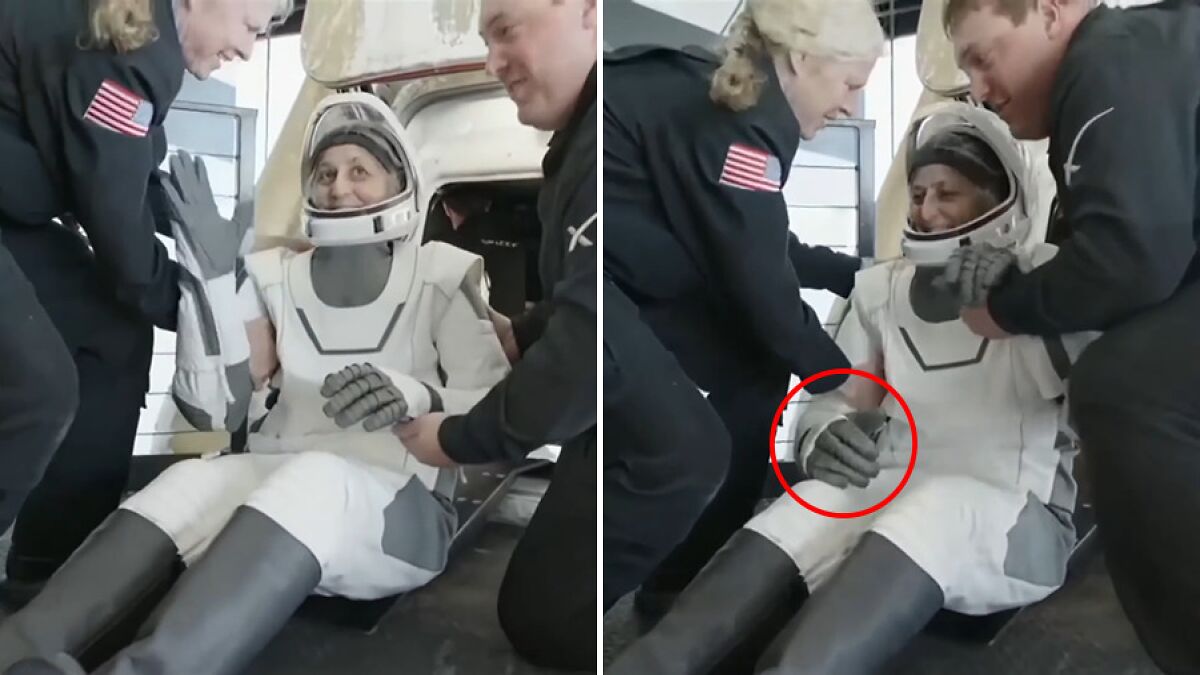
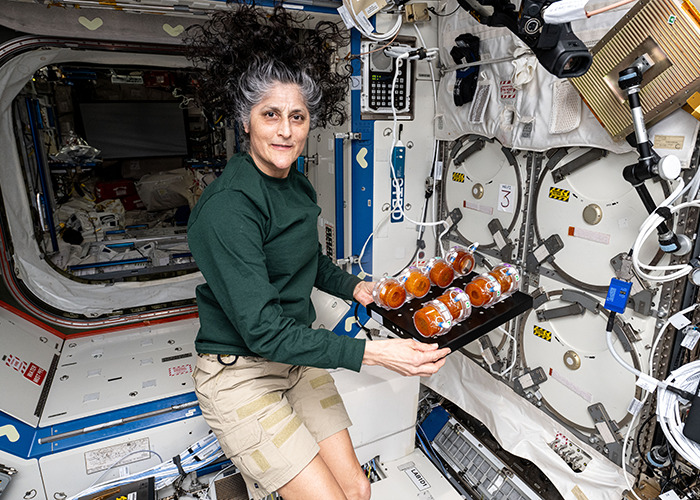
A subtle detail has been identified by health experts that could reveal astronaut Sunita Williams‘s health condition.
Williams, along with Barry Wilmore, recently touched down on Earth after a long nine months up in space.
Image credits: NASA Johnson
The whole world locked in on the “stranded” astronauts’s long-awaited return to Earth yesterday, March 19. After an unexpected nine months on the ISS, Williams and Wilmore’s dramatic change in appearance surprised viewers.
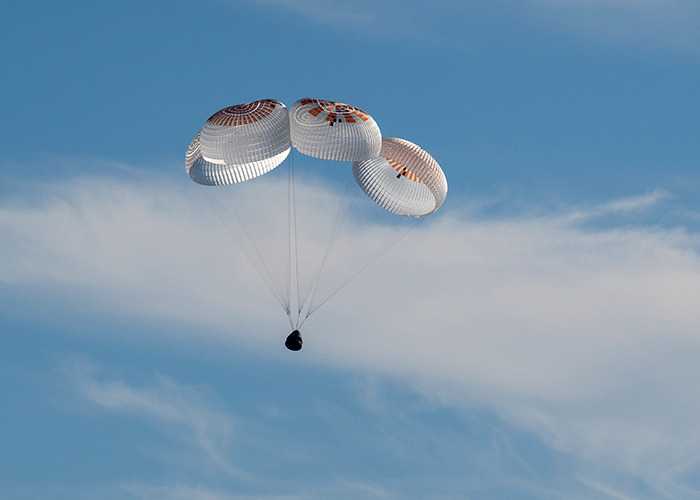
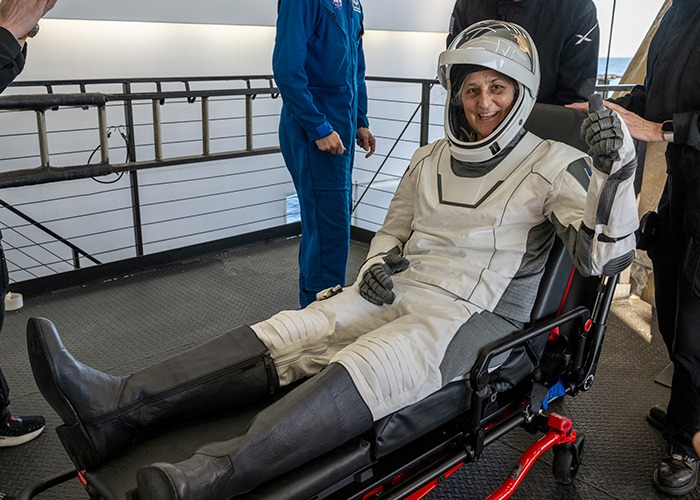
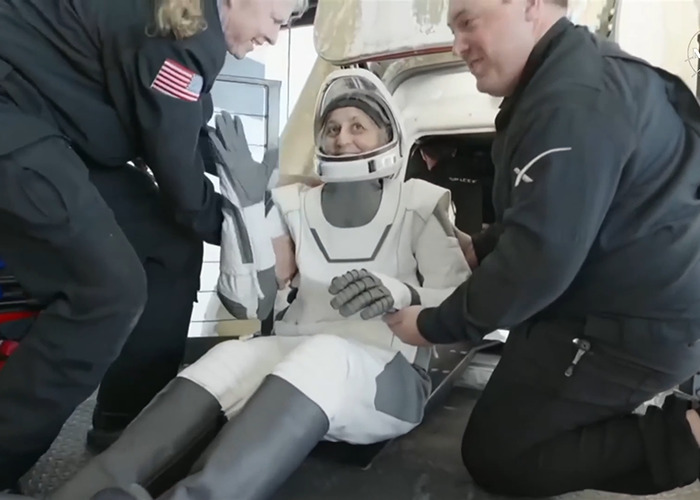
After landing off the coast of Florida, astronauts stepped out of their SpaceX Dragon capsule. While both astronauts looked tired, Williams, 59, was helped onto a stretcher. In a bid to assure people that she was well, Williams was seen smiling and waving as she was lifted.
However, health experts noticed a small detail that could help reveal the issues Williams might be dealing with now.
Image credits: NASA/Keegan Barber
Image credits: NASA/Keegan Barber
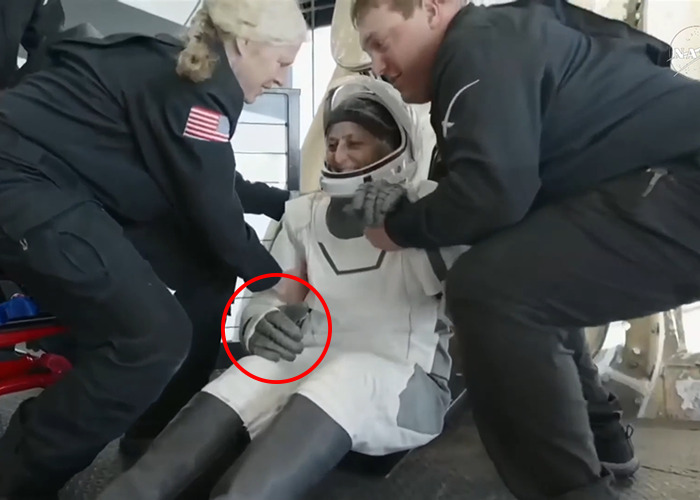
After Williams waved, experts observed her right arm suddenly going limp and falling heavily to her thighs, which might be a consequence of long exposure to microgravity.
Speaking to the Daily Mail, doctors suggested that this behavior could signal muscle wasting from her 286-day stay in space.
They added that in a low-gravity environment, muscles tend to waste away as they work less to maintain posture since they experience less resistance. On Earth, gravity forces muscles to work against it, creating a mechanical load that prevents atrophy.
Image credits: NASA
The claims come after other experts were concerned about the astronaut’s alarmingly thin wrists. According to the doctors, both details point to weight loss and muscle wasting.
However, according to Dr Vin Gupta, an Air Force surgeon, the fact that she was able to lift her arm to wave at the onlookers was a good sign.
“Anyone who is able to elevate their arm is then also able to lower their arm successfully, should be OK,” he said.
Image credits: NASA
Dr. Stanton Gerson shared that Williams appeared thinner than her male crew member, Butch Wilmore.
“She had more trouble, if you will, than did the other astronaut with standing up,” Gerson told the Daily Mail. In general, men have more muscle mass than women, which can lead to women being more affected by losing a small amount.
“This may be because it is really hard to maintain muscle mass in space without the help of gravity. In space, there isn’t a differential on muscle mass, because there isn’t the stress and strain from gravity and, as a result, from undertaking exercise,” he explained.
Gerson also added that the muscle loss the astronauts experienced is likely to be in the single digits and minimal and that they should be okay in a short time.
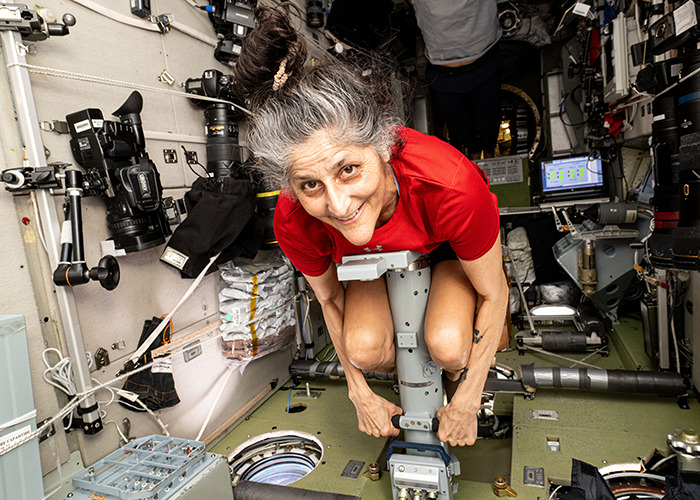
Image credits: NASA Johnson
One of the biggest changes to the human body comes from spending time in microgravity, which enables astronauts to float inside a spacecraft or outside during spacewalks.
During this period, there is a decrease in muscle mass—due to decreased use and lack of stimulus through exercise—and bone loss, according to NASA.
Without Earth’s gravity, bones that support the body’s weight can lose 1% to 1.5% of mineral density on average per month in space, the agency explains.
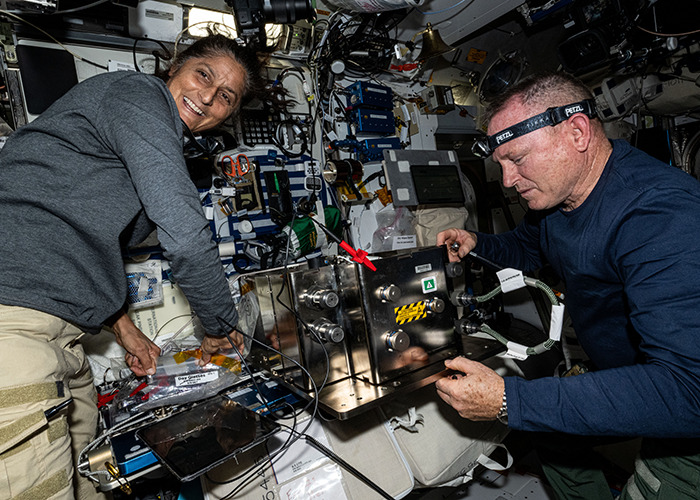
Image credits: NASA Johnson
Additionally, astronauts experience accelerated muscle loss in microgravity environments due to not having an optimal diet or exercise routines, which would normally help prevent such effects on Earth.
NASA also points out that in microgravity, there is a shift of blood and cerebrospinal fluid from the lower body to the head and eyes, likely causing structural changes in the brain and eyes.
Upon their return to Earth, astronauts undergo thorough medical evaluations as part of their readjustment to Earth’s gravity, yet most recover quickly and do not suffer long-term health impacts.

By entering your email and clicking Subscribe, you're agreeing to let us send you customized marketing messages about us and our advertising partners. You are also agreeing to our Privacy Policy.
Thank you! You've successfully subscribed to newsletters!


The Daily Mail is a British tabloid rag. Don’t pay any attention to their sensationalised “stories”, which contain small elements of generalized truth but are rarely accurate for the specific context.

We like to call it the Daily Fael. It's run by a bunch of white misogynistic boomers.
Load More Replies...
After that long on orbit you develop habits appropriate to that environment, like expecting things to stay where you put them - including your limbs.I don't think it's particularly significant that her arm dropped like that because she would no longer be used to having to lower her arm back down.

Doctors should stop diagnosing non-patients from afar. It's wholly unethical.
The Daily Mail is a British tabloid rag. Don’t pay any attention to their sensationalised “stories”, which contain small elements of generalized truth but are rarely accurate for the specific context.
We like to call it the Daily Fael. It's run by a bunch of white misogynistic boomers.
Load More Replies... After that long on orbit you develop habits appropriate to that environment, like expecting things to stay where you put them - including your limbs.I don't think it's particularly significant that her arm dropped like that because she would no longer be used to having to lower her arm back down.
Doctors should stop diagnosing non-patients from afar. It's wholly unethical.


































 No fees, cancel anytime









18
7