Bored Panda works better on our iPhone app
Continue in app Continue in browser

The Bored Panda iOS app is live! Fight boredom with iPhones and iPads here.

Experts Astonished By Unearthing Of Lydian Palace Dating Back To The 8th Century B.C.
Archaeologists working inside the unearthed 2,800-year-old Lydian palace ruins in western Tu00fcrkiye excavation site.

Experts Astonished By Unearthing Of Lydian Palace Dating Back To The 8th Century B.C.

62

ADVERTISEMENT

Archaeology isn’t exactly the most glamorous job out there. You can spend years digging around in the dust and dirt only to come up empty-handed. Sometimes, though, you hit the jackpot with a find that changes everything.

One team of archaeologists has recently stunned the global archaeological community after unearthing a 2,800-year-old Lydian palace in western Türkiye that challenges previously held ideas about the ancient civilization. Take a closer look.

RELATED:

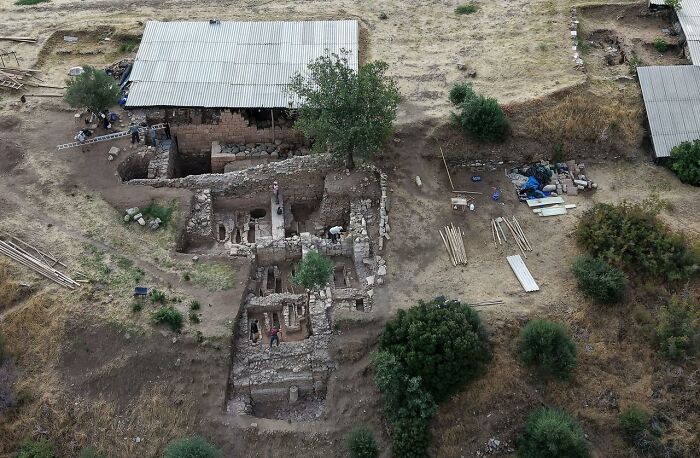
    Archaeologists have unearthed a 2800-year-old Lydian palace in western Türkiye that’s shedding new light on the ancient civilization

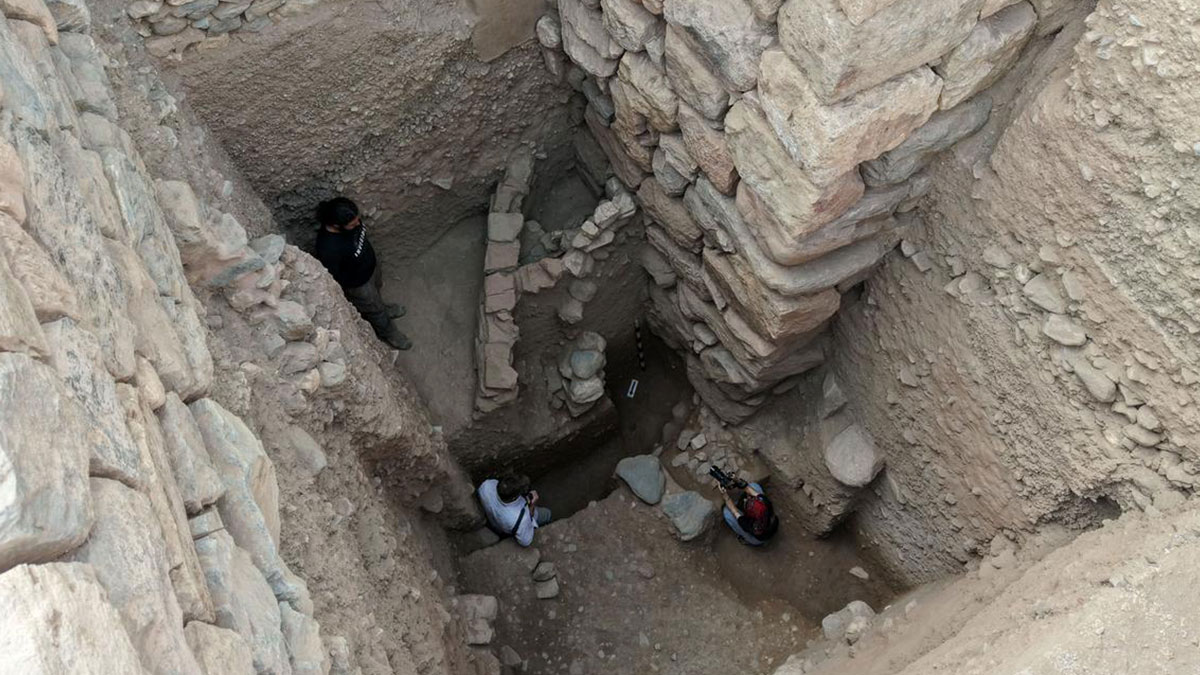
    Aerial view of ancient Lydian palace ruins under excavation in Western Türkiye with archaeologists at the site.

    Image credits: AnadoluTarihii / X

    The palace ruins were discovered about eight meters underground, buried beneath later layers from the Persian, Hellenistic, Roman, and Byzantine periods

    Archaeologists in Sardis, a UNESCO World Heritage Site in western Türkiye, have discovered the ruins of a Lydian palace that dates back to the 8th century B.C. The site, situated in Salihli, a district of Manisa province, was at one point in history the capital of the Lydian Kingdom.   

    Excavations in Sardis have been ongoing for more than a century, most recently under the care of Professor Nicholas Cahill, who hails from the University of Wisconsin. Cahill explains that experts and academics have long held the impression that Lydians lived in villages until the 7th century, only developing urban life much later on.

    ADVERTISEMENT

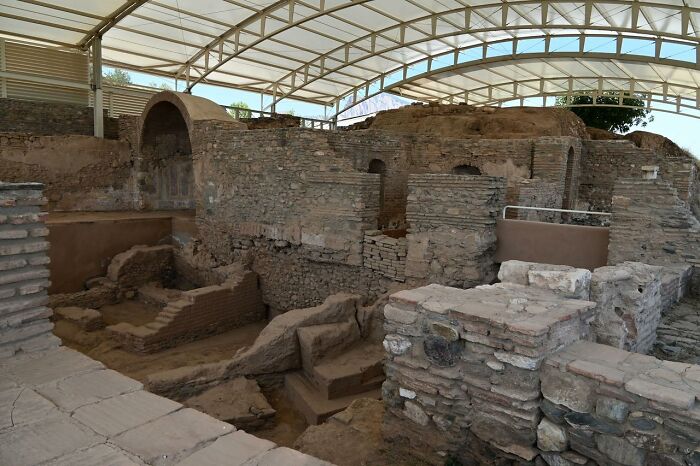
    Ancient Lydian palace ruins uncovered by archaeologists in Western Türkiye, showcasing stone walls and preserved foundations.

    Image credits: AnadoluTarihii / X

    The site lies in Salihli, and was once the capital of the Lydian Kingdom, the place where coins were first minted under state authority

    This latest unearthing challenges these previously held notions. Cahill notes, “Historians once thought the Lydians only began urbanization in the seventh century B.C. and had lived in villages before that. These findings prove otherwise. Sardis was already a major monumental city in the eighth century B.C. The terrace system began then, showing the Lydians were an Anatolian civilization looking eastward, not a Greek one.” 

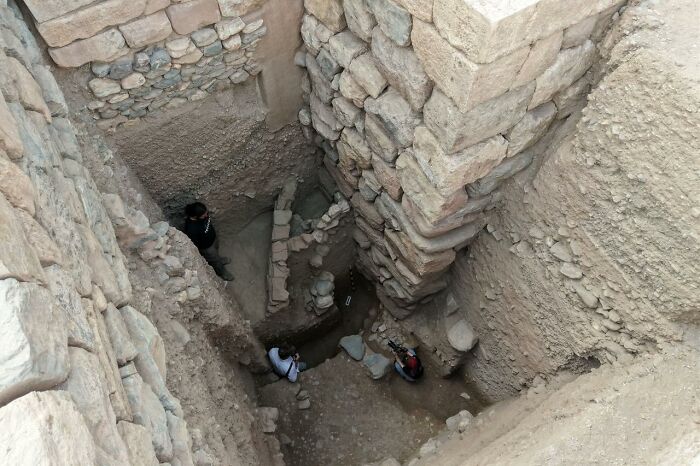
    The remnants of the palace were discovered approximately 8 meters underground, beneath later layers from the Persian, Hellenistic, Roman, and Byzantine periods. The palace’s stone walls, measuring between 1.5 and 2 meters thick, stand over 6 meters tall, offering experts fresh insights into the scale of Lydian architecture.

    ADVERTISEMENT

    Archaeologists excavating the 2,800-year-old Lydian palace ruins in Western Türkiye, revealing ancient stone walls.

    Image credits: AnadoluTarihii / X

    ADVERTISEMENT

    Significant finds at the site include 30 bronze arrowheads, fragments of human skeletons, and nine silver coins dating to the early sixth century B.C., considered among the oldest on the planet. These groundbreaking discoveries emphasize the importance of Sardis as a political and economic hub of its time. With the 2025 archaeological season now over, work at the site is anticipated to continue in the next excavation period.

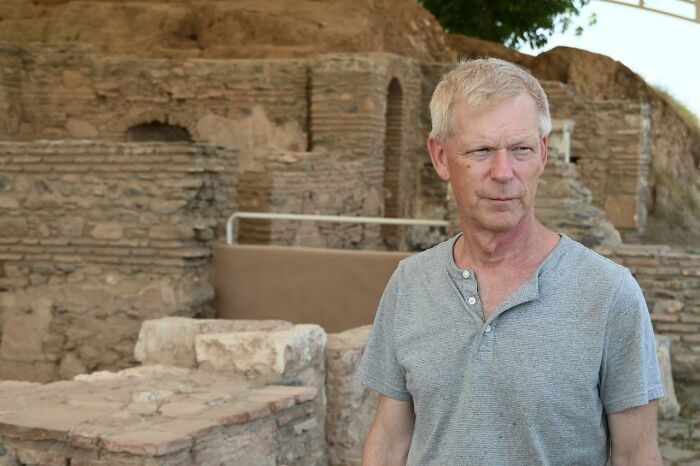
    Middle-aged man standing near ancient stone ruins of a Lydian palace site in western Türkiye archaeological excavation.

    Image credits: Ahmet Bayram / AA

    ADVERTISEMENT

    Scholars had long believed the Lydians lived in villages until the seventh century B.C., but this monumental find challenges the previously held notion

    Lydia’s prominence grew in the first millennium BC, particularly under kings like Gyges and Croesus. However, the kingdom eventually fell to the Persian king Cyrus the Great in the mid-6th century B.C. Renowned for their rich deposits of gold and silver, the Lydians are credited with being the first to mint coins, revolutionizing trade and commerce.

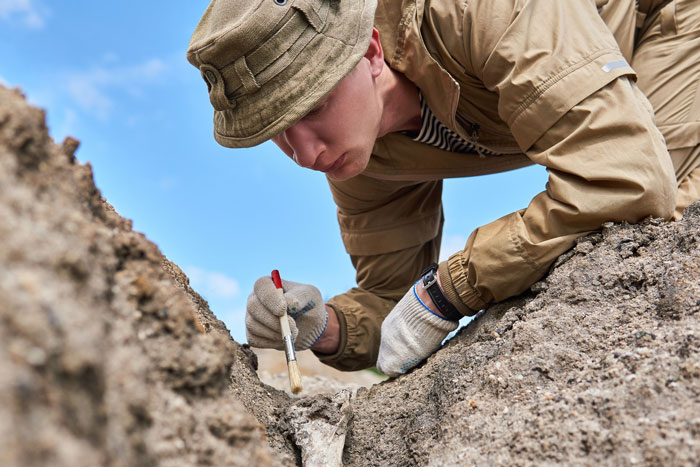
    Archaeologist carefully brushing ancient remains during excavation at 2,800-year-old Lydian palace site in Western Türkiye.

    Image credits: haritonovstock / Freepik (not the actual photo)

    The Lydians interacted with the Greeks, adopting some of their customs and influencing their development, particularly when it came to commerce. They also had their own distinct culture, including a mother goddess and a vegetation goddess, and spoke an Indo-European language related to Hittite. 

    ADVERTISEMENT

    The Lydian military was known for its powerful cavalry, particularly their “horse-fighters” (hippomachoi), and their expertise in archery. They were also described as valiant and warlike, with a military organization similar to the early Greeks. Lydia’s economic strength likely contributed to its ability to fund and maintain a strong military.

    The discovery underlines the significance of Sardis as a political and economic hub of its time, and work at the site will carry on in the next excavation period

    ADVERTISEMENT
    Share on Facebook
    Ivan Ayliffe

    Ivan Ayliffe

    Writer, BoredPanda staff

    Read more »

    After twenty years in advertising, I've decided to try my hand at journalism. I'm lucky enough to be based in Cape Town, South Africa and use every opportunity I get to explore everything it has to offer, both indoors and out. When I'm not reading, writing, or listening to podcasts, I spend my time swimming in the ocean, running mountain trails, and skydiving. While I haven't travelled as much as I'd like, I did live in !ndia, which was an incredible experience. Oh, and I love live music. I hope you enjoy my stories!

    Read less »
    Ivan Ayliffe

    Ivan Ayliffe

    Writer, BoredPanda staff

    After twenty years in advertising, I've decided to try my hand at journalism. I'm lucky enough to be based in Cape Town, South Africa and use every opportunity I get to explore everything it has to offer, both indoors and out. When I'm not reading, writing, or listening to podcasts, I spend my time swimming in the ocean, running mountain trails, and skydiving. While I haven't travelled as much as I'd like, I did live in !ndia, which was an incredible experience. Oh, and I love live music. I hope you enjoy my stories!

    Denis Krotovas

    Denis Krotovas

    Author, BoredPanda staff

    Read more »

    I am a Visual Editor at Bored Panda. While studying at Vilnius Tech University, I learned how to use Photoshop and decided to continue mastering it at Bored Panda. I am interested in learning UI/UX design and creating unique designs for apps, games and websites. On my spare time, I enjoy playing video and board games, watching TV shows and movies and reading funny posts on the internet.

    Read less »

    Denis Krotovas

    Denis Krotovas

    Author, BoredPanda staff

    I am a Visual Editor at Bored Panda. While studying at Vilnius Tech University, I learned how to use Photoshop and decided to continue mastering it at Bored Panda. I am interested in learning UI/UX design and creating unique designs for apps, games and websites. On my spare time, I enjoy playing video and board games, watching TV shows and movies and reading funny posts on the internet.

    What do you think ?
    Multa Nocte
    Community Member
    3 months ago Created by potrace 1.15, written by Peter Selinger 2001-2017

    Thank you! These are the sort of articles I LOVE to see here on BP!!!!!!!!

    Nils Skirnir
    Community Member
    3 months ago Created by potrace 1.15, written by Peter Selinger 2001-2017

    Much better than the celebrity and rich folk crapola

    Load More Replies...

    abn_gator
    Community Member
    3 months ago Created by potrace 1.15, written by Peter Selinger 2001-2017

    If you like this, you should look up Gobekli Tepe. Recently unearthed in Turkey as well. Dates back to 9500 B.C. Sheds new light on neolithic living. Not all were hunter gatherers. They actually had a settlement. It's crazy

    VikingAbroad
    Community Member
    3 months ago Created by potrace 1.15, written by Peter Selinger 2001-2017

    Rediscovered in the 1960'es, but yes, it is a stunning discovery!

    Load More Replies...


    Mari
    Community Member
    3 months ago Created by potrace 1.15, written by Peter Selinger 2001-2017

    Very interesting! I wonder what more they will discover.

    Load More Comments
    Multa Nocte
    Community Member
    3 months ago Created by potrace 1.15, written by Peter Selinger 2001-2017

    Thank you! These are the sort of articles I LOVE to see here on BP!!!!!!!!

    Nils Skirnir
    Community Member
    3 months ago Created by potrace 1.15, written by Peter Selinger 2001-2017

    Much better than the celebrity and rich folk crapola

    Load More Replies...
    abn_gator
    Community Member
    3 months ago Created by potrace 1.15, written by Peter Selinger 2001-2017

    If you like this, you should look up Gobekli Tepe. Recently unearthed in Turkey as well. Dates back to 9500 B.C. Sheds new light on neolithic living. Not all were hunter gatherers. They actually had a settlement. It's crazy

    VikingAbroad
    Community Member
    3 months ago Created by potrace 1.15, written by Peter Selinger 2001-2017

    Rediscovered in the 1960'es, but yes, it is a stunning discovery!

    Load More Replies...

    Mari
    Community Member
    3 months ago Created by potrace 1.15, written by Peter Selinger 2001-2017

    Very interesting! I wonder what more they will discover.

    Load More Comments
    You May Like
    Related on Bored Panda
    Popular on Bored Panda
    Trending on Bored Panda
    Also on Bored Panda
    ADVERTISEMENT