Get Premium
Dark mode theme is available exclusively for premium users. Learn more about the benefits of subscribing.
No fees, cancel anytime.

 Dark Mode Ad-Free Browsing Unlimited Content
 Ad-Free Browsing Unlimited Content Dark Mode
Join 1.2 million Panda readers who get the best art, memes, and fun stories every week!
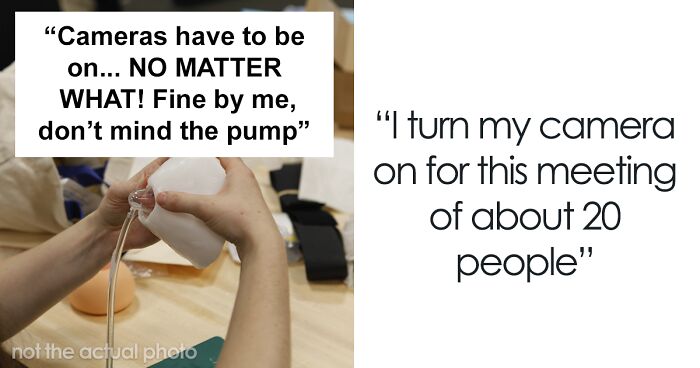
A recent post shared on r/MaliciousCompliance has sparked a heated debate on what it’s like to be a new mother in a patronizing workplace environment.
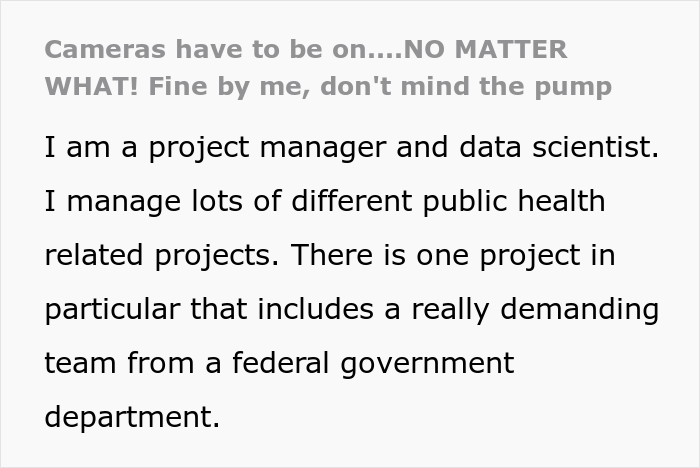
The woman who introduced herself as a project manager and data scientist and goes by the handle u/HappyGiraffe wrote that while she manages lots of different public health-related projects, one particular project put heavy pressure on her.
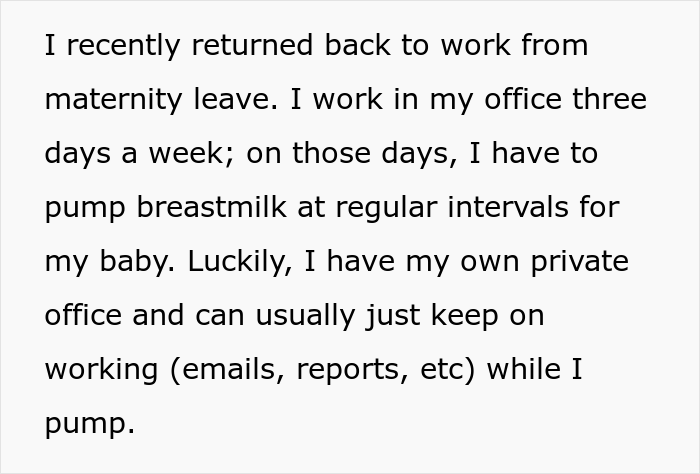
“I recently returned back to work from maternity leave. I work in my office three days a week; on those days, I have to pump breastmilk at regular intervals for my baby,” she explained. However, during one such Zoom call scheduled at the time she needed to pump, the uncomfortable situation evolved.
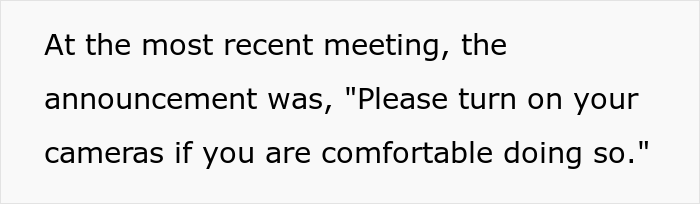
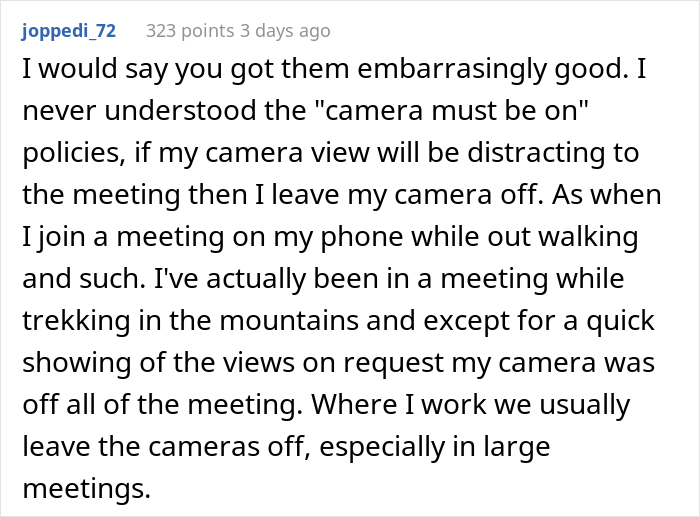
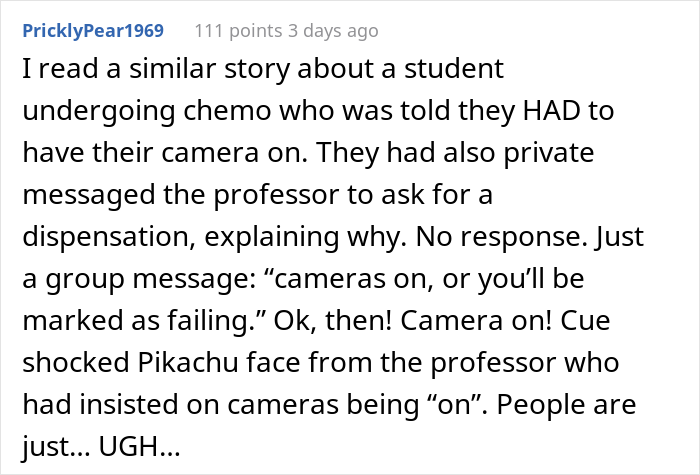
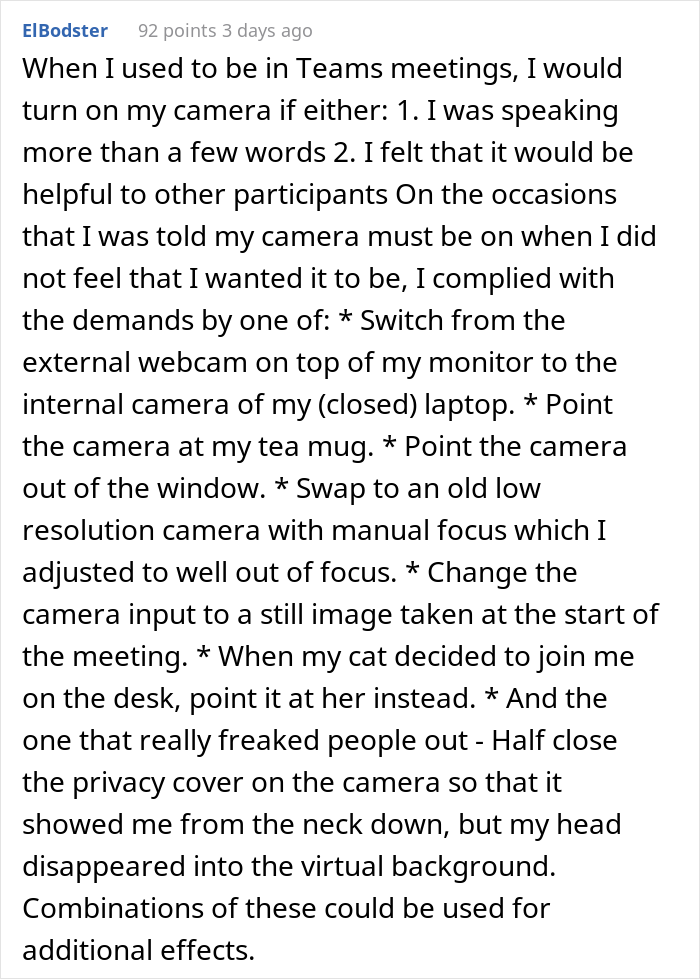
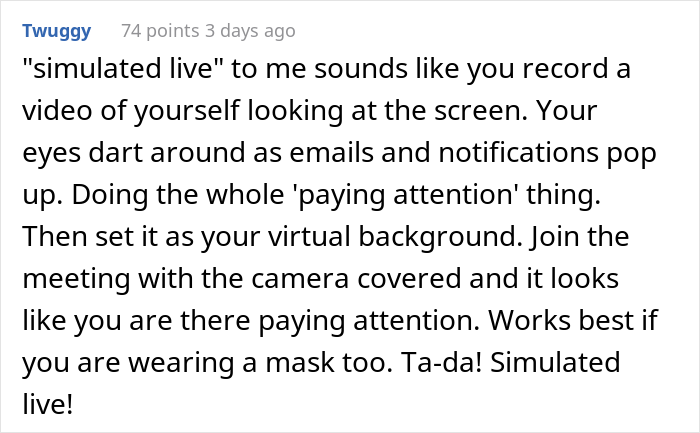
“Instead of missing the meeting, I figured I would just keep my camera off so I could wear my pump and still participate and listen,” the author wrote, but it turned out that the meeting lead was less than impressed with her camera being off. So the lead kept pushing for all cameras to be on, “no matter what.” I guess they got what they wanted…
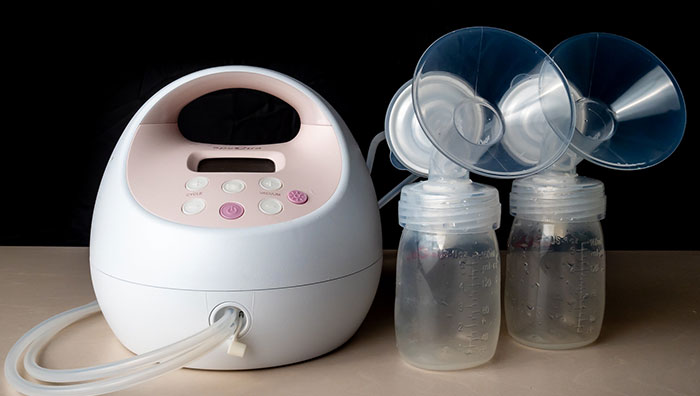
Image credits: LinkedIn Sales Solutions (not the actual photo)
Image credits: ajay_suresh (not the actual photo)
Although society would much rather ignore it, being a successful woman in the workplace is different from being a man and it comes with its own unique challenges (and rewards). That includes not only the pressure of going back to work right after giving birth, but also the newly acquired duties like breast pumping and/or feeding the baby all while on duty.
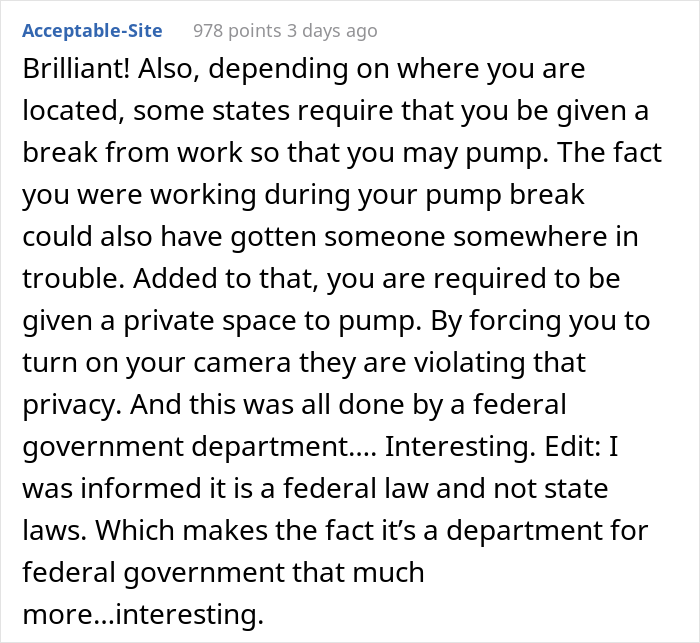
In 2010, Section 7 of the Fair Labor Standards Act (FLSA) was amended to require employers to provide basic accommodations, such as time and space, for breastfeeding mothers at work.
“Reasonable break time for an employee to express breast milk for her nursing child for 1 year after the child’s birth each time such employee has need to express the milk” — U.S. Department of Labor Wage and Hour Division, Section 7(r) of the Fair Labor Standards Act — Break Time for Nursing Mothers Provision states.
However, when it comes to conferences or video meetings, the common etiquette may not be that clear. But according to Katie Hintz-Zambrano, co-founder of Mother and founder of Gather, “Women should do whatever is most comfortable to them, including whipping out their boobs and nursing for all to see.”
According to Hintz-Zambrano, “In general, the world needs to get less squeamish about seeing breasts when they are being used to feed babies—wherever that may be—instead of used to sell video games and magazines and everything else women’s sexualized bodies are used for,” she said.
Meanwhile, Jessica Shortall, the author of Work. Pump. Repeat: The New Mom’s Survival Guide, argues that “it shouldn’t come as a question of right or wrong, but as an assessment of how the people around you will react, balanced with a decision about how many sh*ts you have to give about those reactions.”

Blah. For the last time, boobs are primarily for babies. Why do people get so damn offended every time they see them out of a sexual context? Don't you have the ability to understand the concept of context? BLAH. And every company should have some finesse when they talk to their employees.

Breast pumps can be loud. That's one consideration.
Load More Replies...
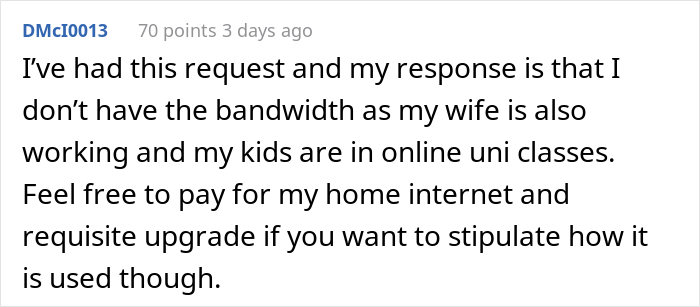
During Teams, I MAYBE turn my camera on when I have to introduce myself to people I haven’t met yet. I really don’t understand why cameras must be on, when Covid first hit, people here moved meetings to Teams, and told everybody to keep cameras off, to save bandwidth. Also, who really wants to be seen by others or see other people.

*So* important to see other people's facial expressions to see how what is being said is coming across. It is a very important part of human evolution and socialisation.
Load More Replies... Blah. For the last time, boobs are primarily for babies. Why do people get so damn offended every time they see them out of a sexual context? Don't you have the ability to understand the concept of context? BLAH. And every company should have some finesse when they talk to their employees.
Breast pumps can be loud. That's one consideration.
Load More Replies... During Teams, I MAYBE turn my camera on when I have to introduce myself to people I haven’t met yet. I really don’t understand why cameras must be on, when Covid first hit, people here moved meetings to Teams, and told everybody to keep cameras off, to save bandwidth. Also, who really wants to be seen by others or see other people.
*So* important to see other people's facial expressions to see how what is being said is coming across. It is a very important part of human evolution and socialisation.
Load More Replies...


























 No fees, cancel anytime


















159
93