Get Premium
Dark mode theme is available exclusively for premium users. Learn more about the benefits of subscribing.
No fees, cancel anytime.

 Dark Mode Ad-Free Browsing Unlimited Content
 Ad-Free Browsing Unlimited Content Dark Mode
Join 1.2 million Panda readers who get the best art, memes, and fun stories every week!
Medical professionals are not gods — they can make mistakes. It’s just terrifying that those mistakes can cost people their lives. Research shows that 10-12% of patients in developed countries experience adverse safety events in healthcare settings. WHO calculates that about 2.6 million people pass away every year because of poor quality care.
Doctors and nurses see their colleagues’ mistakes, and many have wild stories to share. Recently, in one online thread, medical professionals began recounting the worst medical blunders they’ve seen throughout their careers. Their stories were prompted by a netizen who asked: “Doctors and Nurses, what is the worst medical error that you've witnessed?” However tragic and infuriating they may be, it’s definitely a reminder that bad medical professionals, just like bad apples, can be anywhere.
This post may include affiliate links.
 When i worked as a nurse i witnessed a patient fall on her side in a geriatric ward. She was unable to walk after this and became increasingly confused. I suggested she might have a hip fracture. The doctor sent her for an x ray. Of her upper arm. Only. She had a humerus fracture sure but still refuses to walk. I worked that weekend and told every doctor I rounded with to send her for an x ray. They all examined her but no x ray. On monday the head doctor was back. She lifted the blanket and saw that the leg was shortened and outwardly rotated. The x ray revealed an uncomminuted hip fracture. She was wincing in pain for 3 days because no one listened to me.
This event among others made me decide to study medicine. Today i work as a doctor and keep advocating that you need to take a nurses worry seriously.
 I’m an ICU nurse. Took care of a patient who came in for an elective nephrectomy due to cancer. Should have been pretty straight-forward, and wasn’t expecting many lifestyle changes afterwards since you can live with one healthy kidney. Patient woke up in PACU and couldn’t feel their legs. Rushed to CT and turns out, when the surgeon performing the procedure was supposed to be stapling off the renal artery of the kidney they took out, they somehow stapled shut the ENTIRE AORTA. Basically no blood flow was perfusing to the entire lower half of this patients body. Then they had to have a massive 16+ hour long surgery to repair the aorta. They ended up doing okay (all things considered) but I still cannot believe that happened. How do you manage to staple shut a giant pulsating vessel like the F*****G AORTA on accident? I hope they sued the s**t out of that surgeon and won.
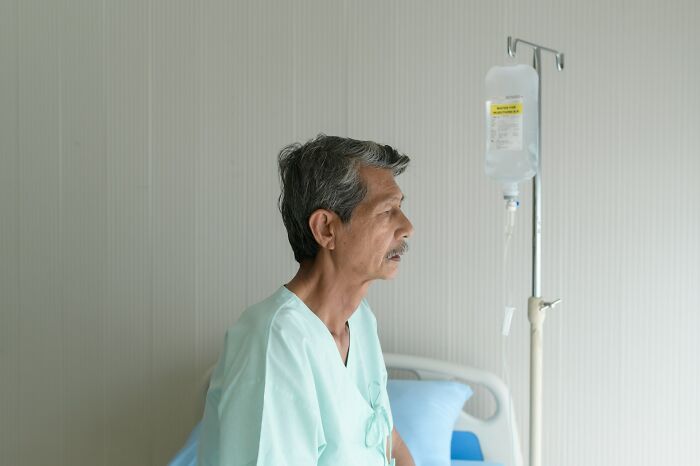 A patient came in with urinary retention. He was a man in his 50s with advanced cancer, which was probably the cause of the retention.
Normally, in cases like this, the bladder is drained with a urinary catheter. After several painful attempts, however, no catheter could be passed.
The doctor came out and told the patient and his wife that this was basically it—that nothing more could be done, that he was going to shut down and d*e from the urinary retention. The patient had already accepted his fate, and his wife started crying.
The doctor then went into the break room and discussed the case with another doctor. The second doctor immediately gave her a "what the f**k?" look and told her they could perform a suprapubic cystostomy (basically inserting the cathether by puncturing the abdominal wall).
The original doctor went back to the patient and, within five minutes of telling him he was essentially a d**d man walking, said everything was fine and that they were going to get the urine out after all.
This wasn't her only s***w-up, of course (I've seen her letting pulmonary embolisms wait for HOURS), but this is the one that has stayed with me the most, because... what the f**k?
To top it all off, she was incredibly self-important, which I suspect heavily influenced the way she practiced medicine.
And I was supposed to learn from this doctor. I still get angry just thinking about it.
 Both the worst error and the most amusing.
As a junior doctor I was bleeped to the ward because a patient “just didn’t seem himself”. Arrived to observe a student nurse trying to spoon yoghurt into a corpse.
“You just don’t seem very hungry today Mr Smith.”.

As an 18 year old, the first time I fed a patient I realised that after a few spoonfulls of ice cream he wasn't interested any more. I called the Charge Nurse who checked him and told me that he'd died. Then held up the untouched piece of ice cream and shouted to the ward to see if anyone wanted more ice cream (1972)
 I’m not being flippant or trying to make a stand here but short staffing is the worst thing I’ve ever seen. I have seen individual errors, but when the unit is short staffed the shift before mine there are a thousand things that get neglected and oftentimes those misses add up to dangerous situations.
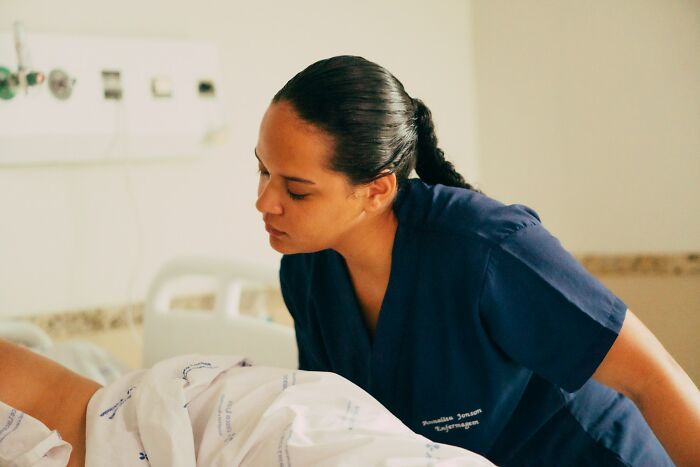 I was a clinical assistant at a detox center. One of our clients had a fatal seizure from alcohol withdrawal about a week into his stay. Other CAs were literally begging the nurse to transfer him to the ER bc he took a sudden downturn. The nurse on staff was so adamant that his symptoms couldn’t be that severe a week into withdrawal and he had been “just fine” for about 36 hours. He died in his sleep that night. He was only about 30, and unlike most of our clients, was really dedicated to starting recovery. The worst part was that when the CAs were discussing reporting the muse, one of the other nurses said “we shouldn’t bother with all that” and “it would be really hard on *nurse*” They reported her anyway but she basically got a slap on the wrist.
 Patient has major abdominal surgery and is open with a clear plastic looking window. Patient has a pain pump going into their spine so they don't feel major open abdominal wound. Bad nurse is supposed to be checking patient q15 minutes. Patients nurse aid is constantly checking patient because he's pressing button and pump is running but he's screaming in pain. Nurse is alerted 4 times but says patient is baby and won't physically check patient. Nurse aid risked her job going outside her scope to check patient herself and finds epidural was pulled out, bed is soaked because meds have been pumped everywhere but the patient, patient ripped open wound or something while thrashing and screaming in pain. Patient went back to surgery and the nurse retired less than 6 months later.

Instead of retired the 6 months the nurse should of been sacked 6 hours later
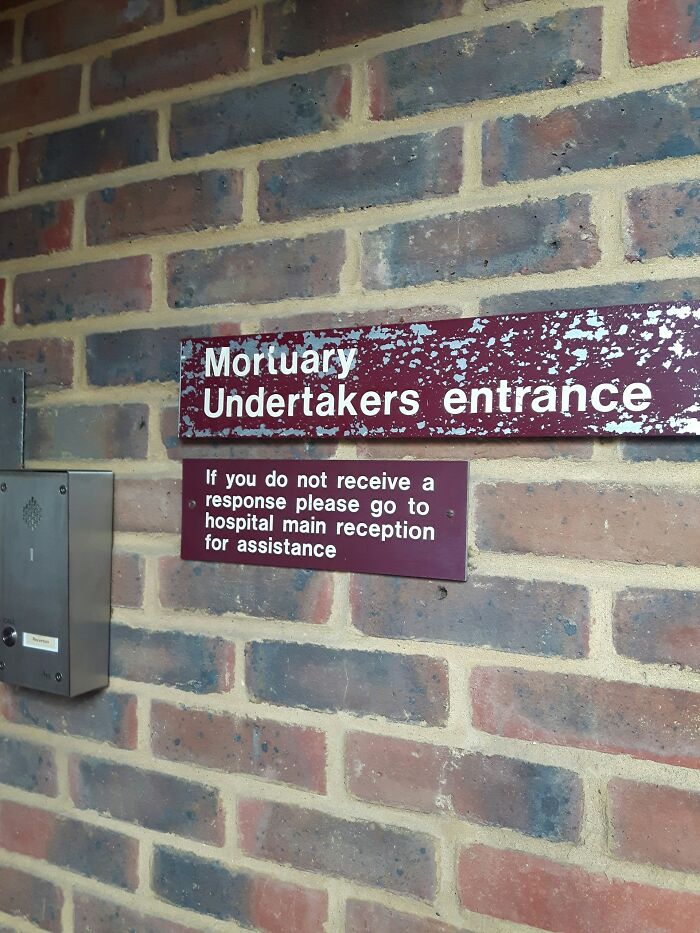 Probably that kid that was just misdiagnosed as being d**d and waking up in the morgue.
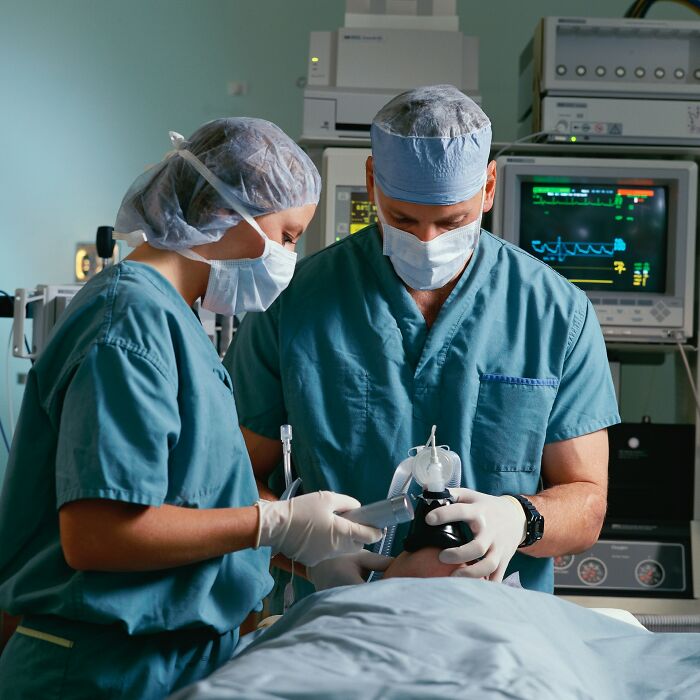 Many moons ago, when I was a medical student- the country hospital anaesthetist (who rumour had it was often drunk) was so incredibly bad at his job that for limb procedures, the patient‘s arm would STILL BE MOVING during the operation (withdrawing from painful stimuli). He would physically hold the arm or leg still himself and insist he had done his job properly…
Imagine my horror some seven years later when my spouse was undergoing a major procedure and the city hospital’s “new anaesthetist“ ambled in to take his pre-op history.
You better bet that I paged my husband’s surgeon so g*****n fast and told him everything I knew about this guy. He was horrified and called in a second anaesthetist to take over.

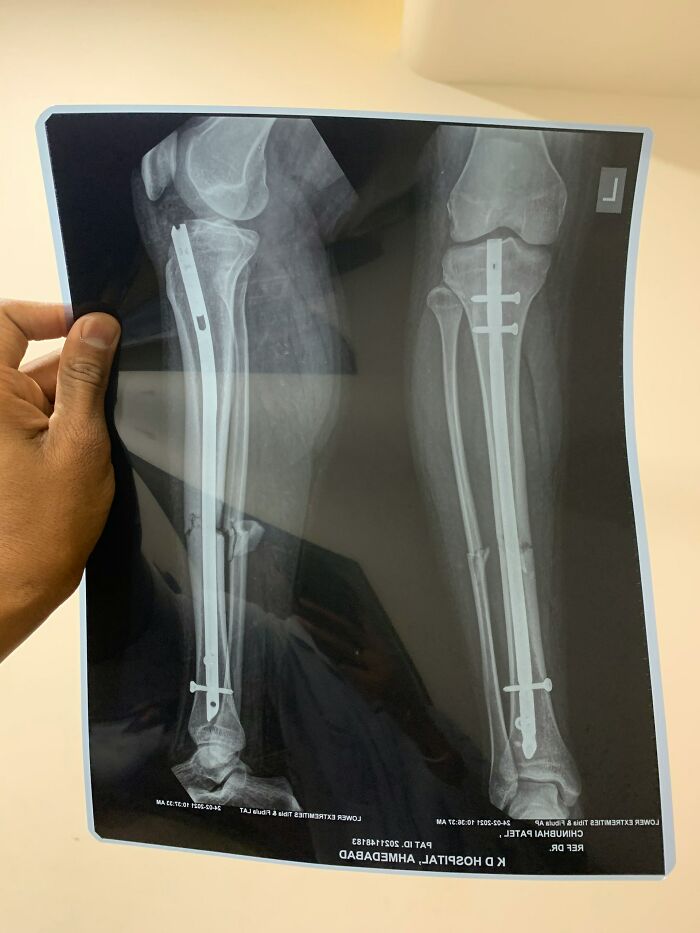 Morbidly obese man has open heart surgery. Standard type of equipment is used to hold the rib cage together and close things up. He's in the ICU for recovery, typical for complicated major surgery like this.
A number of cascading errors happened. For one, it was a holiday weekend. The CT who performed the procedure was in a hurry to get out of town. A nurse reported the suture looked like it could be loosening.
CT hands off, notes in the chart to monitor the site and evaluate on Monday.
Pt had progressively worsening coughing fits going into the weekend, progressive pain and agitation as well.
At some point during one of these fits, two nurses are attempting to manage and calm pt when they hear a snap, the nurse looks down and sees that she is holding the pt's heart in her hand, as it has been expelled after the wire holding the rib cage failed.
Pt expired almost immediately.
This was a malpractice suit that involved a former employer of mine and a couple former colleagues
That's the second worst mistake I've seen.
The worst one was an ortho installing a hip replacement backwards.
Don't worry though that guy is banned from the OR. Now he does peer review for insurance companies, telling competent docs that their treatment plan isn't medically necessary.
 Surgeon performed wrong-side craniotomy.
Patient was level one trauma for fall from roof, had a scan, read by surgeon and supposedly by radiology as a brain bleed. Ran patient from trauma bay directly to OR. No consent possible, waived per life or d***h emergency protocol, surgeon performed time-out themselves, stated left side craniotomy for hematoma, left side prepped and draped.
Procedure began, skull flap created... no hematoma is found. Assisting PA breaks scrub, runs over to the computer, pulls up the imaging... it's a right-sided hematoma. I don't personally know if it was really read by radiology pre-op, actually only read by the surgeon incorrectly, or he simply forgot which side it was and didn't verify.
Regardless of the cause, that patient had the wrong side of their skull cut open. The correct craniotomy was performed immediately after, but I do not know how the delay effected their outcome.

Jeebus. This was basically my dad's accident - a fall from the roof, massive subdural hematoma. His surgery was performed on the correct side, but it had been enough time from the fall to the surgery that the blood flooding his brain had already caused a lot of irreversible damage. My dad was near-vegetative and completely disabled for the rest of his life. I can't imagine how much damage a delay in surgery like this would cause.
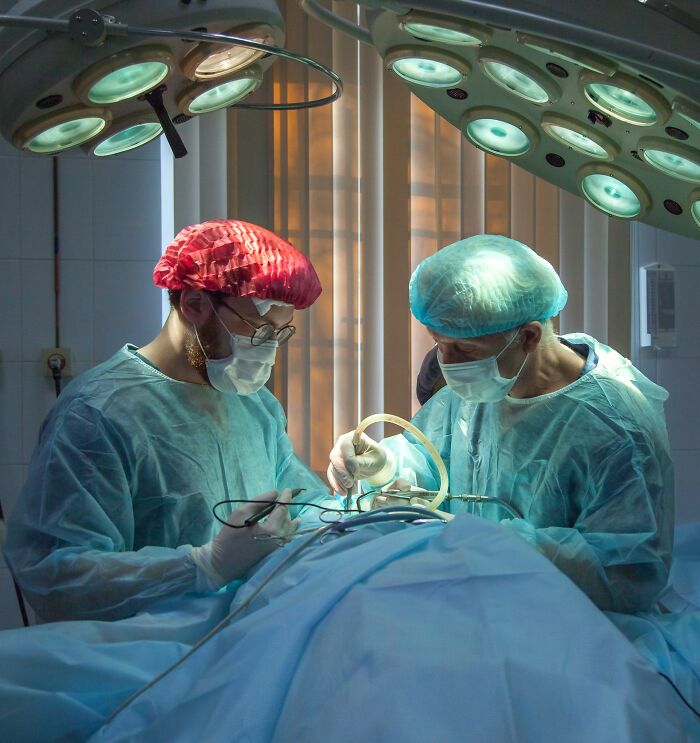 Surgeon took out a section of colon. Normally the proximal section (the part connected to the small intestine) would be brought through a new hole in the abdominal wall, forming a colostomy.
Somehow the surgeon accidentally made the ostomy out of the distal segment (connected to the r****m) and sewed the proximal end shut thinking it was the rectal stump.
Patient had a bowel perforation on post op day 2 or 3 from food/tube feeds being fed into a gut with a blind ending. I believe the patient ended up dying during that hospitalization.
 As a hospital pharmacist, I’d say the NECC compounding crisis of 2012. Not so much an error but a disgusting amount of violations with regard to sterile compounding that led to hundreds of patients dying from fungal meningitis. It changed the way we practice. It put the fear of God into me.
 Patient had come in with shortness of breath.
Unfortunately, known cancer and needed drainage of a pleural effusion. (Build up of fluid between lung ans chest wall)
Unfortunately, donkeys years ago we used trocars. Think long sharp metal tube that could become hollow.
The chap doing the procedure went too far with the trochar and um. Drained the patients heart.
We were not a cardiothoracic unit.
Nothing could be done.
 Not a doctor or nurse, but I was sitting with a friend in the hospital post-surgery.
A nurse came by and gave him his evening medications. I watched and listened to what meds they gave him - he was high as a kite from the morphine drip and had no idea what it was he was swallowing.
About a half hour later the next crew of nurses had started their shift. A nurse came to my friend's room - "Okay, time for your evening medications."
I asked her what she wanted to give him. She told me - it was the same stuff he'd gotten from the previous shift's nurse 30 minutes ago.
I stopped her and told her he'd already gotten those meds, and I asked her to check the records. She argued a bit, but went to check.
She came back and agreed that he had already been properly dosed, so she went off and did the rest of her rounds - I hoped that those other patients were getting the right meds on the right schedule.
I don't remember what d***s my friend was given rhat night, or if a double dose would have been all that dangerous. But what if it had been?
And why was the nurse trying to dose him twice - why did the system allow it? Why did nobody notice that two different nurses were handing out d***s from the same schedule without verifying that they had already been given?
It just shows that a vulnerable patient should have a friend or family member with them as advocate as much as possible. I'll never let a loved one (or myself) be alone in a hospital again.
 Veterinarian here. I still have no idea how the f**k this one happened. A few years ago a kitten came in for fever and abdominal pain a couple days after a spay. Ok, maybe we have a surgical site infection, it happens. Worst case maybe blood loss from a knot that wasn’t tied down enough or a ureter got lighted during the spay—bad complication, but the ureter and uterine horns are right next to each other, and sometimes we see both get tied off together. It’s rare but happens often enough that in vet school we’re specifically warned to look out for this.
Oh no, if only it were that. The uterus was still there. One uterine horn was still attached and in place. The other uterine horn was cut and flapping in the breeze. The uterus itself was untouched. **The surgeon had removed part of the kitten’s descending colon and colonic artery, cut another part of the colon, and left the rest of the colon open, part of it dying from lack of blood supply, and leaking s**t into the kitten’s belly.** The kitten was septic from this. I don’t know how she was still alive.
The kitten was rushed back into surgery, where our specialist actually removed the uterus, flushed everything out, and reattached both ends of the colon. Barely managed to do that one. The kitten spent several days in the ICU but made a full recovery.
The uterus and colon look nothing alike. Blood vessel look nothing like either. I have no f*****g clue how that vet managed to do this.

I really hope they were able to trace back and get that negligent vet punished. That's absolutely horrible and shows SO much oversight it's insane.
 Not a medical professional but have seen two.
My mum had a hysterectomy when she was 30 and the surgeon left surgical swabs inside her. They wrapped around her bowel. No one took her seriously for weeks until he jokingly said ‘Oh we’d better check we didn’t leave anything behind’ and actually investigated further. 33 years on and she still suffers, adhesions are a b***h because it’s not easy to release them without making more.
My aunty (mums sister) went in for a valve replacement on her heart. When they were removing the ECMO they tore her vena cava and she essentially bled out on the table. They brought her back and she spent two weeks in ICU before they finally let her go. Her post mortem showed she was pretty much gone when she bled out, I wish they had just let her go then.
We live in a country where it’s not possible to sue in these situations so my mum got $5 a week for two years for her misadventure. Fortunately my uncle did get a payout for my aunty’s d***h but it was inconsequential.
I miss her so much.
 Not a doctor or nurse, but used to be an ER counselor. A doctor asked me to go talk to a kid who was anxious- he was shaking and sweating IIRC. He had experienced some extra stress recently. I chatted with him and his dad for a bit. I left and told the doc it seemed medical but I wasn’t sure. Turned out he was in diabetic ketoacidosis. Obviously as soon as they figured this out he was treated and okay. Obviously not as bad of a mistake like some other commenters have reported, but still concerning. The doctor was good at their job, it was just one of those blind spots.
Back in my ER nurse days, I caught a fellow nurse hanging 40 MEQ of iv K (potassium) wide open…no iv pump!!!! I immediately stopped the pump and disconnected the line, flushed with saline and then informed the nurse he almost gave the patient a lethal injection. He laughed and said he was only following the order. I showed him the order which clearly stated the very slow rate of 10 MEQ/hr…and informed him of the many safety checks required to give potassium iv, which he had not completed. I told the charge nurse, doc, and filed an incident report.
Second story involving the same negligent nurse: doc ordered a urinary catheter on an 82 year old female patient. After 20 minutes, the same nurse came out of the patient’s room quite frustrated at not being able to place the catheter, and he asked if I would try. I entered the room and found the patient crying out in pain at the previous nurse’s attempts. I explained the need for the catheter and asked if I could take a look and try. She agreed. What I saw next made my insides hurt. Her clitoris was quite red/inflamed/bruised…like someone took a hammer to it!!!!! I quickly located the correct hole: the urethra…not to be mistaken with the clitoris…and I placed the catheter. I immediately informed the nurse who tried to catheterize her clitoris the reason he was unsuccessful. He denied any mistake on his part. I held firm and informed him that it was very obvious, by assessing the patient, that he did NOT know basic female anatomy, and the clitoris is NOT a hole or even remotely similar to the urethra. I wrote up and incident report and informed the charge nurse. He remained cocky and resolute in his complete idiocy. He did not work there much longer.
Simplification of first story since it's a bit confusing and sometimes the lingo can be unclear: Nurse was giving IV potassium to a patient. Nurse was supposed to put it on a pump/drip that would slowly give 10 milliequivalents per hour over 4 hours. Nurse was about to basically inject the entire bag of potassium (40 milliequivalents) into the patient all at once, which would kíll the patient. Potassium has literally been used in léthal injection éxécutions as the drúg used to éxécute the criminal. An OD of potassium affects the electrical conduction of the heart muscle and basically causes léthal cardiac arrest.
2 from my residency hospital stick out that fortunately did not involve me or even my service line.
1. Nurse gives 5000 of insulin (an insane dose) instead of 5000 of heparin (a totally normal dose). Patient dies. I was on the floor it was happening charting and helped with a central line placement because the resident was struggling.
2. While doing a posterior spine fixation, a s***w is too long and pierces the aorta and k**ls a 20 something year old woman. I was on the trauma service and got called to help with the resusc in PACU by the primary surgical team.
A nurse forged a co-signature for methadone and gave 13x the amount. The patient survived but went to ICU.
Not so much an error as it was just…a horrific combination of negligence, incompetence and blatant disregard for patient health and safety but…anybody hear about the hepatitis outbreak in Fremont Nebraska?
So circa like 2000-2001, picture this…cancer clinic, infusion center. Lots of sick patients, lots of chemo ports, and different chemo d***s being administered. This isn’t first hand, I didn’t witness it or work there, but this is what happened…
I’m not super clear on details of how this all transpired but a bit of background…a chemo port is a little doohickey under the skin of the chest that they can poke needles through the skin and into the port to deliver d***s basically straight to the large vessels by the heart. They do that for chemo d***s so they don’t damage the smaller peripheral blood vessels giving them IV. It’s not like an IV though where there’s external bits they poke into to deliver meds. They have to poke through the skin still. It’s preferred to a central or peripheral line because less infection risk since the skin is closed over it.
So what this clinic decided to do apparently in an effort to save a buck was rather than using saline flushes (individual prefilled syringes of saline) they would draw saline out of an IV bag in order to flush the ports with saline. They do this (I think) before and after the infusion of chemo to ensure the port is still viable (hasn’t been dislodged somehow or anything) and after in order to flush the chemo d***s out of the hardware.
In theory this would be fine except that they had a nurse there that was jamming dirty needles into the saline bags to draw up saline and then using the same saline bag on multiple patients. Some patients even reported seeing little speckles and chunks of presumably old clotted blood floating in the saline bags when they were getting low and had been used a lot.
It only took one patient with hepatitis C to expose hundreds of sick patients to the virus because of the contaminated saline bags. Around 850 exposed, with 99 cancer patients contracting the virus. Biggest hep C outbreak in history.
This is a famous case that I was blessedly not witness to but it’s told all the time in nursing and medical schools. Somebody threaded an NG tube and didn’t verify with an xray before starting feeds. Tube was in the brain. The patient died.
Pharmacy tech here:
We had a nurse give a full 10 mL vial of lantus (insulin) to a patient mixing it up with another d**g. Typical doses are around 0.10 mLs..
Additionally there’s the whole fiasco of the doctor at Mount Carmel who was intentionally overd*sing patients on f*ntanyl to k**l them as a f****d up form of “comfort care” to end their suffering.
Important context on the second story from a commenter: "There really needs to be more context to this. The doctor “overdosing” patients on fentanyl was doing so as an end of life measure. The patients in question were being terminally extubated, meaning there is no chance of survival. Code status had already been changed. He wasn’t running around the ICU overdosing patients that were going to get discharged in two days. In layman’s terms- the patient was deemed to have no chance of survival, and before “pulling the plug” they were loaded up with opiates and benzos (normal practice) to keep them comfortable while they essentially suffocated and died. It’s a comfort measure to ensure they have a pain-free déath. The act of giving narcotics to a dying patient isn’t what was questioned, it was the dosages. The doctor was brought to trial on I believe 20+ múrder charges and was found not guilty. I have no idea what happened to his medical license."
There’s a rule in medicine not to use trailing zeros. Which is when you put a .0 after a number.
A doctor wrote (back in paper prescription days) an order for 10.0 units of insulin (a normal amount of insulin. And the nurse gave 100 units of insulin (you would very rarely* bolus this much insulin at once)
The patient had a hypoglycemic emergency and permanent brain damage from the seizures. The doctor should have known not to write an order like that and the nurse should have known not to give that much insulin without verifying the order.
SLP here. Had to argue with nursing staff that a patients acute onset of aphonia (inability to use voice) was an airway problem. Had to even explain how it wasn't related to the nerves in his arm (seriously). It became very heated. He was eventually sent to the hospital, which did not do a comprehensive work up. Patient died within 24 hrs.
Ugh. I was an EMT and was dispatched with a medic to pick up a patient from an "ER" which was a glorified urgent care. Doctor was frantic which already comes off as unfortunately inexperienced with his hand off and said the patient had all the signs of a AAA. Medic didn't take it serioisly, assumed the patient just had anxiety. We get to the hospital, medic doesn't mention anything about a AAA to hospital, and the patient's vitals were stable but he could not sit still and was jittery, probably feeling like something was really wrong and that he was dying like they do.
The ER we brought him to was and is chronically understaffed and underfunded. He got put in a room, apparently had his vitals taken, and then wasn't looked at again until hours later when he was found d**d. I was so mad when I heard about his outcome. I felt like I should have spoken up but I was a baby EMT who never had previous medical experience in the past.
But also f**k that ER.
AAA = abdominal aortic aneurysm. Basically when there's a bulge in the aorta (the big artery thingy leading down to your legs/pelvis/lower body that supplies blood.) This bulge can rupture, causing a life-threatening situation.
Not a doctor or nurse. I went to the emergency room after a workplace injury.
Everyone I encountered was an absolute professional, but everyone I encountered was completely exhausted. This was the tail end of covid and a lot of people had left the industry.
The resident who ended up treating me was so tired it was like watching a drunk making a sandwich. He spent 5 minutes looking for my file because the nurse had put it in the draw where it was supposed to go, rather than dump it on the counter.
This is what I think about every time I hear about any medical error in the. All the people I encountered that afternoon were too tired to be driving, let alone making decisions about life and d***h.
In the ICU when I was a medical student there was a nurse who left the cap off a right IJ central line after administering meds. Nobody noticed anything until a janitor saw half the patient’s blood volume lost on the floor and yelled for help. Fortunately, because the patient was already in ICU where they could receive immediate critical care, they survived.
IJ = intra-jugular line. It's usually where central venous catheterization is performed, since the jugular has a fairly large diameter. So basically... this patient had a hole in their jugular vein (uncapped "open" line) and they were bleeding out.
I’m an Emergency Physician… Not the worst, but 90% of the patients that are referred to us from urgent care or come in after being “treated” by urgent care are mismanaged. Things like an antibiotic… they will almost certainly prescribe the wrong one, wrong duration, wrong frequency. Pretty much guarantee they f****d something up.
The most egregious error? Critical Care PA leaving a central line wire in a patients **carotid artery**. Surgeons got it out. Patient died anyway which was inevitable regardless of the error.
Knew of an ICU nurse who had two bags of meds to hang. Vancomycin and norepinephrine. The nurse ended up accidently putting the norepinephrine at the rate of the Vanco. Patient died.
Norepinephrine is your "fight or flight" brain chemical. Basically the nurse ODed this patient on "adrenaline" (adrenaline and norepinephrine are different hormones, but can cause similar physiological responses.) ODing a person on norepinephrine causes massive, widespread vasoconstriction and spikes blood pressure.
My father was a doctor (the older i get the more I question how competent he/his colleagues were)...
When they open up someone's abdomen they used a thing they nicknamed "the fish" to basically hold all the organs in place while they operate. They forgot to remove it and sewed the patent up with it still in them. They only realised after the patient had left the hospital when they did an inventory of all the surgical equipment.
They had to convince the patient to come back for a "follow up operatation"... The nurses nicknamed this operation "Finding Nemo".
You're supposed to do an inventory at the end of each surgery! At least that's what my mom's hospital does. That way you can catch sight of anything that is missing or left in the patient
Someone had programmed an insulin infusion but the med hanging was argatroban. So they kept going up on the “insulin” because the blood sugar wasn’t coming down. So they were giving more and more argatroban until the patient started hemorrhaging. It wasn’t noticed across multiple shift changes.
Argatroban is an anticoagulant given to patients with blood clots. jfc.
Met a patient that had gone through surgery to have the kindey removed due to kidney cancer. However, Pathology couldnt find any cancer in the removed kidney. Turns out the x-ray image was inverted.
A few years ago a new grad ER nurse accidentally set a heparin drip at 500 ml per hour instead of 50, and didn't catch it until their vitals when crazy a few minutes later.
By the time I got in to help they were bleeding out from their IV site, and unfortunately they died not long later. They were put on leave and never returned.
Out patient chemo clinic. Only heard not witness. Nurse gets patient from waiting room to give chemo infusion. Nurse doesn't do 2 separate patient identifiers to confirm and patient gets wrong chemo. Also heard Nurse gave 10's x normal dose of chemo to patient because of med error. Dr. Wrote wrong amount, 2 nurses and 1 pharmacist don't catch it. Patient ok but has to be monitored much more frequently due to toxicity chemo can cause to lungs.
Also during orientation, a nurse educator witnessed a code blue and when they were about to shock patient... the lead said everybody clear for shock, a dr. Who did cpr put his arms up and stepped back to be clear for shock but his medal Sethocope was still touching patient/bed area and shock button was pushed. Dr. Got electrocuted and died.
Also heard traveler a******d nurse steal iv narcs and used same infected needle on patients giving few hep c in process.
I worked as a doctor, then in medical law and ethics and dealt with various legal cases (in the UK):
Consultant anaesthetist went to do a dental chair anaesthetic on a child. He:
*failed to take a proper history from the father (the child had had previous hospital anaesthetics with major issues over the airway and was impossible to intubate)
*noticed the child had a slightly "unusual" facial appearance but didn't go into details (the child had a genetic condition that included micrognathia (a small lower jaw often associated with significant airway problems)
*failed to check his equipment before starting (the batteries in his laryngoscope (device used when intubating) were d**d
*failed to check the laryngoscope in the dentist's consulting room (the bulb was broken)
*failed to check the anaesthetic machine (it had been corrected wrongly so when he thought he was giving 100% oxygen he was giving 100% nitrous oxide)
Inevitably the child developed breathing difficulties, 100% oxygen (actually nitrous oxide) was unsurprisingly of no help, and it was impossible to pass an endotracheal tube to ensure a proper airway (not that it would have helped given the kid was being given no oxygen anyway).
The child died and an inevitable criminal prosecution for manslaughter followed. To the guy's credit, he pleaded guilty - AFAIK the first (and possibly only) doctor to do so when faced with such charges.
This was quite a long time ago and the sentence was much lighter than he would have received these days - 6 months custodial sentence. It was of course the end of his medical career.
I could tell you may other stories, but this probably sticks out the most
Edit: this was one of the cases that lead to dental chair anaesthesia being banned in the UK.
Gastrografin was supposed to be administered via PEG tube. It was given in a PICC line. This was a huge boo boo.
PEG tube = g-tube = one of those tubes inserted into the stomach from outside the abdomen, used to administer medications/food/water to people who cannot (for whatever reason) take food/meds orally. (My dad had a g-tube inserted after his accident due to massive muscle atrophy in his esophagus.) Gastrografin is a contrast medium... you know, the stuff they make you drink in order to see your digestive tract clearly on an x-ray or CT scan? Yeah, that was supposed to be put into the patient's stomach via the g-tube... not injected into the body via a PICC line. (PICC = peripherally inserted central catheter, long tube inserted via the arm and threaded through the veins, end of the tube is usually close to the heart.)
Brain MRI for pediatric oncology patient with known aggressive solid tumor reported out as "no masses" by overnight radiologist and had an obvious enormous brain metastasis. Yeah, that got a call for an over-read.
I had a patient that had a type of myelodysplastic syndrome where they could not create their own red blood cells.
A long story short, a nurse replaced their Foley catheter and inflated the balloon too early in the urethra. This lead to a large amount of bleeding and passing of large clots into the catheter bag. The patient was not sent to the hospital (this was in a skilled nursing facility) for hours.
The overnight nurse noticed at some point overnight and sent the patient to the hospital. The hospital flushed the catheter, drew labs, and sent them back to the facility.
The patient continued passing large clots and when I came onto shift, their blood pressure was 74/42 and they were pallor and generally unwell. No one had checked their blood pressure the entire time since returning and the nurse I received report from said that the hospital said they are fine and that’s why they didn’t follow up.
After discussion with the medical director and a phone call to their oncologist (who was paged in the hospital and told me their labs were stable in the hospital - but the hospitals HGB/HCT/and RBCs were significantly higher than their last blood draw) I questioned the oncologist about how someone with this myelodysplastic syndrome could regenerate their red blood cells when they are incapable, and if it’s possible the labs reported for this patient were actually a different patients in a mix up. After a pause, they asked that I send them back to the hospital.
The patient required 2 or 3 surgeries to correct the damage to the urethra and bladder (can’t quite remember exactly what their family told me at the time)
There is so much more to that story but there was gross incompetence and medical errors across the board at the nursing facility, hospital and even with the EMS called for transfer. .
A nurse infused a cardiac drip that should have been 5ml per hour at the wrong rate. The whole 250ml drip that should have lasted more than a day went in over 30 minutes and the patient arrested. This was before smart pumps. The nurse was inconsolable.
Not a healthcare worker but a family member
my brother was diagnosed with T1D at 20 years old. leading up to the diagnosis, he had all the classic signs: insane dehydration (he would always be asking for water, like no amount of water could ever quench his thirst), insane weight loss over a short period of time, could not keep anything down, had no appetite, among other telltale signs.
when he finally went to his PCP about all of this, the PCP took about 5 min with him and diagnosed with acid reflux. 36 hours later my brother was in DTK (diabetic induced coma). blood sugar was 800 something, where the normal range is 80-120. luckily, he survived and now living a healthy life.
the doctor visited while he was in the hospital and was crying to my mom. “i should’ve just ordered a blood test, checked his vitals”. yeah coulda woulda shoulda buddy. i would’ve sued his a*s but that’s me.
Nurse accidentally gave an ICU patient a levophed bolus and patients BP went up to 300/200. I was a resident at the time and the patient died a couple days later due to Covid complications.
Another time I was a med student and an elderly patient came in to the VA hospital constipated for 7 days with abdominal pain and bloating but had frequent overflow diarrhea and so his pcp had advised taking Imodium which made him more constipated. The team did not realize that and just thought it was normal constipation and did routine care like laxatives, bowel stimulant, manual disimpaction, etc. but couldn’t get it going despite consulting GI, colorectal, general surgery, etc who all recommended similar. Finally got a CT and he was impacted up to the cecum (where the small intestine meets the large intestine) and needed surgery but he perforated his large intestine and became septic and died soon after before he could get the surgery done.
So basically we unfortunately had a patient d*e because of constipation.
Levophed is a very powerful vasoconstrictor medication. It's used to treat life-threatening low blood pressure. Giving too much of it obviously spiked this patient's blood pressure into the stratosphere. If they hadn't díed from COVID complications, this could have caused lifelong damage.
Over worked anesthesia resident at the end of his 24hr shift injected an antibiotic instead of a paralytic into the spine causing a seizure to the expecting mother, both baby and mom d*e. He grabbed the wrong vial.
I'm a PT in a hospital, and one of my co- workers was seeing a patient who had hip surgery to repair their hip joint that was being eroded by cancer and at risk for a pathologic fracture.
They get the patient out of bed the day after surgery, and as soon as they stand up they hear a loud *CRACK*, and the patient screams in agony.
Turns out, the surgeon repaired the wrong hip, and the cancer-damaged hip snapped when the patient stood up.
They returned to the OR to repair the correct hip that day.
I feel like if the hip was under that much pressure and eroded so badly, you would be able to physically see the effects on the bone when you opened it up, therefore knowing it was the right hip. I don't even know how this was so badly done
My future husband was hospitalized for tick borne meningoencephalitis. He was supposed to get manitol infusions, but someone gave him 2 liters of Ringer solution.
That day I had not much work and left several hours early to visit him. I found him barely conscious and aphasic. I went to speak to the doctor and told her that patient was almost recovered and now he is aphasic. Her response? "Tick borne encephalitis is such a disease - one day you are alive, the next one - not anymore". I kid you not.
I was friends with a son of a renowned neurology prophesor. I called him and he called the department and found their error.
My future husband was given diuretics, had an MRI that showed cerebral edema. He recovered quickly.
And now for the last 15 years I joje that he should behave because he owes me his live.
He was lying in bed and calmly loosing conciousness, not making a fuss and nobody noticed it. If I couldn't leave work early that day, don't know what would have happened to my husband.
Lactated Ringer's solution is a fluid given intravenously to help replenish fluids and electrolytes in dehydrated patients. I would give my old cat Wintressia a bolus of Ringer's (75 mL) every day when she was in kidney failure. Giving a human 2 liters of lactated Ringer's solution at once is basically like ODing on electrolytes and those people who drink so much water at once that it essentially kílls them. OP's fiancé is fortunate she caught it in time. Cerebral edema means he had "fluid on the brain".
Nurse tried to convince me the patient’s BP cuff pressure wasn’t real, and to go by the art line…. Transducer was on the floor. Cuff pressure was real.
I've seen so many working as an inpatient pharmacist they all melt together to some extent. 10x dosing errors, meds given with a complete contraindication to use despite being told so are routine occurrences.
A nurse giving an oral suspension in an oral syringe with a friction fit tip via IV is probably the dumbest.
I know of a case where tPA was given when the patient was having an aortic dissection would have been lethal had the dissection not left him d**d anyway
Grabbing a d**g from the fridge that can precipitate labor and giving it to someone at 32 weeks gestation because you didn't scan the med (wanted famotidine) was the most acutely careless.
Watched a physician order 10 units of regular insulin IV in a code. Newer nurse filled a 10cc syringe with regular insulin and pushed it rather quickly. Not sure how accurate but the code lasted another half hour, labs said serum glucose of less than 5 mg/dl and K of 0.5.
And watched a nurse push phenergan through a femoral art line. Patient was noisy.
Phenergan is an antihistamine/sedative/antiemetic. It's usually given for nausea. It's caustic af and would BURN if given directly into a femoral artery line.
I was 39 weeks pregnant. I had upper abdominal pain, lost 20lbs, excruciating back pain, high blood pressure and my son was less than 5 lbs yet Dr's refused to check on him because "it's not hospital policy". I had HELLP Syndrome, a severe form of pre-eclampsia that can k**l the mother. I was failed by every OBGYN I saw and every ER dr. My son died. My husband and I tried to go after them for medical malpractice but because the "official" cause of d***h was a blood clot, we couldn't find a lawyer will to take our case.

This is the first time I’ve never seen a comment on any of the posts
This is the first time I’ve never seen a comment on any of the posts

































 No fees, cancel anytime