Get Premium
Dark mode theme is available exclusively for premium users. Learn more about the benefits of subscribing.
No fees, cancel anytime.

 Dark Mode Ad-Free Browsing Unlimited Content
 Ad-Free Browsing Unlimited Content Dark Mode
Join 1.2 million Panda readers who get the best art, memes, and fun stories every week!

Toddler years are no walk in the park for parents: few can do it themselves without any help from friends, grandparents, babysitters, nannies, or other members of “the village.” Dealing with a 2-year-old is hard as it is, but when you have to simultaneously babysit a 3-year-old for your in-laws, you might just break.
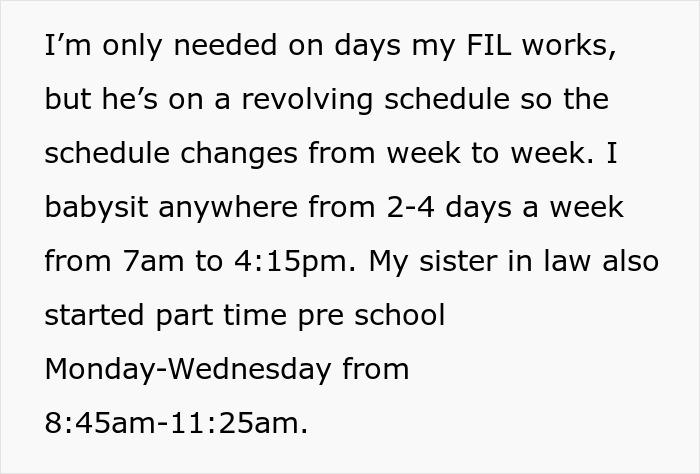
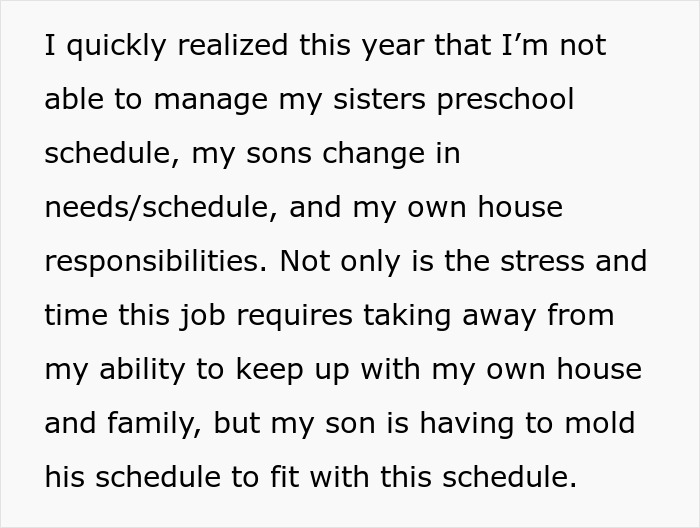
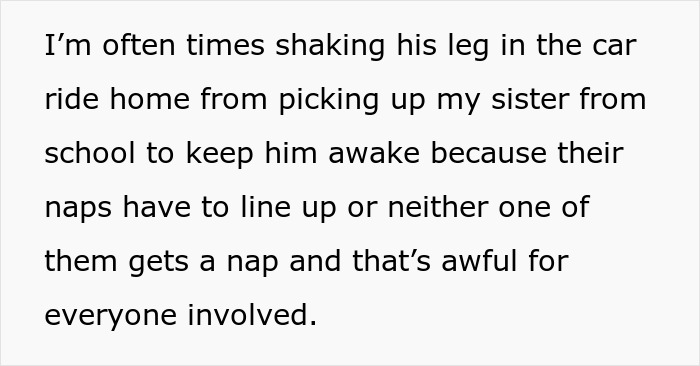
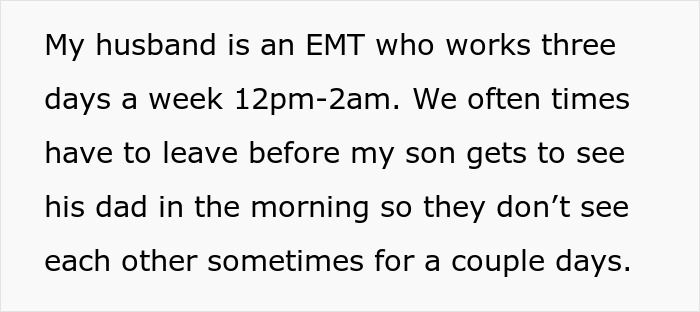
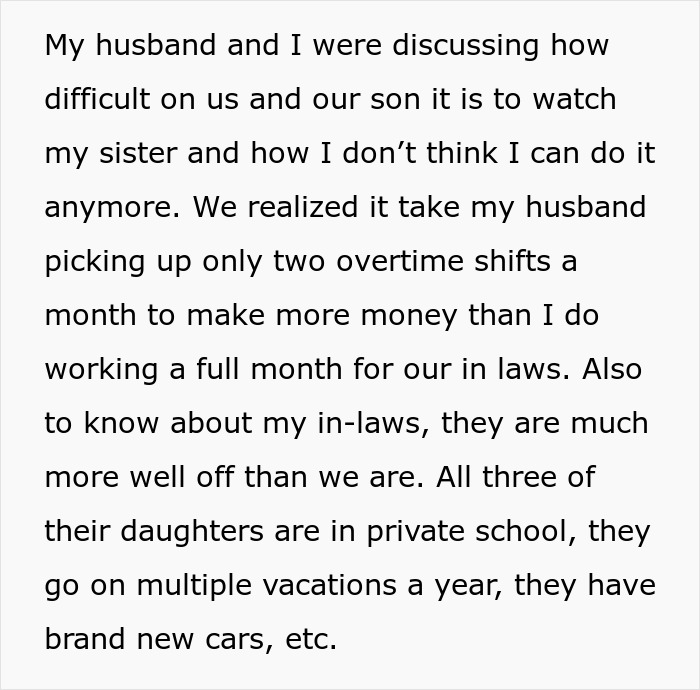
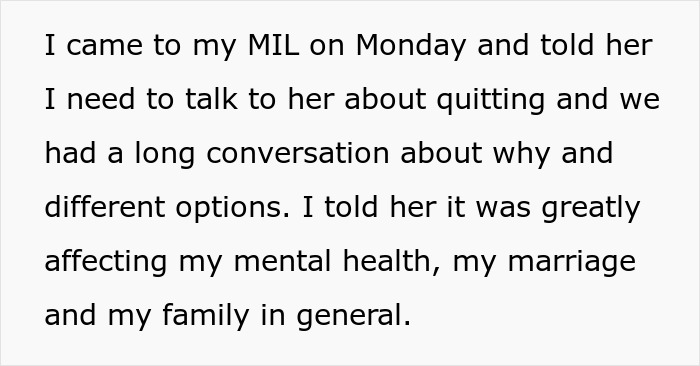
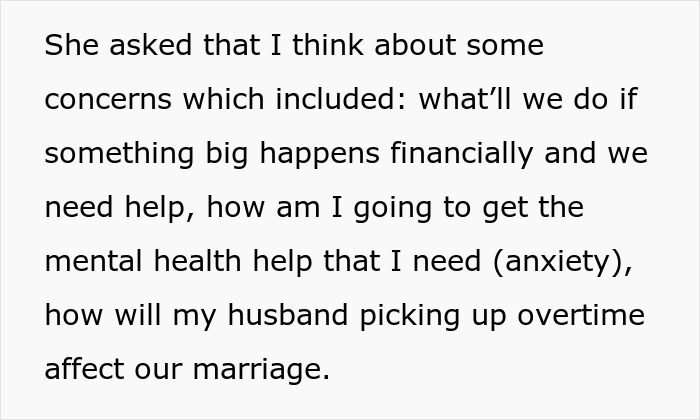
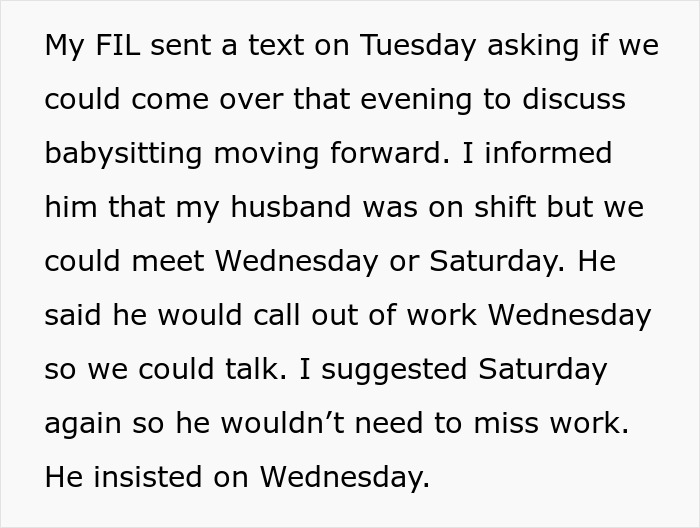
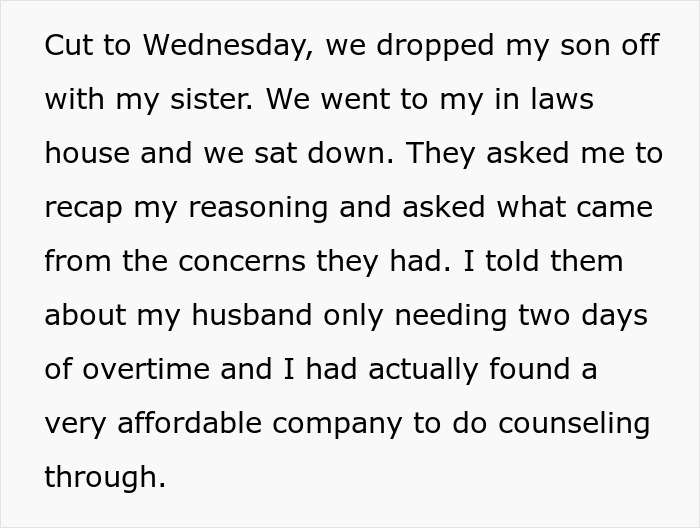
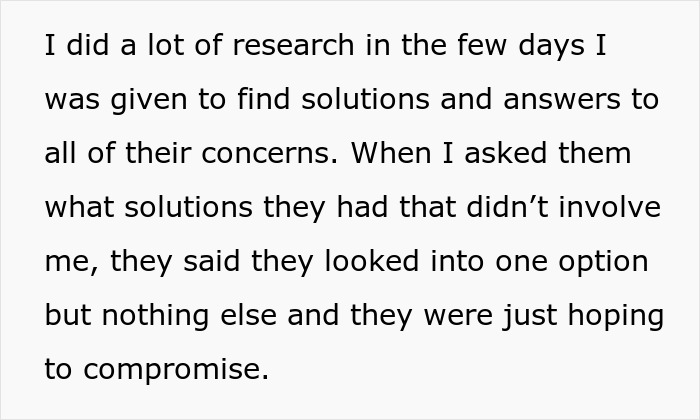
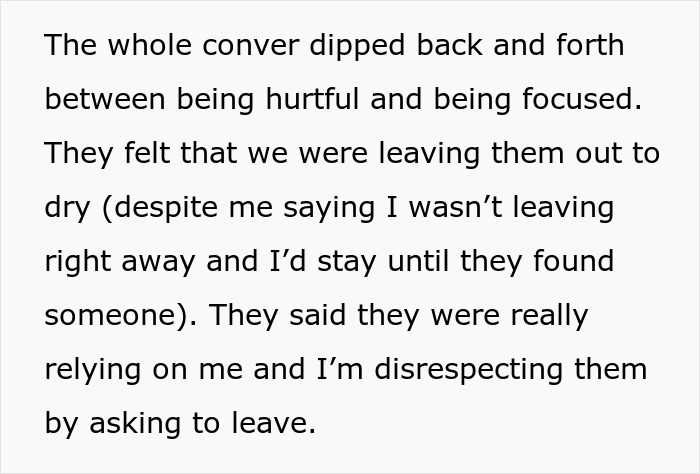
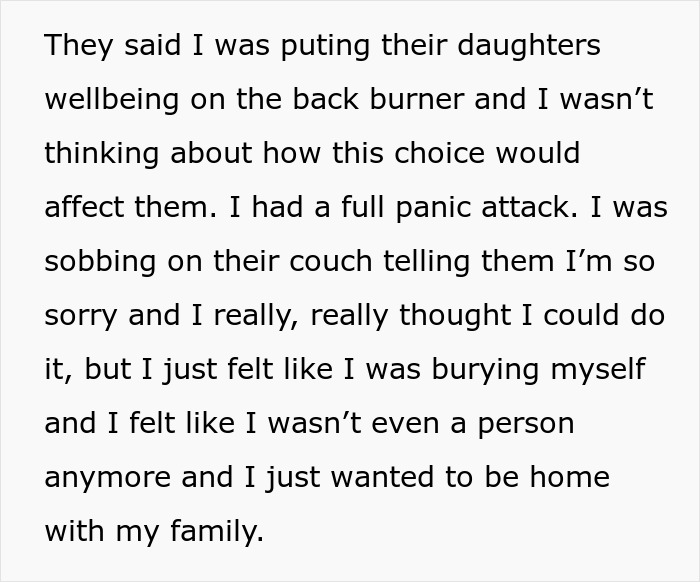
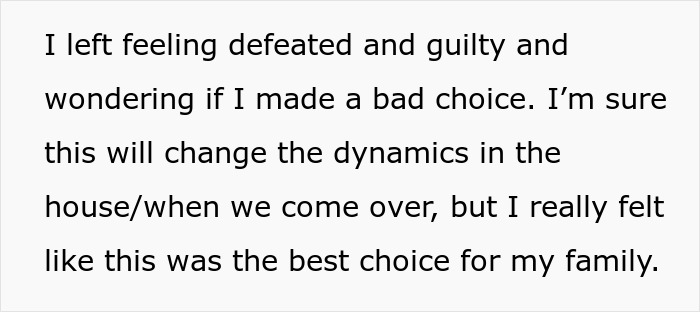
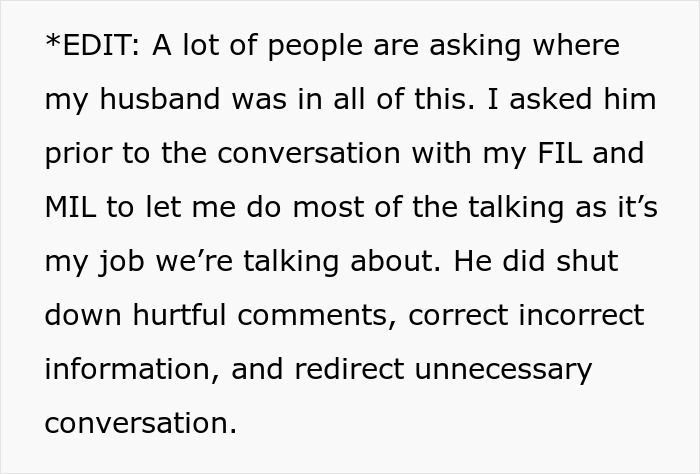
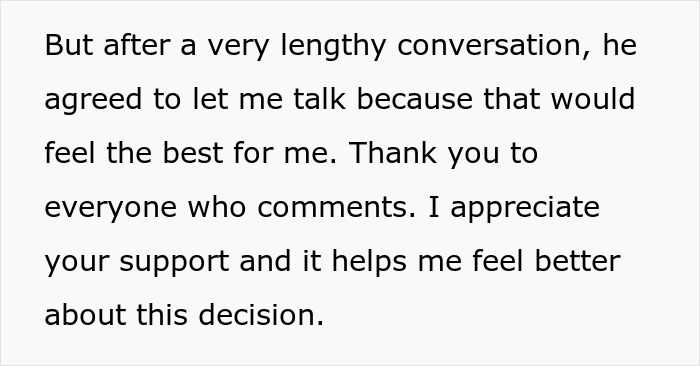
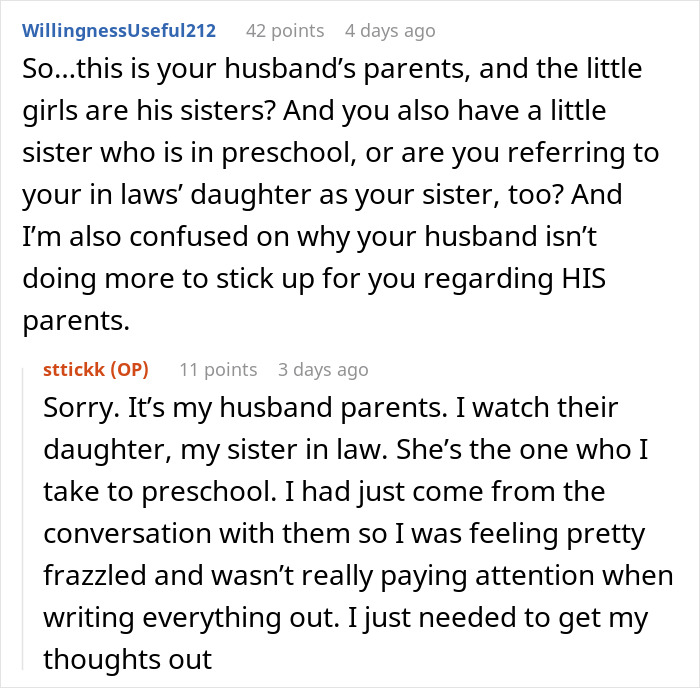
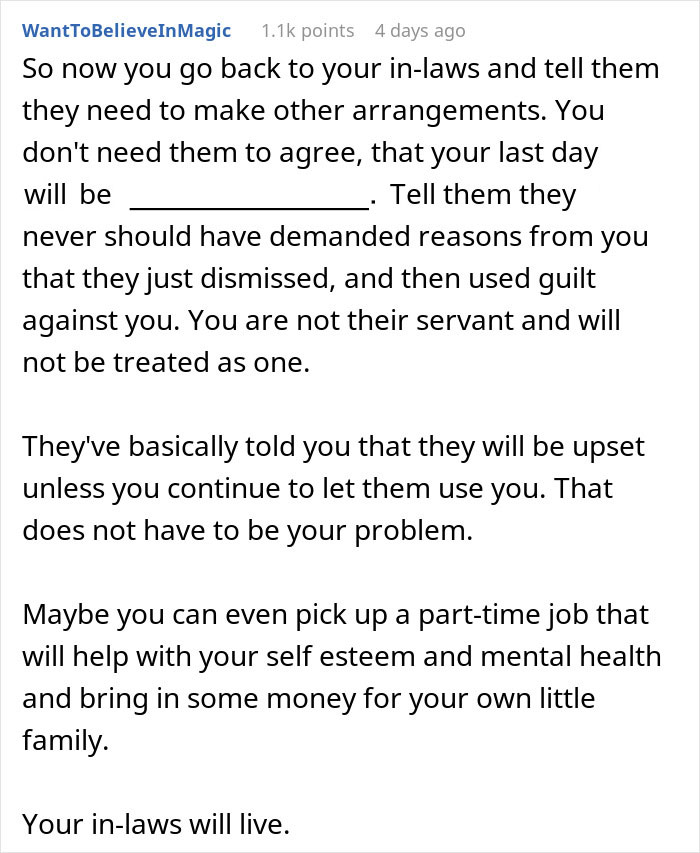
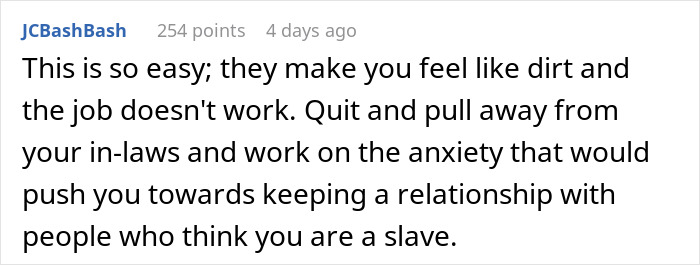
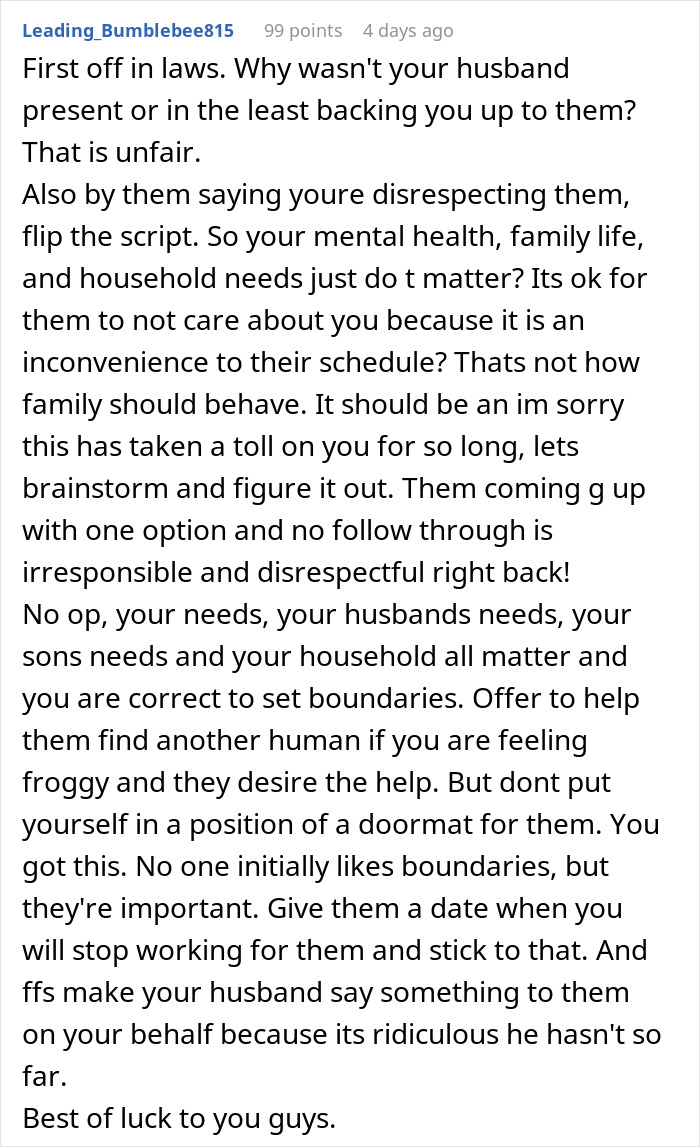
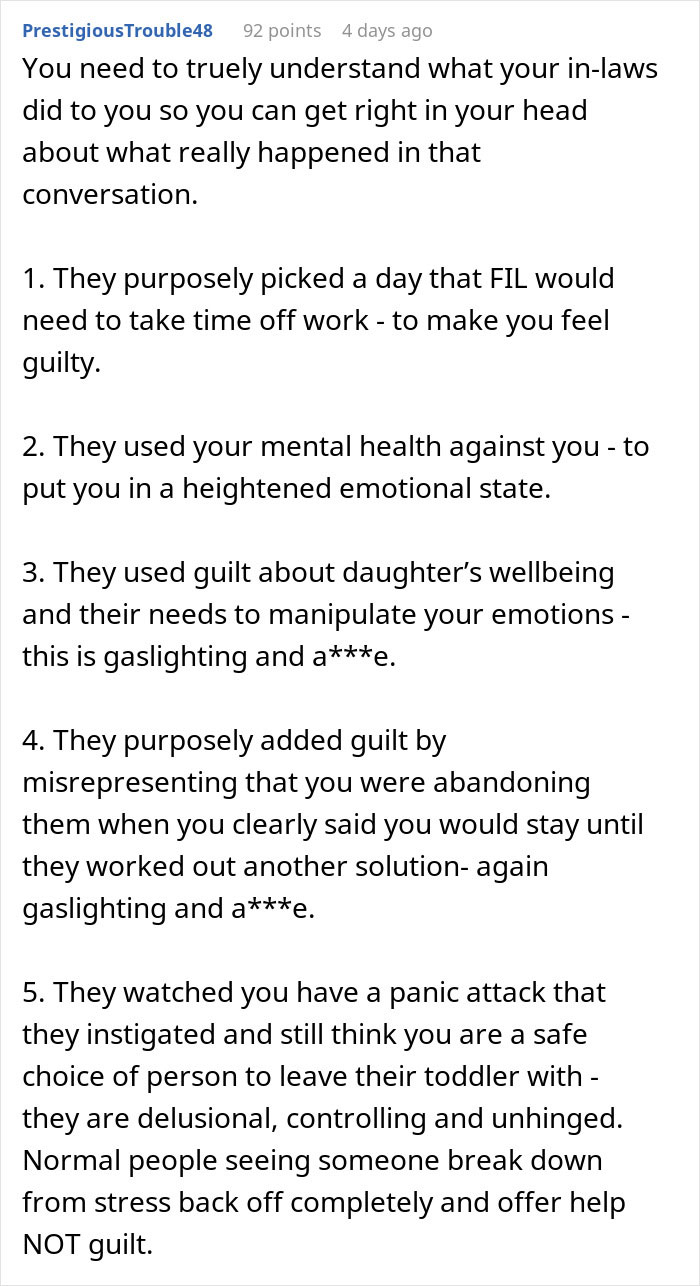
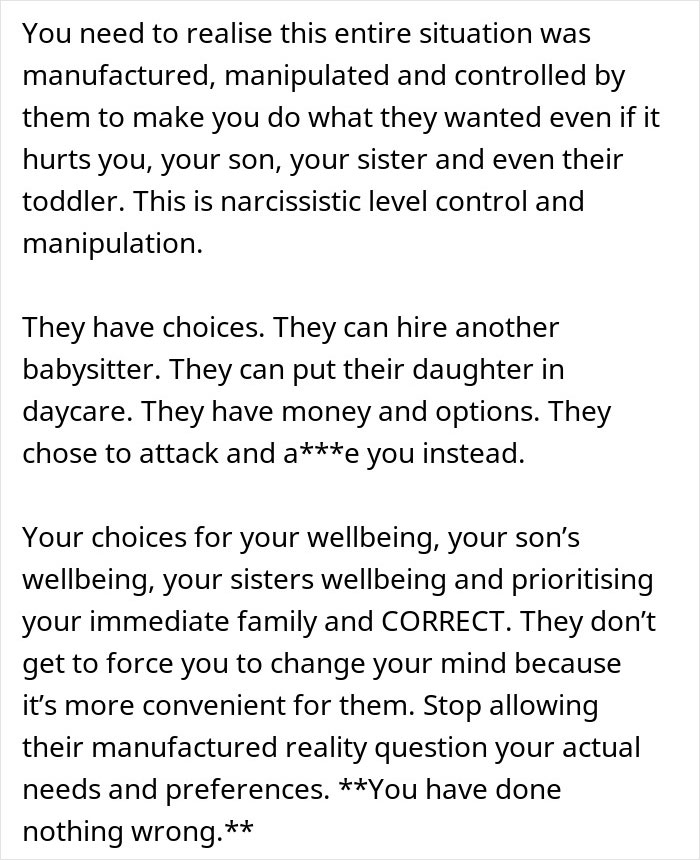
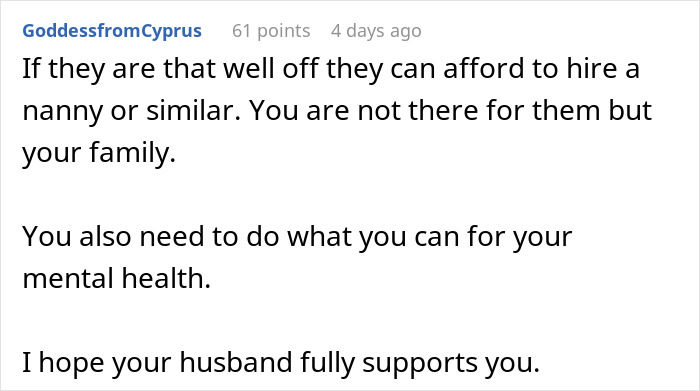
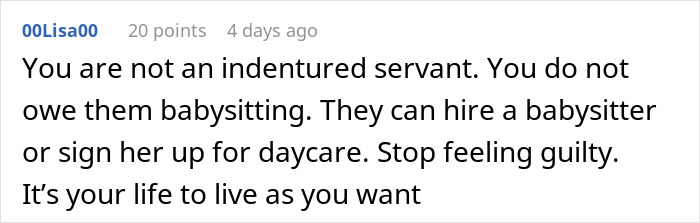
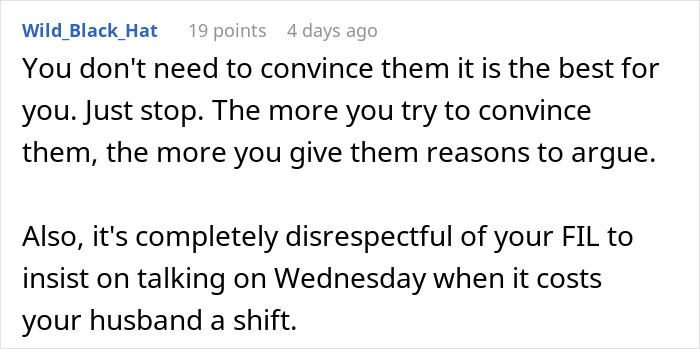
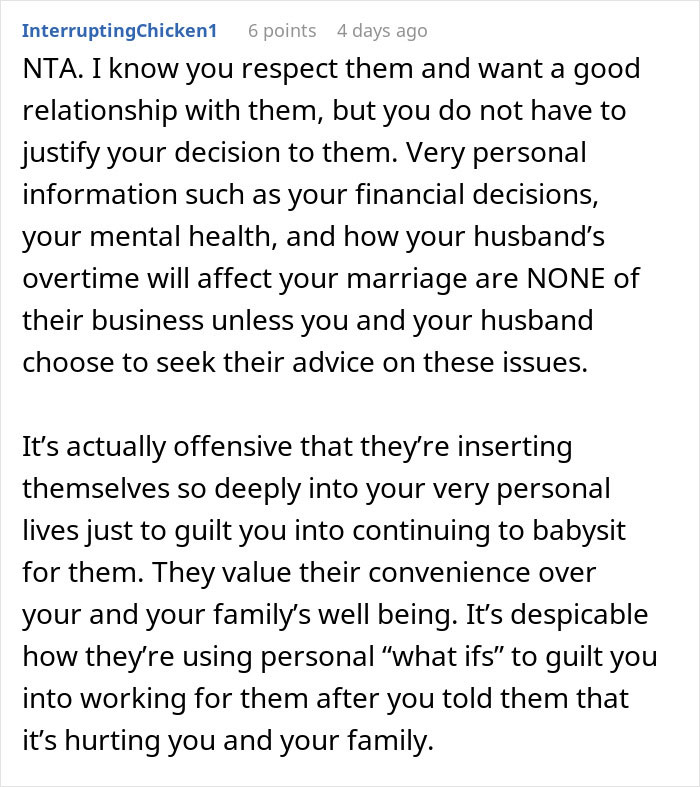
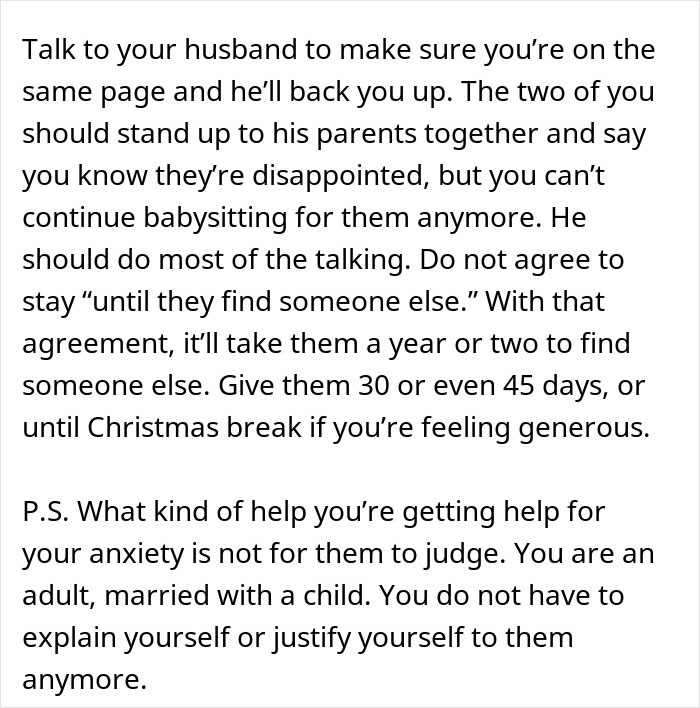
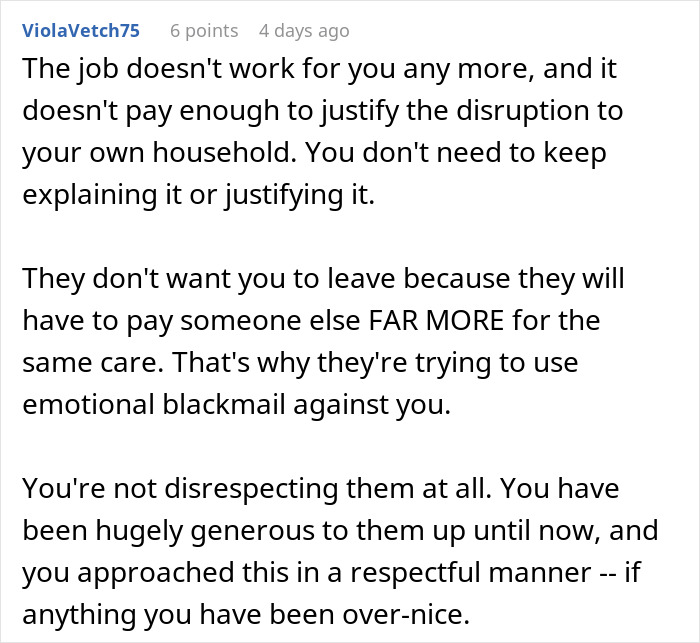
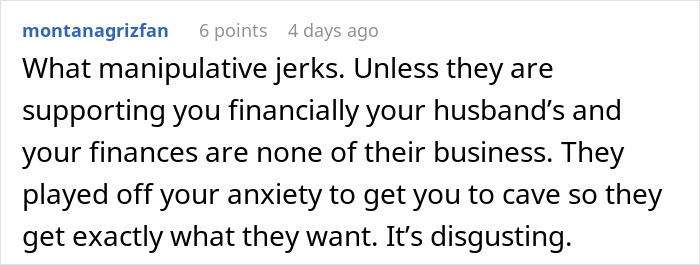
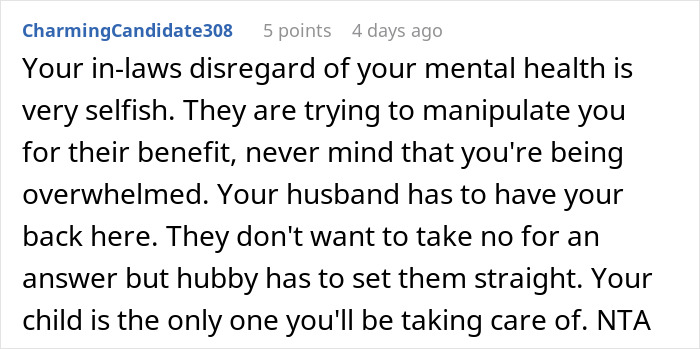
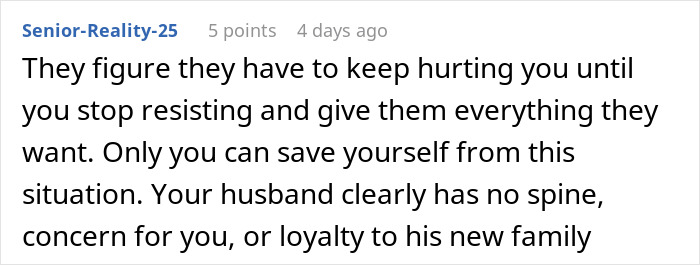
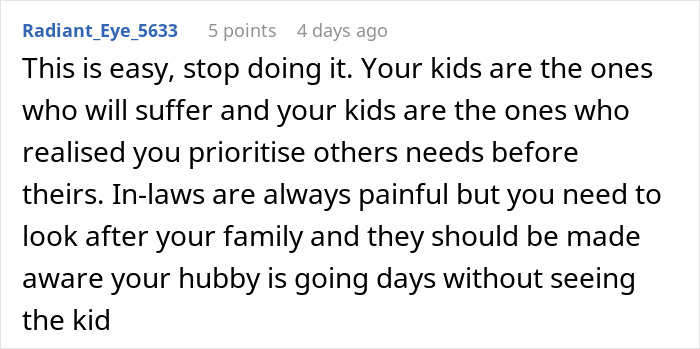
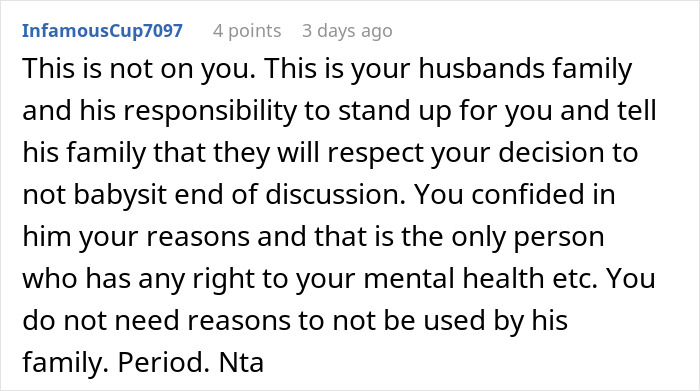
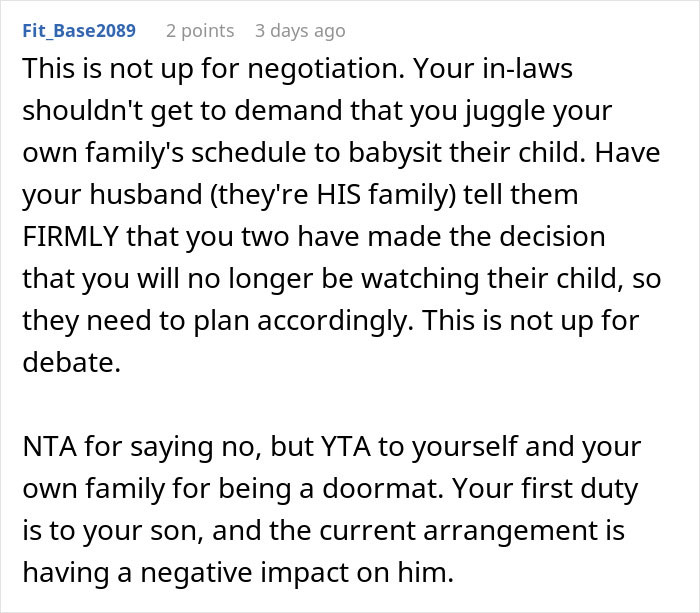
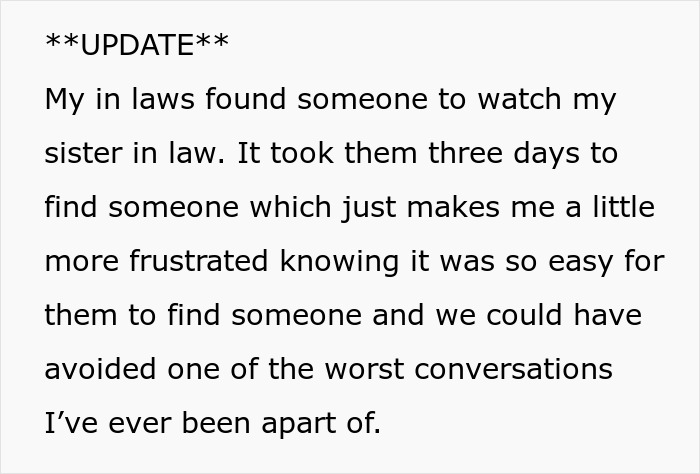
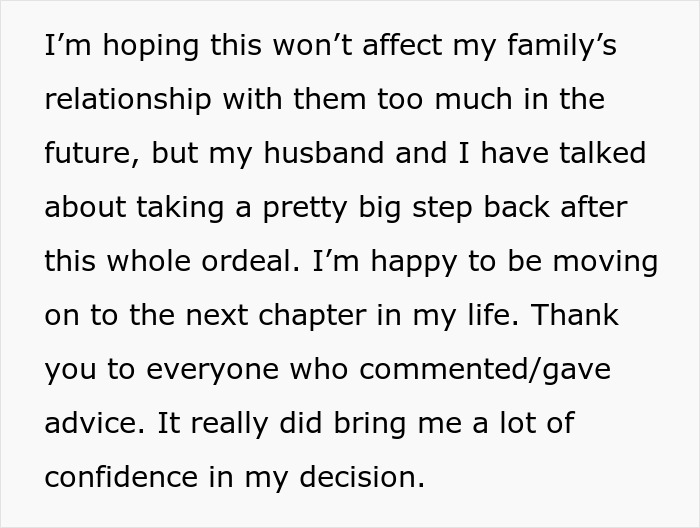
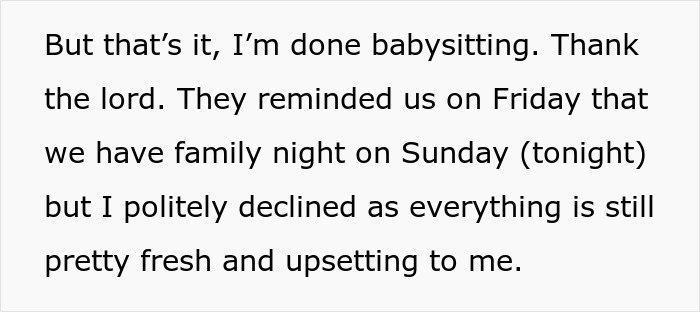
This mom decided it was enough and confronted her in-laws, saying she could no longer do it. But instead of support and understanding, she was met with guilt-tripping and shaming. So, after the interaction, the young mom started wondering whether she was the one who was acting unreasonable and decided to check in with the Internet.
Image credits: Andrea Piacquadio / Pexels (not the actual photo)
Image credits: Sinitta Leunen / Pexels (not the actual photo)
Image credits: Kaboompics.com / Pexels (not the actual photo)
Image credits: Pavel Danilyuk / Pexels (not the actual photo)
Image credits: Yan Krukau / Pexels (not the actual photo)
In our society, children are often the priority. We worry about their safety and emotional well-being over that of their parents. Yet, the mental health of mothers usually gets overlooked. The World Health Organization reports that around 20% of mothers experience postpartum depression.
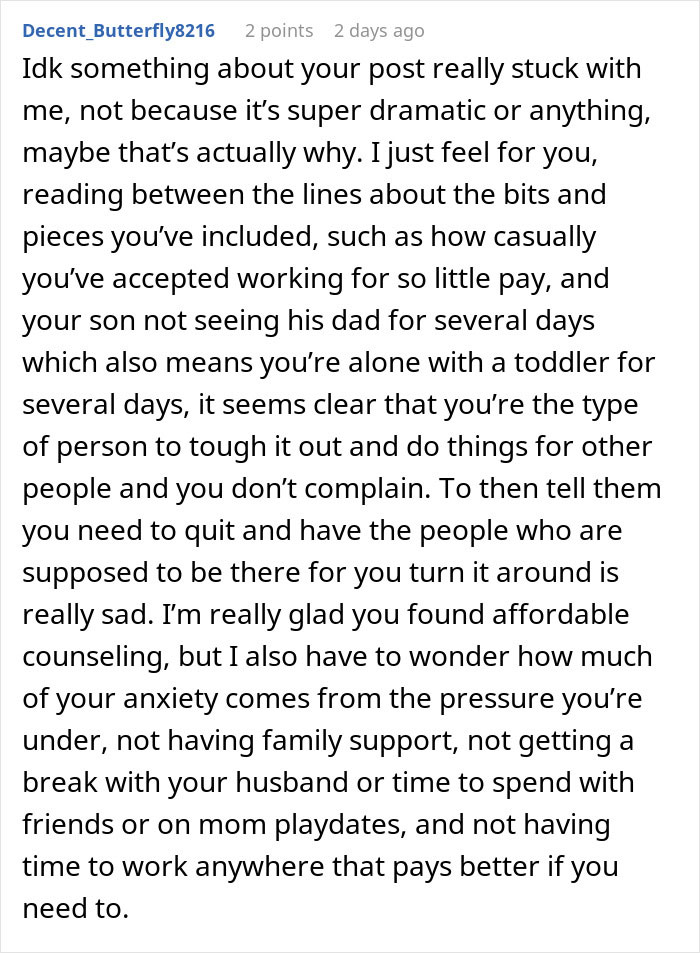
Being a new mom can be especially daunting. According to a 2018 Irish survey, 73% of new moms feel overwhelmed, 62% say they are lonely, and 60% feel anxious. That’s why it’s a bit surprising that the mother in this story is the one providing childcare and not receiving help herself – more than 20% of mothers spend more than four hours a day with their children.
Most mothers receive help from their partners (90%), parents (71%), and siblings (48%). But working as a babysitter for someone else while taking care of your own son who is just under two years old sounds exhausting.
Of course, there are lots of young mothers who work. In the U.S., about 63% of women who have children under the age of six were in the labor force in 2024. But that doesn’t mean they are all right. According to a 2014 Care survey, one in four working moms admitted to crying at least once a week.
The survey also showed that moms spend an average of 80 hours a week on chores, childcare, and housework, while 35% also said they feel like they’re always falling behind. When stress becomes chronic like this, mothers are at risk of burnout.
Dallas-based licensed psychologist Katie Sardone, Ph.D., likens a mother’s energy reservoir to a bank account. “You hit your limit and you keep going, and once you overdraft, there are fees and fines, and you’re going into debt. It takes so long for people to see that they are in the red.”
Image credits: David Garrison / Pexels (not the actual photo)
Parental burnout for mothers is often called Depleted Mother Syndrome. It’s not just feelings of overwhelm, exhaustion, and tiredness, but is also accompanied by feelings of worry and guilt. It might be just what the mother in this story is experiencing.
“Mom guilt” is a very real thing. As functional medicine specialist Melissa Young, MD, explains to the Cleveland Clinic, it’s what moms feel when they don’t live up to people’s expectations of what it means to be a parent.
“There are so many subtle — and not-so-subtle — triggers in our society that pressure us into thinking we should be able to ‘do it all,'” Young says. “But there aren’t enough hours in the day to do everything you think you should be doing. The math doesn’t compute.”
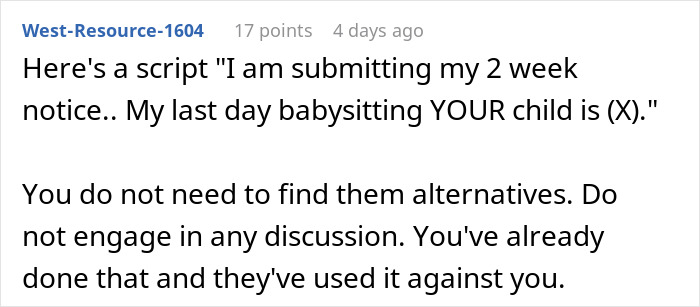
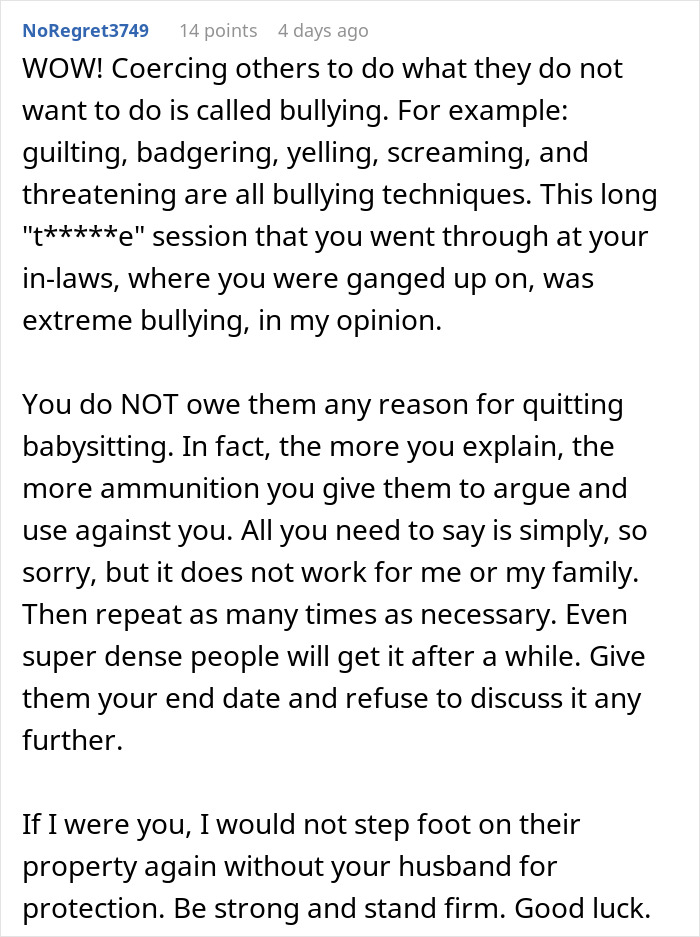
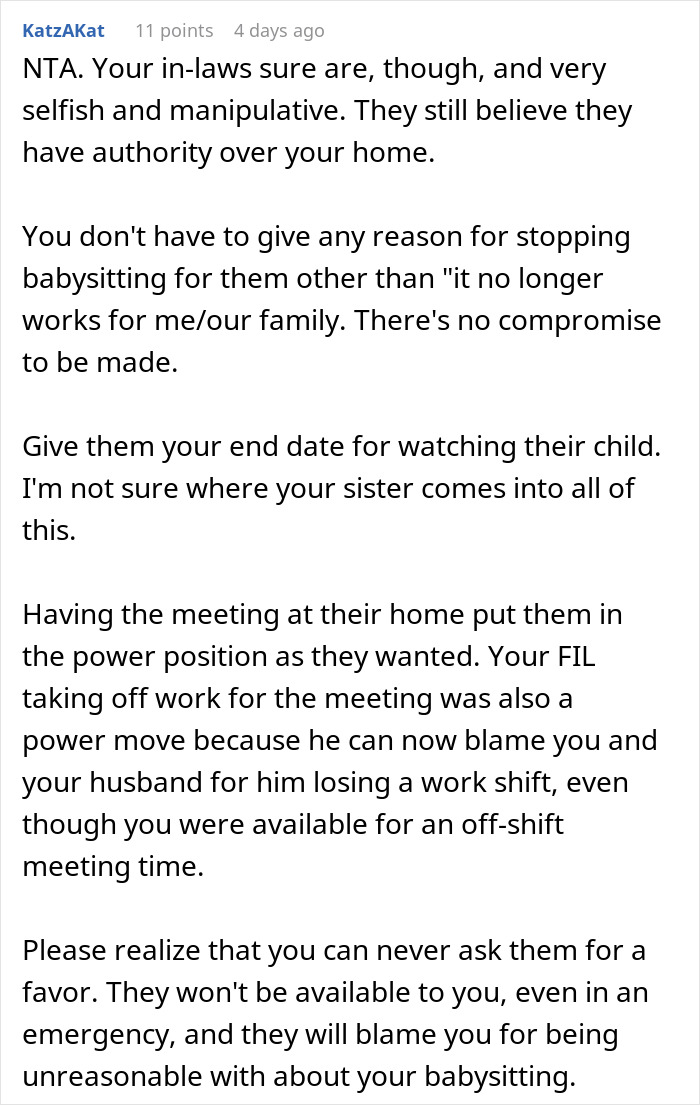
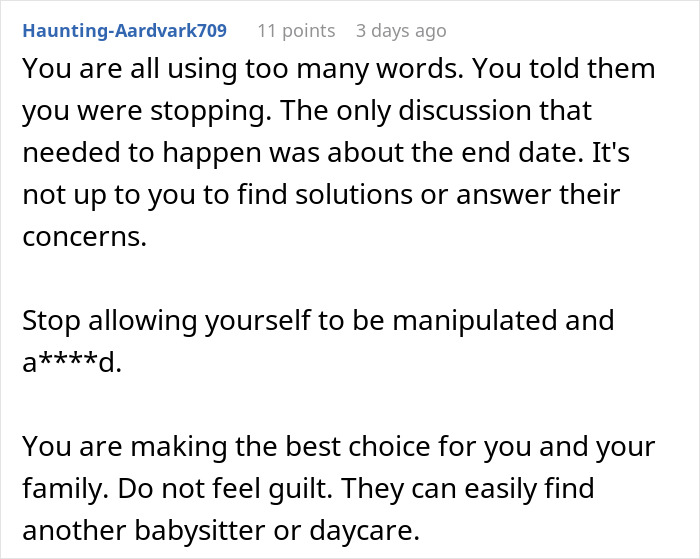
So, how can moms take better care of themselves without being cast out as selfish, branded as bad mothers, or jeopardizing family relationships? Learning to say “no” is a big part of protecting your mental health as a mother and even the well-being of your kids.
Mental health experts note that saying ‘No’ is actually an exercise in self-care. “Boundaries tell others how far they can go, which protects us,” clinical psychologist Aura De Los Santos told Parents. “When we say ‘no,’ it helps us avoid situations in which we may later feel uncomfortable or have a bad attitude. It does not make us look bad to others.”
In the long run, it also sets a good example for children. Seeing how their parents can firmly say “no” reinforces the notion that setting boundaries is okay at any age.
Image credits: sttickk
Image credits: Alina Matveycheva / Pexels (not the actual photo)
Image credits: sttickk

By entering your email and clicking Subscribe, you're agreeing to let us send you customized marketing messages about us and our advertising partners. You are also agreeing to our Privacy Policy.
Thank you! You've successfully subscribed to newsletters!


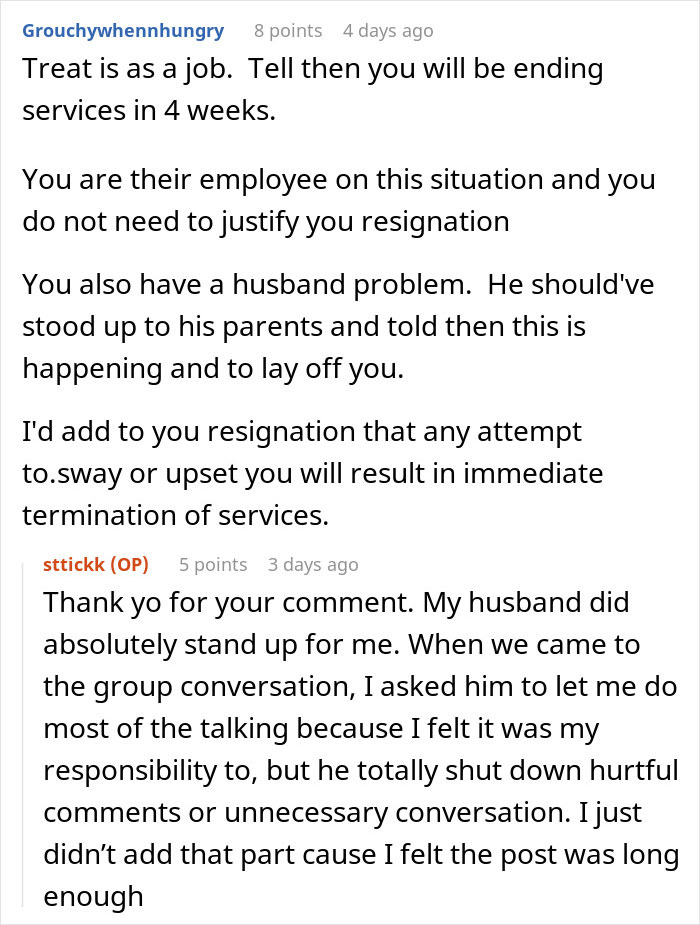
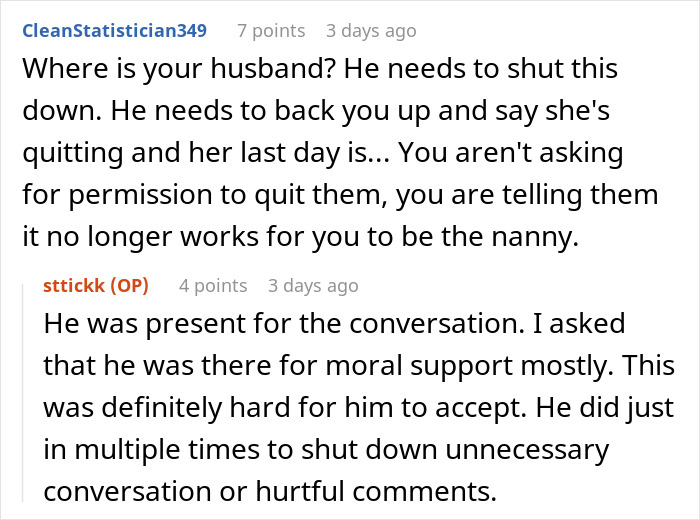
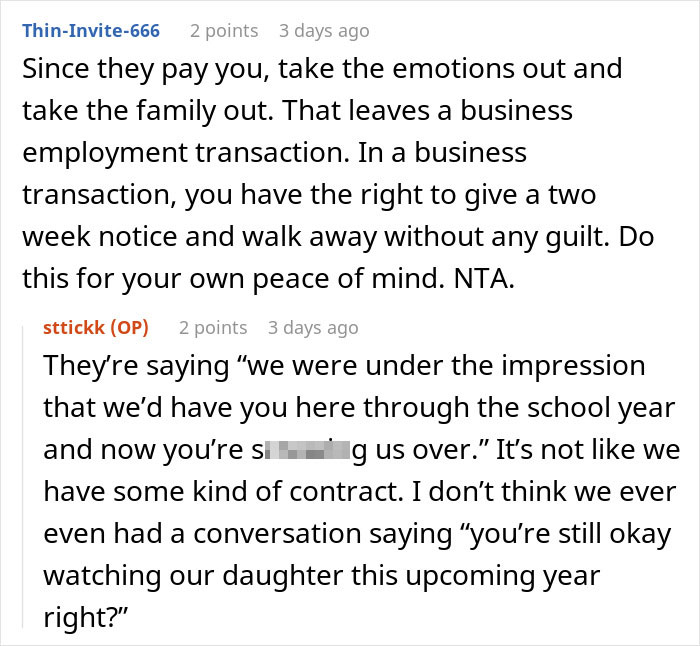
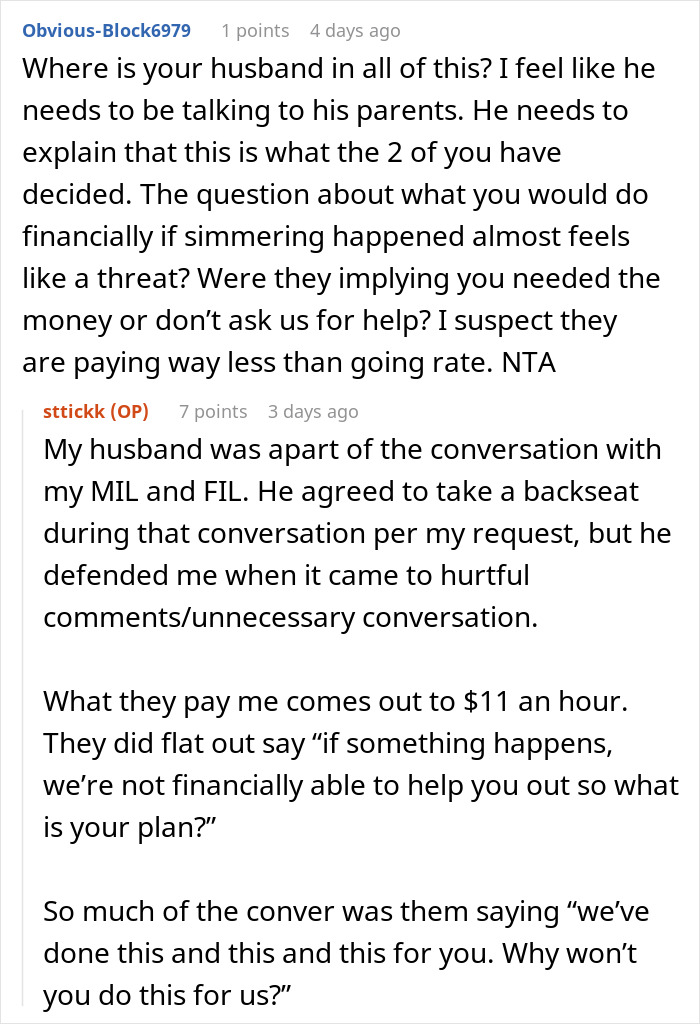
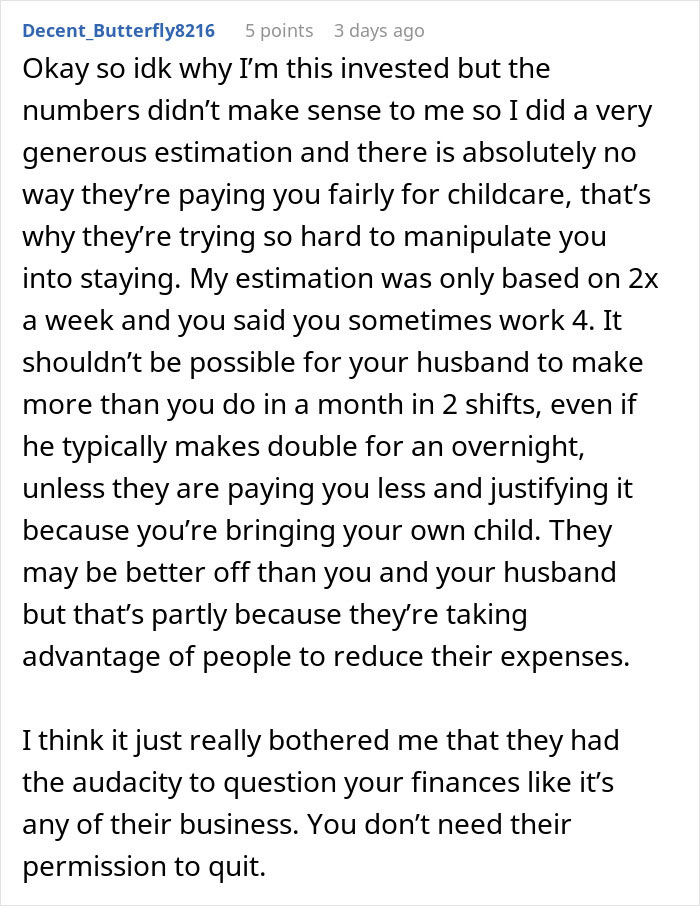
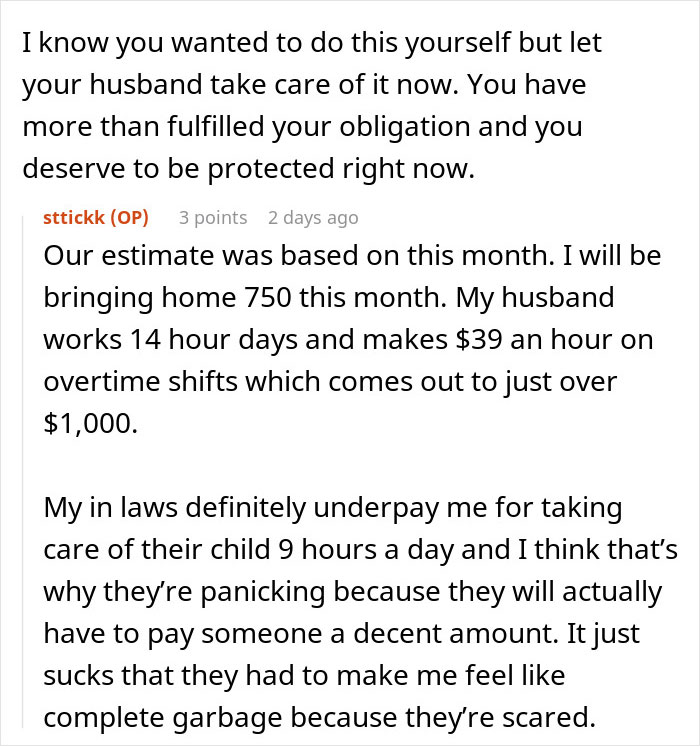
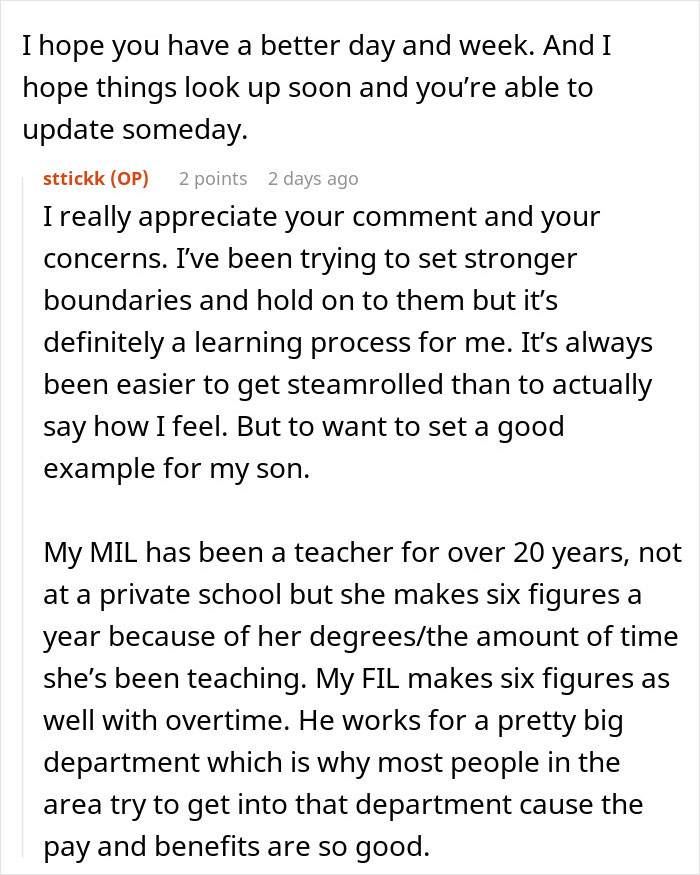
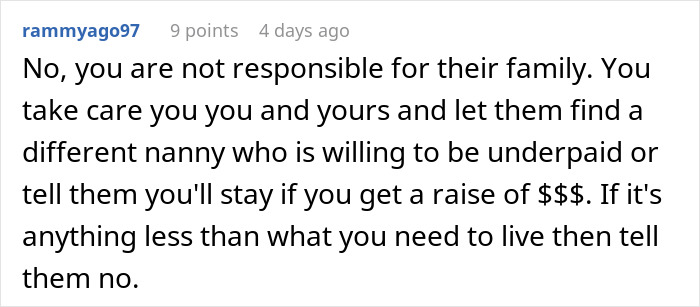
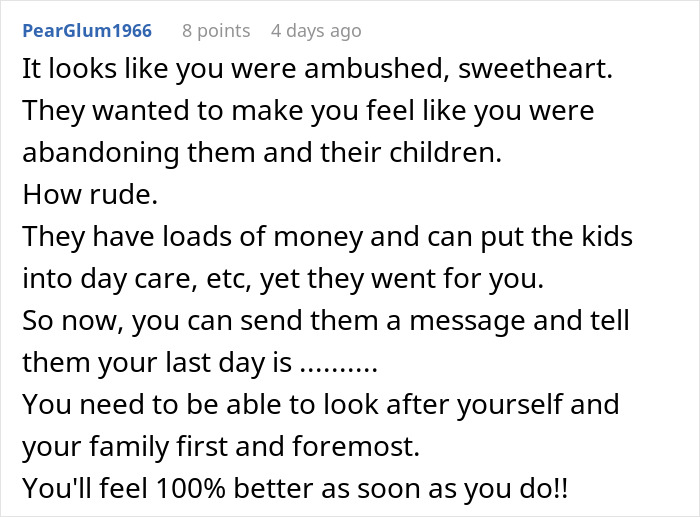
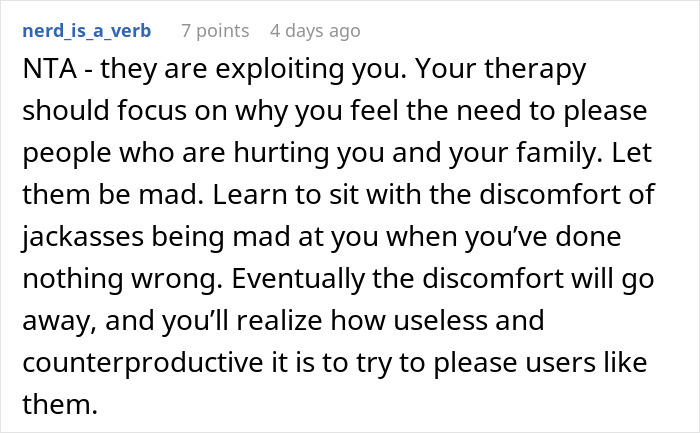
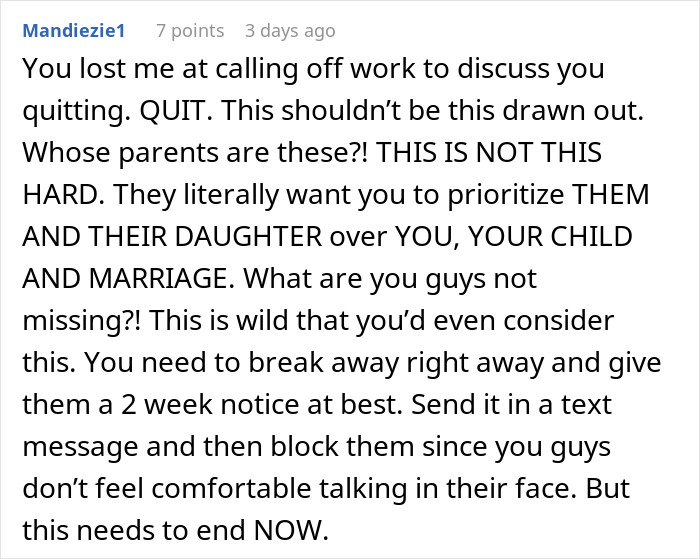
If they’ve been paying just $11/hour all this time, then they have been doing absolutely nothing for this woman, the mother of their grandchild. Why would they want to cheat their own son’s family like this? They sound warped.

The garbage in laws need to be put in a time out. What total AHs they are. Totally selfish and inconsiderate. I'd give them a nice long break.
If they’ve been paying just $11/hour all this time, then they have been doing absolutely nothing for this woman, the mother of their grandchild. Why would they want to cheat their own son’s family like this? They sound warped.
The garbage in laws need to be put in a time out. What total AHs they are. Totally selfish and inconsiderate. I'd give them a nice long break.


























 No fees, cancel anytime


















38
13