Get Premium
Dark mode theme is available exclusively for premium users. Learn more about the benefits of subscribing.
No fees, cancel anytime.

 Dark Mode Ad-Free Browsing Unlimited Content
 Ad-Free Browsing Unlimited Content Dark Mode
Join 1.2 million Panda readers who get the best art, memes, and fun stories every week!

Being around family can be both a blessing and a challenge. They’re the ones who have your back, help you out, and sometimes even go out of their way for you. But occasionally, they cross lines, test your patience, or even try to take advantage of you.
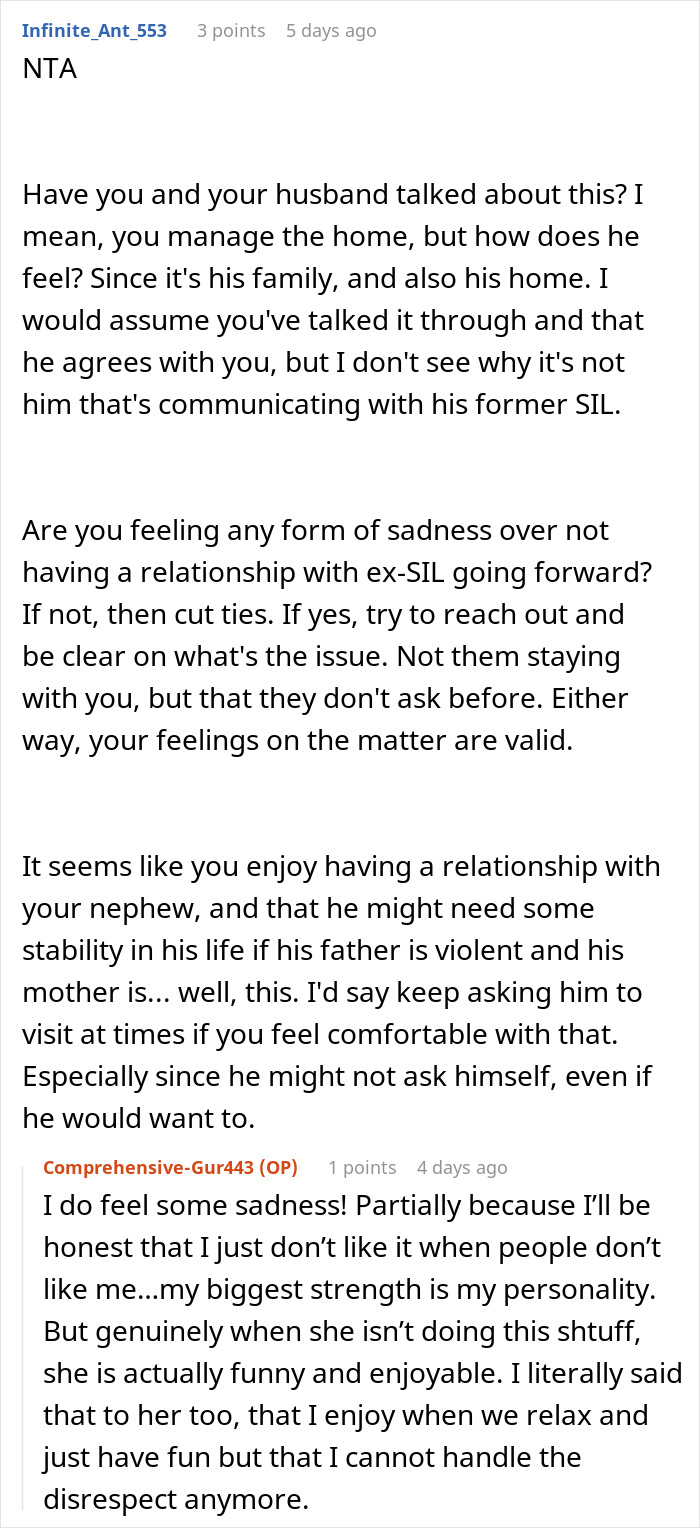
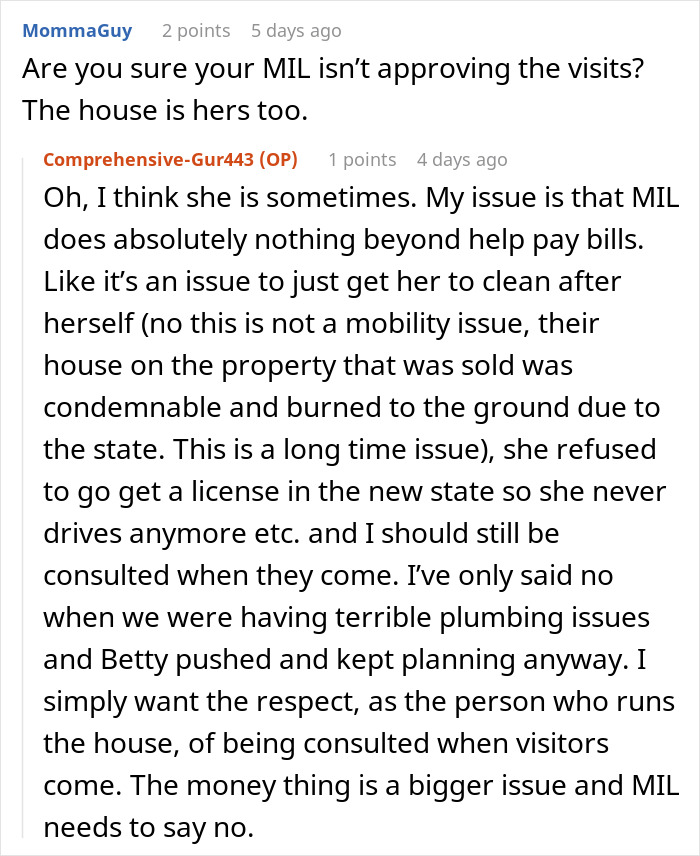
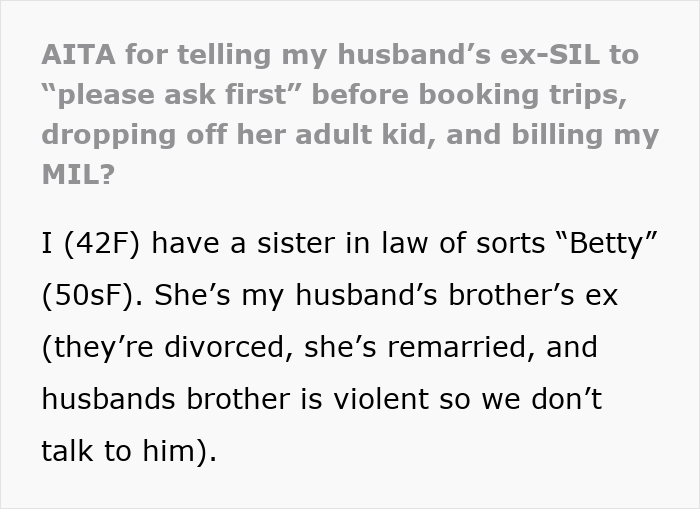
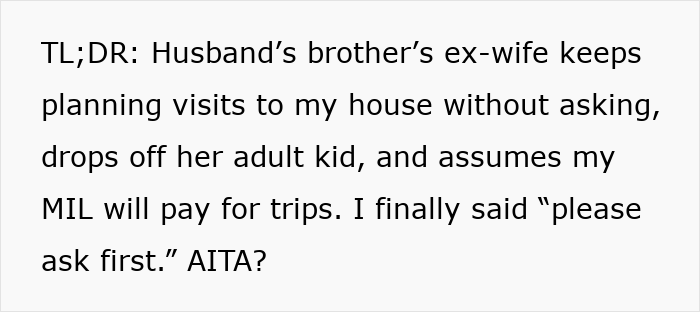
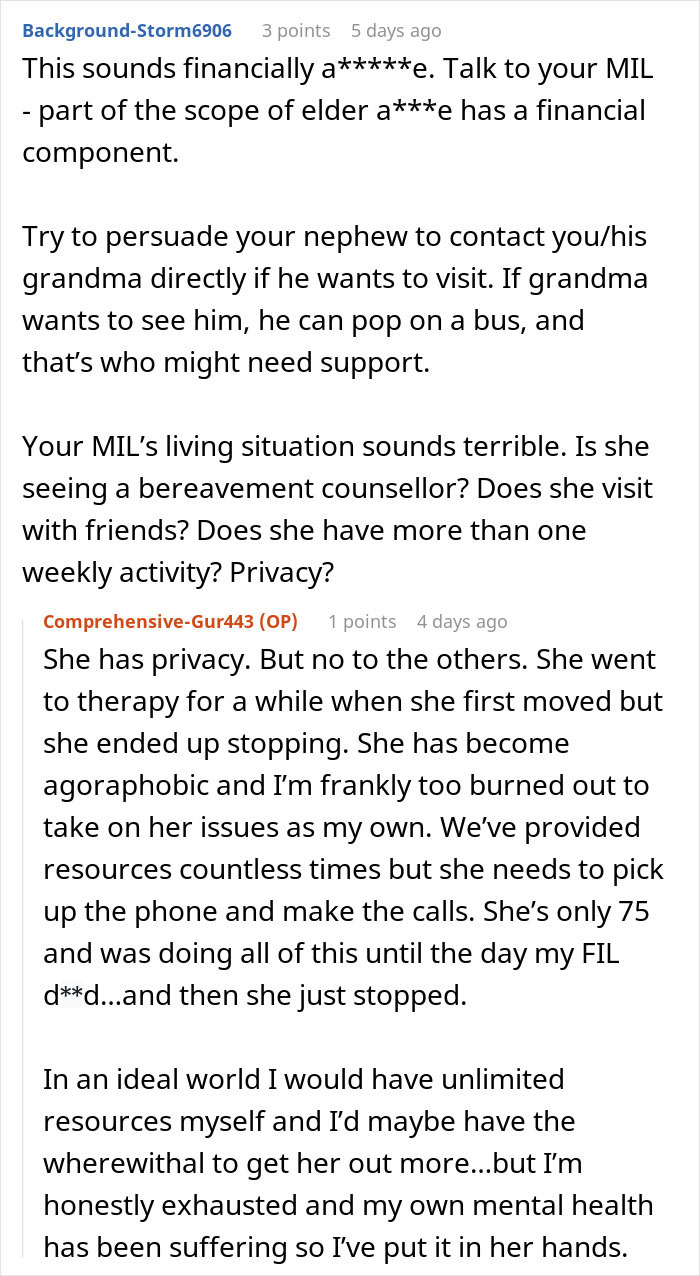
Case in point: a woman shared how her ex-sister-in-law repeatedly showed up at her house without consulting her. Her mother-in-law lived with them, and the ex-SIL would arrive with her 23-year-old son, expecting the author to host them and sometimes even expecting her mother-in-law to pay for vacations. Past efforts to stay polite only seemed to encourage more uninvited visits and assumptions. After years of letting things slide, the woman decided enough was enough. Keep reading to see how the woman finally confronted her ex-SIL.
Image credits: A. C. (not the actual photo)

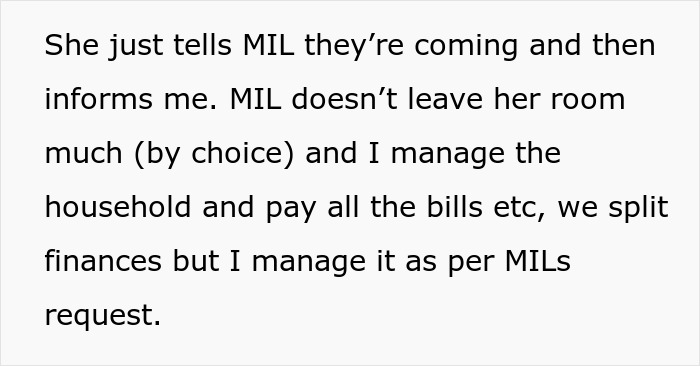
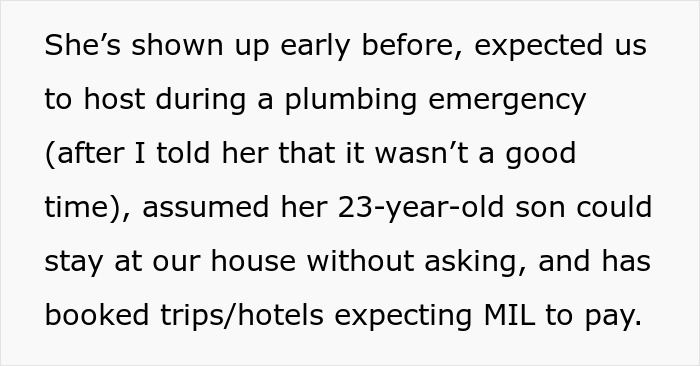
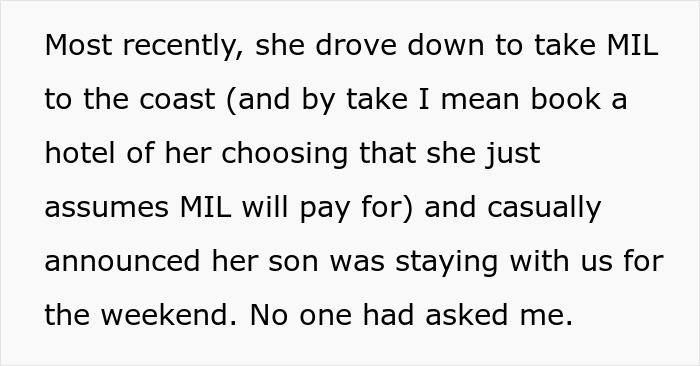
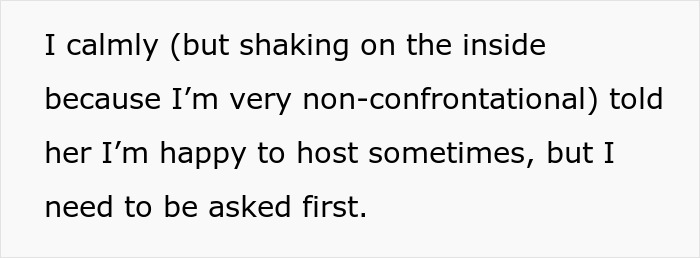
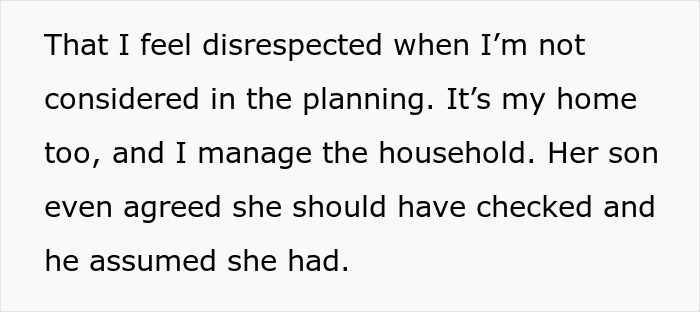

Image credits: Curated Lifestyle (not the actual photo)


Image source: Comprehensive-Gur443
Image credits: Curated Lifestyle (not the actual photo)
We often go out of our way for family. Whether it’s helping a brother move to a new house, babysitting a niece or nephew at the last minute, or running errands for a parent, family members usually step up when someone needs help. It feels good to be needed, and there’s a sense of satisfaction knowing you’ve made a difference. But giving too much without thought can also become exhausting. While family support is wonderful, it’s easy to slip into patterns where your generosity is expected rather than appreciated. Over time, constantly saying “yes” without limits can affect your energy, focus, and peace of mind. That is why it’s important to have boundaries, as they help ensure that family support doesn’t come at the cost of your well-being.
Setting boundaries may feel harsh or even uncomfortable at first, especially when it comes to family. But remember: boundaries aren’t about pushing people away; they’re about protecting yourself. Clear limits help relationships thrive. They create a framework where giving and receiving support feels fair, healthy, and respectful.
Catherine A. Sanderson, a psychology professor at Amherst College, explained in a piece for The New York Times that setting limits is a way of taking care of yourself while maintaining healthy relationships. She says, “When we set limits or boundaries for ourselves, we are drawing a line between our needs and those of other people—and this helps us maintain healthy relationships.” Essentially, boundaries are a tool for self-respect. They help you communicate what works for you and what doesn’t. By doing so, you make space for relationships that feel good rather than draining.
When we don’t set boundaries, we risk letting small frustrations pile up until we “explode” emotionally. According to Dr. Sanderson, ignoring your needs in relationships leads to built-up tension, resentment, and stress. Often, others aren’t capable of giving us exactly what we want or may not even realize when they’re crossing a line. That’s where boundaries become critical. They allow us to maintain relationships without feeling depleted. Instead of shutting people out or suppressing your feelings, boundaries give you a clear framework for healthy interaction. They help you protect your energy while still staying connected.
Image credits: Getty Images (not the actual photo)
Time is one of your most valuable resources, and boundaries around it are essential. Professionally, this might mean creating a clear work-life balance: separating work hours from personal time to avoid burnout. In family life, it’s about making sure your schedule isn’t hijacked without warning. Yes, helping out in emergencies is fine, but it shouldn’t become a pattern where you’re expected to cancel your plans or drop everything. Time boundaries are about respect: respecting your own schedule and teaching others to do the same. By being clear about when you’re available and when you’re not, you reduce stress and maintain control over your own life.
Boundaries aren’t just about time—they’re about possessions too. It’s fine to lend things occasionally, but family and friends need to respect your rules. Your things shouldn’t be borrowed endlessly, returned damaged, or assumed to be free. Money is another area that requires clear boundaries. Lending or covering expenses is okay when it’s agreed upon, but it shouldn’t become an expectation or habit. Material boundaries show respect for personal property and financial responsibility. They prevent conflict and help everyone understand what’s acceptable.
In any relationship (family, friends, or romantic), respecting individuality is key. Having clear guidelines about what’s okay and what isn’t can prevent common relationship pitfalls like codependency, constant misunderstandings, and emotional burnout. For instance, if a friend or family member knows that you can’t drop everything for them on short notice, they’re less likely to take advantage of your time or energy. These guidelines help keep trust intact because everyone understands each other’s limits, maintains clarity about expectations, and promotes mutual respect.
Finally, emotional boundaries are essential too. Don’t let people exploit your feelings or guilt you into doing things you’re uncomfortable with. Your emotions are yours to protect. Emotional boundaries mean recognizing when someone is overstepping and responding in a way that preserves your well-being. Saying “no” doesn’t make you unkind; it makes you self-aware. Emotional boundaries help you stay connected without feeling drained, ensuring that your relationships remain healthy, balanced, and supportive.
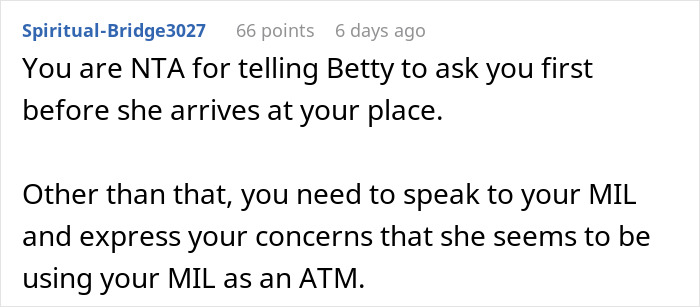
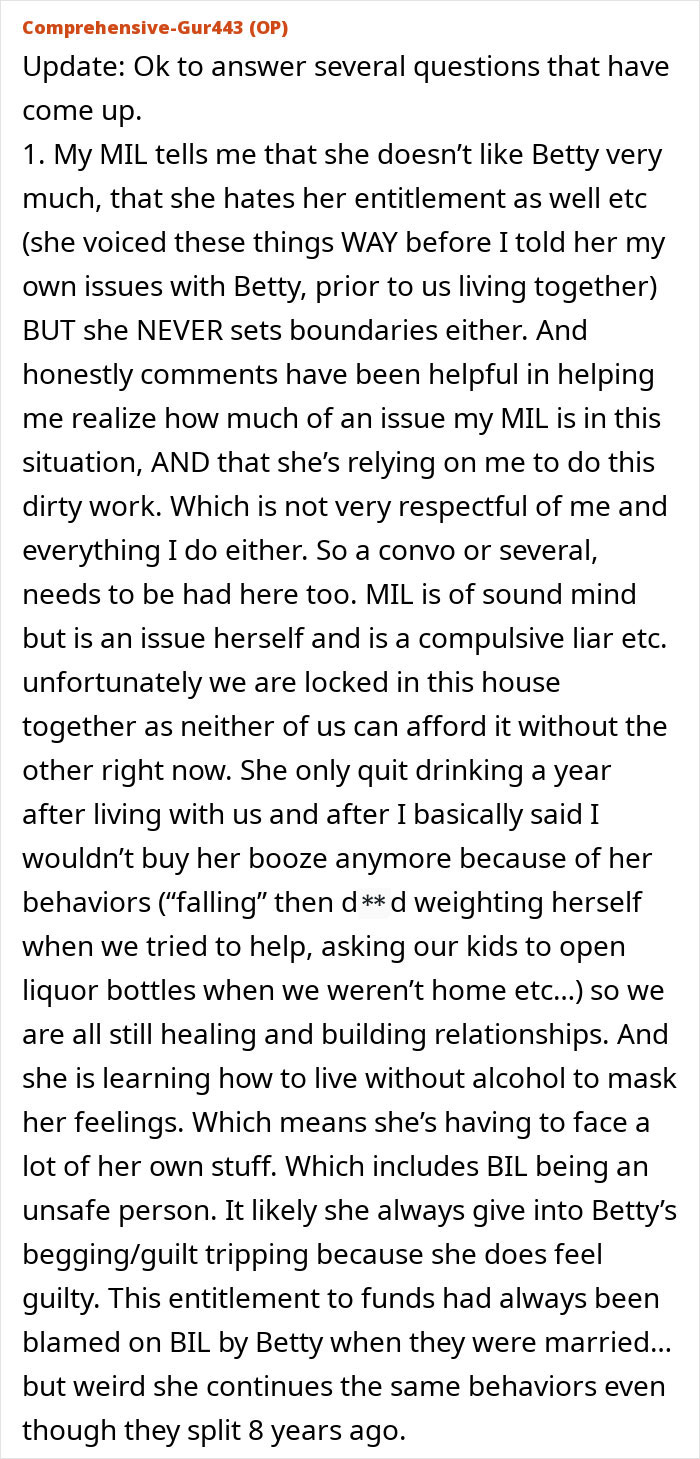
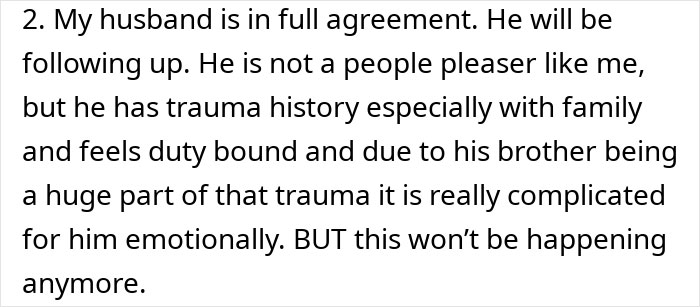
In this situation, it really seemed like the ex-sister-in-law was crossing the line. She kept showing up at the author’s home unannounced, expecting to be hosted, and even brought her 23-year-old son along without checking if it was okay. On top of that, she appeared to be taking advantage of her mother-in-law financially, assuming she would cover vacation costs. It’s easy to see why the author felt frustrated and disrespected—after all, it’s her home, and she manages the household.
We’d love to hear from you: when family members overstep like this, how do you handle it? Do you think the author was right to set boundaries, or could she have handled it differently? Share your thoughts and experiences—we’re curious how you would deal with a situation like this!

















By entering your email and clicking Subscribe, you're agreeing to let us send you customized marketing messages about us and our advertising partners. You are also agreeing to our Privacy Policy.
Thank you! You've successfully subscribed to newsletters!


Sounds like that problem sorted itself out. I'd even reinforce it for her by saying, "You know Betty, you're right, I don't like you. You're invasive and entitled and rude. So if that means you won't come to visit anymore, then YAY!"

Super weird that OP "manages the household" despite there being 3 adults. No wonder MIL doesn't choose to come out of her room much. Just because part of your chores split is paying bills doesn't mean you are the only one that gets to decide visitors. The issue isn't with the SIl, it's with the MIL, who has guests without discussing with other housemates.

There's: I do like you, but I don't like how you behaved on this. (Drop by unannounced and expect to be served.) Then there's the optional: No, I don't like you. I don't have to like you. No one can force or demand me to like anyone. You can ask and expect to be treated with respect and decency by me and we can try to grow closer to each other, but that takes efforts from both sides. Never blame me or anyone else for not liking you, that's a matter of taste and tastes differ.
Sounds like that problem sorted itself out. I'd even reinforce it for her by saying, "You know Betty, you're right, I don't like you. You're invasive and entitled and rude. So if that means you won't come to visit anymore, then YAY!"
Super weird that OP "manages the household" despite there being 3 adults. No wonder MIL doesn't choose to come out of her room much. Just because part of your chores split is paying bills doesn't mean you are the only one that gets to decide visitors. The issue isn't with the SIl, it's with the MIL, who has guests without discussing with other housemates.
There's: I do like you, but I don't like how you behaved on this. (Drop by unannounced and expect to be served.) Then there's the optional: No, I don't like you. I don't have to like you. No one can force or demand me to like anyone. You can ask and expect to be treated with respect and decency by me and we can try to grow closer to each other, but that takes efforts from both sides. Never blame me or anyone else for not liking you, that's a matter of taste and tastes differ.

































 No fees, cancel anytime












32
9