Get Premium
Dark mode theme is available exclusively for premium users. Learn more about the benefits of subscribing.
No fees, cancel anytime.

 Dark Mode Ad-Free Browsing Unlimited Content
 Ad-Free Browsing Unlimited Content Dark Mode
Join 1.2 million Panda readers who get the best art, memes, and fun stories every week!
I have always been fascinated by the stories of animals in wartime, both those in service and those used as mascots and companions. The photos I’ve colourised show a mixture of the two, and whilst some of the animals are undoubtedly heroes for the part they played, it is hard to forget that they are also victims of human war, and no animals had a choice to be there.
I live very close to the base of the Defence Animal Training Regiment near Melton Mowbray, Leicestershire, England which still to this day trains military working dogs and horses. Each year for Remembrance Sunday the Royal Army Veterinary Association will take part in a parade through the town, making sure the animal sacrifices of wars past and present are not forgotten.
I colourise photos as a way of creating a new interest in these images, some of which are over 100 years old. I hope to highlight the contributions made by these animals, some of whom were later recognised officially by means of the Dickin Medal, awarded 54 times between 1943 and 1949, to 32 pigeons, 18 dogs, 3 horses, and a ship cat.
I believe colourising can be a useful means of starting a conversation or sparking the interest of those put off by black and white archive images.
I hope you find this project interesting, and if you can, please wear a purple poppy alongside the traditional red poppy this year. These are sold by Murphy’s Army who raises money to reunite lost and stolen pets with their owners and promote pet safety, welfare and care across the UK.
More info: photogra-fix.com | Facebook | twitter.com | Instagram
This post may include affiliate links.
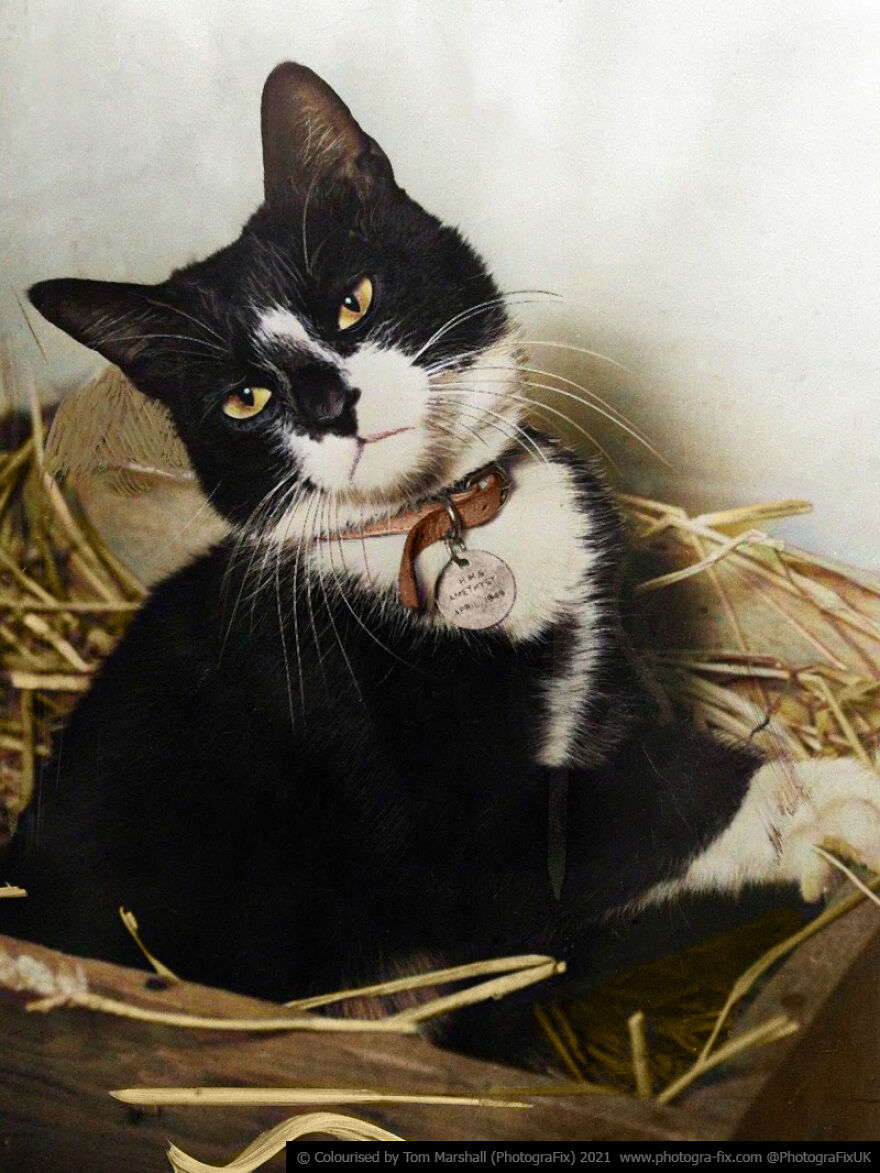
Simon was a ship cat who served on the Royal Navy sloop-of-war HMS Amethyst. He was adept at catching and killing rats on the lower decks. Simon rapidly gained a reputation for cheekiness, leaving presents of dead rats in sailors' beds, and sleeping in the captain's cap.
In 1949, during the Yangtze Incident, he received the PDSA's Dickin Medal after surviving injuries from a cannon shell that tore through the captain’s cabin seriously wounding Simon and killing the captain.
The badly wounded cat crawled onto the deck and was rushed to the medical bay, where the ship's surviving medical staff cleaned his burns and removed four pieces of shrapnel, but he was not expected to last the night.
He managed to survive, however, and after a period of recovery, returned to his former duties catching rats. He is still the only cat to have been awarded the Dickin Medal as of 2021.

All of these amazing animals including sweet Simon are true heroes. I was not aware that the Dickin Medal was specifically instituted to honour the work and sacrifices of animals in during World Wars II.
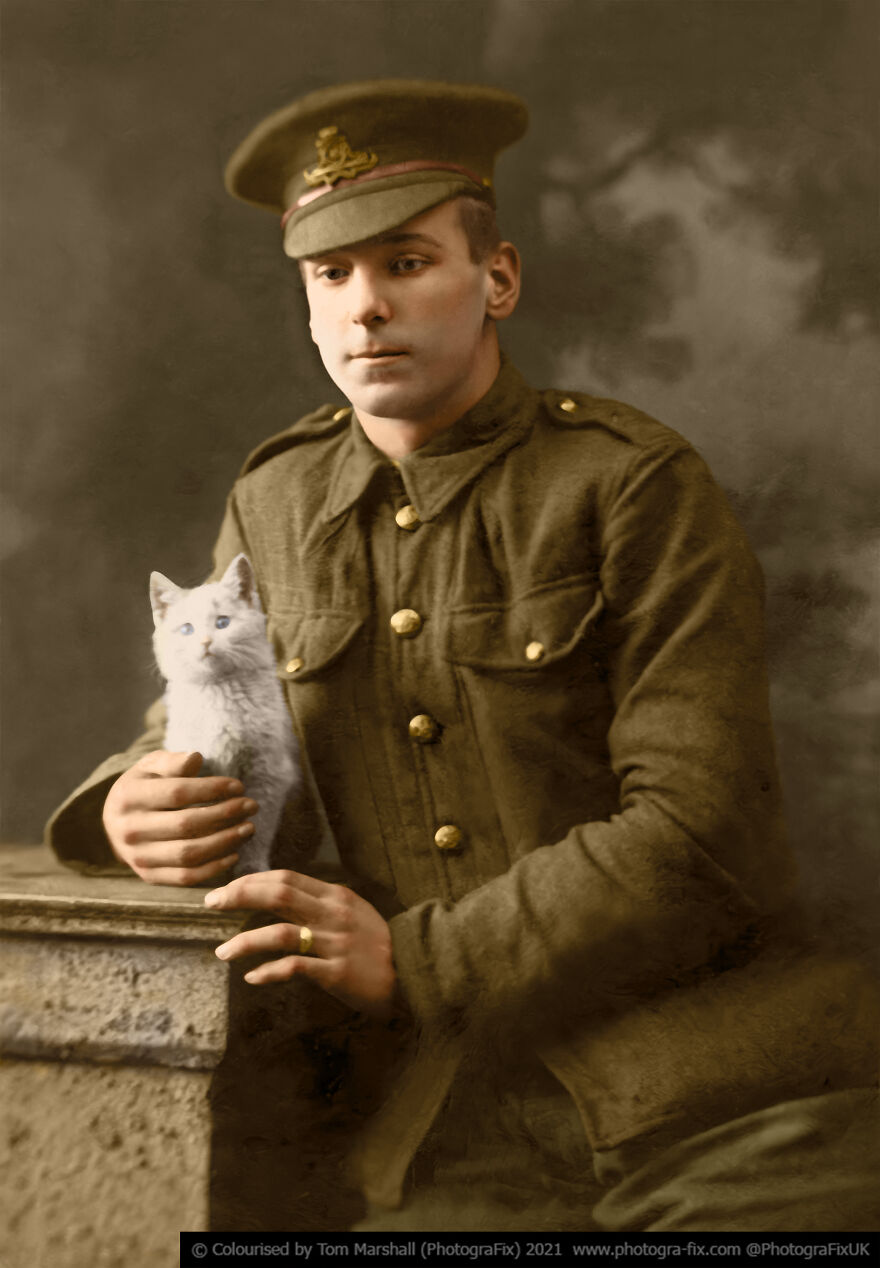
An unnamed British Royal Artillery soldier with his kitten, 1917. Animals were often brought into the trenches, sometimes as a mascot for the regiment, or in this case, the kitten may likely be from a local farm or destroyed village.
After all the horror, trauma, and death that these soldiers witnessed these sweet little animals likely provided a sense of calm, kindness, empathy, and love.
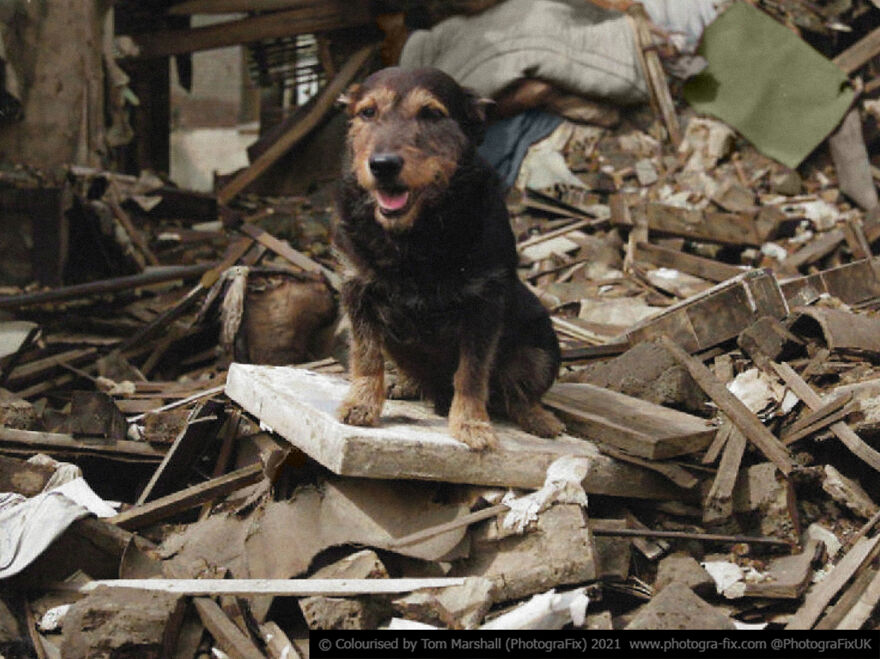
Rip was a mixed breed terrier awarded the Dickin Medal for bravery in 1945. He was found as a stray in Poplar, London, in 1940 by an Air Raid Warden Mr. E King, and became the service's first search and rescue dog. He is credited with saving the lives of over 100 people.
Rip was not trained for search and rescue work but took to it instinctively and his success has been held partially responsible for prompting the authorities to train search and rescue dogs towards the end of World War II.
Rescue dogs knew whether they had located a dead body or a live one, and they would react differently so that the rescue humans knew whether to dig in the rubble quickly or come back later
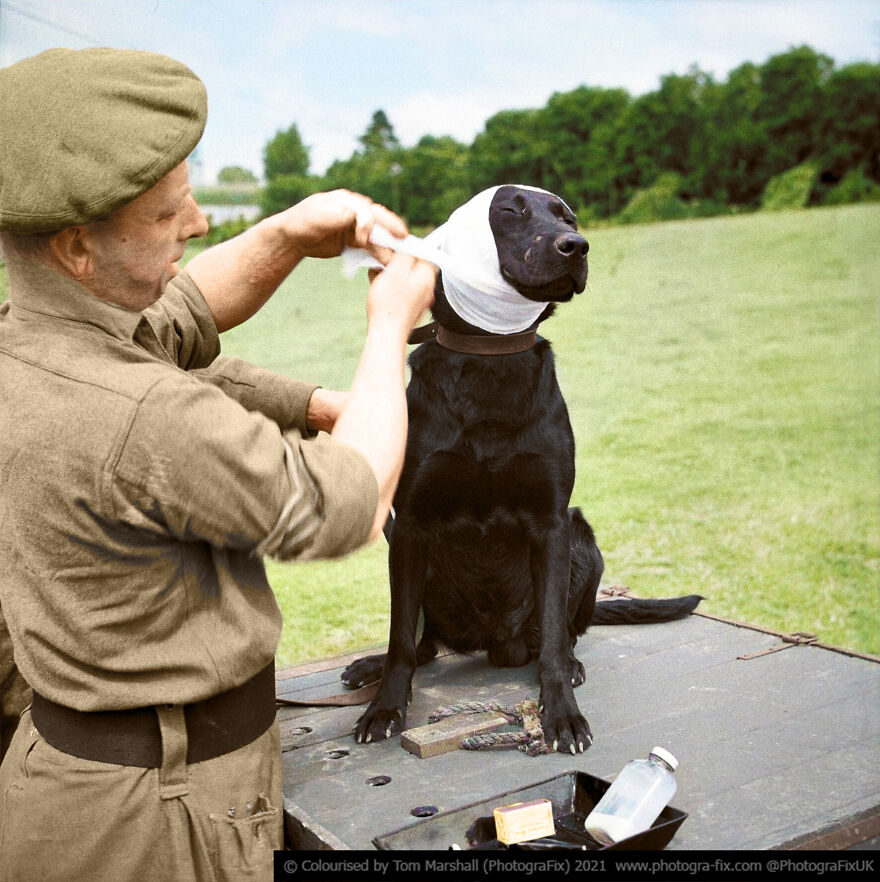
A sergeant of the Royal Army Veterinary Corps bandages the wounded ear of Jasper, a mine-detecting dog at Bayeux in Normandy, 5th of July, 1944.
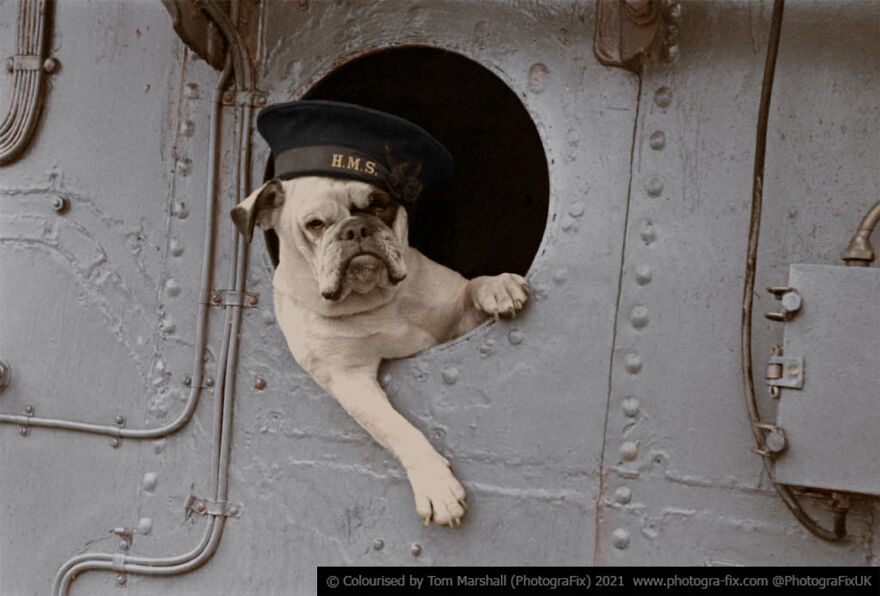
Venus the bulldog mascot of the destroyer HMS Vansittart, 1941.
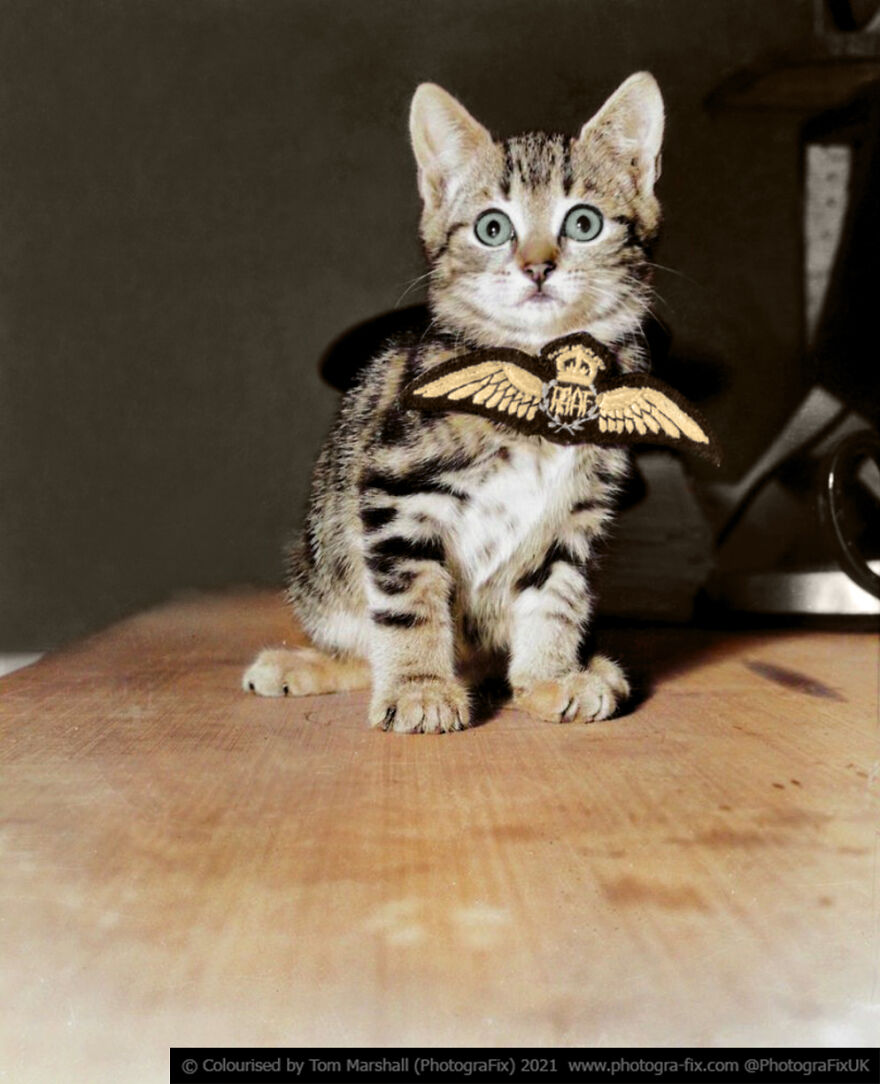
Aircrew was a young cat adopted by the Royal Australian Air Force Flying Training School, Cressy, Victoria, Australia.
Captain Aircrew reporting for duty and the occasional belly rub!
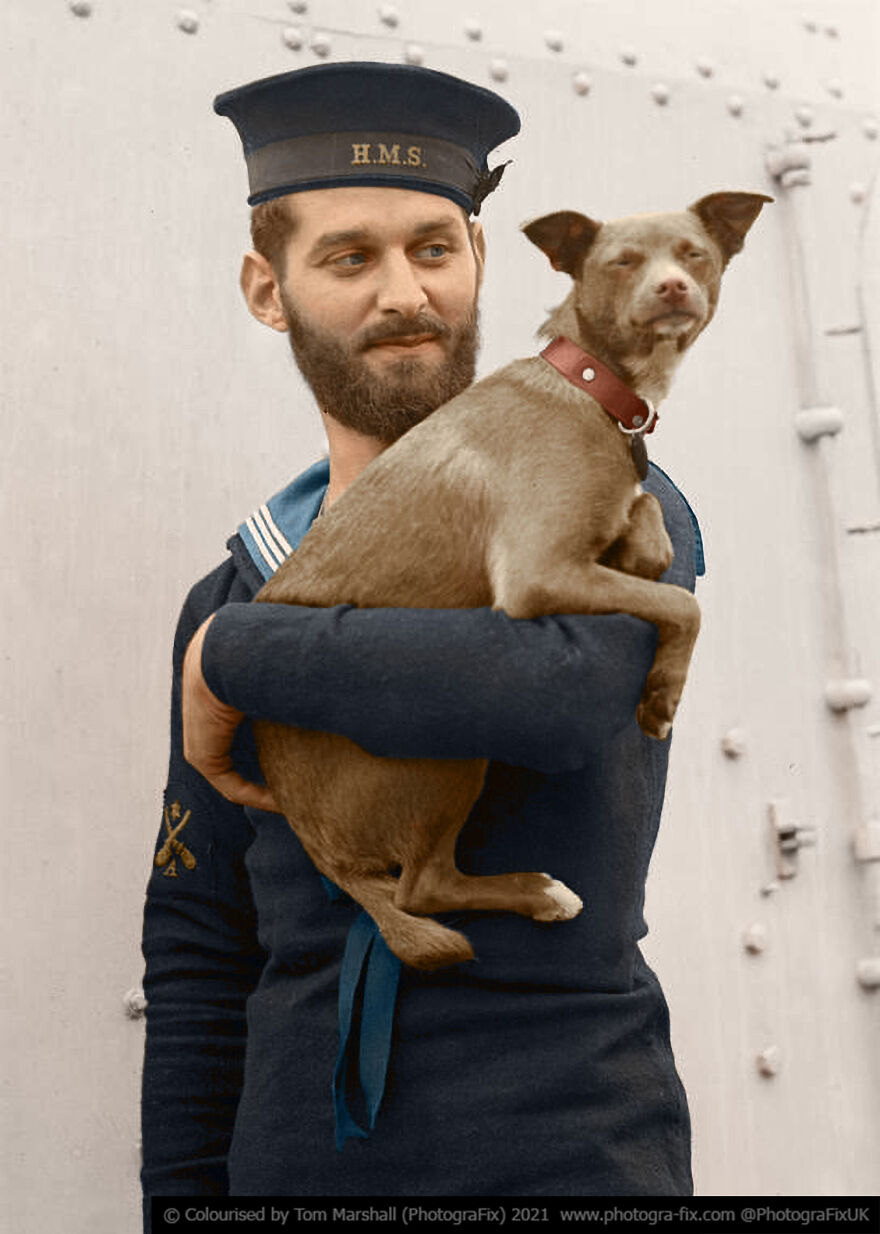
HMS Stork’s mascot, onboard ship, Liverpool, 18th of May, 1941.
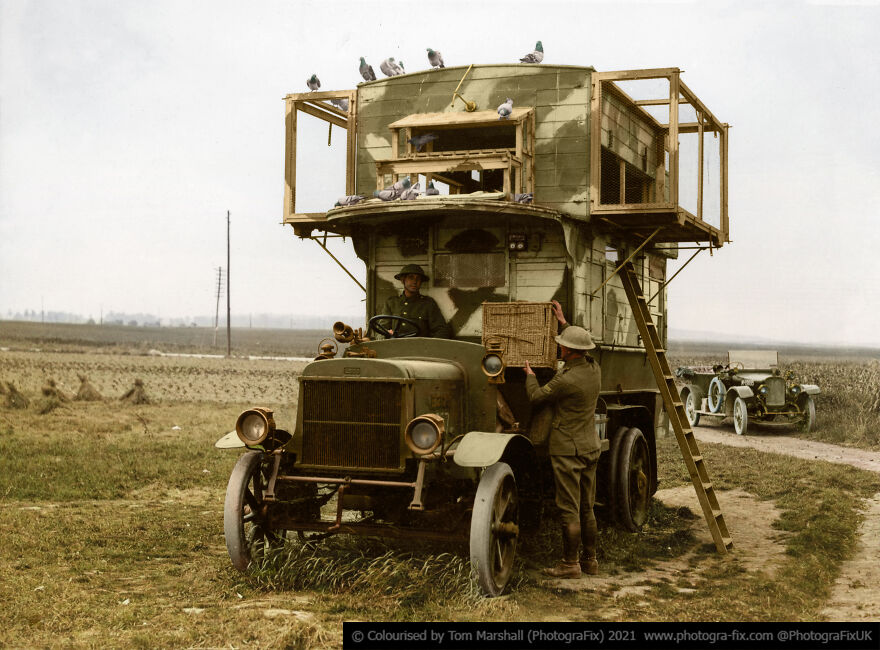
A B-type bus converted into a pigeon loft enabling messages to be sent from the front line back to headquarters. Over 100,000 carrier pigeons were used as messengers throughout WW1 and records show they delivered 95% of their messages correctly.
That is amazing! Animals are so much more intelligent that we often give them credit for.
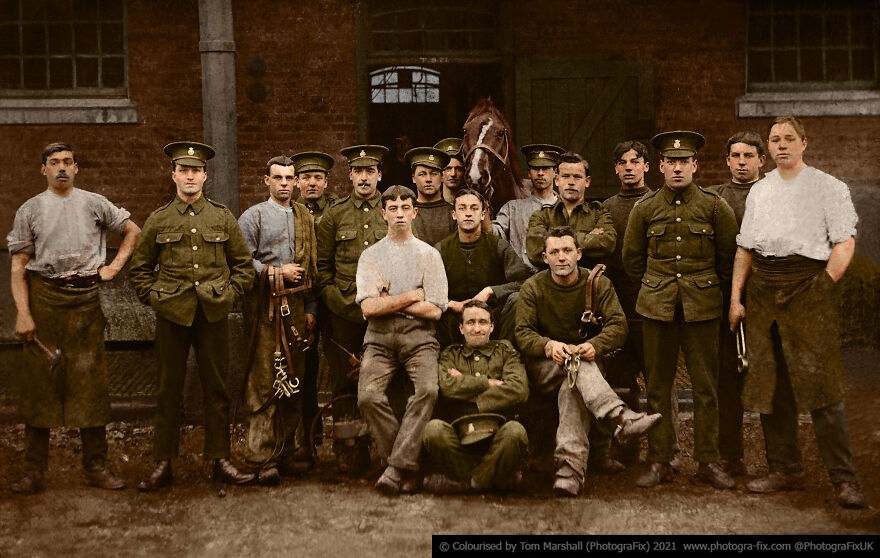
This picture-postcard was sent by William Field (1890-1917) to his brother Harry, postmark dated December 1909, from Aldershot barracks in Hampshire. William is stood third from the left with bridals in his arms.
The original postcard is still owned by Harry's daughter Margaret, who is 90 years old, and I was commissioned to colorize the photo by descendants of the family, Liz and her husband Andy. Thank you to Andy for permission to include the photo here.
William served with the 7th Queens Own Hussars at West Cavalry Barracks, Wellington Lines, but he died in action serving for the Kings Own Hussars in WW1. He laid to rest at Monchy British Cemetery, Monchy-Le-Preux, Pas de Calais, France.
The ship cat has been a common feature on many trading, exploration, and naval ships dating to ancient times. They were used to attack and kill rodents which would cause damage to ropes, woodwork, food, and stores, and would spread disease.
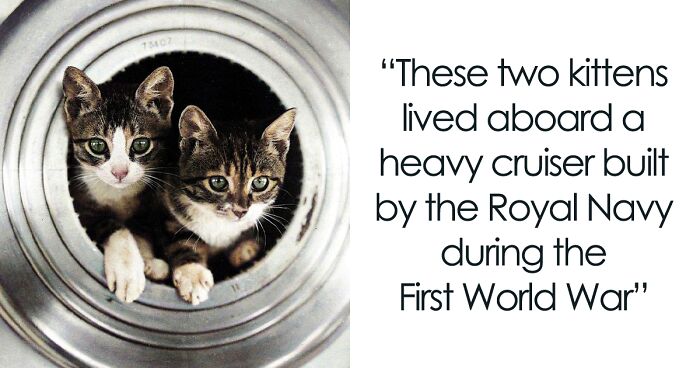
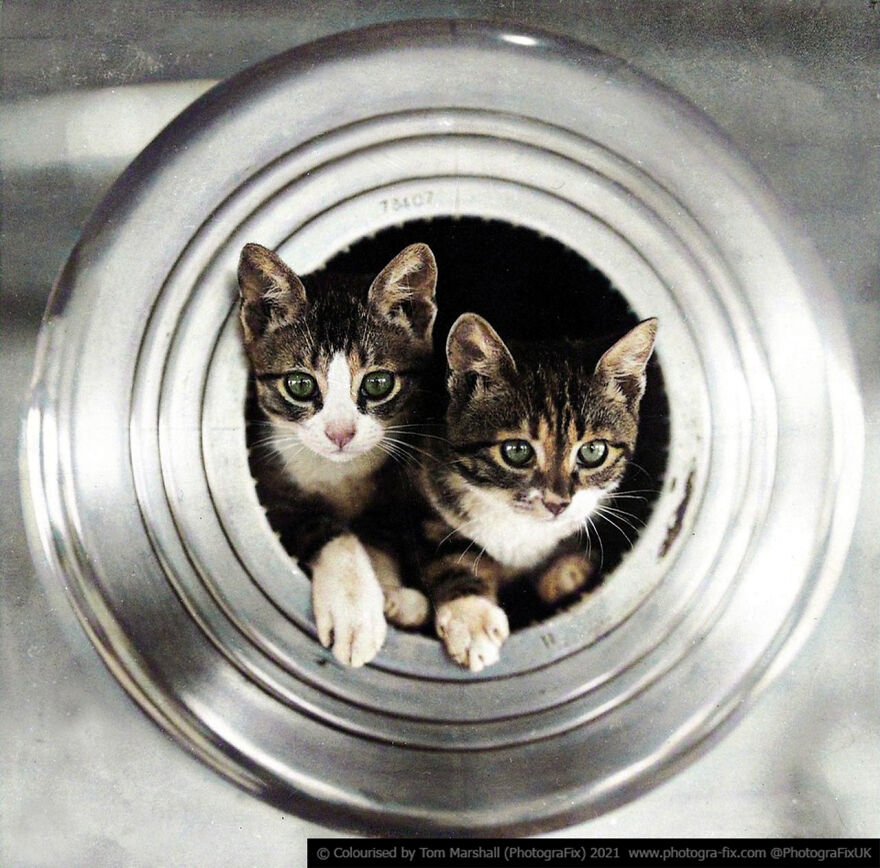
These two kittens lived aboard HMS Hawkins, a heavy cruiser built by the Royal Navy during the First World War, though not completed until 1919. The kittens are pictured inside the barrel of a 7.5-inch gun.
The Royal Navy banned cats and other pet animals from all ships on the ocean in 1975 on hygiene grounds, however, cats are still common on many private ships.
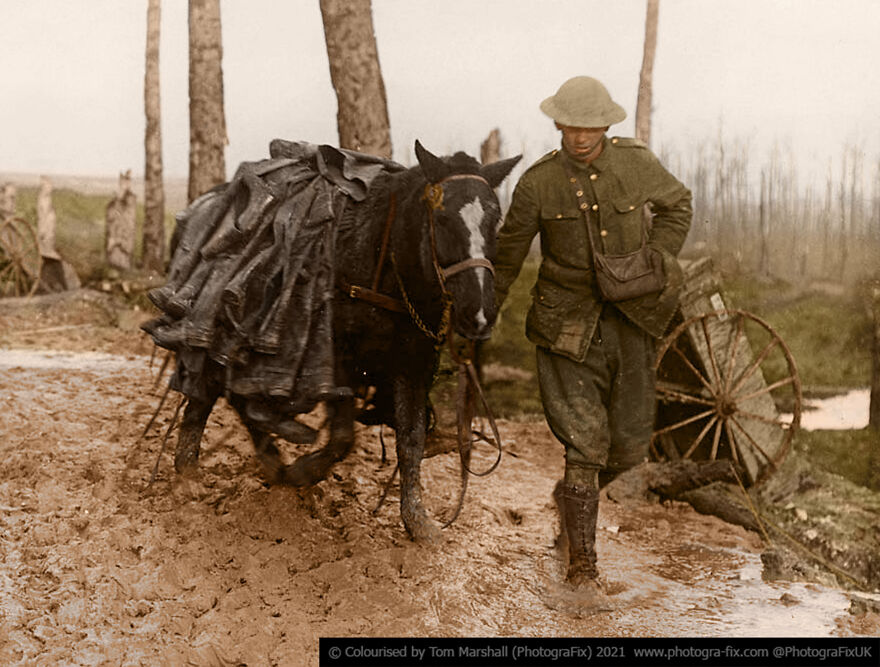
A horse and soldier transporting boots. The path is inches deep in wet mud discernible by the deep imprint around the soldier's boot and the fact that the horse's hooves are no longer visible. Rather than cloth puttees though he is wearing long lace-up boots.
The horse is absolutely laden with rubber trench waders. Horses, due to their reliability and ability to travel over most terrains were crucial to transportation during World War I.
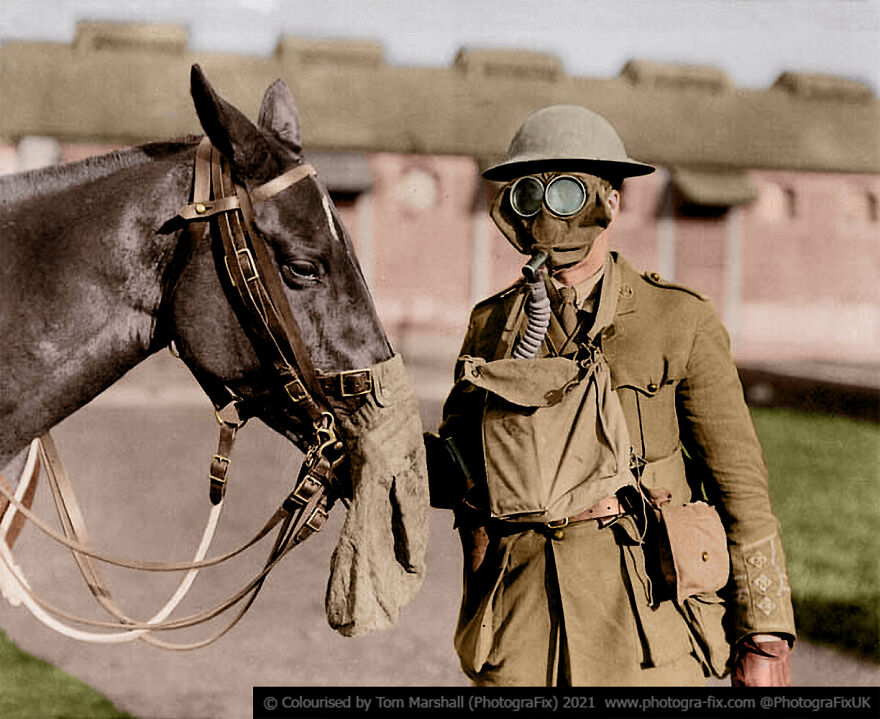
A Royal Canadian Army Veterinary Corps Captain and horse in 1916.
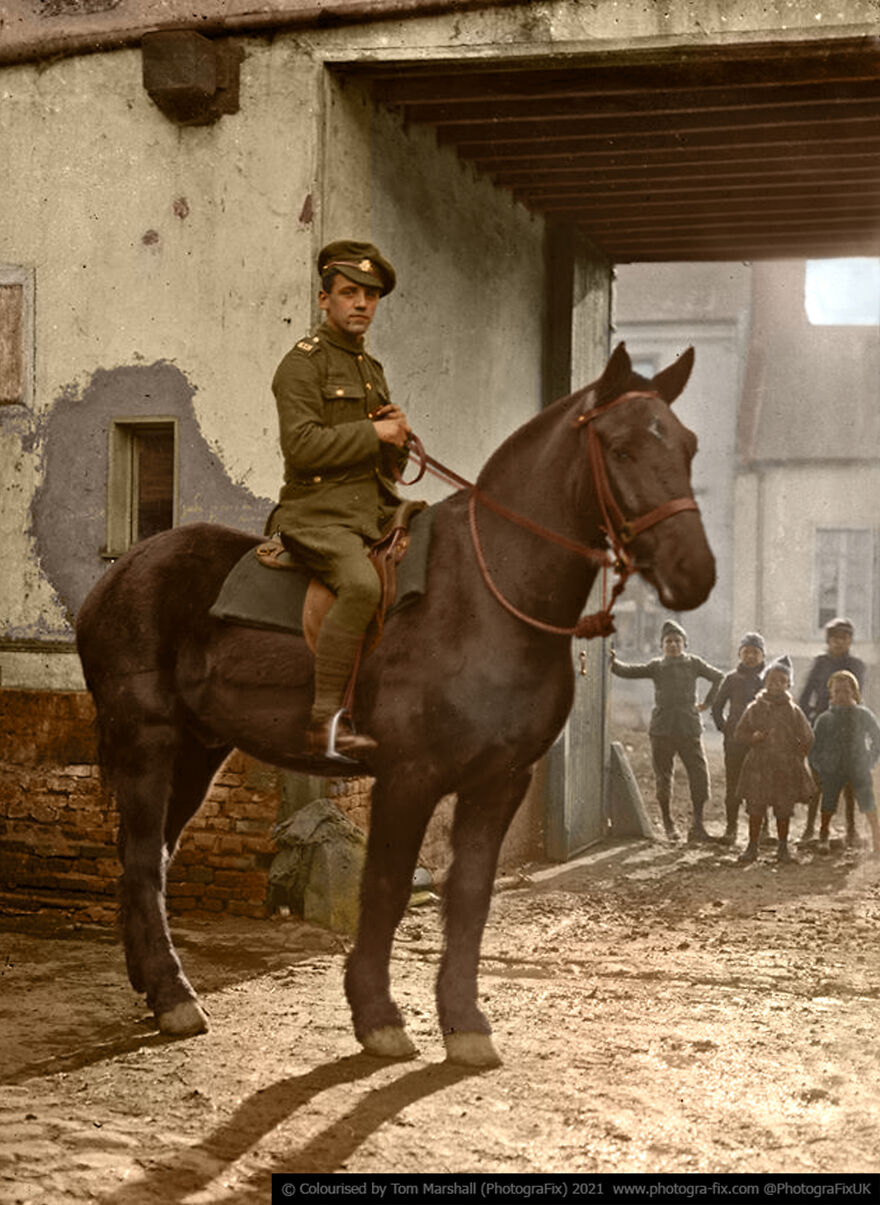
An unknown British Tommy from the 'A' Squadron, the North Irish Horse Regiment.
The most incredible play I’ve ever seen was ‘War Horse’ by Michael Morpurgo and Nick Stafford. It highlights the brutal torture horses went through in the First World War.
It is estimated that eight million horses, mules and donkeys died during the war.
I have not seen the theatrical production and still have yet to see the War Horse movie. I am mentally preparing myself for just tragic and brutal the lives of these horses were during World War 1 and how they often became life lines for many soldiers.
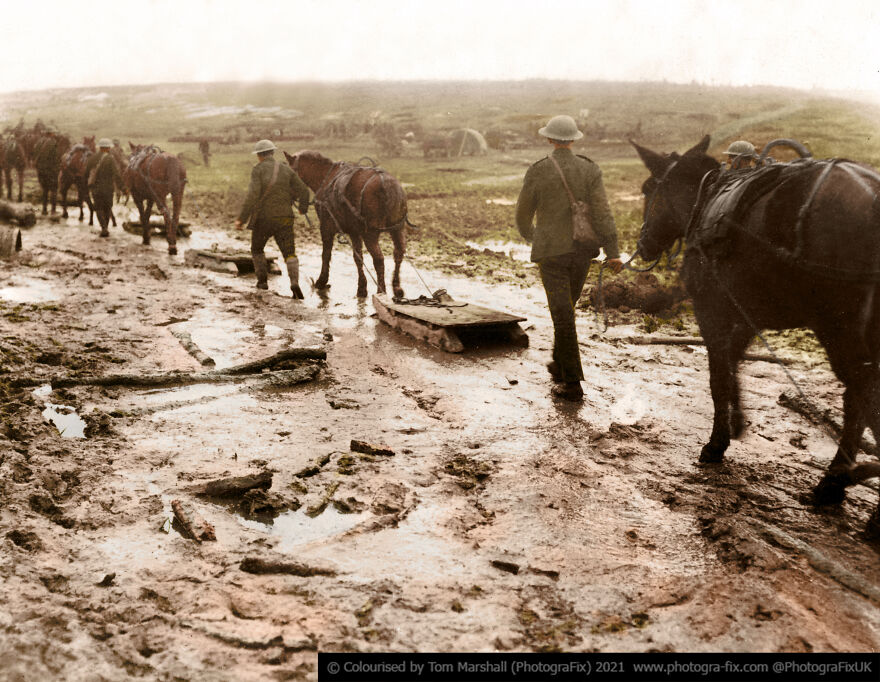
Horses pull makeshift sleds through the mud of the First World War.

My grandad served in WWI as a wagon driver taking supplies to the front. I hadn’t imagined that the routes they took were as bad as this. He was accidentally scalded by some soup and was sent to Scarborough to recover. I can see why such precautions were necessary when I see how filthy everything must have been. Thanks for posting these.
The red poppy is to commemorate the humans, the purple poppy for the animals
It's a shame I had to point out to the charity that they never lay out purple poppies, only red, and remind them that not one country would have won any war without those animals and it kind of rattles me that this year they still have no war animal recognition once again, so I bought my own and wear it with pride every single year.
Load More Replies... These were all gorgeously done. Thank you for also sharing the history of these brave animals. So many of these animals were life lines for the soldiers and also offered a sense of love and compassion amid so much violence, trauma, and death.
The red poppy is to commemorate the humans, the purple poppy for the animals
It's a shame I had to point out to the charity that they never lay out purple poppies, only red, and remind them that not one country would have won any war without those animals and it kind of rattles me that this year they still have no war animal recognition once again, so I bought my own and wear it with pride every single year.
Load More Replies... These were all gorgeously done. Thank you for also sharing the history of these brave animals. So many of these animals were life lines for the soldiers and also offered a sense of love and compassion amid so much violence, trauma, and death.
















 No fees, cancel anytime