Get Premium
Dark mode theme is available exclusively for premium users. Learn more about the benefits of subscribing.
No fees, cancel anytime.

 Dark Mode Ad-Free Browsing Unlimited Content
 Ad-Free Browsing Unlimited Content Dark Mode
Join 1.2 million Panda readers who get the best art, memes, and fun stories every week!

There is a version of yourself that only exists when nobody is watching. The version that drinks out of the milk carton and uses the handicapped bathroom. That version of you is not a bad person; it is simply operating in the space between rules and consequences, and it is between you and the universe. The concept of ethics is a wonderful and important one that has occupied philosophers for thousands of years.
But morality is nuanced, and context is everything. And the line between unethical and understandable is very thin. These people all did something that fell somewhere on the wrong side of the moral ledger, but they decided they were fine with that. No guilt, no apology, no 3 am crisis of conscience. Just the clean, uncomplicated peace of someone who made a choice and stands by it. We are not here to judge, just to relate.
This post may include affiliate links.

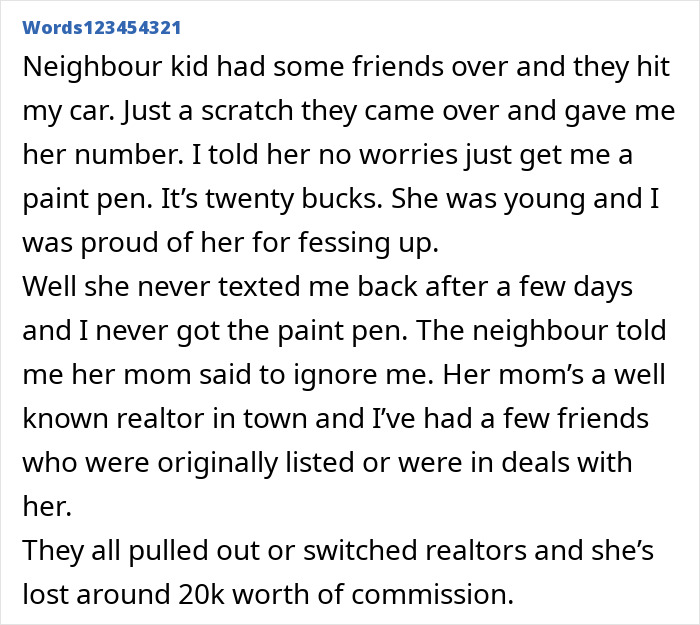
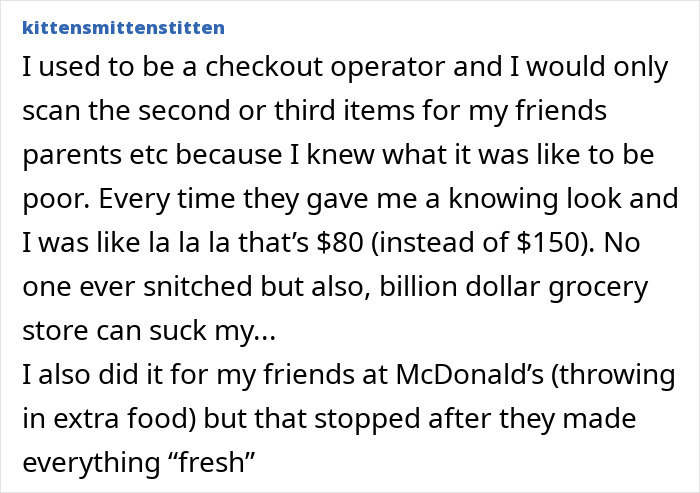
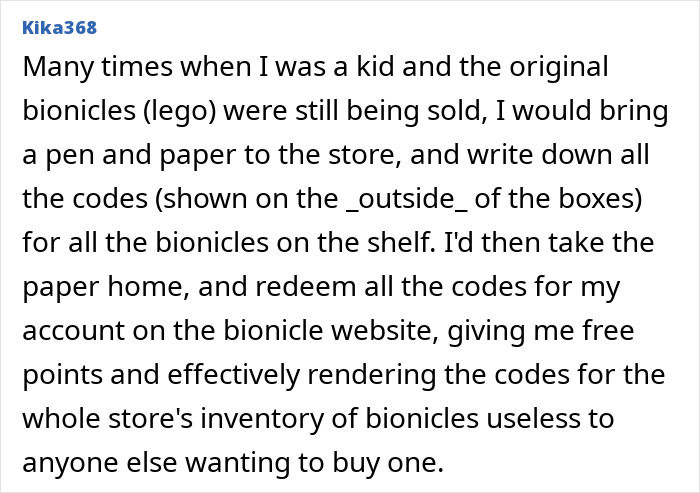
Commendable of the company to have such a program. Even more commendable that they did not shut it down or restrict it after it was used as intended.

Well that's what you do with a kid that bites. Do it just hard enough that it hurts & they won't do it again.

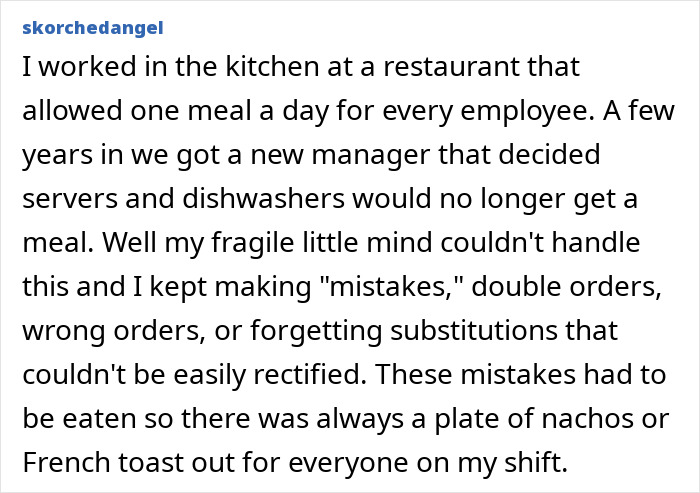
Manager was stupid and short sighted. A restaurant without servers and dishwashers isn’t going to last long and food is generally the lowest cost item in running any food service.

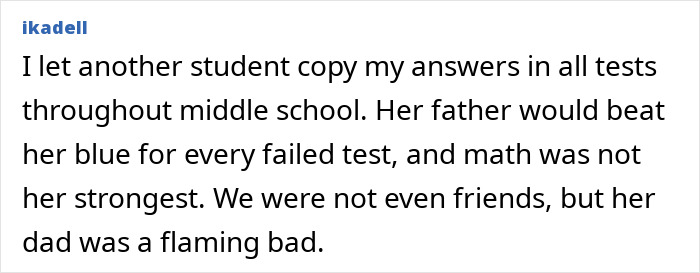
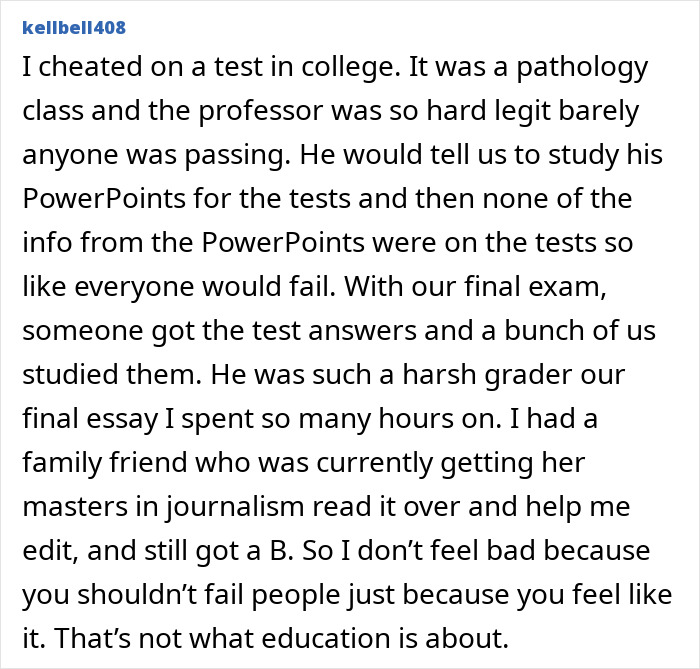
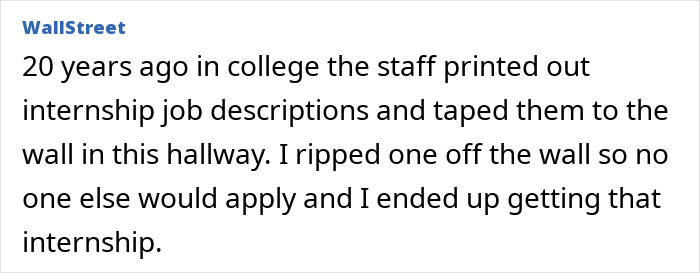
Putting an exceptional emphasis on grades often leads kids to cheat or to find other ways to bump up their grades without really learning better.

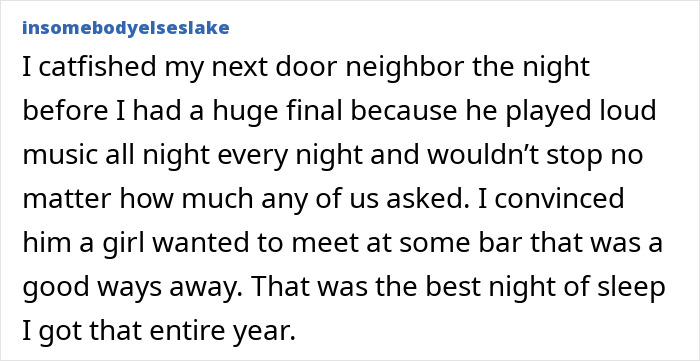
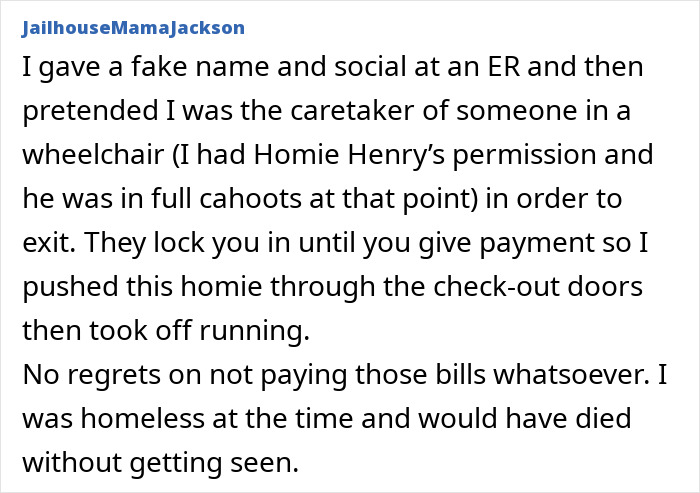
OP very likely kept this man from dying. Homeless folks d*e from exposure during winter in horrific numbers if they are in places that experience a "true" winter.
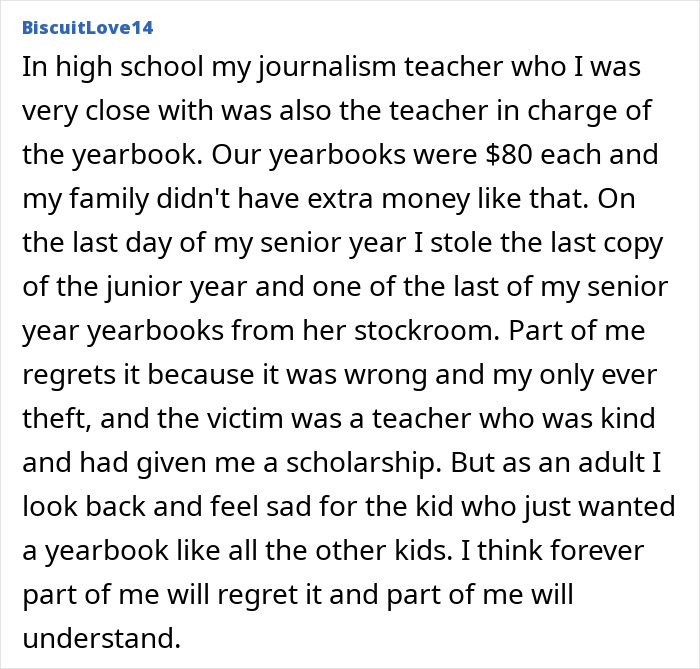
At the high school where I taught, a yearbook was considered part of the tuition package.

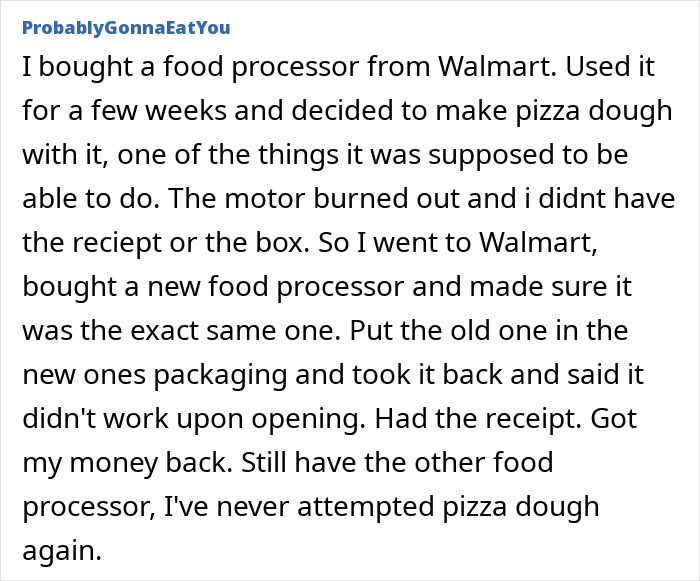
Always keep your receipts and the boxes. For at least 6 months !

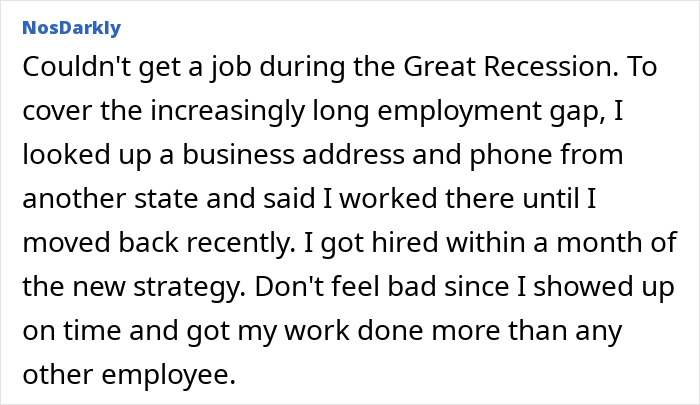
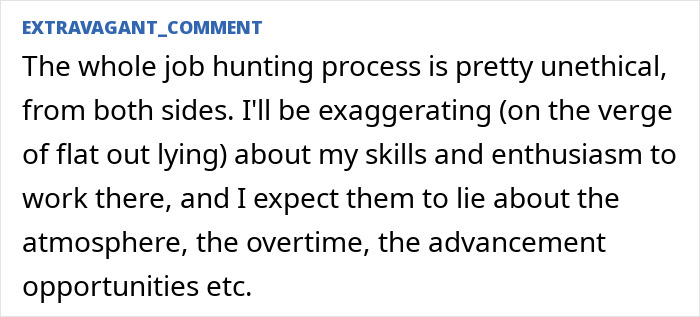
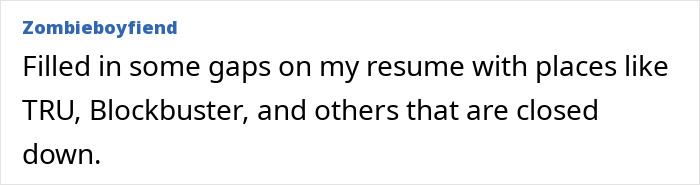
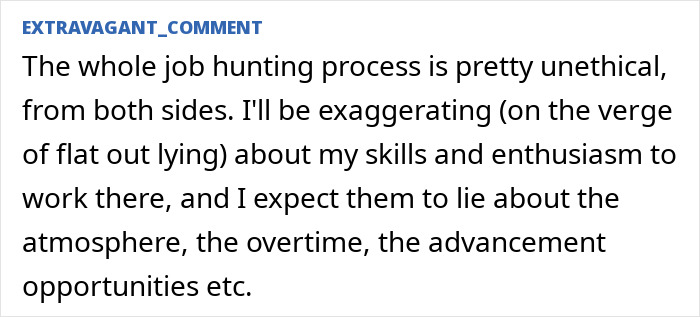
If you're qualified to do the job, I don't really care how much you "lie" about work history to get past our jacked up system. I moved back in with my parents to finish college. I ended up filling my resume gap with a "care taker" position paid by room and board. My dad had extensive back surgery, and I did help a lot. Otherwise, any interview I got made a huge deal out of the gap. Apparently, going back to school is not a good enough reason for a person to not have a full time job. Gotta love the US.
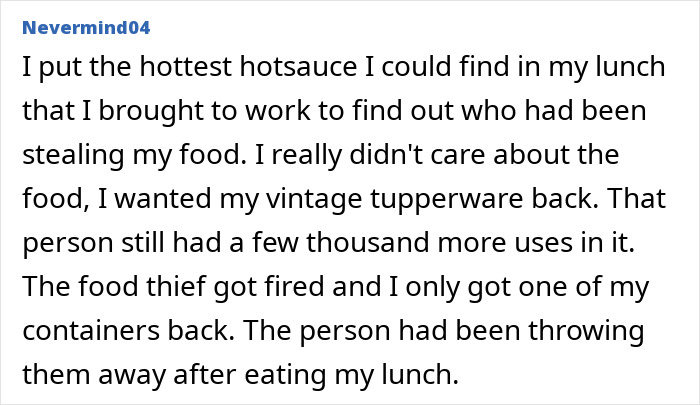
They threw away vintage Tupperware? May they always have an itch they cant reach and a pebble that appears in their shoe daily (yes the same exact pebble they thought they removed the previous day)
A rental car company was selling some of its excess inventory in a bank parking lot. (The bank was handling the finances.) There was a car a woman and I both wanted, but I was early enough to get the first test drive. She sneered at me "It's not who drives it first - It's who gets their money down first!" I said to myself "You know, she's right." so I never brought the car back after the test drive. I parked it a few blocks from the lot, walked back, and closed the deal with the first salesman I could find. That lady may still be at that lot waiting for her test drive.
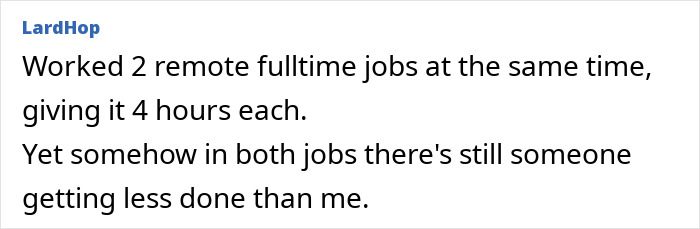
This idea of trying to work two full-time remote jobs during the same 8 hour period took off about a year into Covid, but all the viral discussion about it alerted employers to the trend. It's one of the justifications that suspicious, overly controlling employers use for installing extremely intrusive monitoring software onto employees' remote computers.
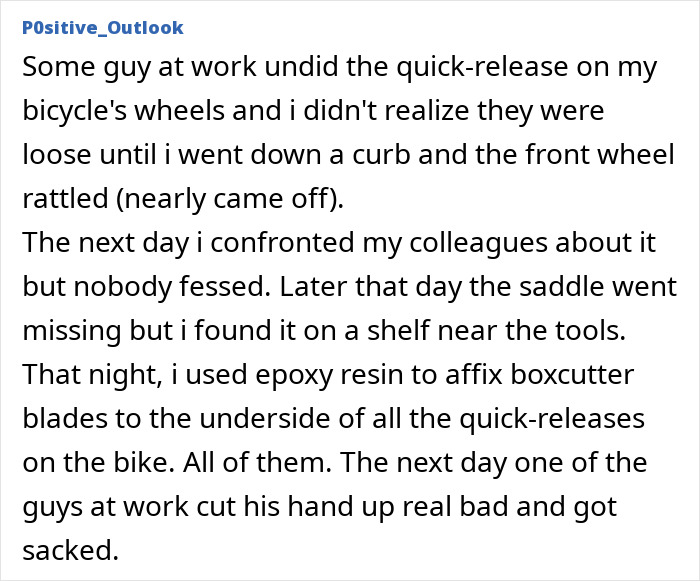
Erm duckies the point is DO NOT TOUCH OTHER PEOPLES FOOD AND DRINK END OFF !! sorry but they deserved that!! if they do it’s their own dam fault for stealing in first place !
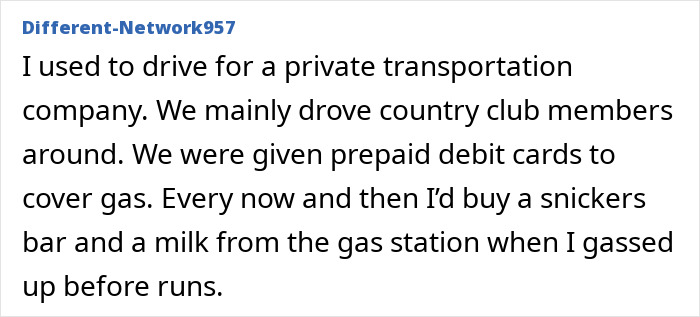
Many of the country club members the OP drove paid their dues and more by stealing a lot more from people than milk and Snickers money.

OP, you need to know that whoever told you to "Tend to your own knitting" meant something else entirely.
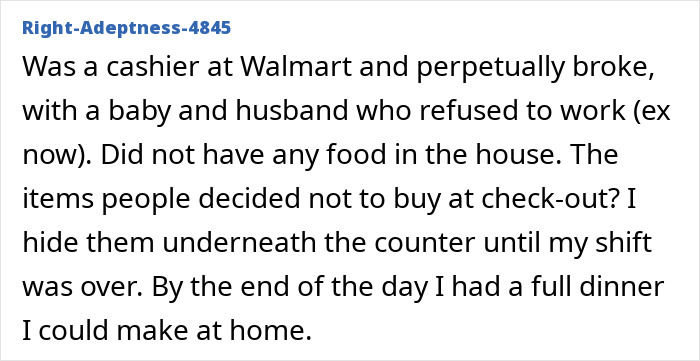
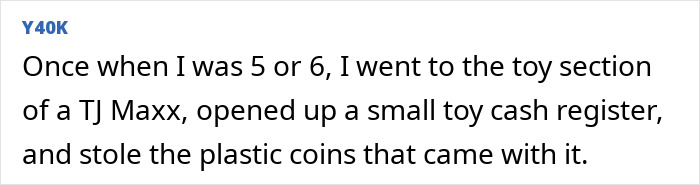
If you didnt work there ,that would be classed as SHOPLIFTING!! So🤷♀️

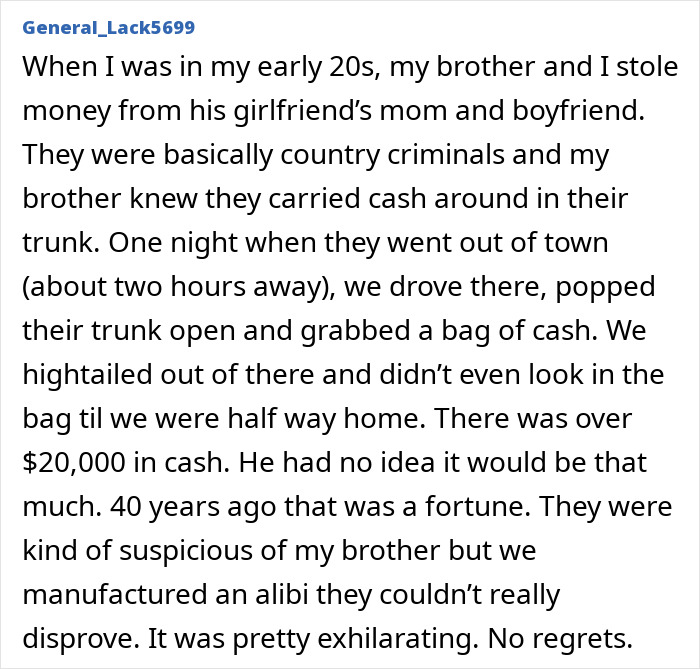
What an utterly idiotic thing to do!!! You knew those people were criminals. What if there had been d***s in the bag? Or something related to a big crime, and the police stopped you? Also, criminals don't find being robbed funny. You could have ended up in a ditch. What a pair of idiots!

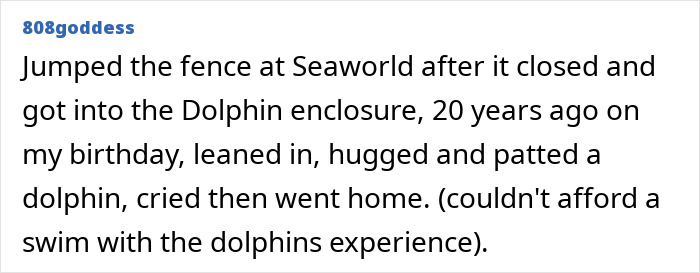
This is questionable due to its impact on the dolphin. Do what you will in this life but leave those babies alone.
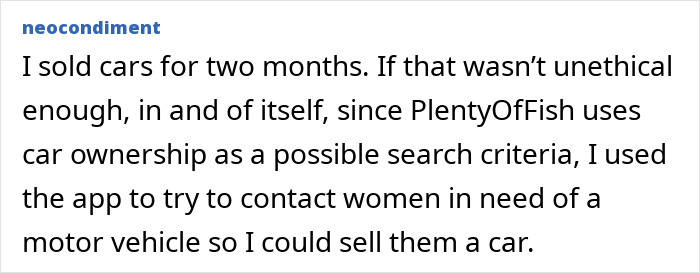
Not the most egregious thing to happen on POF. That place is a cesspool!
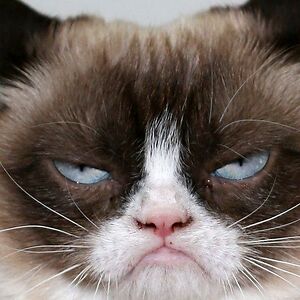
how big was this little dab that it went all over her pillow and completely matted her hair. I'm sensing some embellishment here...
People like this are the same people screaming against free school lunches.

These quickly ceased being ethically ambiguous things and became frequently self-justified evil. "I hated someone, so I did something terrible to them" or "I got away with stealing because my victim showed some humanity" is a far cry from "I didn't follow procedures because they wouldn't've been just." OTOH, a few of them aren't wrong at all, like the person who used the box her replacement product came in to send back the broken product.
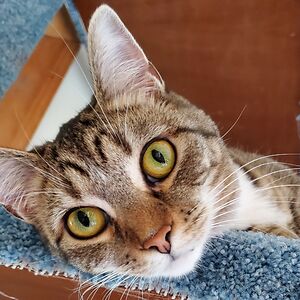
not really "unethical" but .... I was in the Army. One time I was given the job of painting "reserved parking" on several spots for the unit Commander, XO, 1SG, etc. Maybe 6 spots altogether. I made 1 more than authorized and used it myself for 3 yrs. No one ever caught on, or, if they did, they didn't call me on it.
These quickly ceased being ethically ambiguous things and became frequently self-justified evil. "I hated someone, so I did something terrible to them" or "I got away with stealing because my victim showed some humanity" is a far cry from "I didn't follow procedures because they wouldn't've been just." OTOH, a few of them aren't wrong at all, like the person who used the box her replacement product came in to send back the broken product.
not really "unethical" but .... I was in the Army. One time I was given the job of painting "reserved parking" on several spots for the unit Commander, XO, 1SG, etc. Maybe 6 spots altogether. I made 1 more than authorized and used it myself for 3 yrs. No one ever caught on, or, if they did, they didn't call me on it.








 No fees, cancel anytime