Get Premium
Dark mode theme is available exclusively for premium users. Learn more about the benefits of subscribing.
No fees, cancel anytime.

 Dark Mode Ad-Free Browsing Unlimited Content
 Ad-Free Browsing Unlimited Content Dark Mode
Join 1.2 million Panda readers who get the best art, memes, and fun stories every week!
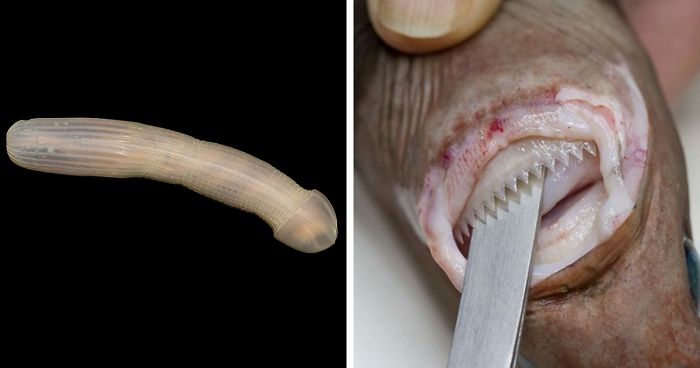

You don't need to go to space to explore places that no man has ever been to. Recently, an international team of scientists went on the world's first survey to explore marine biodiversity in the abyssal waters off the east coast of Australia.
The abyssal zone is a layer of the ocean at depths of 13,000 to 20,000 ft (4,000 to 6,000 metres). This zone remains in perpetual darkness. The temperature there is around 36 to 37 °F (2-3 °C) and it's a very food-limited environment. "The abyss is the largest and deepest habitat on the planet, covering half the world's oceans and one-third of Australia's territory, but it remains the most unexplored environment on Earth," said Museums Victoria senior curator Tim O'Hara on the voyage's departure.
The researchers divided themselves into two shifts (2:00─14:00 and 14:00─2:00). Tirelessly sending their equipment nearly 16,000 foot deep, they hauled over 100 different species aboard their vessel, the Investigator. Five of them are thought to have never been discovered before!
Processing the catch involved separating different species, photographing the creepy specimens to record their colors, extracting muscle samples for DNA analysis, and so on. Commonwealth Scientific and Industrial Research Organisation (CSIRO) ichthyologist John Pogonoski claimed they spent many hours processing the samples. According to him, the voyage is nothing less than "frontier science" that will undoubtedly increase our understanding of the deep-sea. The scientists are still busy preserving the finds for museums around the world. They will be available for research in the future as well. While everyone's waiting for CSIRO Australian National Fish Conference (ANFC) where names to these faceless critters will be given, scroll down and check out some of the spookiest from the whole gang.
More info: nespmarine.edu.au
This post may include affiliate links.
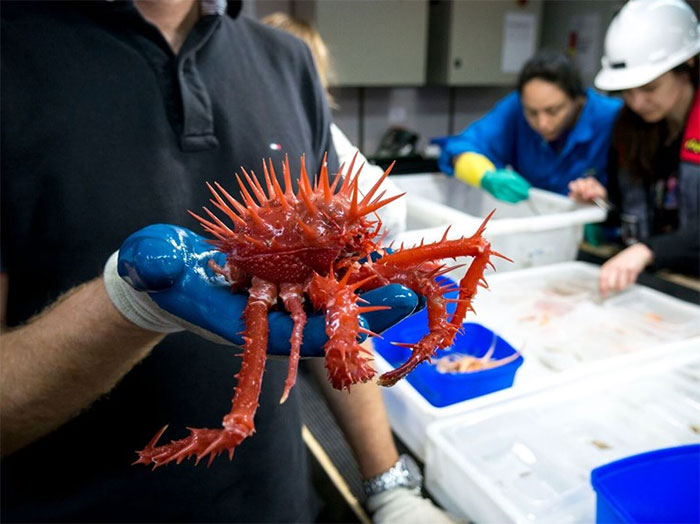
This bright red spiny crab sports an armour of spikes which protect it from the dangers of the deep.
These are not actually true crabs but related more to hermit crabs – although this hermit has traded in its shell for gnarly spikes.
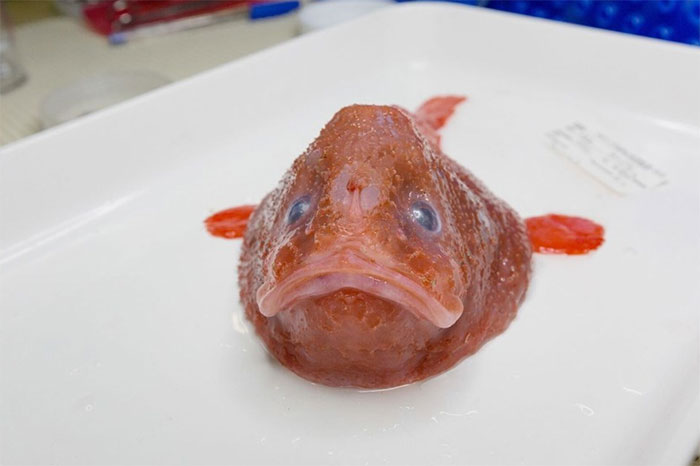
This mysterious little deep-sea coffinfish, with its bluish eyes and red feet, belongs to the anglerfish group. It is potentially a new species.
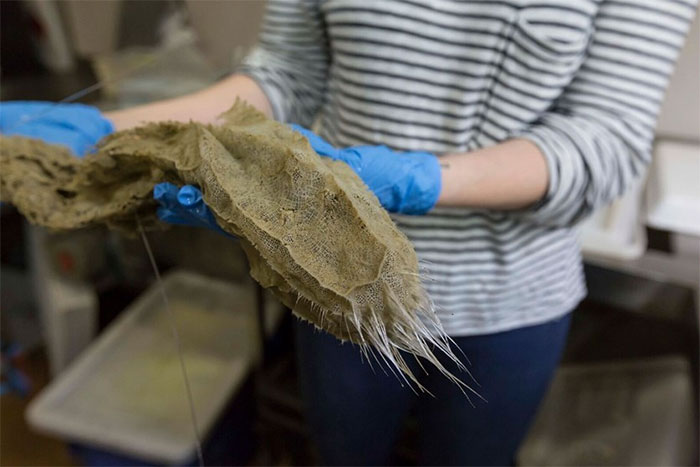
These incredible glass sponges have a skeleton of a lattice of silica filaments, some of which can be up to a metre long.
They feed by sifting bacteria and other single-celled organisms from the water, gently passing over their delicate glass housing.
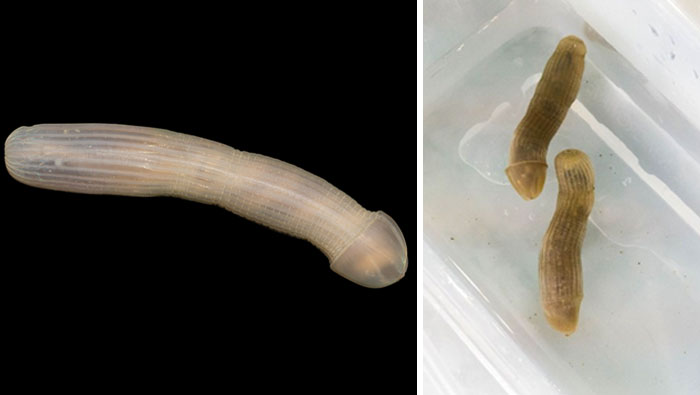
The peanut worm (Sipuncula) is a deep-sea worm resembling a phallus.
When threatened, they can contract their long head inwards and look more like a peanut. They can reproduce both sexually and asexually.
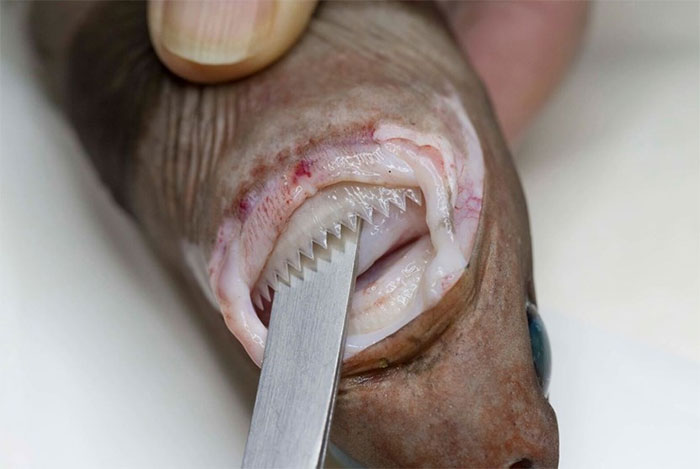
This nasty little bioluminescent shark, with its neatly arranged serrated teeth, inhabits the oceanic “twilight zone” in depths of up to 1,000 metres.
It preys on big fishes, whales, dolphins and the occasional unfortunate swimmer, latching onto them before gouging out cookie-sized chunks of flesh.

Please, it's not "nasty." That's a human value-judgement . These things are meant to be doing what they do in their ecological niche. It might not be nice for the prey species, but that's differnt to being "nasty."
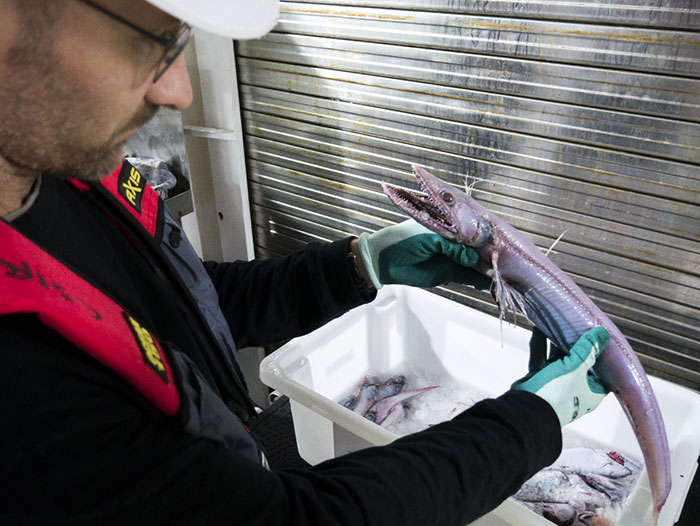
Being the dominant predator of the depths isn't easy though: at depths of 1000–2500 metres there is very little food, so lizard fish are few are far between to maximise scarce resources.
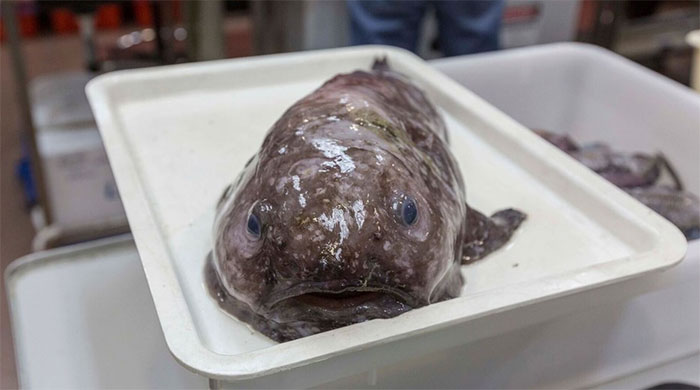
This blob fish was collected from a depth of 2.5 kilometres off New South Wales.
It has soft watery flesh and is an ambush predator that lies very still on the bottom, waiting for unsuspecting prey to pass by.
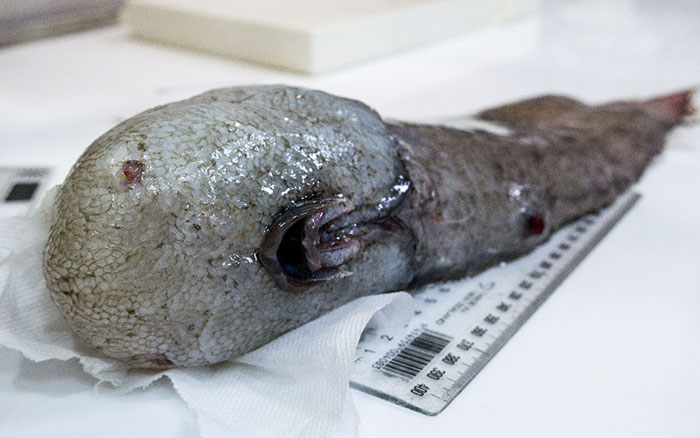
With no eyes, the “faceless” fish was found four kilometres below the surface.
The species was first collected in the northern Coral Sea more than 140 years ago during the voyage of HMS Challenger, the world’s first round-the-world oceanographic expedition. It has been rediscovered in Australia after more than a century.
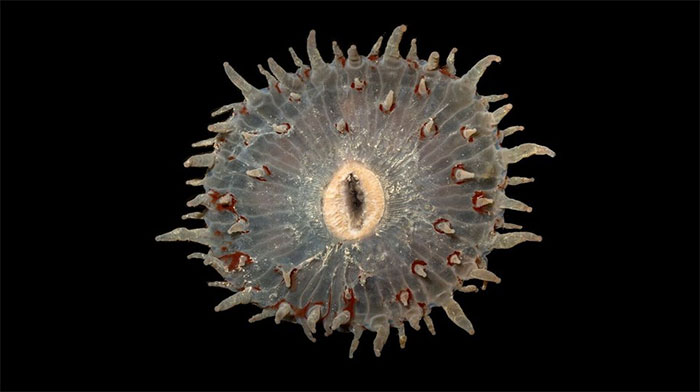
These coral organisms belong to the same group as anemones, jelly fish, hard corals and other tentacled creatures of the sea.

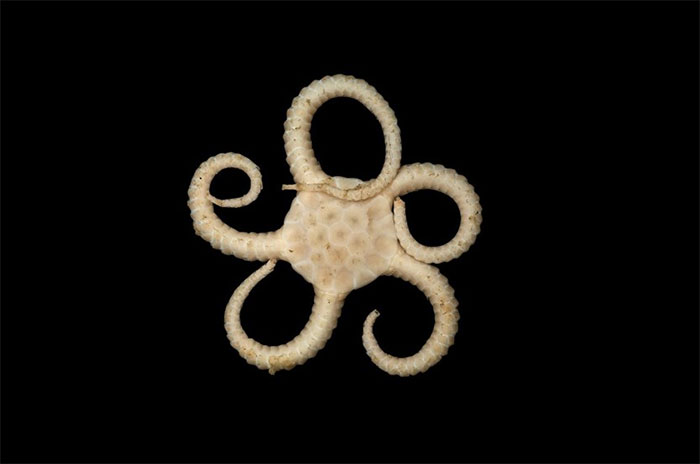
The brittle star can be found right across the globe from Siberia in the north to Antarctica in the south, yet we know almost nothing about them.
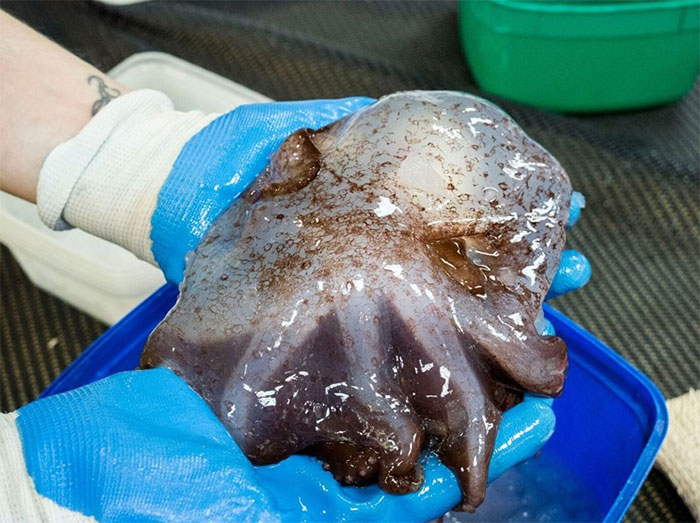
Dumbo octopus flap their ear-like fins, just like the Disney character of the same name, except this animal flaps its ears to glide gracefully through the deep, dark abyss.
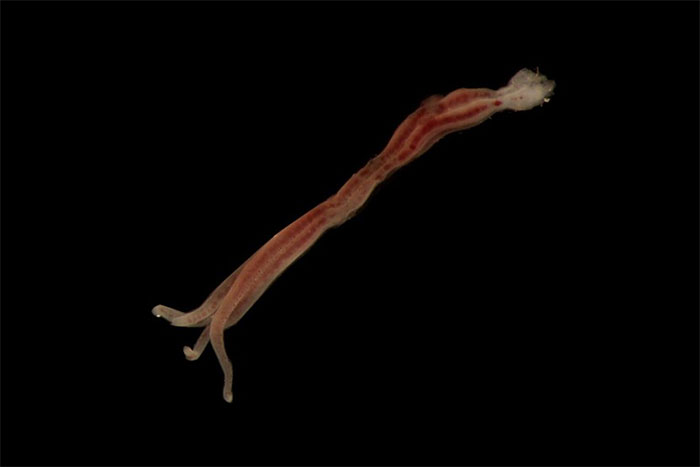
Zombie worms (Osedax) are commonly found in the decaying remains of whales on the ocean floor, burrowing into their bones to reach the sustenance within.
With no functioning mouths, guts or anuses, they have bacteria that digest the grisly remains for them.
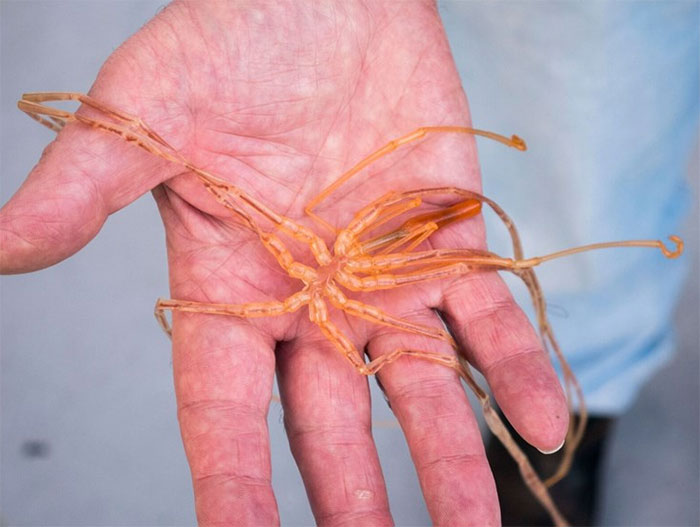
These alien lifeforms are not actually spiders at all but one of the oldest arthropods to grace planet Earth.
Simplicity is their motto, being little more than a tube within a tube. Many sea spiders have legs that glow in the dark.









I like how you call it "one of Earth's oldest inhabitants" and "alien" in the same sentence

just-click it. https://www.youtube.com/watch?annotation_id=annotation_2374124469&feature=iv&index=3&list=PL73YndQawY3OX6hvsbUu2mCuJTvPk3yTU&src_vid=fGT8EWHA5BQ&v=9IiHRSBAMwU



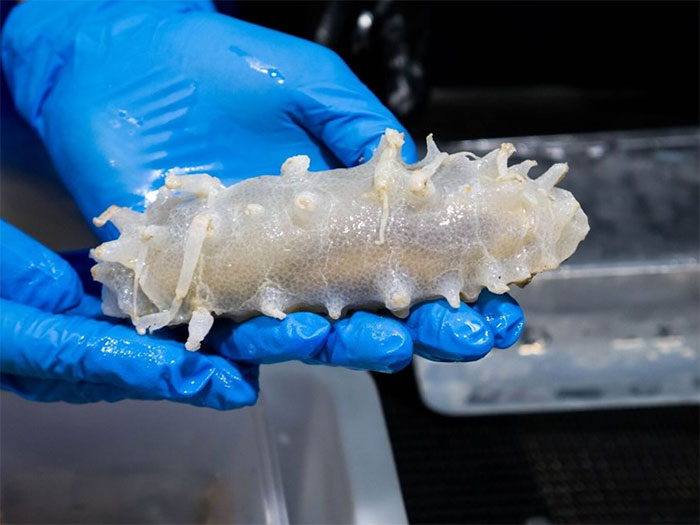
These cute little pink pigs, found in the Freycinet Marine Reserve off Tasmania, are the ocean’s vacuum cleaners, using their tube-like feet to move across the abyssal mud and hoovering up micro-organisms.
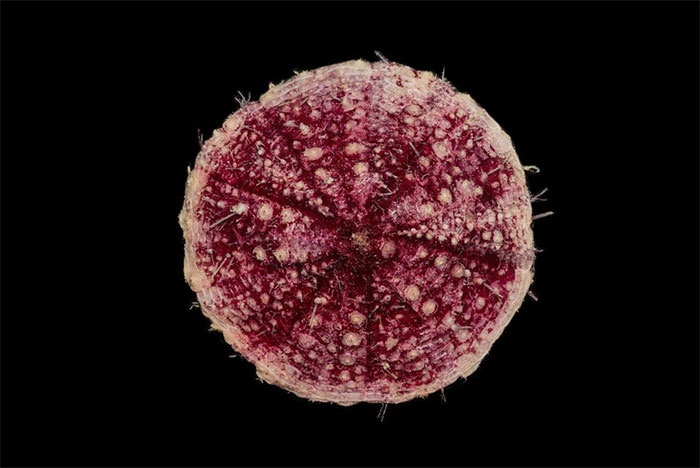
These round discs of concentrated urchin are not actually flat in their natural habitat.
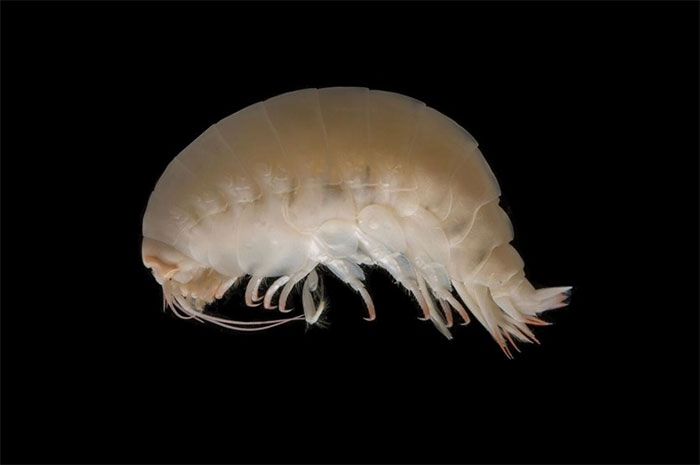
Crustaceans such as this amphipod are deep-sea scavengers and will eat almost anything nutritious they come across – including the decaying remains of a dead whale, drifted down from the world above.
These iconic abyssal fishes, often called spiderfishes, prop high off the sea floor on their stilt-like fins.
Like all fishes in the spiderfish family, they have very reduced eyes.
To feed, they face into the current, extending their elongated pectoral fins forward and “feel” their prey items drifting by.

It's a very rare occasion to find a list that has animals I've never heard of. That's the biggest drawback of being zoology freak. However, this one had lots of species I've never heard of(in fact, like 70% of all)! Creepy but awesome, nonetheless! Thanks for sharing!

The deep oceans are still unexplored and this could be just 0.1% of all species in there.
Load More Replies...
Thrilling pictures that show how little of the marine life we know. Yes, the species already discovered represent a tiny percentage of what may be existing down there. The most amazing point is the fact that life can exist in places where the lack of light, scarcity of food and enormous pressure would make you think that nothing can survive these conditions. Nature is truly marvelous in its many inventions and adaptations, and, unfortunately, we are ruining a lot of it without even knowing it or caring to know.

With the pressure difference, shouldn't they explode when brought to the surface ?

I LOOOVEEEE what's hiding in the deep waters of the oceans! More pls!

How sad that humans have already destroyed half the world's oceans, now they (humans) must kill animals that will never be in contact with us. Scientists should find ways to clear up the mess that humans have made on Mother Earth. No respect, money, sex, selfish politicians, creed, wars, all of these rule this World. No wonder we are all going straight into the wall. Why spend money for scientists to do such research.

Reading this just took swimming in the ocean a "nope" to a "nope, Nope, NOPE!!!"

I understand the need to explore and find out about all these exotic and heretofore unknown species, but I can't help but be a little sad because they killed them all just to show them off in museums....




I'm sad that some of those creatures had to die just so people can ooh & ah over their existence.
Absolutely everything that comes from the sea can jolly well stay there! The deeper you go, the more profound the horror. It is nothing but an all carnival of monsters in there. Except the octofriends. Love those things so very much.


Do they kill these guys or what? The octopus pic looks like there is a cooler of ice beneath him

All these animals are really creepy and I don't think anyone will wish to go in deep ocean to swim too...

It's a shame that most of these are in scientists labs and not in their natural habitat
In their natural habitat, you would not see them at all! First, it's pretty dark around -4.000 m, second some of these fish have such a great camouflage, third no idea of size is given for some species, but my guess is they might be very, very small.
Load More Replies...
It's a very rare occasion to find a list that has animals I've never heard of. That's the biggest drawback of being zoology freak. However, this one had lots of species I've never heard of(in fact, like 70% of all)! Creepy but awesome, nonetheless! Thanks for sharing!
The deep oceans are still unexplored and this could be just 0.1% of all species in there.
Load More Replies... Thrilling pictures that show how little of the marine life we know. Yes, the species already discovered represent a tiny percentage of what may be existing down there. The most amazing point is the fact that life can exist in places where the lack of light, scarcity of food and enormous pressure would make you think that nothing can survive these conditions. Nature is truly marvelous in its many inventions and adaptations, and, unfortunately, we are ruining a lot of it without even knowing it or caring to know.
With the pressure difference, shouldn't they explode when brought to the surface ?
I LOOOVEEEE what's hiding in the deep waters of the oceans! More pls!
How sad that humans have already destroyed half the world's oceans, now they (humans) must kill animals that will never be in contact with us. Scientists should find ways to clear up the mess that humans have made on Mother Earth. No respect, money, sex, selfish politicians, creed, wars, all of these rule this World. No wonder we are all going straight into the wall. Why spend money for scientists to do such research.
Reading this just took swimming in the ocean a "nope" to a "nope, Nope, NOPE!!!"
I understand the need to explore and find out about all these exotic and heretofore unknown species, but I can't help but be a little sad because they killed them all just to show them off in museums....
I'm sad that some of those creatures had to die just so people can ooh & ah over their existence.
Absolutely everything that comes from the sea can jolly well stay there! The deeper you go, the more profound the horror. It is nothing but an all carnival of monsters in there. Except the octofriends. Love those things so very much.
Do they kill these guys or what? The octopus pic looks like there is a cooler of ice beneath him
All these animals are really creepy and I don't think anyone will wish to go in deep ocean to swim too...
It's a shame that most of these are in scientists labs and not in their natural habitat
In their natural habitat, you would not see them at all! First, it's pretty dark around -4.000 m, second some of these fish have such a great camouflage, third no idea of size is given for some species, but my guess is they might be very, very small.
Load More Replies... 




































 No fees, cancel anytime