Get Premium
Dark mode theme is available exclusively for premium users. Learn more about the benefits of subscribing.
No fees, cancel anytime.

 Dark Mode Ad-Free Browsing Unlimited Content
 Ad-Free Browsing Unlimited Content Dark Mode
Join 1.2 million Panda readers who get the best art, memes, and fun stories every week!
For decades, scientists have been exploring whether gut feelings can actually sense events before they happen.
Known as precognition, this eerie phenomenon has long been dismissed as superstition. However, a landmark study in the 1990s suggested that human brains may respond to future events before they occur.
The study has sparked a wave of replications that continue to challenge the idea that time is strictly linear.
Image credits: Getty Images/Unsplash+
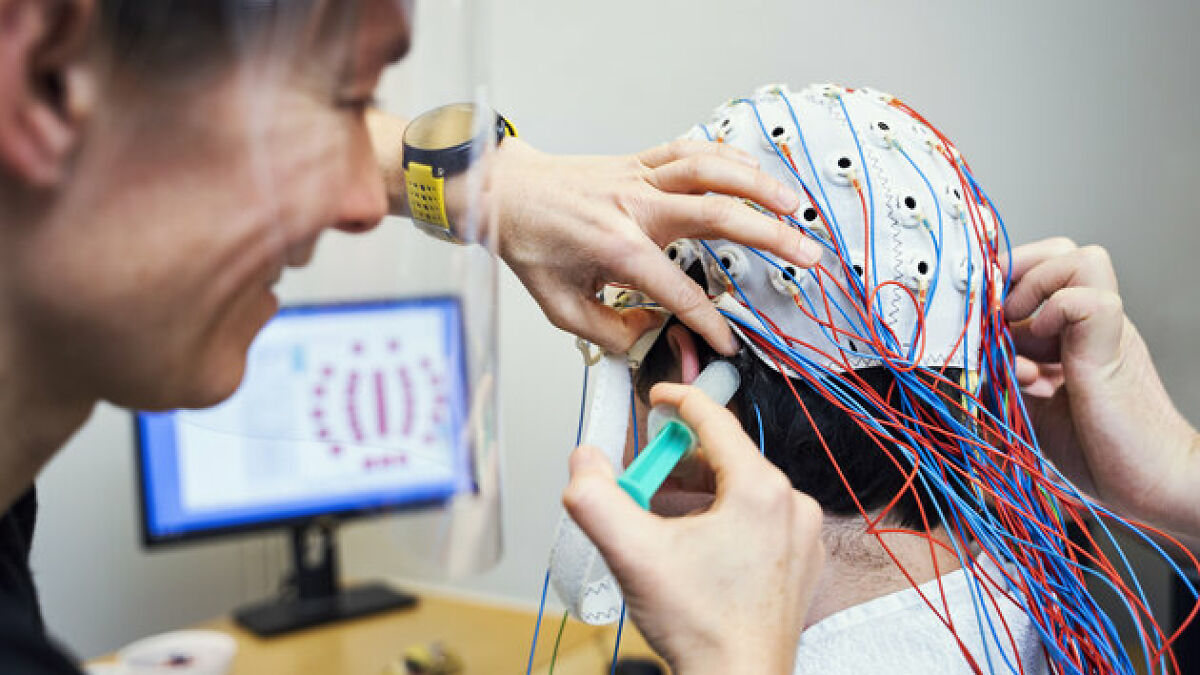
In the mid-1990s, parapsychologist Dean Radin, Ph.D. ran a bold experiment at the University of Nevada. At the time, he had a hypothesis: if awareness transcended time, responses to an upcoming stimulus would appear before the stimulus itself, according toPopular Mechanics.
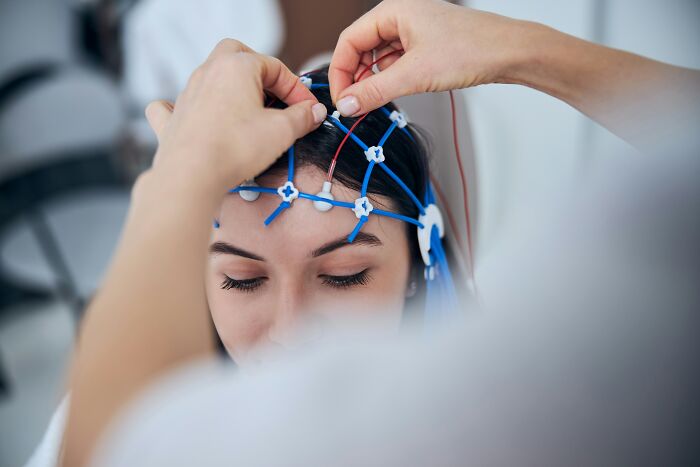
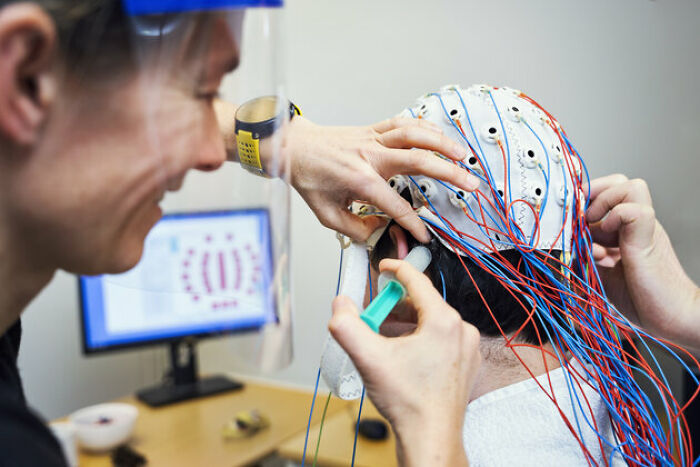
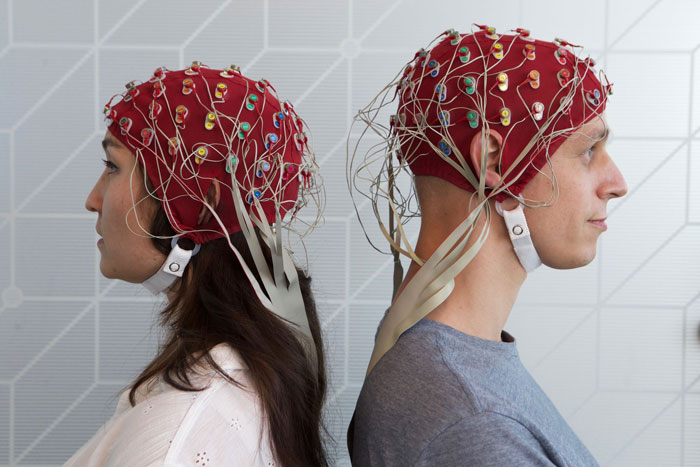
Participants in Dr. Radin’s study were wired to EEG machines and shown images—some positive, like a sunrise, and some disturbing, like a car crash. The EEG recorded a striking pattern.
The study’s participants showed little reaction before positive images but spiked in brain activity before negative images.
Image credits: Getty Images/Unsplash+
Radin’s results were statistically significant and later replicated about three dozen times. His research was so compelling that in 1995, the CIA declassified its own precognitionresearch, with statisticians confirming the effect was reliable.
Still, not all experts are convinced. Dr. Luke Barr, a board-certified neurologist and Chief Medical Officer at SensIQ, cautioned that many studies lack reproducibility.
“As a neurologist, I approach claims of precognition with healthy skepticism. While some studies hint at statistically significant patterns, many lack reproducibility or suffer from methodological issues.”
Image credits: Lund University
“That said, our understanding of the brain is still evolving, and phenomena like ‘gut feelings’ could very well stem from subconscious pattern recognition rather than actual precognition.
“I believe current evidence doesn’t yet support the idea of true foreknowledge. For now, I’d categorize precognition more as an intriguing psychological phenomenon than a proven neurological one,” Barr told Bored Panda in a statement.
Radin himself argued that science needs to look beyond the everyday view of time. “Time is not how we experience it on an everyday level. In quantum mechanics, time may not even be part of our physical reality.”
Image credits: Getty Images/Unsplash+
“It’s not that time doesn’t exist. It just behaves in a much stranger way than how it is seen through the lens of the human experience,” he said.
“It just behaves in a much stranger way than how it is seen through the lens of the human experience. It suggests there’s something probably associated with our consciousness that is different from our everyday experience of time,” he added.
Image credits: Unsplash/Keith Tanner
Beyondlab results, stories of precognition havehaunted people for generations. Cognitive neuroscientist Julia Mossbridge, Ph.D., has experienced precognitive dreams since childhood, and she eventually started recording them in a journal.
Over time, she realized that some visions matched real events that unfolded later. “It’s not hard to understand precognition,” she said. “It’s just hard to believe for people who haven’t experienced it. We don’t understand how time works. Even physicists are admitting they really don’t know how it works.”
Mossbridge also noted that resistance often comes from fear, according toPopMech. “We are stuck on this idea that, if you’re truly scientific, you are going to think about time linearly, but is it really linear?”
Image credits: Unsplash/Lautaro Iglesias
“A lot of the resistance to ideas about precognition and psychic phenomena is about fear, the fear of the unknown or the fear that things aren’t the way they appear to be,” she said.
Her perspective is echoed by neuroscientist Friederike Fabritius, who pointed out to Bored Panda that while precognition itself is debated, gut instincts are well-supported.
“Some studies show evidence for precognition, but there could also be methodological flaws involved. That said, one phenomenon we have for sure is gut feeling.”
Image credits: Unsplash/Pramod Tiwari
“There’s robust evidence for the validity of gut feelings and hunches, since 95% of our brain activity is unconscious and constantly recognizing subtle patterns in our environment,” Fabritius said.
Dr. Mossbridge recalled a story that was shared with her that demonstrated a case of precognition. In the account, a four-year-old girl woke up to the sound of a phone call, then her mother crying because her father had passed away.
Even before the incident, the girl had already felt that her father was not coming home. She had hugged her father tightly before his trip, already knowing she would never see him again.
Image credits: Unsplash/Pablo Merchán Montes
Researchers like Dr. Radin and Dr. Mossbridge have argued that precognition could be tied to quantum entanglement. In physics, entangled particles shareinformation instantly, no matter how far apart they are. Radin believes this might extend to time as well.
“Some people hypothesize that precognition is your brain entangled with itself in the future, because entanglement is not only things separated in space, but also separated in time.
“If it can be entangled with itself in the future, in the present you’d be feeling something like a memory that is going to happen in the future,” he said.
Image credits: The MARCS Institute
Joey Florez, a psychological science scholar, found this possibility scientifically intriguing, though he also highlighted that studies on precognition are still open to criticism.
“Dean Radin’s test, replicated dozens of times, suggests there must be some minimal but statistically significant effect. However, the majority of these studies report relatively minor effects that can be detected only with large numbers of trials and are therefore open to criticism on bias or statistical noise grounds,” he told Bored Panda.
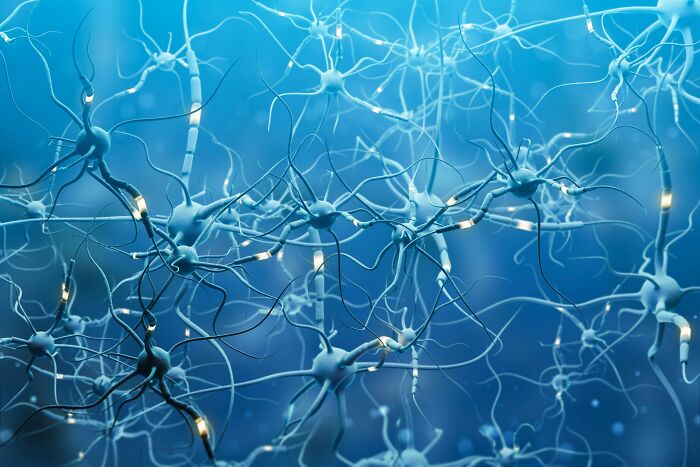
Florez also highlighted that our brains may be prediction machines, constantly processing sensory data to model the future.
Image credits: Robina Weermeijer
“This is called predictive processing, and it explains how we can sometimes anticipate a threat in advance, like slamming on the brakes when a car veers into our path. What Radin’s book adds to this is the suggestion that these predictions may not just be unconscious pattern recognition but may involve something more fundamentally a matter of being attuned to time,” he said.
Cultures throughout history have embraced the concept, from Tibetan oracles to shamans using visions to guide their communities. Scientists remain cautious, but the sheer number of replications, combined with enduring human stories and expert curiosity, has made precognition difficult to dismiss.

By entering your email and clicking Subscribe, you're agreeing to let us send you customized marketing messages about us and our advertising partners. You are also agreeing to our Privacy Policy.
Thank you! You've successfully subscribed to newsletters!


I am shocked, I tell you shocked, science can confirm what we always knew. I took place in a study in 1978 that proved women could recognize btheir own children's cries and have been unimpressed since. Men make a mountain out of the obvious.
I am shocked, I tell you shocked, science can confirm what we always knew. I took place in a study in 1978 that proved women could recognize btheir own children's cries and have been unimpressed since. Men make a mountain out of the obvious.


































 No fees, cancel anytime


















24
2