Get Premium
Dark mode theme is available exclusively for premium users. Learn more about the benefits of subscribing.
No fees, cancel anytime.

 Dark Mode Ad-Free Browsing Unlimited Content
 Ad-Free Browsing Unlimited Content Dark Mode
Join 1.2 million Panda readers who get the best art, memes, and fun stories every week!

We should all strive to be curious, open-minded, and seek to get as close to the objective truth as possible. However, this doesn’t change the fact that, well, the truth can often be pretty uncomfortable. You need a lot of emotional resilience to live with the knowledge about how the world really works.
Amateur and veteran researchers took to an online thread to share the scariest science facts that they know that might keep you up at night. We’re featuring some of the most powerful ones, and the odds are that you might wish you could unlearn some of them. Scroll down to shift your perspective on how you see the world.
This post may include affiliate links.

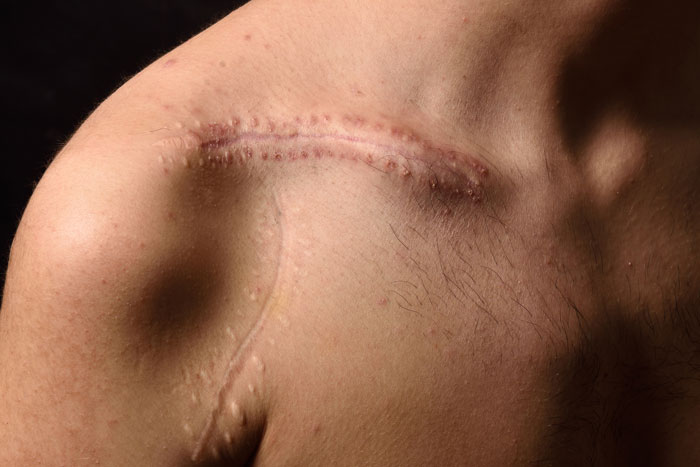 Scars aren't regular skin; they are actively maintained by the body.
The maintenance requires vitamin C.
If you become deficient, the scar tissue will dissolve.
Don't get scurvy.

So of you had a lot of plastic surgery and get a severe lack of vitamin C your face might drop off?
 Polar bears are one of the rare animals that will actively hunt people. Not chase, *hunt*.
EDIT: As a bonus legal fact, in Longyearbyen, Norway, you are required by law to own a large-caliber rifle to defend yourself against polar bears.
It would take you about two hours to walk out of our breathable atmosphere if you could walk straight up.
According to Scientific American, human beings’ desire to learn new things is partly a preference for novelty. “We tend to seek out new information and experiences, and that adds to what we know. We also like to reduce uncertainty. Information can bring food, safety, relationships, and other physical rewards.”
In a nutshell, curiosity, though dangerous at times, encourages exploration, promotes survival, and allows us to build more accurate models of the world we live in.
However, beyond that, we don’t just enjoy learning for the immediate payoff. We are, fundamentally, curious about the world. We have an innate urge to learn.
The only reason malaria isn't endemic in the USA anymore is mosquito control. Not any new meds or anything like that. We used to have summer malaria epidemics all the way up into the New England states, AS WELL AS Yellow Fever, which is a hemorrhagic fever like Lassa and Ebola. The thing keeping them out is mosquito control. Which relies on all of us.
I look at the empathy and social responsibility displayed everywhere and don't feel particularly optimistic about malaria not becoming endemic again within my lifetime in the USA.
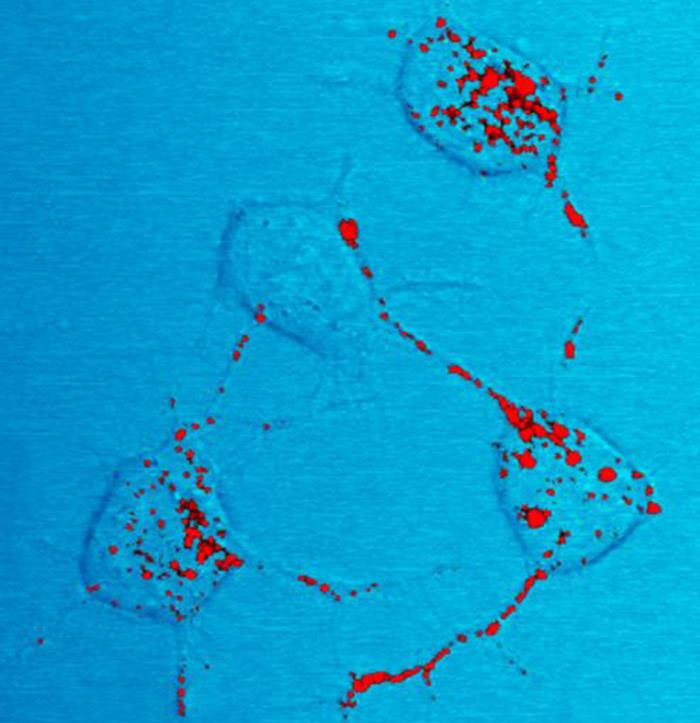 Prions. Everything about them is nightmare fuel.
Ubeube_Purple21:
It's the fact they are almost indestructible that makes them scary.
WakingOwl1:
We had a patient with CJD in our nursing home once. It was incredibly sad. Definitely not a way I’d want to go.
kitarchive:
To make prions even scarier: standard hospital autoclave sterilization (the high-pressure steam used to clean surgical tools) does not reliably destroy them. If a patient with an undiagnosed prion disease (like CJD) undergoes brain surgery, those exact same surgical instruments can potentially transmit the misfolded proteins to subsequent patients, even after being 'sterilized' by normal medical standards.

Just hearing(or in this case reading) the word prion makes me shudder! 😳
At least half of your health is determined by social determinants of health. Things like your income, where you live, color of your skin, and education. Some of it even depends on your parents status. You can make as many healthy decisions as you want but if you are poor, live in a rough area and/or aren't educated, you will statistically have worse health. They have done studies comparing rich folks who smoke vs poor folks and the rich have healthier longer lives. So as much as people stress out about seed oils and healthy habits, it's not going to impact you health much compared to your standing in society. Which is pretty depressing.
People blame poor people for having bad health because they eat bad or make bad decisions but really it's all because of how unequal society is.

Yeah, it's always "poor people are fat because they're lazy slobs who just sit on their a$$es all day long instead of hustling" and never "poor people are fat because all they can afford is trash, processed food and don't have time to invest into fitness" or even "fat people are poor because high-paying jobs always opt for conventionally attractive, 'representative' candidates"
Human beings are especially driven to learn more about the things that we already know a little bit about.
“You can think of curiosity as the process that guides the acquisition of knowledge,” said neuroscientist Celeste Kidd, from the University of California, Berkeley.
“If you feel positive after learning something, then you now understand the joy of learning, which motivates you to learn next time,” adds educational psychologist Kou Murayama, from the University of Tübingen, in Germany.
Meanwhile, Pierre-Yves Oudeyer, from the French research institute Inria, in Bordeaux, emphasized that people ought to “focus on learning activities that are neither too easy nor too difficult, the ones where you have maximum improvement in speed, which will progressively get you to more and more complicated and yet learnable activities.”
That way, there is a positive feedback loop between curiosity and learning.
US Media generally keeps its news publications at a 8th grade reading level. However, 60% of the population has less than a 6th grade reading comprehension level.
In a media environment designed to capture and direct attention to create engagement, the skill of focusing relies heavily on latent cognitive activity. The long term consequences is a stunted ability to control attention.
Modern advertising isn’t about selling a product but creating engagement. Everytime someone states something wrong or controversial, the engagement between the multiple parties is ultimately the product they’re selling.
This means the cognitive dissonant, the controversial, and the belligerently ignorant are the perfect attributes for a profitable media “star”.
So profitable, outright lying can generate enough engagement for profiteers.
One thing i thank my mother for is encouraging me to read at a young age. It has carried on throughout my entire 47(i think...🤔🤣) years on this earth! I may not be the smartest man alive but ive always enjoyed reading.
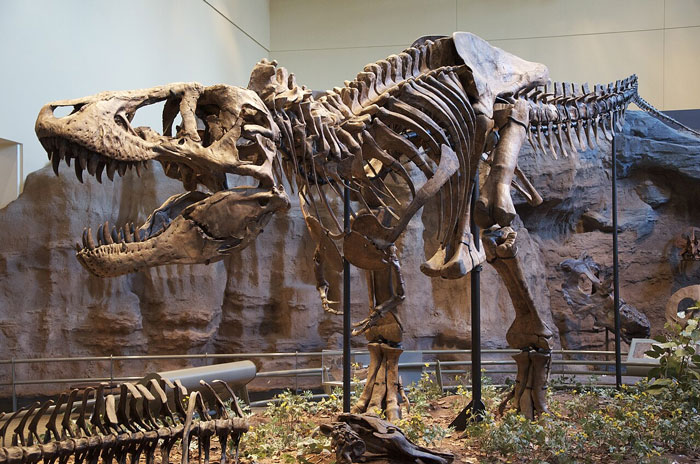 Every fossil we have likely represents only less than 1% of every species that lived on Earth. Most species are completely lost to time with no proof they even existed.
 Aneurysms. Anyone can have it and u kinda just drop since it's so random.
For me it's the scariest because I was told my condition makes it higher chance.
SereniaKat:
It can even happen to otherwise healthy children. We had a family friend whose 12yo daughter had a bad headache all day. No fever or anything, so her parents gave her Panadol and put her to bed. She crawled into bed with them a bit later, fell asleep between them, and never woke up.
It's so frightening because there wasn't anything they really could have done differently. A one-off headache doesn't seem like it needs an ER visit.

honestly it's probably the best way to go, so not that scary
Which of these science facts genuinely made you feel a bit uncomfortable?
How do you find the time and energy to stay curious about the world, despite being so busy in your day-to-day life?
What are the most interesting, weirdest, or spookiest things that you recently learned about the world? Share your insights in the comments below with all your fellow readers.
Your brain is so good at creating a stable version of reality that most people don’t realize how much of what you “see” is actually prediction, reconstruction, and filtering done by the brain in real time.
You’re not experiencing reality directly as much as you think you are.
 Tattoos only work because our immune systems are trying to protect us from the ink free floating in our blood stream, so it sends cells that just trap the ink there as best they can. Slowly, particles of the ink will rearrange within or escape through their barriers, which is why tattoos fade and/or get fuzzy over time. Also sunburns can cause tattoos to fade because it forces the body to send extra immune cells and fluids to the area, which breaks down or washes away ink particles at a faster rate. Not necessarily super scary outside of thinking about how our bodies are trying to protect us and we’re just like “ooooh pretty!” and doing it anyways.
 We can't do a true study on how nano and microplastics impact the human body because it is impossible to find a control group. Microplastics are found in literally everything, they are in the brain, placenta, breast milk, the atmosphere, glacial ice, sediment deep deep down. They are one of the most invasive things we have ever seen.

The reason it's impossible to find a control group, the reason microplastics have been detected everywhere, is now explained. Contaminated laboratory glassware in the testing organisations. What they're actually detecting is the powder used in the lining of the rubber gloves that they use when cleaning lab equipment. There's a recent scientific article about it.
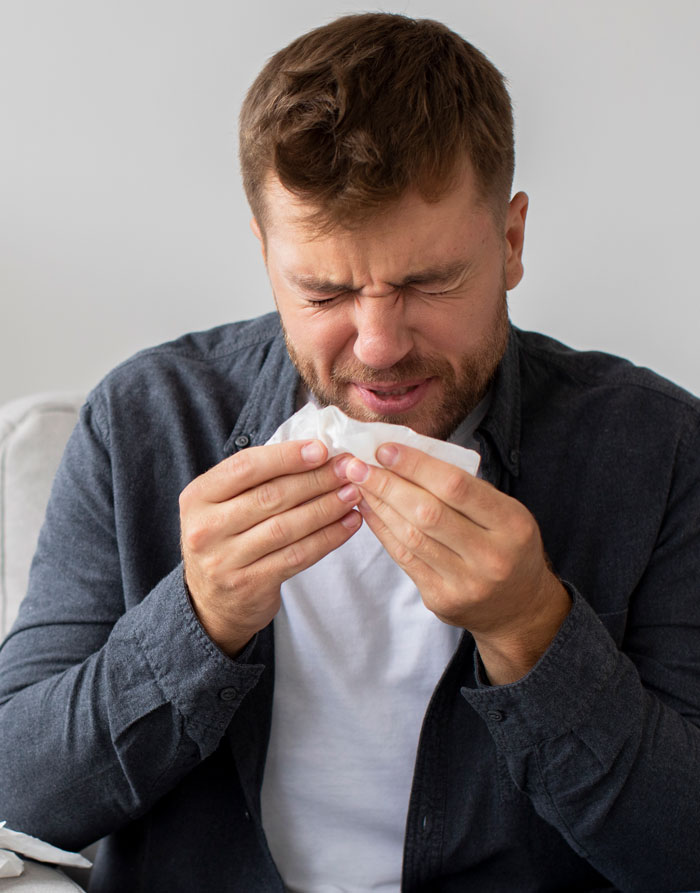 Sometimes, if you sneeze hard, you'll pop a hole in the tube that carries your cerebrospinal fluid down your spine. You get a spinal headache, like you can get after an epidural or spinal draw, except nobody poked a hole in your spinal fluid system with a needle, you just sneezed and tore a hole.
This can happen at any time. Your spinal fluid will be leaking out the hole into your body and you won't know. You'll get debilitating headaches from standing or sitting up because your brain isn't floating on enough fluid, but they'll go away if you lie down. It takes forever to diagnose and then most of the time they'll just wait to see if it heals on its own. (They can do a blood patch, which they do after an epidural or a spinal, except they don't know where the hole is so they don't know where to send the patch.)
Any sneeze, anytime. The human body is so broken.

What could happen to you if you hold in a sneeze: damage to eardrums; sinus problems; increased pressure inside your eyes; ruptured blood vessels. There aren’t any reported cases of death due to holding in a sneeze. (Can Holding in a Sneeze Hurt You?, Cleveland Clinic 2024)
 It's scarier for women but : most meds are never tested on women, when they are the results are not segregated by sexes (so if the results are different, it's not visible) and dosage are made for male body.
As a result, meds can be more or less effective or with higher negative effects. Some meds could have been flag as infective but could have been great on women's body, etc. (Also not even talking about the effect of hormones and hormonal fluctuations on the results).
From a quick Google search for example, I've found that a recent study from last year noticed that beta blockers prescribed after heart attacks aren't effective on women.
Also IIRC women have bigger chance to d!e in a car crash since the crash test dummies are mostly modeled after average-sized men.
Yellowstone is a supervolcanic caldera that could blow apart much of the American West, bury the US under ash, destroy crops and infrastructure, darken the skies, cool the planet, and cause worldwide famine if it erupts at full force.
Yellowstone last erupted about 640,000 years ago. Given that supervolcanoes like this blow every 600,000 years or so, there's no telling how close we are for the next one.
This was from A Short History of Nearly Everything by Bill Bryson.
Your brain can “edit” memories without you knowing. Every time you recall something, your brain can slightly rewrite it so some of your strongest memories may not be fully accurate anymore.
Eyewitness testimonies in criminal trials are known to be unreliable, but juries will often believe them over forensic evidence. Innocent people have been sent to prison or even executed based on what someone thought they saw.
 I mean some people know this, but it’s not common knowledge: **alcohol causes cancer**. The World Health Organization has it in the same category as tobacco and asbestos. I think technically it’s not the alcohol itself that causes cancer, but it’s the substance that our bodies turn alcohol into, that does it. The way I understood it is that that stuff damages DNA, which means that when the cells rebuild, they can become cancerous.
Where I live, stuff like "small amount of beer / red wine is good for your digestion and overall improves your health!" are just immutable facts that everyone accepts. But even if it DID have some minor beneficial effects, this cancer risk always outweights it (and also, frankly, nobody here sticks to just "small amount" anyway)
Ever hear of rogue planets? They are planets that are zooming around the Milky Way independent of a star system.
It's hard to get an accurate number due to the random nature, but they have an estimate: in the Milky Way alone, rogue planets outnumber the stars 7 to 1.
What's even more wild, rogue planets weren't discovered until the year 2000. (Or late 1999) Not only are they hard to track and study, we've only been recording data about them for a little over 25 years.
Gamma Ray Bursts can sterilize a planet in an instant and we see evidence of them striking targets trgularly. One could be on its way to us right now and we would never know unti.

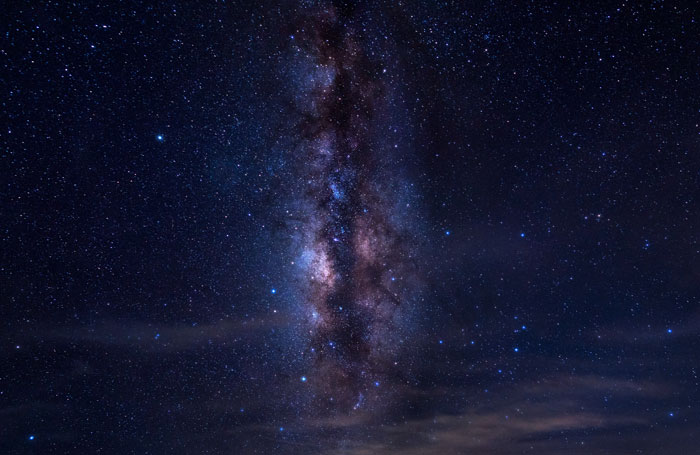 In the unlikely event that we’re in a “false vacuum”, at any time a “real vacuum” could spontaneously form somewhere in the universe and begin expanding at the speed of light until it reaches us and everything would end instantaneously. No warning, no time to even realize what’s happening, just *poof*.
Nobody really knows how anesthesia works.

i know how it works. they put a weird mask on your face, you fall asleep, then wake up. simple as that
We are currently in the process of a mass extinction event. Many species, especially birds, are going extinct at an alarming level. We've had 5 mass extinction events throughout earth's history where up to 95% of all life on earth has [disappeared]. And that could very well be where we are headed. It just doesn't seem that serious because the worst mass extinction events happened over tens of thousands of years and humans can't really fathom life in that length.
 Scientists are warning that antibiotic resistance could make routine surgeries extremely risky again.
Crutation:
We know about antibiotic resistance. What people don't realize is that there no new antibiotics in the pipeline, and nobody is researching novel ones.
Why, because even if there is a new one researched and approved, it will be limited to only the most urgent cases, so it is impossible to break even.
So when antibiotics become useless, it will take years for new medications to be developed, tested, and approved.

Very oddly phrased, and (deliberately?) misleading, suggesting that development of new antibiotics is being held back by lack of profitability. Not so. The problem of resistance is that existing types of broad-spectrum antibiotics all work in a similar way, so new ones that may be more effective against certain bacteria would not address problems of resistance. But just 2 years ago a new class of antibiotics was found which works quite differently, and is being developed specifically to address bacteria with resistance to traditional antibiotics.
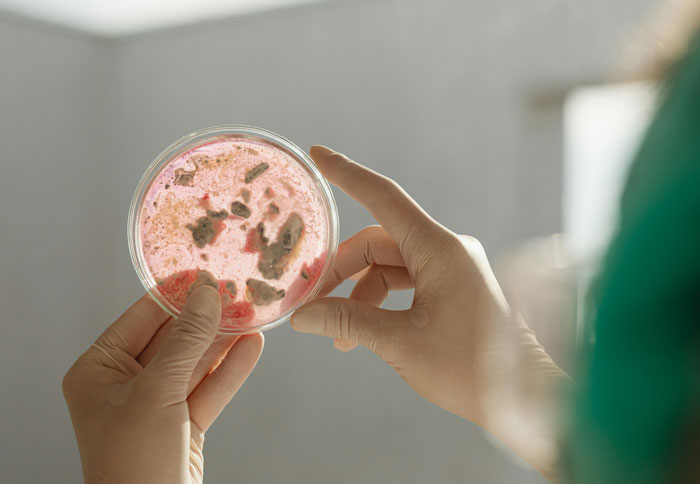 There are invisible bacteria in your gut that control your cravings, mood, and even some of your decisions.
Yeah that’s just how we humans are. Not scary or surprising. We’re just meat and bone mechs who are not as in control as we would like to believe
People don't know about basic economic facts and they can vote.

"If voting made any difference, they wouldn't let us do it." Just read the Elstein files, they are all in there. Yes, even him, and him, and her etc
A photon leaves a far-away star, and travels millions of light-years to get to us. When we see that star, we see it as it was all those millions of years ago, as if the information carried by that photon is millions of years old.
However, to the photon, the trip is instantaneous. If you could ride on the photon, it would seem that it was emitted and arrived at its destination in the same instant. One of the really weird consequences of relativity.
This also means that as a spaceship approaches the speed of light, it can travel millions of light years without the astronauts aging.
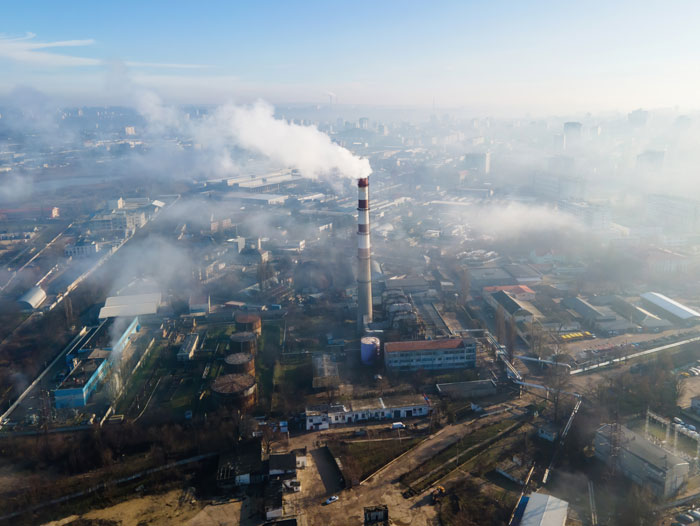 One of, if not the most problematic consequence of air pollution is not long-term climate change (the way you imagine it, at least).
A higher concentration of CO2 and CO in the atmosphere, as well as higher temperatures, is slowly turning the oceans more acidic. We're a few pH points away from oceans becoming too acidic to be hospitable for countless sea creatures, but most notable of all, various phytoplankton and algae. That is to say, we are obliterating the habitat of the creatures that *generate approximately 70% of the Earth's oxygen supply.*
My only hope is that they adapt or evolve fast enough.
Edit:
This is getting larger than i figured, so some probably needed further explanation:
1. It is unlikely we will all suffocate due to this.
2. When I say a few points of pH, I mean dropping from about 8 to 7.9 to 7.8 in 75 years. But this is still really bad because pH is a logarithmic scale.
There's a world of difference between water acidity due to carbonic acid from CO2 and water acidity due to inorganic acids. Organisms eat carbonic acid, it's a food.
Locked-In Syndrome is caused by severe damage to the brainstem (often through a stroke). This leaves patients fully conscious, aware, and able to feel pain, but completely paralyzed. They lose the ability to move any muscle except their eyes. These people are essentially trapped inside their own mind.

I was the ICU for a week due to dangerously low sodium levels. The reason I was hospitalized for so long was because they had to bring my sodium levels back up extremely slowly; a couple of times the doctor even stopped adding it because the level was getting too high. When I asked why, my doctor told me that doing it faster could cause locked-in syndrome. I told them to take all the time they needed.
Your biopsied flesh (and tonsils if you get them removed) will sit in storage for a decade before they're anonymized and sold to big pharma companies.
Source: I work at one of those companies and handle tissue samples every day.

Well if it helps, I clearly don't need it anymore if they had to remove it ¯\_(ツ)_/¯
The active cores from the Fukushima still uncontrolled and all they are doing is drenching them with water and when the tanks fill up with the radiated water they are simply dumping them in the sea.
"History shows again and again how nature points out the folly of man". "Go go Godzilla!".

... as if seawater doesn't naturally contain a decent amount of radiation...
Atmospheric CO2 is increasing at such a rate that it's *weakening human bones*.
From that same 2026 paper: "If these trends continue, **blood bicarbonate values could be at the limit of the accepted healthy range in half a century**, and Ca and P will be at the limit of their healthy ranges by the end of this century. Studies indicate that, after this time, elevated atmospheric carbon dioxide, leading to CO2 accumulation in the body, has the potential to cause a range of adverse health effects. These findings highlight the urgent need for significant reductions in anthropogenic CO2 emissions to safeguard public health."
Nightmare fuel!
Every metal object you touch today; such as a ring, a knife, fork, spoon, car door, iPhone case, deodorant can, pots and pans. Were once a star billions of years ago.
Chemical elements such as carbon, magnesium, iron, copper, gold, aluminium, lead, zinc, were only formed by the nuclear fusion that happens inside a star. Only hydrogen and helium naturally exited outside this stellar nuclear fusion
The star exploded, throwing out these chemical elements. The dust cloud eventually binded together to form planets.
The aquifers that we depend on for major food production in both California and the central prairies are drying up and will be essentially gone within 30 years. A big chunk of the most productive agriculture in America will be wiped out.
We genuinely have no clue whats in the ocean. It makes up 90 or so % of our earth but we have no clue what’s in there. Yes we know a lot but that’s merely the surface. There’s brine pools on the very bottom that can go 40 50 feet lower than the bottom and that’s already at a level where absolutely zero light can be seen. Not even if you look straight up at the surface. There’s creatures that have never even seen light. There could be creatures so big that they’re larger than humpbacks. There could also be alien life with a whole city and everything. We have no clue and no way of knowing. We can only go so deep now so who knows what we’ll find in the future. Hell there might still be aquatic dinosaurs from back then since all that water and stuff has the possibility to ‘slow down time’. Look at those one sharks who can live for over 500 years. We have zero clue.
This was true until "environmental DNA" was discovered and researched. Until after the year 2005. Now we're starting to use environmental DNA to discover cryptic species in the deep ocean that nobody has seen yet. Or to put it another way, we're now getting a knowledge of all the most common species in the deep ocean.
The richest (above 100 millions of wealth) pay 20 to 25% taxes, when the working and middle class pay 40 to 50%. Social science is science.
PFAS, the "forever chemical" is EVERYWHERE. To give you an idea as to how ubiquitous it is, here's a little anecdote: PFAS can be detected down to parts per trillion. In the state of Florida, when drilling into soil or water to collect samples for PFAS, drillers have to decontaminate the drill stems between each boring. Decon involves scrubbing and pressure washing the drill stems with an environmentally friendly soap like Liquinox and clean water. Drillers usually bring the clean water with them into the field. It's gotten to the point where we can't find clean water that hasn't already been contaminated with PFAS to clean the drill stems and other sampling equipment.

David, They are called "forever chemicals" because an exceptionally strong carbon-fluorine bond makes them highly resistant to breakdown, meaning they accumulate over time in the environment and in human bodies. They are toxic. They cause increased risk of certain cancers (e.g., kidney, testicular, and reproductive cancers)Liver damage and elevated Cholesterol reduced fertility and developmental issues in infants and Children weakened immune system response. Even though they do not actively undergo chemical reactions with our biology, they still physically interfere with cellular processes.
A massive solar storm—similar to the 1859 Carrington Event—could induce powerful electrical currents through modern long-distance power lines, potentially destroying global transformers and plunging continents into a months-long blackout.
If the sea temperatures keep rising.. there will likely be a phytoplankton extinction event.
So here's something I found out recently. Our bodies actually have a built in defense mechanism against the vast majority of fungal infections and it comes down to something super simple: our body temperature. Most environmental fungi literally cannot survive at 98.6°F (37°C), which is why most fungal infections in humans tend to stay on the surface. Think athlete's foot or ringworm - they live on the cooler parts of our skin on the extremeties. Mostly annying but not very dangerous. Comes from someone who's had to deal with a few of these, having lived in a humid city (Kolkata).
As global temperatures slowly rise, fungi are being subjected to a massive evolutionary pressure test. Adapting to higher heat. Scientists believe this thermal adaptation (fungi basically getting "trained" to survive at higher temperatures) is what's driving the sudden global emergence of deadly, multidrug resistant pathogens like Candida auris. Essentially - climate change is stripping away our primary biological defense against fungal infections. I sure hope the pace of science's progress with curing disease keeps pace. Rooting for Demis Hassabis to work his wonders.
Wasn’t there a small totally not famous series based on this idea.. /s
Despite all of our knowledge and technology, our entire existence depends on 15cm of topsoil and the fact that it rains sometimes.
Even more than that. Our entire existence depends on a lack of volcanic gases sulphur dioxide and carbon monoxide in the atmosphere.
Large parts of many countries will be fully underwater, or at very high flood risk, well within the life of a mortgage.

by 2050 the population of the planet is estimated to be 9.8 billion, 2.5 is meant to be the point where humans could live comfortably. p.s. over 12 billion by the end of the century.
We are surrounded by poisons: radon gas, micro-plastics, PFOAs, pesticides, fertilizers, food additives, car exhaust, ... There is no knowing what we are doing to ourselves and the planet.
Hell, even oxygen is poisonous. The lifeforms on this planet just evolved a resistance to it and use the reactive properties as energy source (Well, everything that is not a plant)
Toxoplasma Gondii it is a single cell parasite that lives in the neurons in the brain. In mice it makes them not afraid of cats, the cat catches the mice and eats them and the parasite is where it wants to be. So what's scary about that? Over 1/3 of the human population has this parasite. In humans, if you are healthy, the parasite is dormant however if there is a compromised immunity in a person the parasite alters dopamine levels causing risky behavior and slower reaction time and a high number with Schizophrenia has this parasite.

Considering how domesticated felines have been part of my life for the past 40+ years...
Most geologic features are trauma scars from unknown periods.
Iceland, for instance, is believed to have mostly formed from one giant flood of lava. The Great Plains was once the ocean floor until the mantle lifted it straight up for unknown reasons. The Hawaiian islands line up with a mantle plume that's shifted underground with time. And one entire bay in Italy is a volcanic crater.
 If you climb Mt Everest without an oxygen tank. You get to an altitude where the oxygen is so thin your body can't sustain life any longer. You are [passing away] as you climb.
Technically a summit attempt without oxygen is a race against time. If you twist an ankle and can’t get yourself down, you will run out of time and [pass away] on the mountain.
Once you do [pass], it’s almost impossible to bring your corpse back. Many bodies get left on the mountain, frozen for decades. Some bodies that are still on Everest are even used as navigational waypoints by other climbers (look up “Green Boots Guy” ).
George Mallory and Sandy Irvine died on Everest in 1924 and their remains are still there. Mallory's body wasn't found until 1999 and Irvine's remains weren't found until 2024. The discovery of Mallory's body led to speculation that he may have reached the summit before Edmund Hillary, but even if he did surely you've only half climbed Everest if you d*e on the descent?
We don’t have any idea how to program a benevolent super-intelligent AI. There are good reasons to expect these AI companies to create something that kills all humans. The founders recognize this, but the money and power and race dynamics make them neglect the most important problem in history.
The big anticipated west coast USA earthquake isn't LA but Seattle. There's a major fault that runs right through the city and kicks off every few hundred years or so. The last one was in the 1700s. The Japanese have records of that and earlier because the tsunamis were powerful enough to hit them. The next one will basically break off a huge part of the washington coastline and Seattle.
If you go googling, you'll find the dhs paper written about it 10-20 years back.
Los Angeles is on a slip fault. It moves approximately 2 inches closer to San Francisco every year.
Diphtheria bacteria can cause a pseudomembrane to grow over the throat, block the airways and suffocate a person to.
Ebola was the big scary before covid came onto the scene.
The US has had several Ebola outbreaks that have burned themselves out before becoming part of the zeitgeist in the way covid has, though they have still have had an impact. Personally I am infinitely more terrified of Ebola mutating and resurging than I am of another Covid mutation.
Scarily, the reason why they haven't had an impact in the media is because the disease just flat out kills through hemorrhaging without going through the pneumatic processes covid travels through before becoming fatal.
The balance maintained by the wastewater treatment plants in highly populated areas is often tenuous. It was less than 75 years ago that all of Seattle was just dumping their waste directly into Lake Washington.
It is easier to prove that there are extraterrestrial life out there than to prove there isn't.
Reason being is that to prove there are aliens, we only need to stumble upon one. But to prove there isn't, we need to scour the entire universe.
Pre-atomic age metals are fairly rare but needed in scientific research equipment. After the first atomic testing all metals being smelted were infused with increased levels of unnatural radioactivity. Old train tracks, boilers, and steamer ships are a key source of pre-atomic age steel that must be carefully smelted without being exposed to the earth's, now unnaturally radioactive, atmosphere. Test equipment used in space exploration can be extremely sensitive to background radiation especially.
Scavengers are also dismantling sunken pre-atomic ships, including warships which are considered war graves by international treaty.
The “big one.” It’s considered an even that will happen within the next 50 years. The Cascadia subduction zone is a faultline off the Pacific northwest coast. Scientists are predicting that it’s overdue for a major earthquake that could produce tsunamis and reach > 9 magnitude. This could essentially destroy Seattle. Much of the infrastructure would not be able to withstand the force.
most of the western seaboard, and large areas of the Canadian shoreline. i watch too many docs.
Forever chemicals like teflon. I watched a bbc documentary on them (that dupont had taken down so you won’t find it on their regular channel) and it truly shook me to my core.
Oranges are [vanishing] from a bacteria infection and we can't feasibly stop it. Because of this, orange production in the U.S. is down 90%.
From the interweb: "Florida's orange production has fallen by more than 90% over the past two decades, primarily due to the impact of citrus greening disease and other challenges. This decline has significantly affected the overall U.S. citrus industry."
There is no center of the universe.
The pole shift takes between 1000 and 10000 years. during that time the poles drift over the equator with moments where the magnetic donut has it's donut hole looking straight at the sun. that generates immense concentrations of solar winds and areas where charged particles hit the size of cities.
We don't know the exact effects but we assume it's not going to be pretty.
Yes and no. As the magnetic dipoles shift and weaken, the magnetic quadrupoles take over the role of protection. Even with no magnetic dipole, the effects are still minor. The Earth's magnetic dipole has reversed at least 22 times in the past 5 million years with no detectable effect on species extinction.
Our galaxy and Andromeda are gonna collide one day.

Yes, but both are so vastly spacious that there is a high chance of nothing directly crashing into each other. But the night sky will probably look more awesome for those living through it
You don’t actually see the present, your brain shows you a slightly delayed version of reality (about 80–100 milliseconds old) and then fills in the gaps to make it feel instant.

Technically speaking, we also see the world "upside down" but our brains have adapted to take this into account, so we don't even realise it.
A powerful solar storm could knock out large parts of modern civilization for months. If a massive burst of solar energy, called a Coronal Mass Ejection, hit Earth directly, it could damage transformers, satellites, GPS systems, internet infrastructure, and power grids around the world. A major solar storm known as the Carrington Event happened in 1859, long before modern electronics existed. If something similar happened today, the damage could cost trillions and leave some areas without power or communication for weeks or even months.
Some research was just released that indicates that microplastics in the upper atmosphere are making climate change worse.
Your body has a microbiome larger than your own brain.
The AMOK is slowing and following a predicted northward trend as it does. Once it stops, England and Northern Europe will descend into an ice age. The disruption will cause massive collapse in current biological systems. We've got about 50-70 years although it is accelerating toward collapse at a much much faster pace than predicted.
"The main ocean current in the Atlantic — the Atlantic Meridional Overturning Circulation — is one of the most powerful drivers of heat around the globe. The AMOC is the reason that northern Europe is so temperate, a couple of degrees warmer than it ought to be given its latitude." (Why Fears Are Growing Over the Fate of a Key Atlantic Current, Yale Environment 360, 2026)
We don't know how effective the rabies vaccine actually is. We think it's somewhere between 80% and 100%, but for obvious reasons it's difficult to test. Rabies, thankfully, does not transmit all that easily so we don't have a good way to know if an encounter is a viable transmission vector and often times we don't even know if a specific wild animal even has rabies.
It should be very easy to test. Rabies kills about 20,000 people a year in India.

1) Scientists know that acetaminophen works, but they don't know how it works. 2) "Light" takes 10's of thousands of years to get from the center of the sun to its surface, but only takes 8.5 minutes to get to Earth.
1) Scientists know that acetaminophen works, but they don't know how it works. 2) "Light" takes 10's of thousands of years to get from the center of the sun to its surface, but only takes 8.5 minutes to get to Earth.





















 No fees, cancel anytime