Get Premium
Dark mode theme is available exclusively for premium users. Learn more about the benefits of subscribing.
No fees, cancel anytime.

 Dark Mode Ad-Free Browsing Unlimited Content
 Ad-Free Browsing Unlimited Content Dark Mode
Join 1.2 million Panda readers who get the best art, memes, and fun stories every week!
Plenty of people go by nicknames in their personal lives, but should the same apply to work settings? While some may feel closer to their colleagues when referring to them by a moniker, this can be tricky in professional environments, causing others to abstain from them.
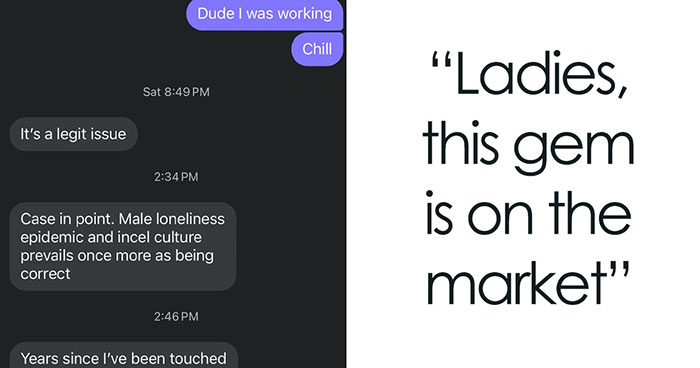
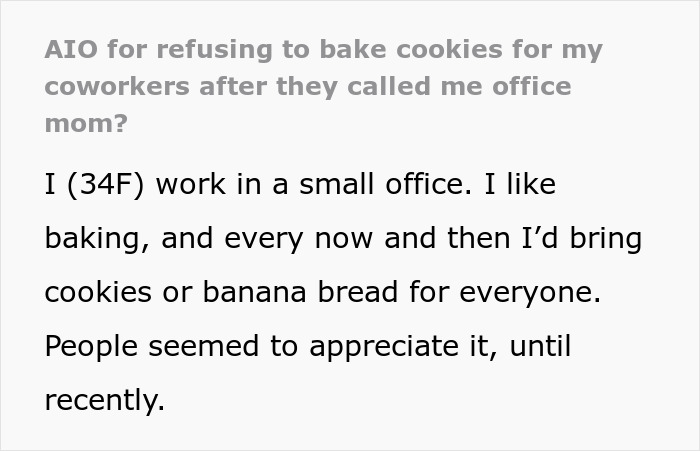
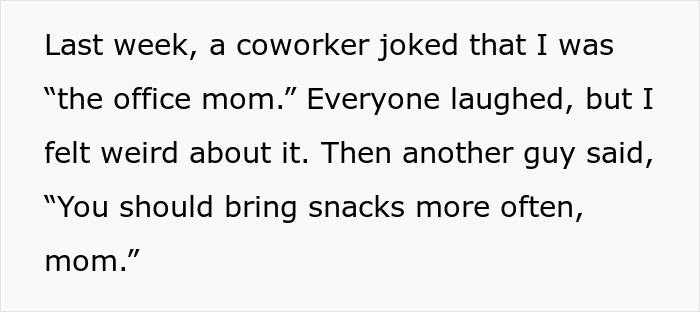
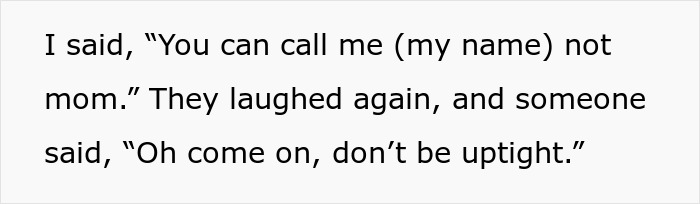
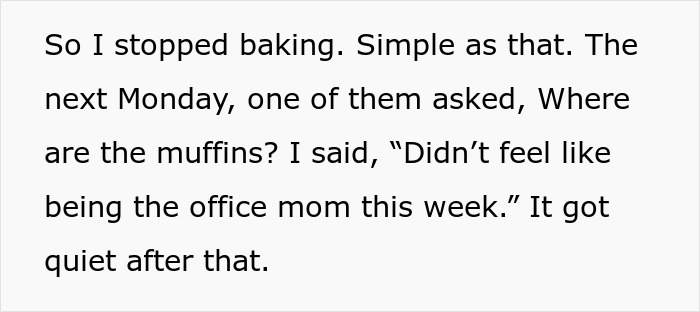
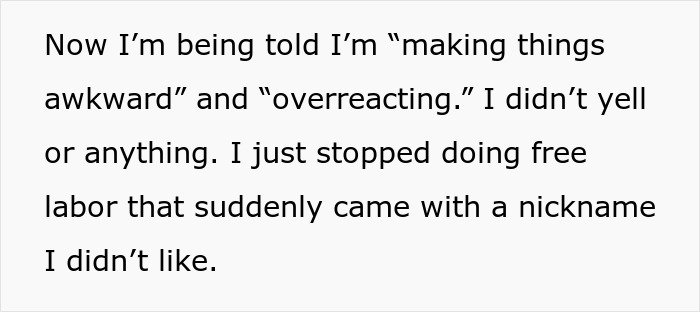
In this workplace, it seems that employees were comfortable using nicknames with each other. But it all turned awkward when they gave a woman one she didn’t like, and she was forced to shut it down.
Image credits: ansiia / freepik (not the actual photo)
Image credits: volodymyr-t / freepik (not the actual photo)
Image credits: Impossible_Law_2895
Image credits: rawpixel / freepik (not the actual photo)
Per Harvard Business Review, nearly 9 out of 10 US adults have been called by a nickname at work or witnessed someone else being called by a moniker. This might seem like a trivial thing, but it can have a big impact on an employee’s experience at work, for better or worse.
“The existing literature suggests that nicknames serve as an emotional bond, which can facilitate and improve interpersonal relationships,” says Ivey assistant professor of marketing, Zhe Zhang. Employee nicknames can also help foster belonging in the workplace, but at the same time they can also have negative consequences if they’re not used appropriately.
“Friendly and well-intentioned nicknames at work do not always lead to better relationships,” Zhang told Fast Company.
Nicknaming colleagues is tricky because of the power disparities involved that we don’t find in our everyday relationships. But their nicknames can be used in professional settings while keeping a few important things in mind.
According to Zhang’s study, the first rule to nicknaming colleagues is that managers shouldn’t give their employees monikers. “Because there is a power disparity between the supervisor and the subordinate, nicknaming a subordinate may make the manager seem like they are abusing their power,” Zhang explains.
Another thing to consider when thinking about whether to give your colleague a nickname is the organization as a whole. Monikers are usually associated with flexible, horizontal and egalitarian companies but are typically deemed inappropriate in pyramid-shaped organizations where power disparities are very present.
Image credits: freepik (not the actual photo)
Overall the best approach to colleague nicknames, according to Zhang, is simply asking. “When in doubt, it’s always best to seek one’s consent before using a nickname.” This ensures that they feel respected and comfortable with how they are called in the workplace.
“Nicknames in the workplace aren’t for everyone, and leaders should exercise caution when using them with subordinates,” additionally notes Zhang.
Never assume that an employee is comfortable with a moniker, as it can lead to discomfort, strained work relationships and even HR or legal concerns. A simple check-in is all it takes to ensure that a colleague feels good with the way they’re addressed by co-workers.
In case a person is nicknamed without being asked their preference at work, they politely say something along the lines of, “Actually, I prefer to be called Alexandra rather than Alex.”
This should be done as early as possible so the nickname doesn’t catch on. “If you don’t like being called by a nickname, you really need to nip it in the bud. You don’t need to go into the reasons why; it should be sufficient simply to ask politely for it not to be used,” Liz Wyse, an etiquette adviser, recommended. “All attempts to stop people calling you by a nickname should be made in the first couple of months.”


By entering your email and clicking Subscribe, you're agreeing to let us send you customized marketing messages about us and our advertising partners. You are also agreeing to our Privacy Policy.
Thank you! You've successfully subscribed to newsletters!



Telling her she made it awkward when obviously they made it awkward...
Load More Replies...
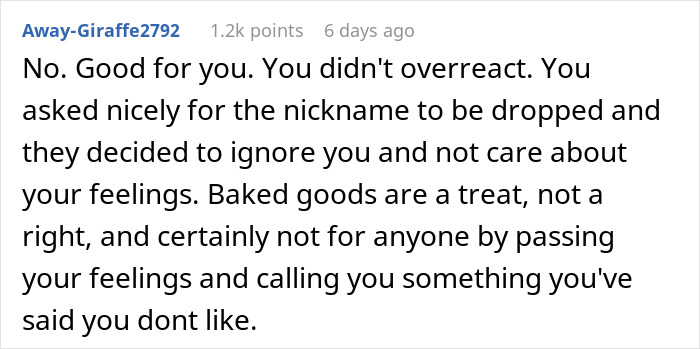
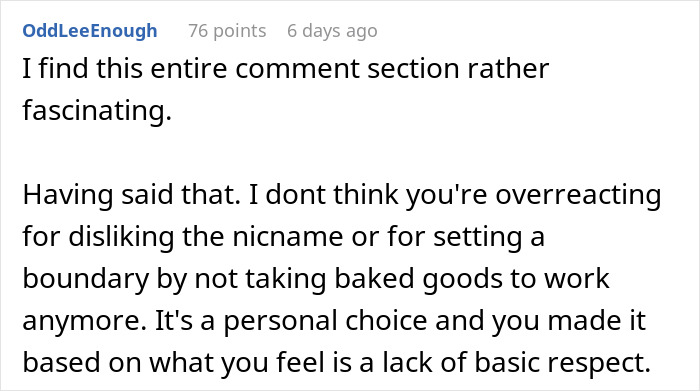
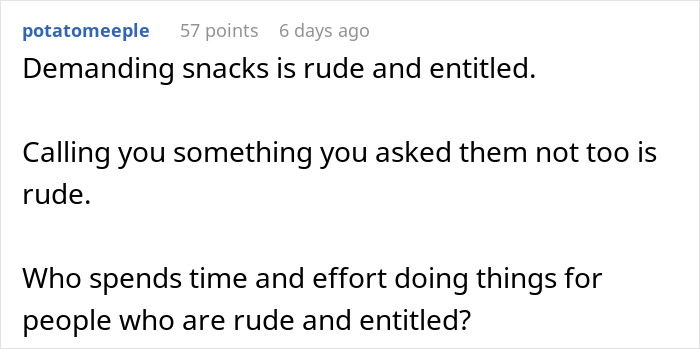
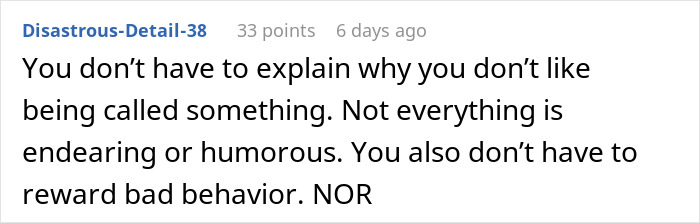
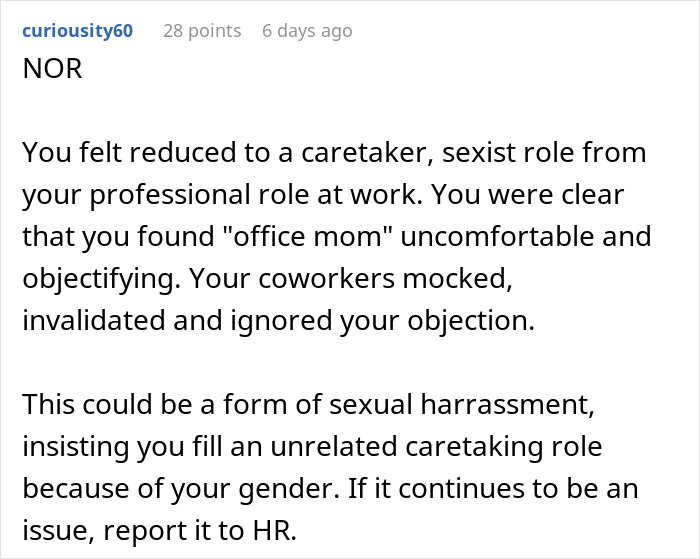
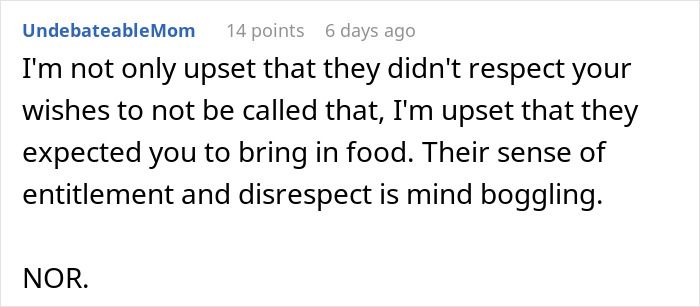
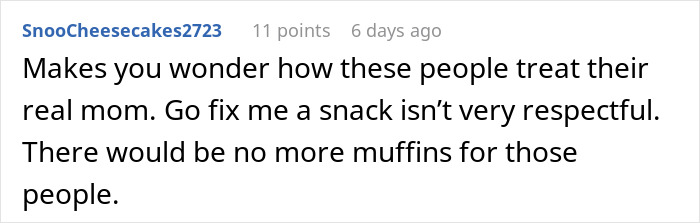
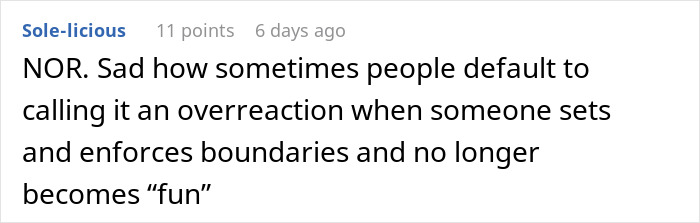
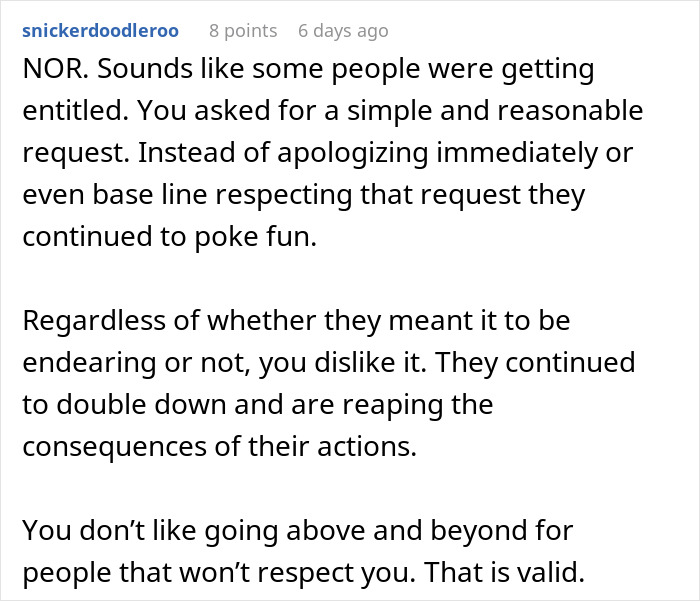
FAFO. She said please don't call me that, they ignored her, so she took appropriate action and they got upset that they didn't get the treats they seemingly now expect. It's a small mound, not a hill but the battle has been won by her imo.

I know for a fact that I WON"T be treating those who said she over-reacted to any baked goods or cooked food any time soon. The entire office should've just shut their traps when OP said she wasn't happy about the nickname, now they don't get to stuff them with baked goods instead. OP ought to escalate the issue to HR should these c*r*a*p*trap co-workers decide to make the office any more uncomfortable for her! SMH!!!
@Paul Rabit : Guess you must like nicknames forced on you, no matter how derogatory or uncomfortable, huh? Wasn't thinking of treating you to anything with that attitude either, thanks!
Load More Replies... Telling her she made it awkward when obviously they made it awkward...
Load More Replies... FAFO. She said please don't call me that, they ignored her, so she took appropriate action and they got upset that they didn't get the treats they seemingly now expect. It's a small mound, not a hill but the battle has been won by her imo.
I know for a fact that I WON"T be treating those who said she over-reacted to any baked goods or cooked food any time soon. The entire office should've just shut their traps when OP said she wasn't happy about the nickname, now they don't get to stuff them with baked goods instead. OP ought to escalate the issue to HR should these c*r*a*p*trap co-workers decide to make the office any more uncomfortable for her! SMH!!!
@Paul Rabit : Guess you must like nicknames forced on you, no matter how derogatory or uncomfortable, huh? Wasn't thinking of treating you to anything with that attitude either, thanks!
Load More Replies...









 No fees, cancel anytime



















37
42