Get Premium
Dark mode theme is available exclusively for premium users. Learn more about the benefits of subscribing.
No fees, cancel anytime.

 Dark Mode Ad-Free Browsing Unlimited Content
 Ad-Free Browsing Unlimited Content Dark Mode
Join 1.2 million Panda readers who get the best art, memes, and fun stories every week!
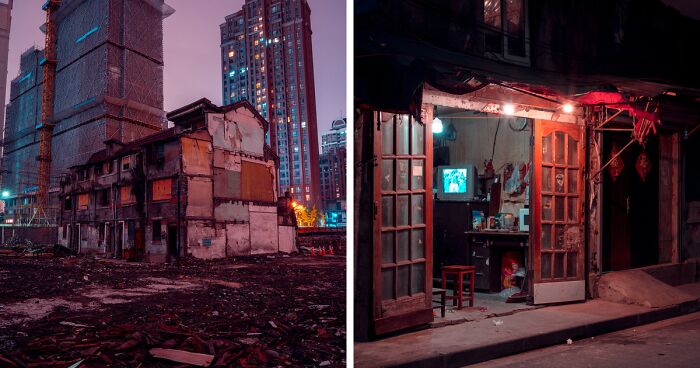

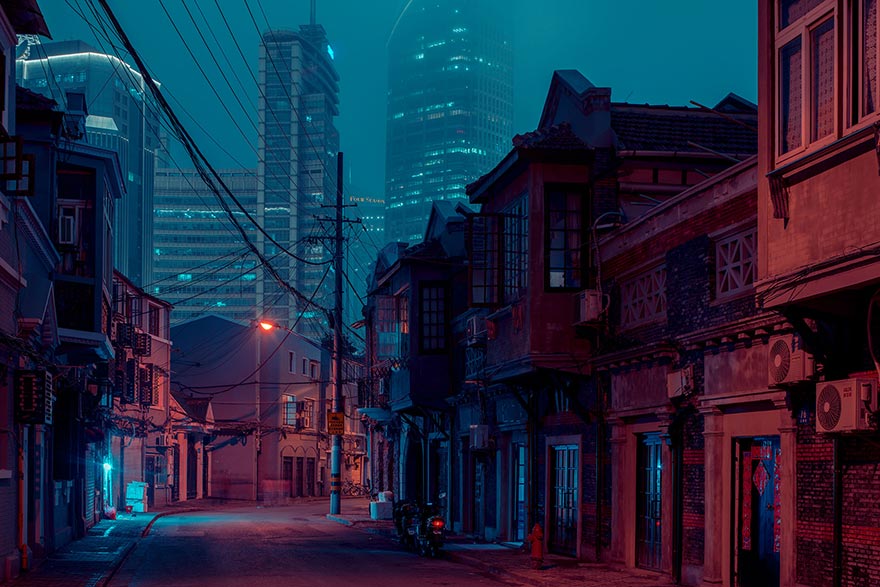
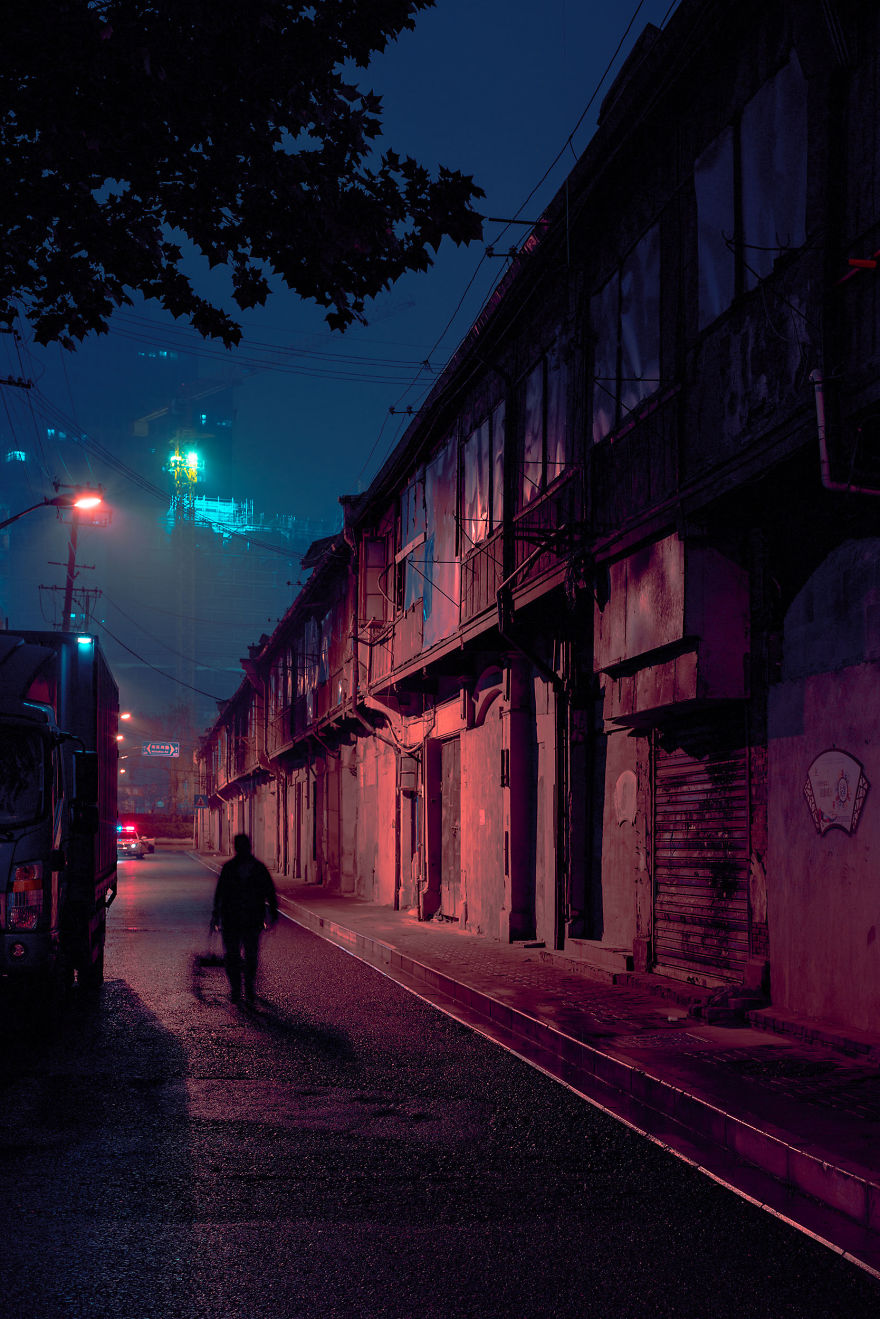
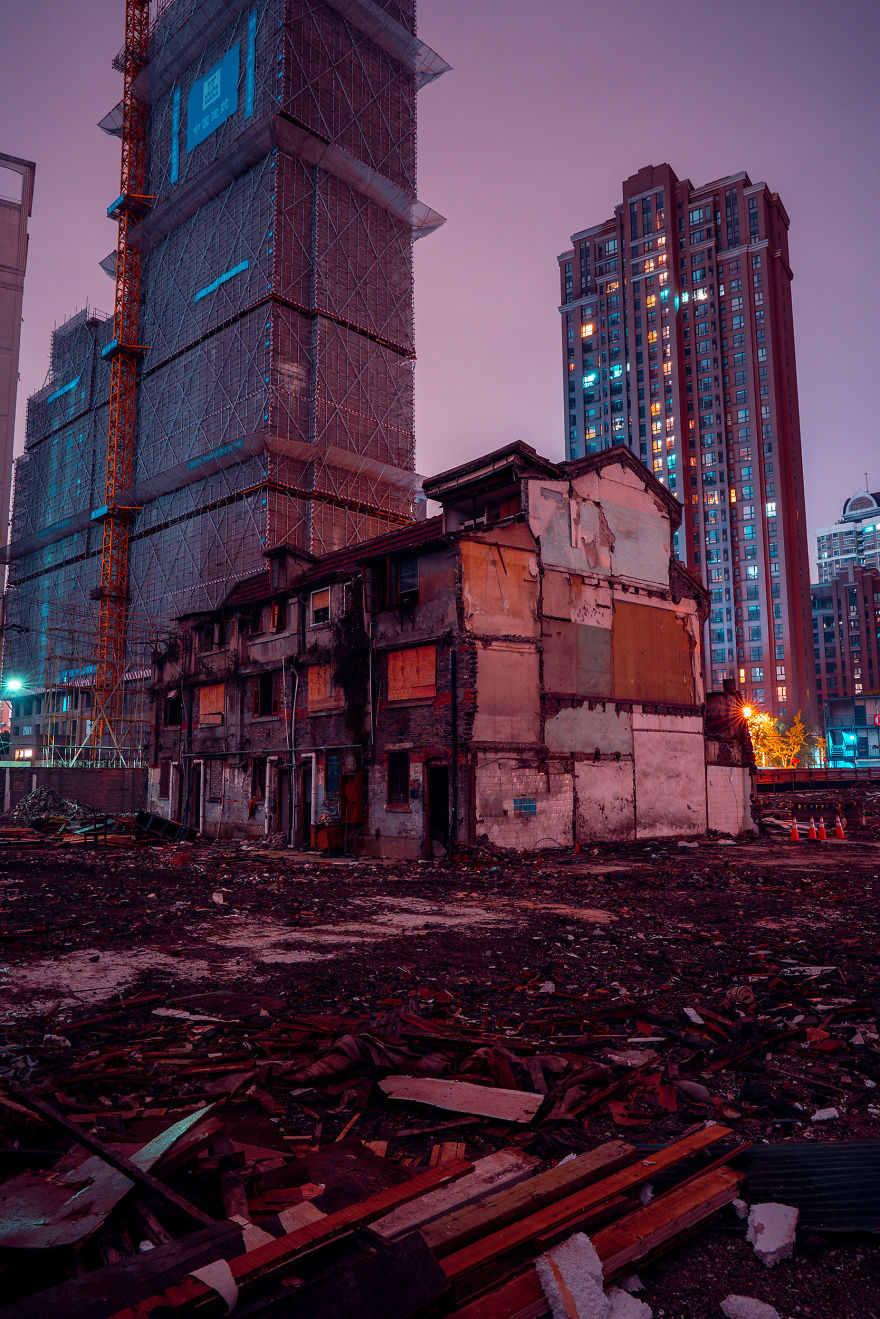
My name is Cody Ellingham, I am a photographer and nightcrawler from New Zealand. The aging and ornately beautiful "Shikumen" lane houses were being torn down across Shanghai, and I set out on a mission to capture the historic streets before it was too late.
I have embarked on a project to explore the disappearing communal Shikumen lane houses unique to Shanghai’s oldest districts, as part of my Shanghai Streets series.
More info: codyellingham.com | Instagram | Twitter
This post may include affiliate links.
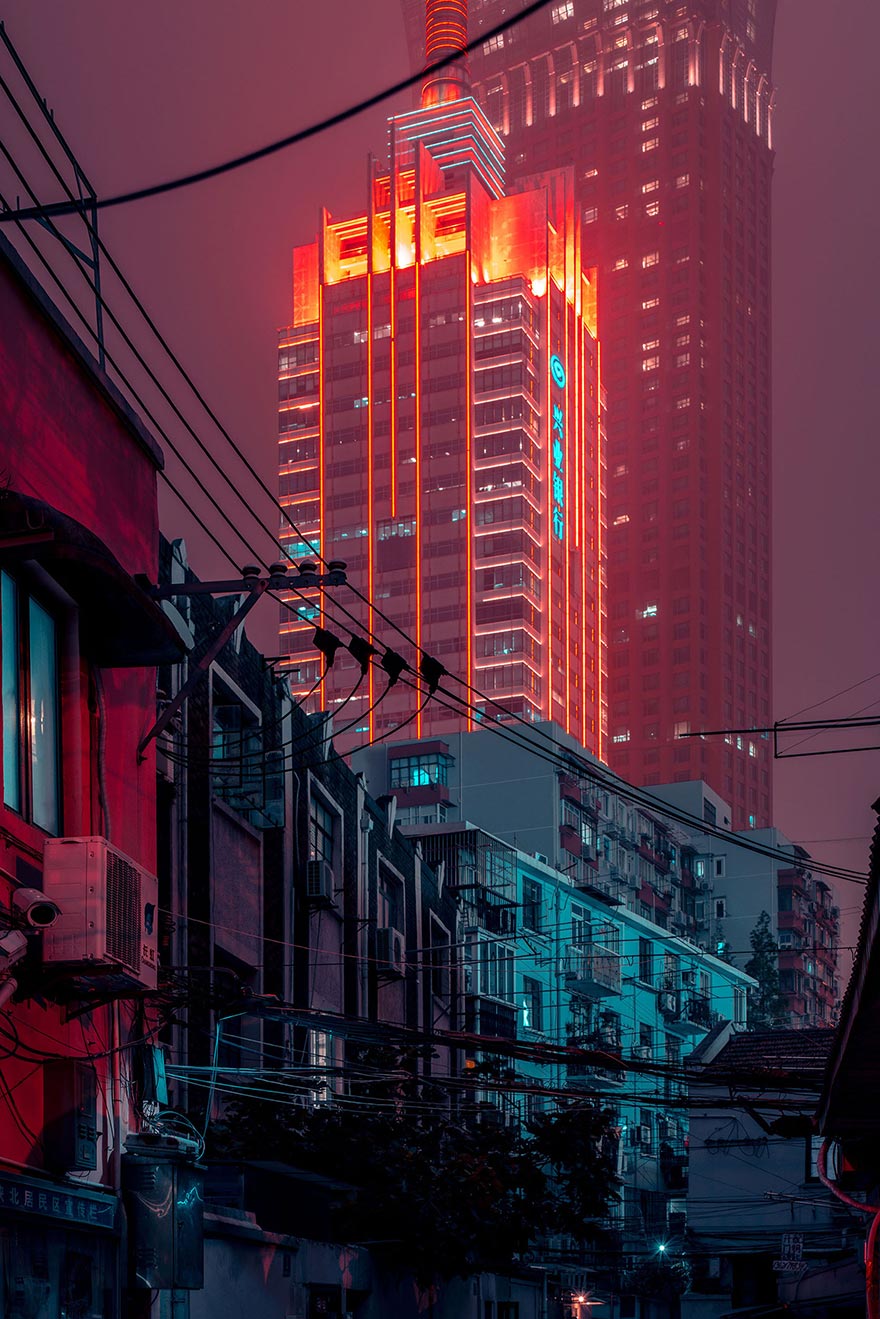
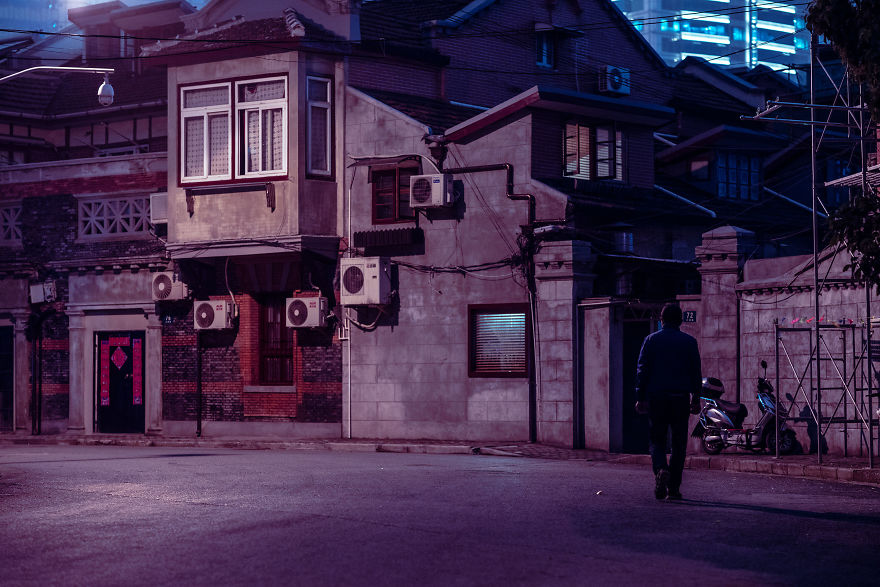
In the old days, the city was split into three areas: the French Concession, the International Settlement, and the Laoximen Chinese district. Much of the former French Concession retains a European vibe – the terrace houses and tree-lined avenues could be Barcelona or Paris, but they are not. This is China, with its noisy meat markets, modified electric motorbikes, bundles of live wires dangling from rooftops, humming neon lights and a dense smog reflecting the changing city below. Card games and shops sprawling out onto the street give it a community atmosphere. Nowhere is this more clear than in the lane houses of Shanghai, the oldest type of which are called Shikumen.
The structures, partly inspired by the Chinese ‘Hutong’ style housing of the capital and heavily influenced by French and British colonial and art deco styles, were built in their thousands between the end of the 19th century and World War Two.
The name Shikumen comes from the brick or stone gateway at the entrance to these communities. A sophisticated entrance meant a sophisticated family behind it, and it is these lane houses that make Shanghai. Almost all of the original nineteenth-century examples are lost, with the vast majority being post-World War One specimens. But even for these, time is running out.

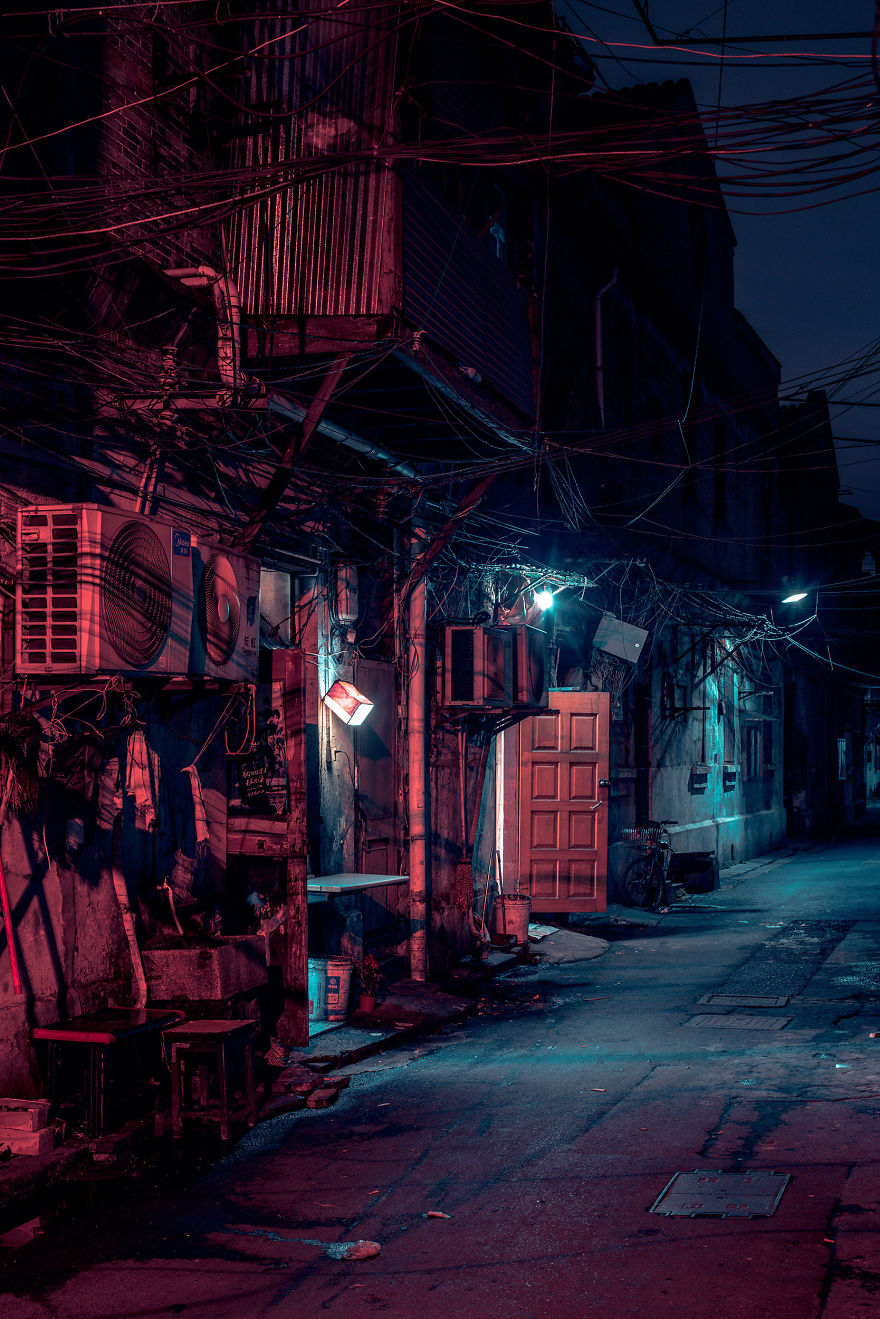
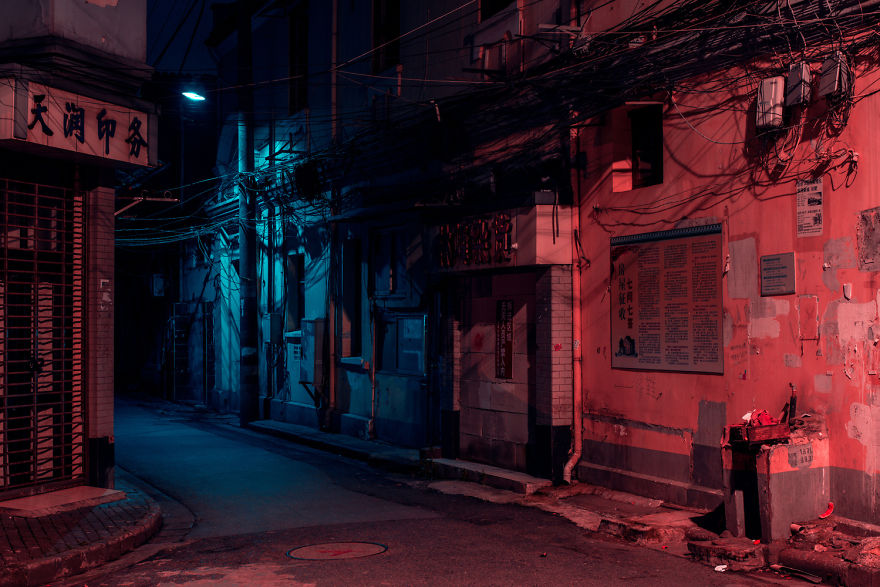
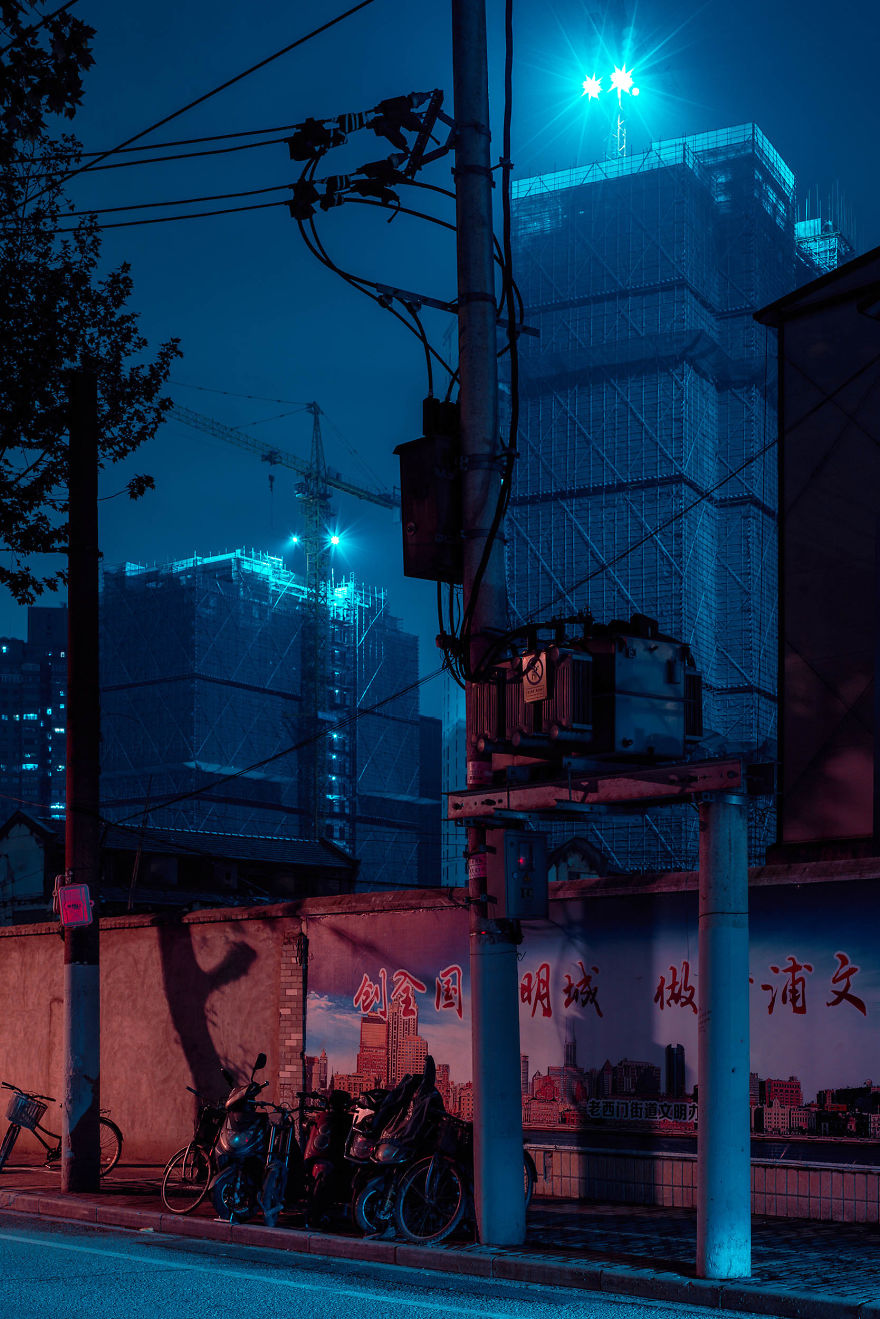
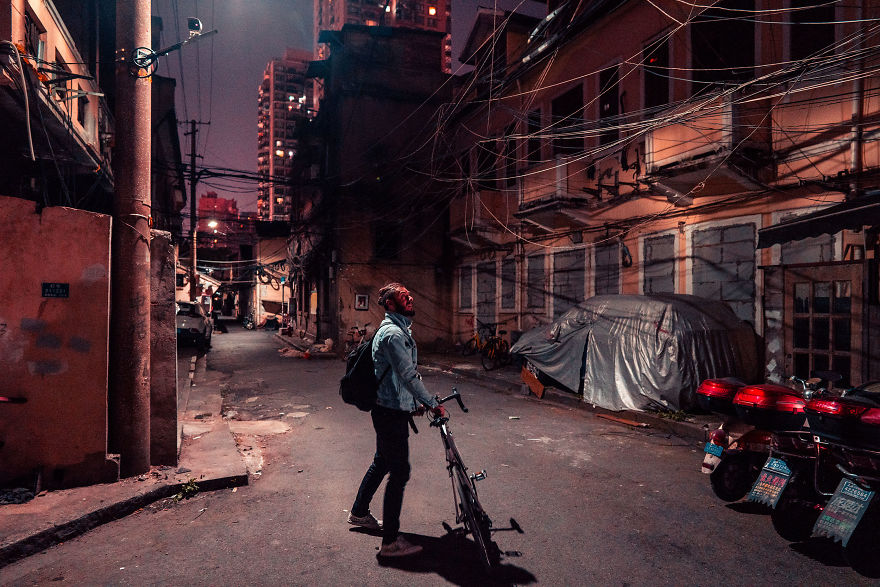
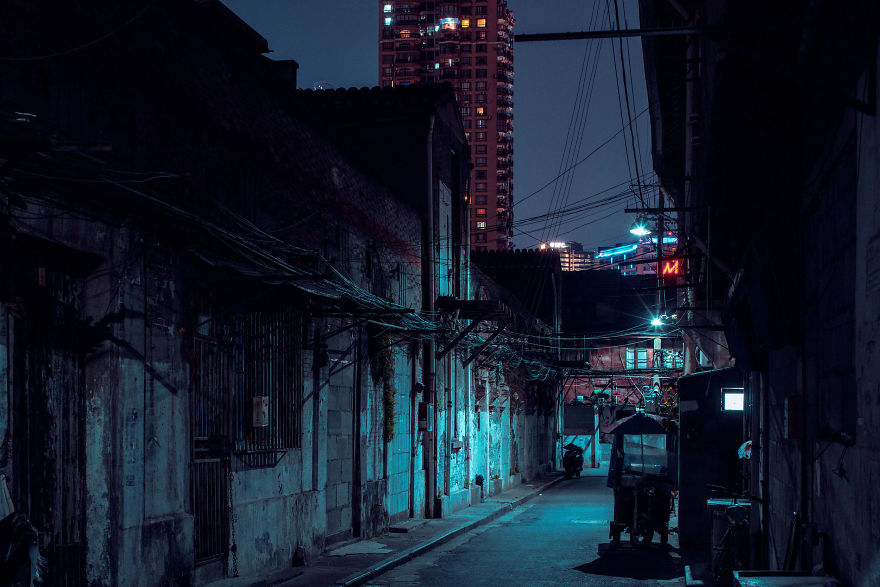
Only an electrician could make a serious comment on all the wires strung on these homes. They look like unregulated dangerous wiring, tragic accidents waiting to happen.
There is a distinct vibe walking through the lane house areas that are still inhabited. You hear the Shanghainese dialect pouring out of windows and many of the older people do not even leave the lane houses, everything they need is in the community. And for anything else, there are men who stand near the notice board who they can pay to go out to run errands. There is a sense of a time slip, which makes the scene of demolition more powerful. Some areas have become gentrified, cleaned up, and made into boutiques, all of which lose the essence of what these places really are.

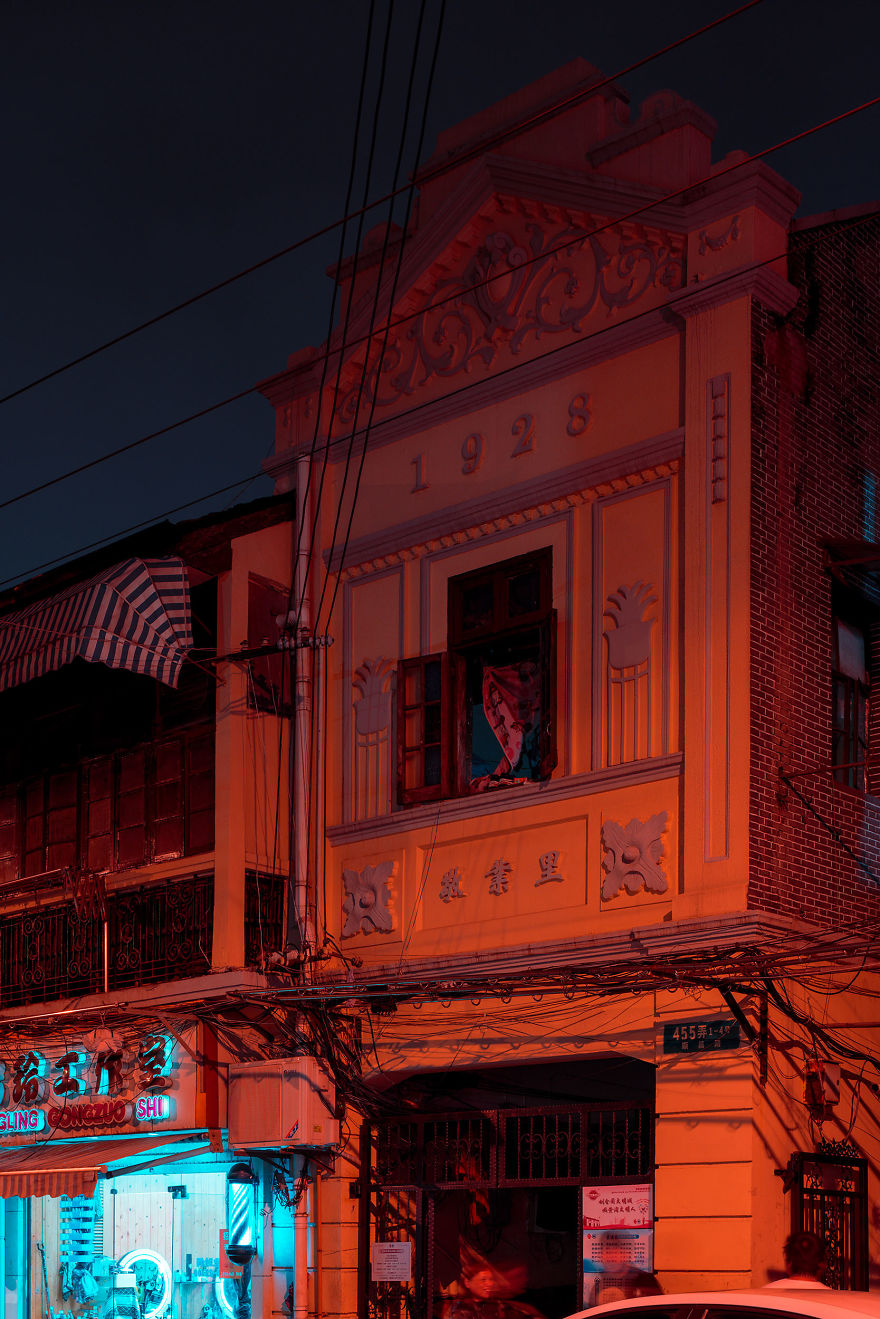
I guess there's no preservation for Historic Buildings? Although 1928 is probably not very historical for them
Is electrification in Shanghai unregulated? If you want electricity, you can wire your house in a DIY project? This is insane in a crowded street.
The history of the Shikumen lane houses is what really drew me to them. I remember walking along and seeing the year '1928' engraved above the entrance to a lane house and I reflected on all the things that had happened in the last 90 years. It was as if the lane house had soaked up all of that history into its worn stone walls. If I could only see what it had seen, I thought.

I love this one. The roof will dump all the water directly down on the air conditioner !
I chose to photograph at night because by that time the true story of a building comes alive. In the rawness of daylight, the subtle hints of a place can be washed away but by night the details return and if you look closely you can kind of feel its true essence emerging. I carry my camera gear around me at night and somehow I feel like I can become more closely connected to the buildings when it is dark, there are usually fewer people around and the streetlights and ambiance lends itself to a more evocative scene.

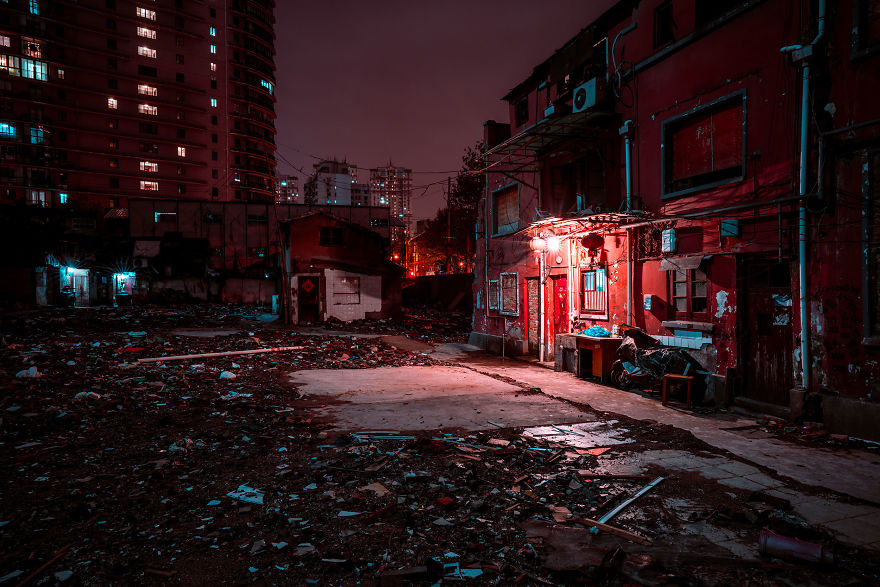
What happens to the people, businesses and families whose homes are being bulldozed for profit? How much are they paid for the loss of their livelihoods, family and community?
It has been a while since I have been back to Shanghai and I often dream about that city. I have friends who tell me that the old parts of Shanghai in the Laoximen district are continuing to change. Though there are still plenty of the lane houses still standing, the real question is what will happen to the communal aspect of them which is really at the heart of the lane houses. The recent strict lockdowns in Shanghai appear to have left a dent in the culture of Shikumen and urban living in Shanghai. Only time will tell.

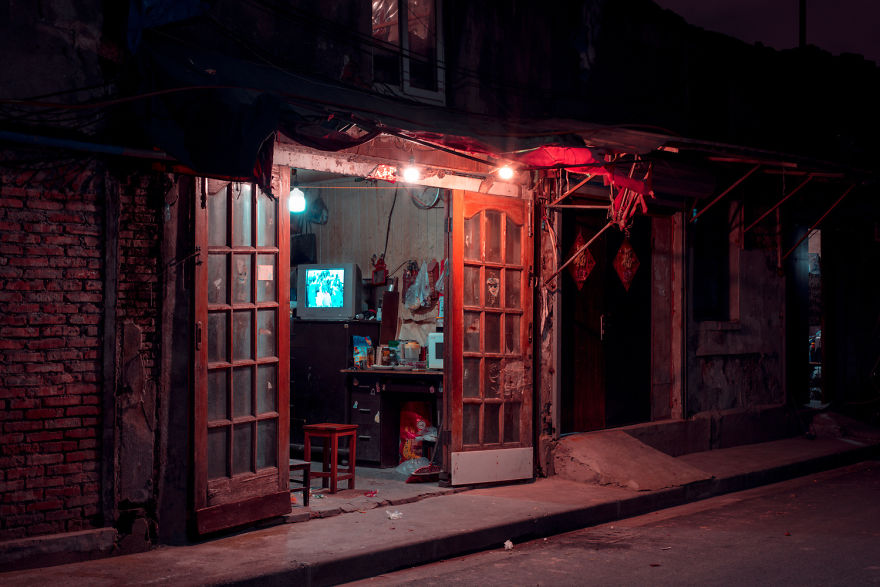
Is that indeed someone's home?? Seems so weird to me. In a place that isn't really that isolated having your doors open like that just strikes me as odd. Honestly it is probably quite nice airflow wise and other than the photographer it doesn't look like many people are out.
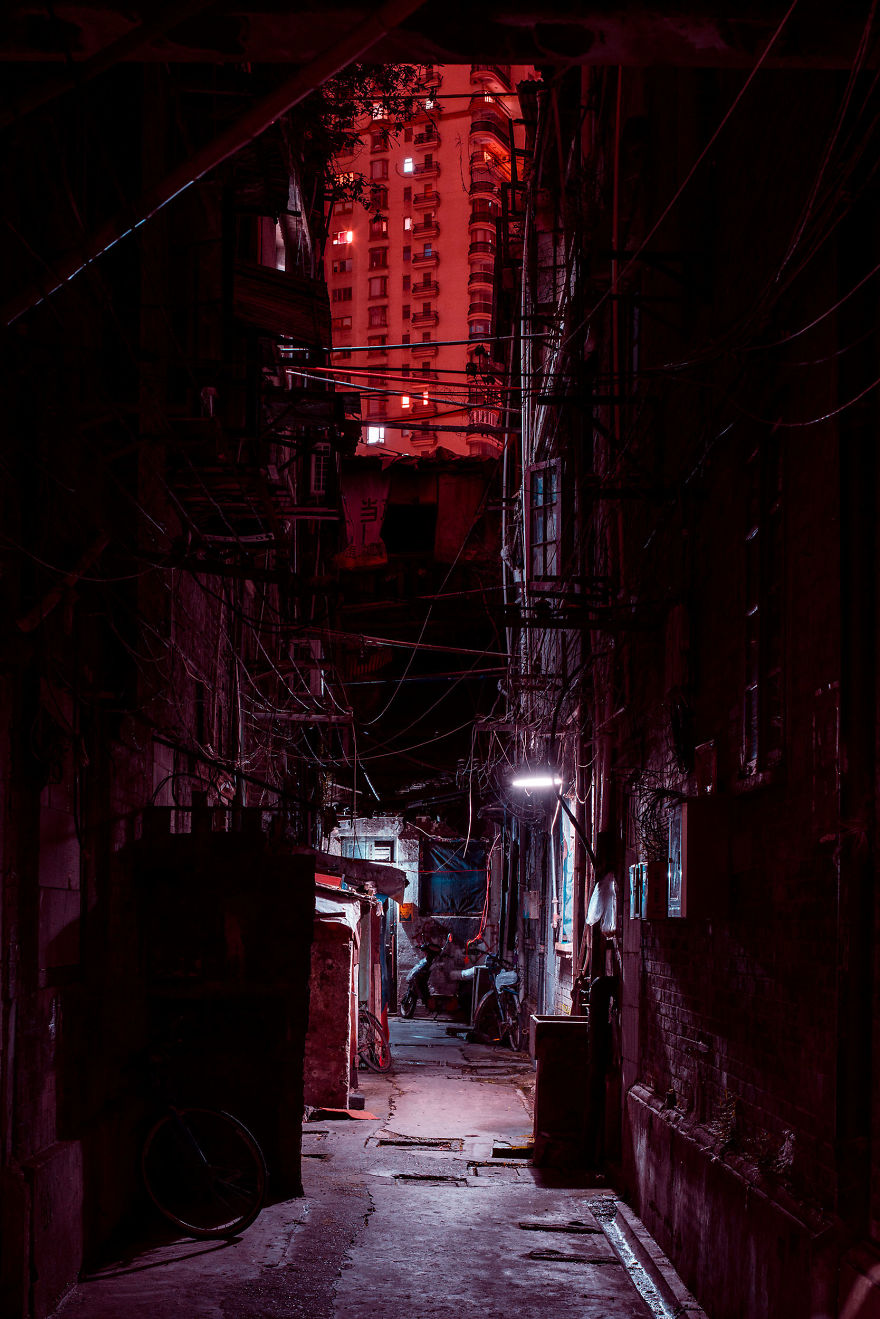
An excellent juxtaposition showing the cold blue lights and stark future on one inside of the wall, almost resembling a prison, with the warm colors and signs of freedom on the outside, soon to be destroyed.
It looks kind of like someone hung a large piece of string art on the building on the right and it's just kind of deteriorated and crumbled under its own weight. How can you tell what wires go to what buildings?
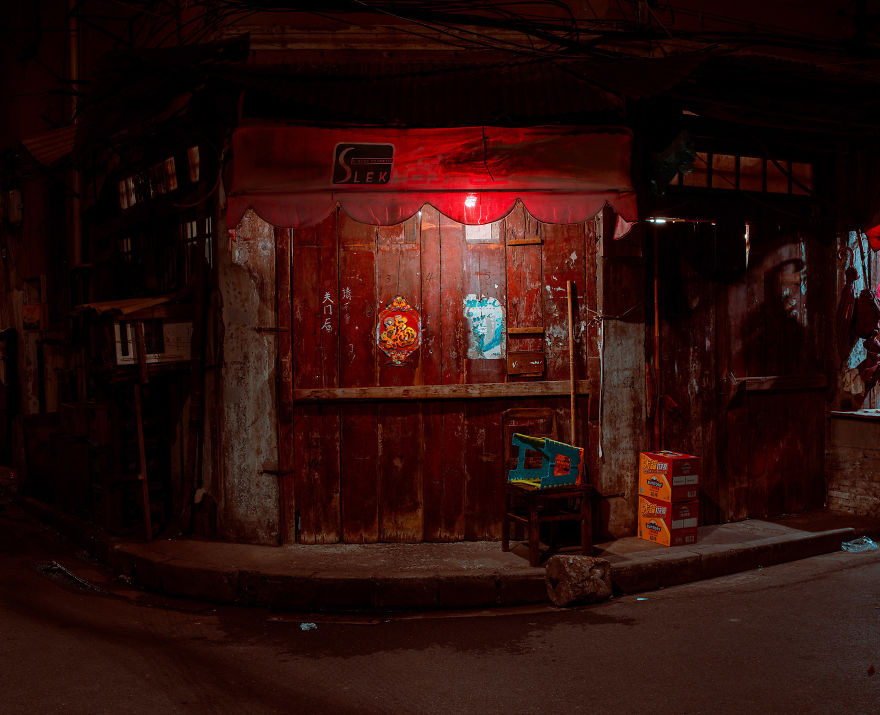
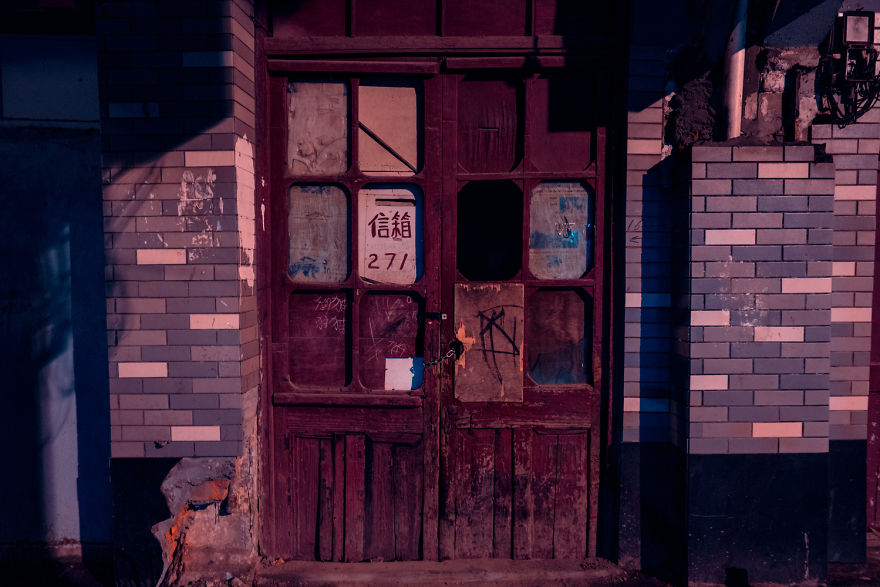
Love these doors. I do wonder if they used to have glass or something else when they were first put up. Looks like they were just replaced one at a time which gives it a neat kind of patchwork.

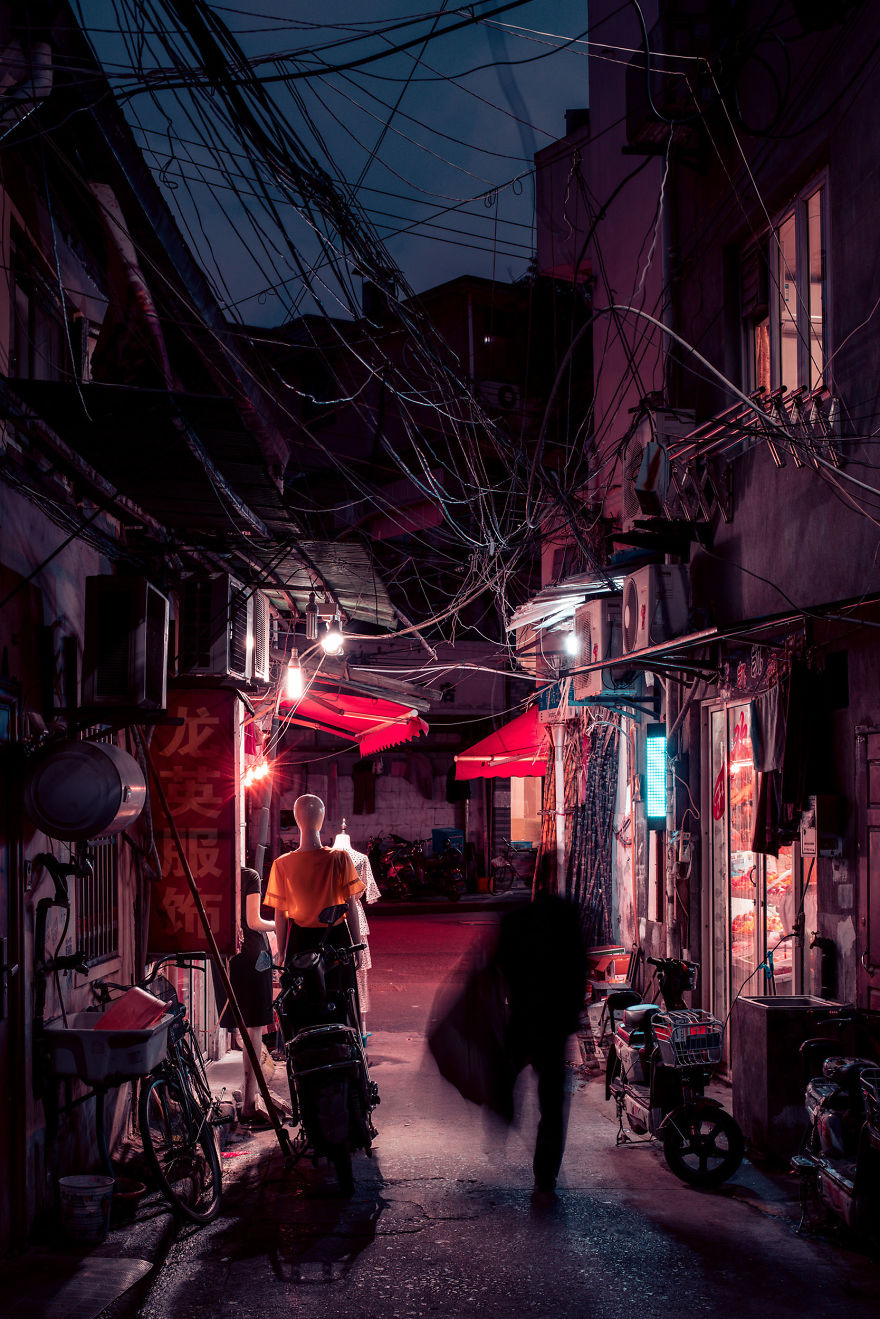
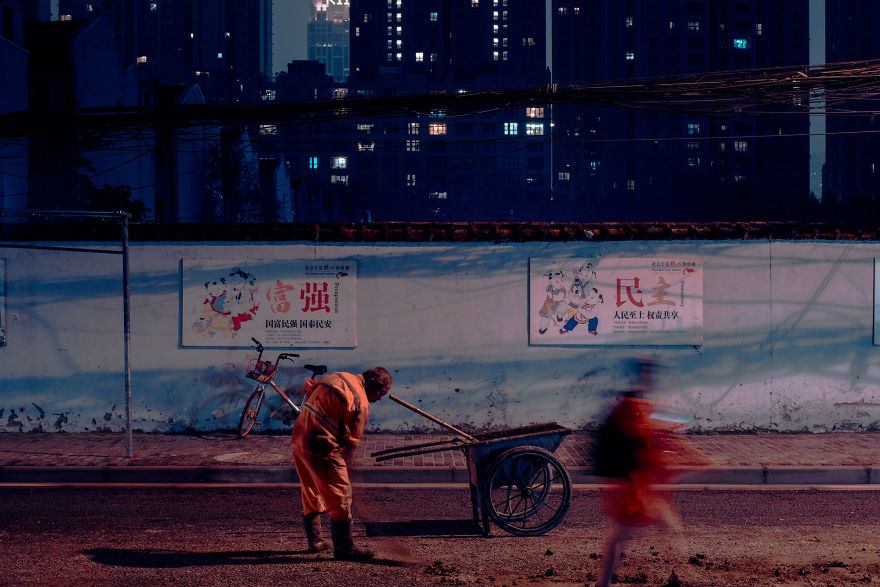
i love this photo!! it took me a bit of staring to know that those are legs & feet that look so ghostly!! I love this!!
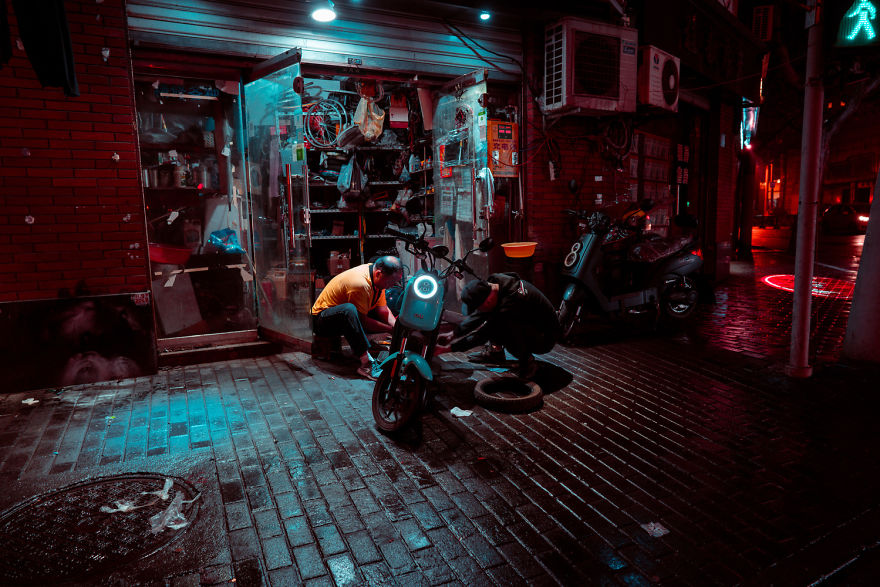
That's a cool garage set up!! I mean, they have to work outside, but if they live behind it they'd have a lot more room in their house, and otherwise I imagine it saves on rent. And with the gate and the doors it's probably pretty secure.

When I lived in Shanghai (I returned home 7 years ago) I loved walking around the increasingly rare old neighbourhoods in the city; even in the poorest and most rundown ones people seemed to live with a lot of dignity and you could tell they were friendly and safe communities. I would sometimes get some curious looks but never felt unwelcome there. People seemed to take pride in their homes and kept them clean and pleasant as possible. Lots of residents had small garden plots to grow flowers or vegetables. Entering them felt sometimes like stepping back in time, or entering a small rural village, where life proceeded at a slower and more natural pace.

Yes, amazing Country. You just cannot describe China and give it justice to someone who has never been... I tell people it is over the top in so many ways. I was lucky enough to be in many cities and even country side.
Load More Replies...
Great photos for certain but having also lived in Shanghai for 10 years, and having been in some of these old homes, I can attest the reality is that most of these old buildings are health hazards and not up to modern standards for fire safety, plumbing, or general health such as heating and ventilation and certainly not mold. It's easy to romanticize these old neighborhoods but try actually living in them.

Why not renovate them instead of just razing them? The neighborhoods sprang up organically just outside the downtown business and shopping district. Why not preserve at least the best of them, to give future generations some context of how the city grew. By just tearing them all down and replacing them with the same kind of skyscrapers you find everywhere around the world, you totally gut your city’s own, distinct, individual character. Who wants to live somewhere that looks like it came off some pre-packaged metropolitan city assembly line? It’s like a “McDonaldsization” of a place that used to be unique.
Load More Replies... When I lived in Shanghai (I returned home 7 years ago) I loved walking around the increasingly rare old neighbourhoods in the city; even in the poorest and most rundown ones people seemed to live with a lot of dignity and you could tell they were friendly and safe communities. I would sometimes get some curious looks but never felt unwelcome there. People seemed to take pride in their homes and kept them clean and pleasant as possible. Lots of residents had small garden plots to grow flowers or vegetables. Entering them felt sometimes like stepping back in time, or entering a small rural village, where life proceeded at a slower and more natural pace.
Yes, amazing Country. You just cannot describe China and give it justice to someone who has never been... I tell people it is over the top in so many ways. I was lucky enough to be in many cities and even country side.
Load More Replies... Great photos for certain but having also lived in Shanghai for 10 years, and having been in some of these old homes, I can attest the reality is that most of these old buildings are health hazards and not up to modern standards for fire safety, plumbing, or general health such as heating and ventilation and certainly not mold. It's easy to romanticize these old neighborhoods but try actually living in them.
Why not renovate them instead of just razing them? The neighborhoods sprang up organically just outside the downtown business and shopping district. Why not preserve at least the best of them, to give future generations some context of how the city grew. By just tearing them all down and replacing them with the same kind of skyscrapers you find everywhere around the world, you totally gut your city’s own, distinct, individual character. Who wants to live somewhere that looks like it came off some pre-packaged metropolitan city assembly line? It’s like a “McDonaldsization” of a place that used to be unique.
Load More Replies...































 No fees, cancel anytime