Get Premium
Dark mode theme is available exclusively for premium users. Learn more about the benefits of subscribing.
No fees, cancel anytime.

 Dark Mode Ad-Free Browsing Unlimited Content
 Ad-Free Browsing Unlimited Content Dark Mode
Join 1.2 million Panda readers who get the best art, memes, and fun stories every week!
Think you can trust your eyes? Think again. What feels undeniable at first glance is sometimes a surprise, an illusion, or an invisible trick.
Ordinary images, patterns, and shapes are windows into the shortcuts, quirks, and occasional misfires of your brain’s visual system.
Every time a dot seems to vanish, a line seems to bend, or a shape refuses to behave logically, your neurons are hard at work, trying their best to make sense of the visual trickery in front of them. It’s as frustrating as it is addictive, yet we’re left none the wiser, even after staring at an illusion for hours.
This list combines classic optical illusions with newer visual tricks, each picked for the specific neural processes it engages.
Some reveal how the brain fills in the missing edges, others show how adaptation and contrast exaggeration bend perception, and a few reveal the ploys the mind uses to interpret three-dimensional images.
As you explore these physiological illusions, you’ll see that they aren’t just visual puzzles; they’re lessons in neuroscience.
Take a peek behind the curtain to see how your brain constructs the world around you, and try to beat these deliberate deceptions.
This post may include affiliate links.
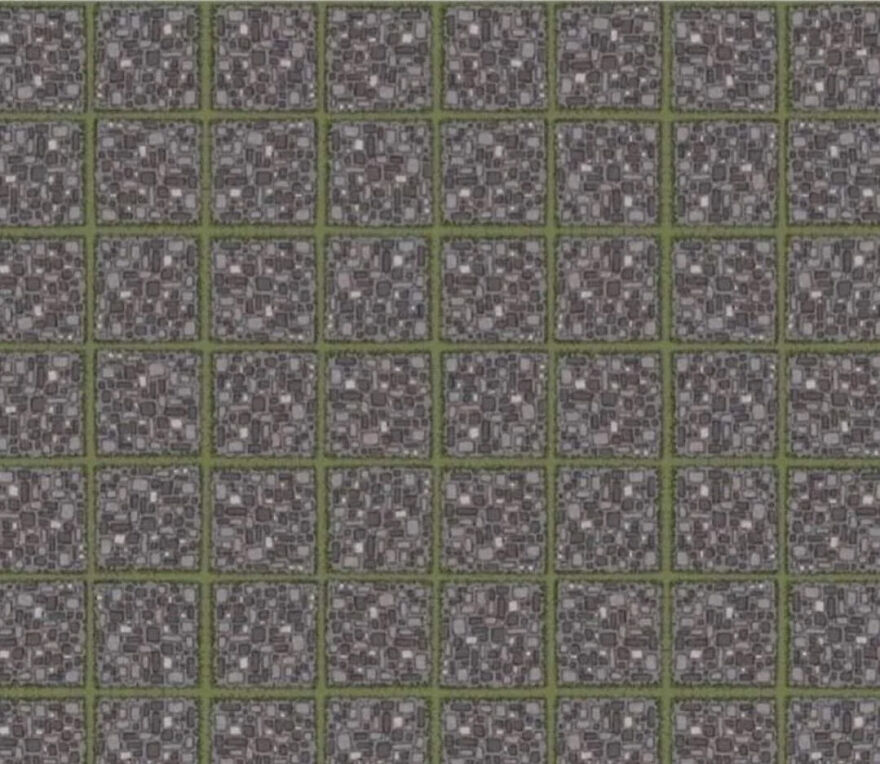
The Curved Line optical illusion challenges you to find a single curve in an image made entirely of straight lines.
The trick lies in orientation interactions between neighboring line segments, where local angles influence how the eyes and brain work together to assess lines.
Low-resolution brightness, blurred borders, and ill-defined edges also confuse our minds (per Michael Bach).
To see how the numerous curves appear, stop tracing individual lines and view the image as a whole. This illusion is another example of the brain preferring pattern coherence over precision, which often crops up in real life, like when the brain recognizes patterns of letters to form words and sentences.
It may also cause distortions when repetitive structures overwhelm us.
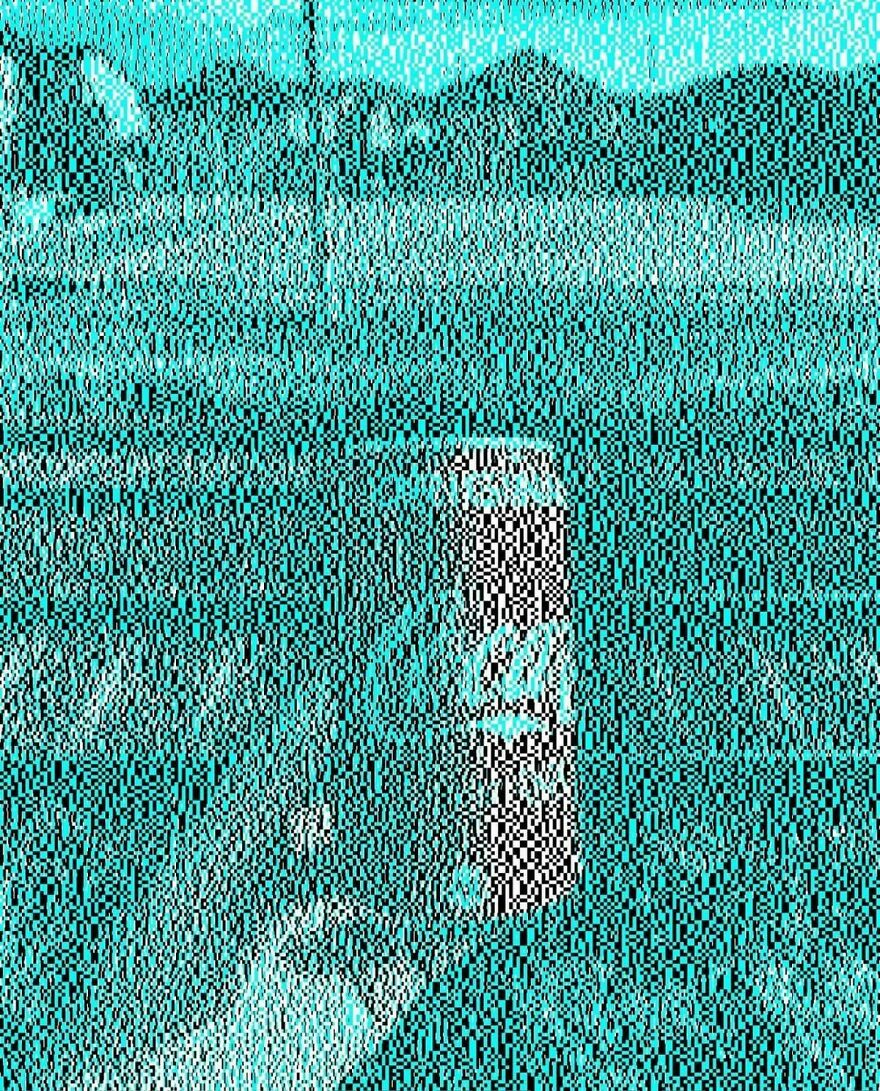
We’d all recognize a can of Coca-Cola anywhere, and that's what this photo illusion relies on. It uses simultaneous color contrast to make the can appear red, even though the picture contains no red pigment.
According to Creative Bloq, the mix of gray and blue tricks our eyes into seeing red, and the effect is amplified by prior knowledge of what Coca-Cola cans look like.
View the image at a distance to amplify the effect, then zoom right in or take a screenshot to observe the lack of red pigment.
This effect is why clothes of the same color look different on people with warm or cool-toned skin. Our brains are easily fooled by simple color combinations.
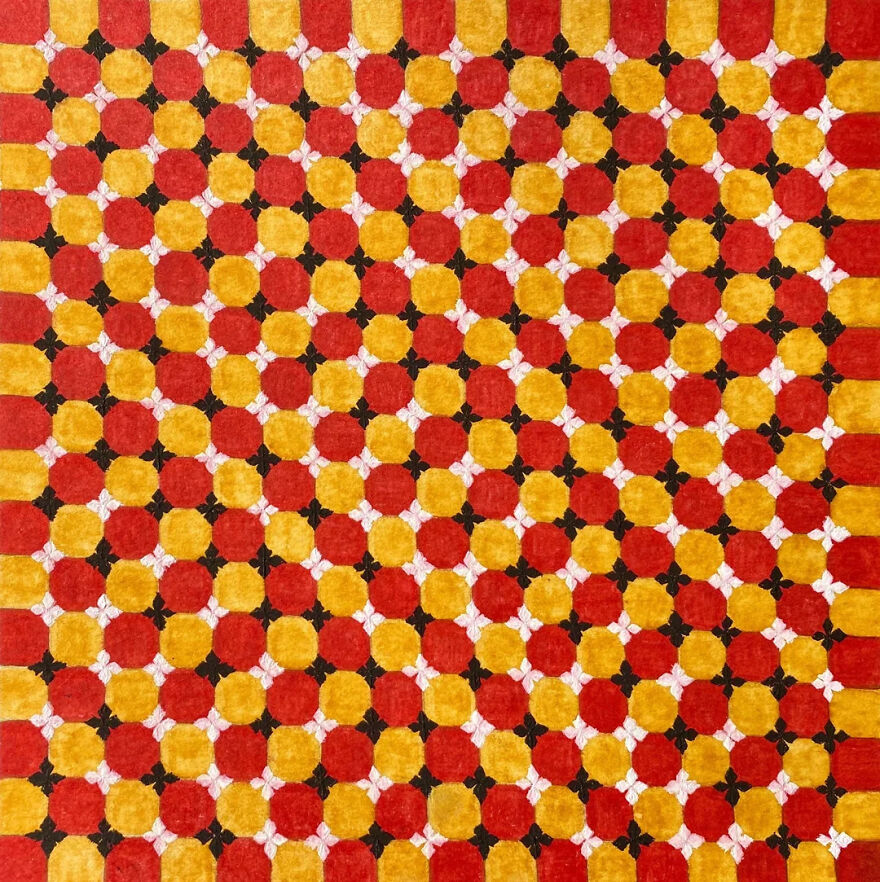
The Watercolor illusion makes blank regions appear softly filled with color when bordered by certain colored contours.
According to Scolarpedia, it's caused by just two juxtaposed contours, with boundary information guiding surface perception to fill in the blanks. There is also a rippling effect caused by the perceived spreading of color.
As you take in the entire illusion, focus on the interior region rather than the outlines to see the color moving outward.
Every day, our brains use the same mechanism to efficiently represent surfaces as a whole, which is why thin blue lines on a shirt, for instance, can make the entire shirt look blue.
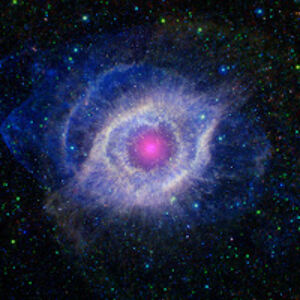
The effect, I find, is really most obvious when scrolling the image up or down on my screen.
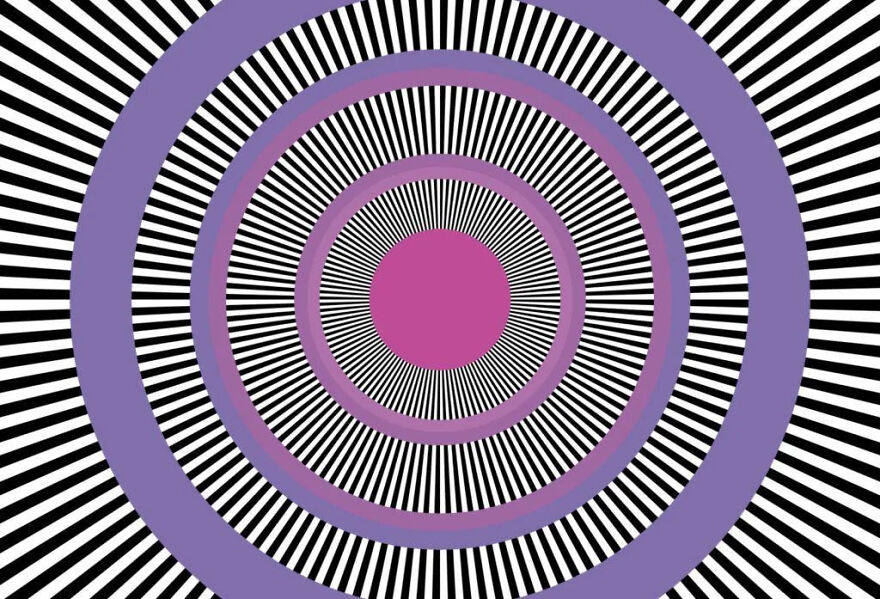
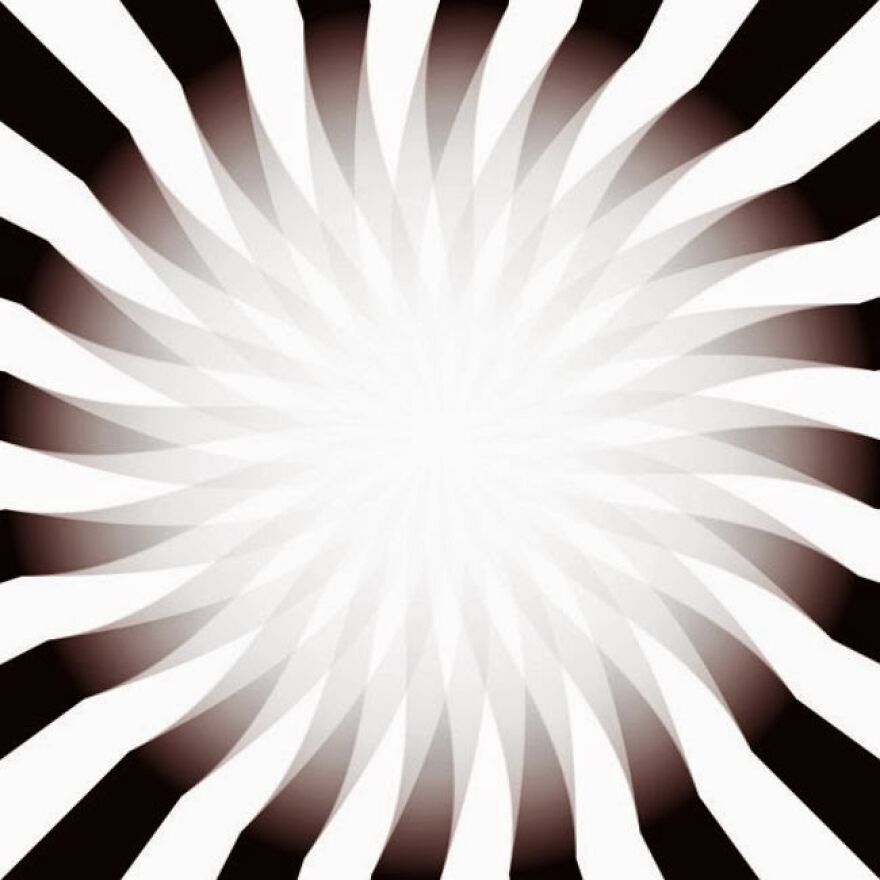
The Enigma illusion consists of concentric circles that appear to swirl or rotate even though they are completely static.
New Scientist describes how the effect is brought on by quick, unconscious eye movements known as “microsaccades”, which trigger perceived motion in radial patterns. The quicker your eyes flick between the wheels, the faster they spin.
When observing the circles together, fix your gaze on the center and let them naturally jitter. It's slightly uncomfortable, but the sensation doesn't last long.
In everyday life, visual motion detectors enhance subtle environmental changes, which is why we sometimes experience microsaccades while driving or reading.
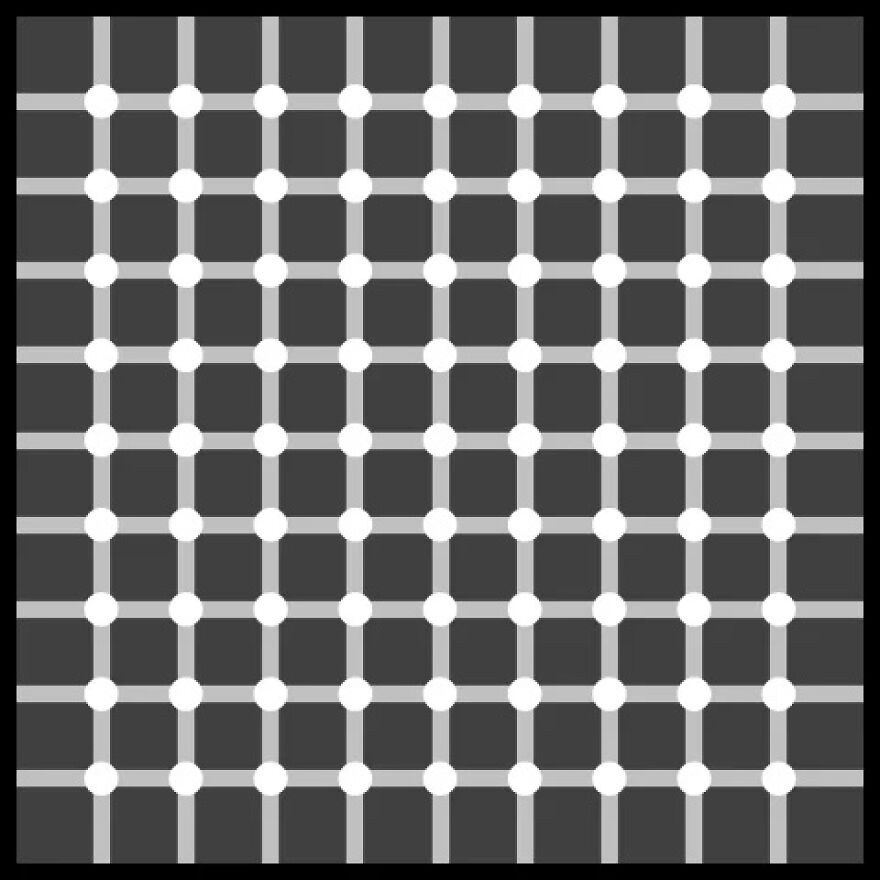
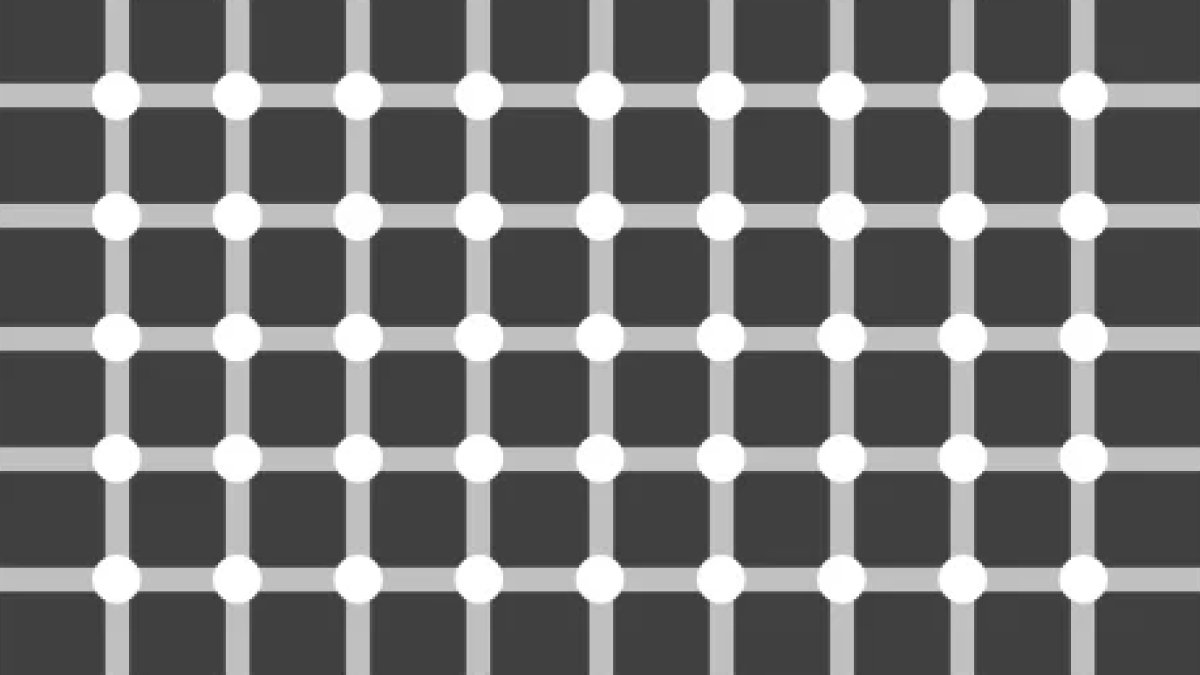
In the Hermann Grid Illusion, faint gray blobs appear at intersections of white lines until you look directly at them. This effect is driven by lateral inhibition in the retinal ganglion cells.
Research by York University reveals that neurons responding to bright areas suppress neighboring neurons more strongly at intersections than along lines, creating the illusion of dark spots.
When you focus directly on one of the intersections, the peripheral spots seem to hide themselves. Try scanning the grid with your peripheral vision to make the illusion pop.
This same neural contrast-enhancement mechanism helps us detect edges in real life, but can also skew perceptions in low-contrast spaces.
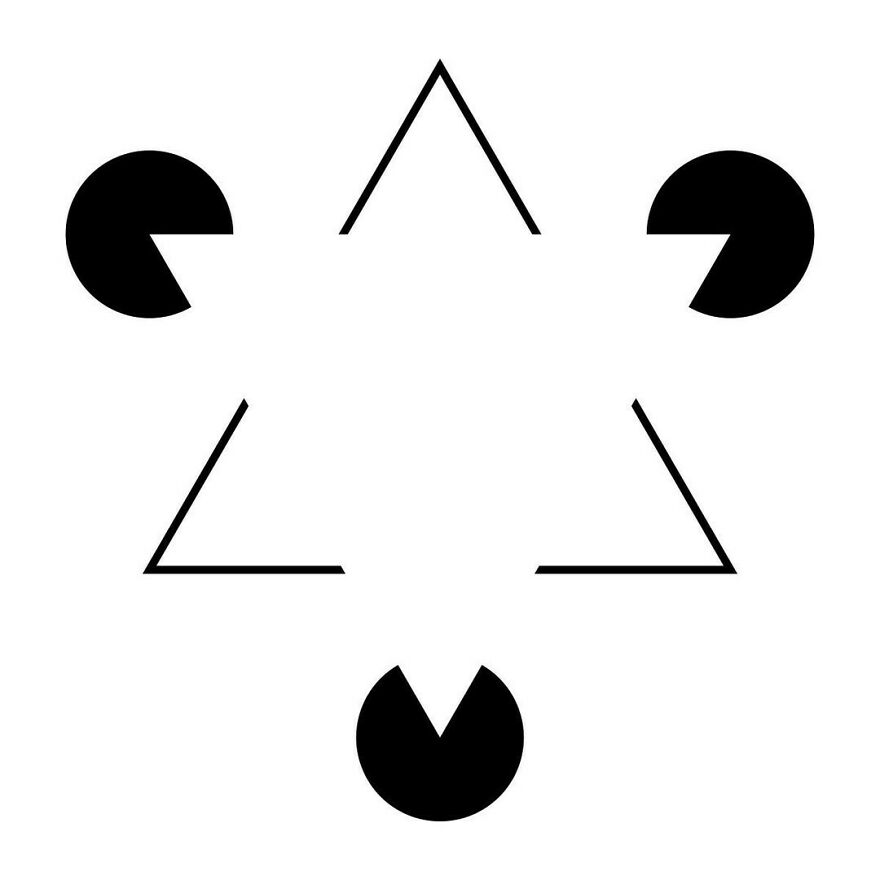
The Kanizsa Triangle creates the vivid perception of a bright, solid triangle that doesn't actually exist.
Per Hanover College, this optical illusion exploits the brain's tendency to lean into illusory contour completion, which is driven by neurons in the early visual cortex that latch onto inferred edges. When partial clues suggest a shape, the brain fills in the rest on its own.
To experience it in all its glory, focus on the implied triangle and not the cutouts forming it. This same filling-in process allows us to perceive whole objects when they're partially obscured in real life, like recognizing a car behind a fence, favoring speed and coherence over perfect accuracy.
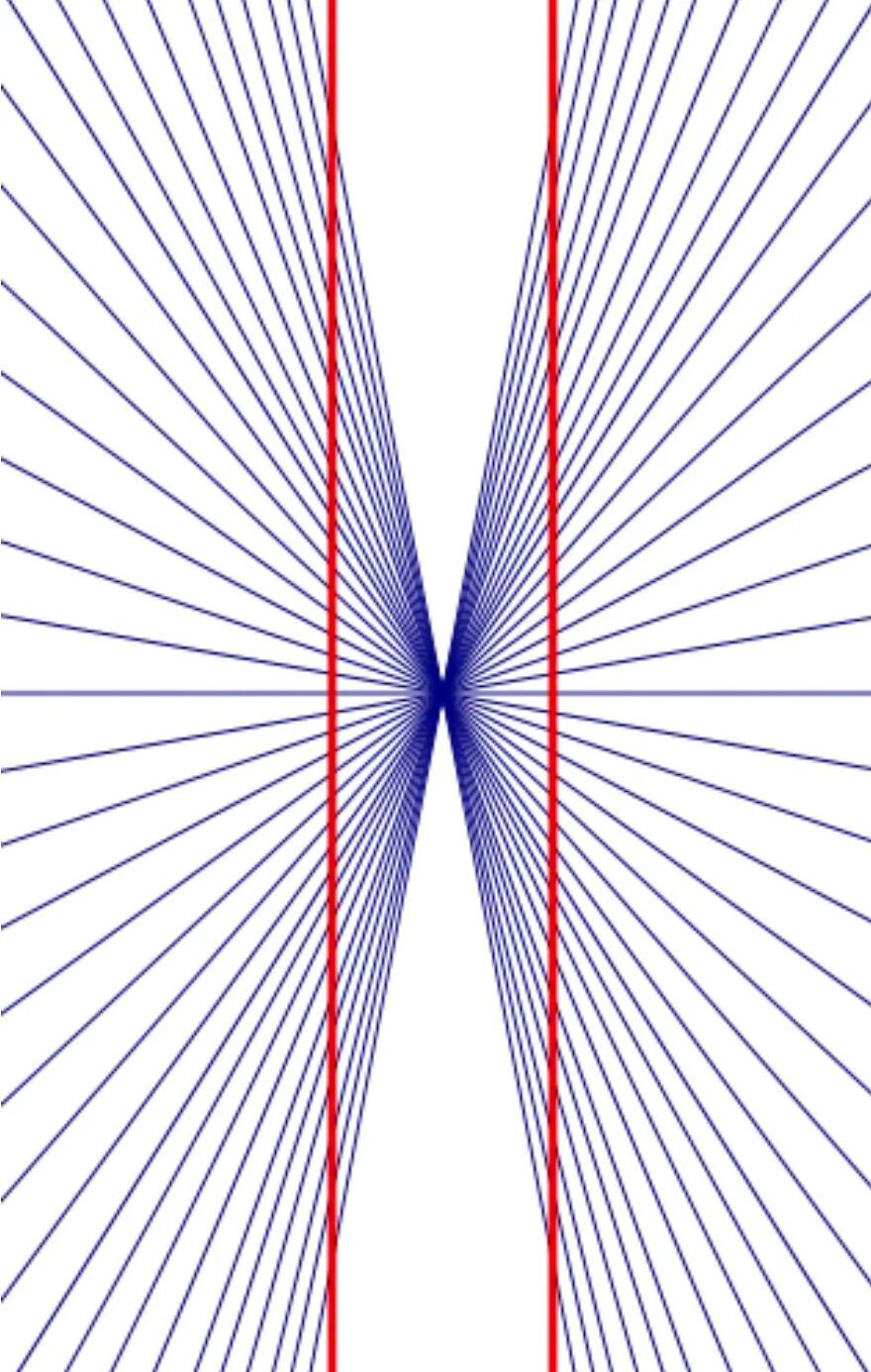
The Hering Illusion makes two perfectly straight, vertical lines appear to bow outward when placed against a radial background.
According to Live Science, this happens because our brains are tricked into thinking we are moving forward, even though the image is static.
Neurons that are sensitive to orientation and motion-like patterns overcorrect, creating a three-dimensional expansion that warps the perceived lines.
To see the trick clearly, stare at the center of the image and avoid tracing the lines with your eyes. The lines should appear to straighten out.
This illusion taps into the same perceptual shortcuts that help us navigate corridors or crowds, but they can also cause distortions when visual context overwhelms actual geometry.
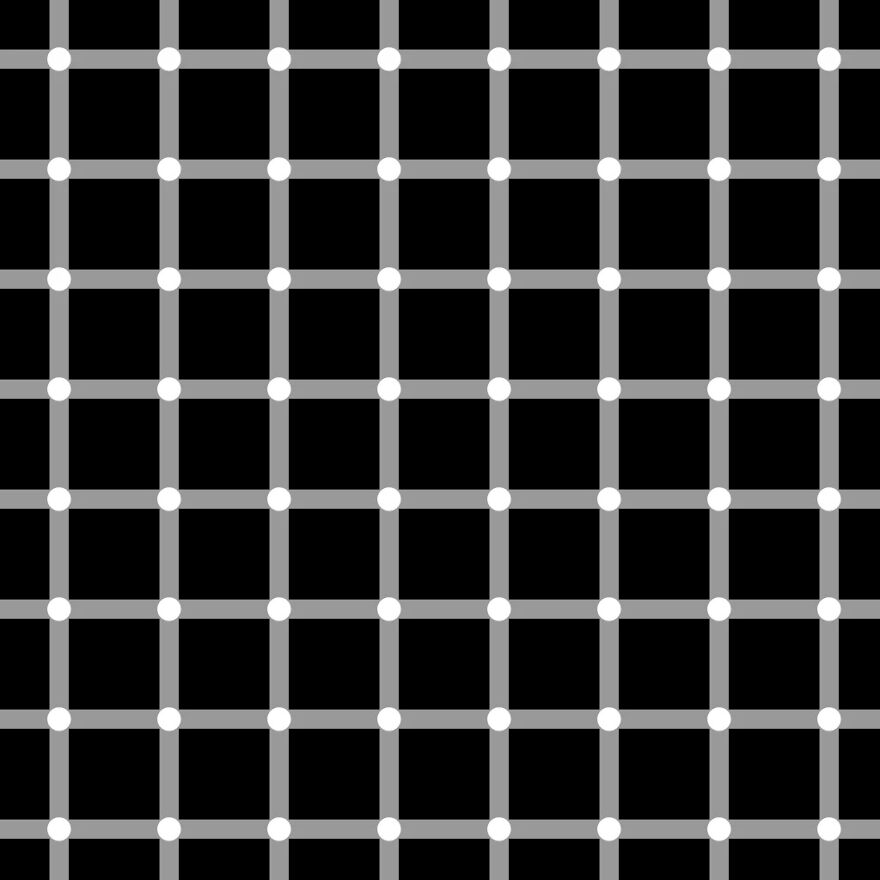
To the untrained eye, the Scintillating Grid Illusion causes dark spots to flash at the intersections of a grid, except when you look right at them.
Like the Hermann Grid, this illusion relies on lateral inhibition, but is amplified by high-contrast edges and eye movements, which ScienceDirect calls the “scintillation effect”. Peripheral neurons exaggerate contrast differences, creating dark spots.
To trigger this effect, don't fixate on one intersection. Instead, let your eyes slowly wander the whole grid. This illusion highlights how our peripheral vision prioritizes motion and contrast over specific detail.
It's a trade-off that helps us detect threats quickly, but sacrifices accuracy in static patterns.

I don't see any change on this one, however this description is exactly what I see for Hermann grid illusion.
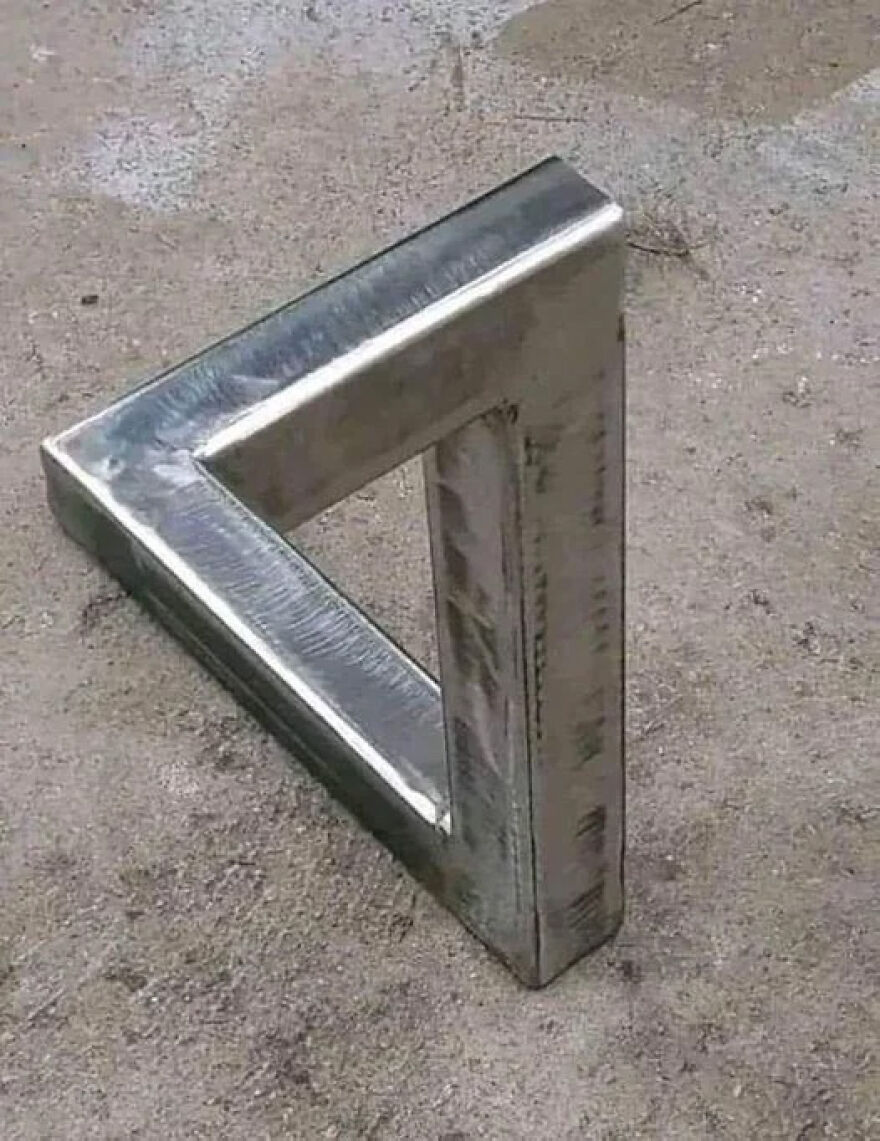
The Penrose Triangle depicts an object that appears three-dimensional, yet cannot exist in a physical space.
Per the Illusions Index, the triangle violates geometrical rules, making it impossible for our eyes to read the local depth cues as two-dimensional. The brain processes it as plausible, yet cannot work out how it takes that shape.
Let your eyes move around the shape's reality, rather than focusing on the impossibility.
It's a good example of how visual perception assembles scenes piece by piece, such as when we see an object seemingly blocking another and assume the blocker is closer. Our brains are easily undone by assumptions.
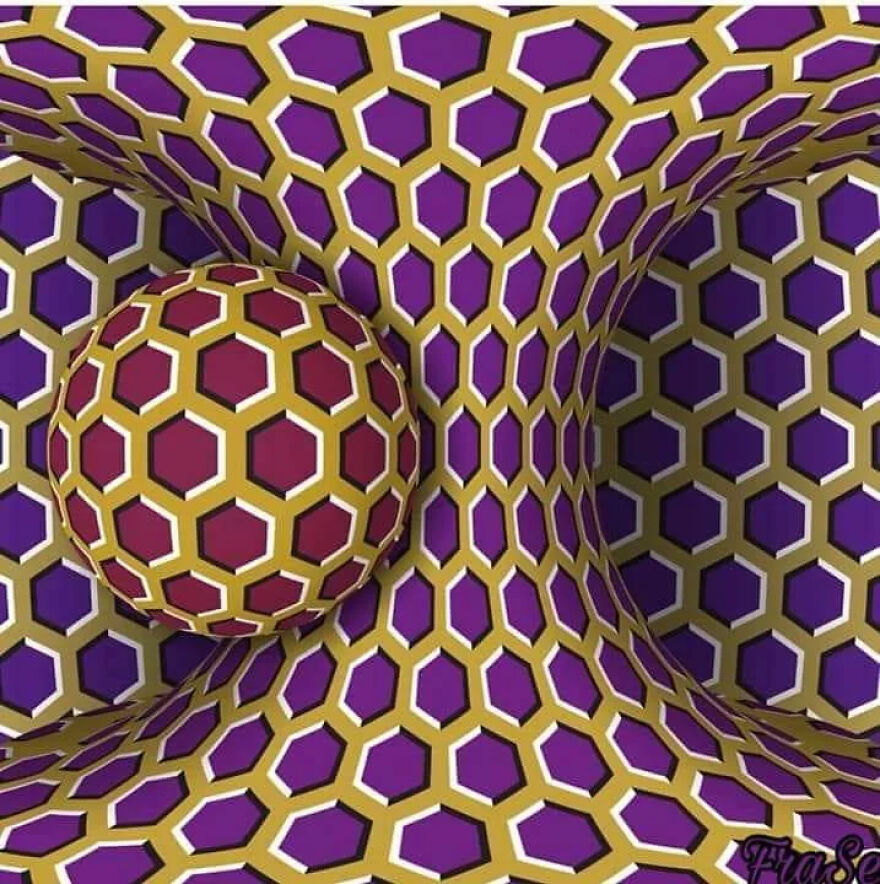
We've all seen the Spinning Ball illusion, which makes a round ball appear to turn and roll.
This queasy effect is caused by temporary delays in luminance processing, which Metro notes are due to black-and-white strokes on a colored background. Our motion-sensitive neurons interpret these mismatches as movement.
To amplify the “spinning” effect further, shift your gaze or blink slowly as you watch. Similar brain mechanisms help detect subtle motion in everyday scenes, which explains why some objects seem to fade or drift when we stare at them.
Patterned objects are more likely to trigger this effect, especially when they're in our peripheral vision.
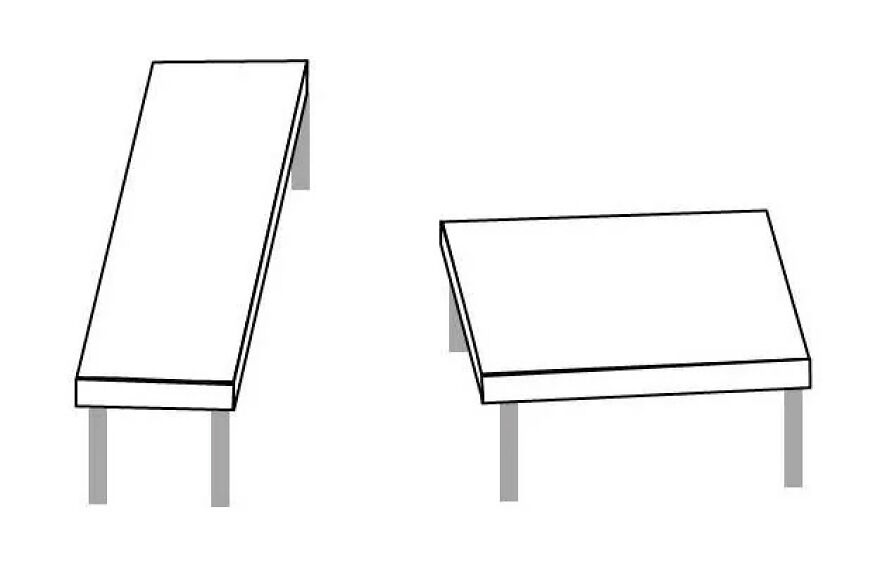
The Shephard's Table illusion shows two tabletops that appear different in shape and size but are actually identical.
Research by i-Perception finds that perception and depth mismatches are responsible for how the parallelograms appear, giving the angles a 3D slant. The mind automatically misinterprets them.
To see them in their true, identical forms, compare both tabletops by covering the surrounding context.
It's an example of how our brains make geometric assumptions to navigate real-world dimensions, which is why buildings or objects often take on different shapes when we see them at the wrong angle.
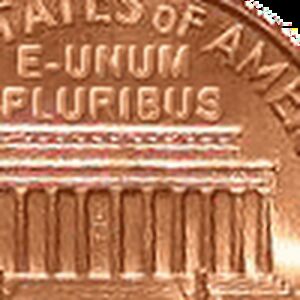
The difference is so stark for me, I couldn't believe it until I loaded it up in photoshop and rotated one over the other.
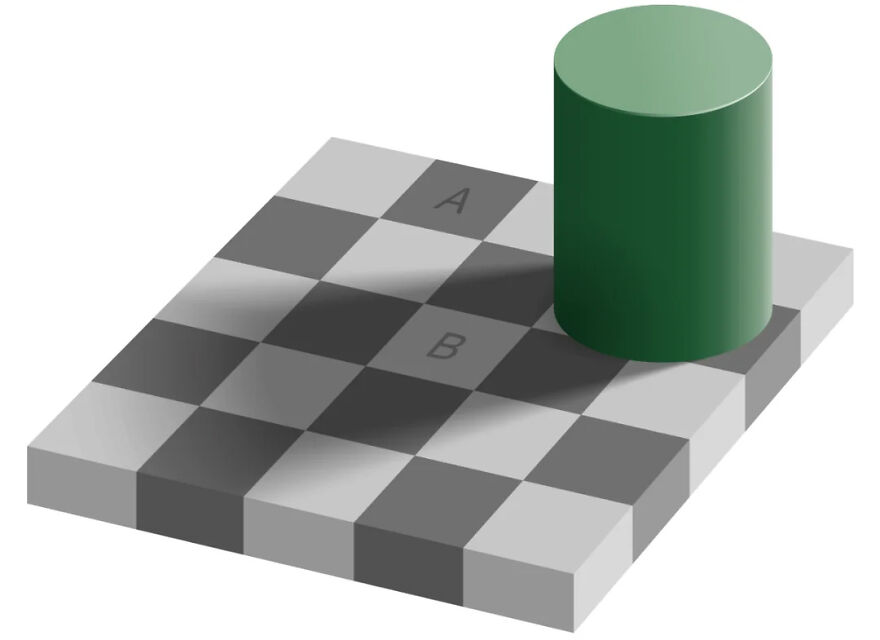
Adelson's Checker-Shadow illusion shows two squares that appear to be different shades but are actually identical.
What gives them different luminance is the brain applying brightness constancy, adjusting perceived color based on surrounding context and assumed lighting conditions. Your visual system assumes that one shape is “in shadow” and adjusts its color accordingly (per Illusions Index).
To see the difference, cover the surrounding area so only the two squares are visible. The difference should vanish, then reappear once the entire image is uncovered.
This shortcut helps us to identify objects reliably under changing lighting, but also explains why we sometimes misjudge colors, shadows, or even road conditions when the lighting misleads us.
Well I'll be d****d. I know I've seen this before... but I still didn't believe it. So I pulled it into Photoshop and both A and B are, in fact R112 G112 B112, or #707070 - the exact same color values.
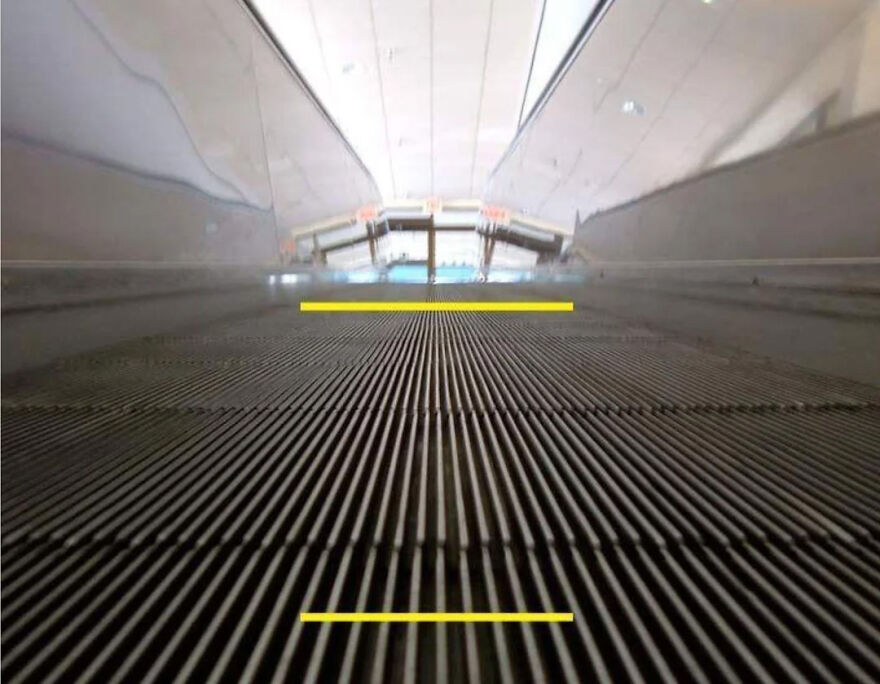
The Ponzo Illusion also uses lines in its trickery, but these identical lines are placed between converging railway tracks, making them appear different lengths.
Research in the Psychonomic Bulletin highlights the role of depth cues in converging lines, triggering size-consistency scaling that makes the upper line appear to be on the horizon and thus larger.
To really see where this effect pulls the wool over your eyes, compare the lines without measuring them and resist the urge to isolate them from their background. You'll see they reflect each other.
This mechanism is essential for judging object size, but it also explains why things like vehicles can seem to change size unpredictably, sometimes leading to misjudgments of speed.
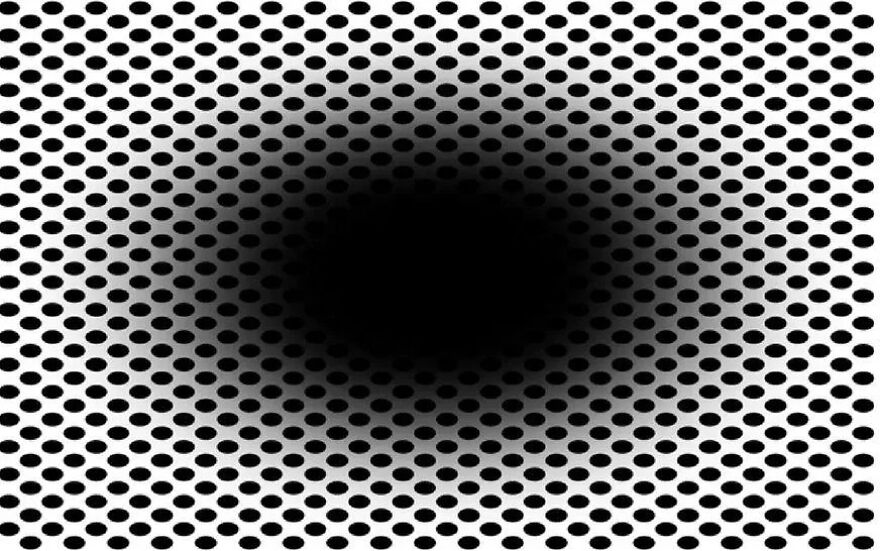
The ominous Expanding Black Hole effect makes a static dark circle appear to grow or pulse outward until it takes over the entire image.
According to Neuroscience News, the illusion triggers a pupil-dilation reflex, creating the impression of darkness and activating motion-sensitive neurons. Staring at the center intensifies the illusion as surrounding neurons adapt unevenly.
All you need to do to see it instantly is keep your gaze fixed and try not to blink. This exact mechanism influences how we perceive looming objects, such as an approaching vehicle, by prioritizing rapid threat detection, which can result in false alarms or exaggerated motion.
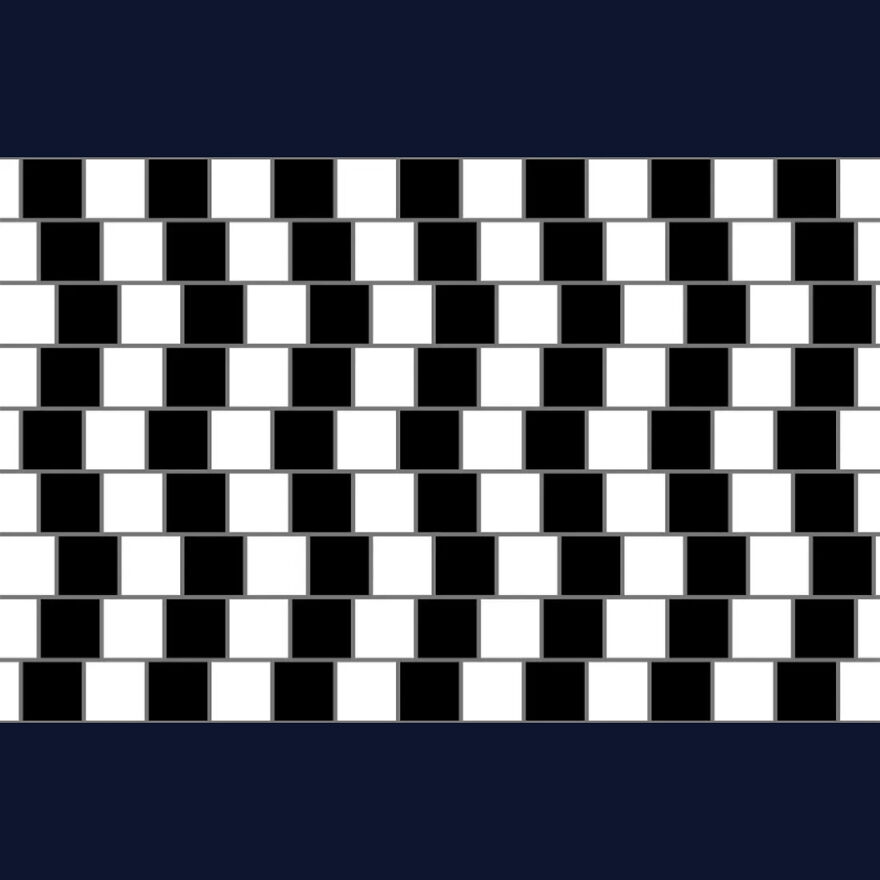
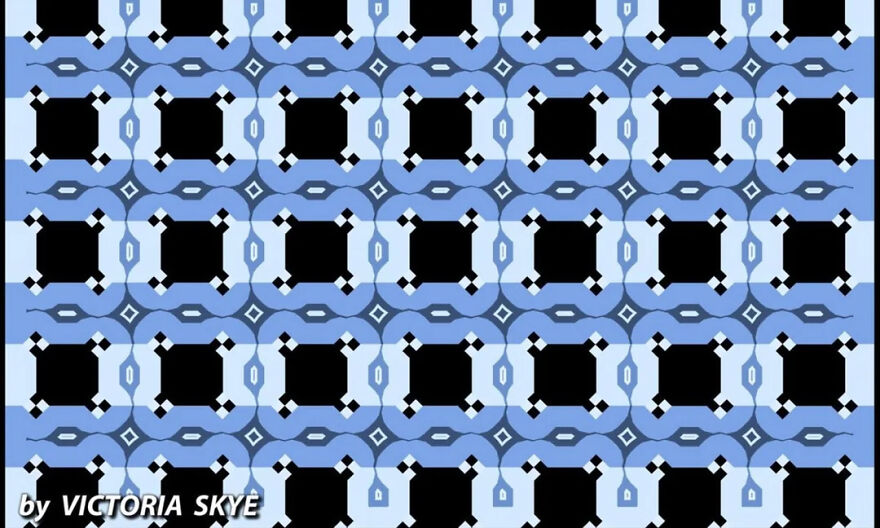
The iconic Cafe Wall illusion also plays with lines, making parallel horizontal lines appear slanted when alternating dark and light tiles are offset.
The journal Perception, in a PubMed article, blames “inappropriate contour shifts” and “contrasting luminance” for the trippy effect.
Neurons responding to high-contrast edges skew our perceived alignment at a local level, adding to the tilt.
To see the optical illusion clearly, avoid following any single line and instead take in the entire pattern as one. Similar processing shortcuts help the brain detect edges quickly, like when you're moving around the kitchen, but can also distort architectural or patterned features in everyday areas.
The Brightness illusion shows identical shades as lighter or darker depending on their surroundings.
i-Perception describes it as a “peripheral flicker” that occurs when the visual system uses contextual brightness rather than measuring actual light levels. Early visual cortex neurons adjust their responses to the surrounding intensity, further exaggerating contrast.
To fully experience this illusion, try to isolate the shapes from the background and watch the trick fall apart. This neural hoodwink helps us maintain stable perception under changing lighting conditions, so our eyes work like an adaptive smartphone.
It's also why shadows and glare can trick us into misjudging brightness in real-life situations.
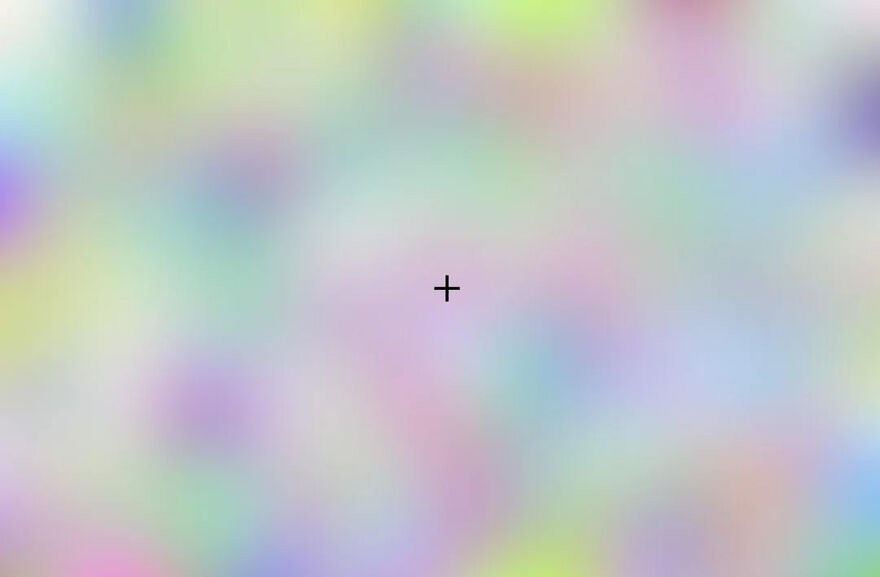
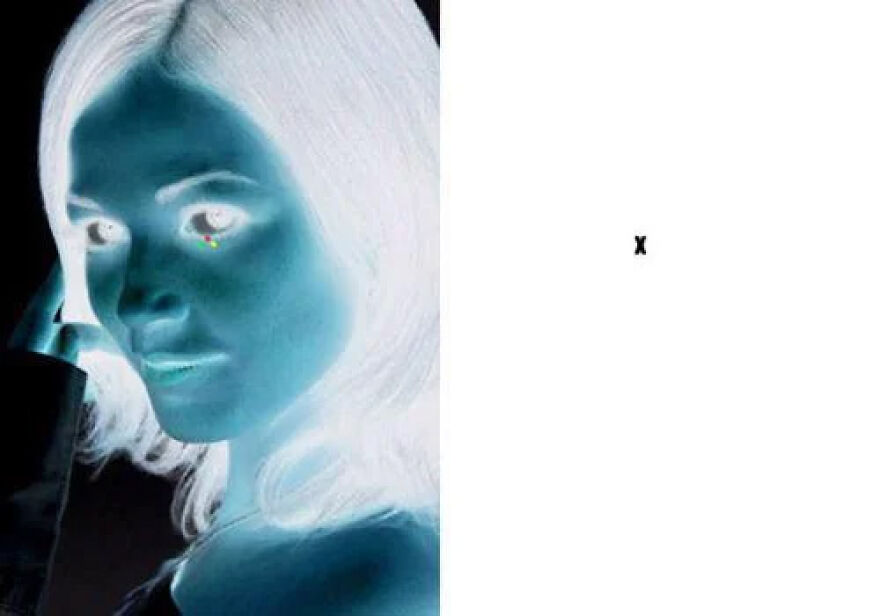
The Troxler Effect is another trick that preys on our peripheral vision. It causes stationary objects to completely disappear when we fixate on a central point.
According to ScienceDirect, this is driven by neural adaptation, in which neurons responding to unchanging stimuli reduce their power over time. Anything deemed “non-essential” is filtered out and forgotten.
To be able to see the full Troxler Effect, stare at the center of the image for 10 seconds, then move your eyes away.
This isn't so much a trick as a way of prioritizing information, and it's why we're not constantly aware of the feel of our clothes or what background voices are saying as we go about our everyday lives.
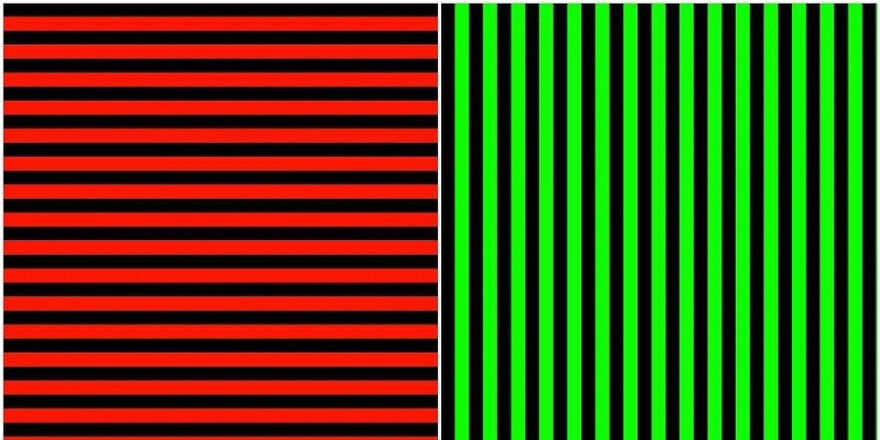
Color also takes center stage in the McCollough Effect, which produces long-lasting aftereffects tied to orientation.
After staring at colored gratings, black-and-white patterns appear tinted. The Illusions Index links it to adaptive mechanisms in the retina, with color-sensitive neurons imprinting on specific orientations in the visual cortex.
To truly see it, stare at the alternating grid patterns for as little as 3 minutes, then look away and observe colors appearing on black-and-white lines. Unlike most illusions, this effect can last for days or even months!
It's an example of how our eyes become adapted to things when we look at them for too long, like when we stare at the sun.
In this Vertical-Horizontal illusion, vertical lines appear to be longer than horizontal ones.
According to the Journal of Visualization, the cause is an anisotropy, which makes the horizontal lines look shorter, and a tricky bisection component. Our brains literally can't make heads or tails of the patterned phenomenon.
To observe it in action, compare the lines without rotating the image. If you rotate it, you might see the reverse effect. This bias may stem from how we interact with gravity and upright objects.
In real life, our minds make subtle judgments of height, distance, and even architectural proportions. It's one reason why tall buildings often feel more imposing than they actually are.

To me, it's not that the vertical lines look longer: it's that the HORIZONTAL LINES ARE PERFECTLY LEVEL, even though they look tilted!
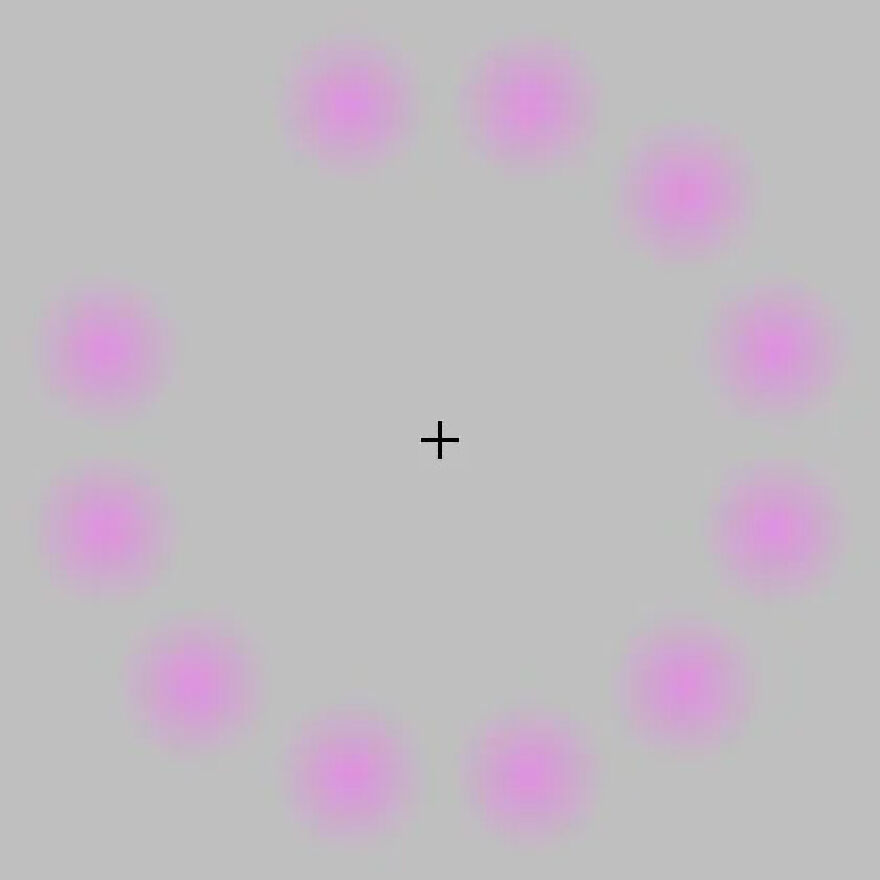
The Lilac Chaser optical illusion combines two visual tricks into one unsettling experience: disappearing dots and a glowing spot that seems to chase around in a circle.
What's happening is, according to Michael Bach, a mix of neural adaptation and afterimages. As you stare at the fixation point, neurons responding to the purple dots get tired, causing the dots to fade.
At the same time, color-opponent neurons generate a green afterimage that appears due to apparent motion. To experience it fully, fixate on the center without shifting your gaze.
This adaptation mechanism explains why stationary objects sometimes vanish from awareness and why visual systems recalibrate themselves in stable environments.
I have seen this one before that worked, but like some of the others on this page, it appears to be suffering from some sort of presentation issue, and for me the dots just become more faint, eventually disappearing entirely, but no movement.
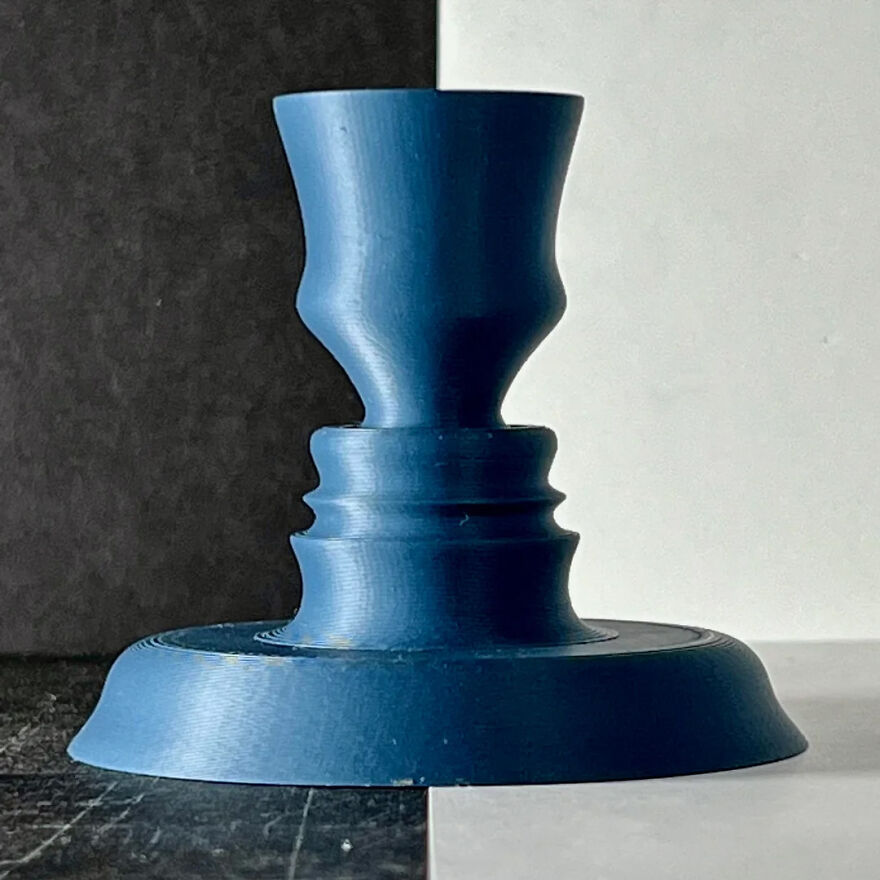
The famous Rubin's Vase flips between two interpretations: a vase in the center and two faces on either side.
This is a classic example of figure-ground ambiguity, where the brain can't simultaneously see both images, which the Illusions Index calls a “Gestalt switch". Competing neural populations take turns dominating perception, leading to bistable switching between the regions.
To observe the switching effect, relax your gaze and let perception alternate rather than forcing one interpretation.
This perceptual rivalry reflects how the brain manages competing sensory inputs in life, such as recognizing faces in shadows or objects cluttered together. The mind continuously tests competing hypotheses to decide which one is real.
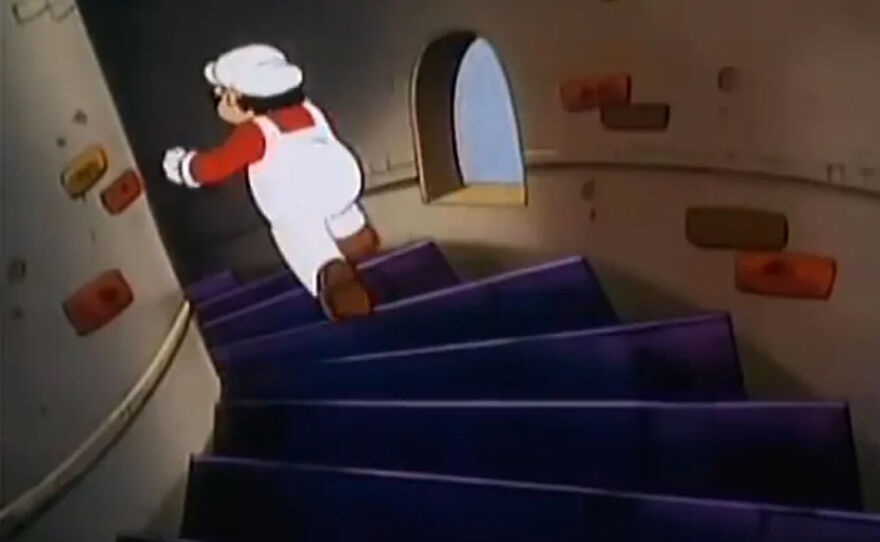
We've all seen the Mario Staircase optical illusion before, with its baffling visual trick that makes it hard to tell which direction he's running.
This ambiguity is caused by perspective inference and depth-from-shading, and The Mirror points out how our brains want to interpret the movement in a sensical way, but cannot with two plausible interpretations.
Let your perception flip back and forth on its own by mentally reinterpreting the stairs both ways. Similar ambiguities emerge in everyday life when lighting is poor, like when we misjudge steps in a dark stairwell.
It just proves how heavily our depth perception depends on assumptions, rather than raw data.
Afterimages appear when we stare at a bright object for several seconds, then look away, revealing complementary colors and shapes on a blank surface.
Exploratorium explains how a single flash of light can leave a lingering visual impression, so it's more a quirk of nature than a deliberate trickery, like many other optical illusions.
To see afterimages, focus on it with minimal blinking for 20-30 seconds, then immediately look at a white wall or piece of paper.
This is probably the most common illusion observed in everyday life because lingering illusions can persist in our eyes after looking at an object backlit by the sun or artificial light.

(Almost) all my favourites are here. Half of them are new to me. Excellent.
This thread has shown me something I didn't know before. As a HS science teacher, I've shown most these many times to students. They loved them. Since I've retired, I've had cataract surgery and my eyesight went from 20/400+ in both eyes to 20/15 in both eyes. I also noticed that the time it took to ensure it was safe behind me when I was backing up my car went from a few seconds to a quick glance, literally a fraction of a second. It wasn't until this thread that I found out that not only have the new lens affected my inline sight, but also my peripheral sight. The illusions that depend on fooling peripheral sight no longer work for me. I looked it up and found greater acuity can prevent seeing the illusion. Cool.
(Almost) all my favourites are here. Half of them are new to me. Excellent.
This thread has shown me something I didn't know before. As a HS science teacher, I've shown most these many times to students. They loved them. Since I've retired, I've had cataract surgery and my eyesight went from 20/400+ in both eyes to 20/15 in both eyes. I also noticed that the time it took to ensure it was safe behind me when I was backing up my car went from a few seconds to a quick glance, literally a fraction of a second. It wasn't until this thread that I found out that not only have the new lens affected my inline sight, but also my peripheral sight. The illusions that depend on fooling peripheral sight no longer work for me. I looked it up and found greater acuity can prevent seeing the illusion. Cool.





























 No fees, cancel anytime