Get Premium
Dark mode theme is available exclusively for premium users. Learn more about the benefits of subscribing.
No fees, cancel anytime.

 Dark Mode Ad-Free Browsing Unlimited Content
 Ad-Free Browsing Unlimited Content Dark Mode
Join 1.2 million Panda readers who get the best art, memes, and fun stories every week!

Most neighbors have a short list of requests like turning down the music after midnight, trimming a hedge that’s starting to look like it wants independence, or remembering that trash bins belong at the curb, not permanently decorating the driveway. Sometimes though, a neighborly dispute arrives that leaves everyone wondering where reasonable accommodation ends and personal responsibility begins.
That’s exactly the situation today’s Original Poster (OP) found herself in after trying to work with a neighbor who claimed her husband’s sports car was triggering severe anxiety. Although it all started as complaints about engine noise, it eventually turned into a request that many people would consider crossing a line.
More info: Reddit
Image credits: manowar1973 / Magnific (not the actual photo)

Image credits: saulich / Magnific (not the actual photo)
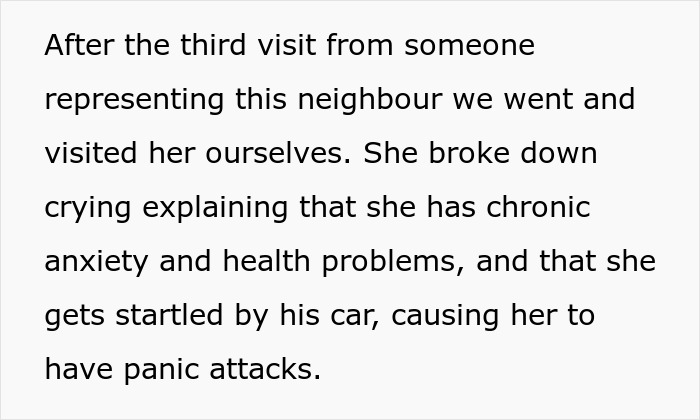
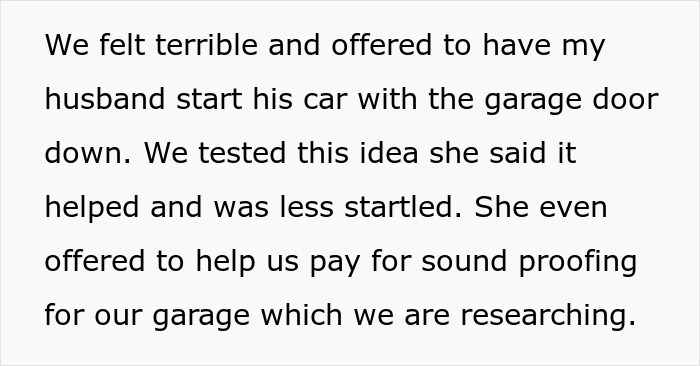
Image credits: mart production / Magnific (not the actual photo)
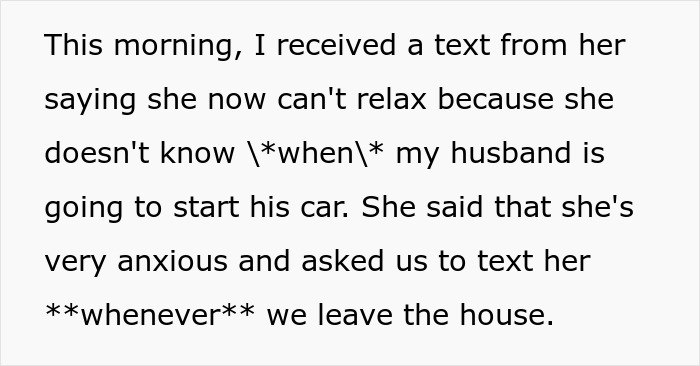
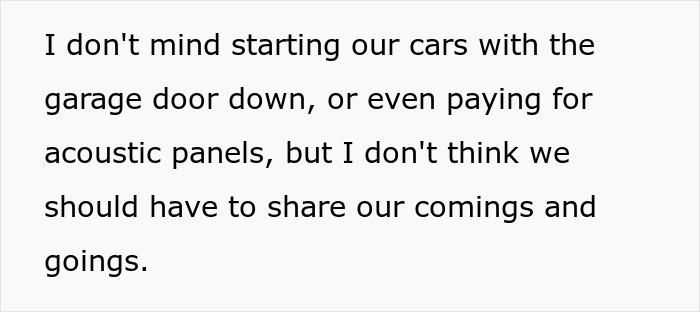

Image credits: mikewazowski_0912
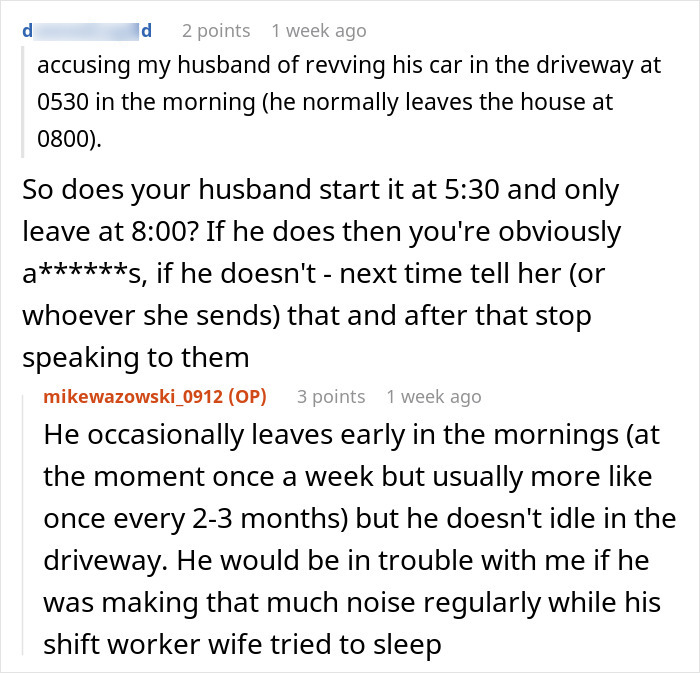
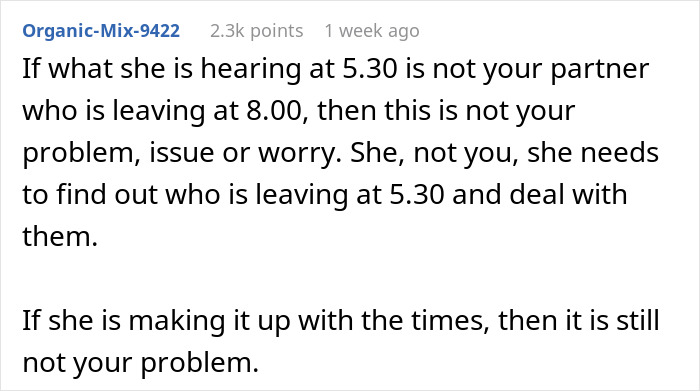
The OP explained that she and her husband have lived peacefully in a densely populated townhouse community for five years. However, that peaceful routine changed when one particular neighbor began complaining about the OP’s husband’s vehicle. Although he drives a sports car, the OP emphasized that it is completely unmodified and not unusually loud.
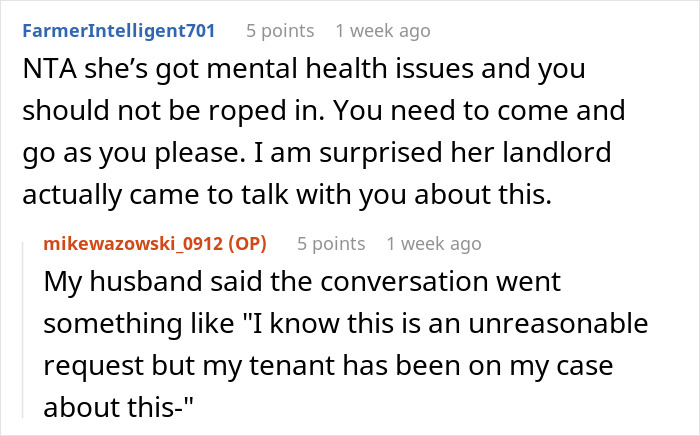
After several rounds of complaints, the OP and her husband decided to speak directly with the neighbor. The neighbor explained that she suffers from chronic anxiety and other health issues, and the sound of the sports car starting unexpectedly would startle her and sometimes trigger panic attacks. Hearing this, the couple felt sympathetic and immediately looked for ways to reduce the disturbance.
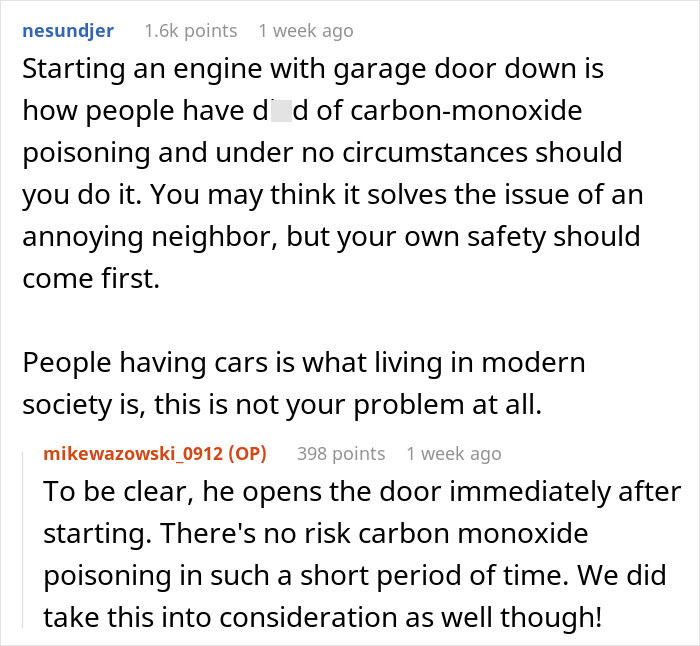
Together, they came up with a compromise. The husband agreed to start his vehicle while the garage door remained closed, reducing the amount of noise escaping into the neighborhood. After testing the arrangement, the neighbor reportedly said it helped and made the car less startling. Just when it seemed the issue had been resolved, the neighbor contacted then OP with another concern.
While the quieter startup method had reduced the noise itself, she now said that uncertainty was causing her anxiety. Not knowing when the car might start left her feeling on edge. Her proposed solution was for the OP and her husband to send her a text message whenever they were planning to leave the house. However, this was where they drew the line as haring details of their daily movements felt far more intrusive.
Image credits: Madhanajah / Magnific (not the actual photo)
In situations like this, Birchwood Clinic cautions that the way avoidance is handled can play an important role in how symptoms develop. They state that while steering clear of triggers may bring short-term comfort, consistently reshaping daily life around them can unintentionally reinforce anxiety over time. This is because repeated avoidance increases sensitivity and reduce confidence in coping with unavoidable situations.
At the same time, the dispute also touches on broader questions about what counts as “reasonable” noise in shared living environments. Legal Clarity points out that neighborhood disagreements over sound are extremely common. However, most noise regulations are designed to address excessive or disruptive disturbances, particularly during designated quiet hours.
Beyond the legal and psychological angles, Zing Collaboration highlights that while making reasonable adjustments can help preserve neighborly harmony, there is a point where ongoing requests may become difficult to sustain. In particular, sharing detailed information about personal schedules or movements can introduce privacy concerns and create expectations that are not realistic in the long term.
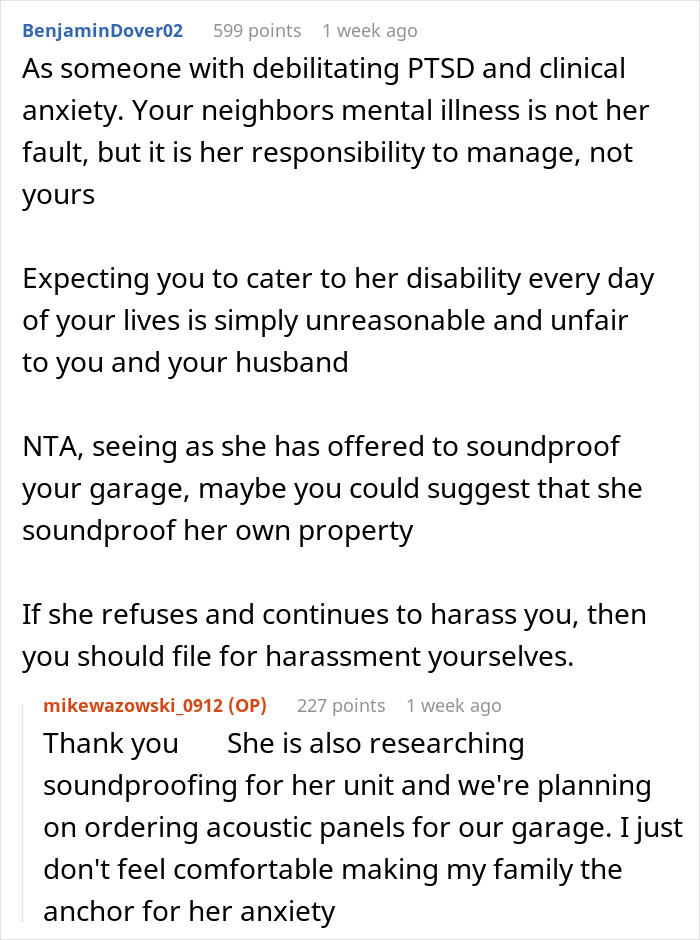
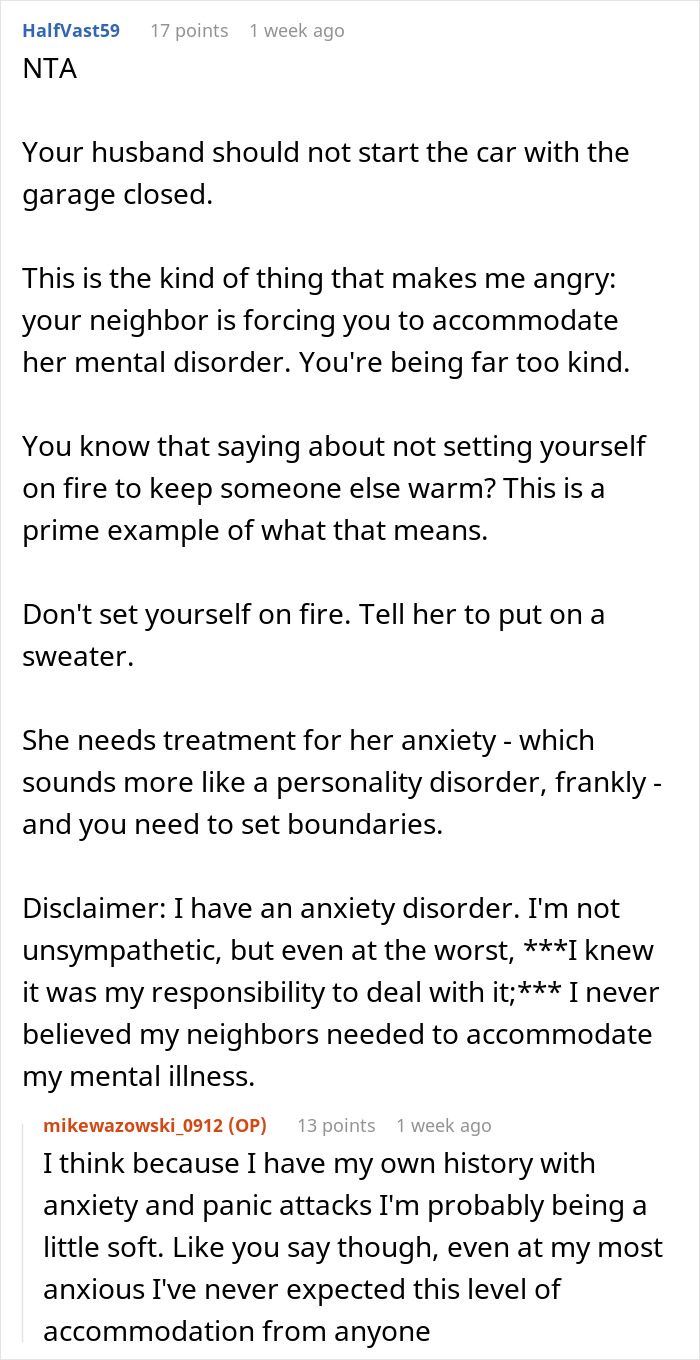
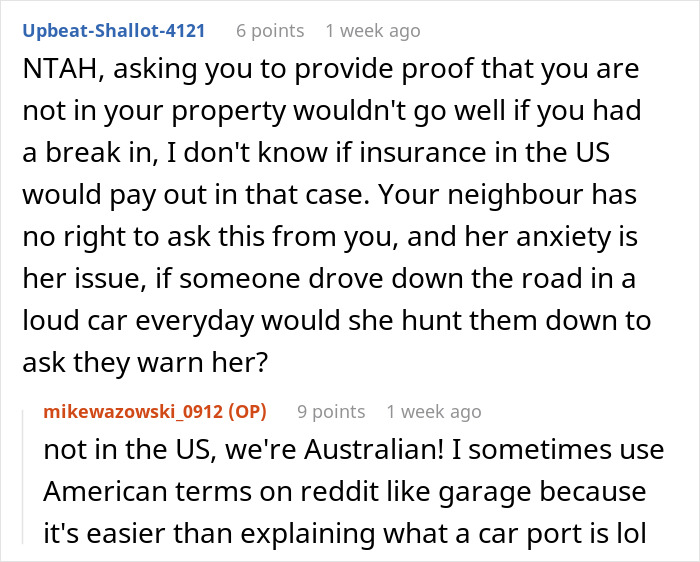
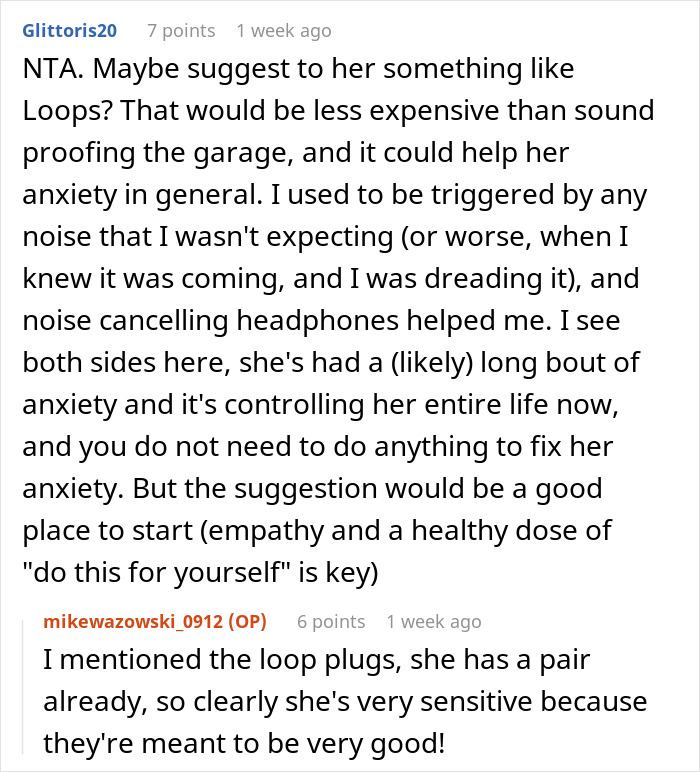
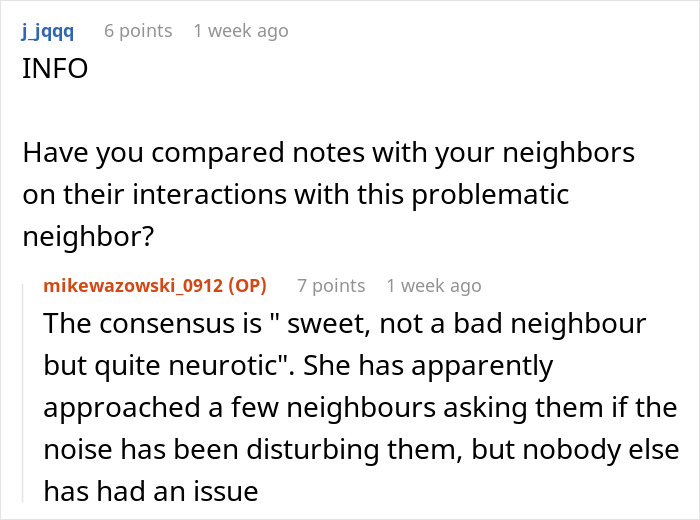
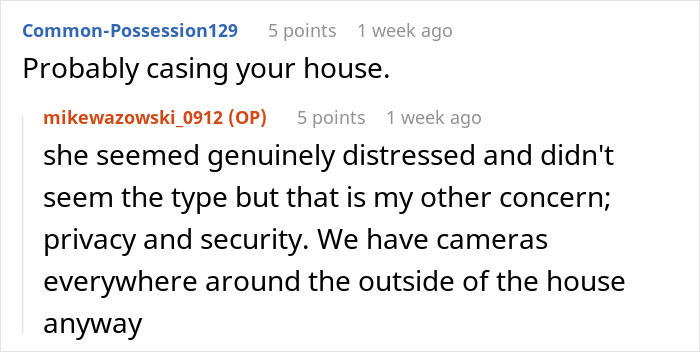
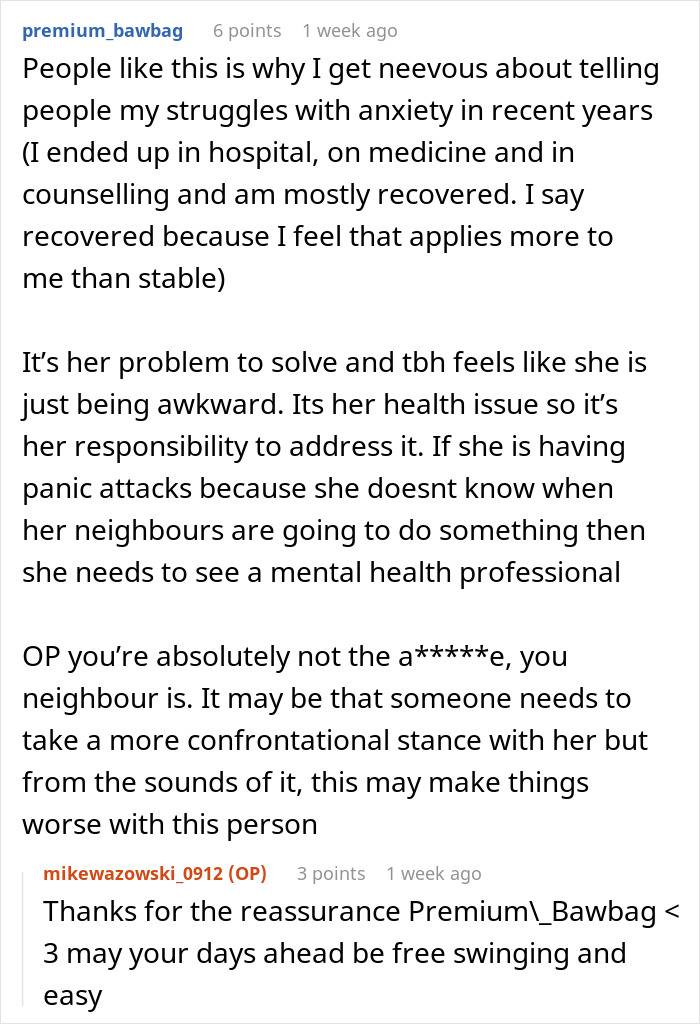
Netizens insisted that the OP and her husband are not at fault, and that the neighbor’s expectations are unreasonable. They also argued that the issue should be handled through personal coping strategies rather than changes imposed on others. What would you do if you were in the OP’s shoes? Would you change anything about your routine at all? We would love to know your thoughts!





By entering your email and clicking Subscribe, you're agreeing to let us send you customized marketing messages about us and our advertising partners. You are also agreeing to our Privacy Policy.
Thank you! You've successfully subscribed to newsletters!


This is insane. I would never. What if she is just faking and wants verification the house is empty when you leave. Her problems are not your problems and you've attempted to make reasonable accommodations.

If it was my neighbor who revs his silly little not-really-a-motorcycle several times every morning at 5:50, I could see the problem - believe me, I do see the problem and apparently so do many others. But if none of OP's other neighbors are complaining about the noise, then it is all in this woman's head and SHE is the one who needs to soundproof her windows and exterior walls, wear earplugs, or just seek help from a mental health professional.

We have a cvnty little guy in the 'hood who likes to rev at 3am-ish, and I will not be unhappy if something happens to his bike.
Load More Replies...
I experience panic attacks at unexpected noises, and over the last few years it has been getting harder to deal with it. One of my neighbours makes what feels like a terrible racket in the morning. I have tried out noise reduction solutions. Loops don't do enough, ear defenders are better but uncomfortable to sleep in for a permanent solution. Mainly, I have been working with my GP to solve the issues, it is slow going. In the meantime, I go to bed much earlier, so I can be up and in ear defenders before neighbors start making noise. My husband and I have discussed a time frame whereby if I can't get to grips with this, we will look at moving somewhere away from noise as I don't like the idea of having to alter sleep patterns, take medication and wear ear defenders as a permanent solution. What has never once occurred to me, is talk to my neighbours about this. They are lovely people and would probably try to accommodate me a little, but it is most definitely a me problem.

This is insane. I would never. What if she is just faking and wants verification the house is empty when you leave. Her problems are not your problems and you've attempted to make reasonable accommodations.
If it was my neighbor who revs his silly little not-really-a-motorcycle several times every morning at 5:50, I could see the problem - believe me, I do see the problem and apparently so do many others. But if none of OP's other neighbors are complaining about the noise, then it is all in this woman's head and SHE is the one who needs to soundproof her windows and exterior walls, wear earplugs, or just seek help from a mental health professional.
We have a cvnty little guy in the 'hood who likes to rev at 3am-ish, and I will not be unhappy if something happens to his bike.
Load More Replies... I experience panic attacks at unexpected noises, and over the last few years it has been getting harder to deal with it. One of my neighbours makes what feels like a terrible racket in the morning. I have tried out noise reduction solutions. Loops don't do enough, ear defenders are better but uncomfortable to sleep in for a permanent solution. Mainly, I have been working with my GP to solve the issues, it is slow going. In the meantime, I go to bed much earlier, so I can be up and in ear defenders before neighbors start making noise. My husband and I have discussed a time frame whereby if I can't get to grips with this, we will look at moving somewhere away from noise as I don't like the idea of having to alter sleep patterns, take medication and wear ear defenders as a permanent solution. What has never once occurred to me, is talk to my neighbours about this. They are lovely people and would probably try to accommodate me a little, but it is most definitely a me problem.






























 No fees, cancel anytime







26
18