Get Premium
Dark mode theme is available exclusively for premium users. Learn more about the benefits of subscribing.
No fees, cancel anytime.

 Dark Mode Ad-Free Browsing Unlimited Content
 Ad-Free Browsing Unlimited Content Dark Mode
Join 1.2 million Panda readers who get the best art, memes, and fun stories every week!
Buying your first home together is one of those milestones most couples dream about—even more so after a decade of living in cramped, underwhelming apartments.
After five years of aggressive saving, this couple finally got there, purchasing an older four-bedroom house in a beautiful area. But the celebration didn’t last long, and their pride and joy turned into frustration after each of their mothers visited for the first time. Instead of simply offering their congratulations, both women landed on the exact same idea: maybe there’s room here for me too.
Perplexed, the wife couldn’t let one question go: Why would either of their mothers want to live with them? So she turned to Reddit to vent.
Image credits: Jonathan Borba / Pexels (not the actual photo)
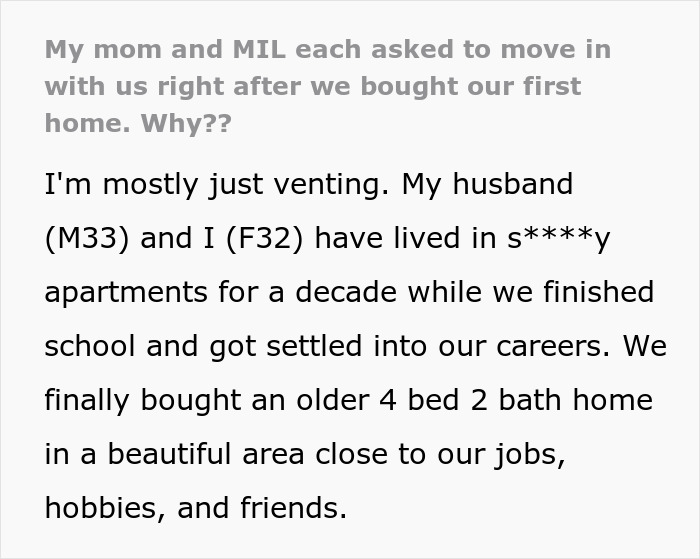
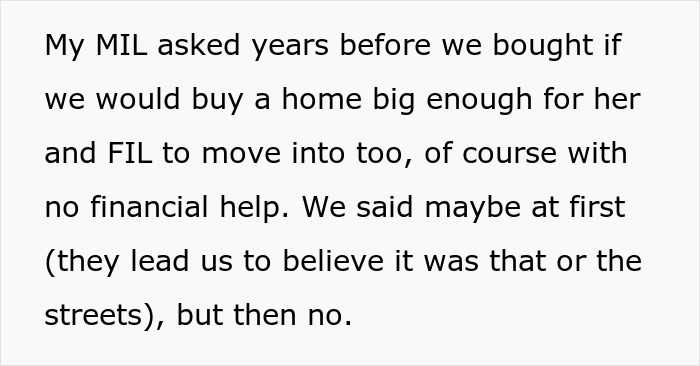
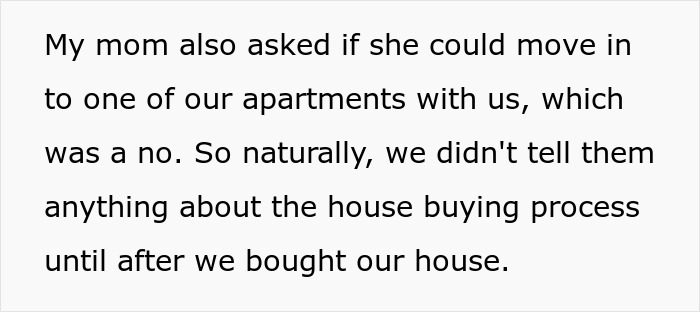

Image credits: Anna Shvets / Pexels (not the actual photo)
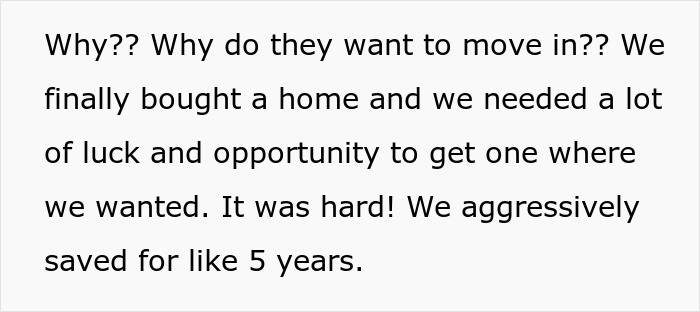
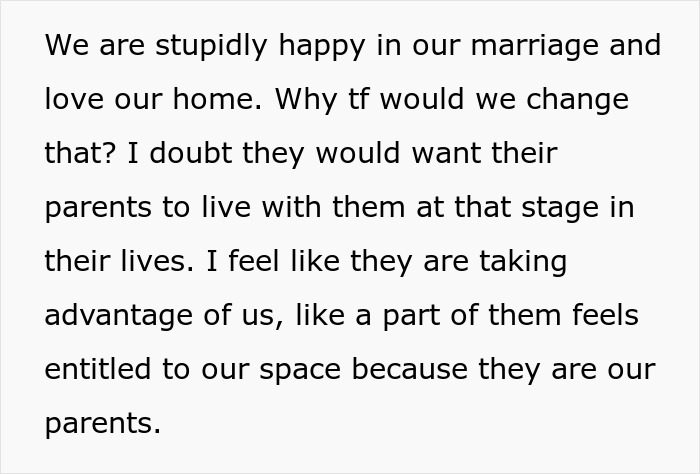
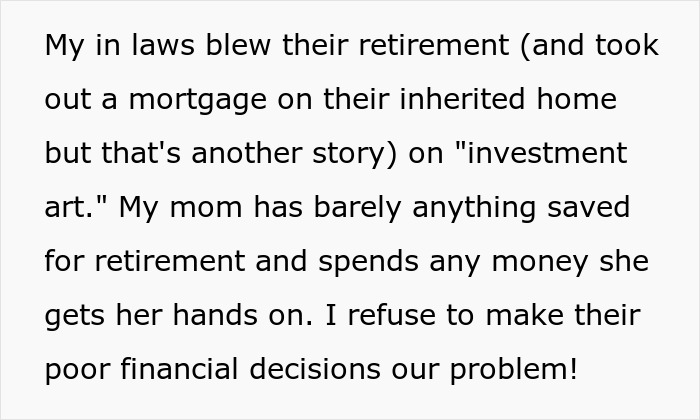
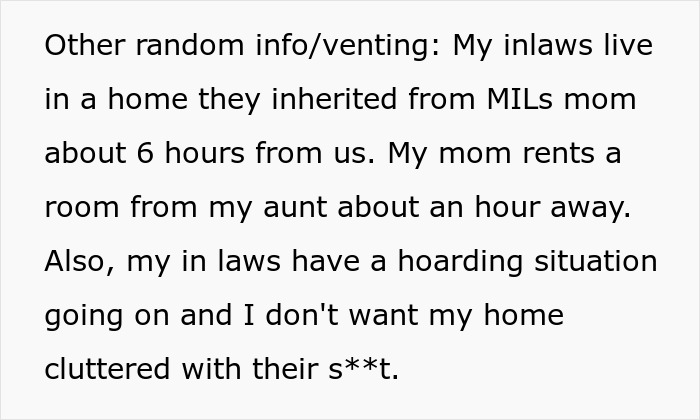
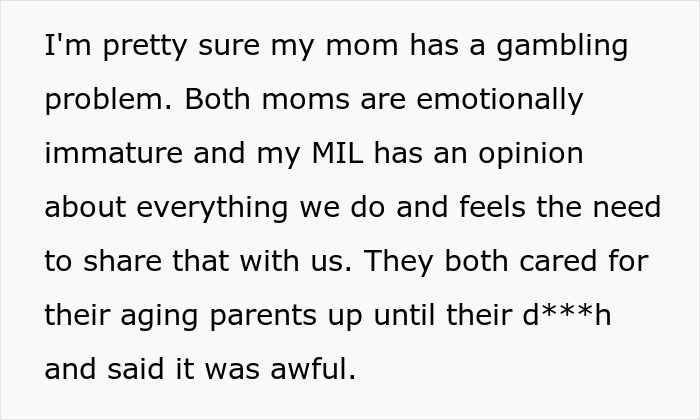
Image credits: SHVETS production / Pexels (not the actual photo)

Image credits: sabrownie234

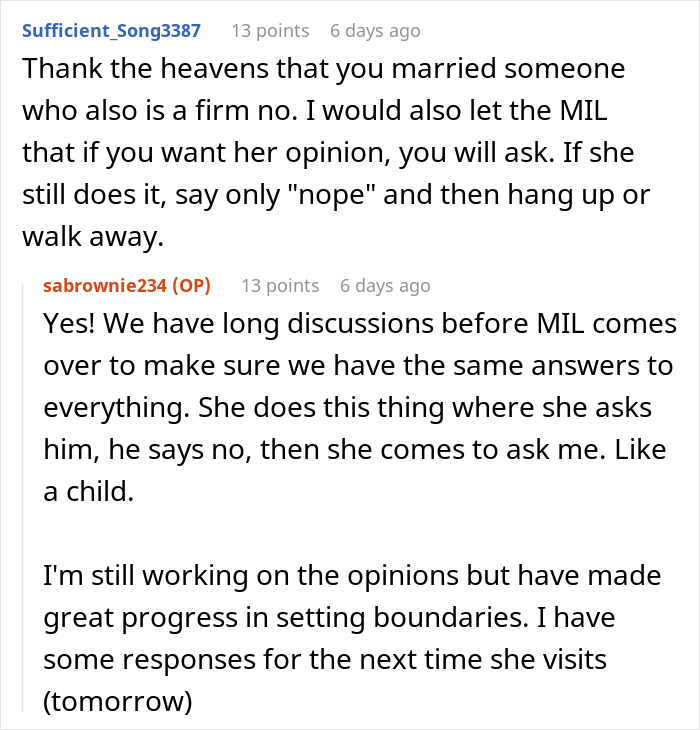
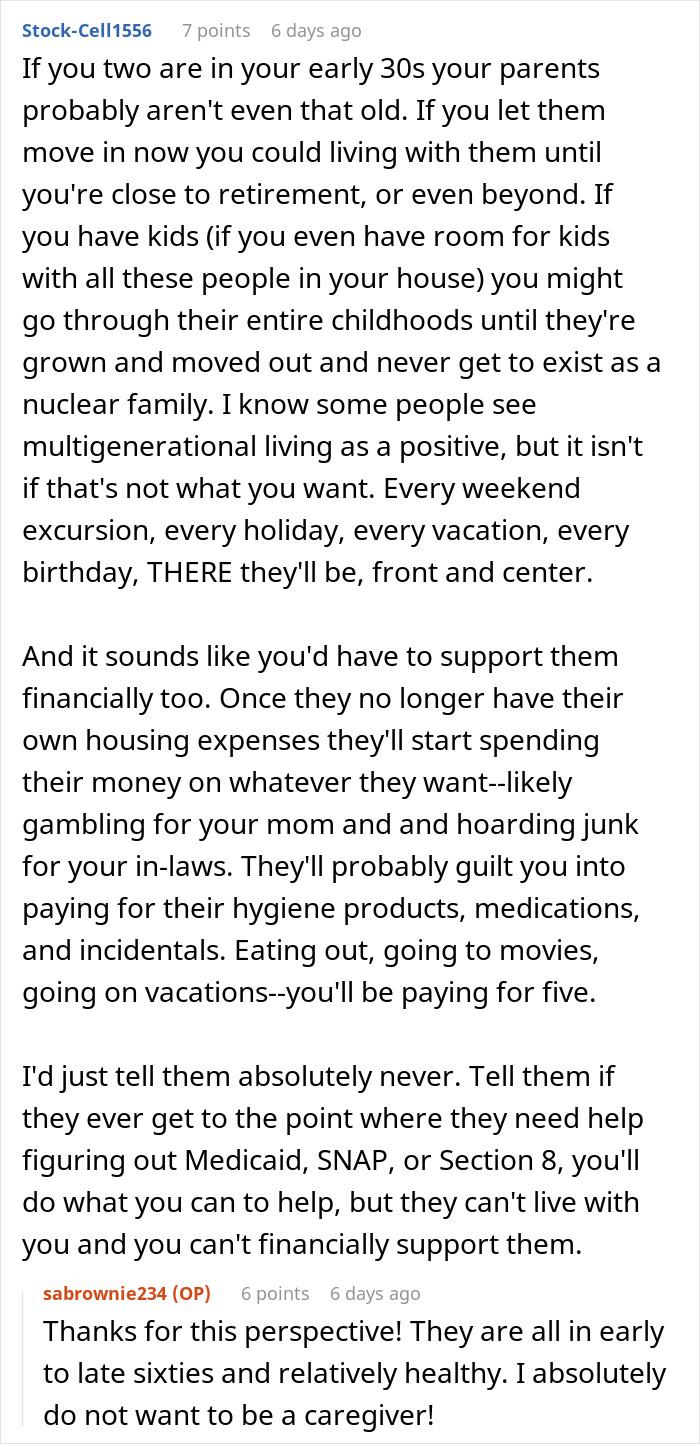
Image credits: Getty Images / Unsplash (not the actual photo)
On the surface, although certainly audacious after the first “no,” it’s not impossible to fathom why OP’s mom and MIL would float the idea of moving in.
After all, multigenerational homes, where two or more adult generations share the same roof, are hardly anything new. In the US, it was more of a norm during the first half of the 20th century, before housing began to center on the nuclear family and Americans became healthier, lived longer, and accumulated more wealth. It became least popular during the 1980s, but with the 2008 financial crisis and the pandemic, the arrangement has become more popular in recent years. In fact, in 2021, according to the Pew Research Center, a quarter of US adults ages 25 to 34 resided in a multigenerational family household, up from 9% in 1971.
While this statistic consists mainly of young adults living in their parents’ homes, Pew’s 2021 findings also show that 15% of 25- to 34-year-olds in multigenerational households were living in their own home and had a parent or other older relative living with them. Up from 12.7% in 2011, this arrangement, called the “reverse-boomerang effect,” is also on the rise.
Describing this effect, Oyin Adedoyin, writing for The Wall Street Journal, explains that a greater share of parents aren’t waiting for retirement or urgent healthcare needs to move in with their adult children. Pew attributes this to changing attitudes about family life, high housing costs, and challenges in finding affordable childcare. But for a subset of these families, Fortune’s Jasmin Li offers a more pointed take: one rooted less in preference and more in financial necessity, where the driver isn’t cultural or logistical but rather a retirement shortfall.
Image credits: Teona Swift / Pexels (not the actual photo)
According to Li, many boomers are reaching retirement age without enough saved to support themselves, and so they’re turning to their adult children for help. The outlet cites one estimate putting the median retiree’s savings at around $142,000—far short of the roughly $1 million many say they’d need for a comfortable retirement. A separate Federal Reserve survey found that as of 2022, nearly half of Americans ages 65 to 74 had no retirement savings at all, despite most in that age group owning their own homes.
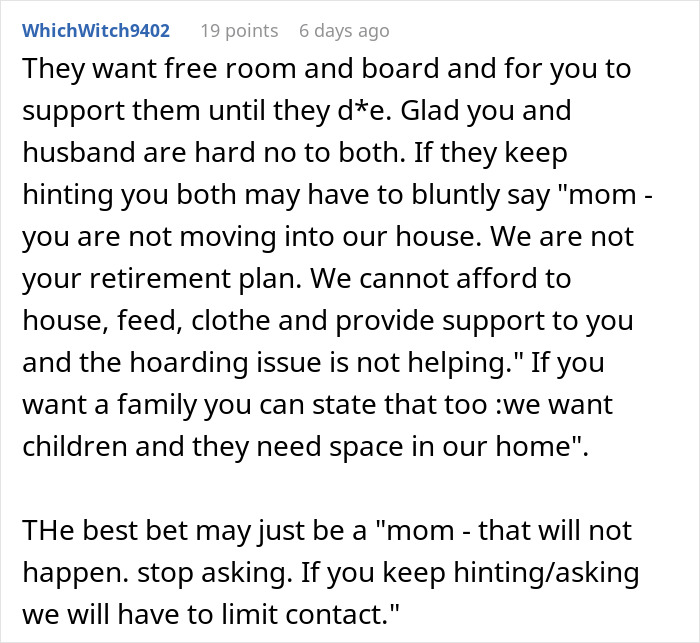
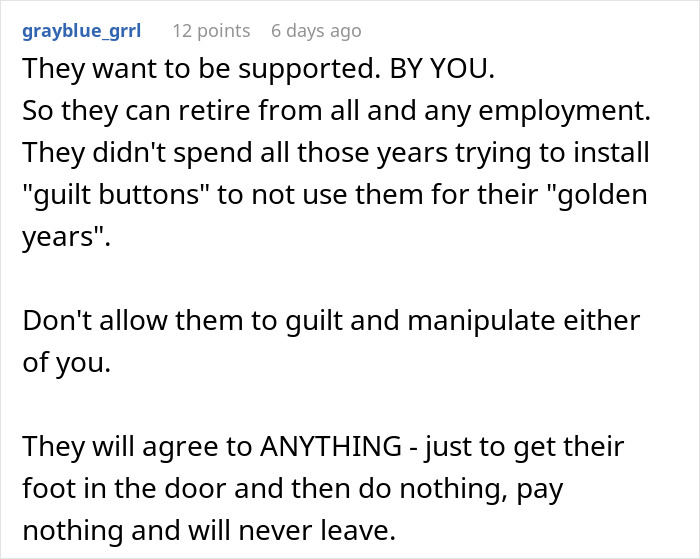
OP’s mother and in-laws, all in their sixties, seem to fit that broader trend. She explains that her in-laws “blew their retirement” on “investment art,” and that her mother—who she suspects might have a gambling problem—“has barely anything saved for retirement and spends any money she gets her hands on.” OP and her husband, by contrast, “aggressively saved for like 5 years” to afford their home—no small feat when nearly a quarter of millennials believe they’ll never save enough for a down payment, according to Bankrate. In that light, they look like the type of millennials Business Insider’s Emily Stewart had in mind when she wrote: “They’re doing everything right to save for their golden years. Their baby boomer parents didn’t.”
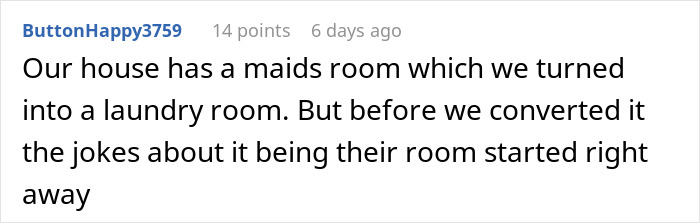
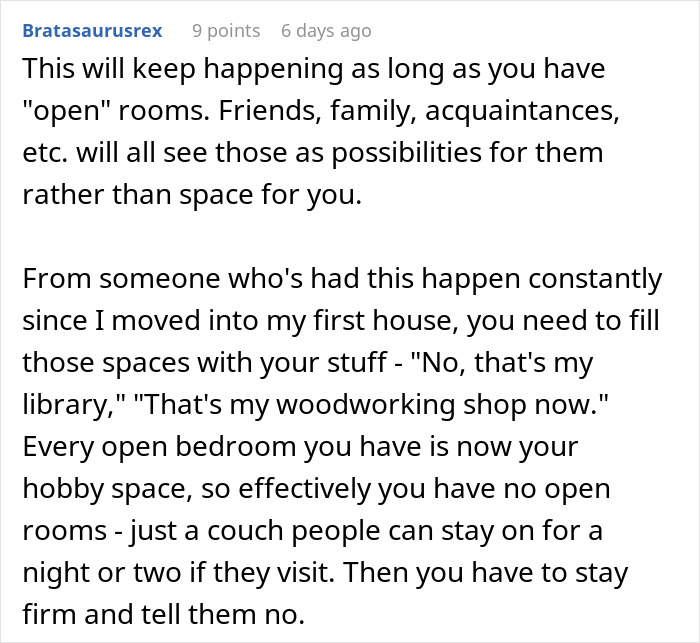
And that’s possibly the real sting for OP: the implication (or expectation) that she and her husband, like many “seething millennials,” according to Li, should have to bear the consequences of their parents’ financial choices. Maybe it isn’t just that her mother and in-laws want to move in—it’s the why she keeps circling back to in her post. They already have places to live. They complain about the cold every time they visit. They have opinions on everything the couple does. And they’ve said themselves that caring for their own aging parents was awful.
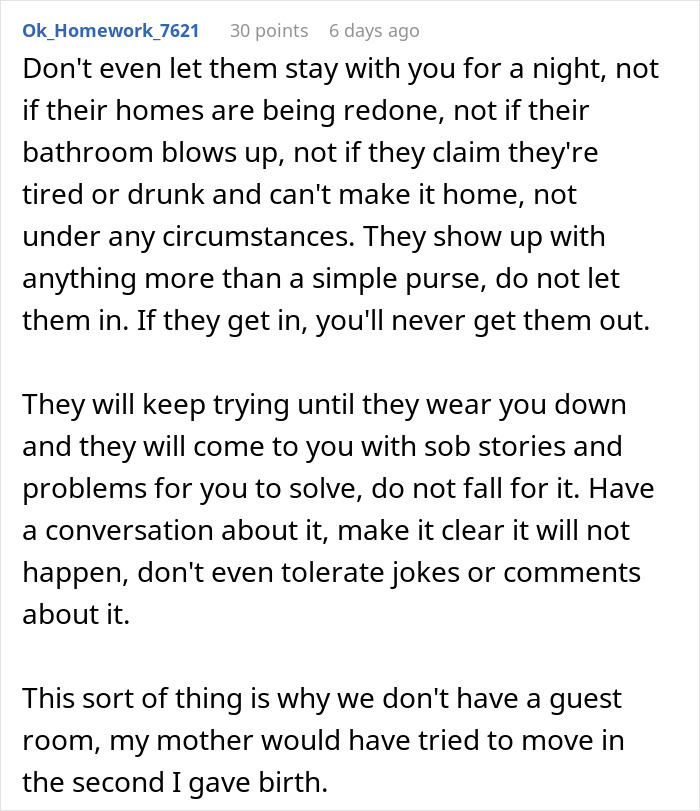
So perhaps the answer to OP’s question has less to do with preference or misfortune than with financial necessity brought about, at least in part, by their own choices. Maybe that’s what makes a “joke” about having so much space land so wrong: it hints at something bigger, what Stewart calls an “intergenerational financial contagion,” where, as she puts it, “One generation’s under-saving rewires another’s math and rewrites their future.”
How would you have handled OP’s situation? Would you have shut the idea down immediately, or would you have considered letting a parent move in? Share your thoughts in the comments.









By entering your email and clicking Subscribe, you're agreeing to let us send you customized marketing messages about us and our advertising partners. You are also agreeing to our Privacy Policy.
Thank you! You've successfully subscribed to newsletters!


"Sure, dad. I've been waiting decades to say, 'NOT UNDER MY ROOF!'" And that was the end of that conversation.

Being a caregiver for a parent is eventually utterly crushing and demoralizing, and will ruin your physical, mental, and emotional health, even if you love said parent. And even if OP's mom/in-laws say "oh we're just moving in, we can take care of ourselves!" ...OP and her husband will end up becoming caregivers. Caregiver burnout is devastating. We took care of my dad at home for 21 years; he died 5 years ago and no one in my family has even remotely recovered mentally, and we all have physical health issues now from the physical aspects of caregiving for a fully-disabled adult. I loved my father dearly, but good lort, being a caregiver was brutal and it destroyed my life.

True and brutal is the right word. I so don’t want that for my girl. I have plans (and more than plans) to decide when my life is done. I am willing to err on the side of a year or two rather than risk hanging on beyond the point of choice.
Load More Replies...
My mother raises a worse version of this every time I visit her. She doesn't want to move in with me, but wants me to leave my wife and home to move in with her. Because she wants to still be in control - her house, her rules. First time I was just shocked and just said no. Now I laugh at her and tell her no way in hell would I ever consider that. I've tried pointing out how selfish it is to ask someone to give up their life to look after you, but she doesn't see it that way, but something she deserves for giving birth to me 60 odd years ago, despite ignoring my life for most of those years. She can afford carers or even to live in a nursing home, so it's not like I'm the only option. She just wants to be able to control me.

How have you resisted saying, “Ma, you’re showing signs of dementia mentioning my moving in with you; no *rational* parent would want that for her kid. I’m taking you to look at rest homes right now,” and MEAN IT. Scare that nonsense right out of her! (I’m not making a joke; why on earth would a parent think a 60-some odd child would want to leave a SPOUSE to live with “mommy”? Something’s not right there.)
Load More Replies... "Sure, dad. I've been waiting decades to say, 'NOT UNDER MY ROOF!'" And that was the end of that conversation.
Being a caregiver for a parent is eventually utterly crushing and demoralizing, and will ruin your physical, mental, and emotional health, even if you love said parent. And even if OP's mom/in-laws say "oh we're just moving in, we can take care of ourselves!" ...OP and her husband will end up becoming caregivers. Caregiver burnout is devastating. We took care of my dad at home for 21 years; he died 5 years ago and no one in my family has even remotely recovered mentally, and we all have physical health issues now from the physical aspects of caregiving for a fully-disabled adult. I loved my father dearly, but good lort, being a caregiver was brutal and it destroyed my life.
True and brutal is the right word. I so don’t want that for my girl. I have plans (and more than plans) to decide when my life is done. I am willing to err on the side of a year or two rather than risk hanging on beyond the point of choice.
Load More Replies... My mother raises a worse version of this every time I visit her. She doesn't want to move in with me, but wants me to leave my wife and home to move in with her. Because she wants to still be in control - her house, her rules. First time I was just shocked and just said no. Now I laugh at her and tell her no way in hell would I ever consider that. I've tried pointing out how selfish it is to ask someone to give up their life to look after you, but she doesn't see it that way, but something she deserves for giving birth to me 60 odd years ago, despite ignoring my life for most of those years. She can afford carers or even to live in a nursing home, so it's not like I'm the only option. She just wants to be able to control me.
How have you resisted saying, “Ma, you’re showing signs of dementia mentioning my moving in with you; no *rational* parent would want that for her kid. I’m taking you to look at rest homes right now,” and MEAN IT. Scare that nonsense right out of her! (I’m not making a joke; why on earth would a parent think a 60-some odd child would want to leave a SPOUSE to live with “mommy”? Something’s not right there.)
Load More Replies...































 No fees, cancel anytime








43
15