Get Premium
Dark mode theme is available exclusively for premium users. Learn more about the benefits of subscribing.
No fees, cancel anytime.

 Dark Mode Ad-Free Browsing Unlimited Content
 Ad-Free Browsing Unlimited Content Dark Mode
Join 1.2 million Panda readers who get the best art, memes, and fun stories every week!

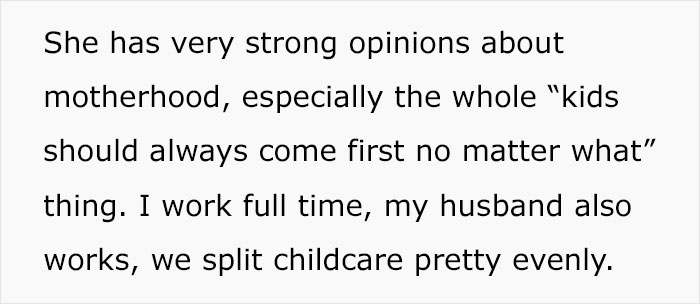
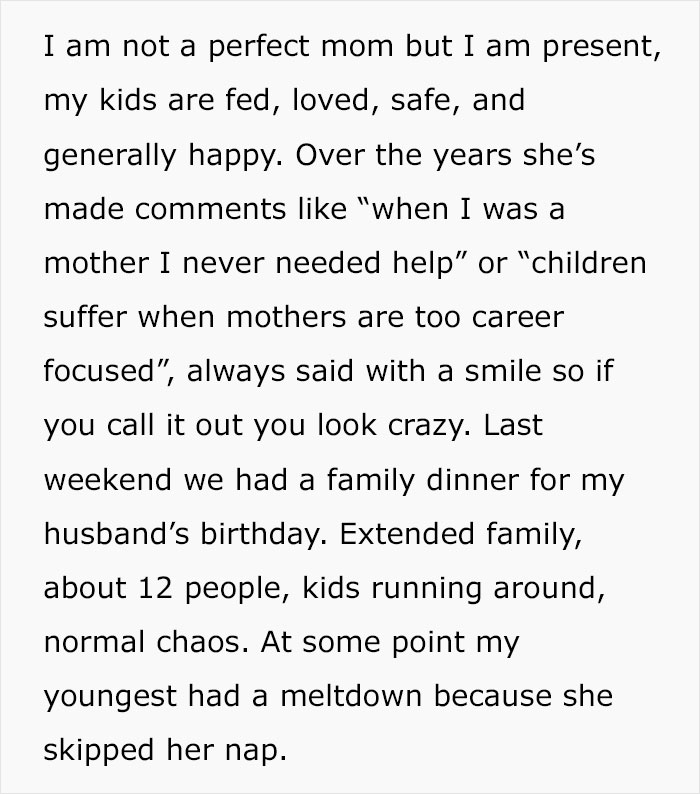
It takes two not just to tango but to keep family gatherings from turning into passive-aggressive battlegrounds. And Reddit user AlderMoonstone says her mother-in-law has been taking (subtle) digs at her parenting for years.
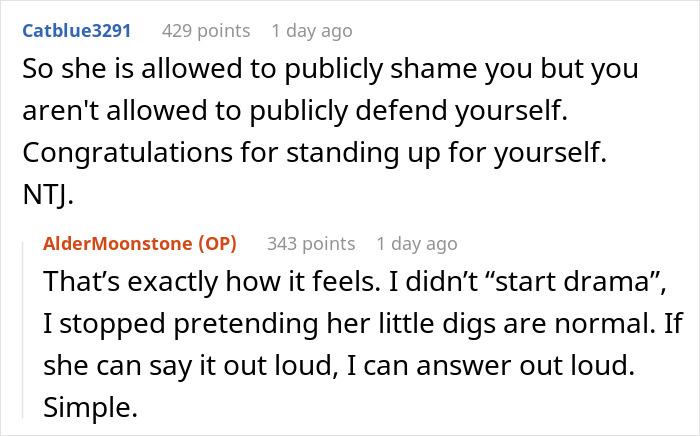
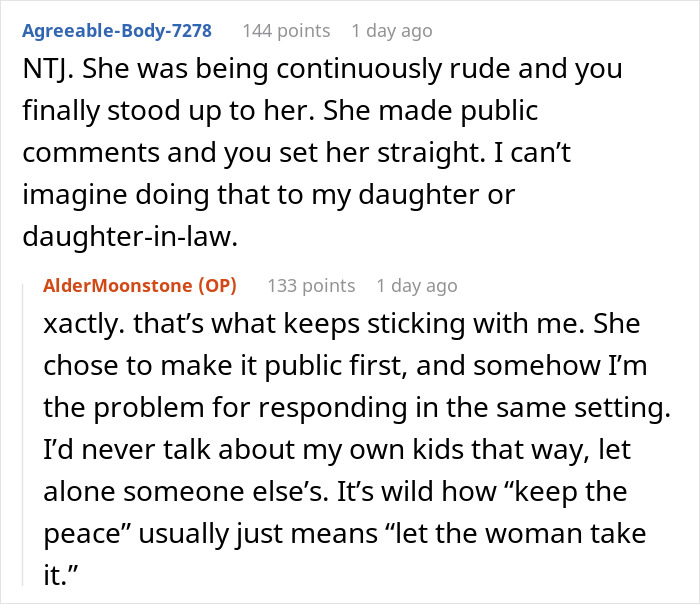
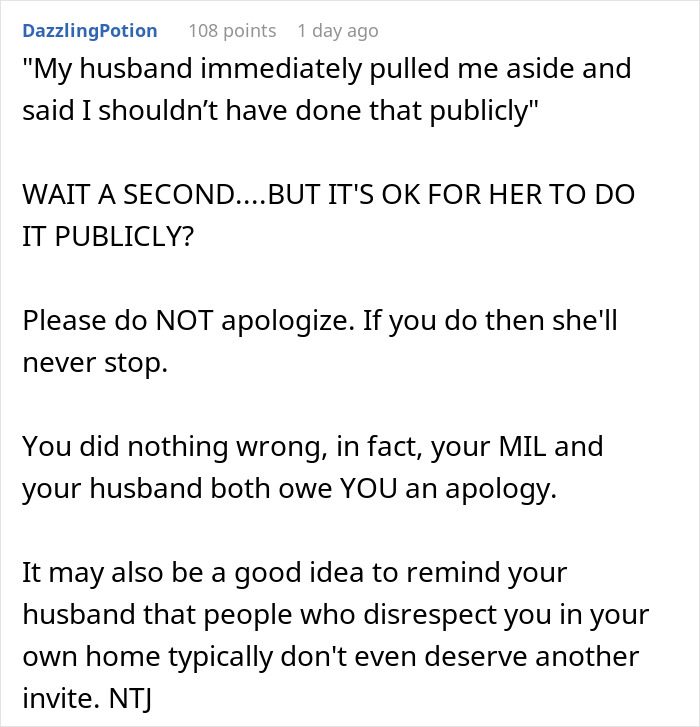
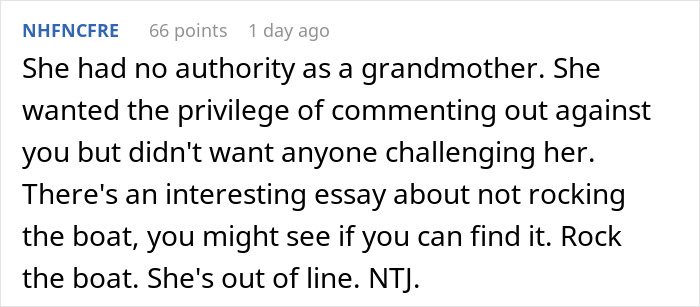
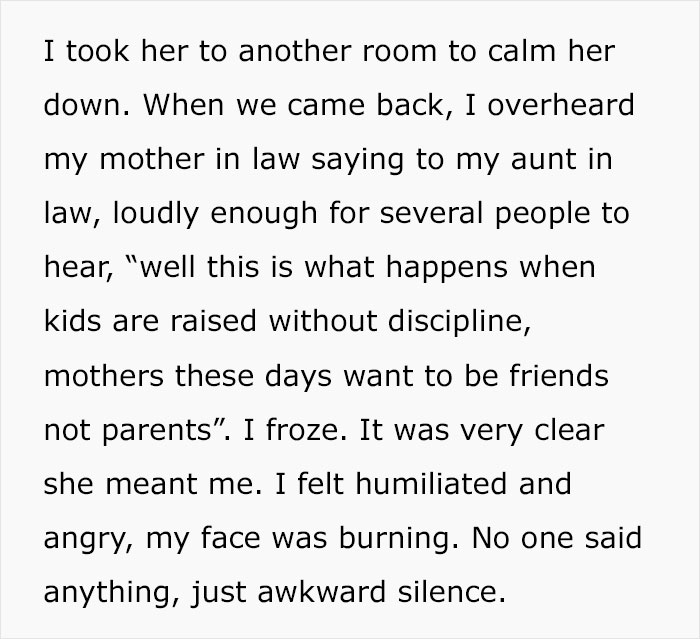
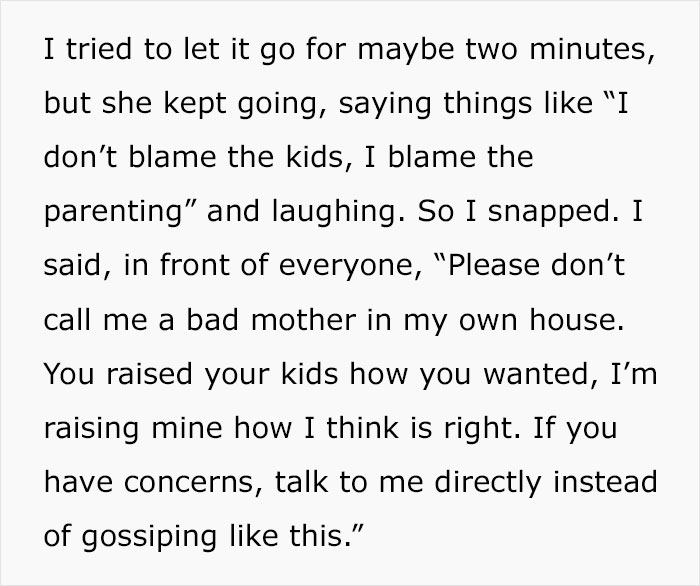
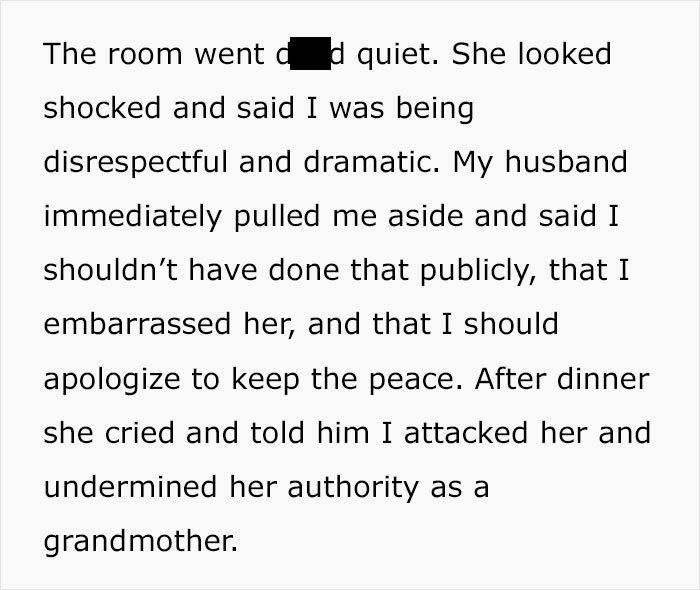
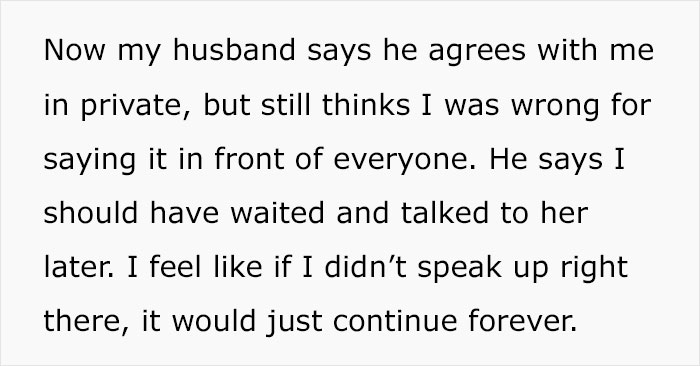
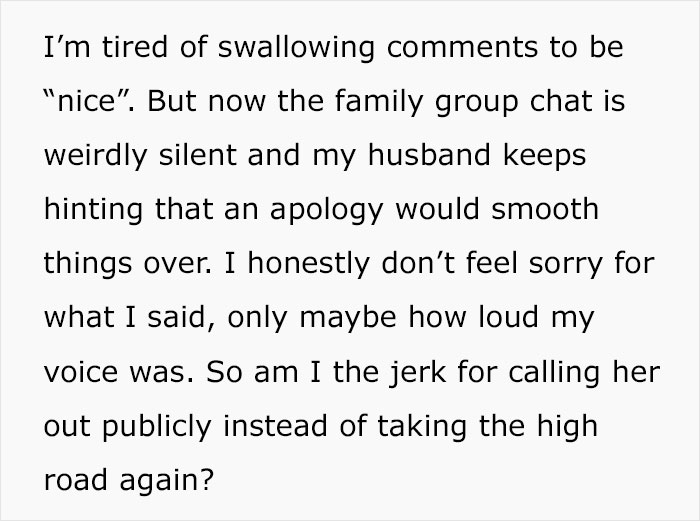
The last straw came during her husband’s birthday dinner, when the lady began criticizing her in front of everyone. However, after the woman called the mother-in-law out, she quickly flipped the script and played the victim. So the Redditor decided to ask the internet if she was wrong for escalating the situation.
Image credits: shurkin_son / freepik (not the actual photo)
Image credits: freepik (not the actual photo)
Image credits: freepik (not the actual photo)
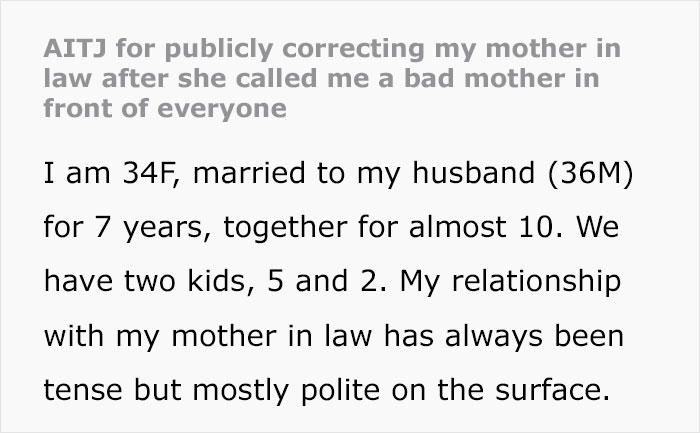
Image credits: AlderMoonstone
Mothers of young children face numerous parenting decisions every day, from feeding methods and diet to sleep position and safety. Some mothers have a support system that encourages them during the challenging times; others — just like our Redditor — face negativity and criticism of their choices.
The C.S. Mott Children’s Hospital National Poll on Children’s Health asked a national sample of American mothers of children 0–5 years old about their experiences, and most of them (61%) say they have been criticized about their parenting choices, most frequently by family: their spouse or child’s other parent (36%), their in-laws (31%), or their own mother or father (37%).
Mothers report less criticism from peers — friends (14%), other mothers they encounter in public (12%), commenters on social media (7%) — or from their child’s health care provider (8%) or childcare provider (6%).
About a quarter (23%) have been criticized by three or more of these groups.
Overall, 62% believe that mothers get a lot of unhelpful advice from other people, while 56% believe that mothers get too much blame and not enough credit for their children’s behavior.
As was the case this time, discipline is the most frequent topic of criticism, reported by 70% of criticized mothers. Other common topics of criticism are diet and nutrition (52%), sleep (46%), breast- vs. bottle-feeding (39%), safety (20%), and childcare (16%).
Mothers describe different — and sometimes conflicting — responses to criticism about their parenting. Many seek additional information about a specific topic, either searching for information themselves (60%) or asking a health care provider (53%), and 37% have made a change in how they parent. While 67% of mothers say that criticism made them feel more strongly about their parenting choices, 42% indicate that at times, criticism has made them feel unsure about their parenting choices.
Half of mothers say that they avoid certain people who are critical, while 56% have stopped criticizing other mothers after experiencing criticism themselves.
Marriage and family therapist Sara M. Klein, LMFT, says the key to dealing with a meddling mother-in-law is to bite your tongue, and — when in doubt — imagine you’re all part of a National Geographic docuseries.
“One strategy I might use,” Klein explains, “is to pretend you are an anthropologist and just observe and describe. This will help with judgments.”
Rather than rolling your eyes when she criticizes you — which is quite likely happen — Klein suggests saying something like, “It’s interesting that your family does it this way”
If you’re really tempted to drop a snarky line when your mother-in-law keeps intruding in your marriage, Klein warns against deflecting responsibility.
“Blame and shame are not effective relationally. They shut people down, and there is no space in between.”
Instead, she suggests saying, “We made a decision about this and we are happy to discuss our thought process with you.”
When it comes to parenting, the expert explained that it’s normal to want to parent differently from how your in-laws raised their children.
And statements like “We’ll never do that with our children” can feel like a direct critique of how your in-laws raised your spouse.
Instead, try: “We’re trying to limit screen time while the kids are little — it’s just what’s feeling right for us right now. But who knows, ask me again in six months,” Klein explains.

















By entering your email and clicking Subscribe, you're agreeing to let us send you customized marketing messages about us and our advertising partners. You are also agreeing to our Privacy Policy.
Thank you! You've successfully subscribed to newsletters!


The husband was in the room and didn't feel attacked about his parenting? That means he's a babysitter and not a parent, no matter what the private time party line is. It's his family, let him sort it out, and if he won't it's time for big conversations.

Her comments were very specifically designated against mothers. The only way to nip passive aggressive people like this is right then and there when it happens. No one neglects spilt milk. Passive aggressive comments like this are designed to make the target feel small. I started doing this with my MIL and she won’t dare do it now. No love lost because none was ever gained.
Load More Replies...
The husband was in the room and didn't feel attacked about his parenting? That means he's a babysitter and not a parent, no matter what the private time party line is. It's his family, let him sort it out, and if he won't it's time for big conversations.
Her comments were very specifically designated against mothers. The only way to nip passive aggressive people like this is right then and there when it happens. No one neglects spilt milk. Passive aggressive comments like this are designed to make the target feel small. I started doing this with my MIL and she won’t dare do it now. No love lost because none was ever gained.
Load More Replies... 




































 No fees, cancel anytime










35
12