Get Premium
Dark mode theme is available exclusively for premium users. Learn more about the benefits of subscribing.
No fees, cancel anytime.

 Dark Mode Ad-Free Browsing Unlimited Content
 Ad-Free Browsing Unlimited Content Dark Mode
Join 1.2 million Panda readers who get the best art, memes, and fun stories every week!
Our planet is several billion years old—a number so vast it’s almost impossible to truly comprehend. In all that time, countless plants, animals, organisms, and creatures of every kind have come and gone, each leaving their mark on a world that kept right on spinning without them.
It would be extraordinary to travel back centuries, or even millions of years, and witness what life actually looked like here. But since time travel remains firmly out of reach, the closest we can get is the objects that have survived the ages, waiting to be found. Fossils are exactly that kind of time capsule.
On r/FossilHunting and r/fossilid, people share the remarkable specimens they’ve stumbled across. We’ve rounded up some of the most fascinating ones below.
This post may include affiliate links.
Beautiful_Brain4390:
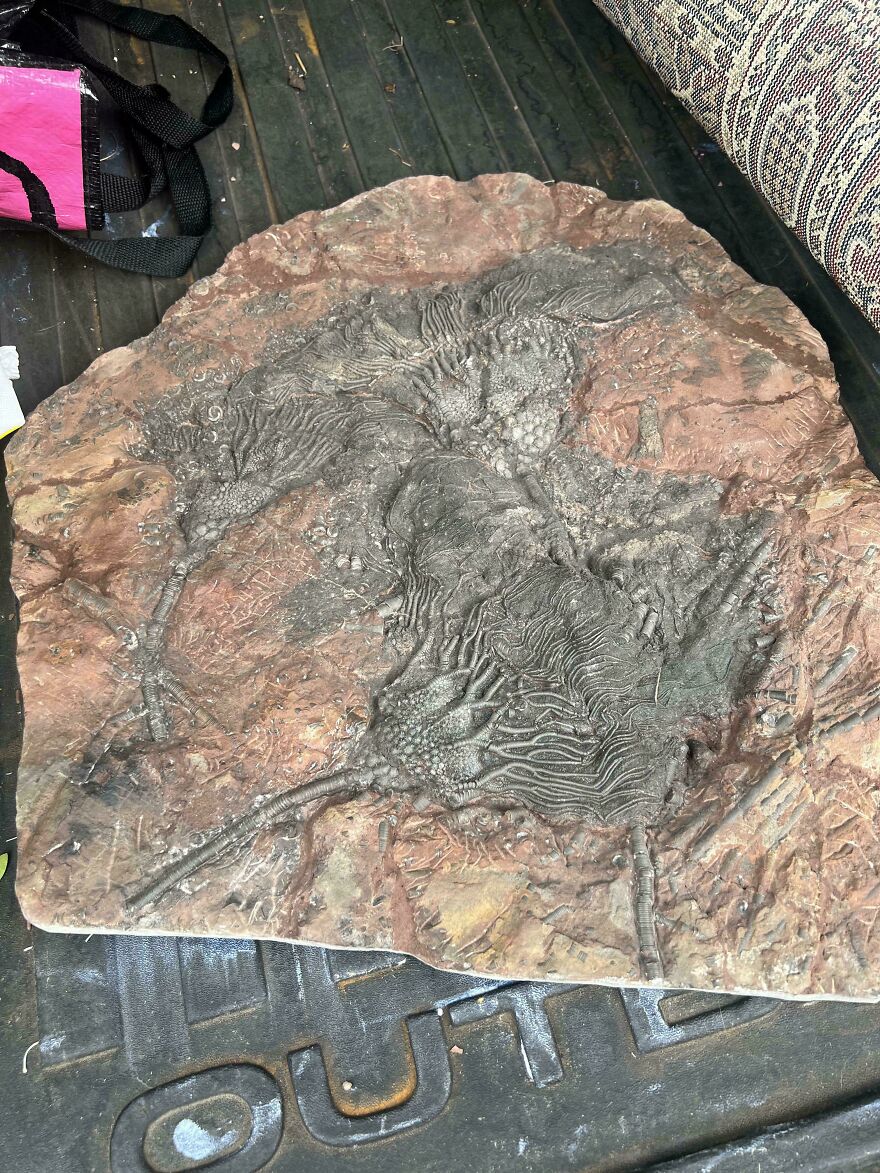
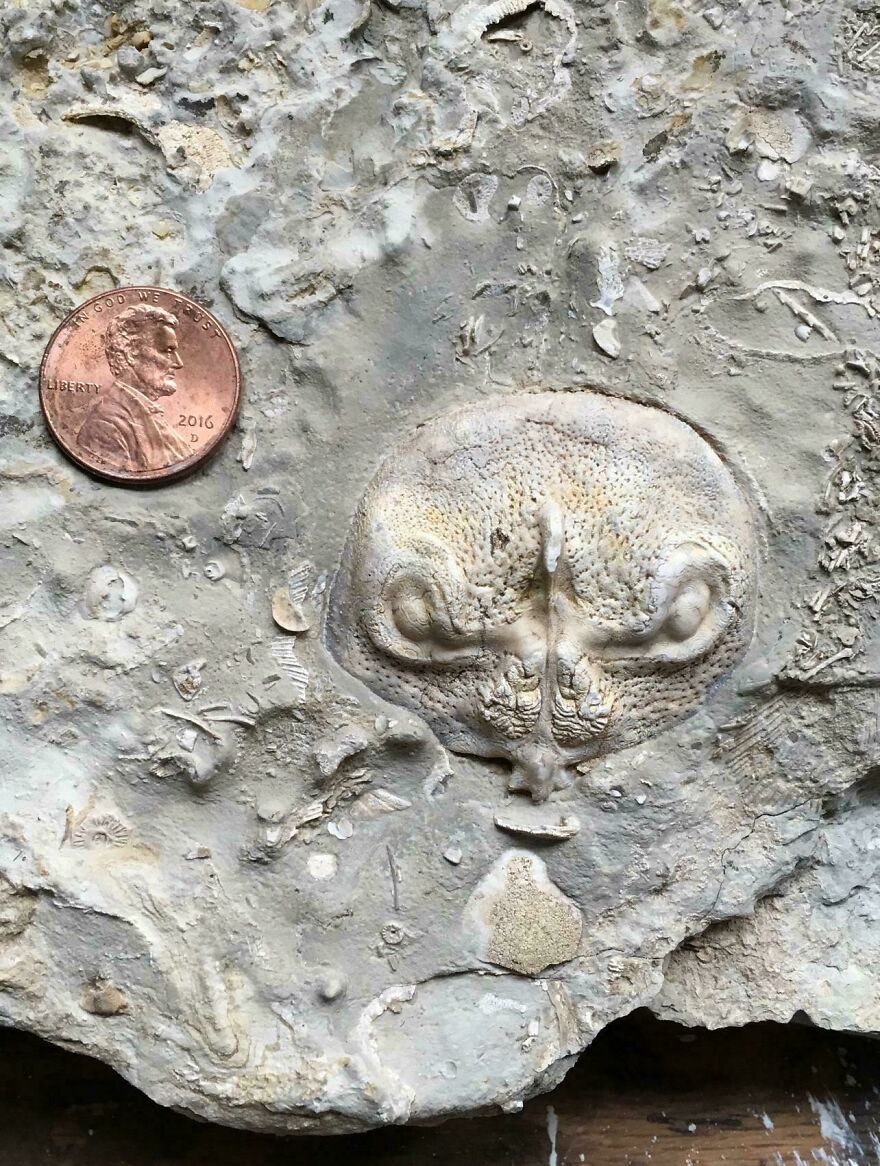
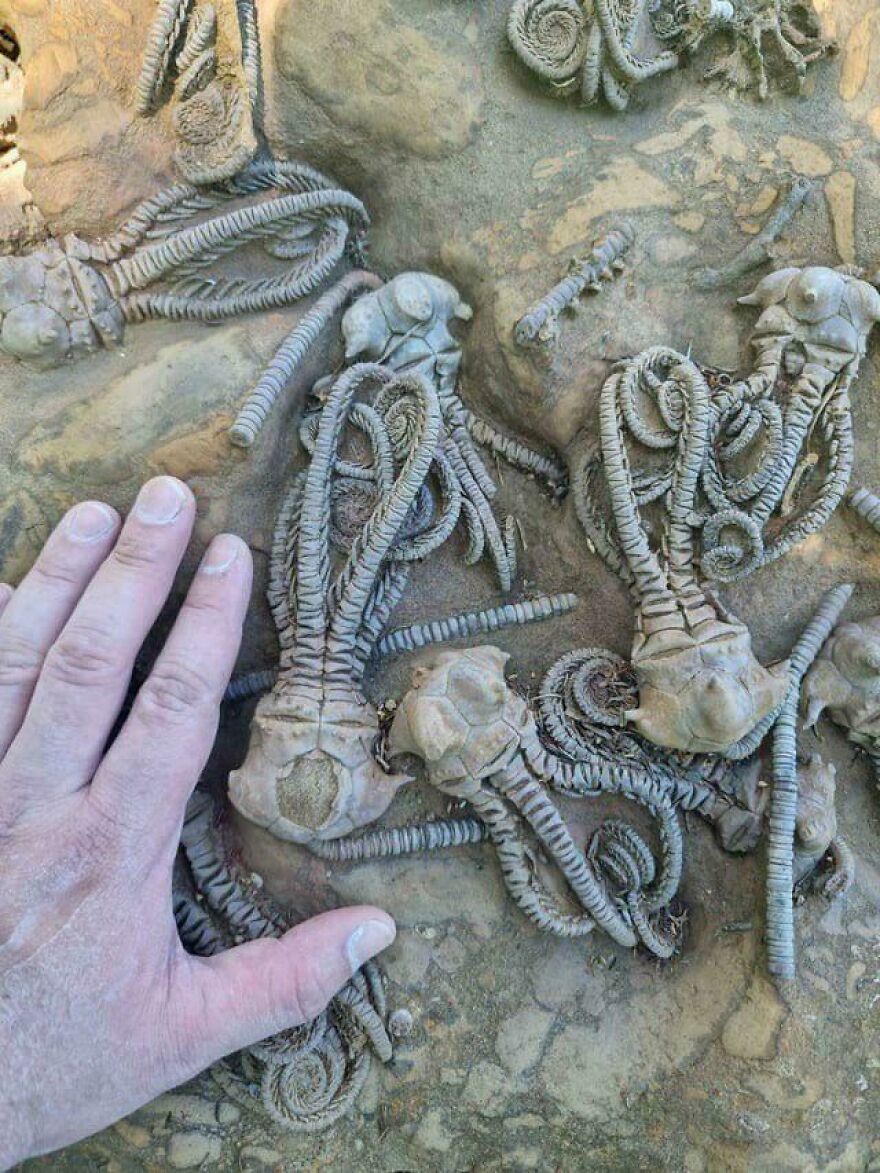
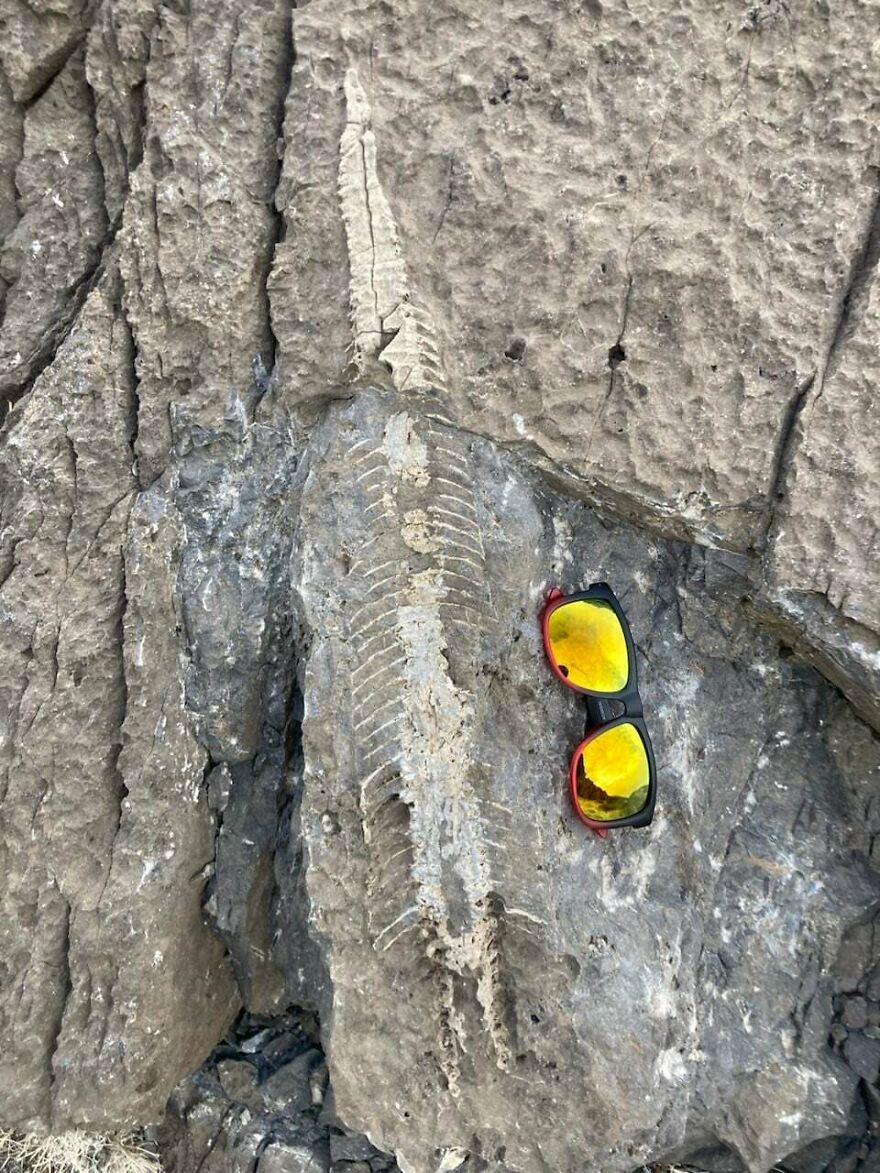
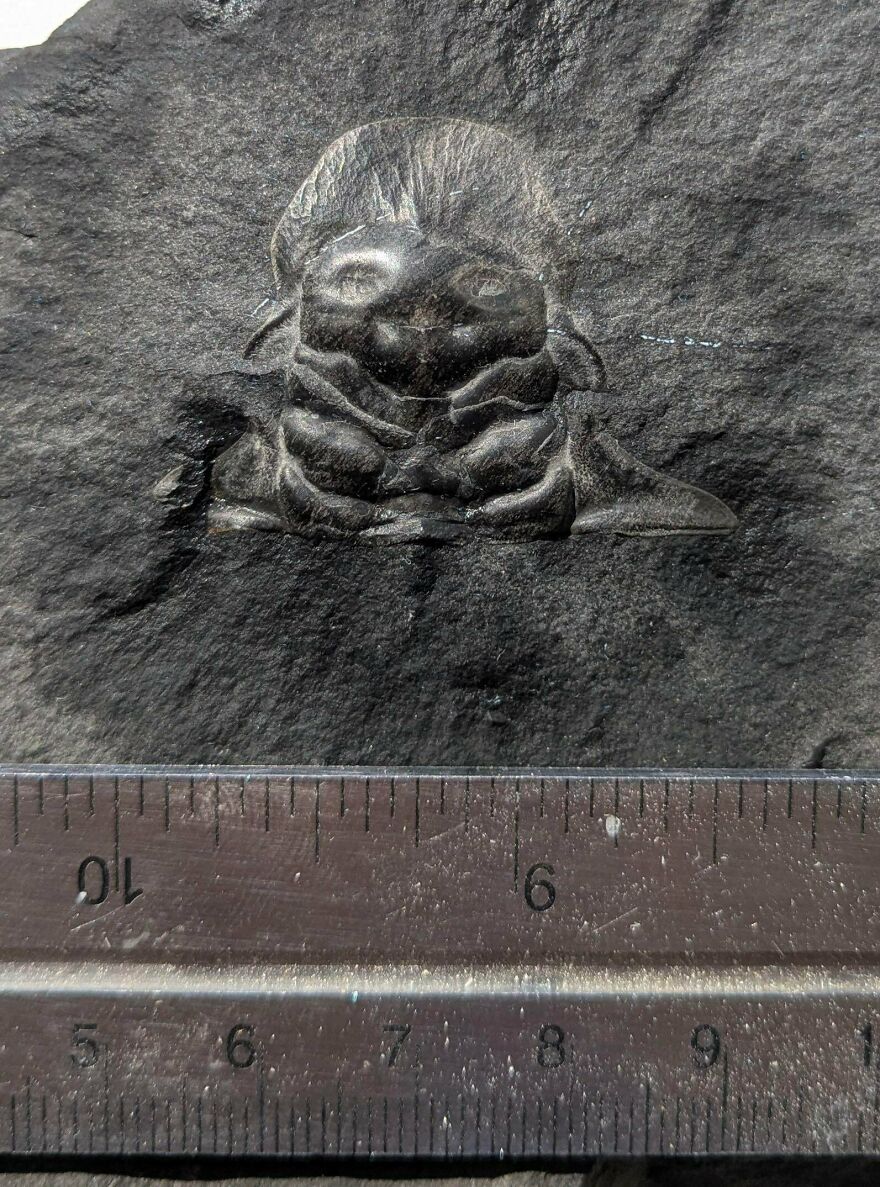
Sea Lilly - very common fossil, but to find one as complete and beautifully prepared as this one is really beautiful. I’m sure many many hours of preparatory work went into creating this relief. The white gashes you see are preparatory marks from an air scribe.
thanatocoenosis:
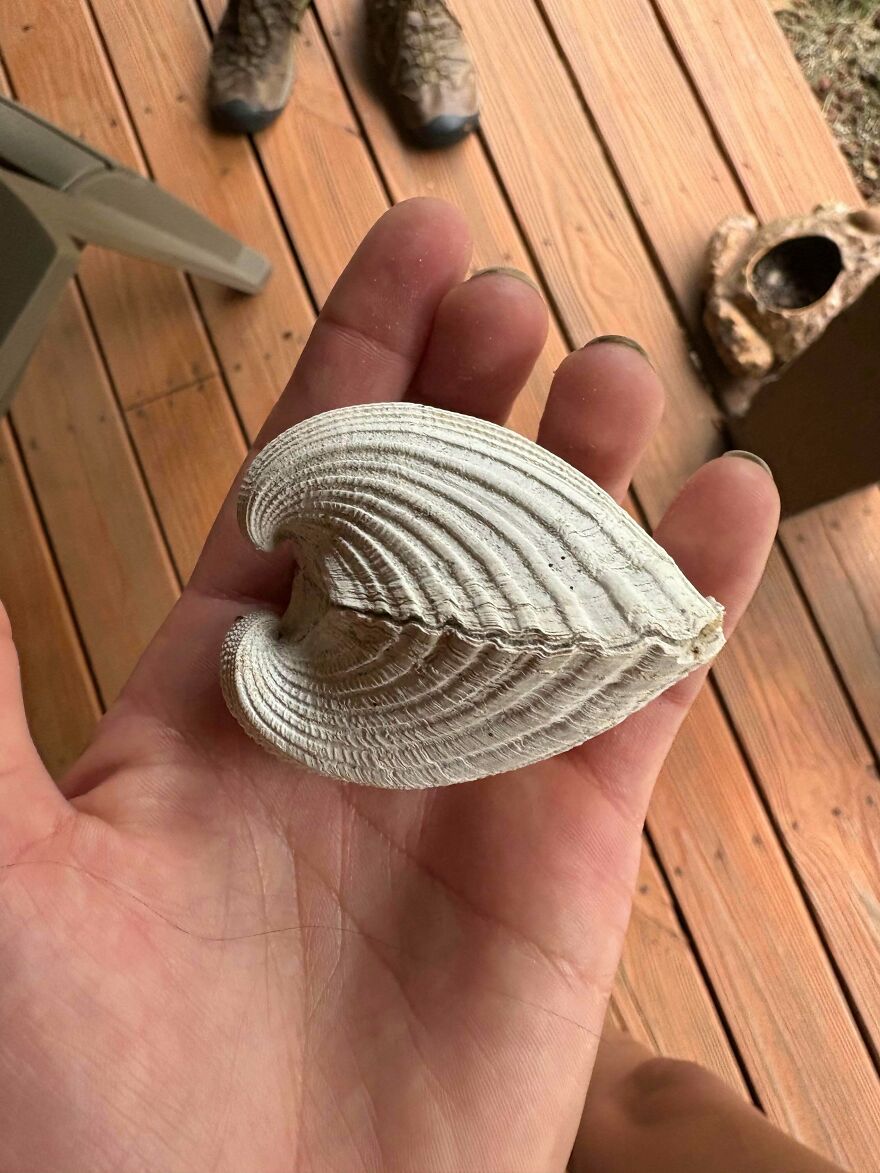
Nice! It's a mitrate carpoid which are homalozans(class of echinoderms) which are distant relatives of crinoids.
These are kind of rare, and highly sought after by collectors.
Tsunamix0147:
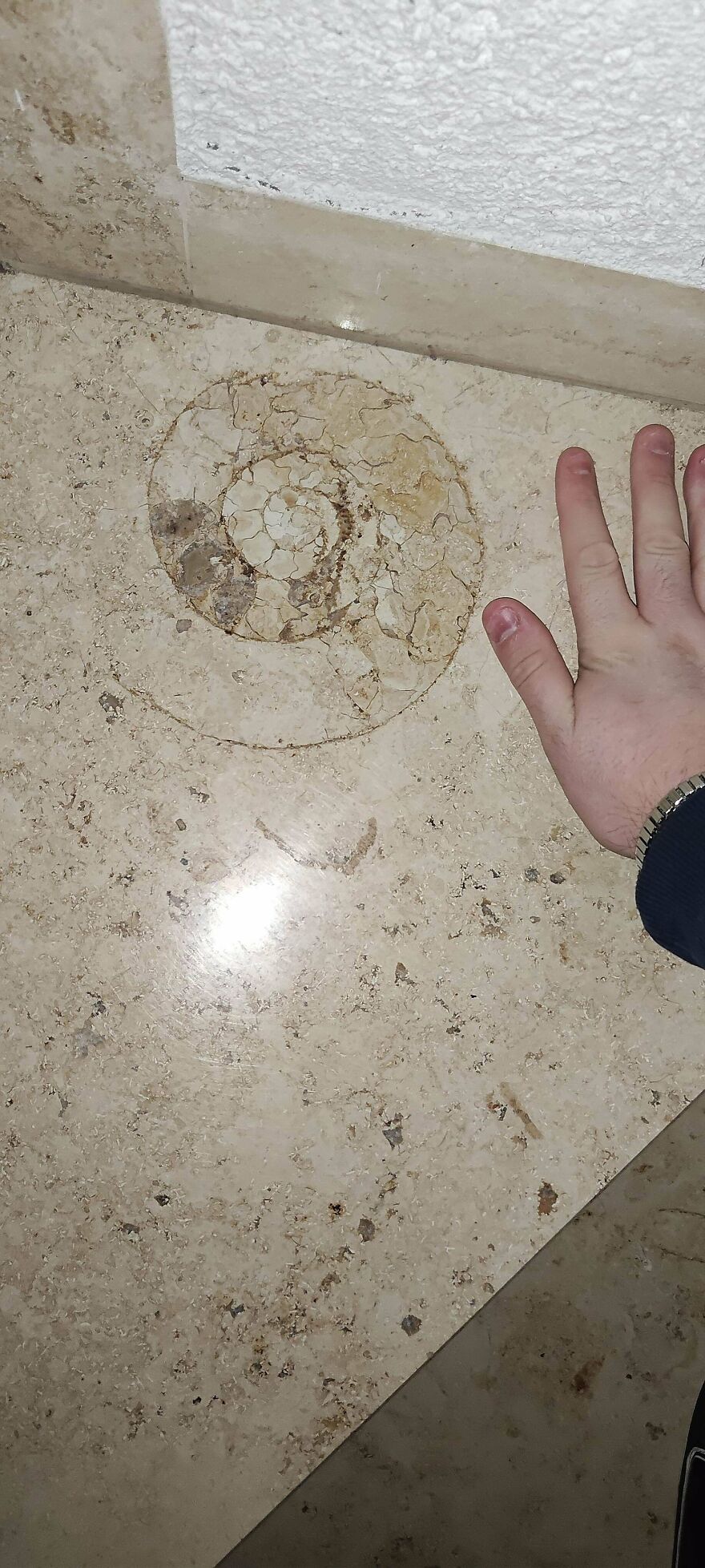
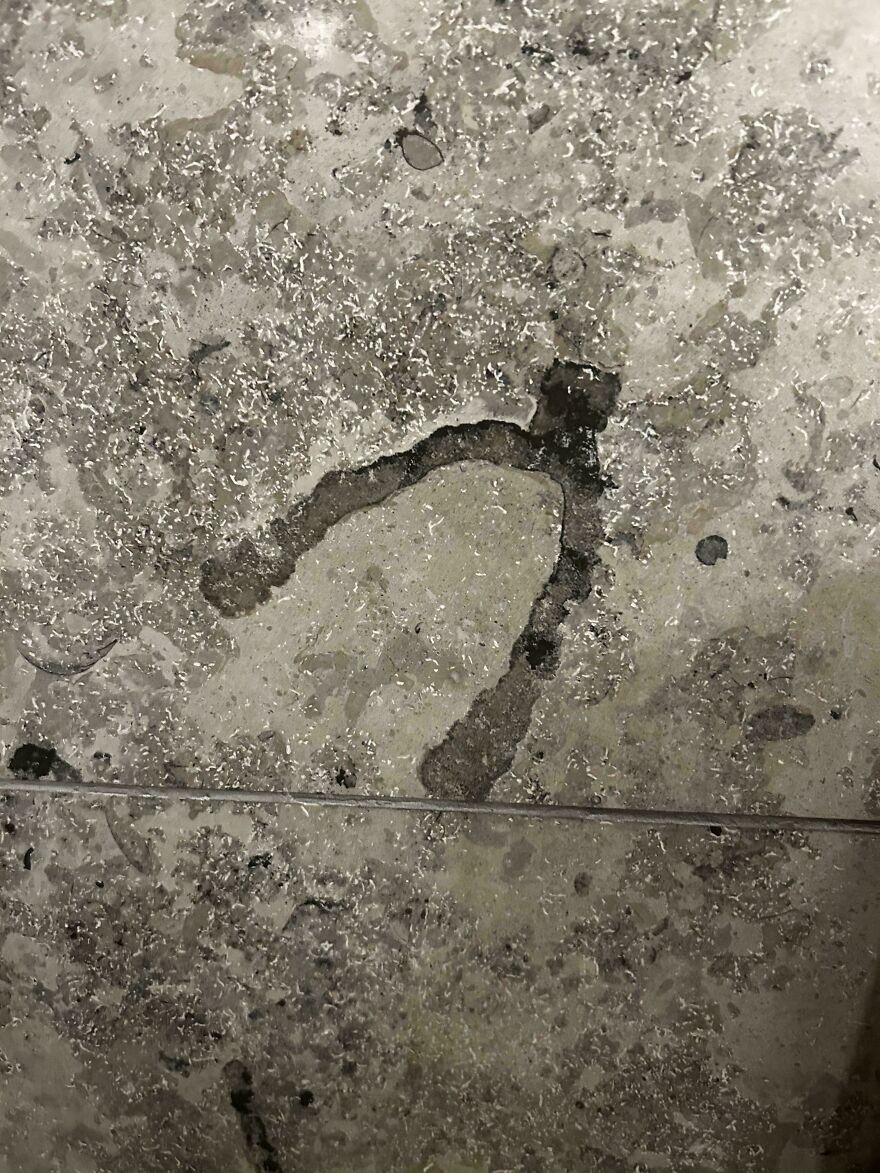
They sure are! Those are mostly ammonites you have encased in the tiles. I sadly don’t know about the other things.
Given the fact you’re in Germany, I would assume that the rock used to make these tiles may be Jurassic in age, especially since that was the time in Europe’s history when almost the entire continent was made up of scattered islands in the Tethys Ocean.
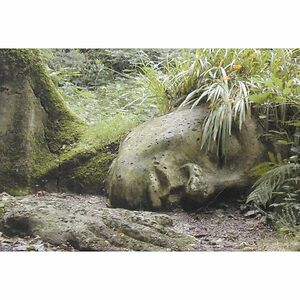
The floors in my old primary school all looked like this. As children, we loved to explore them and discover all sorts of creatures embedded in the tiles of our hallway floors - some of them real, some of them fantasy creatures, of course.
The word “fossil” literally means “dug up,” taken from the Latin word fossilis. According to the Australian Museum, a fossil is any remains or trace of past life preserved in rock—the actual tissues, shells, teeth, or bones of a plant or animal, or even just the footprint it left behind in ancient mud.
girlinthe_woods:
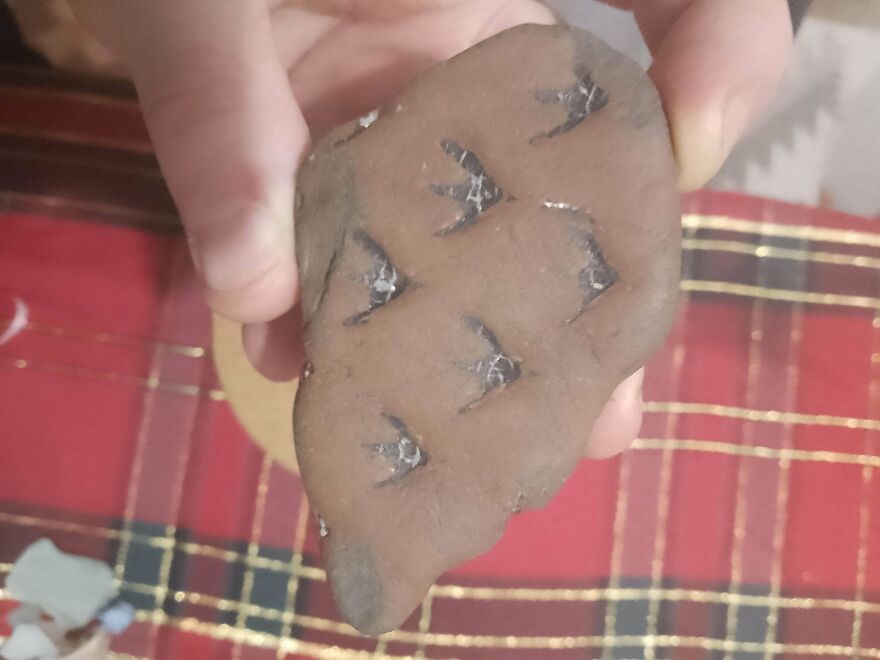
Blows my mind that footprints, of all things, survived millions of years.
I got an email from the museum this morning, the slab that they lifted last month has been with a preparator down in Lyme Regis. It looks amazing!
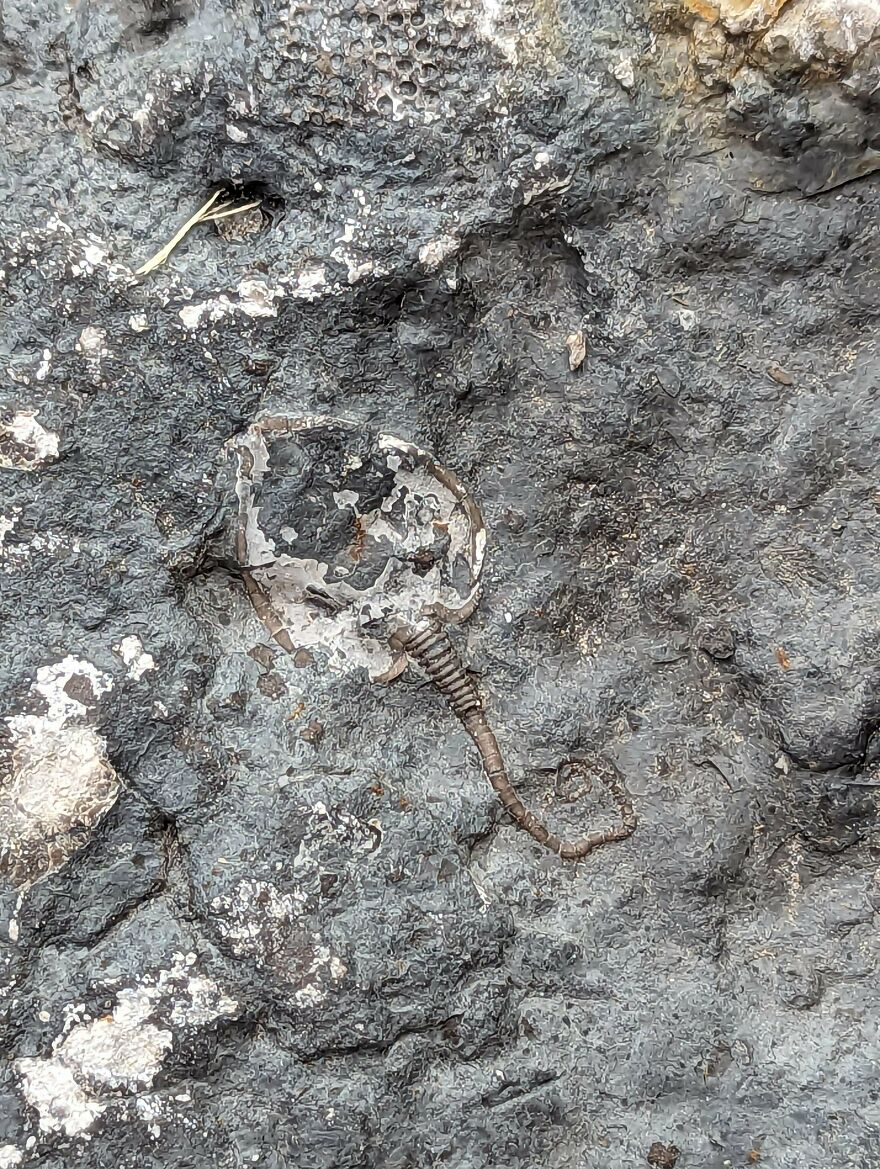
Crinoid ossicle, fossilised in what appears to be a cast calcite crystal in the impression?
[deleted]:
Looks like a calcite replaced crinoid columnal to me. Pretty awesome!
What makes fossils so valuable is the story they tell. As the British Geological Survey explains, they show us where life on Earth came from and how our environment has changed over geological time. They’ve also helped scientists understand that continents now separated by vast oceans were once connected.
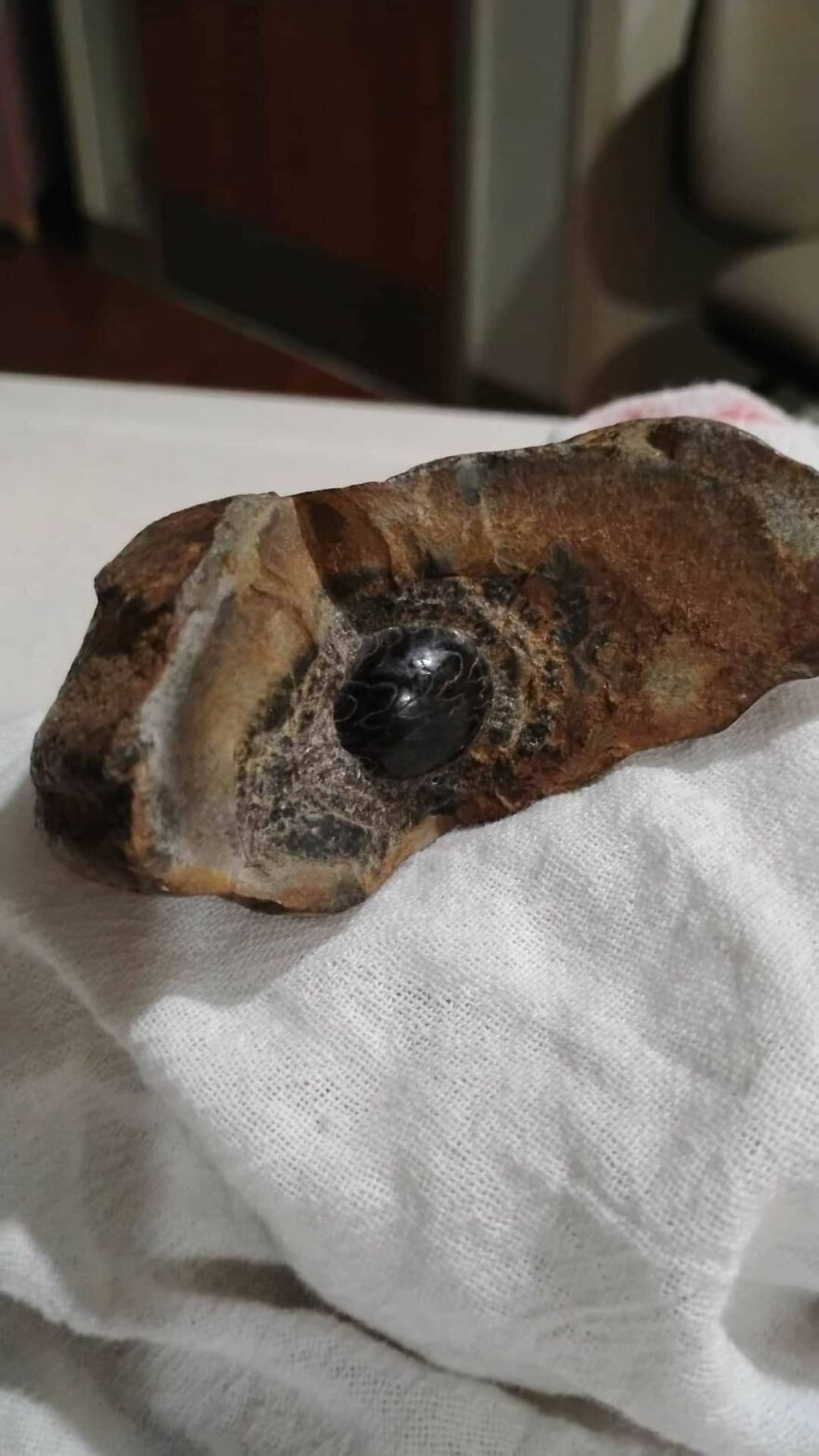
The stone/fossil isn't coated with anything, how you see it on the pictures is how I found it.
The farm is located in The Netherlands.
It wasn't an active farm, more like a farmhouse with a couple of horses cats and dogs.
The nearest sea is about 80 kilometers (50 miles) away.

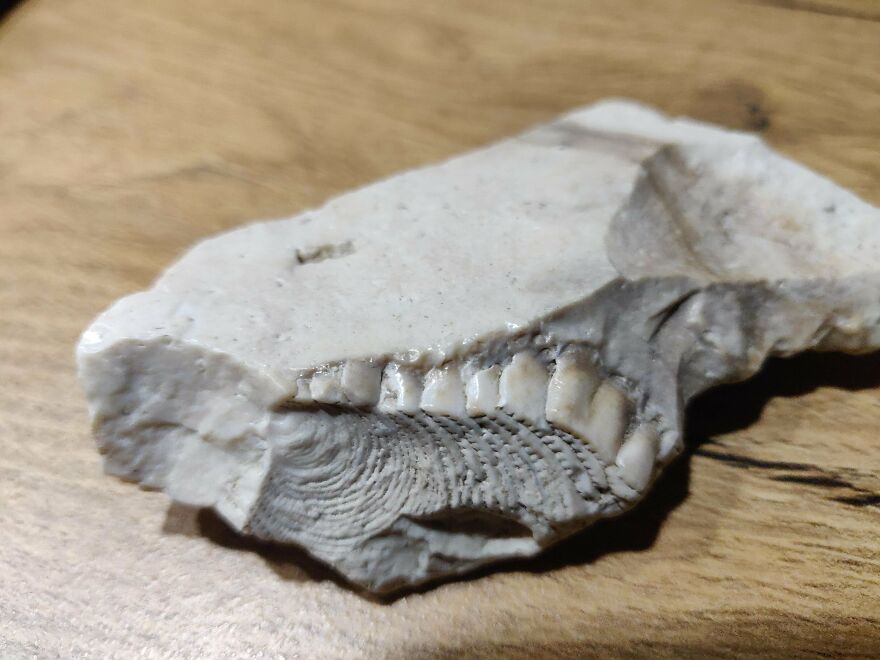
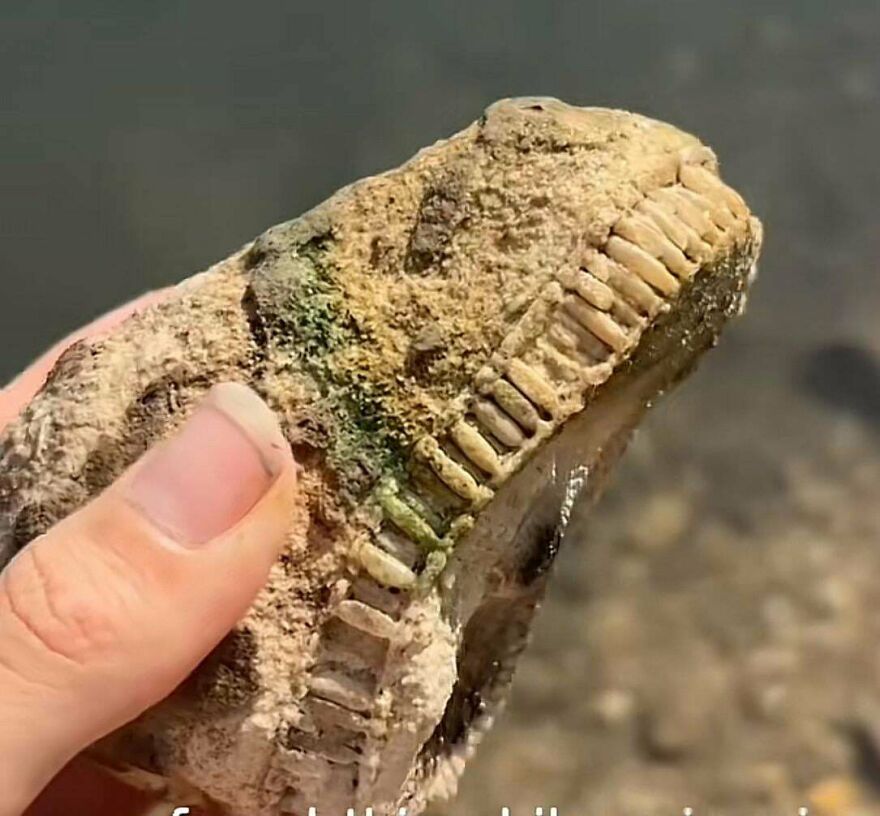
Definitely tooth-like, but I have no idea which animal. I can't even tell if it's fish or mammal.
Friend sent me photos of a fossil they found in the water. Details we have (fresh water lake, around Manitoba, the textured side was facing down it’s about 2.5-3 inches tall about 3inches long and about 2 inches side to side weighs about a lb) has green algae growing on it the underside what I presume is the belly/ undercarriage of what ever it is seems to have little bristle like tendrils)
Handeaux:
Since others have provided the identification, you might be interested to know that receptaculites went extinct at the end of the Permian period, about 250 million years ago. Also, they lived in marine environments, under the sea. In other words, this critter was dead and fossilized a couple hundred million years before that freshwater lake even existed.
lastwing:
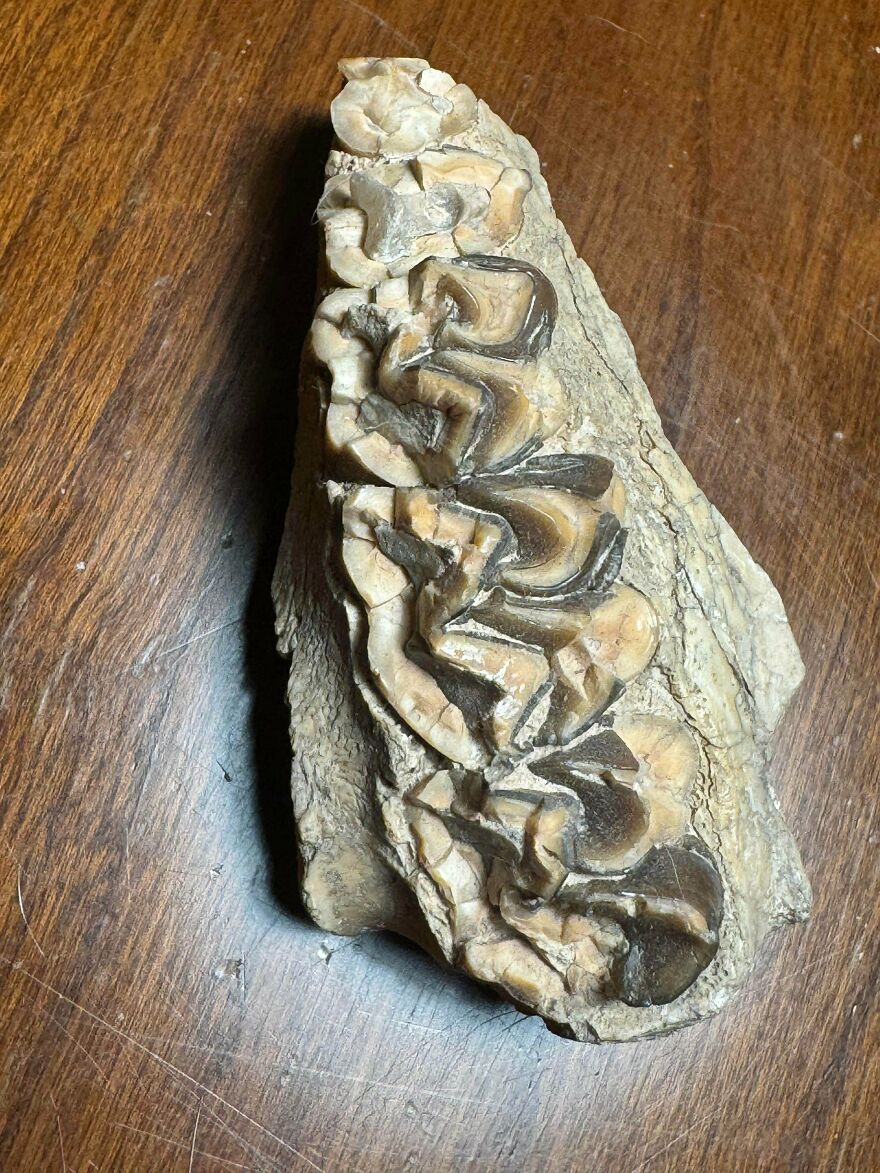
The occlusal (chewing) surfaces of the molars and premolars are heavily damaged, but I believe this is a Cervid maxillary fragment with P3-M3 represented.
These photos are of fossilized Giant Deer maxillaries, but it reveals the pattern. I’ve circled the P3-M3 teeth.
Geologists even use fossils to date rock layers. Through evolution, different species appear in rocks of different ages, which gives scientists a reliable timeline to work with. Ammonites are a great example. They're so reliably tied to specific geological periods that scientists can use them to figure out the age of rock strata in completely different parts of the world.
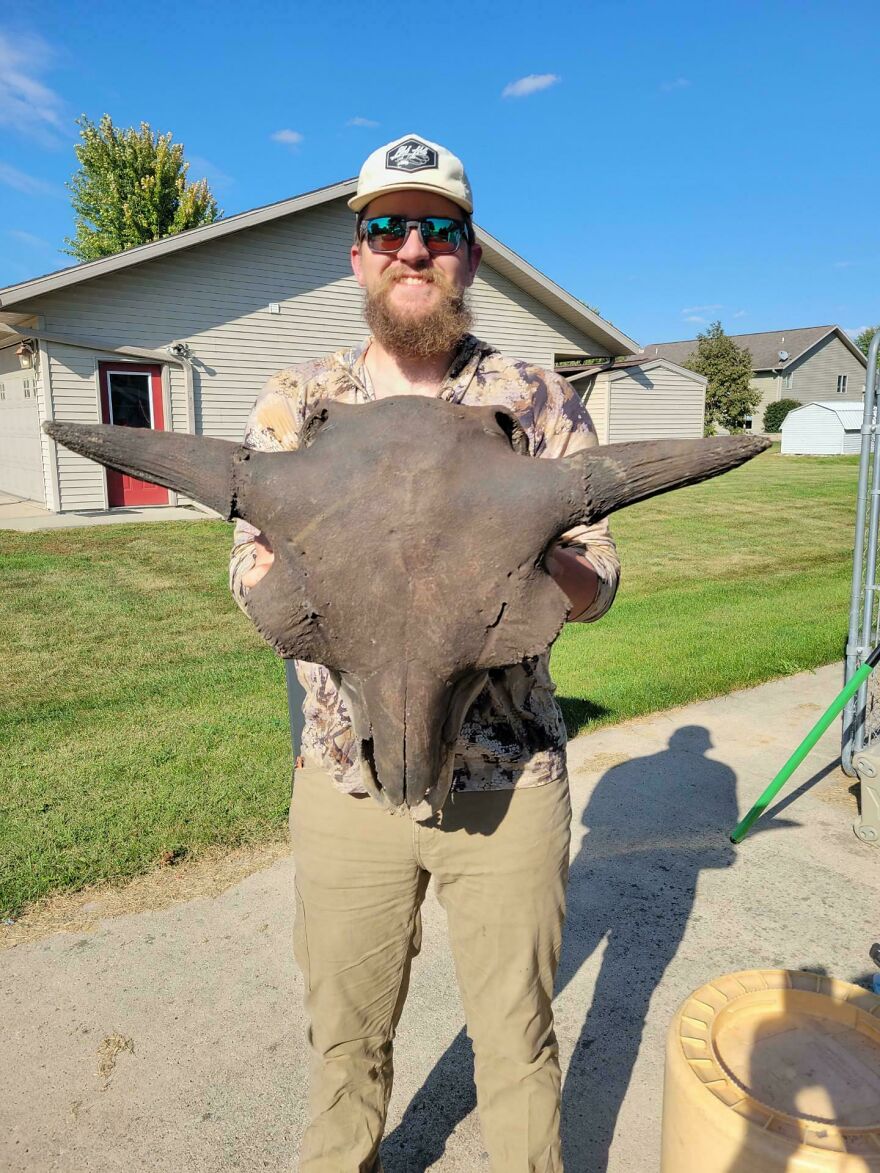
He also said that they are learning that bison antiquus are much more rare in Iowa than previously thought. He said at the time of bison antiquus a larger ruminate, the Harlan's Musk Ox, was more common in Iowa and that it wasn't until 5-6000 years ago that modern grasslands appeared in Iowa and with that bison. Incredibly interesting!
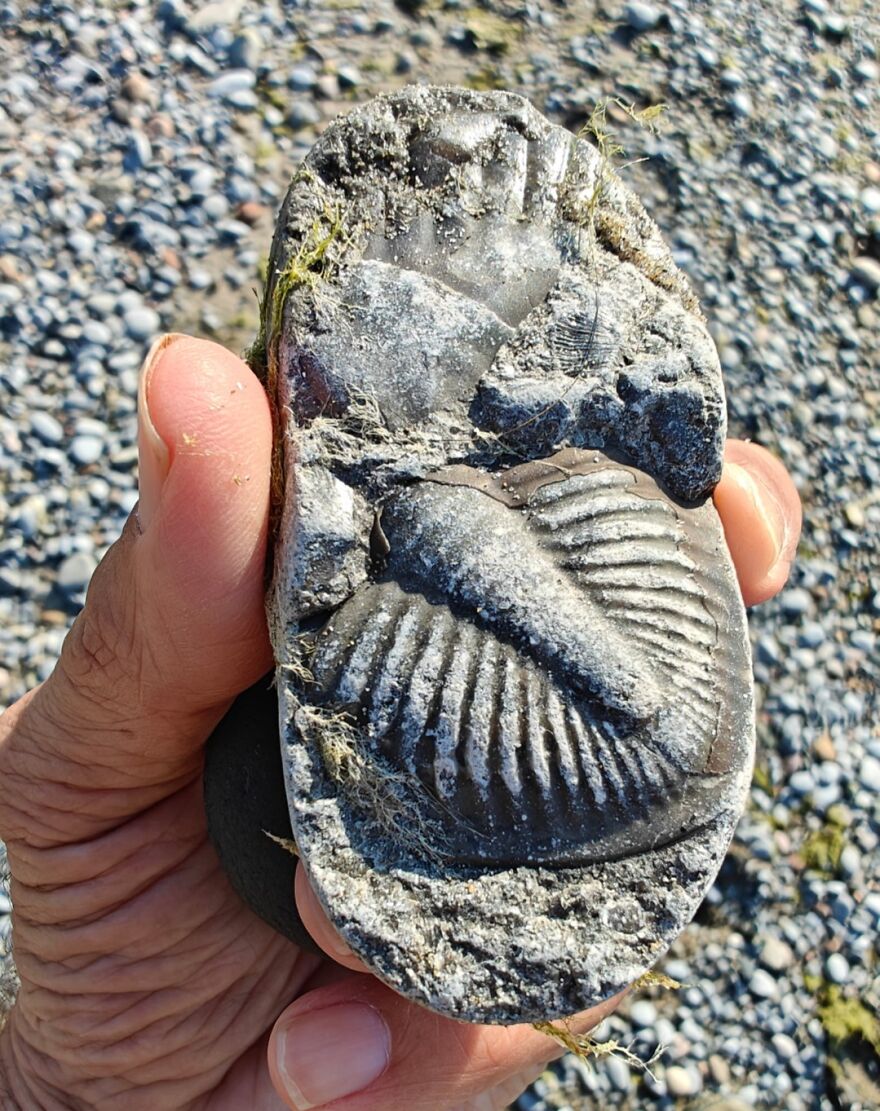
It’s solved: Brachiopod
As for how fossils actually form, the Australian Museum notes that it usually starts with an organism perishing and getting quickly buried under sediment, like mud, sand, or volcanic ash.
The soft parts typically decompose, leaving only the harder bones or shells. In special cases though, even soft tissue can survive—if, for example, the organism got trapped in amber.
From there, more sediment builds up over time, everything gradually hardens into rock, and there the creature sits. It is only when erosion slowly wears the rock back down that these once-living organisms are revealed to us from within the stones.
Excellent_Yak365:
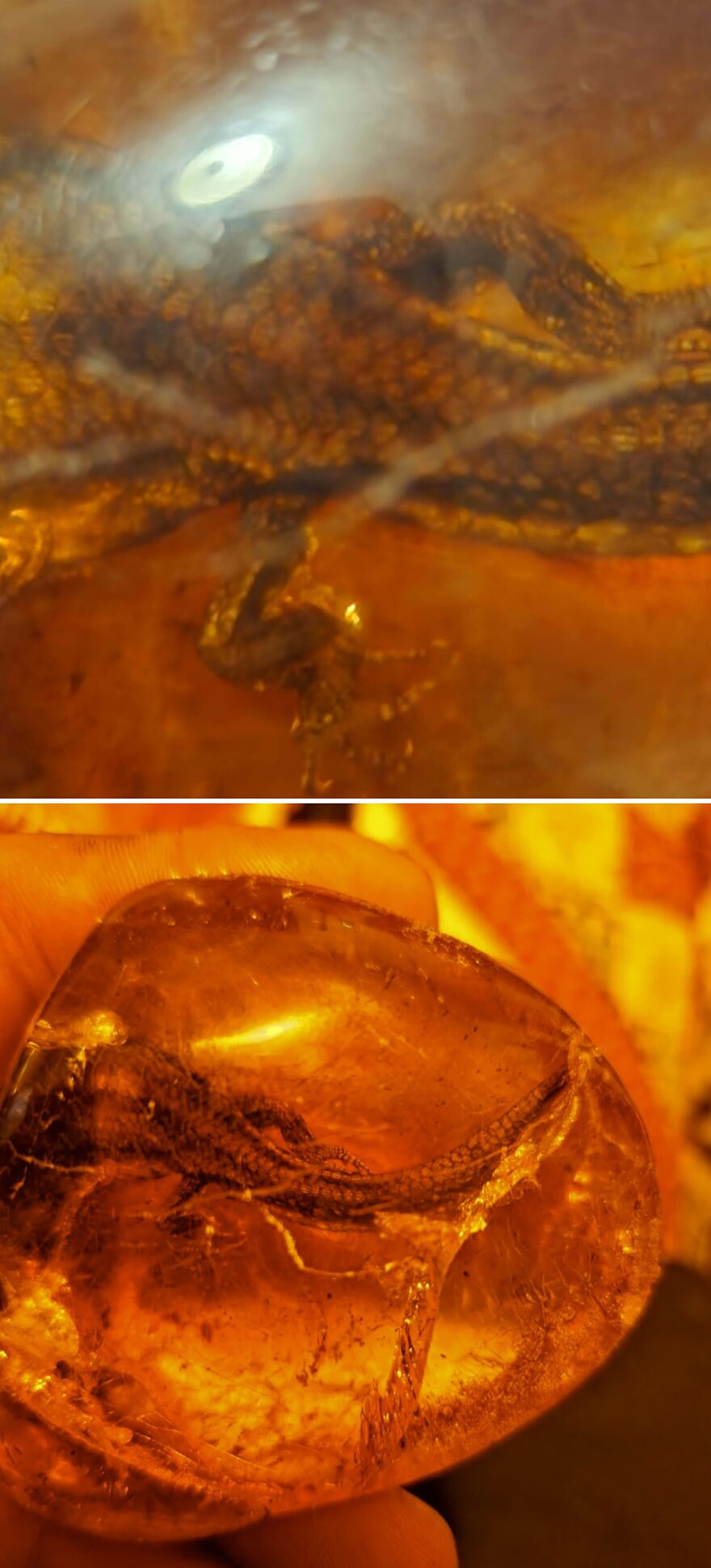
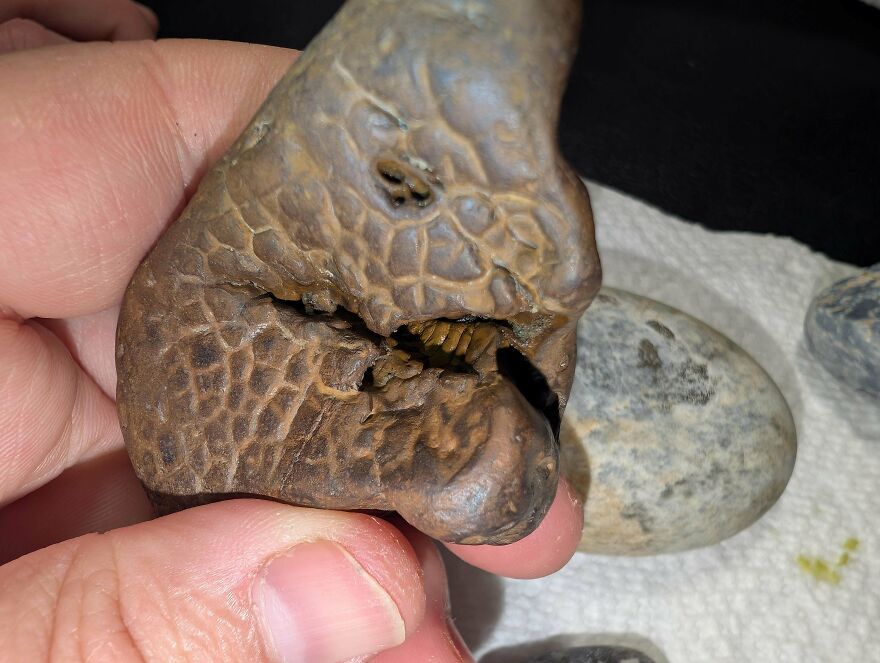
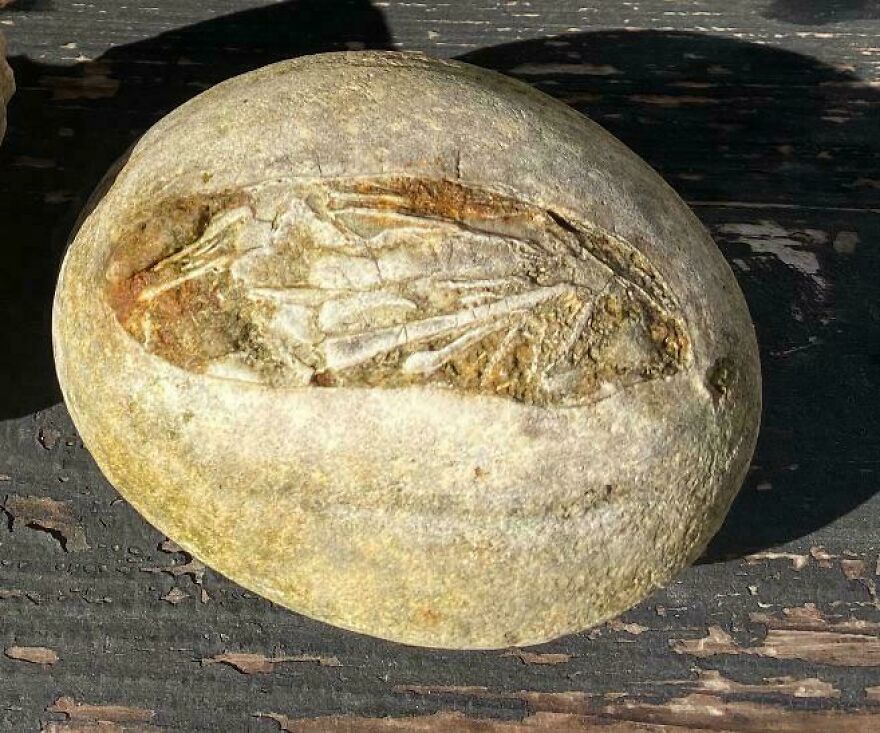
I have many doubts. The only time I’ve seen preservation like this was in a news article about a gecko specimen https://en.m.wikipedia.org/wiki/Yantarogekko , as others said- where and how did you acquire this and for how much. Leaning toward dried lizard shoved in natural sap resin(or copal). That preservation is way too good to be a casually sold item
mousekopf:
I agree, was immediately reminded of this famous gecko fossil.
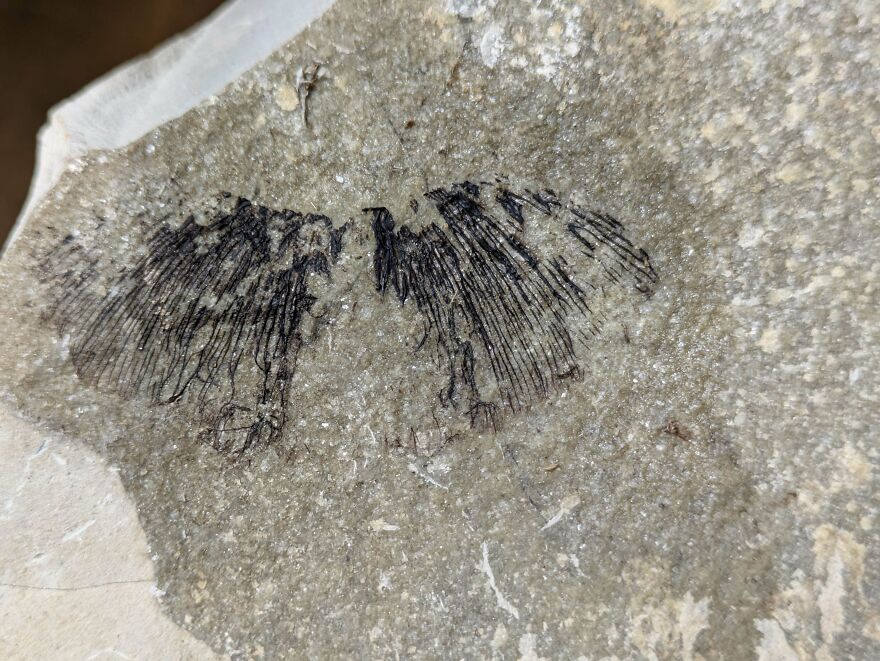
OP’s lizard is far too well preserved to not be a modern animal in resin. No skeletal remains, shredded skin/muscle, flattening, or translucent parts that are common in vertebrate amber fossils.
Also, the flakey yellow powder in the surface cracks is not something exhibited in the Burmese, Dominican, or Baltic amber types.
I’m voting fake.
fentifanta3:
What animal is the fossil of? So cool!
thanatocoenosis:
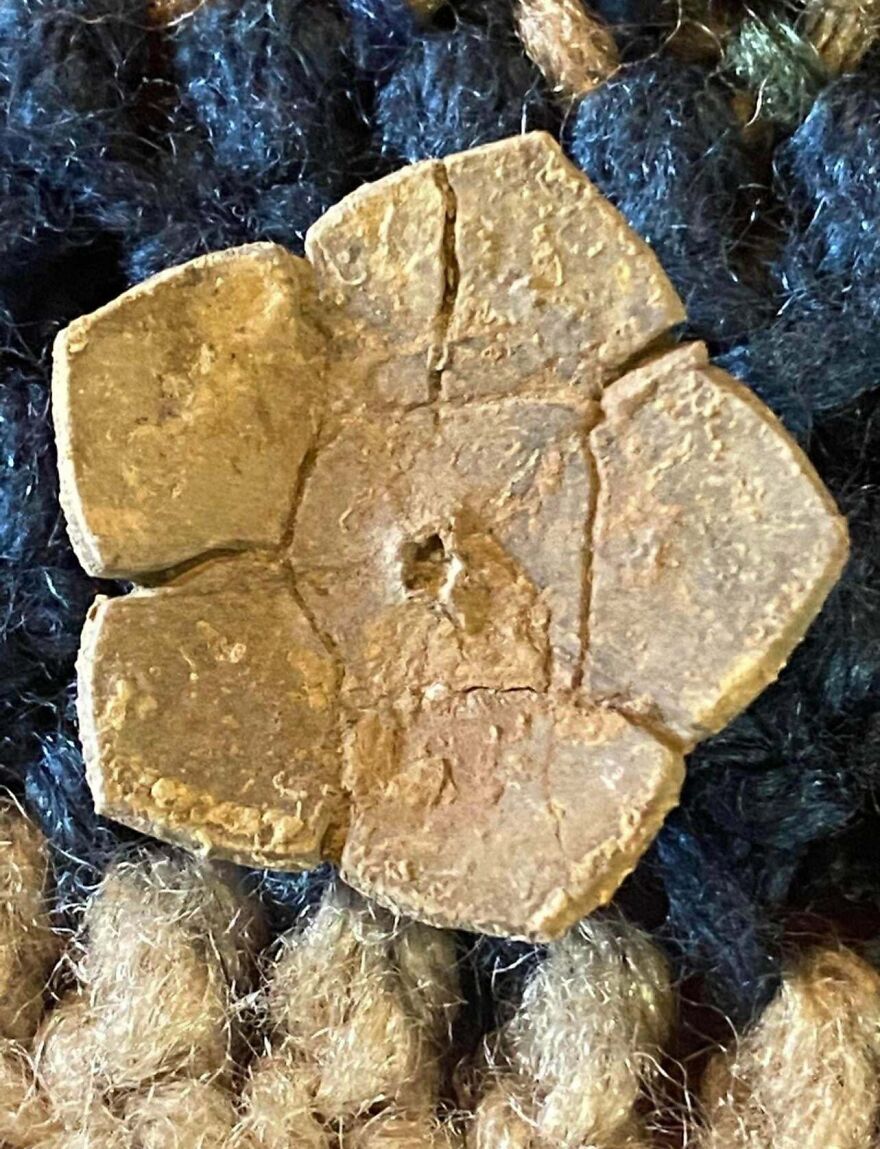
It's part of the calyx from a cladid crinoid. These are the basal plates that make up the bottom of the cup where it attaches to the stem.
The odds of any of this happening are pretty slim. The Natural History Museum warns that the vast majority of living things simply rot away without leaving any trace behind. So stumbling across a fossil is genuinely lucky.
Nearly all the fossils we find—around 99%—come from marine animals like shellfish and sharks, since the ocean floor was ideal for quick burial. Once remains are covered by sediment, decomposition slows down significantly due to the lack of oxygen, giving fossilisation enough time to take hold.
FrozenSquirrel:
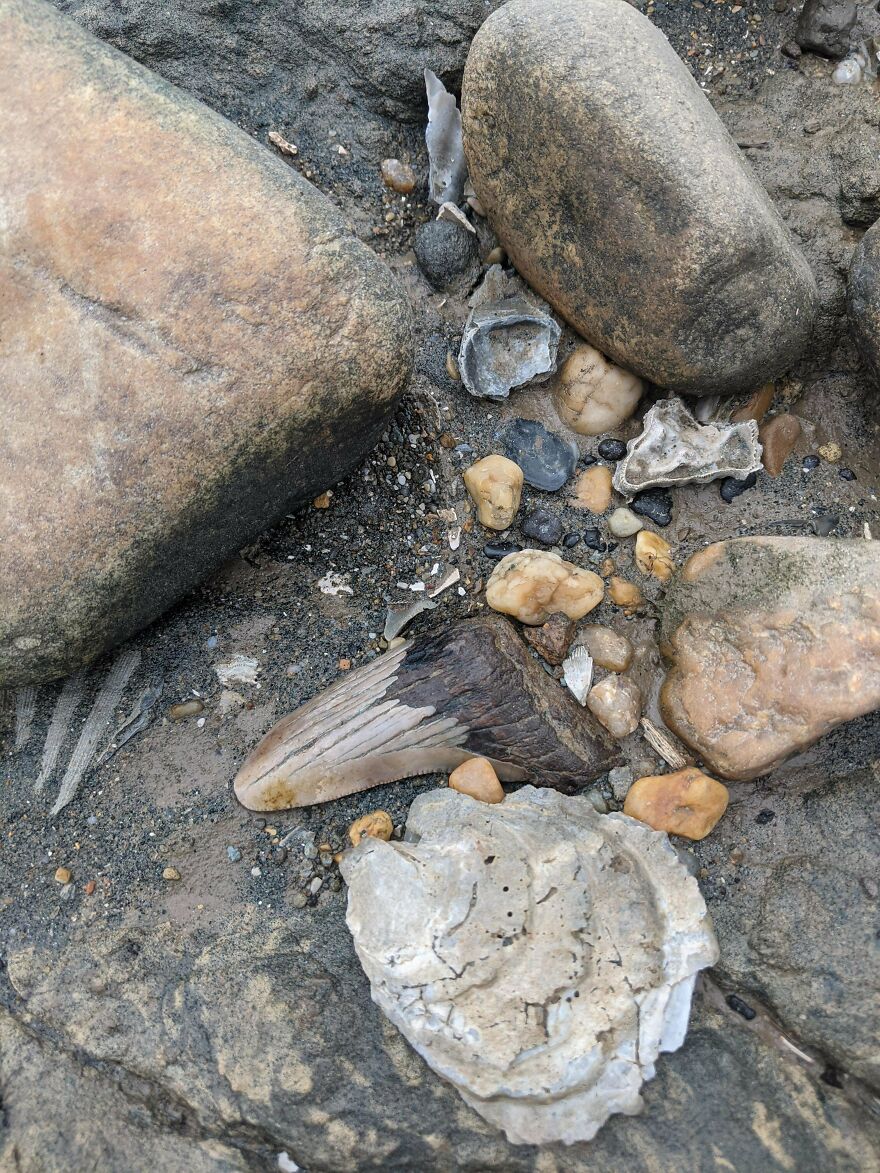
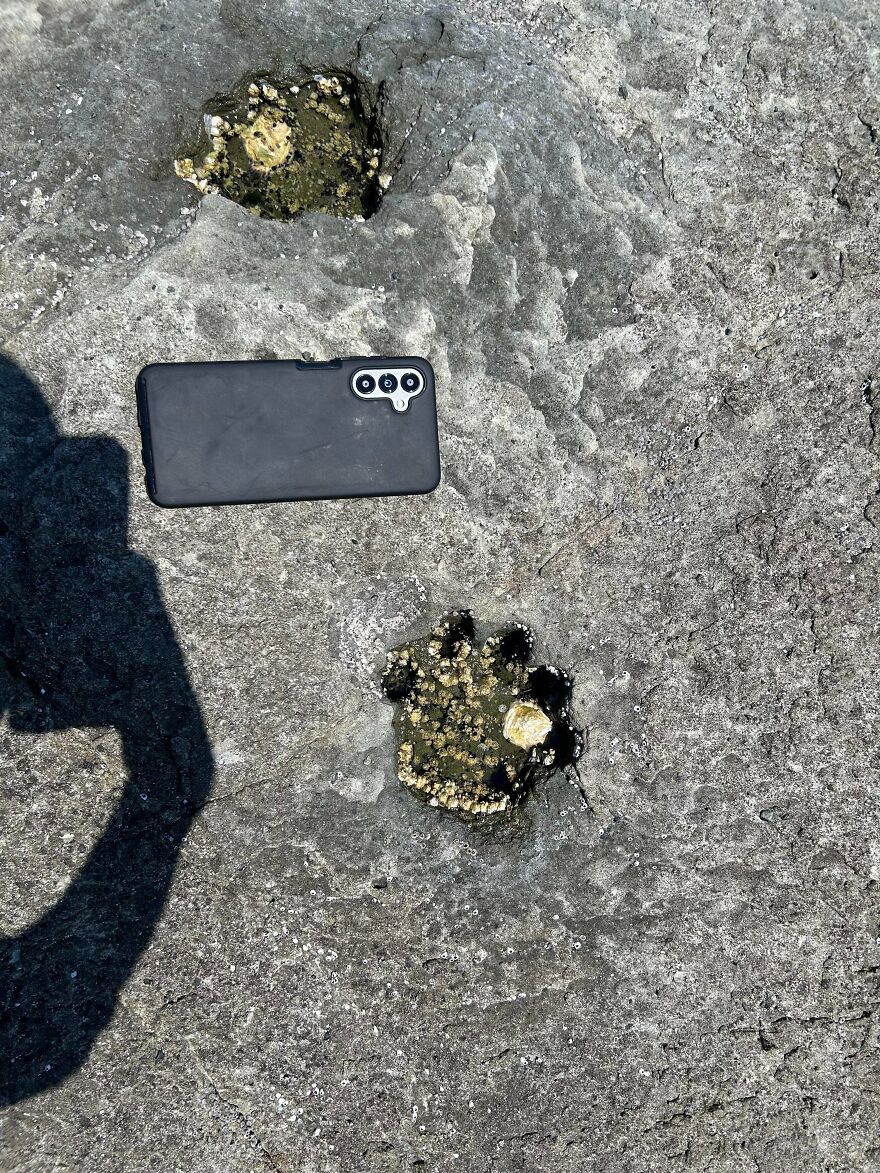
Any idea what the three finger-like things are under the large rock on the left?
[deleted]:
Chesapecten, Virginia's state fossil.
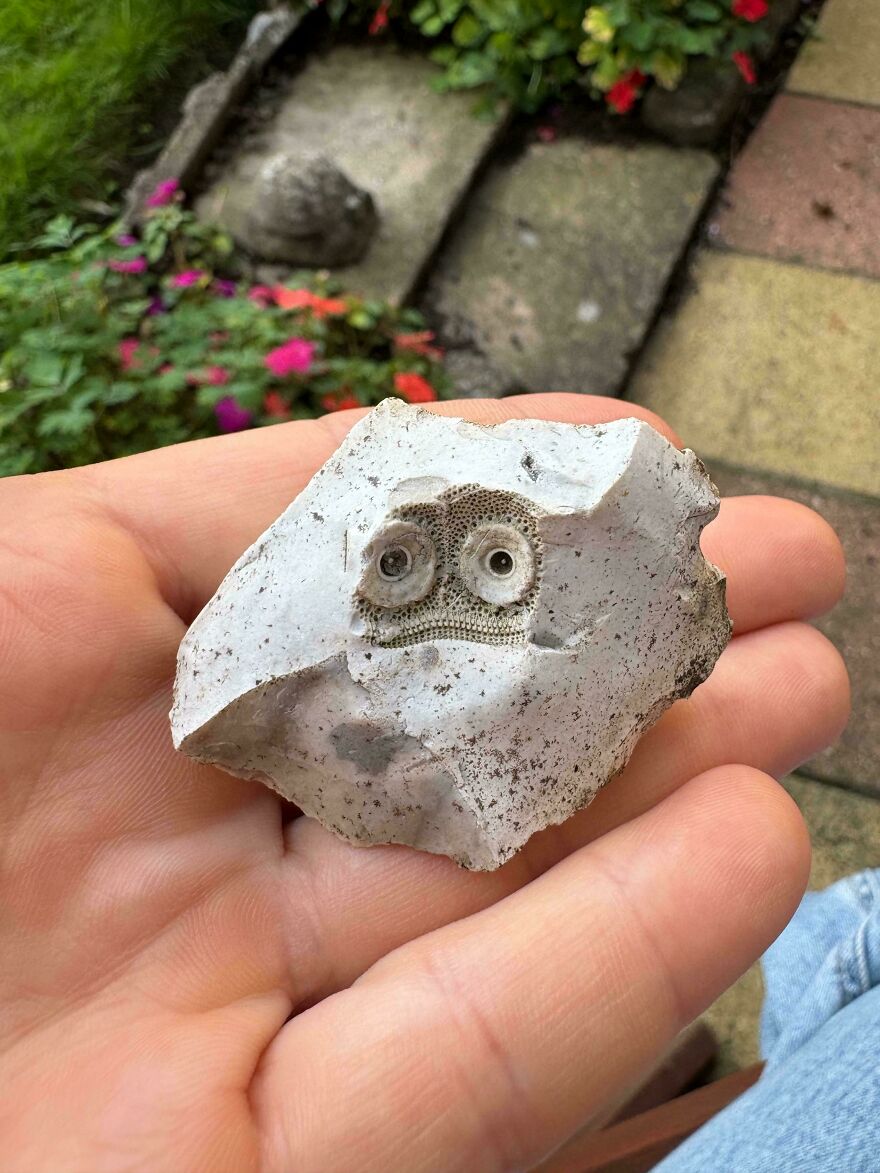
What is this fossil and is it trying to steal my soul??
justtoletyouknowit:
Funny cast of the outside of an cidaroid urchin
wRm_:
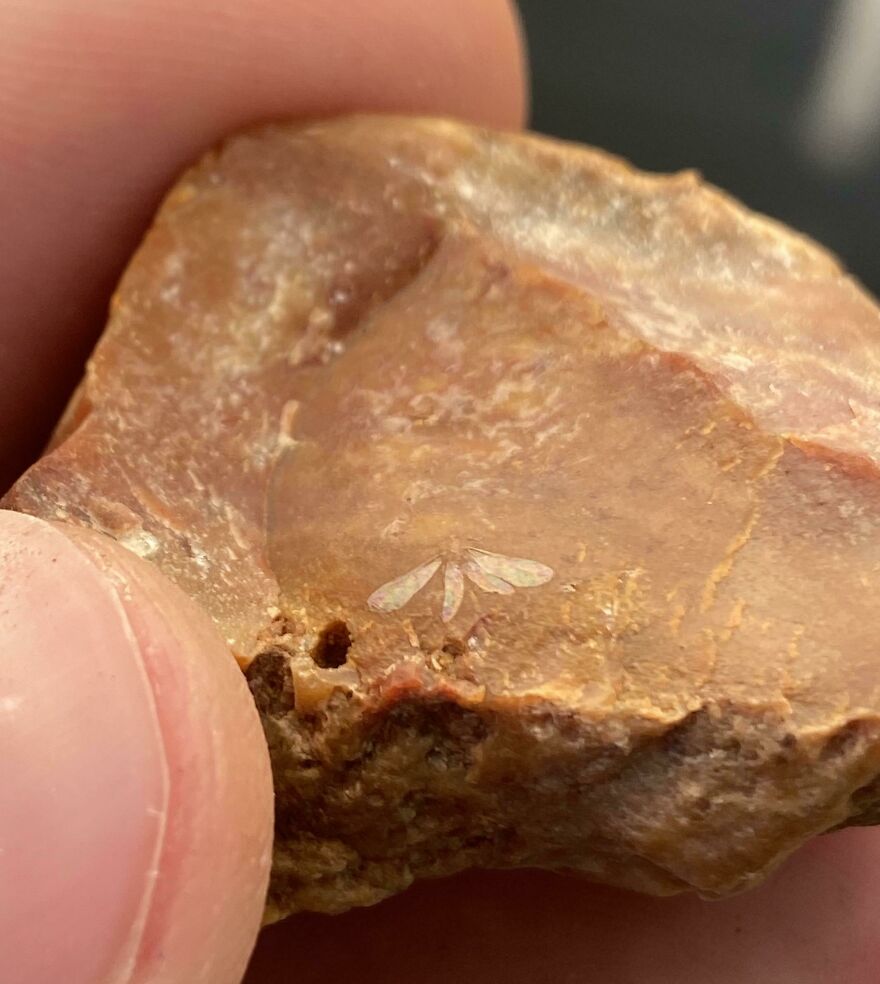
I am just a paleobotanist, but this is most definitely a bug and an expert should definitely see it. Make also sure to write down exactly were you did find it, preferable with GPS coordinates.
And yes. Chert can preserve all kinds of fossils in extraordinary detail.

Given the environments that make chert (deep sea) and where you get mayflies (land), I'm skeptical.
Land animals had a much harder path to preservation. Most dinosaur fossils, for instance, come from animals that happened to live near rivers or lakes.
As dinosaur researcher Dr. David Button from the Natural History Museum explains, many perished shortly before flooding covered their remains in mud and silt, while others were washed into rivers by heavy rain.
zoobernut:
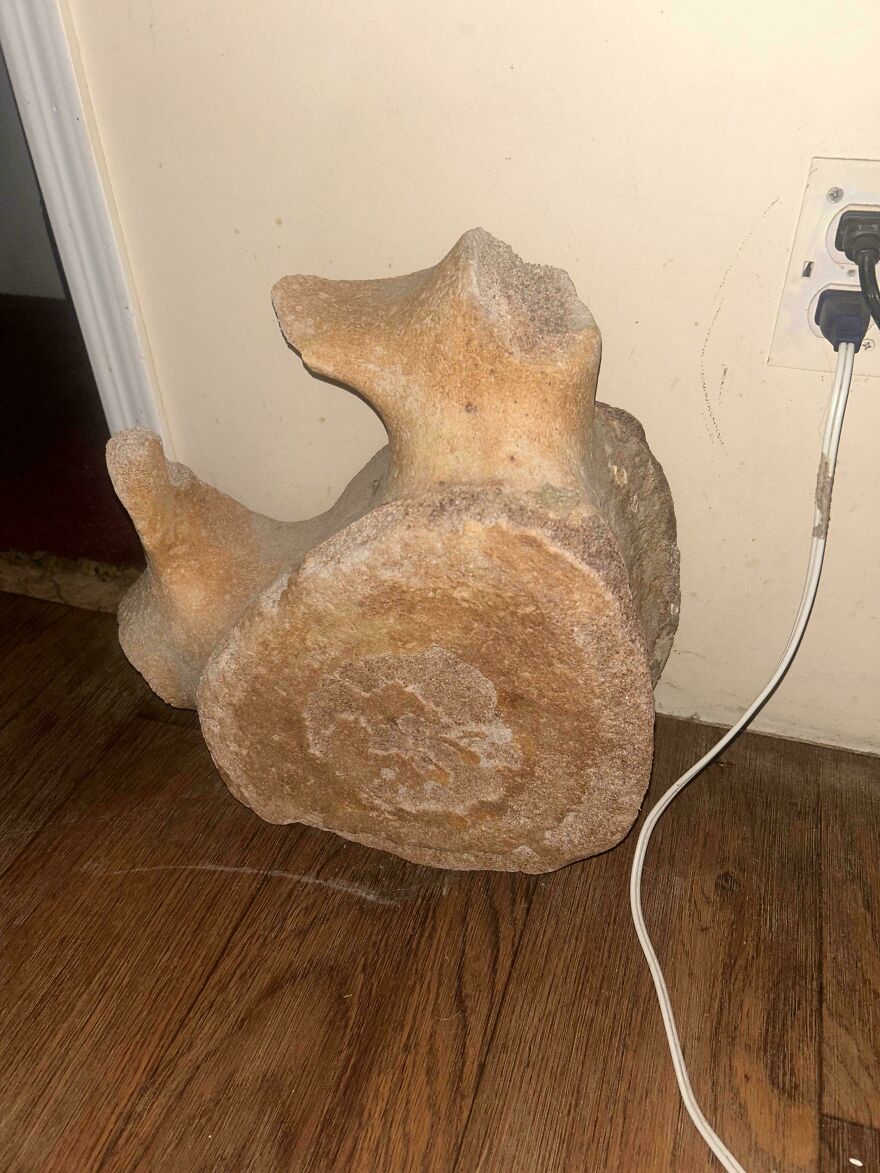
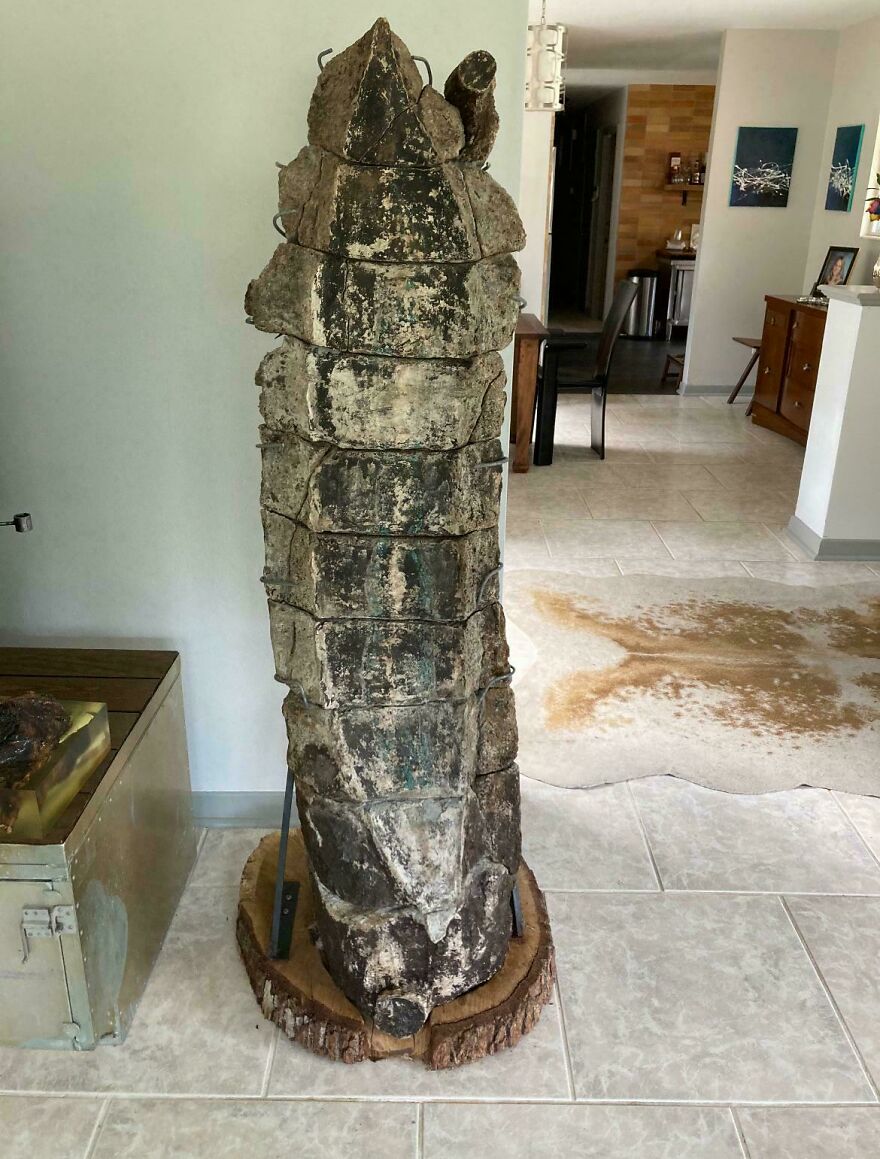
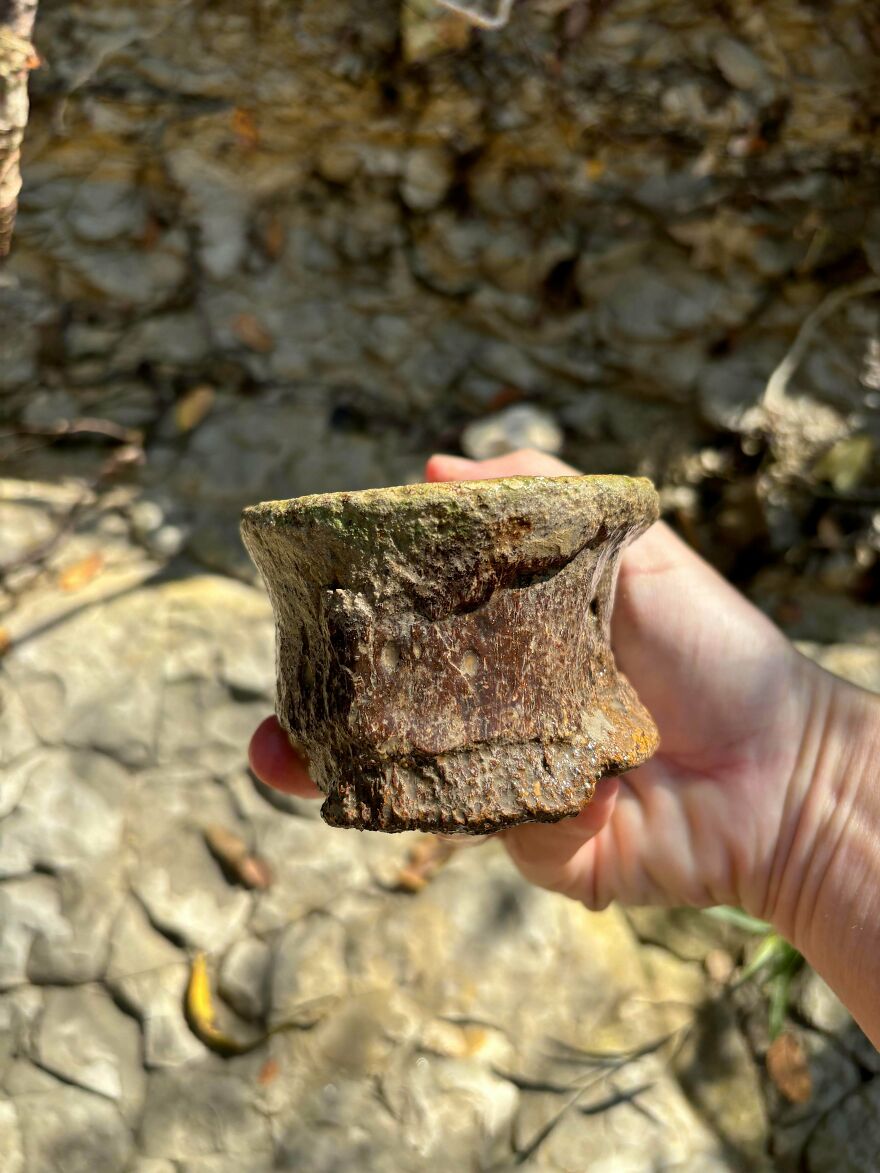
Whale vertebra.
justtoletyouknowit:
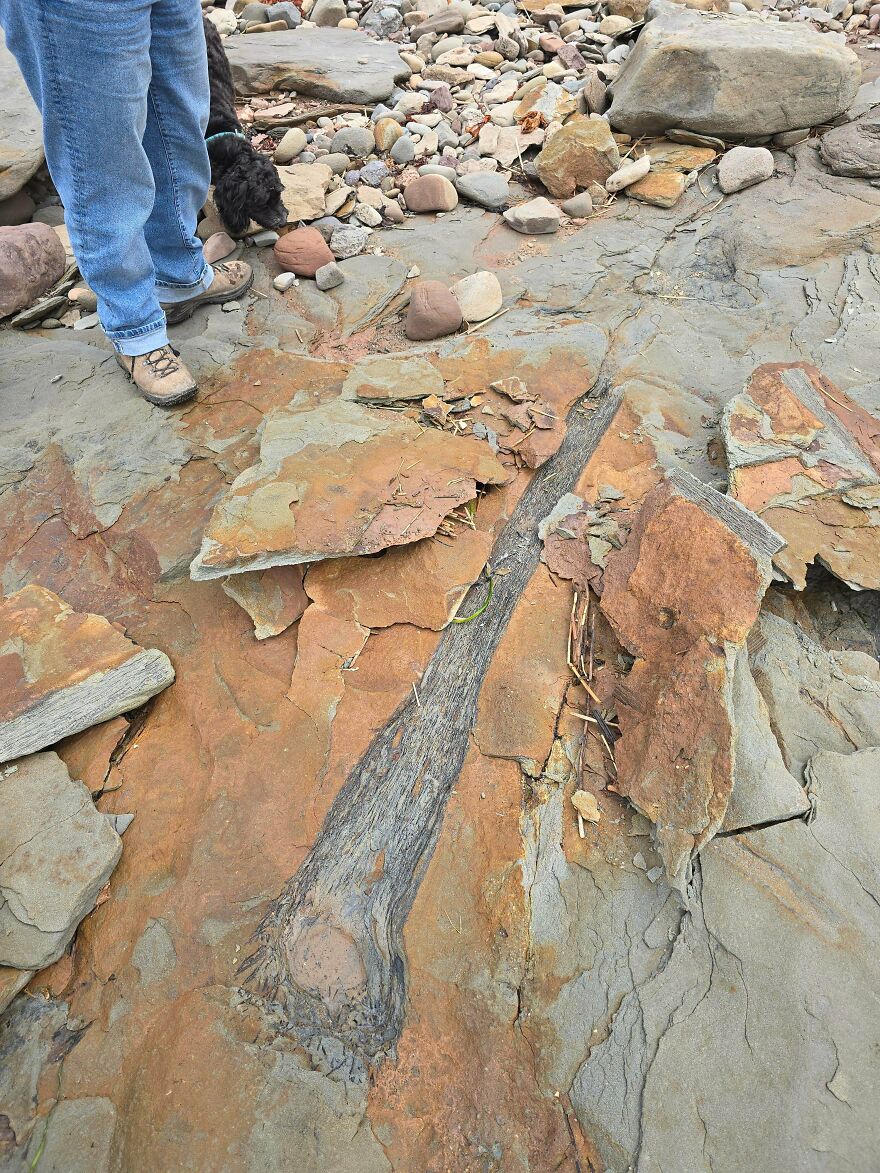
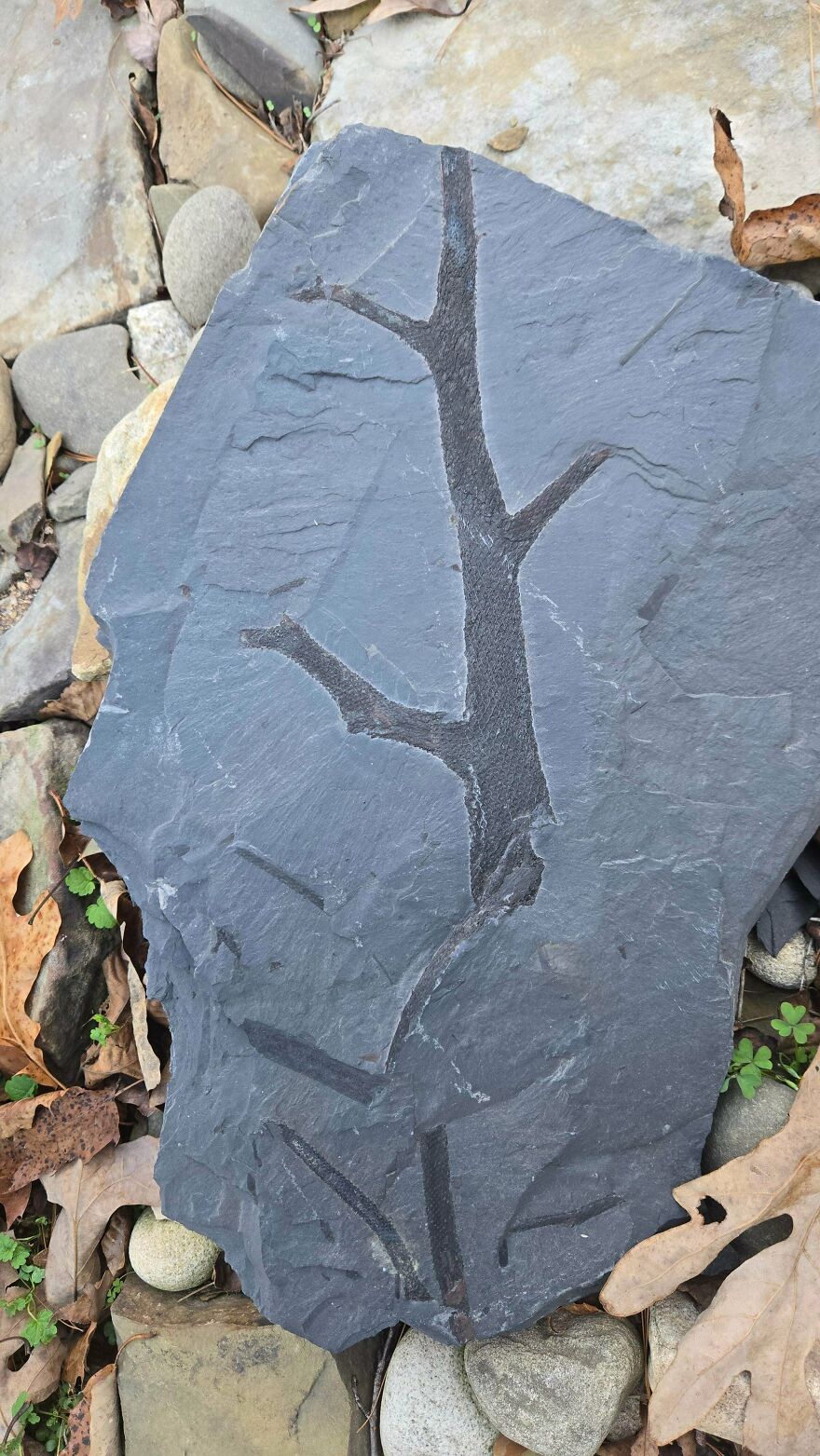
Im a bit late to the game, but maybe i can help out. Very weathered, but id say Lepidodendron aculeatum. The reddish color comes from the presence of iron oxides like hematite. Those red ones are rather rare, compared to the usual black ones. These fossils often form in sedimentary layers where the original plant material was buried in oxygen-rich environments, leading to oxidation of iron minerals in the surrounding sediments.
amiable_ant:
Ginko- like leaf?
ThCuts:
Could be. The White River Formation is terrestrial, and Ginkgoales were in North America at that time. (Eocene and Oligocene)
And just how old are some of these fossils? The La Brea Tar Pits contain remains between 10,000 and 50,000 years old, which already sounds ancient. But that’s nothing to paleontologists who work with fossils that are millions of years old, like 6-million-year-old bone-crushing dogs, and even their preserved poop.
Royal_Acanthaceae693:
They are crinoids which are echinoderms. They are in the same phylum as sea urchins, sand dollars, and star fish.
Vin135mm:
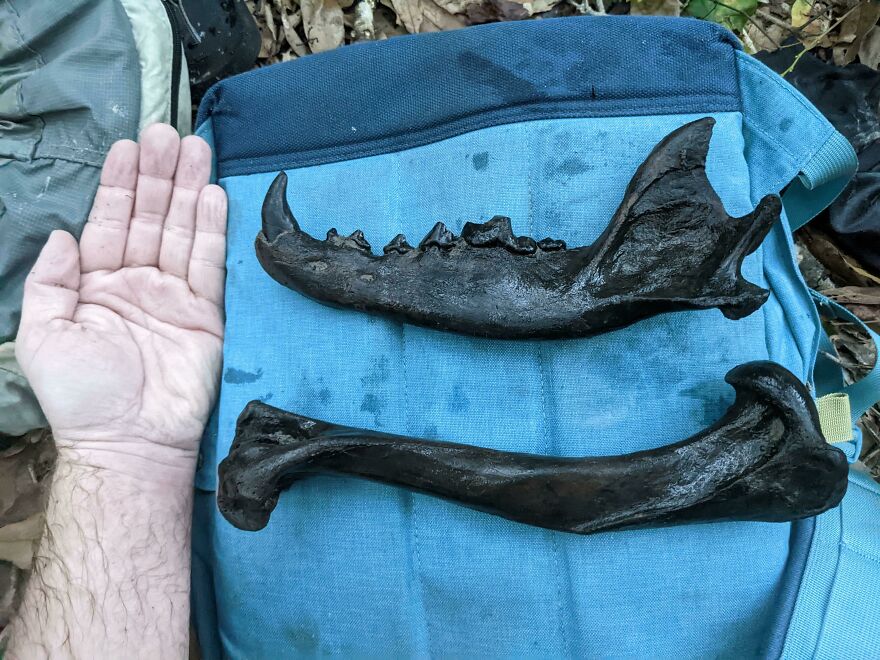
Might, and I stress might, be an amphicyonid (bear-dog, which werent bears or dogs, oddly enough). It looks right to my untrained eyes. Get an expert to check it.
And if that's the case, then you lucky bastard.
The Dinosaur Institute holds specimens older than 100 million years. And then there are stromatolites—layered rock structures built up over time by ancient cyanobacteria—that are over 3 billion years old. Remarkably, the cyanobacteria that formed them are still alive today, just doing their own thing on coastlines in places like Australia.
CFHQYH:
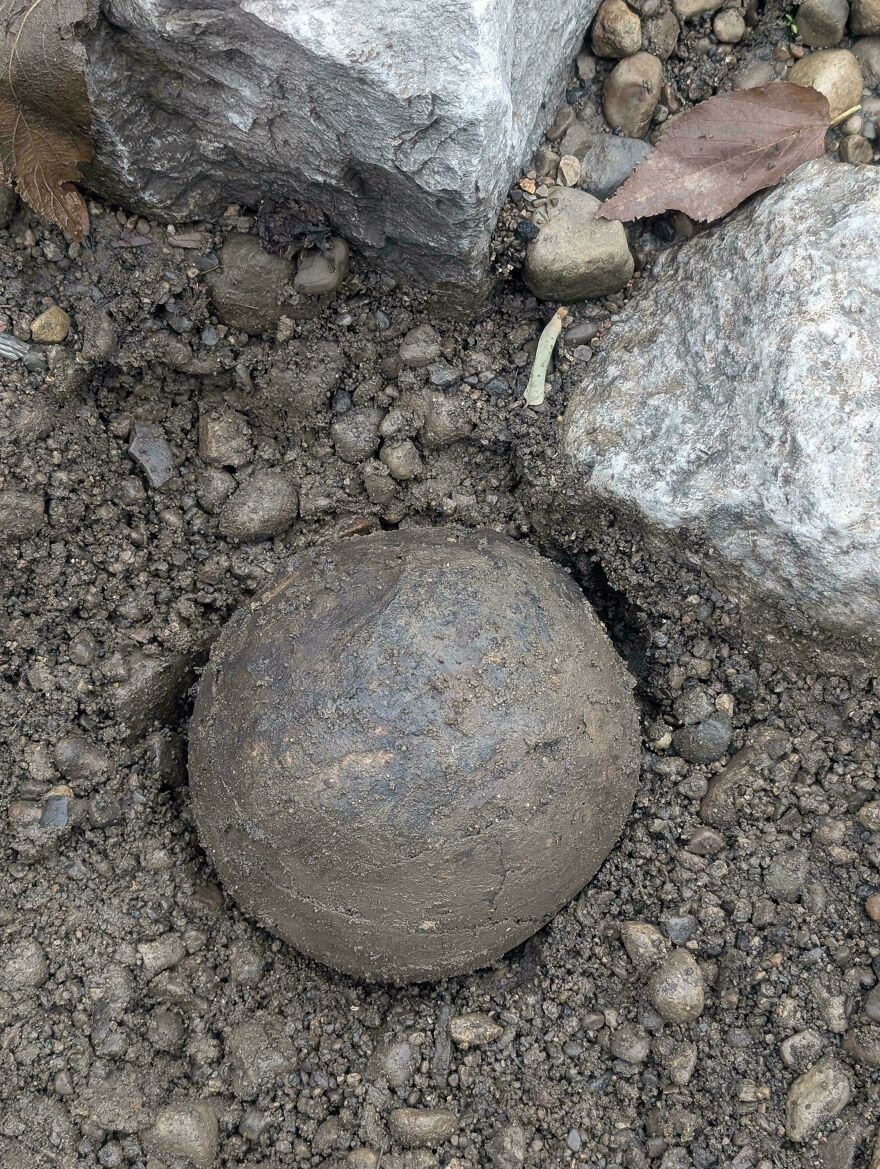
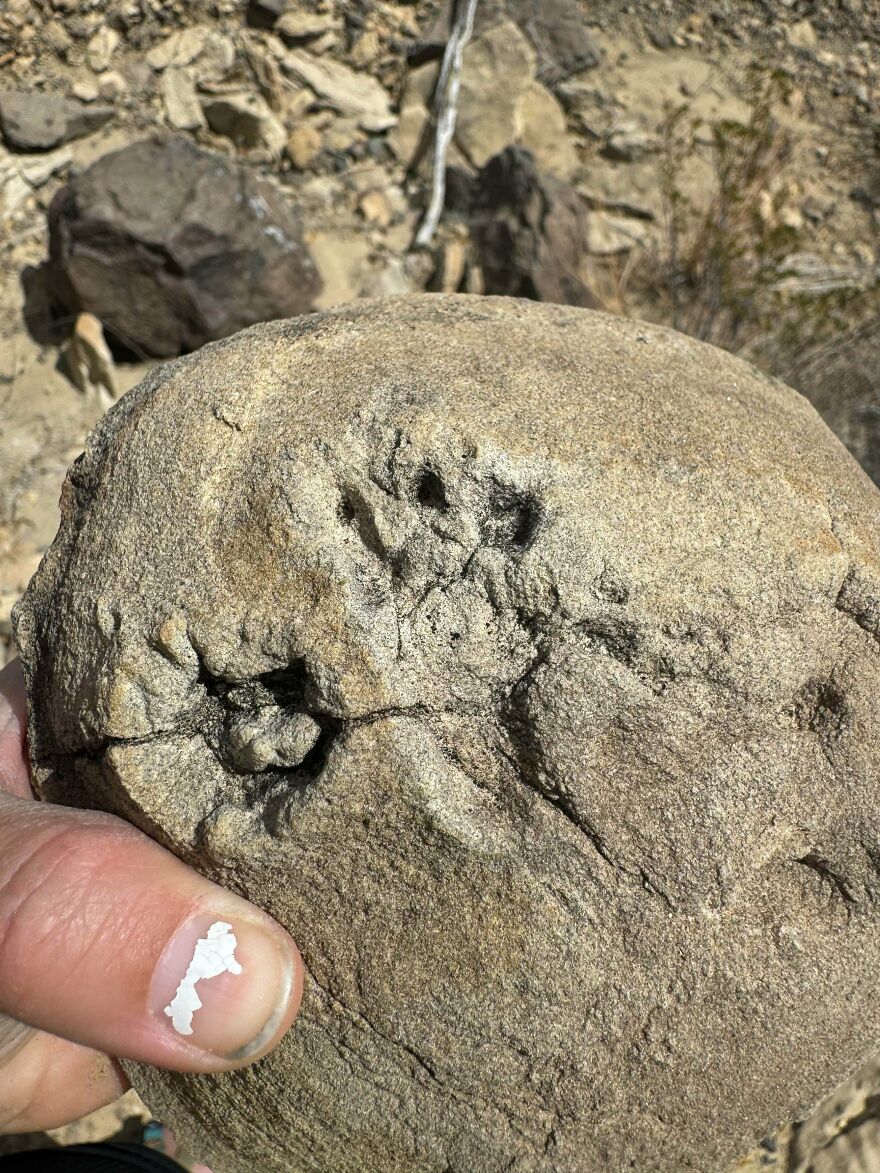
I went back today and finished pulling it out and just about died laughing because this is a freaking bowling ball.
Every fossil in this list is a genuine treasure. Each one survived hundreds, thousands, millions—sometimes billions—of years just to end up here, in front of your eyes. The fact that we get to catch even a small glimpse of what our planet once looked like is, honestly, pretty incredible.
justtoletyouknowit:
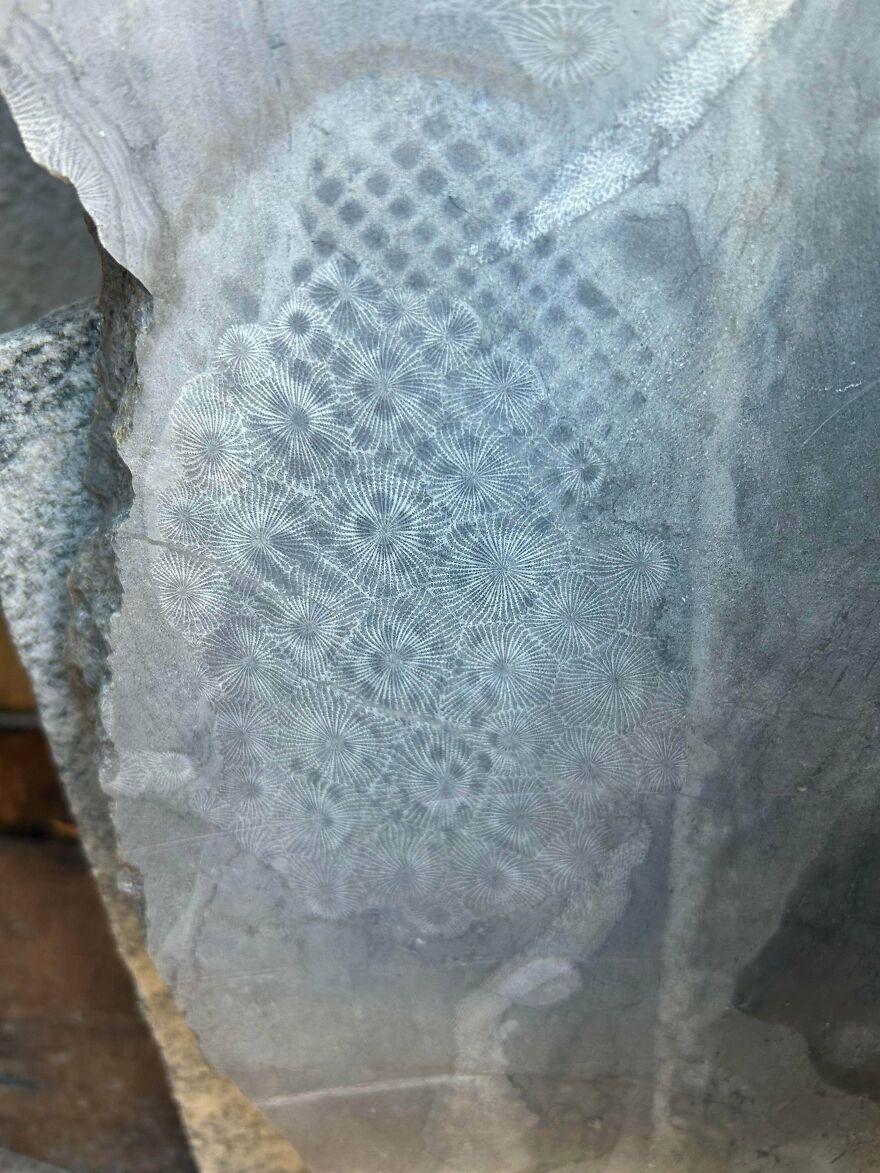
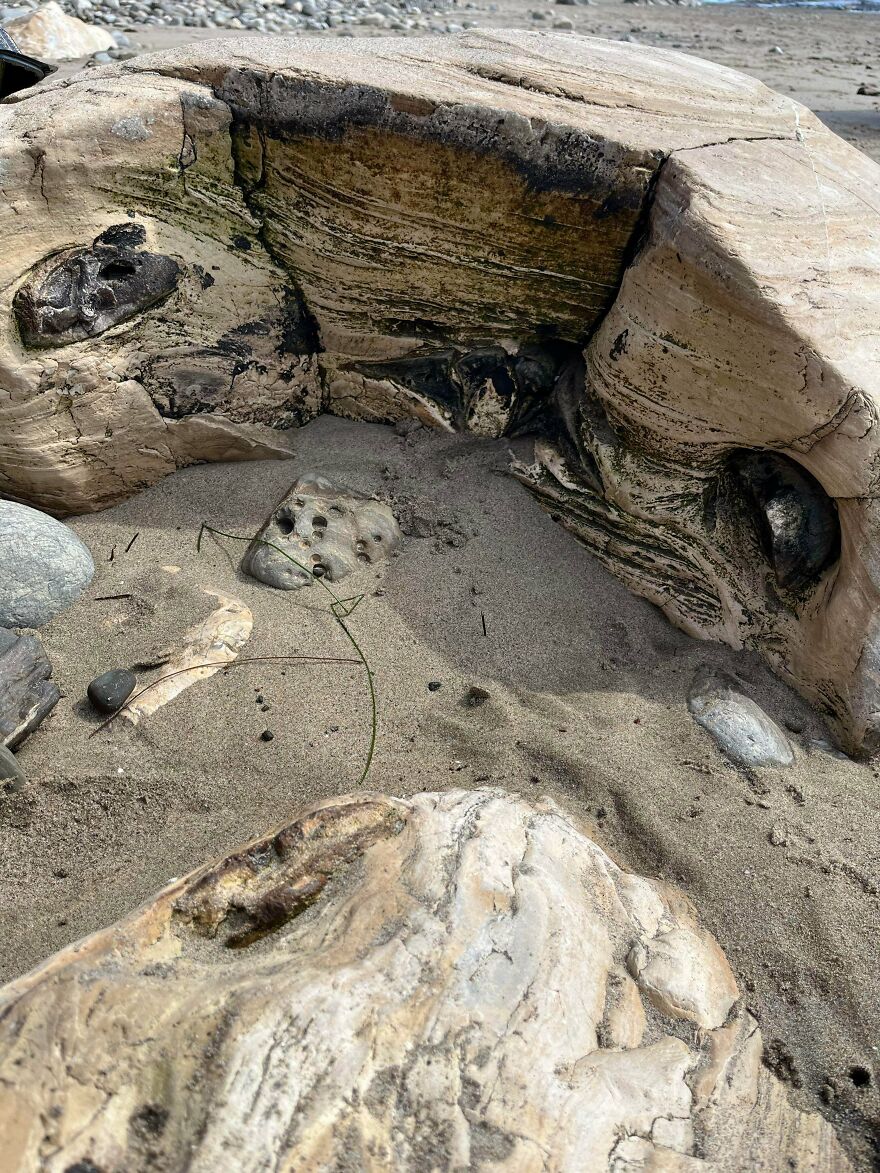
Thats 100% not granite... Those are corals and bryozoans.
_The-Real-Me_:
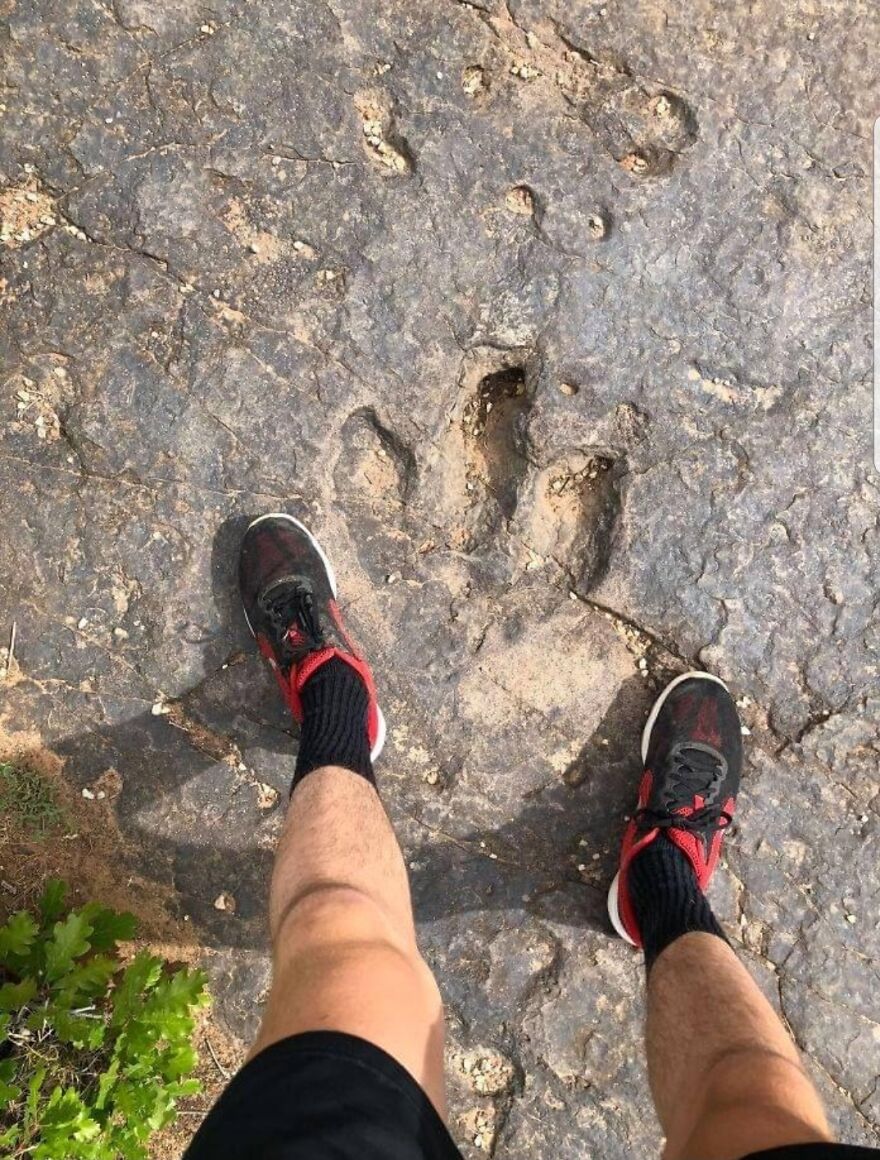
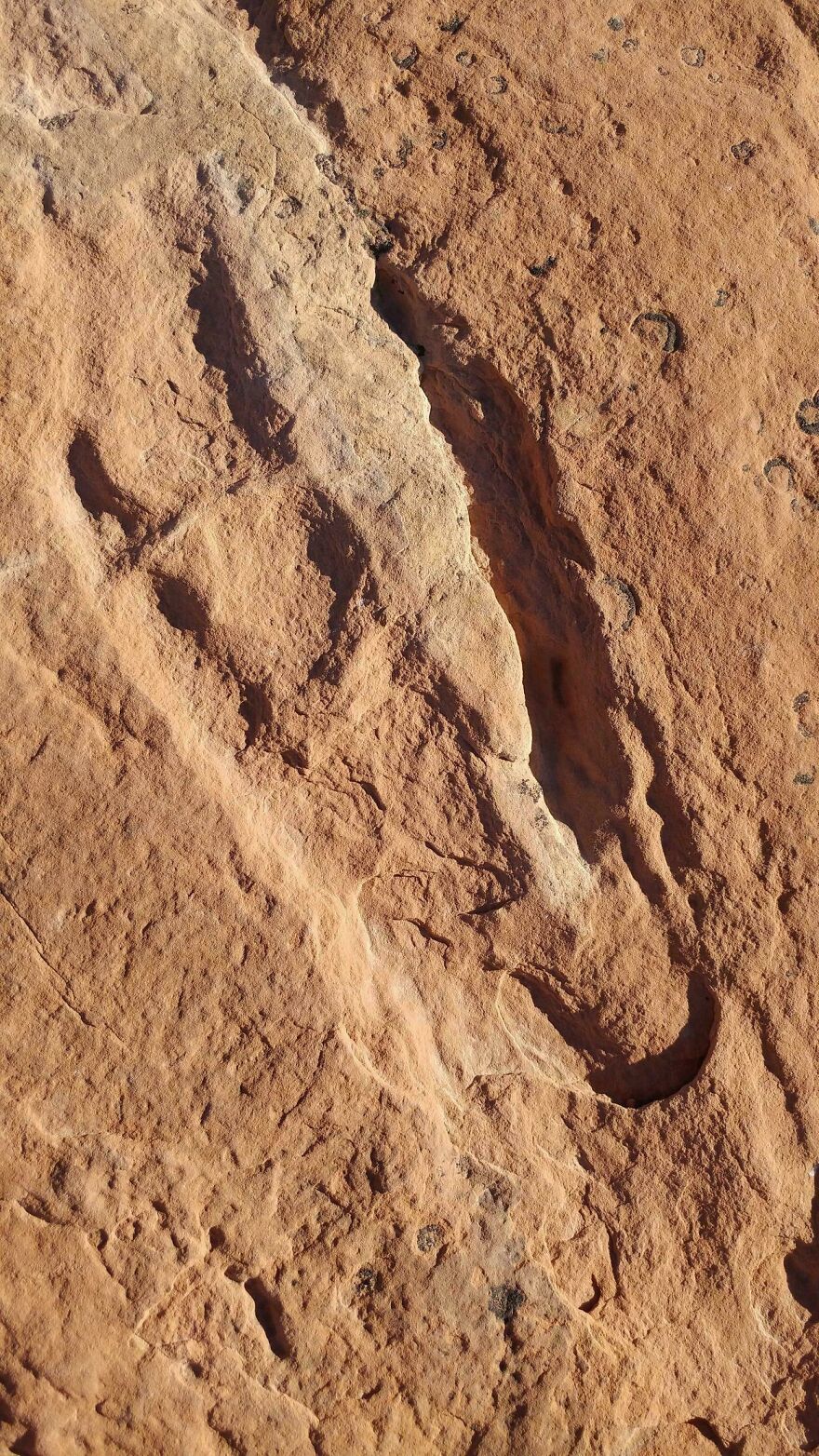
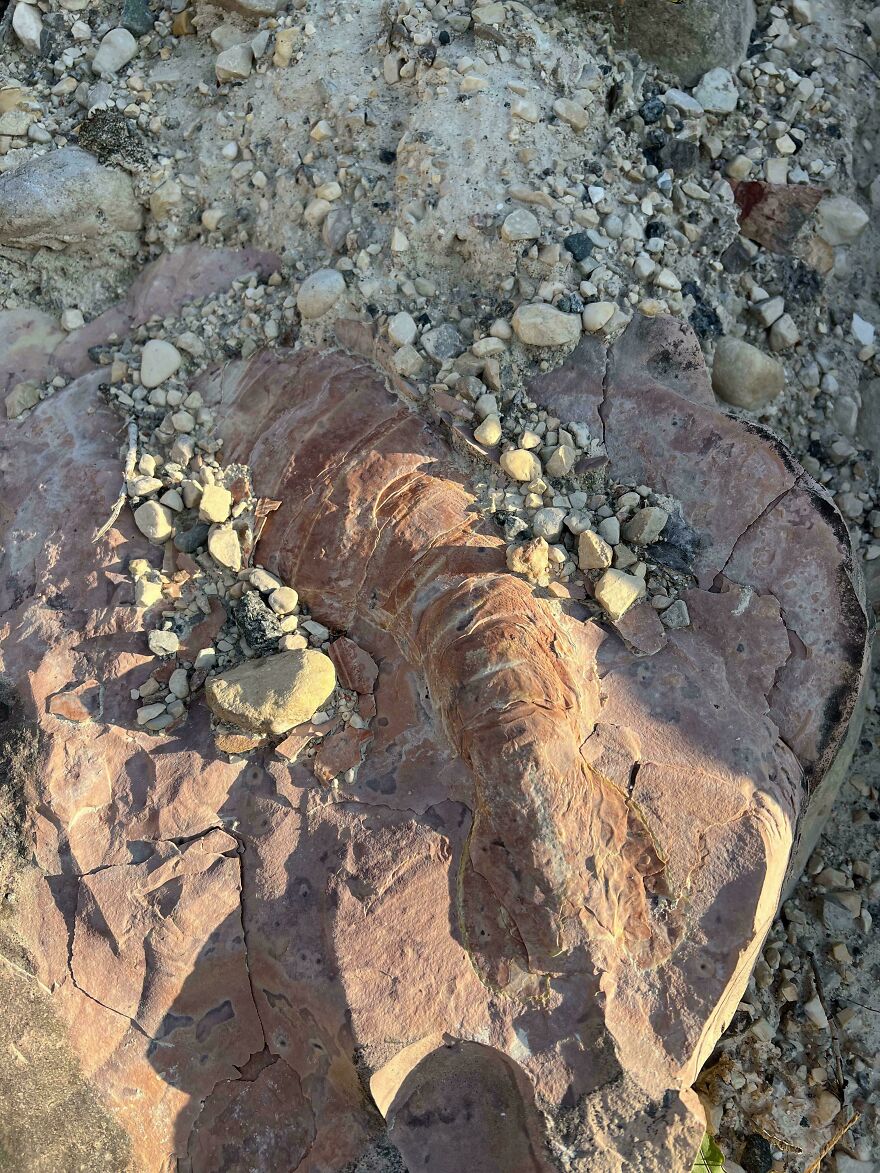
Definitely Theropod footprint. Unless I'm mistaken, the impression at the back kind of makes it look like it was crouching slightly.
Deaner_dub:
231 million years ago…
astr0bleme:
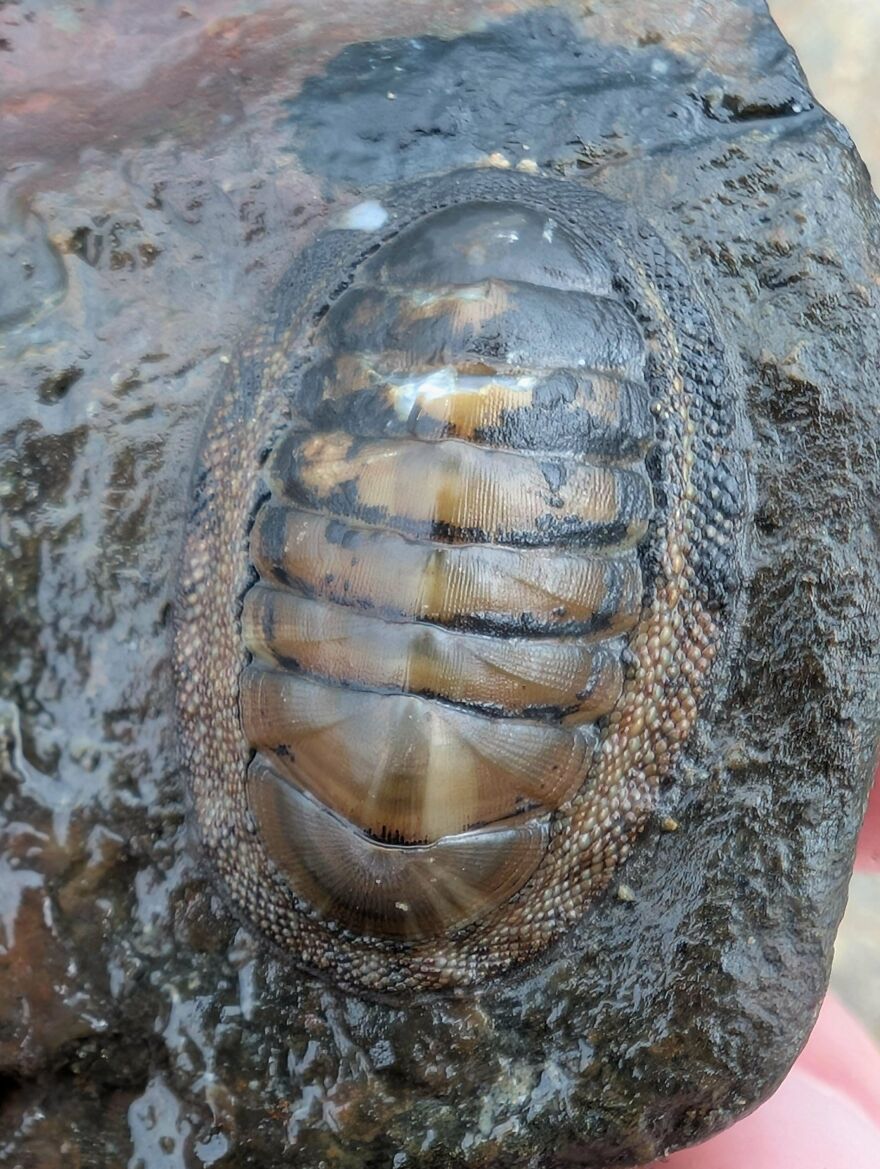
Oh he's a chiton! Living creature. You can see the mantle all around the outside of the shell. https://en.wikipedia.org/wiki/Chiton
They really do a good job looking like part of the rock, eh?
[deleted]:
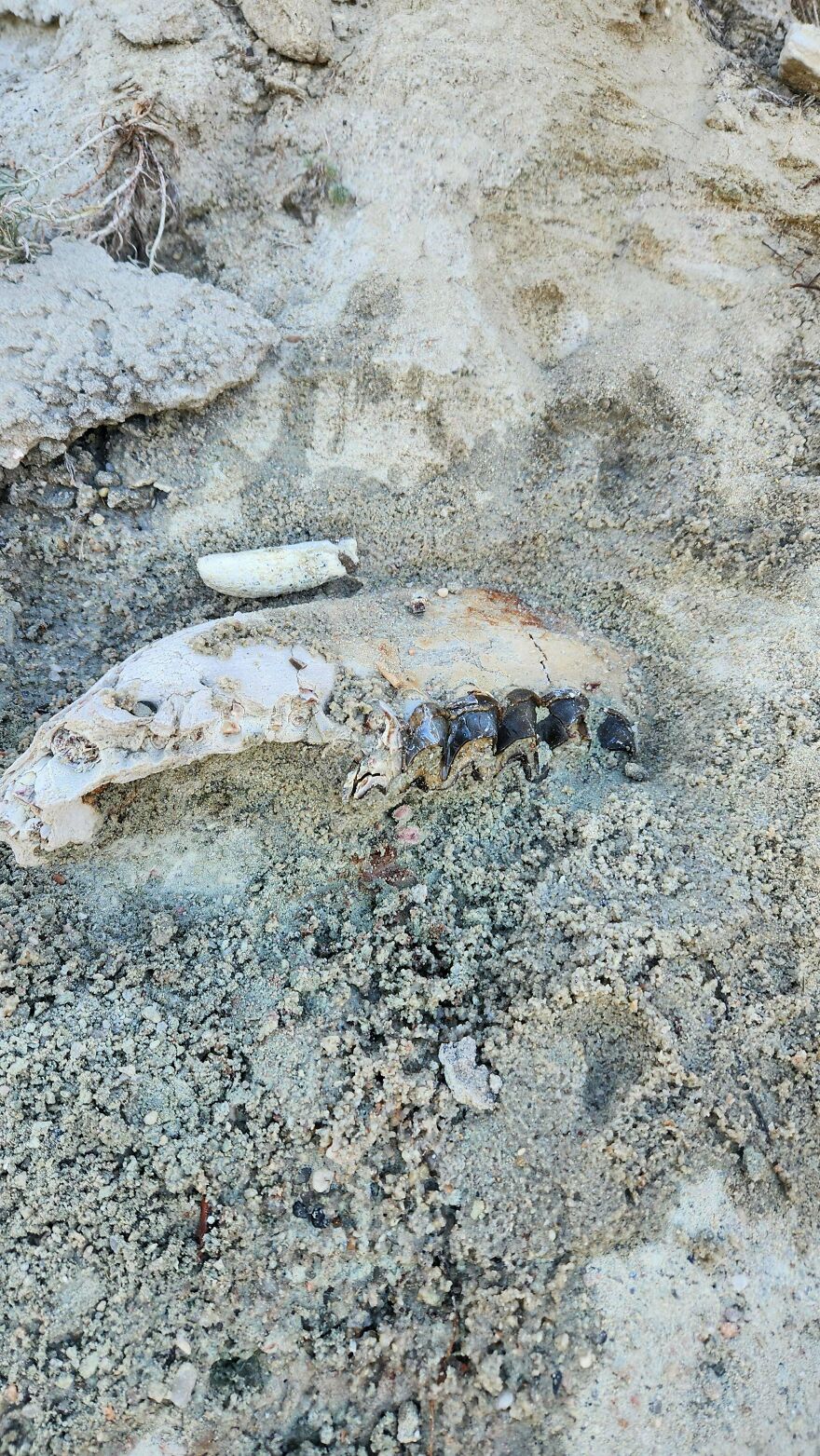
Exercise caution when excavating fossils like this in places like the badlands. Most of that is federally owned and this is pretty frowned upon.
StrangeToe6030:
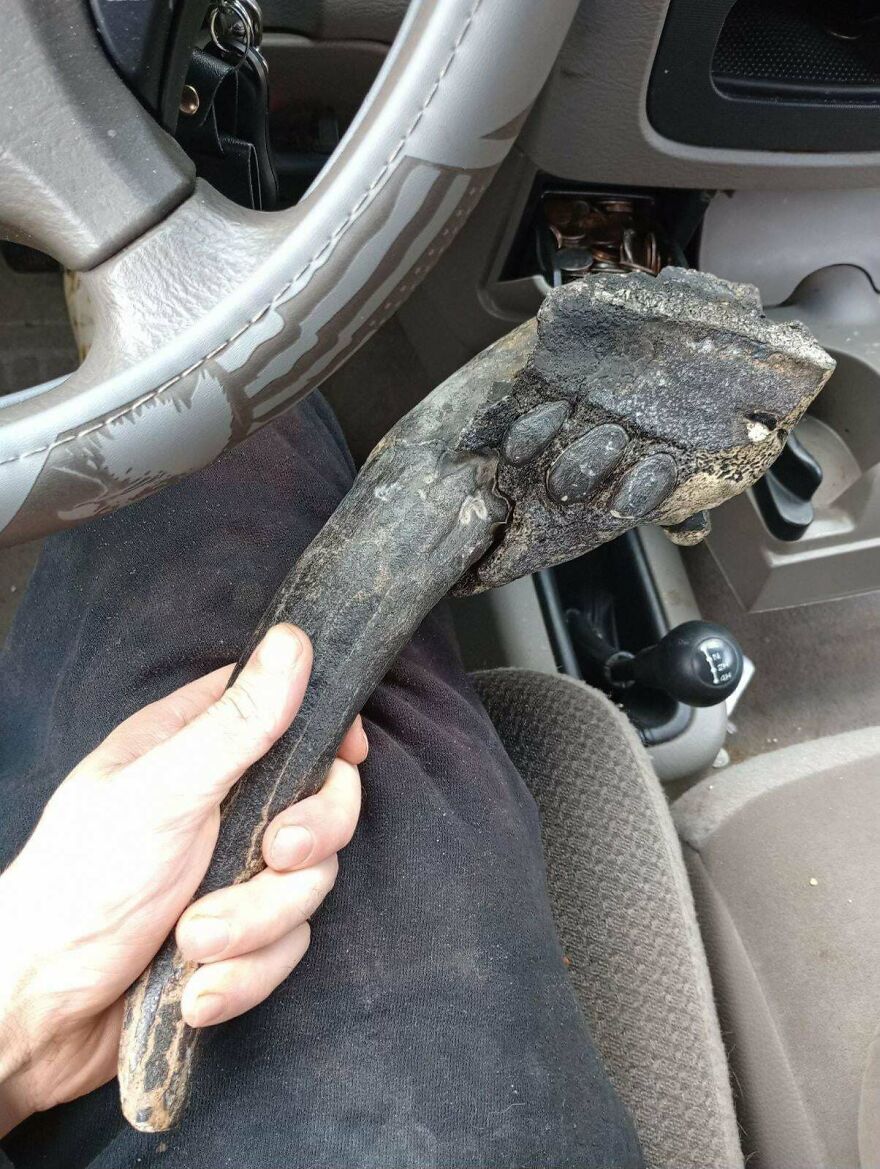
That is similar to some rhino jaw sections I have seen
_Pardus:
Looks to be a really nice goniatite in a nodule. It would definitely be worth getting it prepared.
Ok_Extension3182:
Very solid chance of this being a very small theropod foot print. It is likely a type of foot print that occurs when a theropod dinosaur steps in mud or sand with its heel slipping in. The mud then covers up the tips of the toes making it appear weird.
The fossil formation in your region is home to Late Cretaceous Maastrichian fossils like Alamosaurus, Quetzalcoatlus, and Dienosuchus. So there is a fair chance this is indeed a small foot print!
suchascenicworld:
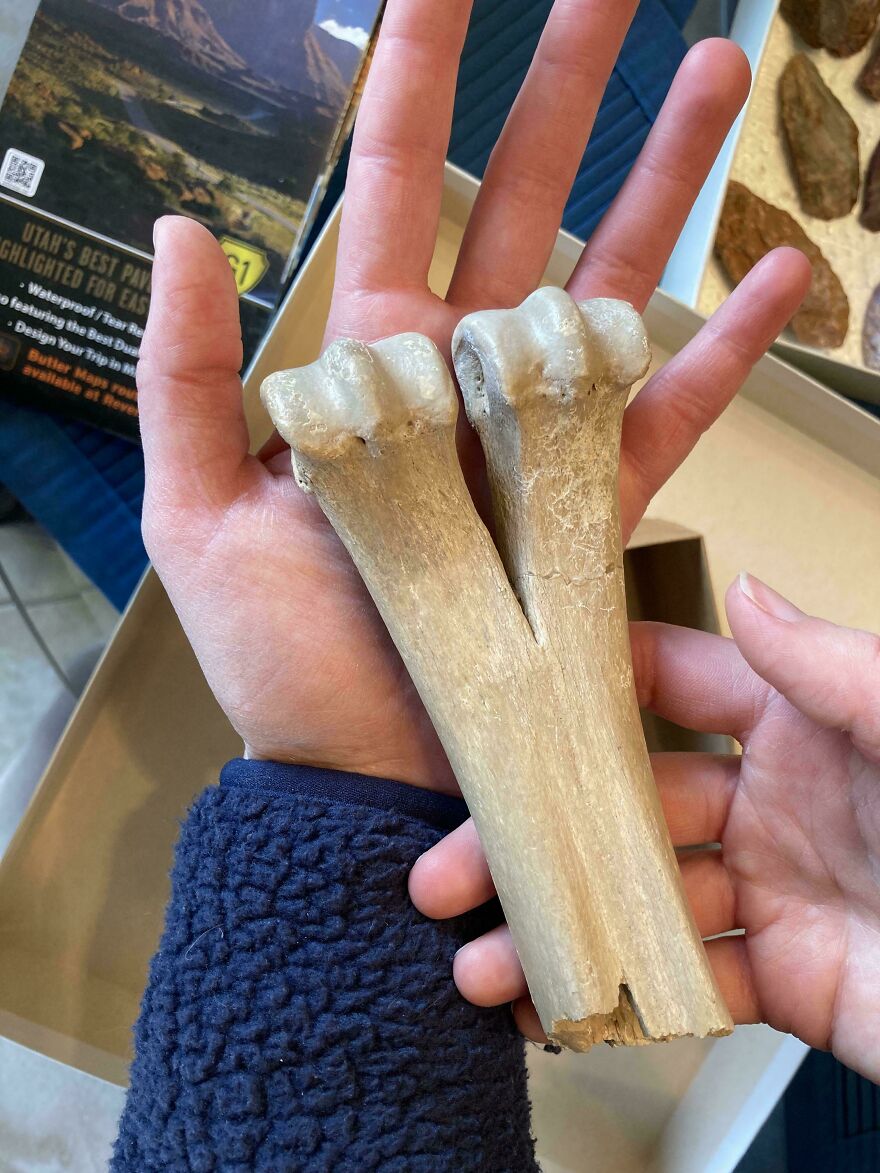
so, that is absolutely a camel metapodial ! I have a background in taphonomy (with a focus on the Pleistocene ). While camels certainly roamed the Americas only 12k years ago, that looks like it may be modern which would also make sense since camels were used (more like tried, tested and not catching on!) in the American west. I don’t know how big they were for Camelops (that giant extinct camel ) and it’s been years since I have seen modern camel bones so I am not 100% sure if it’s modern or extinct but it’s certainly a camel !
A family friend of ours found this while landscaping. He was removing a tree and his chainsaw started to get caught up on something inside the tree. As you can see he was able to remove the outside of the tree and found this inside. Any idea on what this could be?
Lazy_Fish7737:
People used to put concrete in hollow trees to prevent the falling down and save them. Sometimes the tree will grow back over the repair hole.
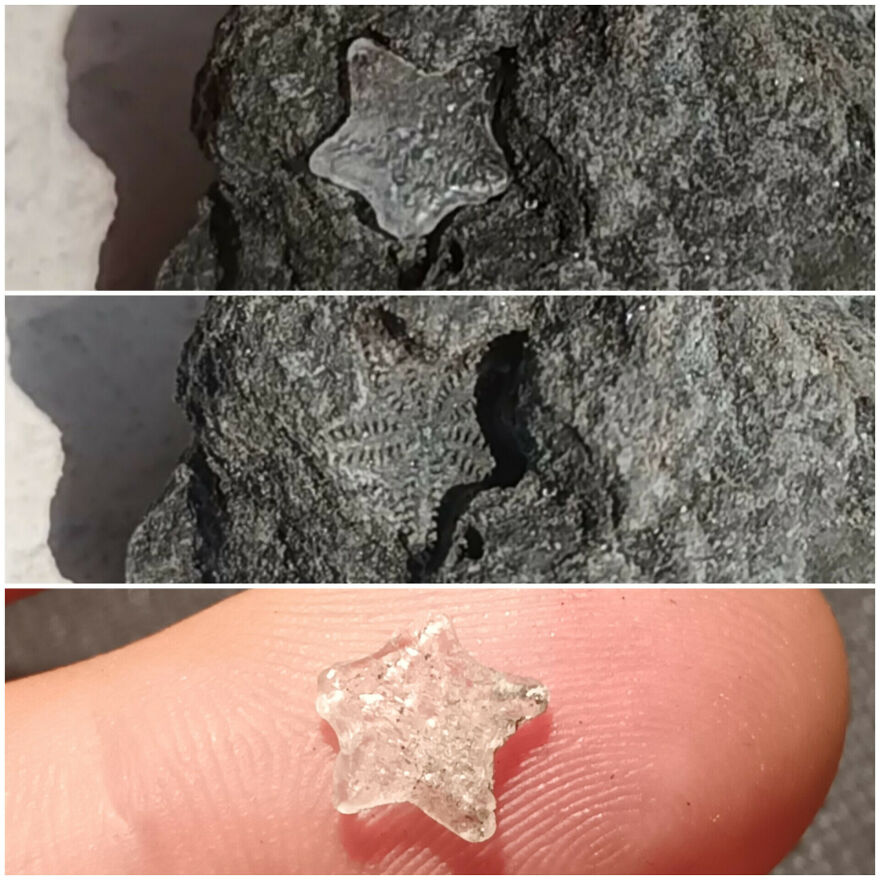
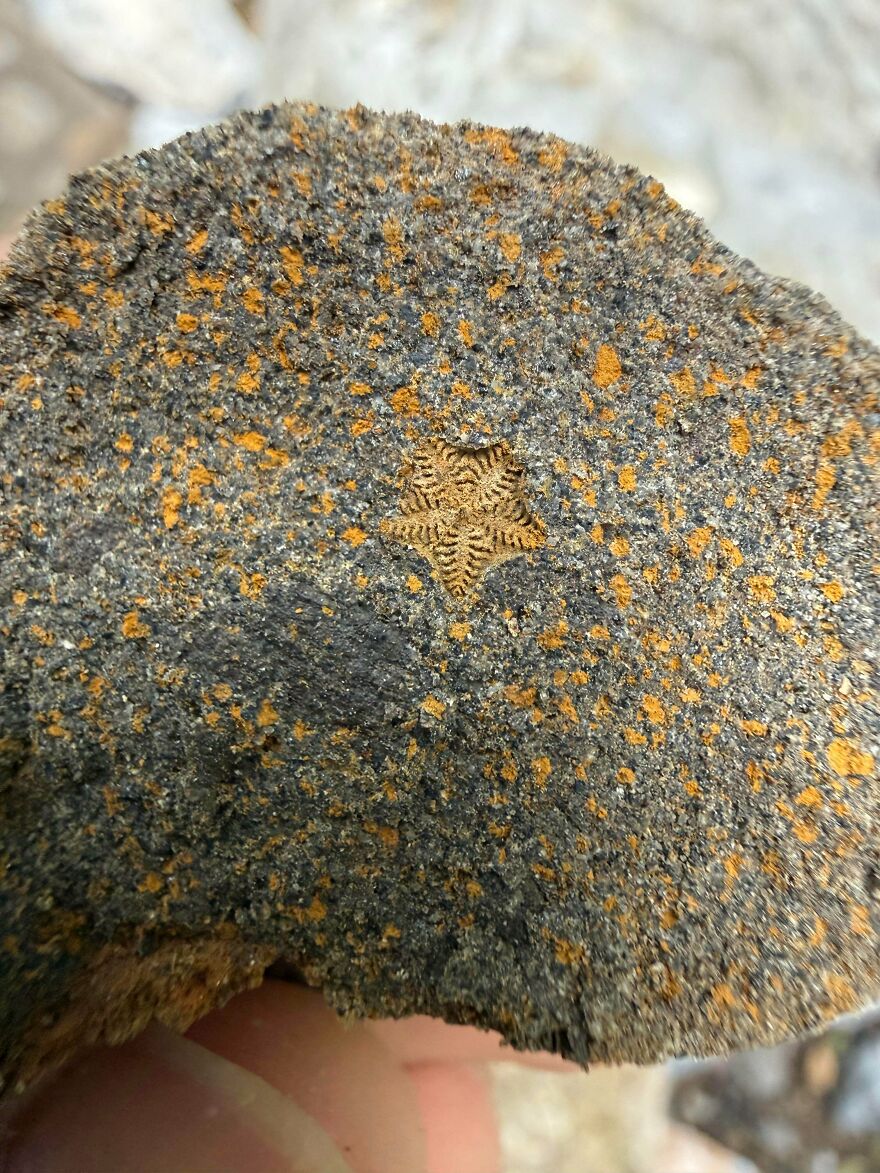
Found this tiny fossil in NorthEast Mexico. I thought it’s probably a sea star but the pattern reminds me of a leaf. Anyone has any other ideas or theories?
thanatocoenosis:
It's a plate from the stem of a crinoid. Bunches of these stack up making the stem. It's likely from one of the isocrinids.
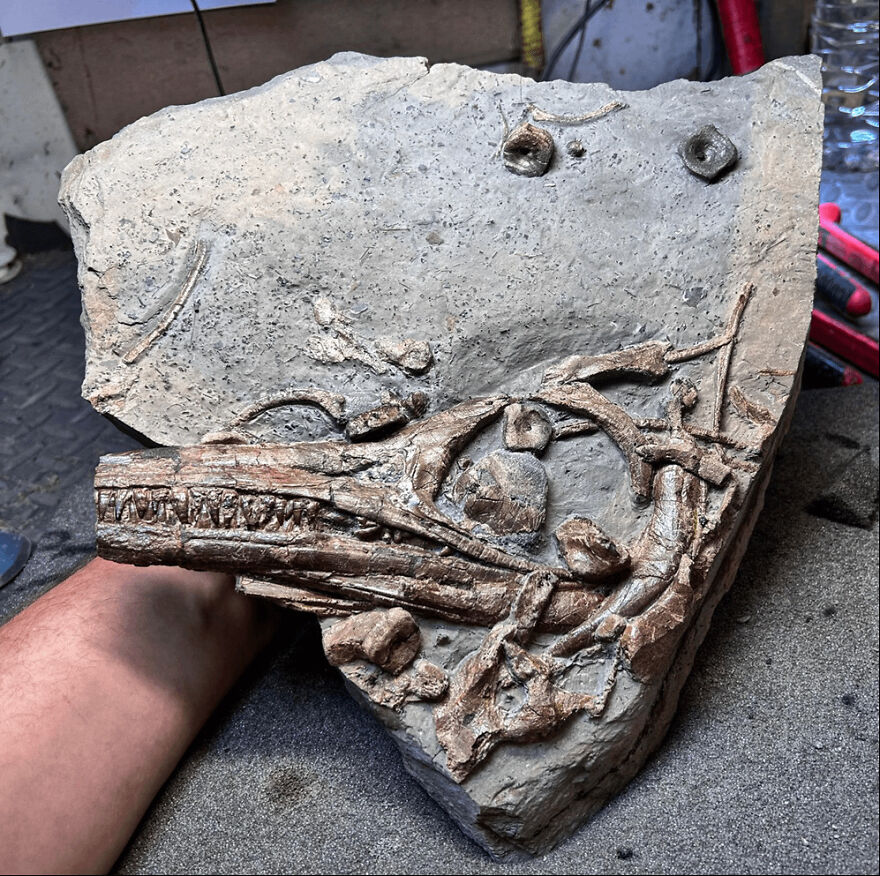
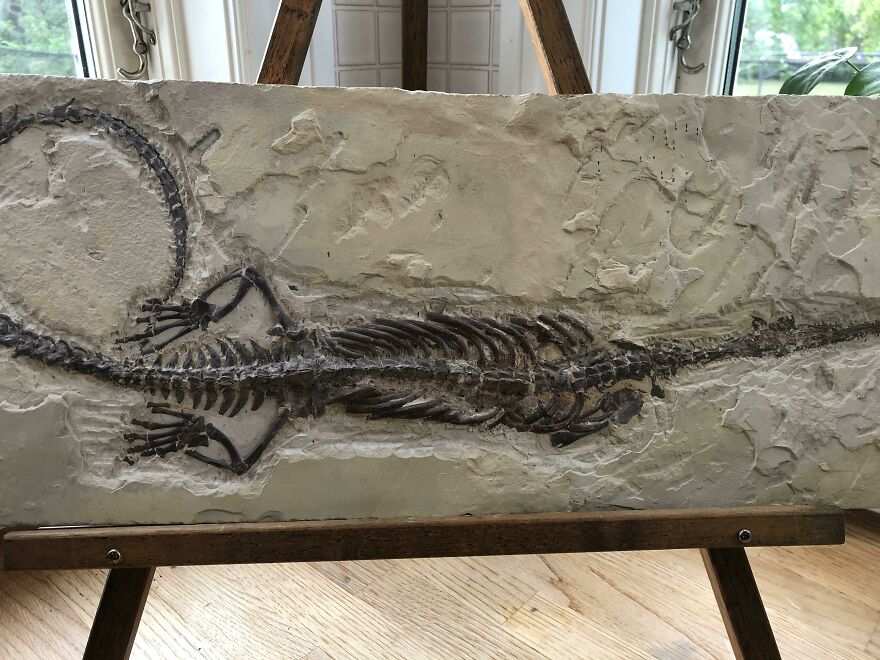
My Wife thinks its some kind of cayman but Im hoping its some evil old lizard. Would be most grateful if I could know what it is, please help me for once score a point against my wife who always outsmarts me :) It's also 53 cm in length and it was bought in Brazil.
LibertyBellSeven:
It looks like something along the lines of a Keichousaurus or a Nothosaurid, both from the Triassic. It's not a caiman or a lizard, so who wins here is up for you to decide :).
Be aware that there are a large number of fabrications of these type of fossils, though this one isn't setting off any alarm bells in my mind (a lot are carved straight from the stone, which is easily noticeable)

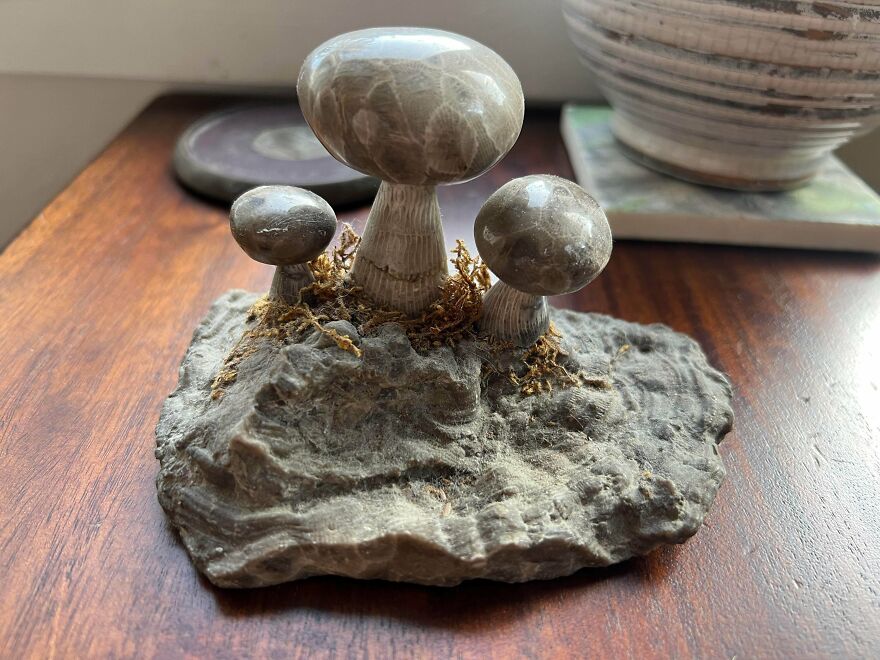
The tops of the "mushrooms" are Petoskey Stones, found in northern Michigan.
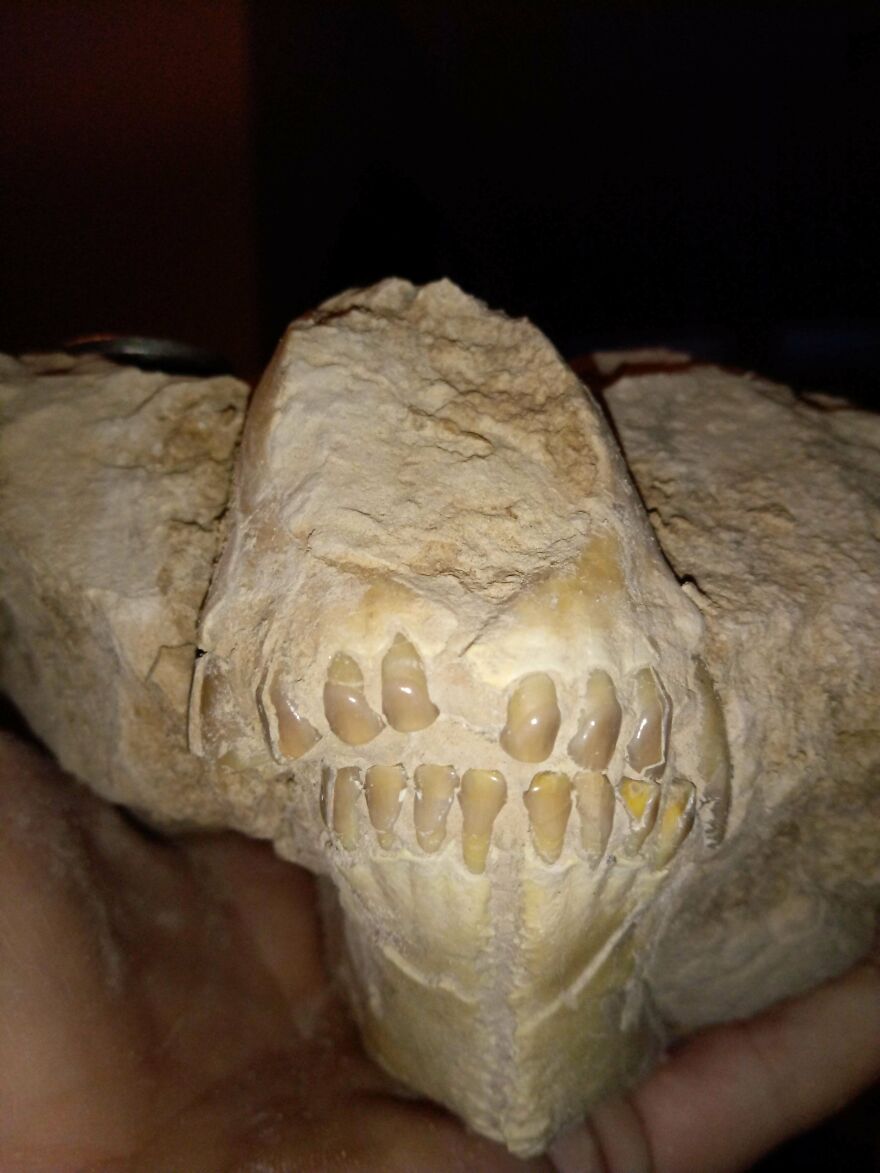
S-Quidmonster:
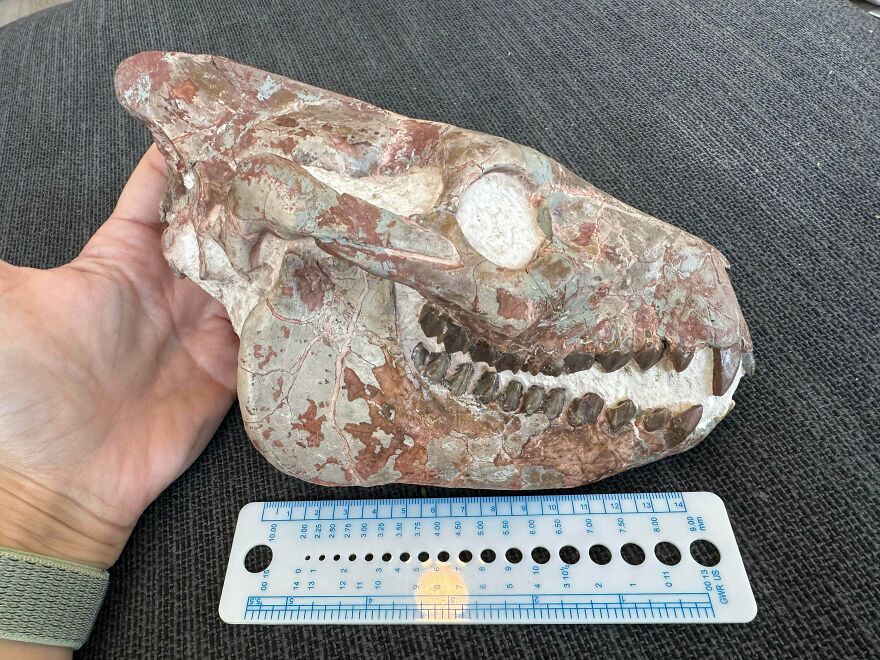
Oreodont skull from the White River Formation
Prowlbeast:
Cephalopod.
NoJelloNoPotluck:
Agreed. And I think it's a cast of the interior. I've found section of similar sizes ones. I'd probably cry if I found that complete of a fossil
Whiteshaq_52:
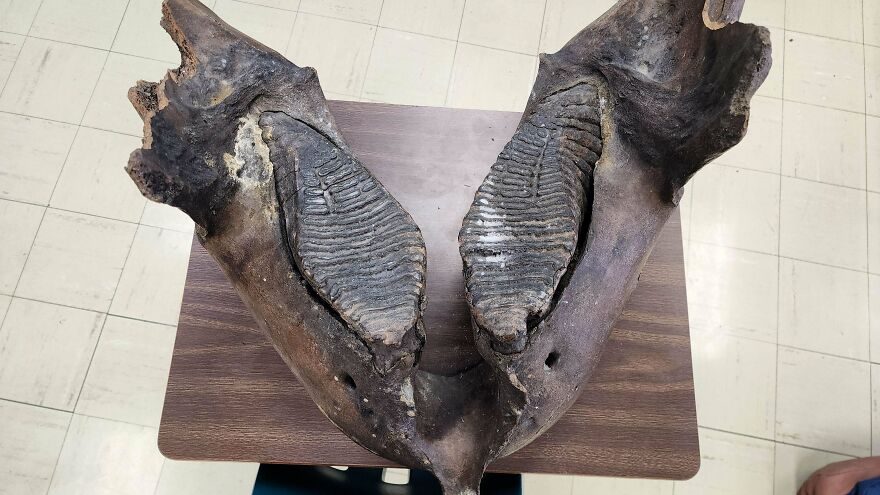
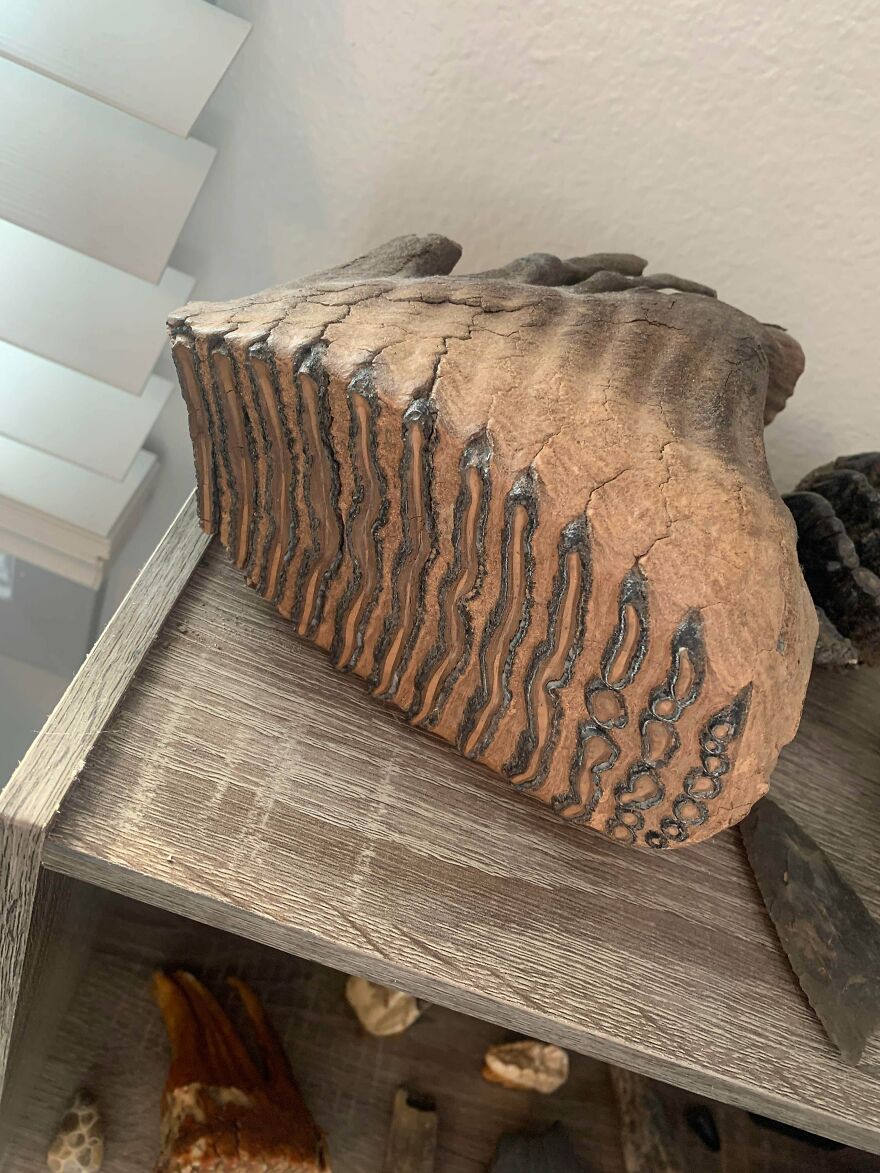
Mammoth jawbone.
lastwing:
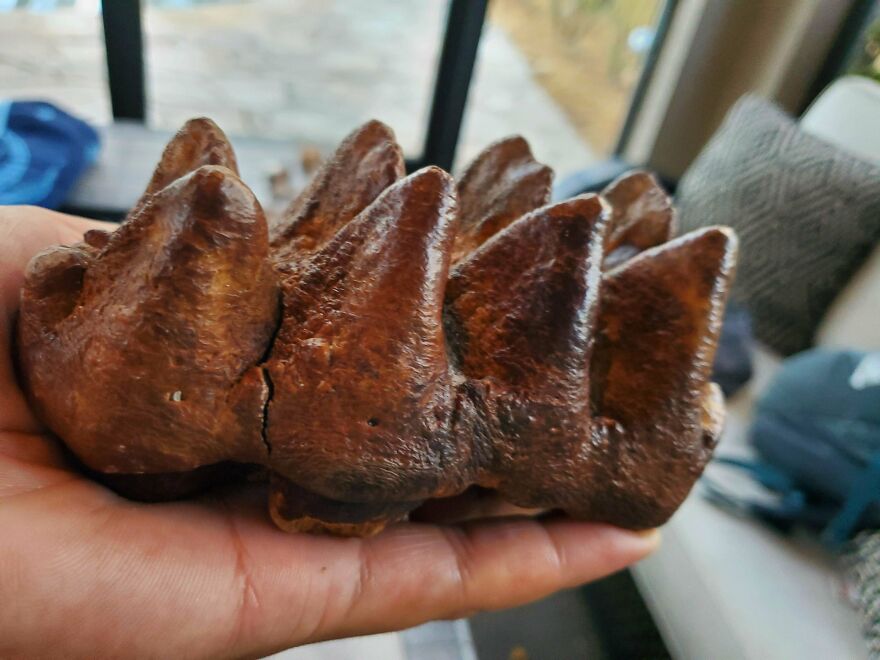
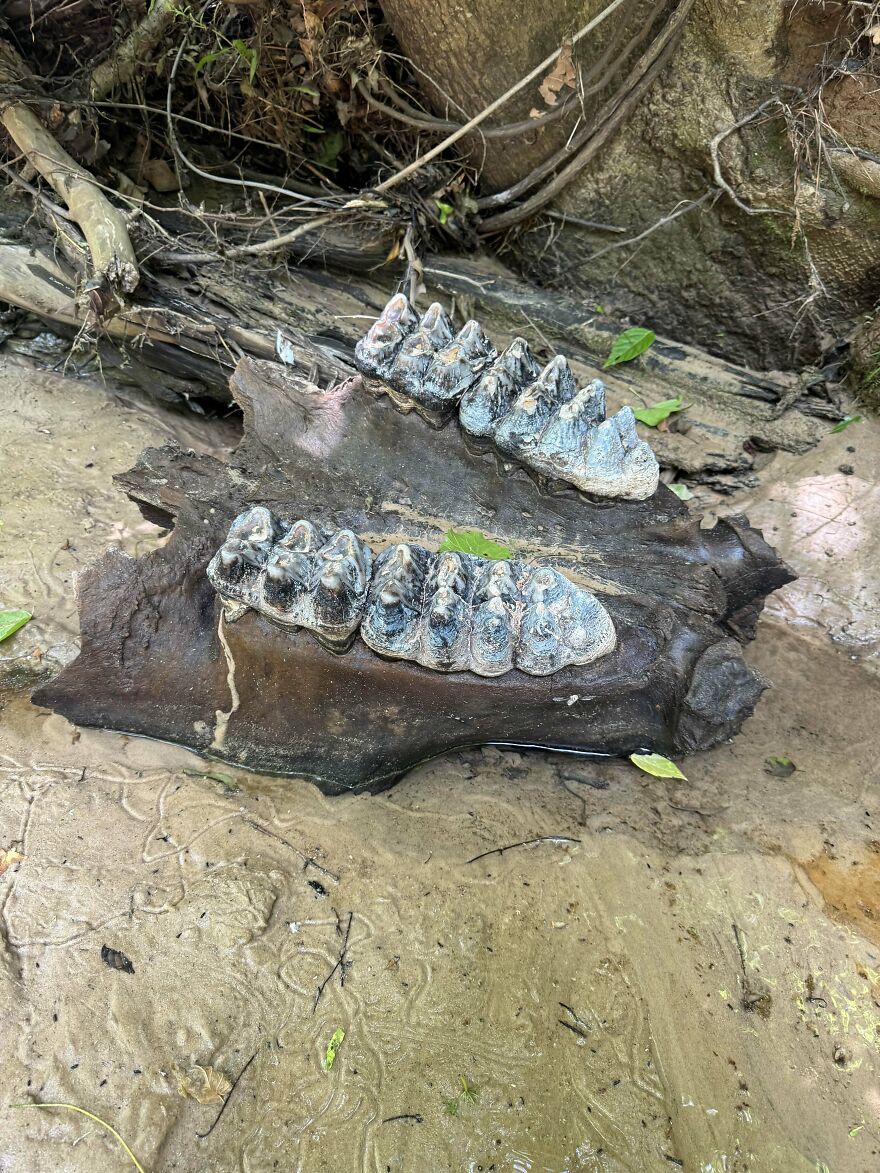
Looks like a beautiful unerupted mastodon molar! Nice!
k__t_:
Disarticulated crinoid stems! The wildlife discovery centre says that the Crinoids from the Northumberland area are Carboniferous in age. That’s about 350~300 million years ago which is pretty cool!
Euphyllia:
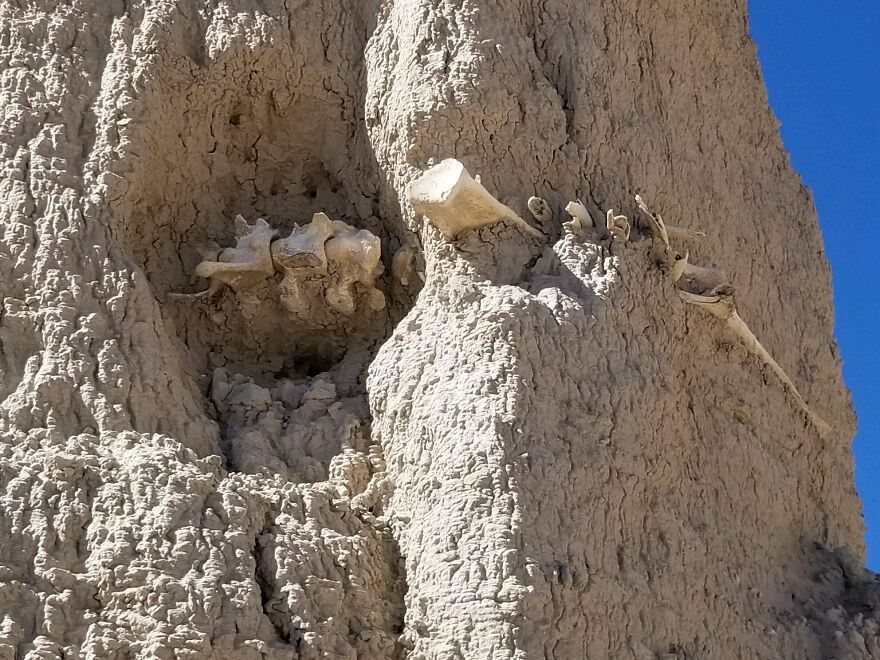
That’s a bison, no older than 130,000 years.
In Badlands NP the most well known fossils are those of mammals and reptiles from the 37-30 million year old White River Formation. These rocks are composed of ancient soils, mudstones, and sandstones that have relatively recently been eroded to form the dramatic topography the park is famous for.
On top of the White River Formation is much younger wind and water transported sediments, forming what are colloquially called the sod tables. These sediments preserve fossils from the Pleistocene, like this bison. A really cool example of fossils from drastically different time periods being represented at the same place!
nagmay:
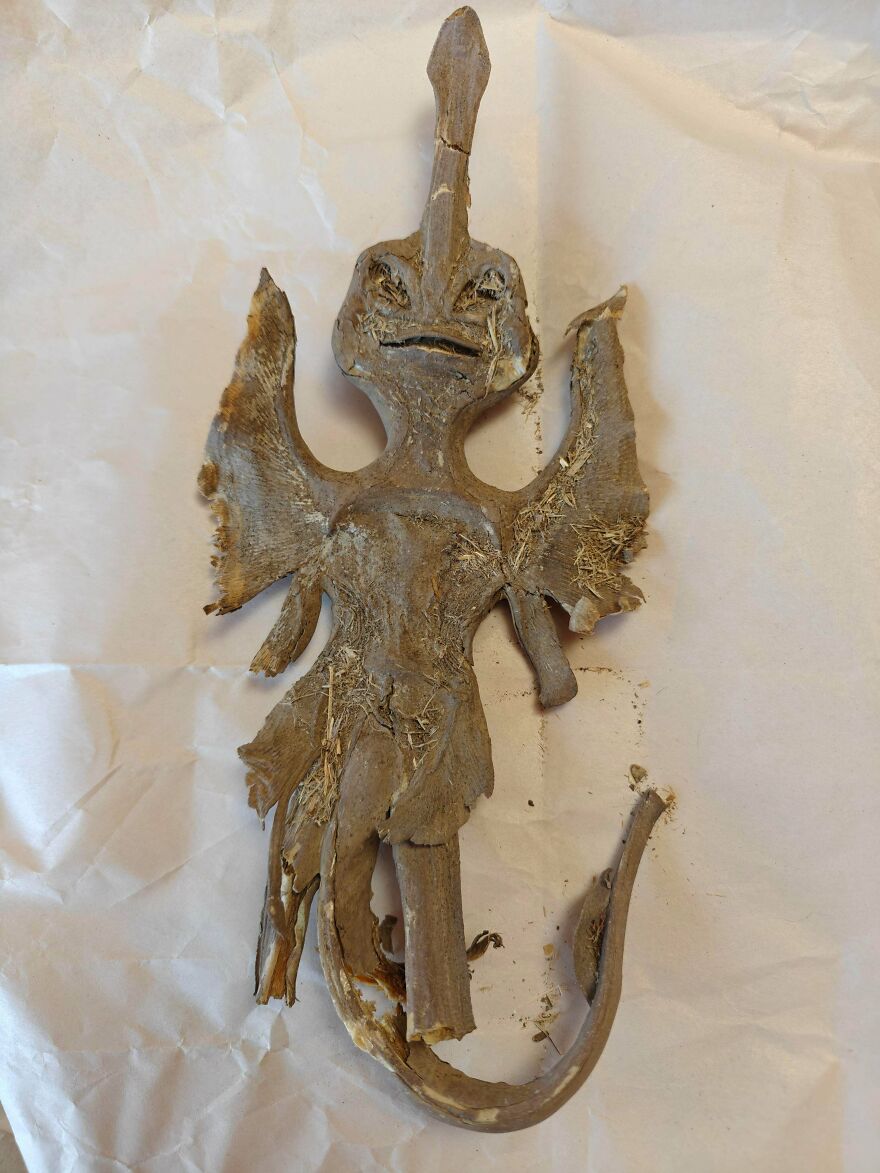
That's looks like a Jenny Haniver!
It's a specific gaff taxidermy specimen: https://en.wikipedia.org/wiki/Jenny_Haniver
Btockily89:
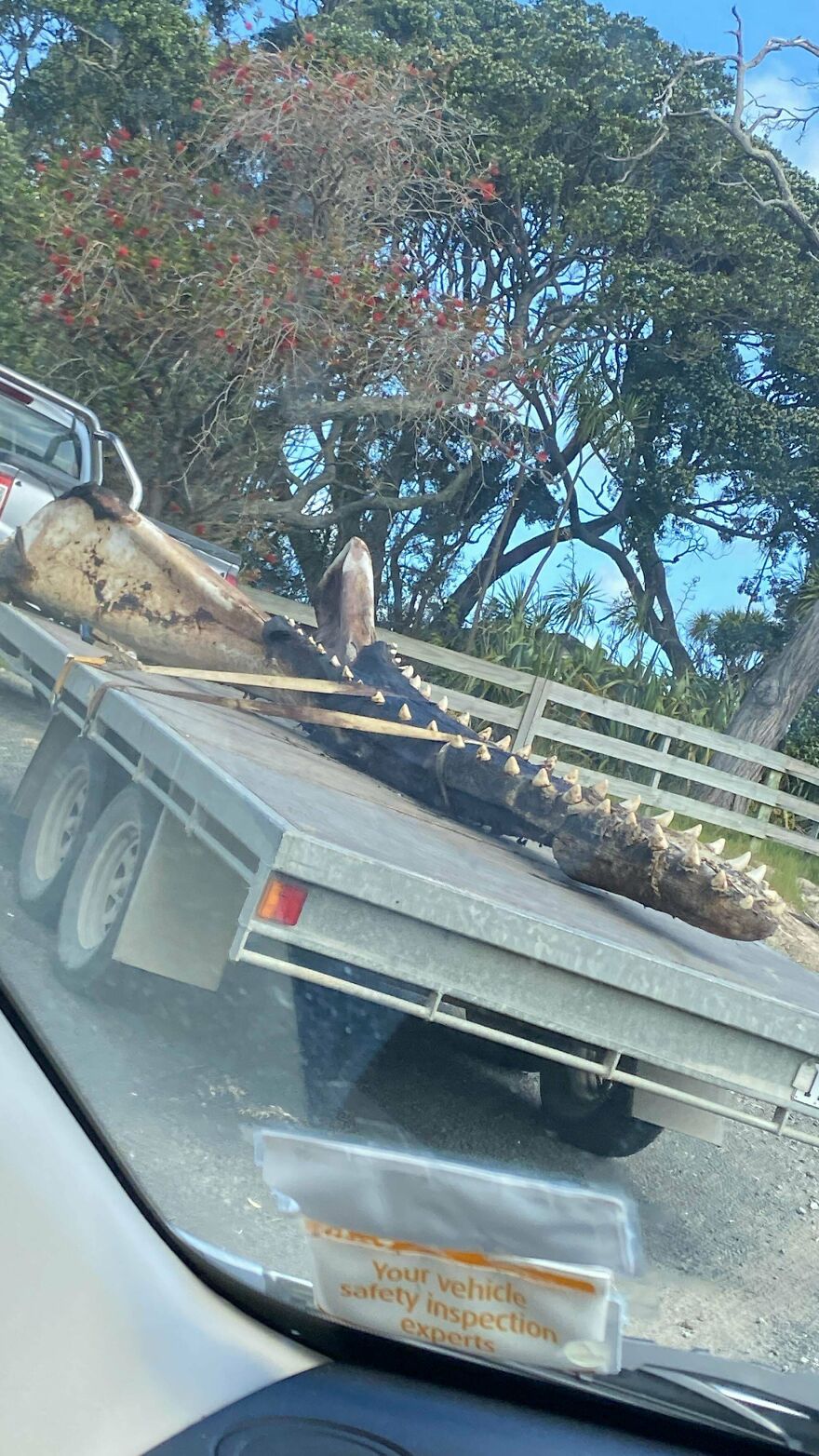
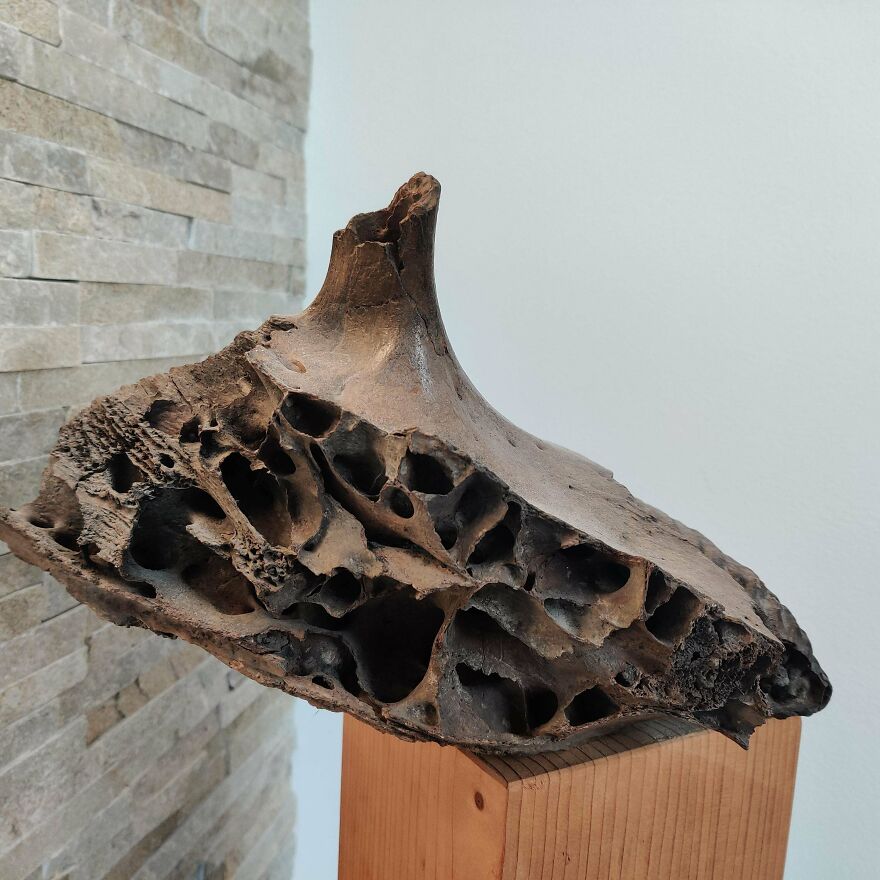
I assume that’s the lower jaw of a sperm whale? That thing's huge!
Atomfried_Ungemach:
The more I look at it, the more I think it's in actuality typical Jura Limestone from Germany ( https://www.globalstoneportal.com/blog/analysis/all-about-jura-limestone-marble ) and therefore good 155 Mio. years old. For travertine it lacks the porosity and you can see the typical calcite-fillings of fossil remnants as well as the black pyrite/hematite discoloring. So sorry to say, but I would guess that your "mandibule" is at best a cool remnant of a mollusc or some other ancient sea creature. Perhaps if you look a little around you'll find an Ammonite or Belemnite as well.
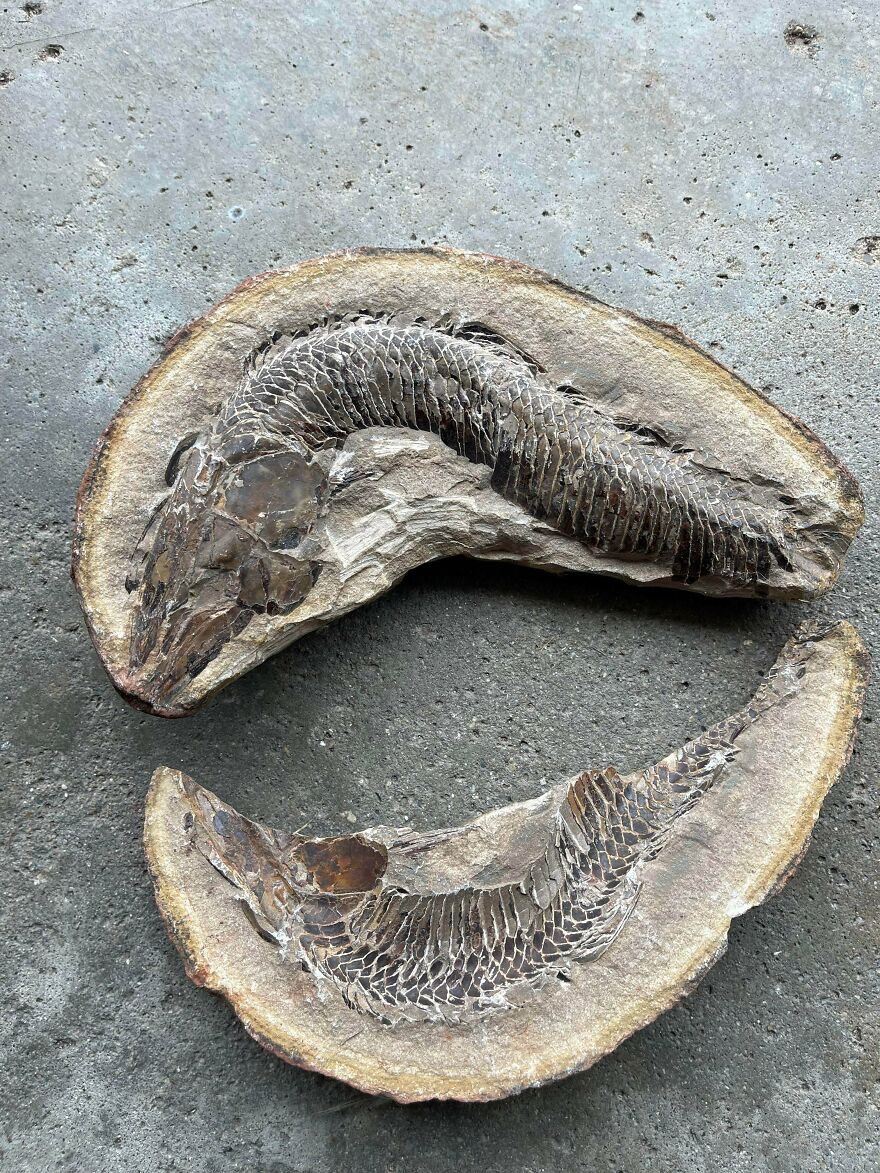
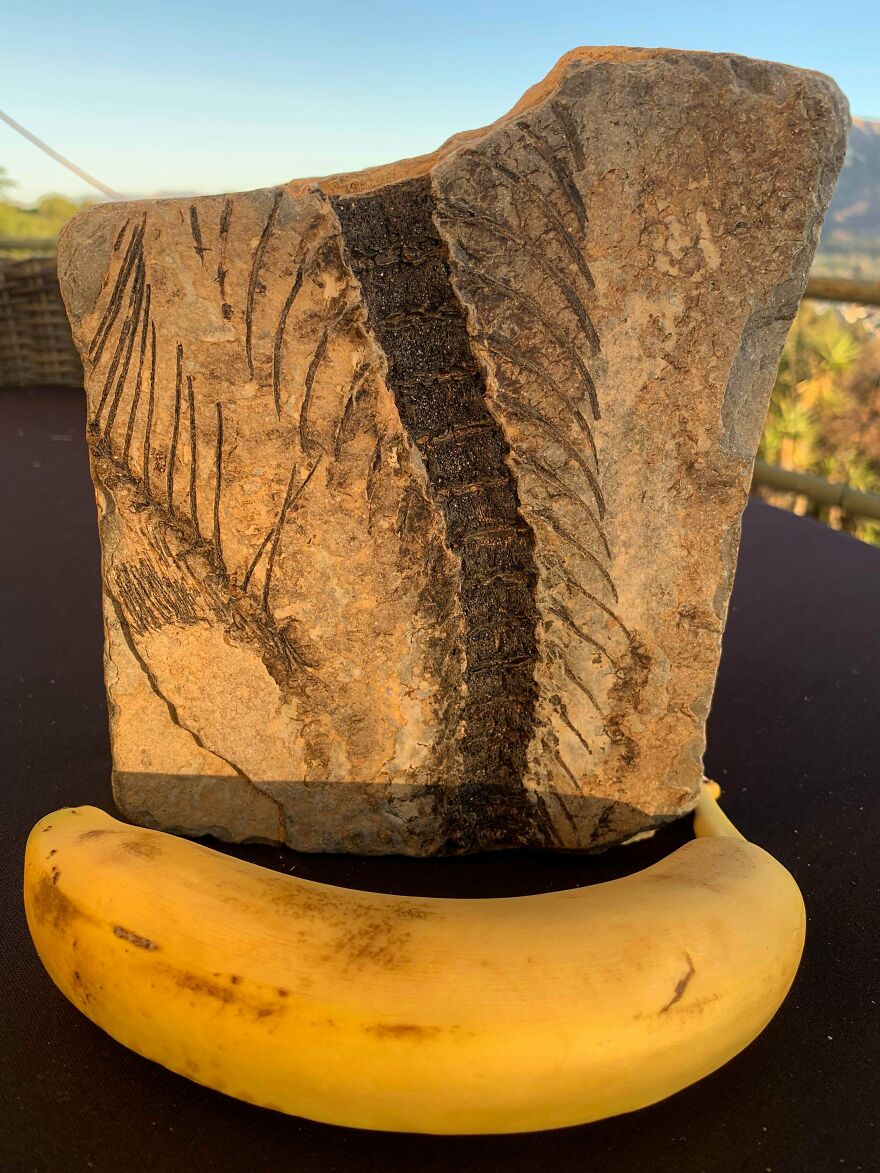
Found along the California coastline north of Los Angeles County. Scales are evident in the corner of this substantial stone. Neat textures are visible, is that a fin as well? Any ideas on what we see in this heavy little fossil? Banana for scale.
Royal_Acanthaceae693:
Its probably Miocene because California has a ton of Miocene marine fossils. North of Los Angeles is a big area though. But it hasn't traveled far from where it came out of the shale & pale shale usually means Monterey Fm. since there's a ton of it from Orange County to around San Francisco if I recall.
However to for sure figure out the formation, go here to find the formation & age https://ngmdb.usgs.gov/ngm-bin/ngm_compsearch.pl. Under the Geology tab, select the Surficial & Bedrock options to help weed out some of the map types you're not looking for. Zoom in on the location & click the Use Area On Map button. After you search, sort the maps by Scale. A 1:24,000 map will have more detail than a 1:250,000 map.
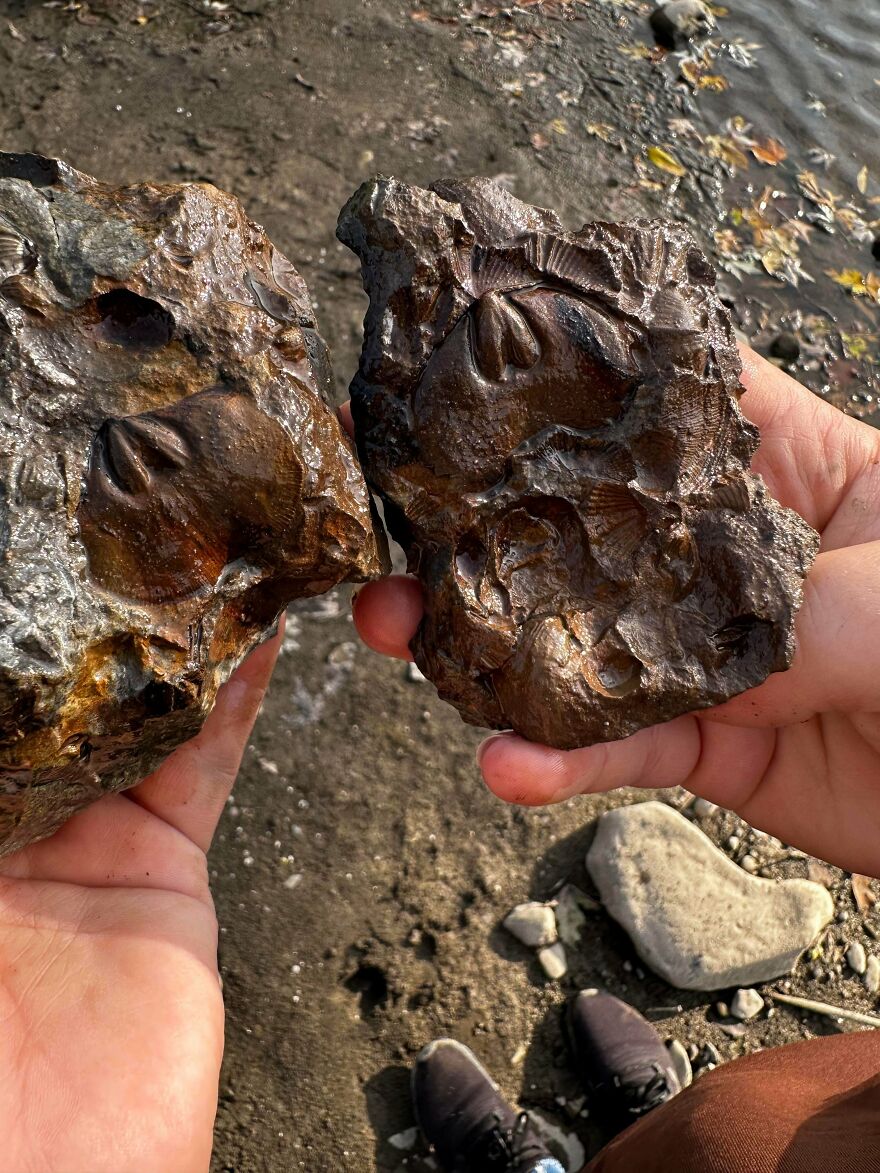
We are in upstate NY, in the chenango river. Found a big rock and broke it open. Found two of these on opposite sides of the rock. We find a lot of fossils but have never seen this. Any ideas what it is?
_duckswag:
Hey op, they are brachiopods - Devonian. Nice finds!
IzzyHoo:
Woah baby! I hope you contact Virginia Museum of Natural History!
Several_Grade_6270:
I have great news! VMNH is interested and got back to me! I also got some info from Calvert Cliffs Museum in MD, but Dr. Pritchard from VMNH and I now have a line of communication open and we’ll be corresponding further. Thanks for this suggestion!
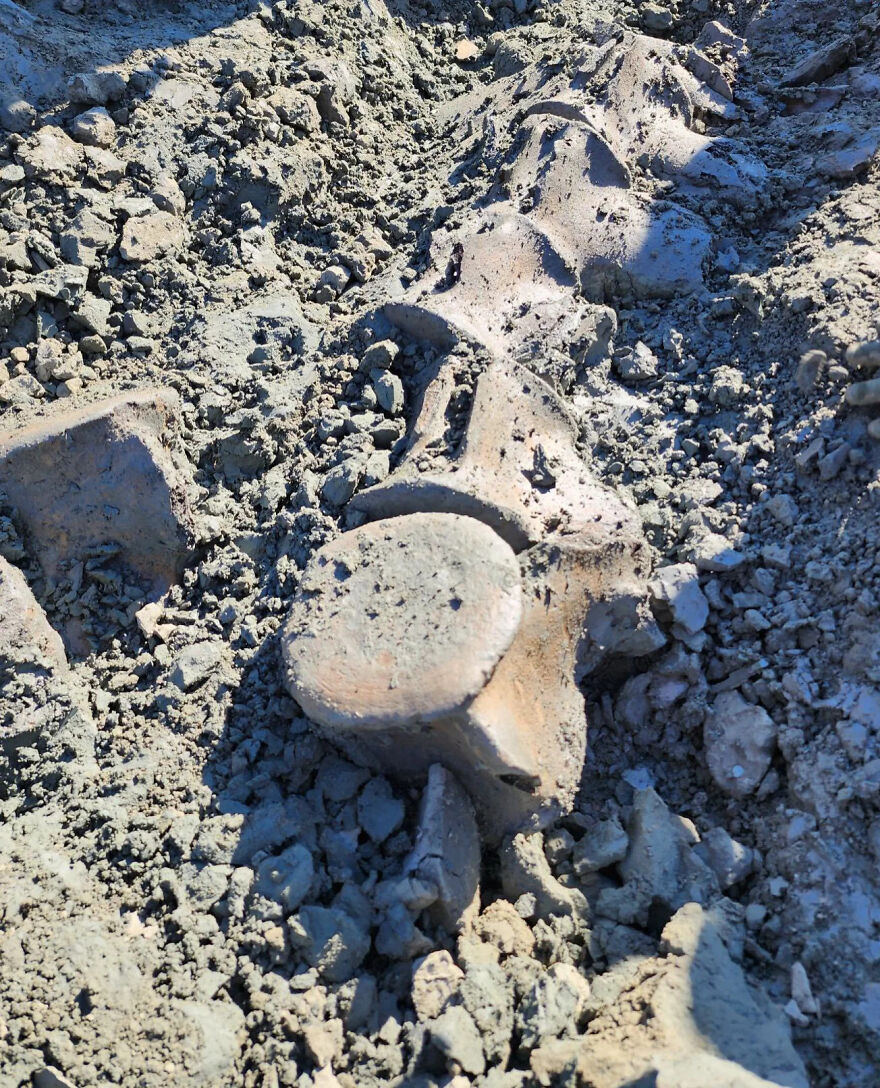
I almost don’t even want to say what I think it is because I’m a little too giddy about possibly finding something this cool, and haven’t wanted to raise my hopes up too much! But… I thought maybe a mosasaur vertebra?
TFF_Praefectus:
Oooh. That's not mosasaur. I'm pretty dang sure that's a plesiosaur vert.
I’ve bought a number of fossils from various eBay sellers with a positive overall experience through the years and no concerns about their authenticity. But this one wooly mammoth tooth purchased back in 2022 almost appears too good to be genuine, although it feels very real in texture and mass. It would be a very elaborate replica to forge and I can’t imagine it’d be profitable to scam people by producing and selling these on such a small scale. Anything this group sees that can confirm its authenticity?
Peace_river_history:
Very much real and not worth faking
NothingAgreeable3254:
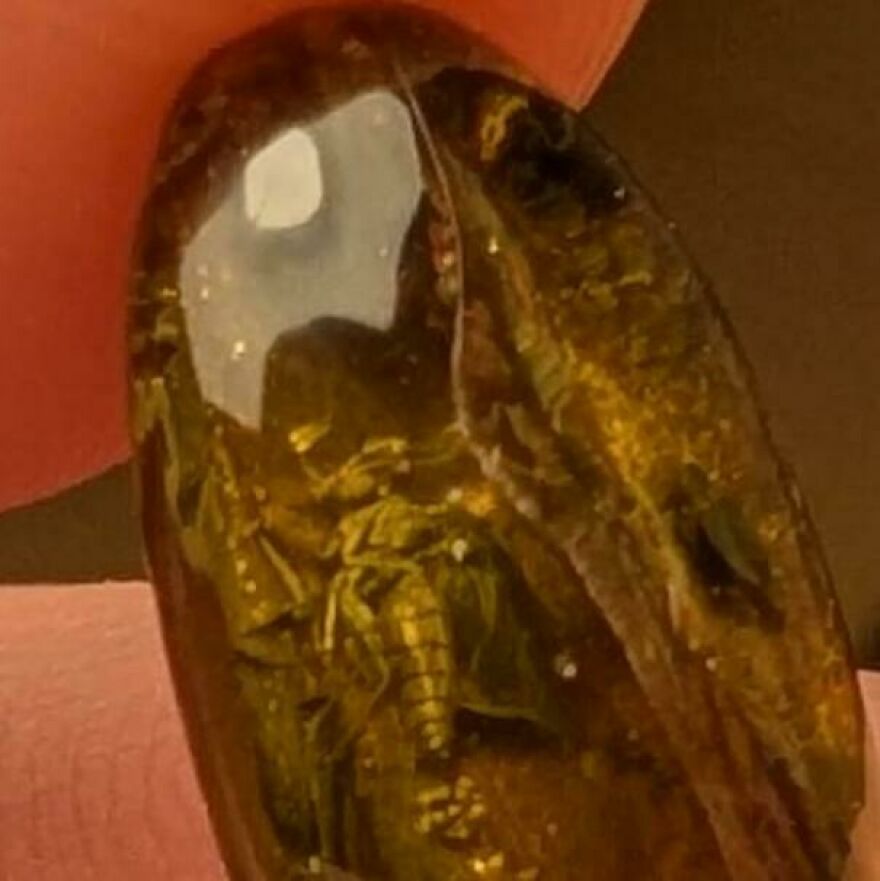
Looks like a robber fly
ChemDiesel:
Would those be fly eggs or poop just below it?
walnut-quinones:
There is not a way to tell for sure, but if you want a good story there is actually a pretty good chance those are eggs - that looks like a female if it is a robber fly, and lots of insects lay their eggs on instinct as they die. It's a highly conserved instinct for obvious evolutionary reasons. Congrats on the very cool amber!
I received this from my mom. She and my dad purchased it from a fossil/rock store going out of business in the late 80’s-early 90’s, for around $2k, if I can recall correctly. She had some info on location, which was lost during my parents’ divorce.
dafuqhappened666:
Appears to be an Oreodont skull.
Handeaux:
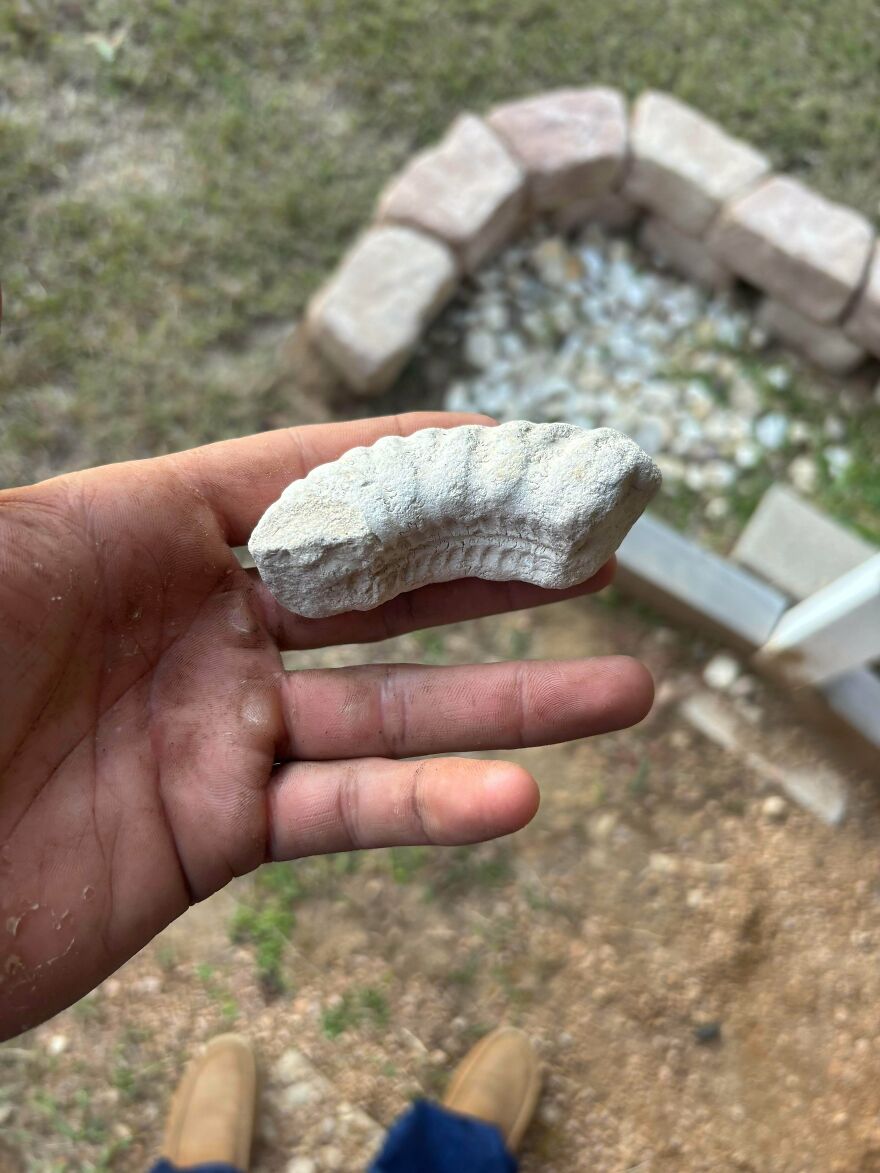
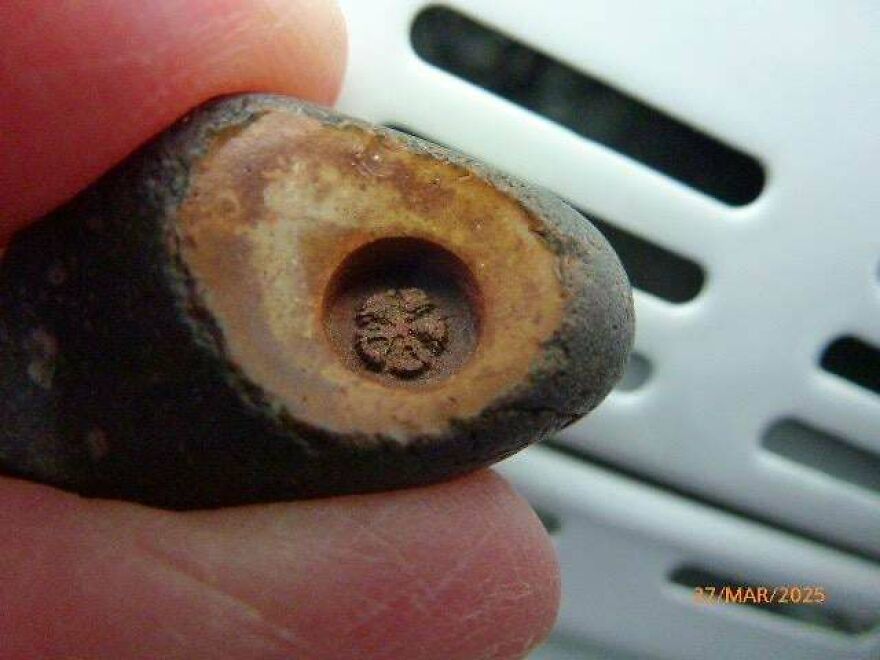
When you see five-fold symmetry like this, it’s usually an echinoderm of some sort. Maybe a crinoid columnal.
[deleted]:
Coryphodon trackways:
https://www.nature.com/articles/s41598-021-88412-3
NElwoodP:
Call your local natural history museum. No joke.
BloatedBaryonyx:
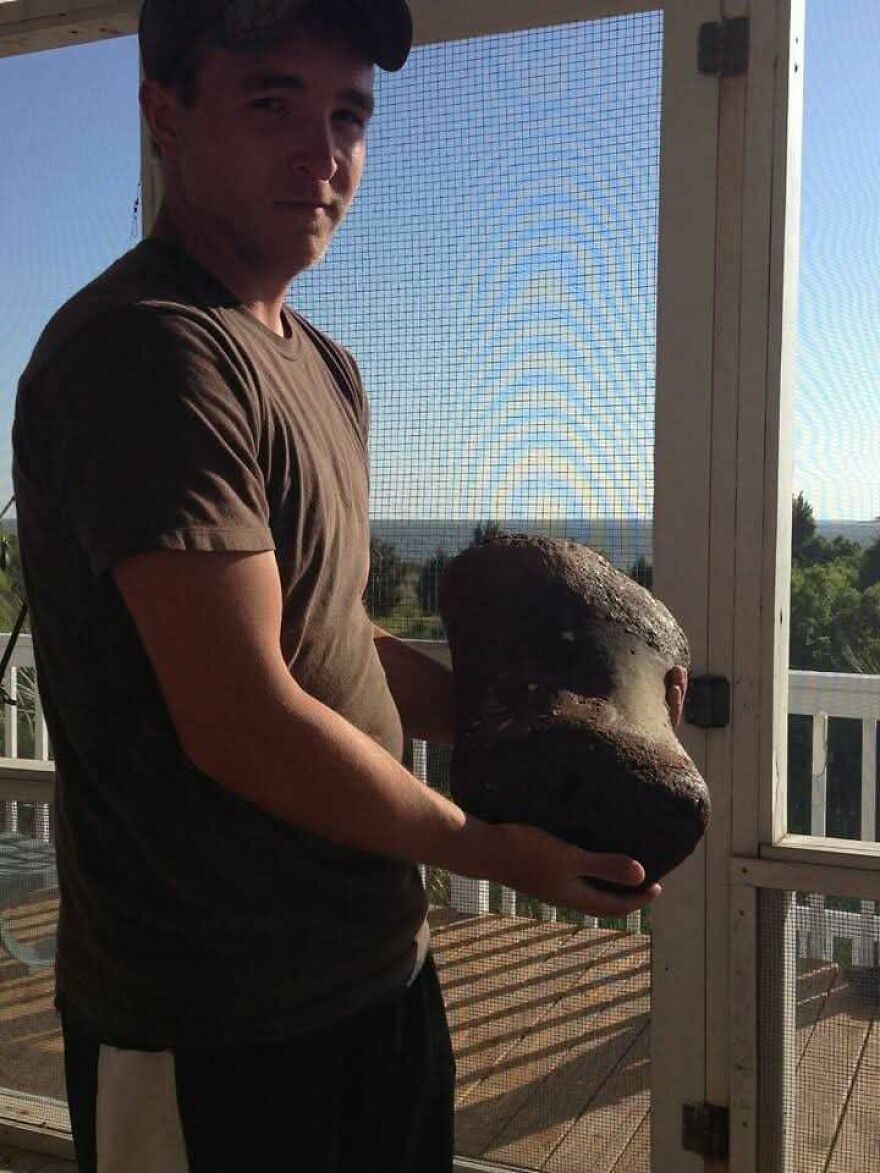
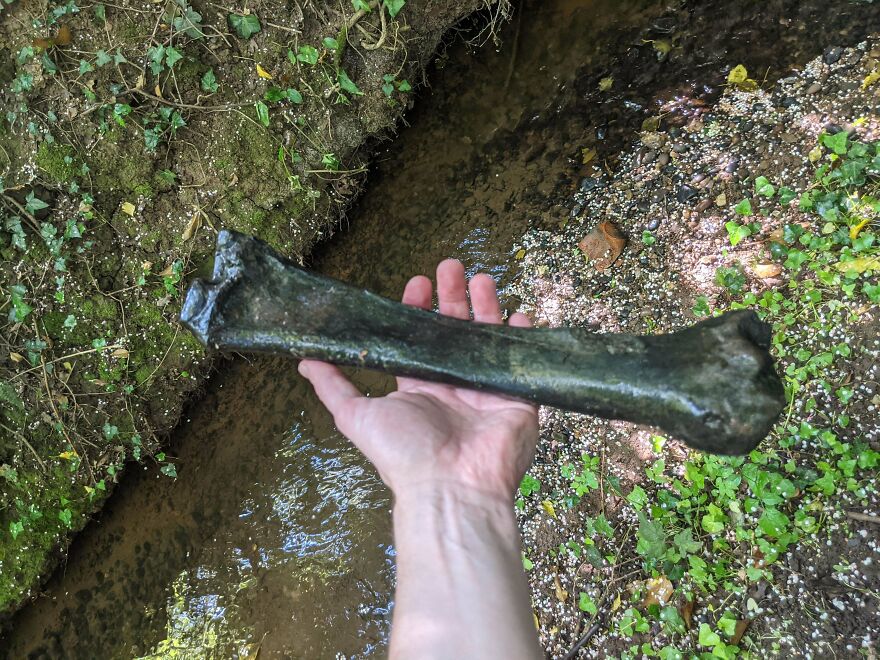
It's definitely a long-bone, which comes from the limbs. If it's the SC coast then there's a high likelihood of a Pleistocene marine source. Its definitely going to be late Cenozic at least.
Going by the shape and how dense the ends look, it's probably a humerus from some kind of cetacean. Lovely big bit of whale you've got there, somewhere in the region of 50000 years old.
BloatedBaryonyx:
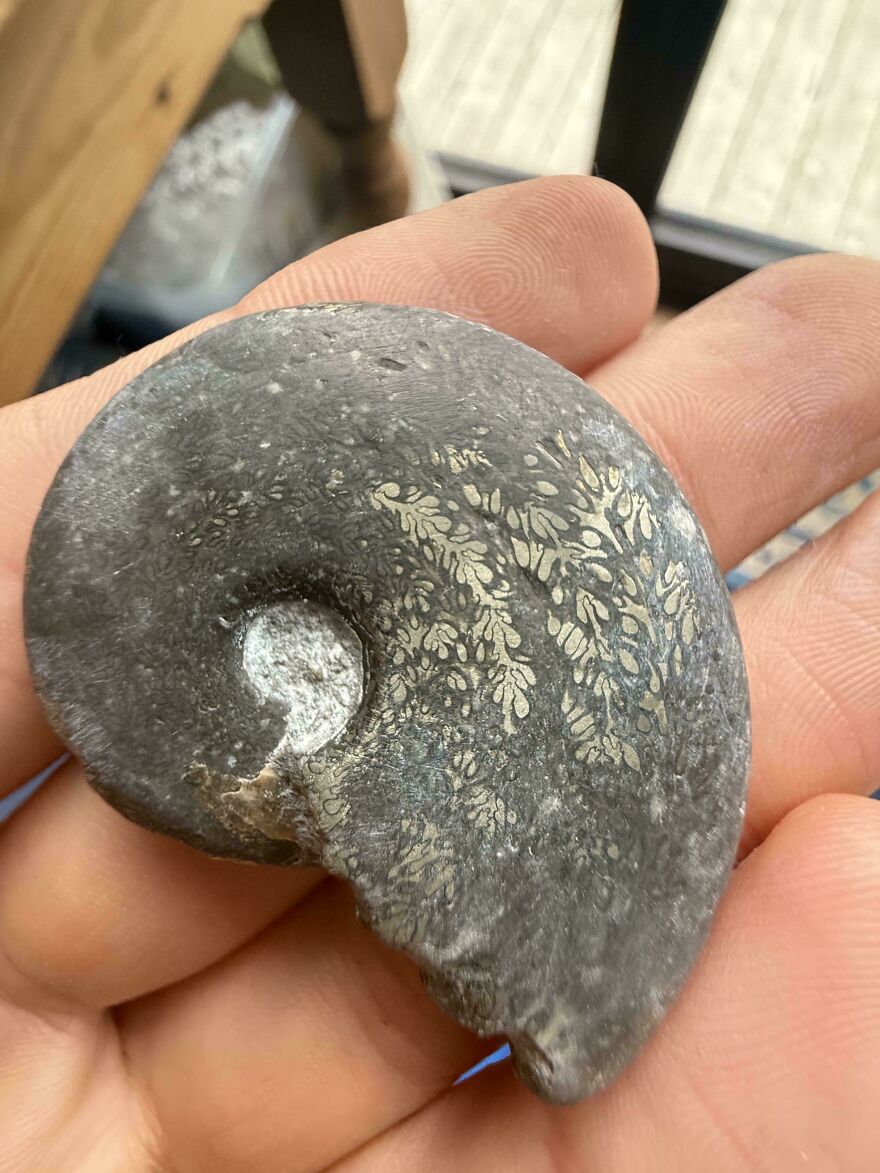
It's Tragophylloceras loscombi, which is indeed a species of ammonite. The patterns you're seeing are sutures, which are visible just under the outermost shell layer; they're a result of the complex internal chamber shape that is something diagnostic of ammonites. The exact suture pattern is unique to every species. Here's a picture I found highlighting the pattern. You've done a good job with this; it's often hard to get the sutures to appear so cleanly. I'd recommend using a combination of a tough brush (like a shoe brush or something similar) and a toothbrush with some water to get some of the tougher hardened mud off. The sandpaper is removing a little shell I'd imagine, but these really are lovely results.
magcargoman:
Looks like a horse radius to me
DangerousAddendum403:
I think you're right... It looks very much like this
Excellent_Yak365:
Interestingly enough, there are Pleistocene horse fossils that have been found in the UK and Ireland. The color and texture of this bone, I would personally bring it to a museum just because. Usually bones that get this dark are rotted and spongey if they aren’t preserved in some way.
Found near Moscow, Russia. Size of what is left is about 5x2 cm
e-wing:
Very cool straight shelled nautiloid! The middle tube is called the siphuncle, which connected the chambers in the shell to help control buoyancy. This appears to be an internal mold of the shell.
Tanytor:
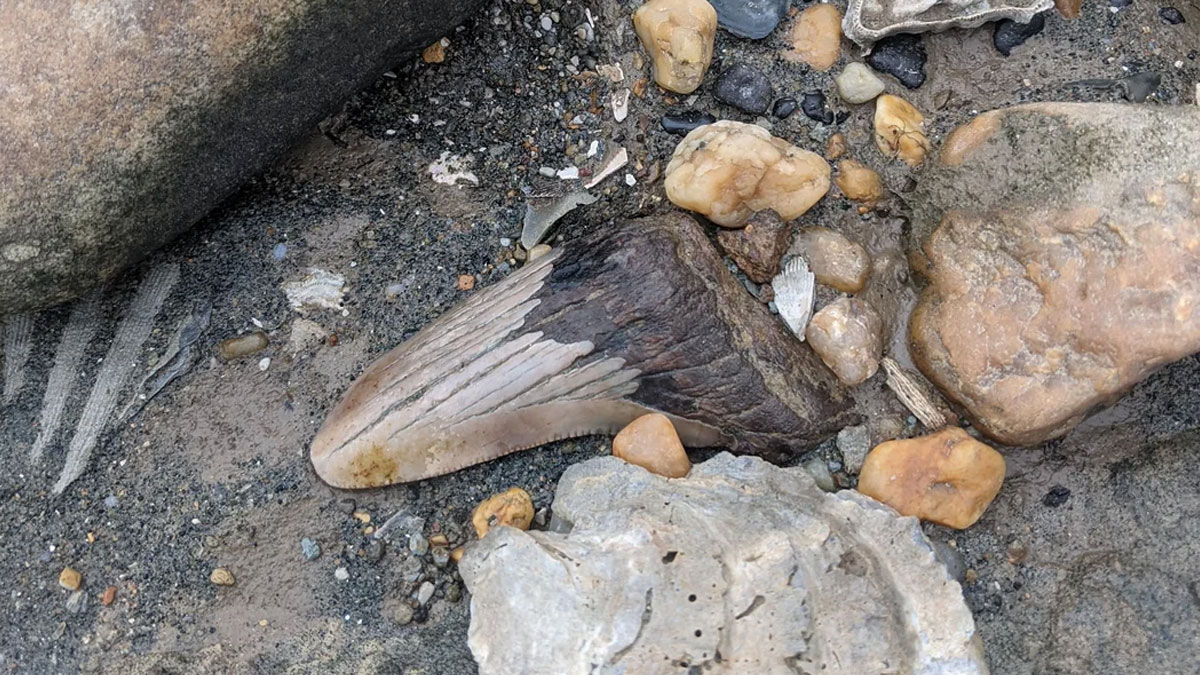
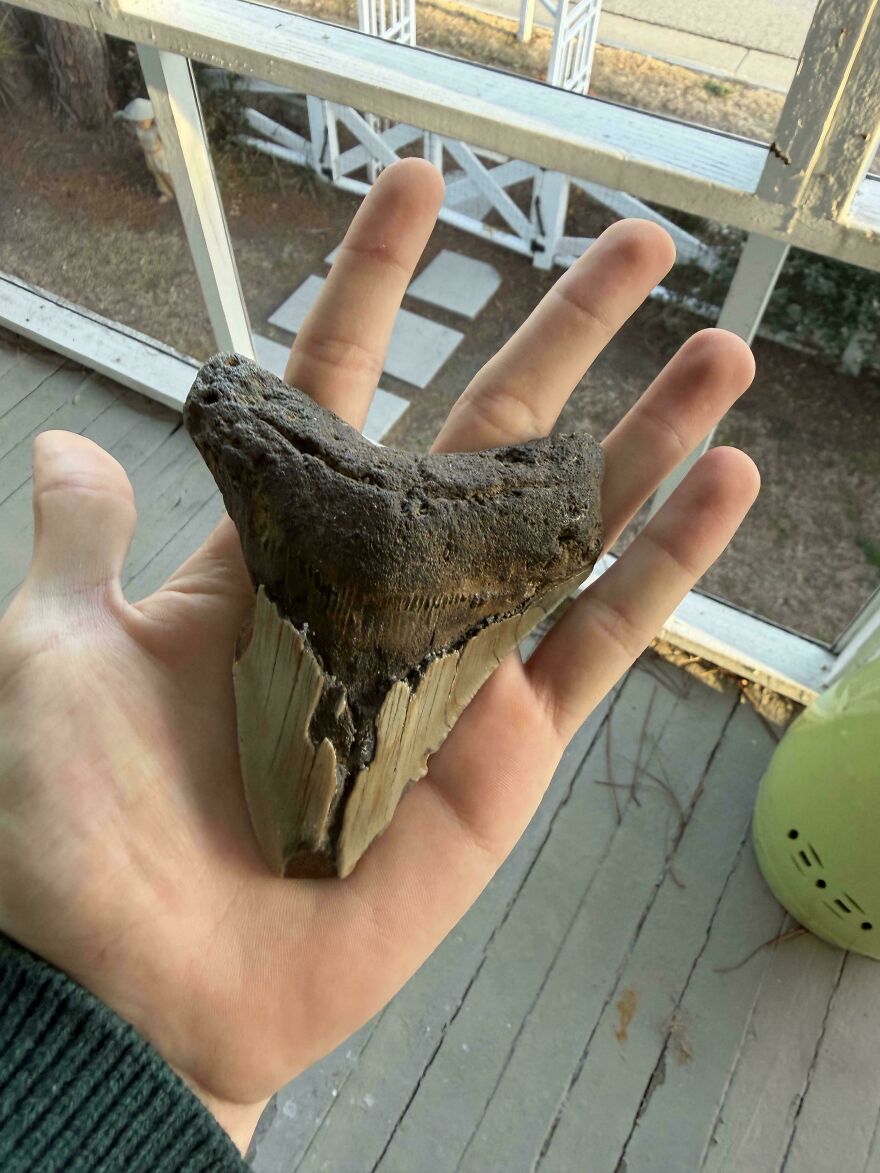
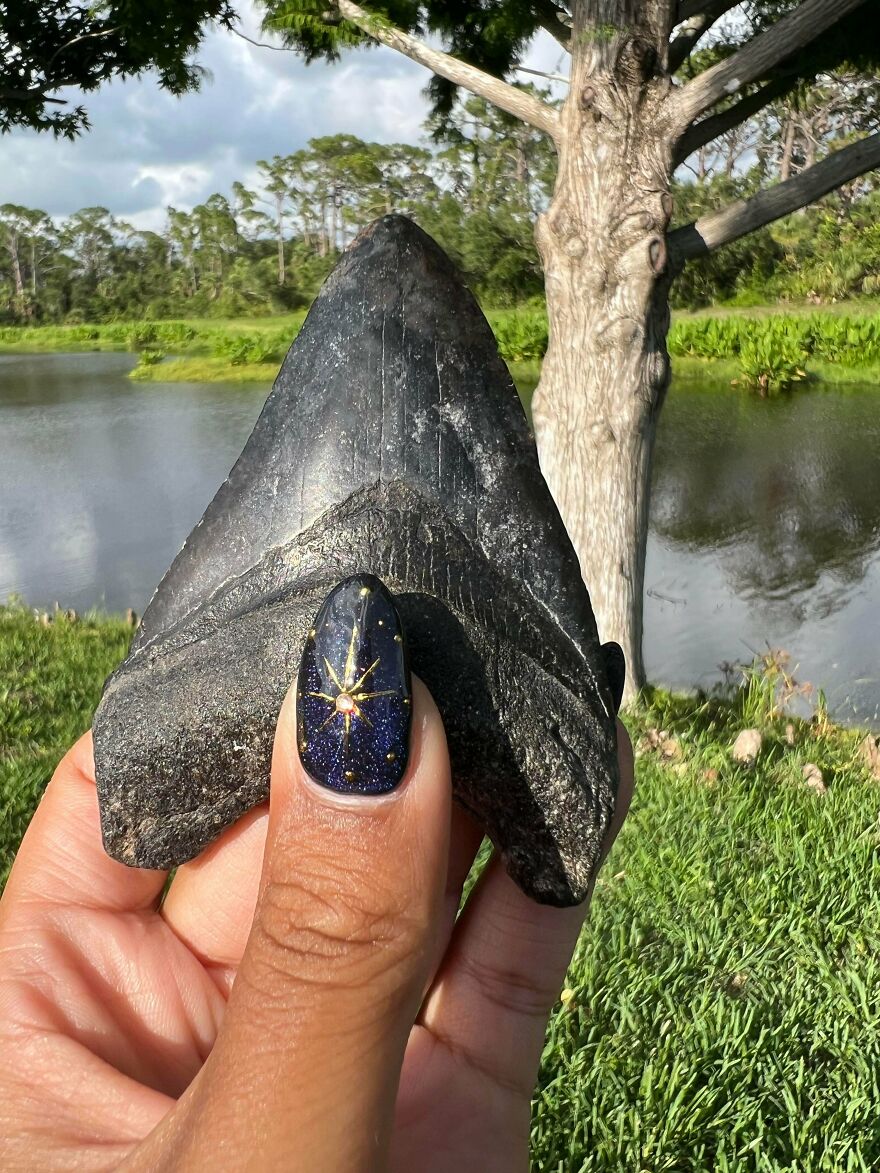
Megalodon. They are valuable when they are in very good condition and large but they aren’t rare overall. I believe a single megalodon would shed 40k teeth over the span of its lifetime. A beat up tooth like this would probably go for 50-100 $. Congrats on the find. Personally I think you should just keep this one
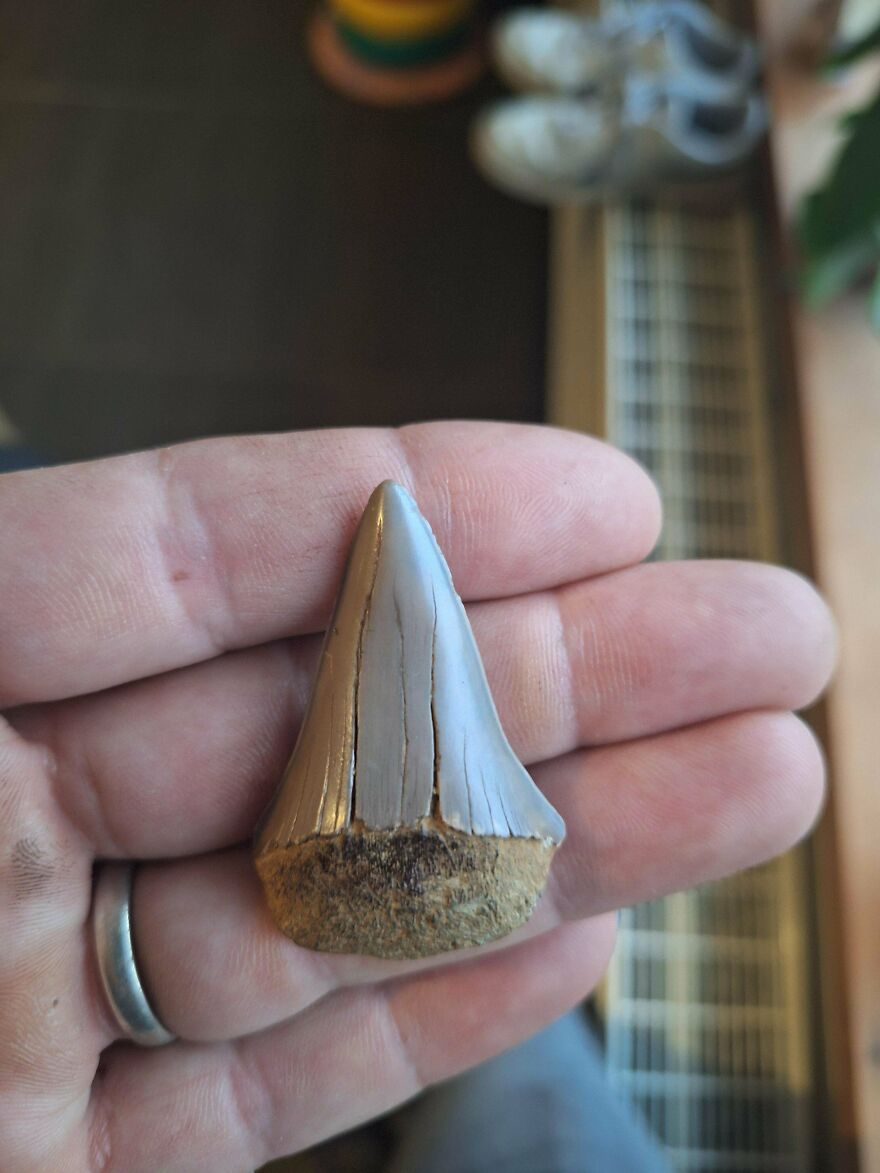
Found in the countryside in Belgium, about 150km from the North Sea. The tooth is 5cm long.
chiralityproblem:
Super cool tooth! My suspicion is an extinct giant Mako. Probably a great white ancestor like Cosmopolitodus Hastalis aka Giant White Shark aka Carcharodon Plicalitis.
Found on the beach in CA. It is almost 2 feet long
Linkylinkylinklink:
It's the cervical column and ribs of a small baleen whale. No species from here have been formally described, so the closest we can get to identifying it is Mysticeti indet. Upper Purisima formation (Pliocene in age)
Celebedelia:
Yes, should be Lepidodendron sp. bark. This one is really beautiful.
justtoletyouknowit:
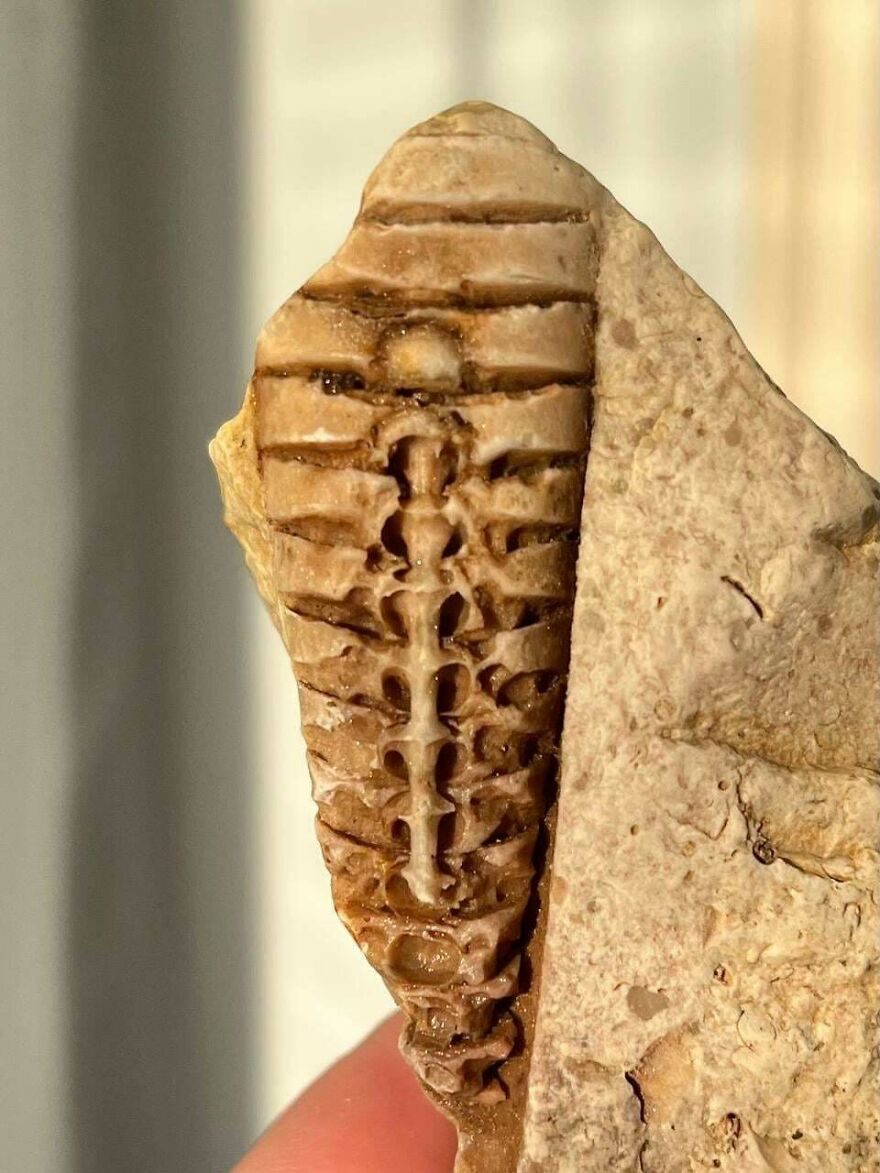
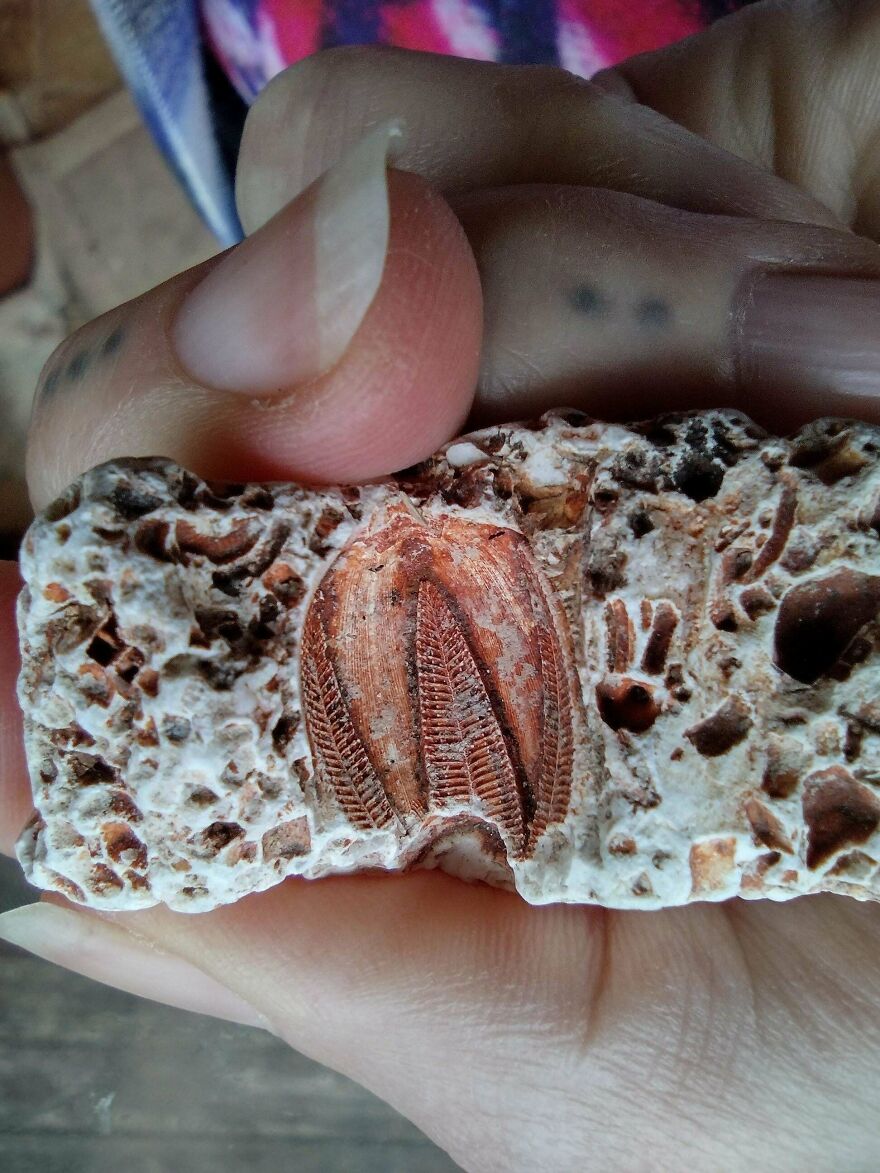
Thats the prettiest blastoid i've ever seen!
They often are found in close proximity to crinoids.
EventHorizonbyGA:
The replicas are typically much larger and look more like shiny bowling balls than rocks. That looks legit. And is quite a nice looking one. Congrats.
BiggS**ual:
These perfect specimens are a plenty around north end of Lake O about 10 ft under the ground surface is several feet the cleanest big whole specimens like this and many many other shallow salt water type fossils. Lake is very low now and you can see this shell layer in the canals. It is really awesome to pick around in.
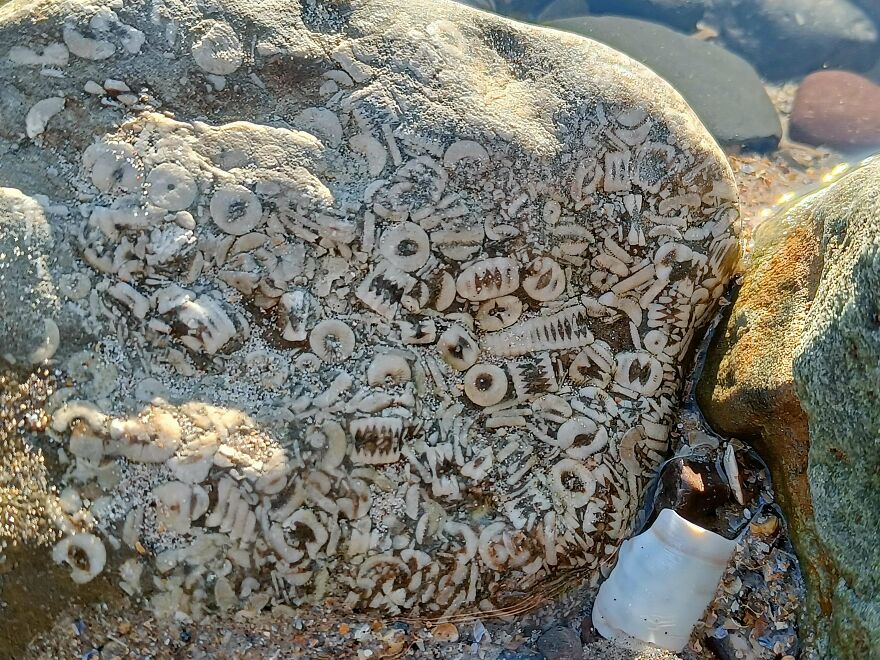
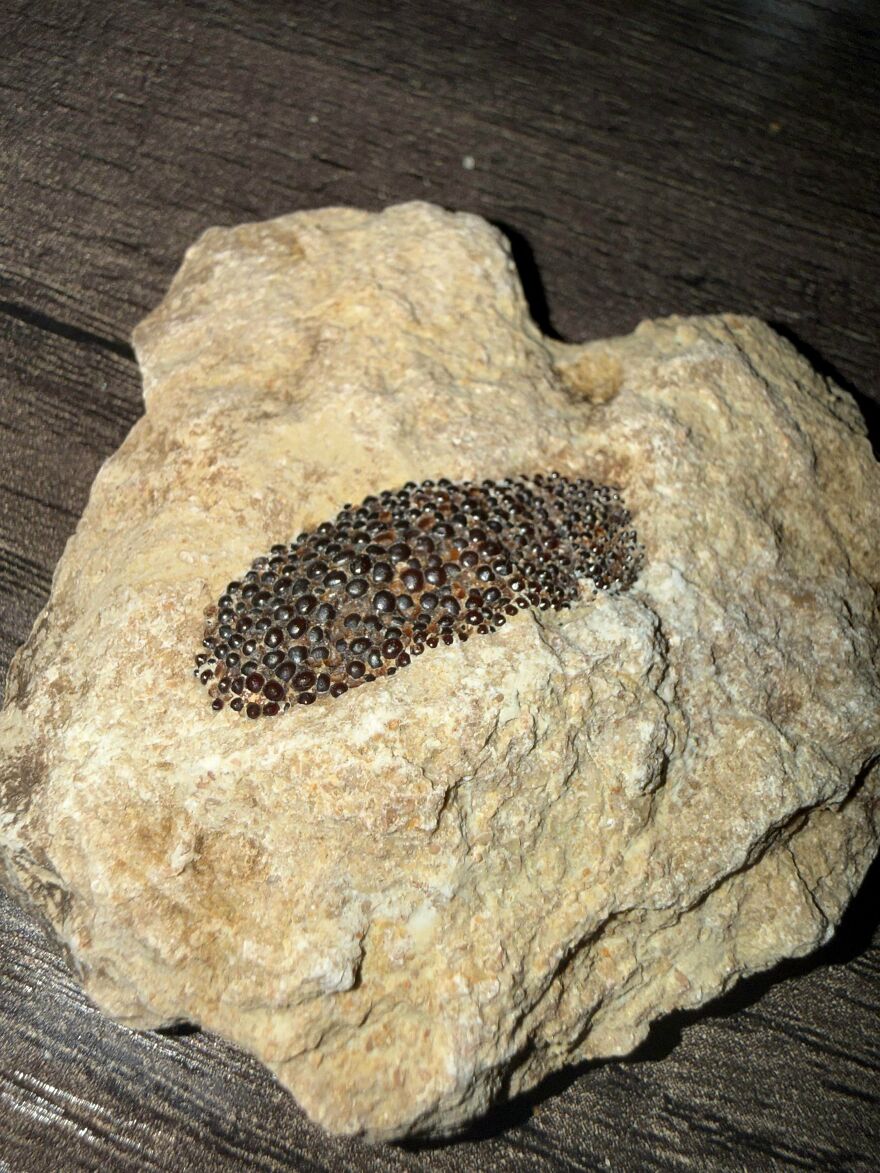
I found this rock in a central Texas creek bed and noticed it had a cool texture on it. Is this a fossil of something like a plant anther? Or is it just a cool mineral?
BloatedBaryonyx:
That's an incredible find! You've got an entire, complete, mouth-plate from a type of durophagous (crushing-eating) fish. All of those rounded blobs are their own tooth, and they grew strategically interlocked inside the entirely of the animal's mouth and occasionally some of its throat- not just on the outside rim like us or dinosaurs.
I agree that the clear chalk deposit + Texas location likely place this as Cretaceous - (somewhere 100 - 110 million years old)
I do think it's within the Pycnodonte, but that group tended to have organised rows of long and short teeth, but they were generally the dominant durophages of their weight class. On consideration I'd call this Anomoeodus.
amt346:
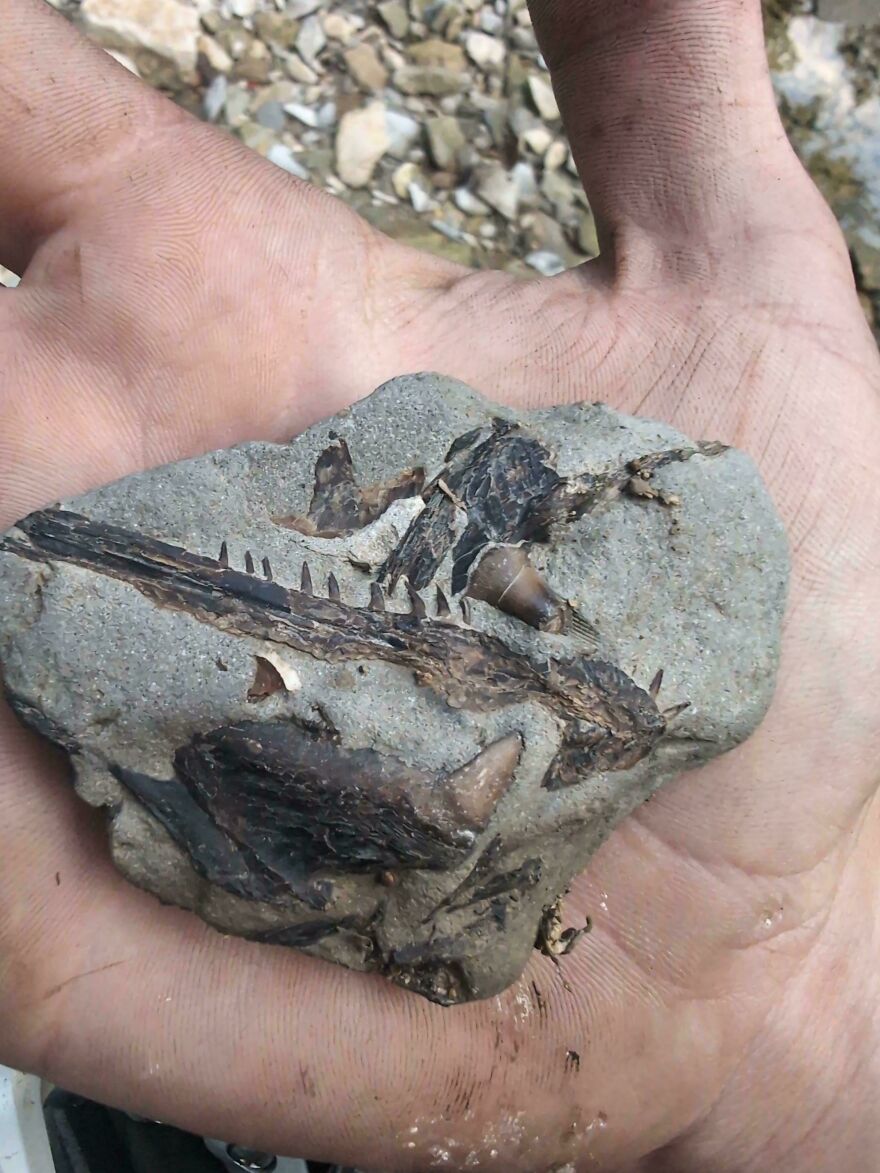
I think Enchodus is the answer and I don't necessarily think there is more than one species or multiple animals here.
The two larger teeth are the "fangs" that Enchodus typically have and one key identifier for me are the grooves circled, they are typical in those Enchodus fangs.
In summary, I think you have a partial jumbled up Enchodus skull.
I had to look this up. A bony fish from the late Cretaceous.
Schoerschus:
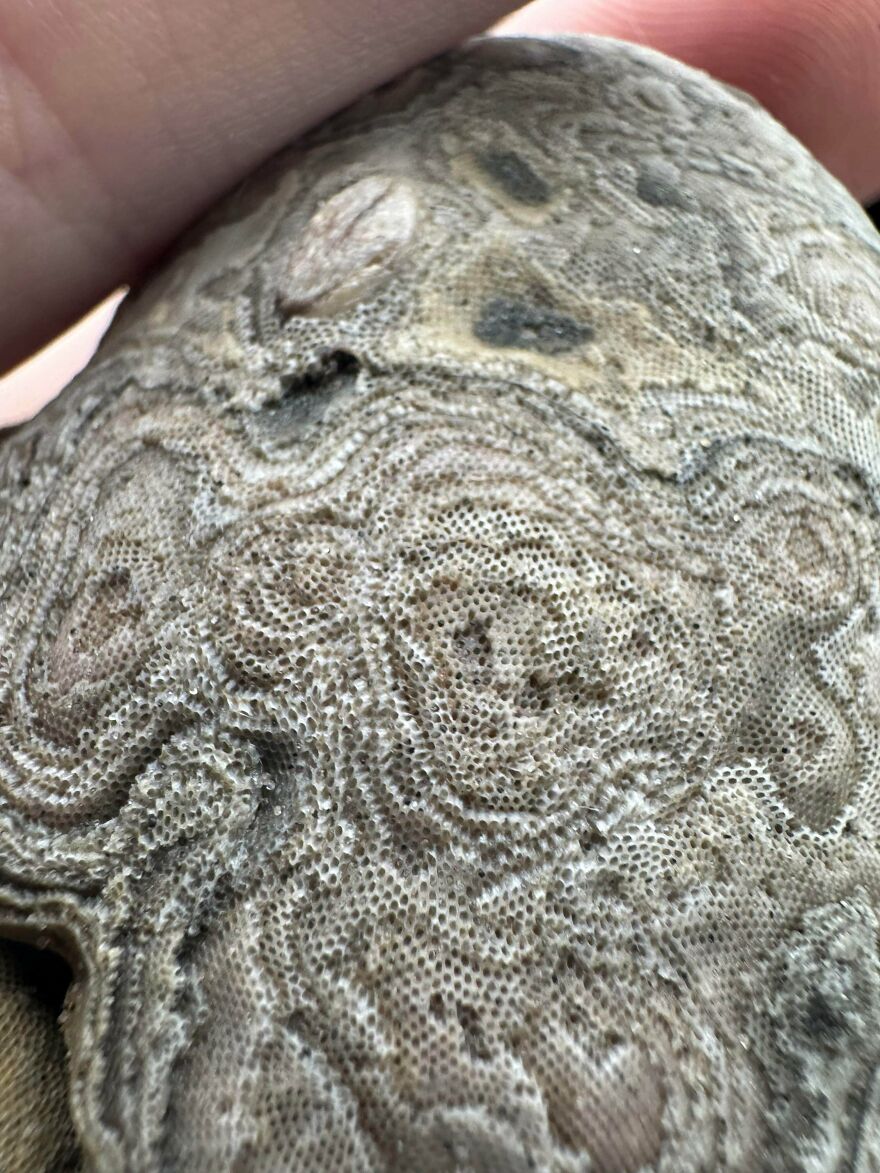
whao, really amazing bryozoan colony. I would say recent, not a fossil
USBrock:
Looks like a walrus tusk and partial jawbone.
During the last ice age it seems like NJ was part of the range walruses could be found.
Calm-Wedding-9771:
Part of a mammoth jaw
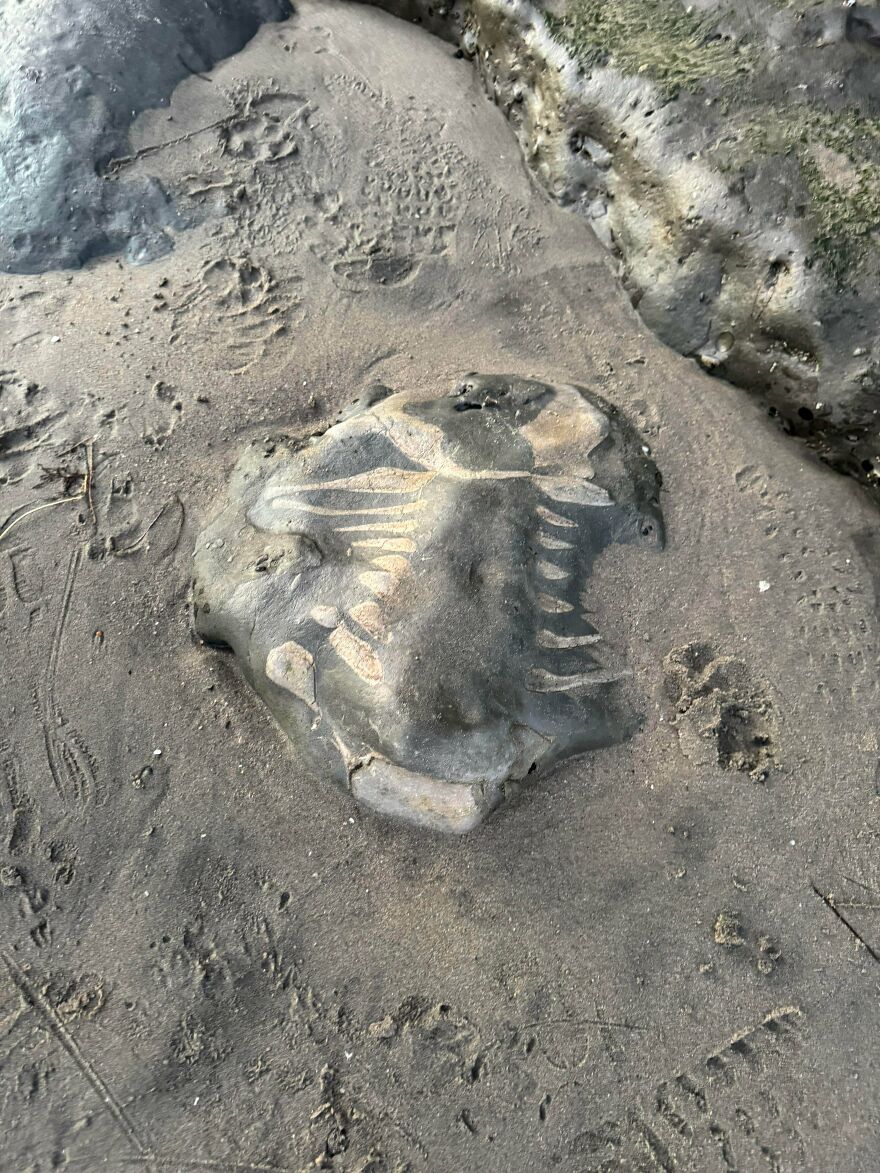
Found this right outside of northern Winnipeg. Anyone have any idea what it is?
Extension_Fact_9104:
Not a lobster. Possibly some older sea scorpion? Need age of the rock to have an accurate ID
thanatocoenosis:
It's a glabella and fixigena from a trilobite. Unfamiliar with what is found in Sweden, but the lobes and shape of the fixigena(gonatoparian) suggests it's one of the phacopids.
AllMightyDoggo:
Nice find, cetacean. I would assume Miocene or the latest Pliocene. Vertebrae on their own are harder to identify, though they have some distinguishable features. I would see if there are any significant paleontological publications on the area. That might get you a start on the fossils found in the area, and what it may be from.
lastwing:
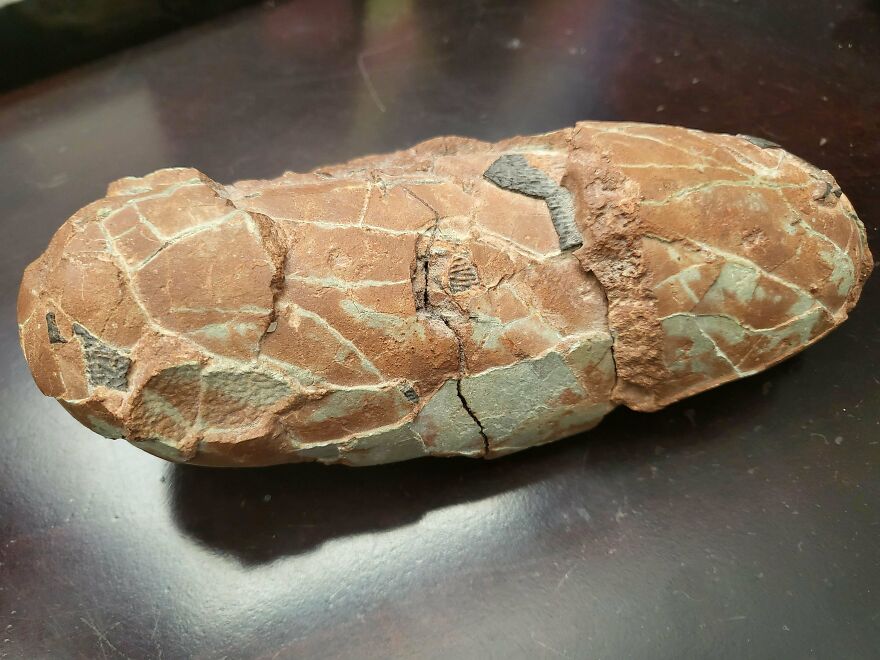
Because this was found in the Ozarks, we can rule out the possibility of this being a fossilized egg. The geology of the Ozarks is far too old to have a fossilized egg.
tchomptchomp:
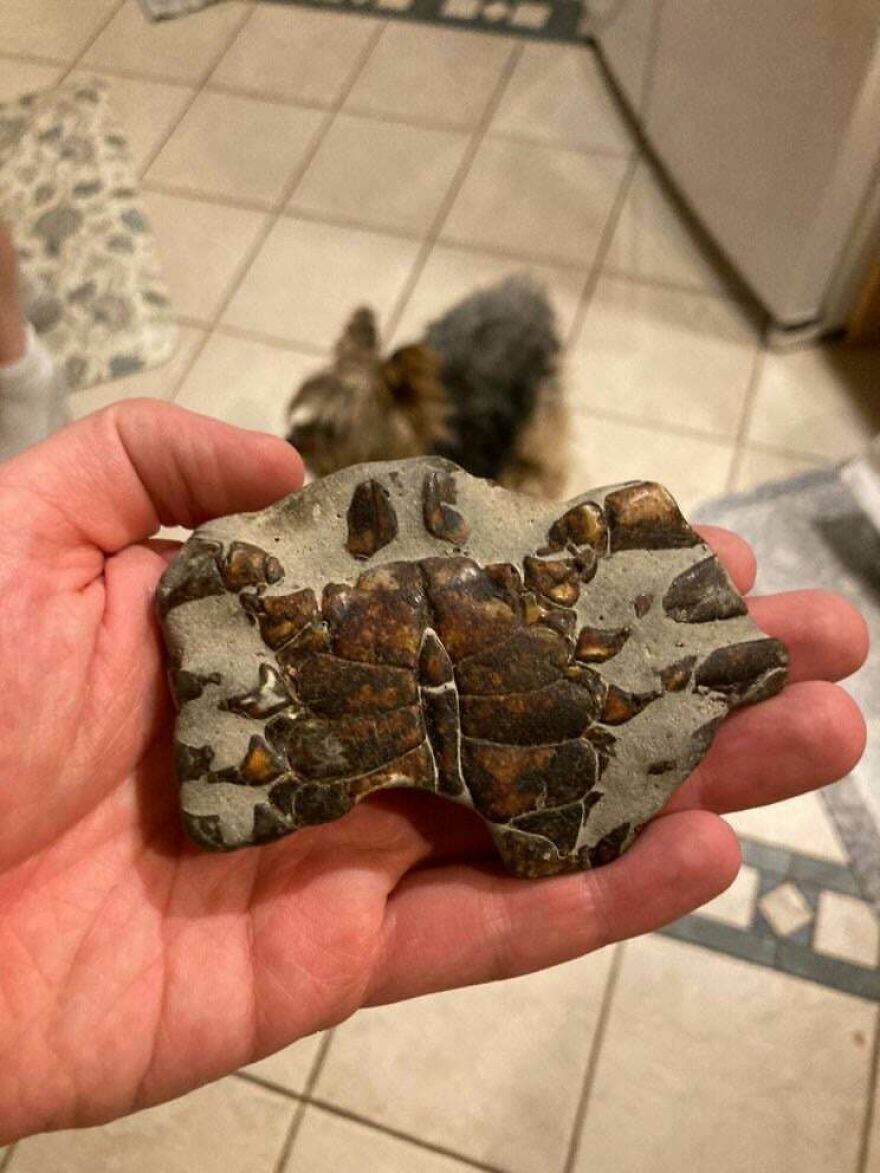
Fossil crab. Nice one, too. I'm not familiar with the crab literature but this might be worth taking in to the American Museum and getting someone to look at it.
Plasticity93:
A male crab, the tail is narrow, females have wide tails to hold eggs.
That's an awesome find, I hope there's enough for a full ID.



































 No fees, cancel anytime