Get Premium
Dark mode theme is available exclusively for premium users. Learn more about the benefits of subscribing.
No fees, cancel anytime.

 Dark Mode Ad-Free Browsing Unlimited Content
 Ad-Free Browsing Unlimited Content Dark Mode
Join 1.2 million Panda readers who get the best art, memes, and fun stories every week!
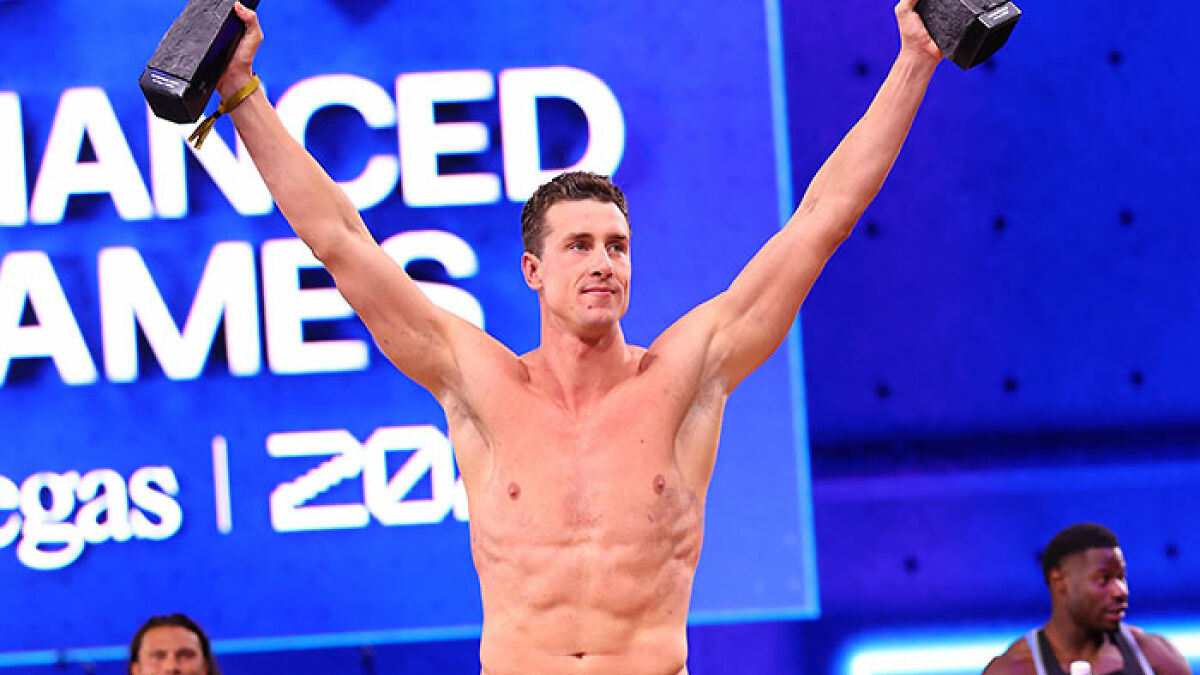

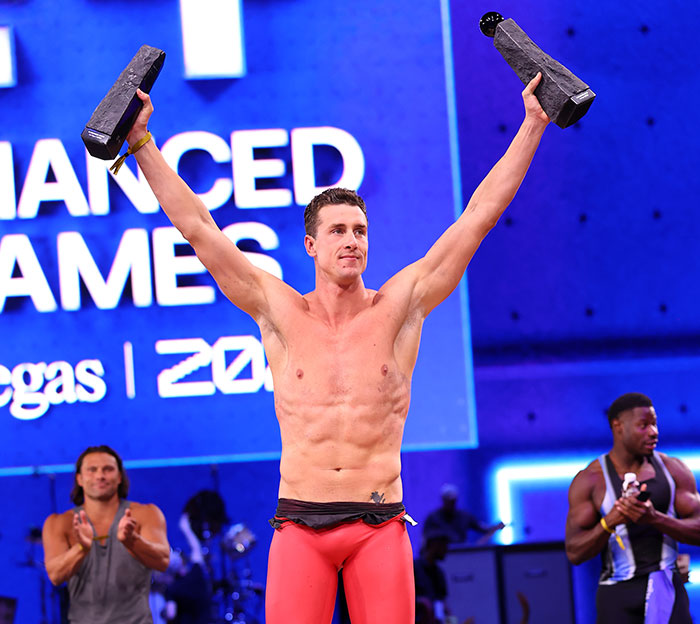
The world’s first-ever “Steroid Olympics” promised a futuristic revolution in sports.
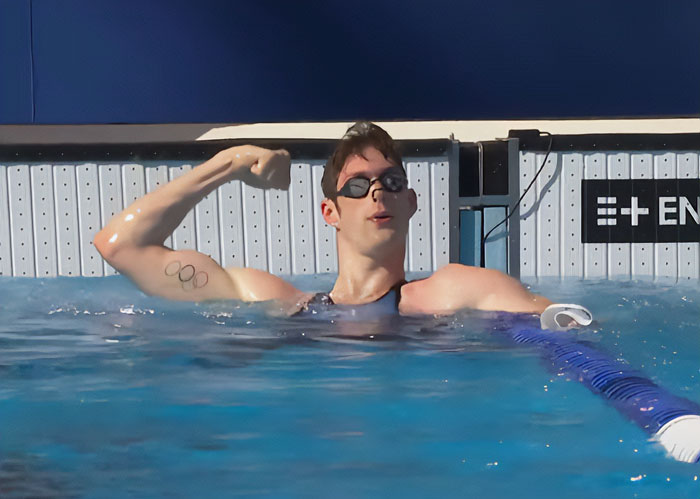
Founded by Australian entrepreneur Aron D'Souza, backed by billionaires, and openly encouraging athletes to use performance-enhancing substances under medical supervision, the inaugural Enhanced Games in Las Vegas on May 24, 2026, marketed itself as a bold experiment designed to unlock “superhuman” potential.
The event’s leadership repeatedly defended the concept as a scientific evolution of modern athletics.

Image credits: Enhanced Games
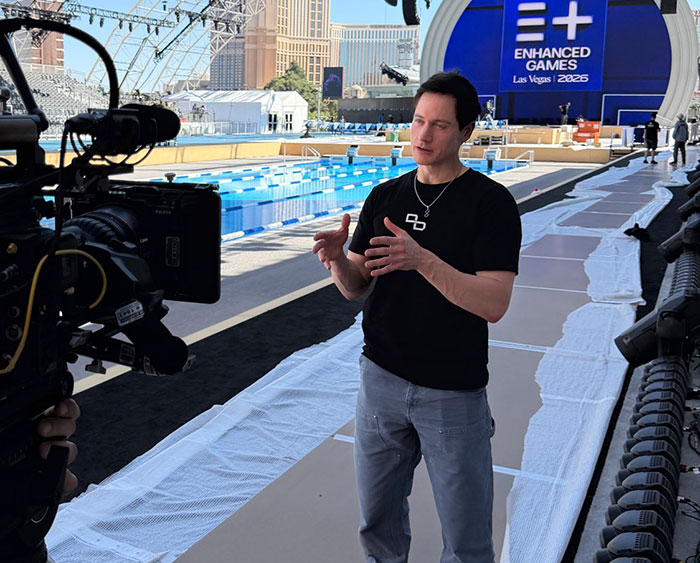
Enhanced Games CEO Maximilian Martin argued that enhancement was already normalized across other industries.
“If you look at Hollywood, every actor is enhanced,” Martin said while speaking to FOS. “If you look at some of the top executives in the world, many of them are openly enhanced.”
But athletes, according to Martin, are “the people that actually need it the most, because being an elite athlete is so taxing on your body,” yet remain prohibited from using the medicine.
“Science is the biggest asset we have as a society. So let’s make use of it.”

Image credits: Enhanced Games
Massive cash prizes, including a reported $1 million bonus for any broken world record, helped attract former Olympians, professional swimmers, sprinters, and strength athletes willing to participate in the unprecedented experiment.
But instead of delivering superhuman sporting history, the inaugural event quickly spiraled into one of the internet’s most awkwardly viral sports spectacles of the year.
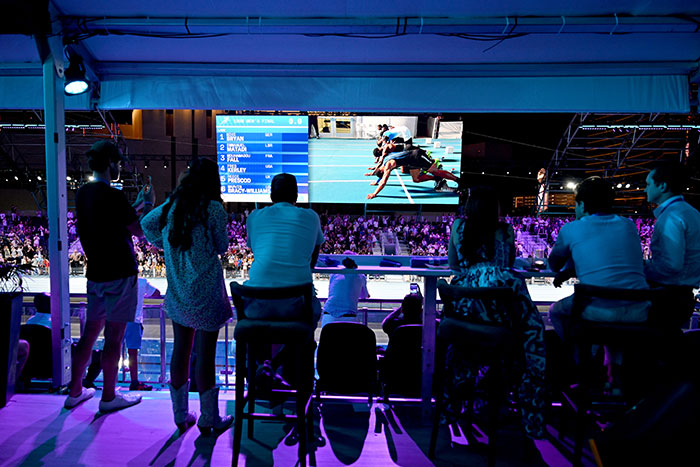
Critics mocked the competition’s sparse crowd, low-budget atmosphere, and heavily hyped athletes who failed to deliver the record-shattering performances organizers had promised.
In one of the event’s most embarrassing moments, retired Australian swimmer James Magnussen, who reportedly came out of retirement chasing a multimillion-dollar incentive, finished well behind expectations despite openly embracing enhancement protocols.

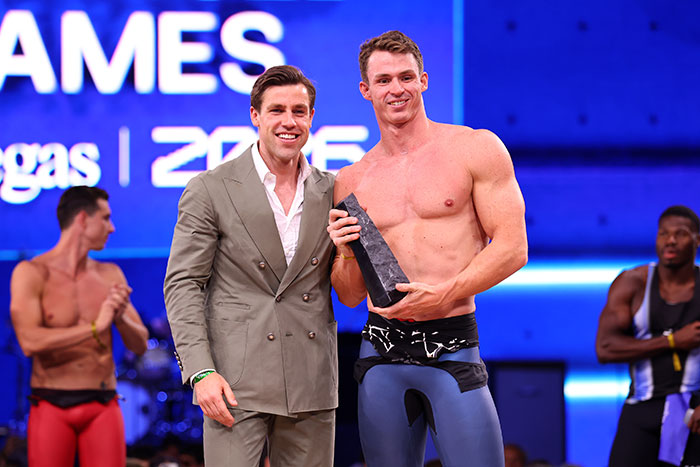
Image credits: Enhanced Games
Meanwhile, several “clean” athletes ended up outperforming enhanced competitors entirely, fueling widespread online ridicule.
Olympic bodies, including the International Olympic Committee and the World Anti-Doping Agency, had already condemned the event as dangerous and unethical before it even began.
But after the disappointing results, many critics began to describe the games less as a sporting revolution and more as a bizarre “humiliation ritual” for many participants.
From failed world-record attempts and uncomfortable interviews to chaotic production mishaps and athletes becoming instant memes, here are the most awkwardly viral moments from the controversial Enhanced Games.
This post may include affiliate links.
Hunter Armstrong, a two-time Olympic gold medalist and former world-record holder in the 50-meter backstroke, unexpectedly became one of the breakout stars after defeating multiple medically enhanced competitors while competing completely clean.
The 25-year-old American swimmer had already built an elite reputation in traditional competition after winning Olympic relay gold medals at both the Tokyo 2020 and Paris 2024 Games.
However, his participation in the heavily criticized “Steroid Olympics” instantly sparked controversy because Armstrong openly refused to use performance-enhancing substances despite entering an event designed around them.
“I will be competing as an unenhanced athlete,” Armstrong stated ahead of the competition.
“I’m here to compete, I’m here to win, and most importantly, I’m here to swim fast.”
At the Resorts World Las Vegas event, Armstrong competed as a “non-enhanced” athlete, meaning he continued to comply with traditional anti-doping standards and passed dr*g tests throughout the competition.
Despite remaining clean, Hunter completely outperformed several rivals who reportedly spent months using medically supervised human growth hormones.
His biggest triumph came in the 50m backstroke, where he dominated the field with an impressive 24.21-second finish that secured him the $250,000 first-place prize.
He also placed second in the 100m freestyle, comfortably beating Enhanced Games poster athlete James Magnussen, who had openly admitted to undergoing 18 months of enhancement protocols.
Congratulations to non-enhanced athlete, Hunter Armstrong, on taking 1st in the Men's 50m Backstroke. pic.twitter.com/cCEDYVi6Jo
— Enhanced Games (@enhanced_games) May 25, 2026
Bryan Johnson became one of the most talked-about figures of the Enhanced Games after a post-event interview defending the competition’s disappointing results immediately went viral online.
The ultra-wealthy tech entrepreneur and longevity influencer served as both an investor and the lead “Human Enhancement Analyst” for the official broadcast team in Las Vegas.
Johnson is widely known for selling payment startup Braintree Venmo to PayPal for $800 million in 2013 before reinventing himself as the face of the anti-aging movement through his extreme “Project Blueprint” lifestyle, where he reportedly spends millions annually attempting to reverse his biological age.
Because the parent company behind the Enhanced Games markets enhancement therapies and longevity treatments directly to consumers, Bryan was brought in to lend scientific credibility during the broadcast.
However, controversy erupted after he was asked why the heavily enhanced competitors failed to produce the wave of historic world records that organisers had repeatedly promised before the event.
Rather than acknowledging the disappointing outcomes, Johnson insisted the competition should still be viewed as a success.
“People came into today expecting world records to drop,” he explained during the interview.
“These athletes had a training camp for four months and were only able to enhance for two months. This is a baby step into a new world.”
He continued, “It’s not a defeat. It’s proof you can enter a protocol with clinical oversight and enhancers in a measured way.”
“It is a victory that they’re opening up the possibility that substances can be used in a measured way in sporting events.”
The explanation immediately triggered backlash online, with many viewers accusing Bryan of desperately trying to spin the event’s failures into a positive narrative.
One critic mocked, “Excuses! The whole event was a flop. Probably crying not enough 17 year old boys signed up for their ‘enhanced’ TRT telehealth scheme.”
Others questioned why the competition spent months hyping “superhuman” performances if organizers later planned to describe the disappointing results as merely an experimental first step.
Fred Kerley, the world-class American track-and-field sprinter and one of the most decorated short-sprint athletes in modern athletics, boldly promised viewers that Usain Bolt’s legendary 100-meter world record of 9.58 seconds was finally about to fall.
Kerley achieved global stardom after winning silver in the 100m at the 2020 Tokyo Olympics, bronze in the 100m at the 2024 Paris Olympics, and gold at the 2022 World Athletics Championships.
Ahead of the controversial Las Vegas event, he repeatedly hyped the possibility of a 9.4-second sprint on social media while chasing the competition’s massive $1 million bonus.
“It’s going to be destroyed,” Fred confidently declared shortly before the event.
However, one of the strangest twists surrounding his campaign was that Kerley insisted he planned to accomplish the feat completely clean, despite competing at an event built entirely around performance enhancement.
“I don’t need it. God gave me fast feet for a reason. Dr*gs aren’t going to give you an advantage if you’re not putting the work in,” he said in an interview.
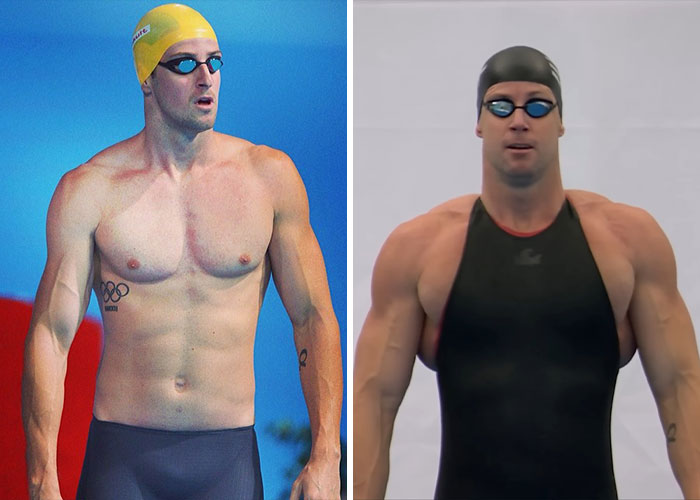
At the same time, Fred heavily trolled both fans and anti-doping authorities online by posting AI-generated hyper-muscular images of himself ahead of the races.
Fred Kerley 🇺🇸 runs 9.97s (-0.3) to win the men's 100m final at the Enhanced Games.
This was supposed to be a 100m World Record attempt.pic.twitter.com/JiJ2d4BnF3
— Track & Field Gazette (@TrackGazette) May 25, 2026
Ben Proud, the elite British sprint swimmer and 2024 Paris Olympics silver medalist in the 50m freestyle, became one of the most controversial faces of the Enhanced Games after walking away from traditional swimming to pursue the event’s enormous financial rewards.
A multiple-time World and European Champion, Proud joined the private event in September 2025, after officially retiring from dr*g-tested competition, fully aware the decision would likely result in a lifetime ban from World Aquatics and the immediate loss of his UK National Lottery funding.
Ben openly admitted the financial incentives played a major role in his decision, noting that winning a single Enhanced Games event offered more prize money than years of success in traditional swimming.
At the Las Vegas debut, he entered as one of the event’s marquee headliners and immediately generated headlines after narrowly missing a world record while openly competing under enhancement protocols.
The British swimmer won the men’s 50m butterfly final with an impressive 22.32-second finish.
However, the time fell agonizingly short of the official world record of 22.27 seconds held by Andrii Govorov.
Because of the narrow miss, Proud secured the standard $250,000 first-place payout but lost out on the event’s much larger $1.25 million world-record bonus.
A visibly frustrated Ben admitted afterward to reporters, “We all know what we came for. And that’s world records. And so to be that agonizingly close, it’s frustrating.”
His participation immediately triggered backlash from anti-doping organizations, including World Anti-Doping Agency and UK Anti-Doping, both of which criticized the Enhanced Games as a dangerous and reckless experiment.
Critics particularly slammed Proud for helping normalize the use of performance-enhancing substances in elite sports.
Despite the controversy, Proud defended his decision and insisted his traditional swimming career had been achieved cleanly.
He framed the Enhanced Games as an opportunity to safely explore the outer limits of athletic performance in a medically controlled environment.
The inaugural Enhanced Games attempted to launch with the kind of spectacle typically associated with major international sporting events, but the bizarre opening ceremony quickly became one of the competition’s most mocked viral moments online.
Instead of immediately focusing on the athletes and controversial performances, viewers were greeted with a flashy EDM concert headlined by Alan Walker, complete with break dancers, live violinists, and dramatic visuals.
The entertainment lineup also included Farruko, while legendary Las Vegas rock band The Killers later headlined the closing ceremony festivities. DJ Ruckus was additionally brought in to perform at the official afterparty.
However, the high-energy production immediately drew ridicule online, as many viewers felt the sequence clashed awkwardly with the competition’s visuals.
While dancers flipped through the air and violinists performed beside booming electronic music, athletes stood awkwardly in rigid lines, waiting for the ceremony to finish.
Why is there a random DJ set and performative acrobatics in our steroid olympics? LMAO pic.twitter.com/R1zlue5fLM
— Autism Capital 🧩 (@AutismCapital) May 25, 2026
Enhanced Group Inc., the controversial parent company behind the Enhanced Games, suffered a brutal market collapse almost immediately after the debut event failed to deliver the record-breaking performances organizers had promised investors.
Co-founded by Australian venture capitalist Aron D'Souza and CEO Maximilian Martin, the company was financially backed by billionaire investors, including Peter Thiel and Christian Angermayer.
Reportedly, unlike a traditional sports organization, Enhanced Group positioned itself as a biotech and healthcare marketplace built around performance enhancement, longevity treatments, testosterone therapies, supplements, and direct-to-consumer telehealth services.
The athletic competition itself largely functioned as a promotional vehicle for those products.
Just weeks before the inaugural Las Vegas launch, the company officially went public after completing a business merger with A Paradise Acquisition Corp.
On May 8, 2026, Enhanced Group debuted on the New York Stock Exchange under the ticker symbol ENHA with a heavily publicized enterprise valuation of approximately $1.2 billion.
Ahead of the games, investor hype briefly sent the stock soaring to an all-time high of $14 per share on May 6.
However, the optimism collapsed almost instantly once the competition began attracting widespread ridicule online.
Instead of producing “superhuman” performances, enhanced athletes largely failed to break major world records, while several clean competitors publicly outperformed their medically enhanced rivals.
Critics also mocked the event’s sparse audience, chaotic production issues, and low-budget atmosphere.
Within days of the disappointing launch, Enhanced Group’s stock reportedly crashed to an all-time low of just $3.56 per share, wiping out nearly 75% of its peak market value.
As of late May 2026, the stock reportedly remained stuck around the $5 range, leaving the company’s valuation severely damaged compared to the billion-dollar hype surrounding its debut.
James Magnussen, famously nicknamed “The Missile,” entered the Enhanced Games as the competition’s biggest headline attraction.
The retired sprint star won consecutive 100m freestyle World Championship titles in 2011 and 2013 and narrowly missed Olympic gold at the 2012 London Games by just 0.01 seconds.
His personal-best 47.10-second swim was once the fastest ever recorded in textile swimwear.
But after officially retiring in 2019 due to chronic shoulder injuries, Magnussen shocked the sports world by returning in 2024 as the very first athlete to publicly sign onto the Enhanced Games experiment.
Organizers reportedly promised him a staggering $1.4 million payout if he could break the official 100m freestyle world record while openly using enhancement protocols.
James, himself, fully embraced the controversy, previously insisting that critics would eventually understand the project.
“History will prove me right,” he told the Sydney Morning Herald. “I’m very confident in that. People will look back and go, ‘oh, it was ahead of the curve’. I’ve pushed in all my chips.”
To maximize his chances, Magnussen admitted to undergoing 18 months of medically supervised doping designed to improve recovery and muscle growth.
He also competed in a banned gold polyurethane “super suit,” the type outlawed by World Aquatics in 2009 because of its artificial buoyancy and speed advantages.
Despite all of that, Magnussen finished last in the four-lane 100m freestyle final with a time of 49.44 seconds, more than two full seconds slower than his natural peak from 2012.
The race was ultimately won by Kristian Gkolomeev, who swam a blistering 46.60 seconds and celebrated the life-changing payday afterward.
“It was a great race. I had a lot of fun,” Gkolomeev said after the victory. “It’s not bad at all [the prize pot]. It’s going to change my life for the good for sure. It will help me and my family.”
However, one of the most humiliating twists for the Enhanced Games came from Hunter Armstrong, an Olympic gold medalist who openly competed completely clean and still beat James with a 48.25-second finish.
Armstrong later revealed he only joined the controversial event because financial struggles left him with few options after losing sponsorship support.
He said, “If I don’t join Enhanced, I lose everything. My back was against the wall. I’m here to compete, I’m here to win, and most importantly, I’m here to swim fast.”
The outcome immediately sparked widespread ridicule online, with one critic writing, “Knew he weren’t good enough and still not good enough cheating. Absolute flops, and they will spend the rest of their lives thinking about it.”
Another user added, “I'm so happy seeing this. There is no room for doping in sports.”
A third netizen joked, “How are they going to call it enhanced games but non enhanced people are winning a majority of the events.”
“It's hilarious. Maybe he has to go get a real job now,” one comment read.
While some fans defended James, arguing, “Weird amount of outrage around this. He’s an Olympian he did it all.. blokes 35 now, it’s not like he’s going back to the Olympics any time soon.”
“To be fair, he is 35, that is past the prime of most athletes. Juice doesn’t beat Father Time.”
Kristian Gkolomeev became the only athlete at the inaugural Enhanced Games to break a world record, narrowly saving the controversial competition from complete humiliation after organizers had repeatedly promised a “superhuman” sporting revolution.
The Greek sprint swimmer delivered the lone historic result during the men’s 50m freestyle final, touching the wall in 20.81 seconds.
The swim edged past the official world record of 20.88 seconds previously held by Cameron McEvoy by just 0.07 seconds.
Because of the performance, Gkolomeev secured the event’s enormous $1 million world-record bonus on top of his $250,000 winner’s purse, earning one of the largest single payouts of the competition.
However, traditional governing bodies like World Aquatics will never officially recognize the swim due to the event’s open enhancement policies and the use of banned full-body polyurethane “supersuits.”
Outside of Kristian’s single breakthrough, nearly every other heavily hyped performance failed to live up to the event’s dramatic promises.
British swimmer Ben Proud missed the 50m butterfly world record by an agonizing 0.05 seconds, while Hafþór Björnsson, widely known as “The Mountain,” also failed in his heavily publicized attempt to break the deadlift world record after trying to lift 515 kilograms.
Moreover, several completely “clean” athletes still managed to outperform enhanced competitors, including Olympic swimmer Hunter Armstrong, who won the 50m backstroke.
The disappointing overall results triggered immediate ridicule online.
One critic wrote, “Only seven hundredths of a second faster despite all those advantages- pretty pathetic really isn’t it!”
Another netizen suspected, “They cannot break records because the doping techniques and dr*gs used by these non-professional athletes is no where as sophisticated or advanced as what the competitive athletes use.”

I didn’t even know about this stuff. Utterly ridiculous. That’s not how competitions work, people want to see real athletes who practiced a lot and not a bunch of dru.gged dudes. Glad to know it was a big flop


tech billionaires desperately trying to normalise and commercialize their increasingly unhinged and insightless personal behaviours and trying to mask their personal failings and fears behind getting others to do the same as cover. Utterly unhinged, insightless and bizarre behaviour fuelled by never hearing the word "No" or "You are an idiot who should just stick to buying cars and whores".
I didn’t even know about this stuff. Utterly ridiculous. That’s not how competitions work, people want to see real athletes who practiced a lot and not a bunch of dru.gged dudes. Glad to know it was a big flop
tech billionaires desperately trying to normalise and commercialize their increasingly unhinged and insightless personal behaviours and trying to mask their personal failings and fears behind getting others to do the same as cover. Utterly unhinged, insightless and bizarre behaviour fuelled by never hearing the word "No" or "You are an idiot who should just stick to buying cars and whores".


































 No fees, cancel anytime