We and our trusted partners use technology such as cookies on our site to personalize content and ads, provide social media features, and analyze our traffic. You can read more about it and change your preferences here.
Raising children is hard. And even when you do your best, things don’t always turn out the way you hoped.
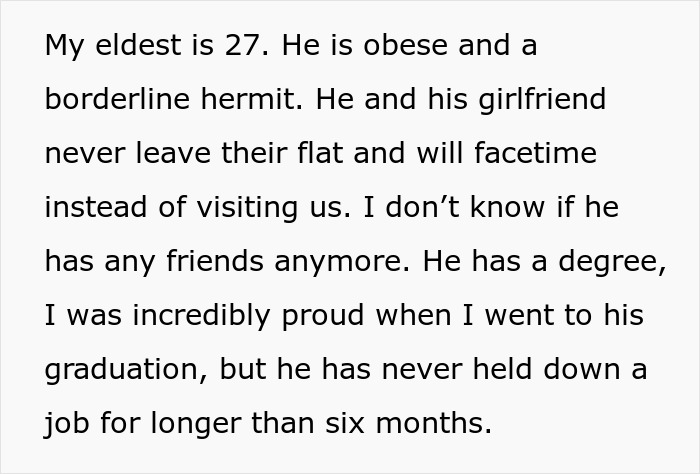
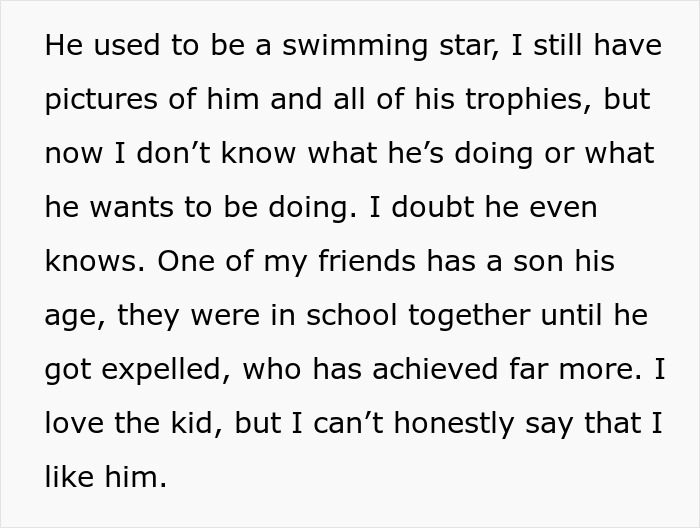
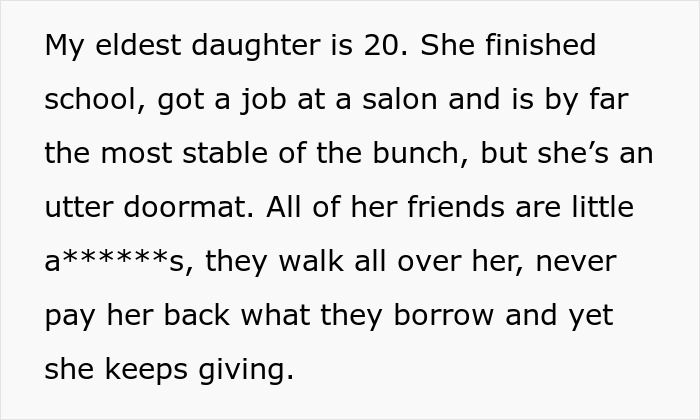
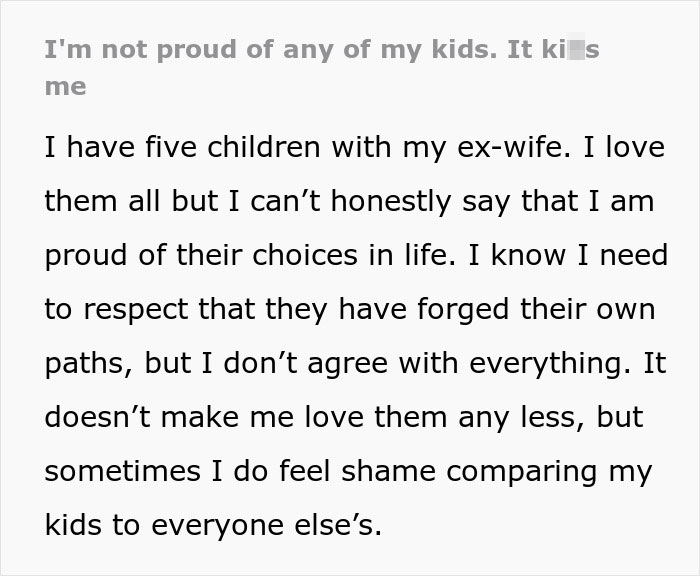
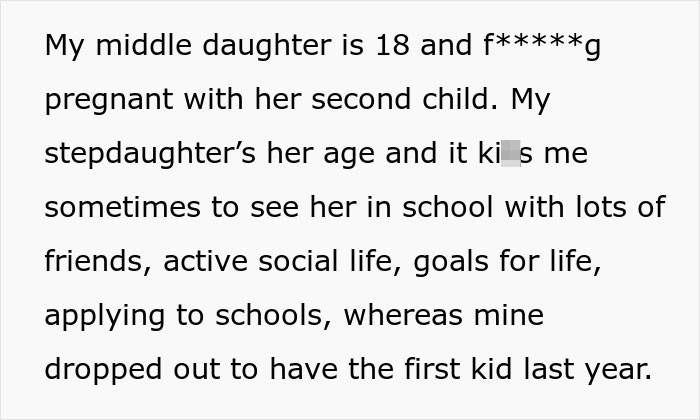
One dad went to Reddit to admit something he’s ashamed to say out loud: he isn’t proud of any of his five children. He says he poured everything he could into them, from education to hobbies, trying to help them grow into independent, ambitious adults. But in his eyes, none of them lived up to what he imagined, and now he blames himself, calling himself a failure as a father.
Read his confession below.
RELATED:
The man went online to get a confession off his chest
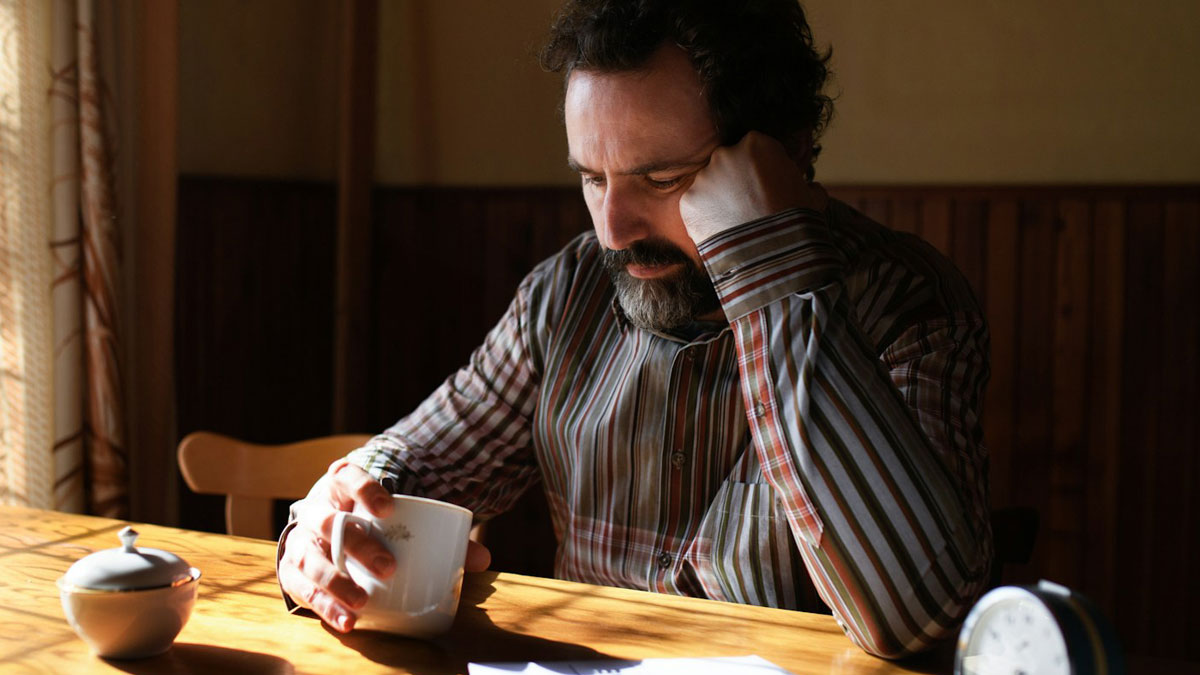
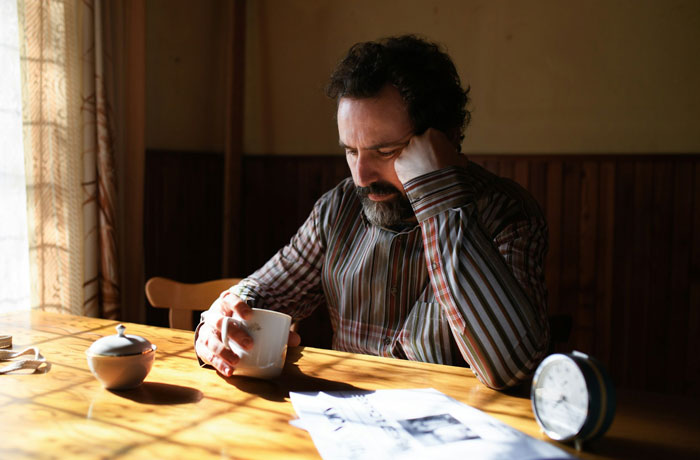
Man sitting at wooden table with cup, looking troubled and reflecting on his children as failures in his eyes.
Too many expectations can backfire and leave kids less motivated, not more
If you’re a parent who genuinely cares about your child, you naturally want them to do well. For a lot of people, that comes with a universal checklist: staying out of trouble, doing fine in school, maybe getting a degree, finding a solid job, building a stable future. It’s not a bad list. It’s also not the whole point.
Because the moment “doing well” turns into “proving yourself,” kids can start to feel like love and approval come with terms and conditions. And even when pressure comes from good intentions, it can still land as, I’m only worth something when I perform.
That’s one of the big takeaways Dr. Carly Claney writes about in Relational Psych: direct or indirect parental pressure can weigh on kids’ mental health and self-image, and it often backfires. For example, kids who grow up around frequent criticism or impossible expectations are more likely to internalize it, slipping into harsh self-talk that follows them long after the moment passes. And when parents comment on weight or closely police eating, research links that kind of messaging to worse body image and disordered eating risk.
Pressure can also push kids toward perfectionism, which sounds productive until it turns into chronic stress, fear of failure, and “never good enough” thinking. The American Psychological Association has pointed out that rising parental expectations and criticism are linked to higher perfectionism in students, alongside mental health concerns.
Kids do better with healthy encouragement than fear of failure
Obviously, parents set expectations out of love and concern. The problem is that while a certain amount can be healthy and grounding, once expectations cross a line, they can start doing more harm than good.
Psychologist David Braucher makes a useful point in Psychology Today: expectations can communicate to a child that what they do matters to their parents. If parents are too accepting of anything and everything, it can slip into permissiveness and signal to a child that they don’t really matter.
“Children know this because when something that matters to them goes awry, they get upset. So, it is not a leap to assume that we don’t get upset because we don’t really care,” he says.
But the balance changes when a parent’s expectations are built around a fantasy, not the child in front of them. When those hopes don’t match a kid’s interests, talents, and natural tendencies, it stops being motivating and starts crushing their confidence. For example, if a child has no musical talent but keeps being pushed to “excel” anyway, it’s not hard to see how they’d end up with a constant sense of low self-esteem.
In the case of the author of this story, we obviously don’t know what went on behind the scenes day to day, or how his kids would describe their upbringing. But even in his own post, he spends less time on their feelings and happiness than on pride, embarrassment, and how their choices make him look like a failure. So it’s fair to guess that his kids may have grown up under heavy expectations, and as adults, they stopped trying to live up to them.
To support kids without that kind of pressure, Dr. Claney suggests shifting the focus to encouragement that builds confidence. Praise effort, not only results, so kids learn that progress matters even when they don’t “win.” She also recommends being careful with appearance-based comments, even the well-meaning ones, since they can make kids feel watched and judged.
Another big one is autonomy. Let them take the lead sometimes with age-appropriate choices instead of micromanaging, and keep rules clear but open to discussion so they feel heard. And when your child pushes back or is struggling, validate their feelings first. It doesn’t mean you have to agree, but it shows them they’re safe to be honest with you.
At the end of the day, achievements come and go. What sticks is whether a child feels loved for who they are, not just what they do.
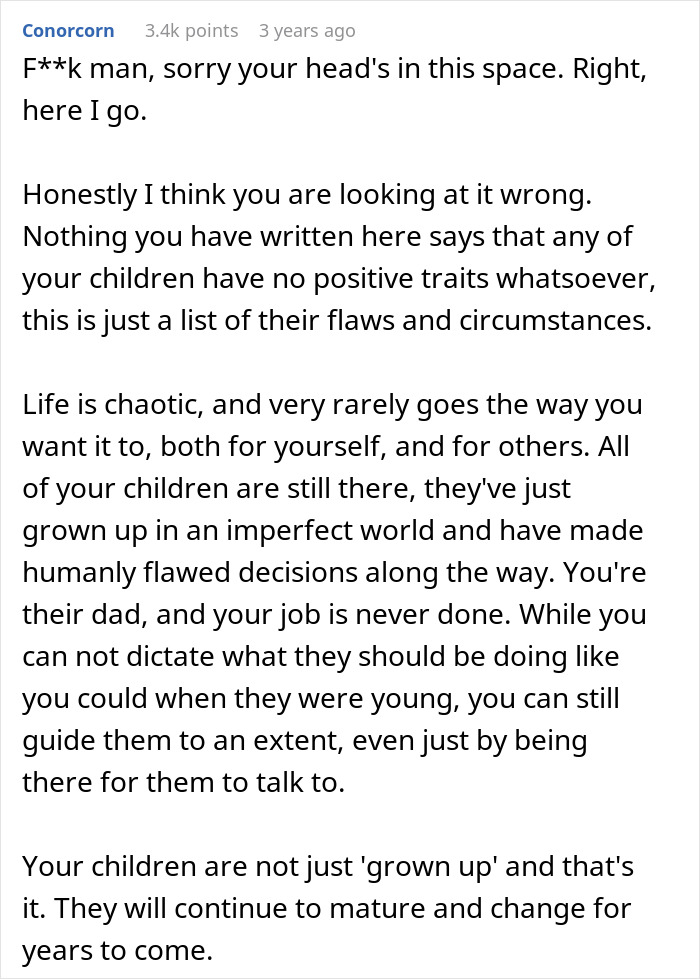
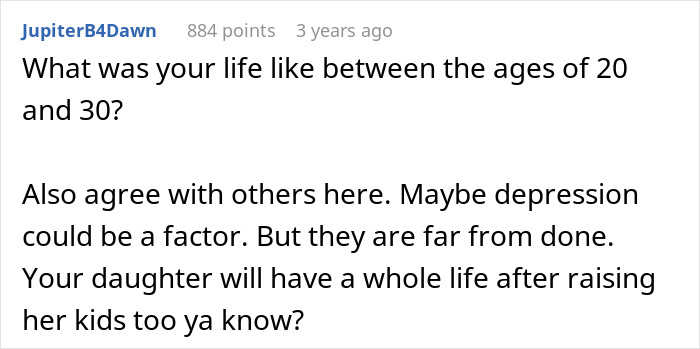
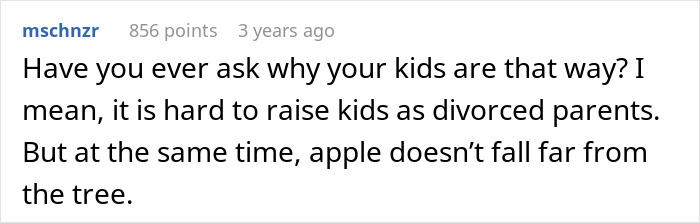
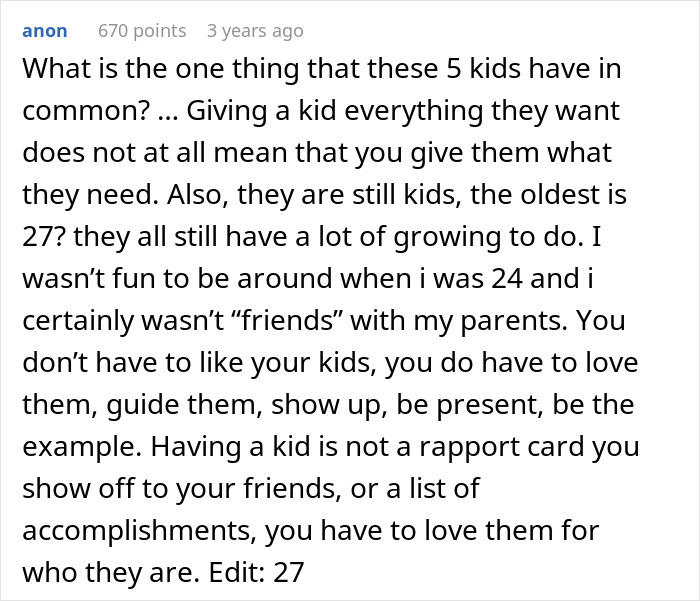
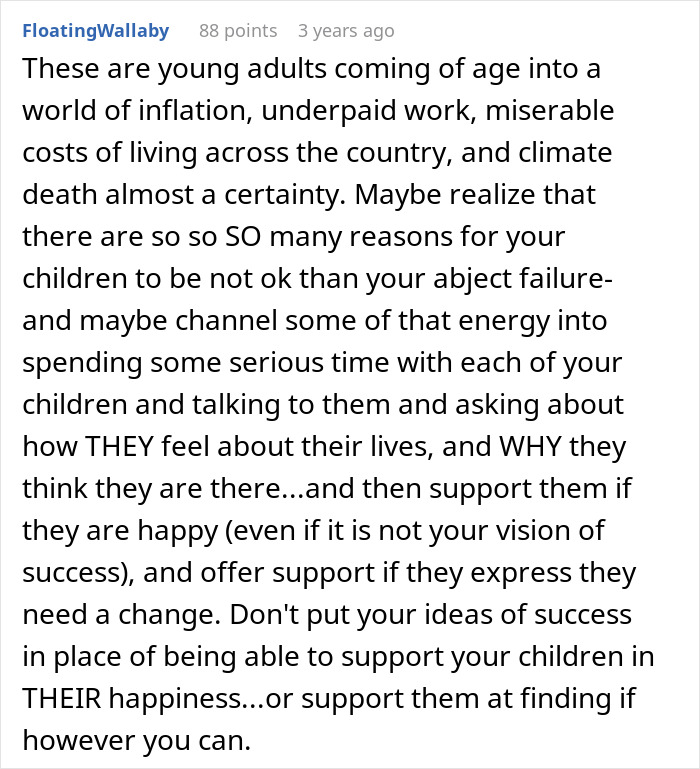
Readers shared their perspectives, personal experiences, and advice
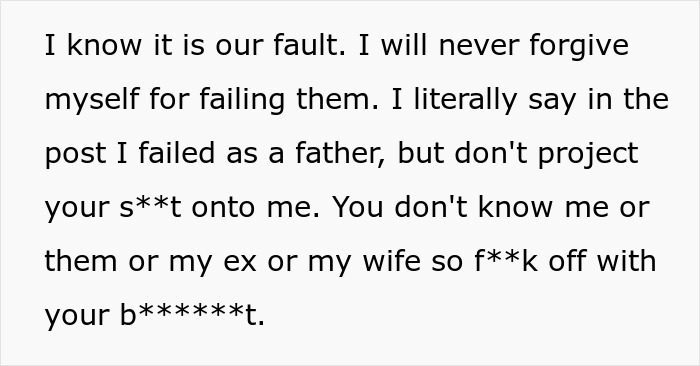
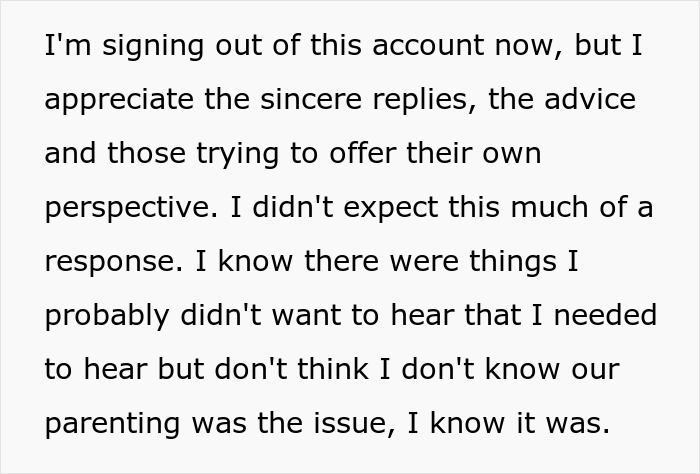
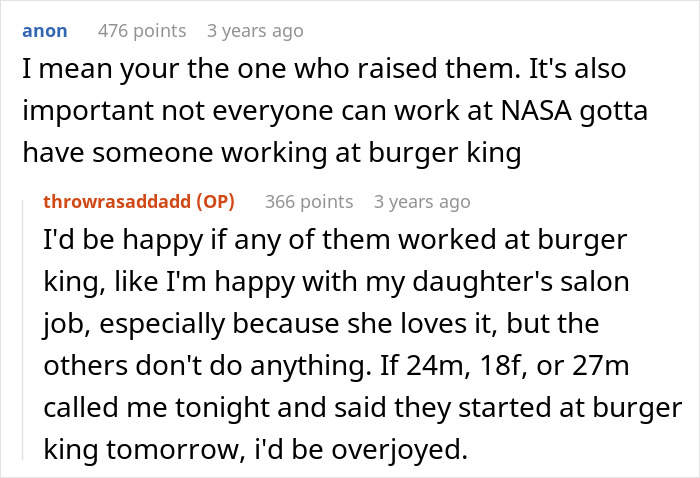
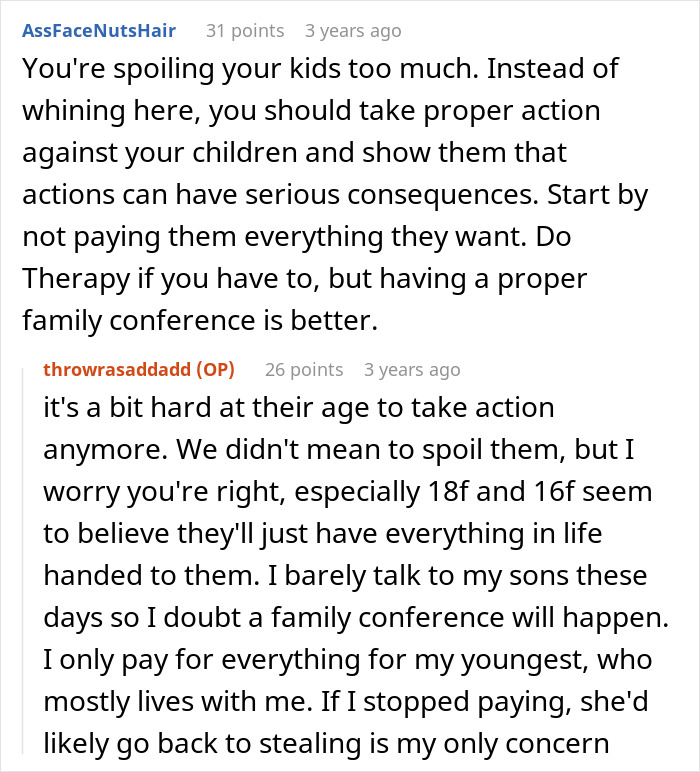
Reddit discussion about a dad's view on his children’s success and his feelings of failure as a parent.
Screenshot of a Reddit conversation about a dad claiming he did everything for his children but views them as failures.
Screenshot of a Reddit conversation about a dad claiming he did everything for his children but sees them as failures.
Comment discussing a dad claiming he did everything for his children but views all 5 as failures, reflecting on parenting challenges.
Screenshot of an online discussion about a dad claiming he did everything for his children but sees them as failures.
Screenshot of an online comment discussing challenges of raising children and referring to parenting and children as failures.
Comment discussing challenges of parenting and children perceived as failures despite a dad's efforts for his kids.
Screenshot of an online comment discussing a dad’s perspective on his children being failures in his eyes.
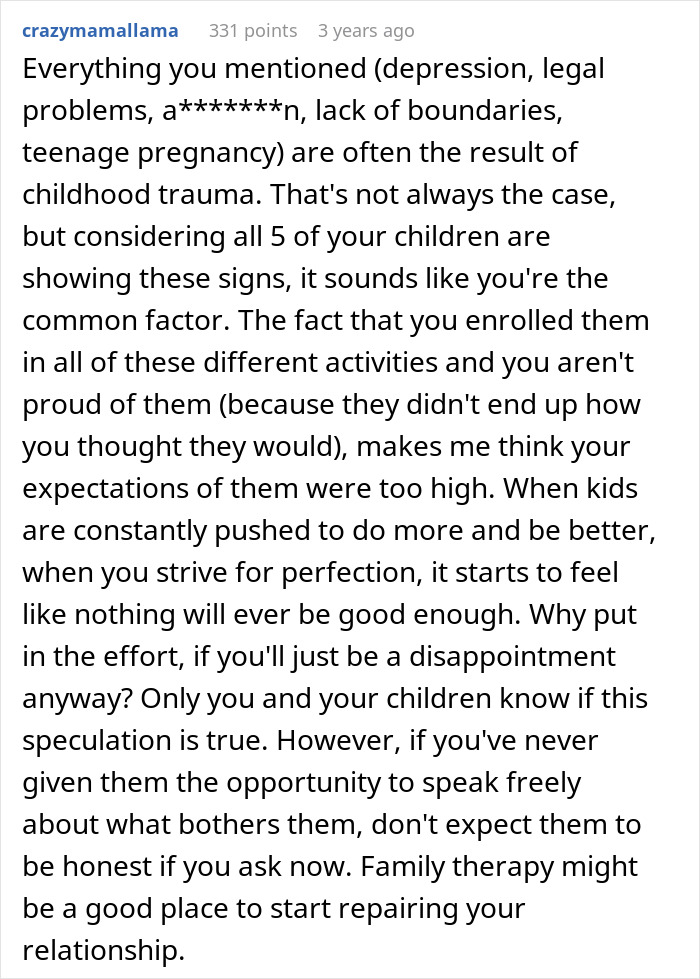
Comment discussing a dad’s perspective on his children’s failures and the impact of high expectations and childhood trauma.
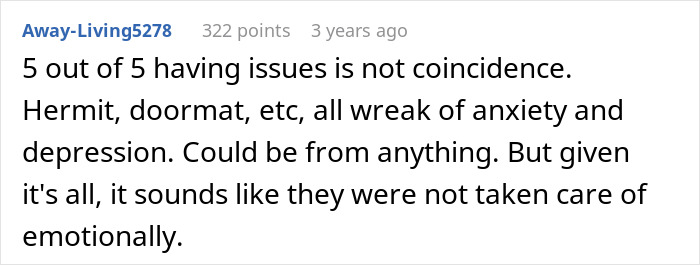
Comment discussing a dad’s claim that all five of his children are failures due to emotional neglect.
Dad claims he did everything for his children but sees all five of them as failures, reflecting family disappointment.
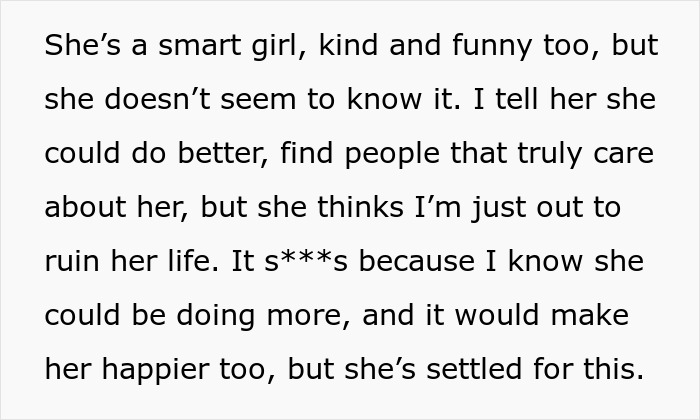
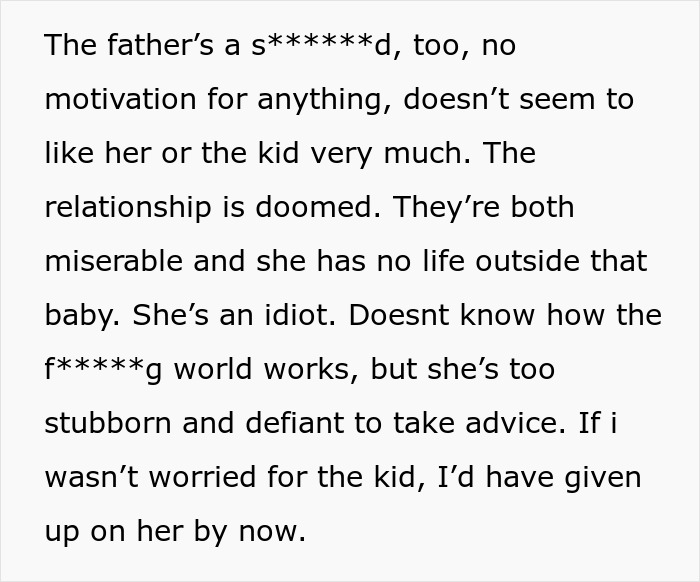
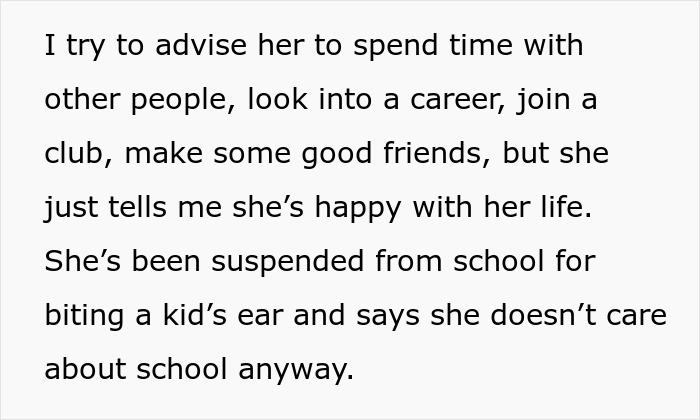
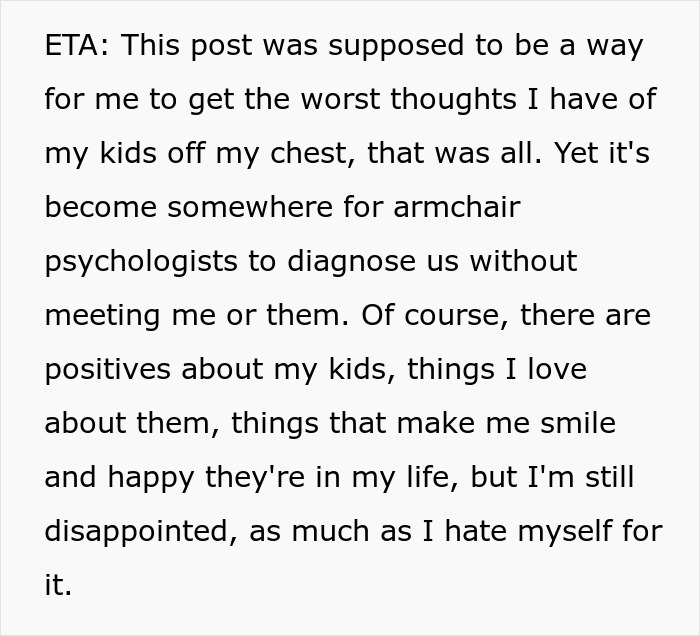
Text excerpt showing a dad's reflection on his children and their perceived failures from his perspective.
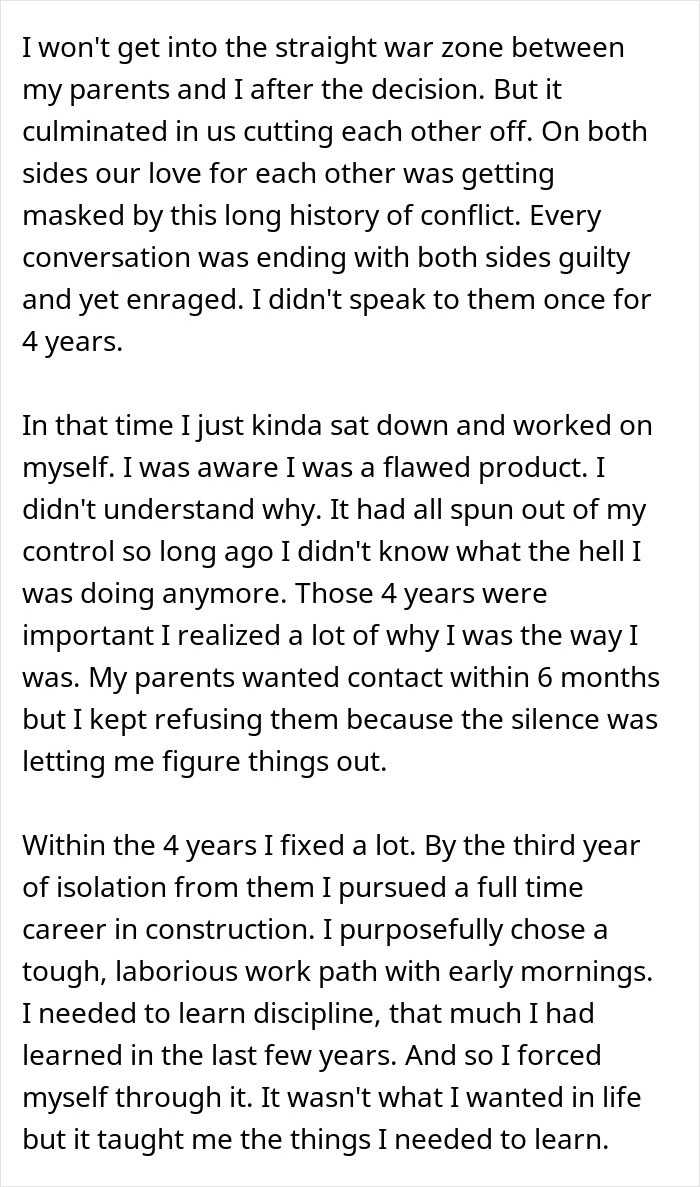
Text excerpt from a personal story about family conflict and self-improvement by a dad reflecting on his children’s failures.
Text showing a dad reflecting on his efforts and struggles with his children and their perceived failures in his eyes.
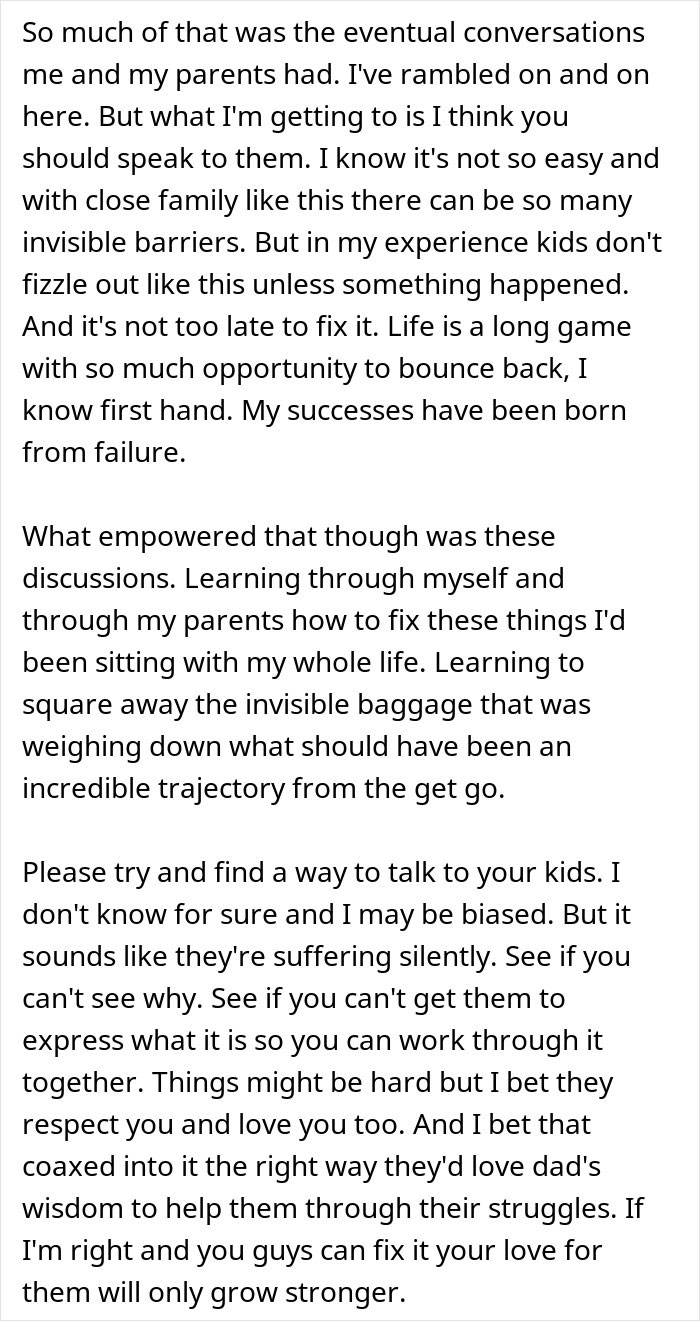
Alt text: thoughtful father reflecting on his children’s perceived failures and sharing advice on family communication and support
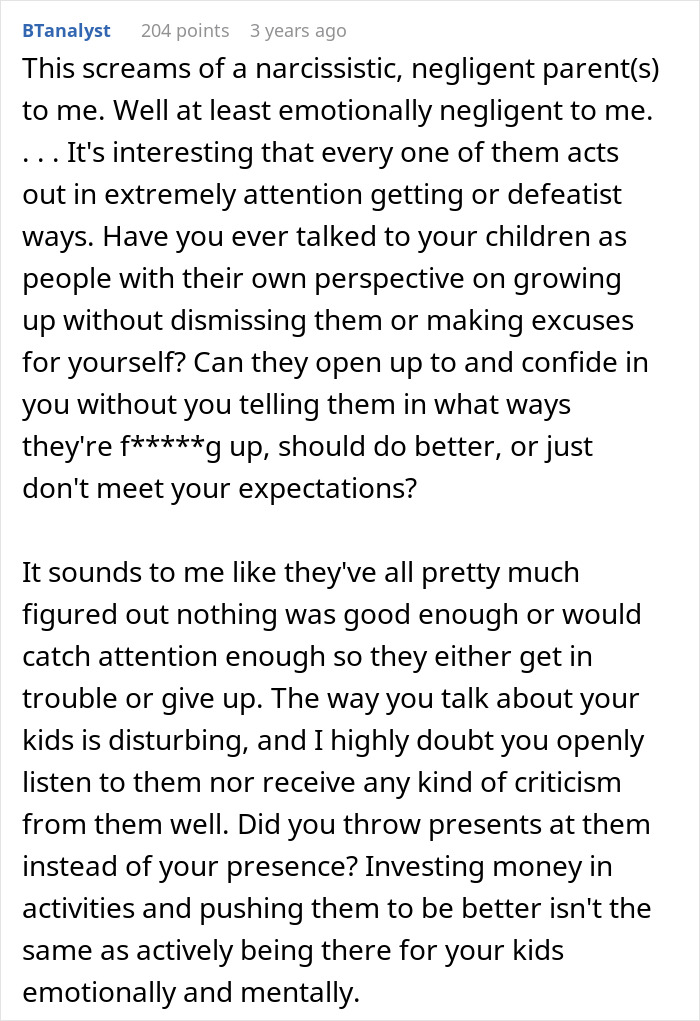
Comment criticizing a negligent dad who views all five of his children as failures and ignores their emotional needs.
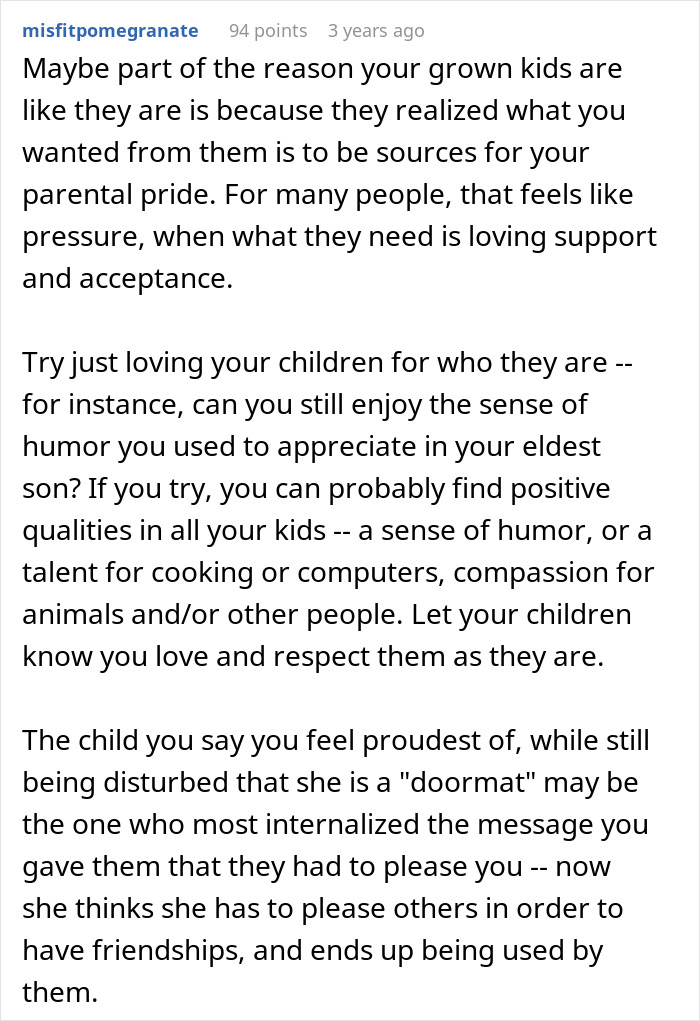
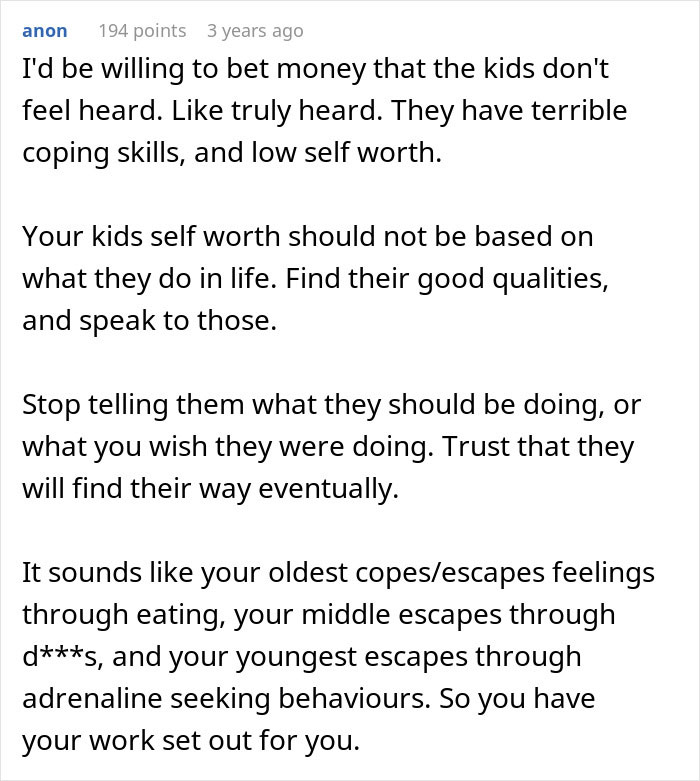
Comment on dad claims about children’s failures, discussing kids’ self-worth, coping skills, and parenting challenges.
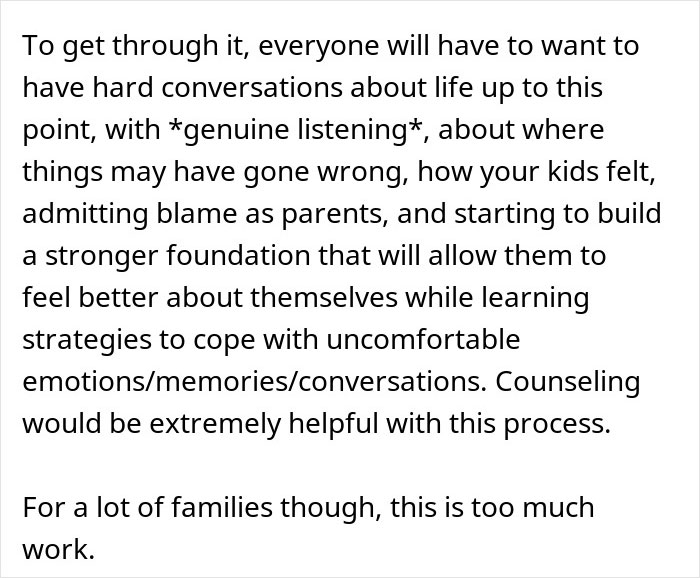
Text on screen discussing hard conversations, genuine listening, and coping strategies for parents and children failures.
Commenter discussing childhood trauma and parenting in a conversation about a dad claiming his children are failures.
Comment discussing a dad claiming he did everything for his children, yet views all five as failures in his eyes.
Comment about a dad reflecting on his perceived failures with his children and feeling responsible as a father.
Comment discussing parenting struggles and the impact of a dad viewing all five children as failures.
Comment discussing challenges faced by children and a dad claiming he did everything for his children but sees them as failures.
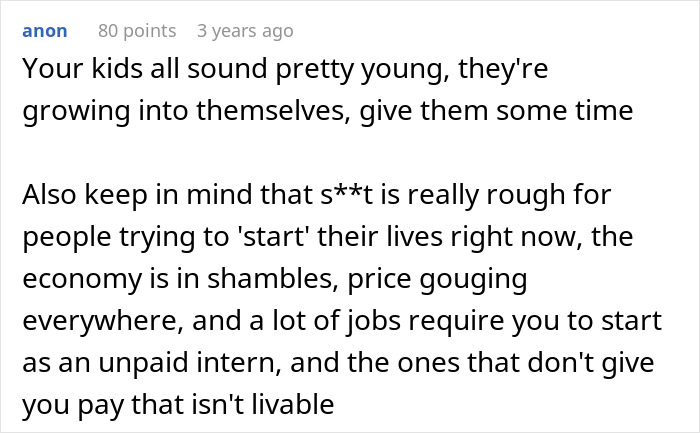
Comment discussing challenges faced by kids and economic struggles related to Dad claiming he did everything for his children.
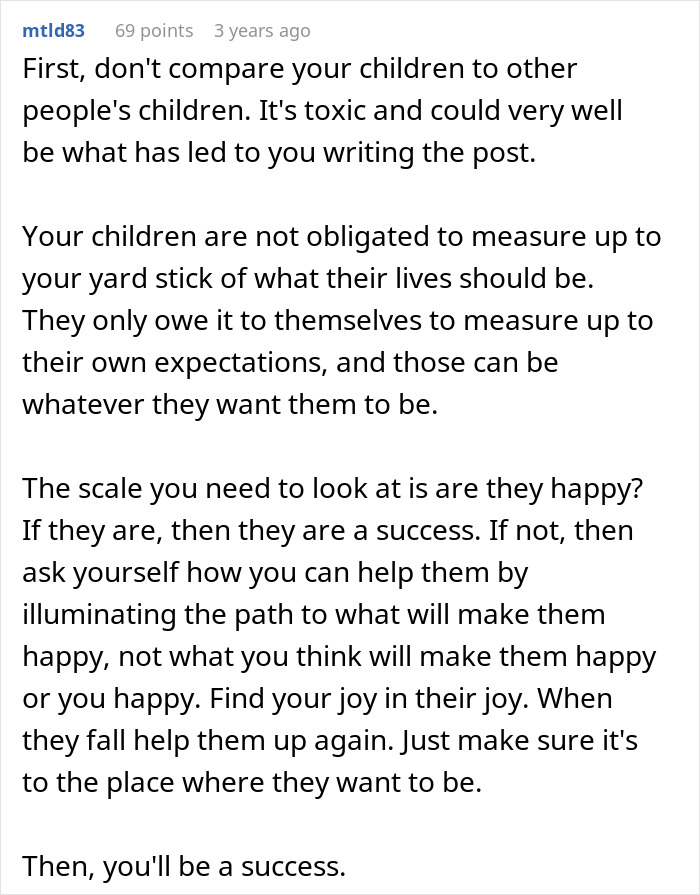
Comment discussing a dad claiming he did everything for his children but sees them as failures, focusing on parenting expectations.
Screenshot of an online comment discussing a dad who feels all five of his children are failures despite his efforts.
Comment discussing accountability and failure in parenting, addressing a father's role in children’s outcomes.
Poll Question
Total votes ·
Thanks! Check out the results:
Total votes ·
Newsletter
Subscribe to Access Exclusive Polls
By entering your email and clicking Subscribe, you're agreeing to let us send you customized marketing messages about us and our advertising partners. You are also agreeing to our Privacy Policy.
Thank you! You've successfully subscribed to newsletters!
Oleksandra is an experienced copywriter from Ukraine with a master’s degree in International Communication. Having covered everything from education, finance, and marketing to art, pop culture, and memes, she now brings her storytelling skills to Bored Panda. For the past six years, she’s been living and working in Vilnius, Lithuania.
Oleksandra is an experienced copywriter from Ukraine with a master’s degree in International Communication. Having covered everything from education, finance, and marketing to art, pop culture, and memes, she now brings her storytelling skills to Bored Panda. For the past six years, she’s been living and working in Vilnius, Lithuania.
I am a Visual editor at Bored Panda, I'm determined to find the most interesting and the best quality images for each post that I do. On my free time I like to unwind by doing some yoga, watching all kinds of movies/tv shows, playing video and board games or just simply hanging out with my cat
I am a Visual editor at Bored Panda, I'm determined to find the most interesting and the best quality images for each post that I do. On my free time I like to unwind by doing some yoga, watching all kinds of movies/tv shows, playing video and board games or just simply hanging out with my cat
If there's no physical reason, it really does seem likely that there's a lot of trauma in the family, especially because there seems to be a time frame where the older kids went from outward looking to retreating. These all seem like classic trauma responses.
If five kids end up 'bad', then it's not the kids that are the problem. One, maybe... two is a coincidence... three is a pattern. Etc. Just because the kids don't fit OP's mold right now doesn't mean that they won't change later; they're all still relatively young. At least OP admits that he was part of the problem. I wonder if the kids have picked up on his 'vibe' in not being proud of them and that's influenced their actions somewhat (whether consciously or unconsciously).
If there's no physical reason, it really does seem likely that there's a lot of trauma in the family, especially because there seems to be a time frame where the older kids went from outward looking to retreating. These all seem like classic trauma responses.
If five kids end up 'bad', then it's not the kids that are the problem. One, maybe... two is a coincidence... three is a pattern. Etc. Just because the kids don't fit OP's mold right now doesn't mean that they won't change later; they're all still relatively young. At least OP admits that he was part of the problem. I wonder if the kids have picked up on his 'vibe' in not being proud of them and that's influenced their actions somewhat (whether consciously or unconsciously).

 Dark Mode

















































 No fees, cancel anytime
 then open in external browser


 and click "Open in External Browser"
























31
18