Get Premium
Dark mode theme is available exclusively for premium users. Learn more about the benefits of subscribing.
No fees, cancel anytime.

 Dark Mode Ad-Free Browsing Unlimited Content
 Ad-Free Browsing Unlimited Content Dark Mode
Join 1.2 million Panda readers who get the best art, memes, and fun stories every week!
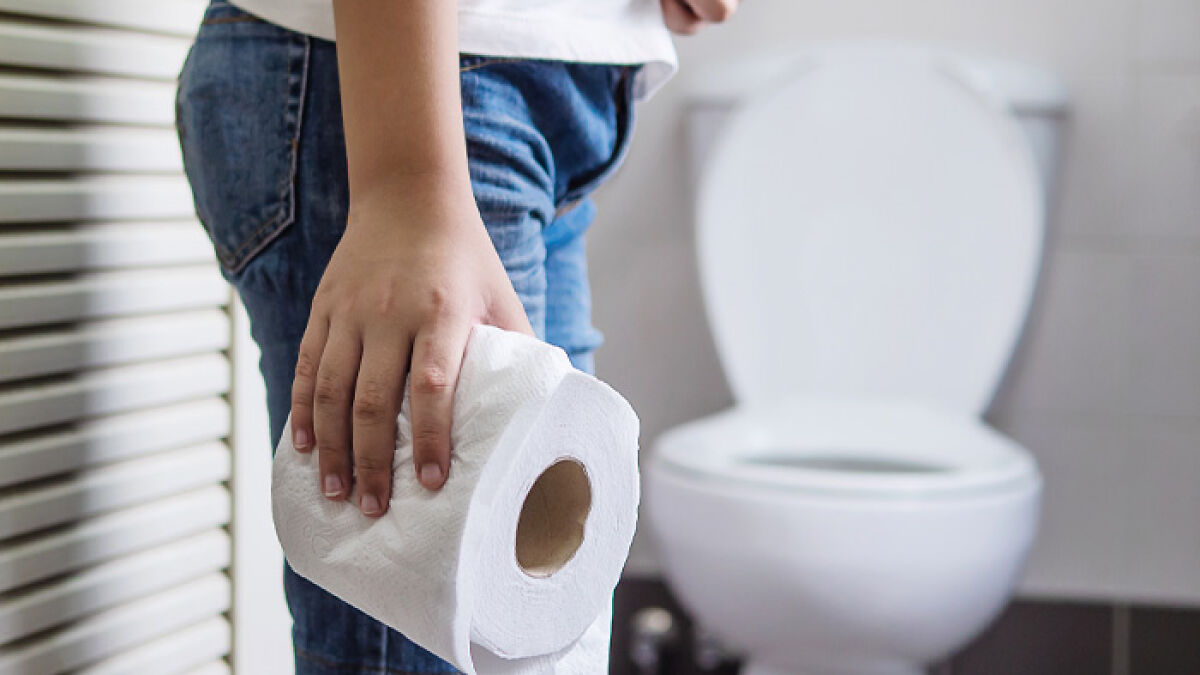
The American Gastroenterological Association (AGA) released an update on April 27, 2026, providing new guidelines for passing stool.
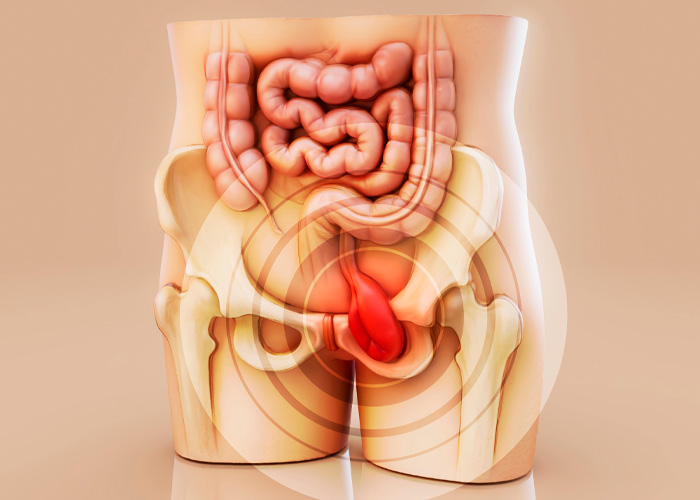
The AGA news release highlighted how a healthier bowel movement can help avoid hemorrhoids, a common condition that causes rectal blood vessels to swell up, causing itching, pain, and bleeding.
Hemorrhoids, or piles, which are caused by overstraining and frequent constipation, among other reasons, affect around 50% of adults by age 50.
Despite its prevalence, the gastrointestinal (GI) condition can be prevented or controlled with some basic lifestyle changes, according to experts.
Image credits: katemangostar/Freepik (Not the real image)
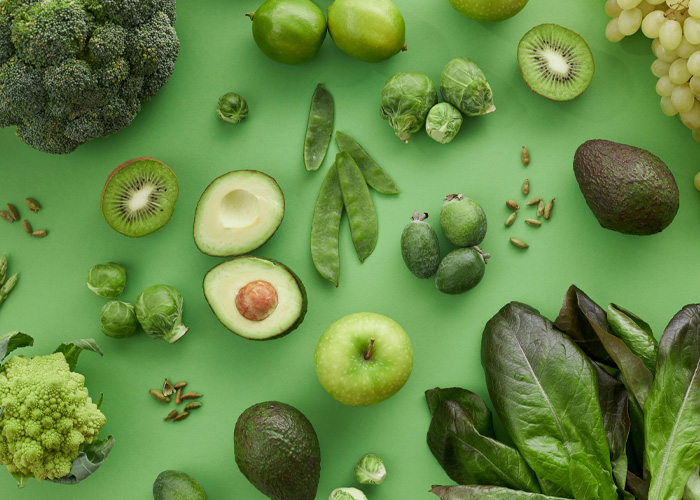
The first suggestion in the AGA update urged people to increase their dietary fiber intake. There are two types — soluble and insoluble — and both are important for good health.
Soluble fiber helps lower cholesterol, regulates blood sugar levels, and reduces the risk of heart disease. It is commonly found in black beans, Brussels sprouts, avocado, broccoli, and sweet potato.
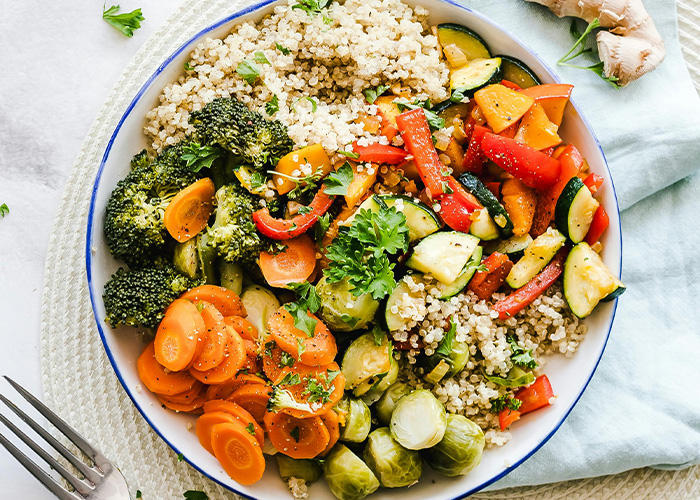
Insoluble fiber passes through the digestive system relatively intact, thus softening stool and adding bulk. Found in whole-grain flour, bran, cauliflower, green beans, and potatoes, this helps prevent constipation and regulate bowel movements, thereby reducing the risk of hemorrhoids.
Image credits: jcomp/Freepik (Not the real image)
According to a 2019 study published in HarvardHealthPublishing, most Americans get less than half the recommended amount of daily fiber, which is 25 grams for women and 38 grams for men up to the age of 50. It is largely due to the rise of low-carbohydrate diets such as the ketogenic or Atkins diets, the paper claimed.
The article cited an analysis drawn from a culmination of 250 studies that confirmed that adding more fiber to the diet reduced the risk of colon cancer by 16-24%, as well as cardiac diseases and type 2 diabetes.
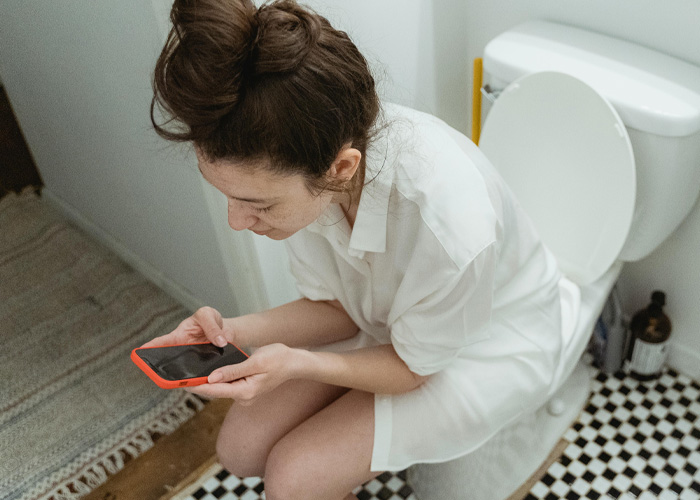
The second suggestion in the AGA newsletter was not to spend too long on the toilet, strain to go, or simply scroll on the phone. Doctors have been warning their followers against it for a while.
Image credits: Nolish57
Image credits: rudekyoni999
“When one’s bottom is in the space of the toilet seat, the blood will pool in the lowest point and cause increased pressure in the blood vessels in the an*s, leading to hemorrhoids,” Dr. David L Schwarzbaum, a gastroenterologist, told HuffPost in 2024.
As for cures or remedies, the AGA news release warned against relying on over-the-counter topical products or internet-recommended sitz baths, as they may only provide temporary relief. The article recommended that anyone suffering from hemorrhoids undergo a physical exam at a doctor’s office before administering any treatment.
Image credits: julos/Freepik (Not the real image)
A March 2026 survey commissioned by Oshi Health and conducted by The Harris Poll revealed concerning findings: 52% of U.S. adults do not feel comfortable discussing their bowel habits with a healthcare professional, which, in turn, is contributing to the rising number of people experiencing GI issues.
The study found that while 1 in 2 Americans (50%) suffer from GI problems, only 29% have an official diagnosis. 44% of people believe they have a condition but do not have a diagnosis.
Yet 52% believe digestive symptoms such as abdominal pain, bloating, constipation, diarrhea, and reflux are just a normal part of life.
Image credits: Vanessa Loring/Pexels (Not the real image)
It also revealed that the stigma around discussing bowel movements has pushed people to avoid visiting a doctor and look for other means.
More than 1 in 3 Americans (35%) said they often rely on the internet, social media, or AI to learn how to manage GI symptoms because they’re too embarrassed to talk about poop with a healthcare provider.
“While online information can be helpful, it often lacks context and personalization,” the study said, adding that AI can actually deliver unreliable answers. “Some sources even lack medical oversight.”
Image credits: Subhaji11545852
Image credits: mymomcare
“These findings highlight the harmful consequences of stigma and misinformation surrounding gut health,” said Dr. Sameer Berry, Chief Medical Officer at Oshi Health. “When people normalize disruptive symptoms or avoid conversations out of embarrassment, they risk delayed diagnoses, ongoing discomfort, and worsening conditions.”
Self-diagnosis of GI issues can lead to delayed diagnoses, ineffective treatment, and higher medical expenses, representing over $136 billion in annual healthcare costs.
Image credits: Ella Olsson/Pexels(Not the real image)
Dr. Trisha Pasricha, MD, MPH, an assistant professor of medicine at Harvard Medical School and the Ask A Doctor columnist for The Washington Post, published a book in 2026 titled You’ve Been Pooping All Wrong: How to Make Your Bowel Movements a Joy.
In it, she laid out evidence-based, time-tested practices that have been shown to make using the restroom easier and more comfortable.
Dr. Pasricha echoed AGA’s instructions to consume more fiber, adding that those who are deficient could take a psyllium supplement, a plant-based powder soluble in water or coffee.
Image credits: Miriam Alonso/Pexels (Not the real image)
“If you have diarrhea, it forms this gel that kind of pulls it together and makes it more formed,” she explained about fibers. “If you have constipation, it softens it up.”
Moreover, fibers feed the microbes in the gut, which in turn produce short-chain fatty acids that help reduce gut inflammation and risks of colon cancer, dementia, and heart attack.
Image credits: 0x_levy
Image credits: powerfull_Mann
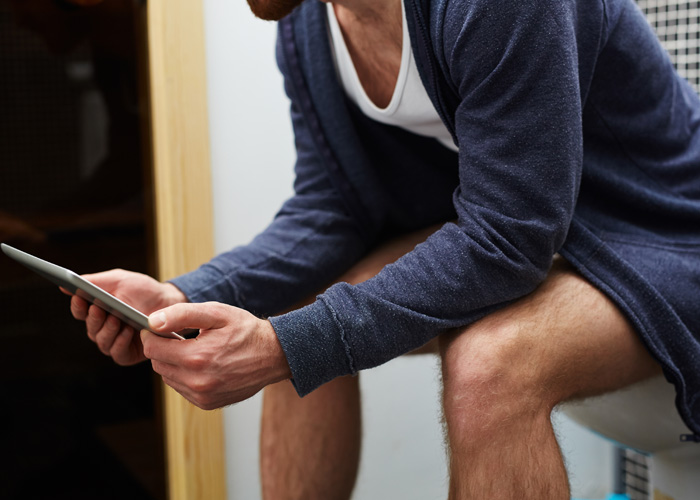
She cited a study in her book, which she was also part of, that surveyed 125 people about smartphone use while pooping. The subjects went in for colonoscopies, and the result showed that those who used phones in the bathroom were 46% more likely to have hemorrhoids than those who went device-free.
“We found out that you were five times as likely to spend more than five minutes in the bathroom if you brought your smartphone in,” Dr. Pasricha wrote, urging everyone to limit scrolling to two TikTok videos or Instagram reels before checking in with oneself.
Image credits: pressfoto/Freepik (Not the real image)
She also advised people to stay away from ultra-processed foods and artificial sweeteners, as they “decrease the mucus barrier that’s on our guts, and can change the microbes.”
Her book advocated squatting for pooping, as sitting at a 90-degree angle causes a muscle called the puborectalis to curve around the colon like a sling, keeping it shut and making it harder to defecate.
Image credits: CrisNYCa – Own work/Wikipedia
When you squat during pooping,
The muscles around the perineum relax and the rectum becomes straight to allow the nyweeee release of poop.
Poop in the latrine, or use a squat stool.
Squatting protects you from haemorrhoids, constipation and rectal prolapse.#FoodFridaypic.twitter.com/EnMHVzerqW
— Eric (@amerix) May 1, 2026
But there is no need to abandon the comforts of a modern toilet, according to the doctor. Placing a stool or yoga blocks under the feet to raise the knees above the hips would allow the tube to straighten up again.
Dr. Pasricha referred to August Rodin’s famous sculpture, The Thinker, as the ideal posture for pooping.
Image credits: PeterTonkei_
Image credits: MGGMU07
Image credits: FauzKhalid
Image credits: okekechibueze7
Image credits: UtdMinja
Image credits: Ggkinyanjui
Image credits: nollyclips28
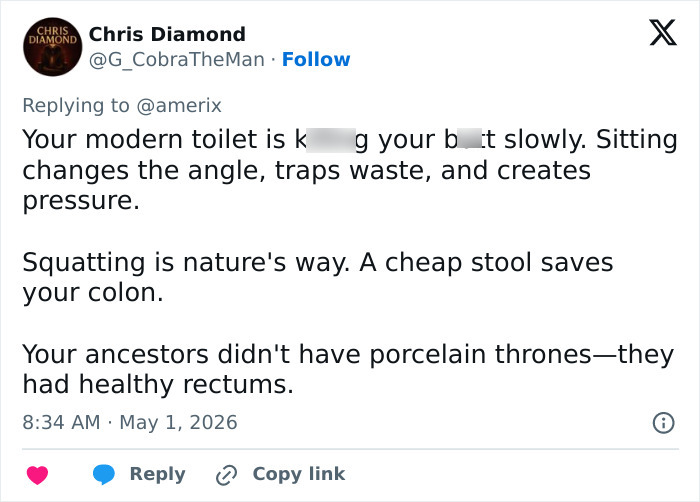
Image credits: G_CobraTheMan
Image credits: GenyvinKE
Image credits: elitheglorious
Image credits: joboduj
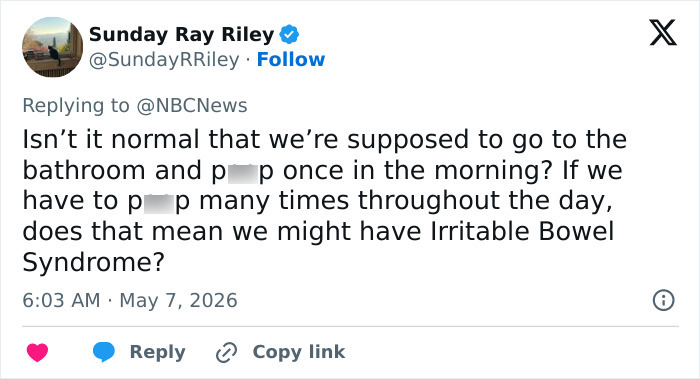
Image credits: SundayRRiley

By entering your email and clicking Subscribe, you're agreeing to let us send you customized marketing messages about us and our advertising partners. You are also agreeing to our Privacy Policy.
Thank you! You've successfully subscribed to newsletters!



Maybe TMI but I figured I’ll share. I don’t have a regular pattern for #2. I only tend to “go” every other day, and it’s not at a specific time: could be morning, afternoon or evening. Since one set of grandparents were both nurses, and grandad particularly harped on about the importance of regularity, I eventually asked my GP if my non-pattern is an issue or suggests an underlying problem. She said, unless I’m straining &/or constipated, there’s nothing to be concerned about, it’s just how my body works. I also keep an 8-9” tall footstool in my ensuite because it’s much more comfortable for bowel movements. I had no idea that squatting is recommended. So, if you aren’t a regular between 7-8AM every morning, it doesn’t necessarily mean anything concerning. Raising your knees above your hips is way more comfortable.

Yes, it's definitely recommended. I started doing it when I saw an elderly Chinese man talk about it on TV. I told my beat friend and my son about it. They both have piles as have I. It really helps.
Load More Replies... Maybe TMI but I figured I’ll share. I don’t have a regular pattern for #2. I only tend to “go” every other day, and it’s not at a specific time: could be morning, afternoon or evening. Since one set of grandparents were both nurses, and grandad particularly harped on about the importance of regularity, I eventually asked my GP if my non-pattern is an issue or suggests an underlying problem. She said, unless I’m straining &/or constipated, there’s nothing to be concerned about, it’s just how my body works. I also keep an 8-9” tall footstool in my ensuite because it’s much more comfortable for bowel movements. I had no idea that squatting is recommended. So, if you aren’t a regular between 7-8AM every morning, it doesn’t necessarily mean anything concerning. Raising your knees above your hips is way more comfortable.
Yes, it's definitely recommended. I started doing it when I saw an elderly Chinese man talk about it on TV. I told my beat friend and my son about it. They both have piles as have I. It really helps.
Load More Replies...



























 No fees, cancel anytime























21
12