Get Premium
Dark mode theme is available exclusively for premium users. Learn more about the benefits of subscribing.
No fees, cancel anytime.

 Dark Mode Ad-Free Browsing Unlimited Content
 Ad-Free Browsing Unlimited Content Dark Mode
Join 1.2 million Panda readers who get the best art, memes, and fun stories every week!

Some criminal cases stay in the headlines for years, while others continue to haunt people long after the verdict.
Whether it's because of the motive, the people involved, or the twists that kept investigators guessing, these stories show just how disturbing real-life crimes can be.
From a woman who allegedly built a business around poisoning husbands to a decades-old m*rder mystery that finally reached an answer, each case reveals a different side of human behavior that is difficult to understand.
Here are six criminal cases that proved the human mind can be truly terrifying.
This post may include affiliate links.
Some crimes leave scars that never truly heal.
In Australia, few cases have lingered in the public conscience like that of SLD, the court-assigned pseudonym for the boy who became the country’s youngest convicted m*rderer.
More than two decades after he was first sent to prison, his name was back in court in 2026, not for the crime that made him infamous, but because he had once again breached the strict conditions designed to keep the public safe.
His latest sentence ensured he would remain behind bars until at least 2028.
The case began on a warm January night in 2001.
Three-year-old Courtney Morley-Clarke was asleep in her family’s home on New South Wales’ Central Coast when 13-year-old SLD, who lived nearby with his adoptive parents, quietly entered through an unlocked or open door.
He carried Courtney from her bed while her family slept, leaving only an open screen door and her discarded nightdress behind.
By sunrise, frantic relatives, neighbors, and police were searching for the missing little girl, unaware that she had already been killed.
SLD took Courtney into nearby bushland, where he fatally stabbed her with a steak knife.
He later admitted, “I stabbed her in the heart.”
Instead of immediately confessing, he joined the search and even helped mislead police before eventually directing investigators to the place where Courtney’s body lay.
During questioning, he gave an explanation that stunned investigators, claiming he attacked her because he was jealous of her older brother’s computer games.
Even more chilling were later statements attributed to him, including that killing once would make it “easier” to do it again and that the crime had simply been “practice.”
Psychological evaluations found no evidence that SLD had suffered abuse or neglect growing up, yet experts described him as manipulative, emotionally detached, aggressive, and consumed by thoughts of revenge.
In 2002, he was sentenced to 20 years in prison, with a non-parole period of 15 years.
The judge called it an “exceedingly disturbing killing of a very young child.”

Image credits: 9 News Australia
While incarcerated, SLD committed further violent offenses, and years later admitted, "I know revenge is not good for me… I know it's not healthy. But I can't help not thinking about it."
His original sentence expired in 2021, but authorities considered him too dangerous to release without strict supervision.
When he was finally allowed into the community under an extended supervision order in 2023, the experiment lasted only months.
He was returned to prison after approaching women accompanied by young children at Bulli Beach, despite being forbidden from associating with children.
Reports later revealed he had approached nearly 200 women, including several mothers with toddlers, over just 95 days.
Although the New South Wales government tried to keep him detained, a court ruled the legal threshold for indefinite detention had not been met, and SLD was released again in March 2025 under another supervision order.
He lasted less than a month.
Correctional officers became suspicious after hearing him boast about browsing prohibited websites, deleting his internet history, and using the dark web without being caught.
A search of his phone uncovered prohibited child exploitation material, violent images involving women, disturbing search terms, unauthorized social media accounts, and evidence he had deliberately bypassed internet restrictions using a VPN.
His lawyers argued he was emotionally stunted after spending nearly his entire life behind bars and described him as “more like a teenager than an adult in his thinking.”
Judge Paul Johnson rejected that argument.
He acknowledged SLD’s mental health issues but said the repeated breaches spoke for themselves.
The reality is that… he cannot last long in the community without breaching the terms of his extended supervision order," the judge said.
SLD was sentenced to four years and six months in prison, with parole eligibility in March 2028.
Nearly 25 years after Courtney Morley-Clarke’s life was stolen, the case remains one of Australia' s darkest reminders of offenders.
When Kouri Richins published a children’s book about coping with the loss of a parent, many saw her as a grieving widow trying to help her three young sons heal after their father’s sudden passing.
But prosecutors painted a far darker picture.
They alleged that Richins had orchestrated her husband Eric Richins’ m*rder, then attempted to profit from his passing while presenting herself to the world as a heartbroken wife.
Years later, the most heartbreaking voices in the courtroom weren’t investigators or attorneys; they were the couple’s own children.
Eric Richins passed away in March 2022 after drinking a Moscow Mule cocktail allegedly laced with five times the lethal dose of fentanyl.
Prosecutors said Kouri had first tried to poison him weeks earlier by secretly putting fentanyl into his sandwich.
When that failed, they claimed she succeeded with the cocktail, hoping to inherit Eric’s $4 million estate and erase the $3.1 million in debt she had accumulated through failed real estate ventures before beginning her career as a children’s author.
Prosecutors also alleged she planned to start a new life with her handyman, Robert Grossman.
The case became even more disturbing during sentencing, when statements from the couple’s three sons were read aloud in court.
The boys, who were only 5, 7, and 9 years old when their father passed away, described years of fear inside their home.
One son said Kouri refused to let their cat into the garage, where it was fatally attacked.
They claimed she neglected their chickens, rabbits, and other animals until they passed away, struck the family dog “as hard as she could” after it urinated indoors, and even threatened to kill their pet lizard because the children did not want to watch television with her.
The boys also described how they themselves were treated.
One child alleged his mother was “drunk almost daily,” sometimes locked him inside his bedroom, and said he believed he had been drugged on the night of his father’s passing because he woke up “shaking” and “couldn’t talk for a while.”

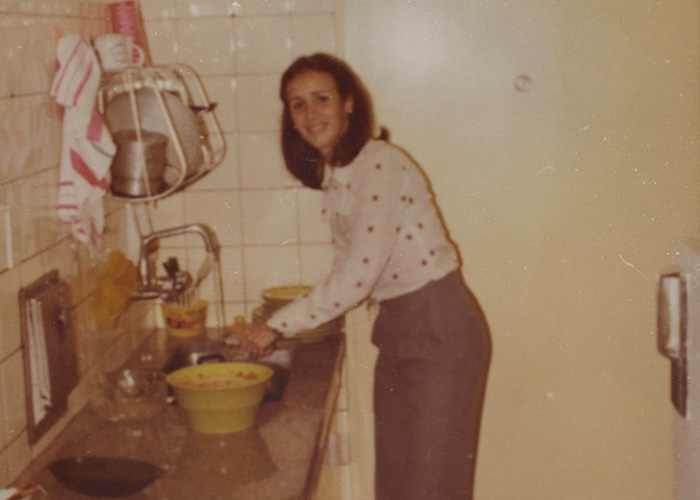
Image credits: Kouri Richins
Their fear was unmistakable.
"I want her to go to prison forever," one son said, explaining that anything less would leave them terrified she might hurt them too.
As the emotional statements were read, Kouri reportedly reacted with visible disbelief, at times sitting with her mouth open and appearing confused.
When allowed to speak, she addressed her children directly.
"I will never be angry at you for your feelings," she told them.
"All I care about is you, boys."
She blamed Eric's family for keeping the children away from her and added, "You boys are my world, the reason I continue to wake up every day and fight to come home."
Acknowledging she had "done plenty of things" she regretted, she also told them, "Nobody is all good or all bad," before encouraging them to "Be like your dad."
Eric’s family painted a very different picture.
Her sister, Katie Richins, told the court her brother had wanted to leave the marriage but stayed because he feared what would happen if Kouri received unsupervised custody of the boys.
"He believed Kouri was the most evil person he had ever met," she said. "He knew his sons did not like her and preferred to be far away from her."
Another sister, Amy, revealed the emotional toll of Eric's passing had been so devastating that she miscarried twins.
The court ultimately sided with the children’s plea for permanent protection.
Kouri was sentenced to life in prison without the possibility of parole for aggravated m*rder, along with additional consecutive sentences for attempted m*rder, insurance fraud, and forgery.
Today, the three boys are being raised by Eric’s sister Katie and her husband, Clint, while continuing intensive therapy.
For years, Argentina believed it knew who slain María Marta García Belsunce.
The country watched her husband and several relatives stand trial, listened to accusations of a family cover-up, and debated one of the nation’s most famous m*rder mysteries.
But more than 20 years after the crime, the case took one final turn, proving that the truth had been hiding in plain sight all along.
The 50-year-old sociologist was found lifeless on October 27, 2002, inside the bathtub of her home in Carmel Country Club, an exclusive gated community near Buenos Aires.
Earlier that rainy Sunday, María Marta had cut short a tennis match because of the weather, watched a football game with relatives, and then cycled home to wait for her massage appointment.
Her husband, Carlos Carrascosa, later found her lying fully clothed in the bathtub, partially submerged in water and surrounded by blood.
Believing she had slipped, hit her head, and drowned, he called emergency services and reported it as a household accident.
Doctors at the scene agreed.
A death certificate listed the cause as a “non-traumatic cardiorespiratory arrest,” and the family prepared for her funeral.
Only María Marta's half-brother, Juan Carlos Hurtig, remained unconvinced.
He insisted on an autopsy a month later, and the result stunned everyone.
Instead of a fall, forensic experts discovered five bullets lodged inside her skull.
What had appeared to be head injuries from striking a faucet were actually gunshot wounds.
The shocking discovery transformed the investigation overnight.
Prosecutor Diego Molina Pico accused Carrascosa and several relatives and family friends of staging the scene, destroying evidence, draining the bathtub, and even flushing away a bullet fragment later nicknamed the “sixth bullet.”
Rumors spread that the family sealed María Marta's bullet wounds with superglue.
Public opinion turned sharply against them, and the case dominated newspaper headlines across Argentina.
Carrascosa was first convicted in 2007 for covering up the crime, then, after an appeal, was sentenced to life in prison in 2009 for m*rdering his wife.
Several relatives, friends, and even the doctor who treated María Marta were later convicted of participating in the alleged cover-up.
Throughout the trial, Carrascosa insisted he was innocent and argued that his wife had interrupted a burglary.
"There was no cover-up for 14 years. If it had been a cover-up, someone would have broken," he later said.

Image credits: Netflix
After years of appeals, Argentina’s justice system dramatically reversed course.
In 2016, the Buenos Aires Court of Cassation found serious flaws in the original investigation, overturned Carrascosa’s conviction, and declared him innocent after he had spent more than five years behind bars.
His lawyer, Fernando Díaz Cantón, said, "I believe justice was finally served… He is innocent. He never killed his wife."
The acquittal reopened the question that had haunted the country for over a decade: if Carrascosa didn’t do it, who did?
Investigators briefly pursued theories involving money laundering connected to the Juárez Cartel, but the claims collapsed for lack of evidence.
Attention instead returned to Nicolás Pachelo, a neighbor with a long history of burglaries inside Carmel Country Club.
María Marta had openly complained about him, believed he had stolen her beloved black Labrador, Tom, and had pushed for tighter security in the neighborhood.
Carrascosa maintained from the beginning that Pachelo had entered the house expecting it to be empty, panicked when María Marta unexpectedly returned home, and shot her to avoid being identified.
Cell phone records contradicted Pachelo’s alibi that he had been shopping in Buenos Aires with his mother.
Security footage placed him inside the gated community around the time of the k*lling, and witnesses later claimed he had purchased a .32-caliber handgun, the same caliber used in the m*rder.
One witness even alleged Pachelo admitted, "That old woman cost me 800,000 dollars," referring to legal fees paid to divert suspicion.
Although Pachelo was initially acquitted of the m*rder in 2022, Argentina’s Buenos Aires Cassation Court reached a different conclusion in March 2024.
In a 310-page ruling, judges sentenced him to life imprisonment, finding that he had fatally shot María Marta during a robbery after she resisted.
Prosecutor María Laura D'Gregorio said Pachelo "attacked María Marta García Belsunce with a loaded firearm… to secure his impunity and avoid being recognized."
The ruling also dismantled some of the case’s biggest myths.
Judges concluded that even doctors, police officers, and prosecutors initially failed to recognize the gunshot wounds, making it understandable that the family believed María Marta had suffered a tragic accident.
They also rejected claims that the family had used superglue to conceal the wounds.
After more than two decades of courtroom battles, wrongful convictions, discarded theories, and relentless public scrutiny, Carrascosa finally felt vindicated.
"All this evidence that has surfaced now was there from day one… Now I can die in peace," he said.

Note to self: Self, don’t go to Argentina when not feeling well, lest someone does you in by repeatedly plunging a screwdriver into your belly, and the coroner agrees that you did yourself in with a toothbrush. Sounds as if people in Argentina enjoy mսrder mystery comedies, so do your best to avoid starring in one. 🥶
For nearly 30 years, desperate wives across late imperial Russia passed along the same name in hushed conversations.
If a husband was cruel, violent, controlling, or simply standing in the way of the life they wanted, there was one woman who claimed she could make the problem disappear forever.
She was known as Madame Popova, a mysterious figure who allegedly built one of history’s most disturbing m*rder-for-hire operations quietly by husbands with arsenic.
Very little is known about Popova’s early life, though some accounts identify her as Alexe Katherina Popova from Samara, Russia.
What became far more famous than her origins was the business she created.
At a time when divorce was difficult, expensive, and heavily controlled by the church, many women felt trapped in abusive marriages.
Popova presented herself as the answer society had failed to provide.
For a modest fee that even working-class women could afford, she promised to “liberate” wives from their husbands.
According to reports, she accepted almost anyone as a client.
Some women claimed they were escaping violent spouses, while others wanted inheritance money, revenge, or simply freedom from a marriage they no longer wanted. Popova repeatedly made little distinction between them.
Her weapon was arsenic, a poison that was almost impossible to detect with medical knowledge available at the time.
Odorless and tasteless, it could be slipped into food or vodka without raising suspicion.
Rather than killing quickly, Popova often recommended giving victims small doses over weeks or months.
The husbands slowly developed stomach pain, vomiting, diarrhea, weight loss, weakness, hair loss, and nerve damage.
To 19th-century doctors, the symptoms often looked like dysentery, tuberculosis, liver disease, or other common illnesses, allowing the poisonings to go unnoticed.
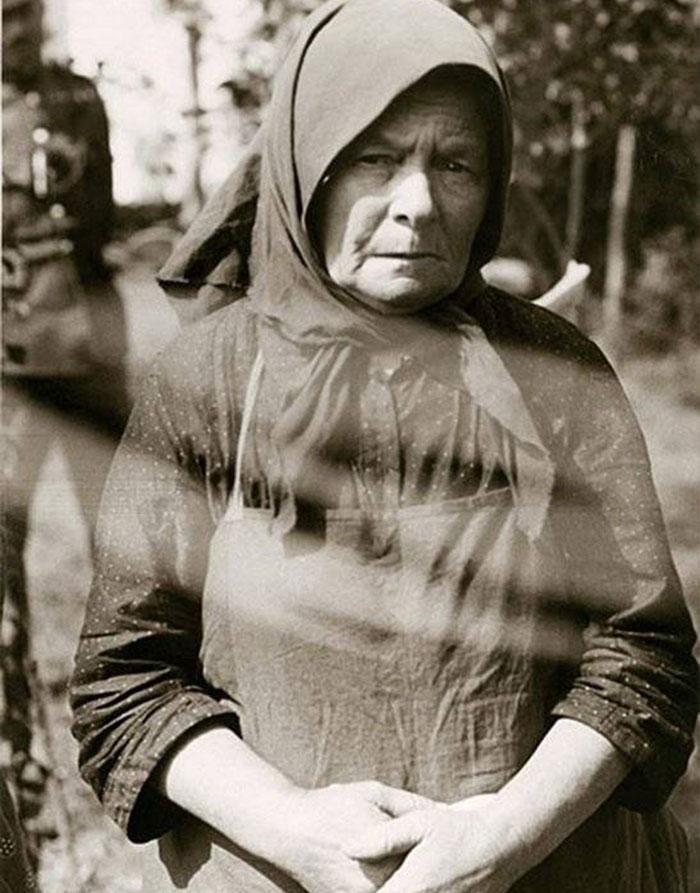
Image credits: Find a Grave
When Popova couldn’t enter a home herself, she allegedly handed the arsenic to the wife along with detailed instructions before returning later to collect the rest of her payment.
The scheme finally unraveled in 1909, not because investigators uncovered it, but because one client could no longer live with what she had done.
Overcome with guilt after her husband’s passing, the widow confessed everything to the police.
Officers searched Popova’s home, where she had tried to explain her growing wealth by claiming she bought inheritances and treated people with herbal remedies.
News of her arrest spread so quickly that an enraged crowd gathered outside, demanding she be handed over to be beaten and burned.
Police struggled to contain the mob before soldiers finally dispersed it.
Even after the arrest, Popova reportedly showed no remorse.
Instead, she defended her crimes by insisting she had helped women escape abusive husbands.
She described the killings as “an act of charity” and declared she had done “excellent work in freeing unhappy wives from their tyrants.”
Apparently, prosecutors saw a woman who had turned domestic misery into a profitable business.
The exact number of victims remains disputed. While some reports claimed she admitted to around 40 murders, newspapers at the time alleged authorities believed she may have been responsible for more than 300 deaths over three decades.
Popova was sentenced to capital punishment and reportedly executed by firing squad later that year.
More than a century later, her story continues in true-crime collections including The Killer Book of True Crime in 2007, Bad Girls: Sirens, Jezebels, Murderesses, Thieves, and Other Female Villains in 2013.
In 2017, writers Alex Valdes and Dre Torres turned her story into Popova, a crime drama.
Again in 2025, Italian writer Antonella Ossorio gave Popova a fictional treatment with La fame del suo cuore. I delitti di madame Popova.
The release of a police interrogation video in 2026 reignited outrage over a case that had already shaken Utah.
In the footage, 30-year-old Mia Bailey calmly described why she had slain her parents, showing little emotion as detectives questioned her.
What disturbed many viewers most was not just the confession itself, but her apparent lack of remorse. "I don't regret it. I hate them. That was the last straw," she told investigators.
The tragedy unfolded in June 2024 at the Bailey family home in Washington, Utah.
According to prosecutors, Mia entered the house armed with a firearm she had purchased from a local pawn shop.
She fatally shot her mother, Gail Bailey, and father, Joseph Bailey, before firing through a bedroom door at her brother, Dustin Bailey, who survived the attack.
Police launched a search that lasted several hours before taking Mia into custody without further violence. She was later charged with multiple first-degree felonies, including two counts of aggravated m*rder.
After more than a year of court proceedings and mental competency evaluations, Mia changed her plea in November 2025, admitting guilt while being found guilty but mentally ill.
The court sentenced her the following month to two consecutive prison terms of 25 years to life for m*rdering her parents, along with an additional sentence for the attack on her brother.
The ruling means she must serve at least 50 years before she can be considered for parole.
During police questioning, Mia claimed she believed her parents were trying to stop her planned gender-affirming surgery.
She had legally changed her name from Collin Troy Bailey to Mia Bailey in 2023 and was undergoing hormone replacement therapy at the time of the killings.
Speaking about her mother, she said, "She was trying to sabotage it. She always had boundary issues. I had one thing going on, and she took that away from me."
She added, "She can't say sorry to save her life, apparently. And I gave her so many chances throughout my life."

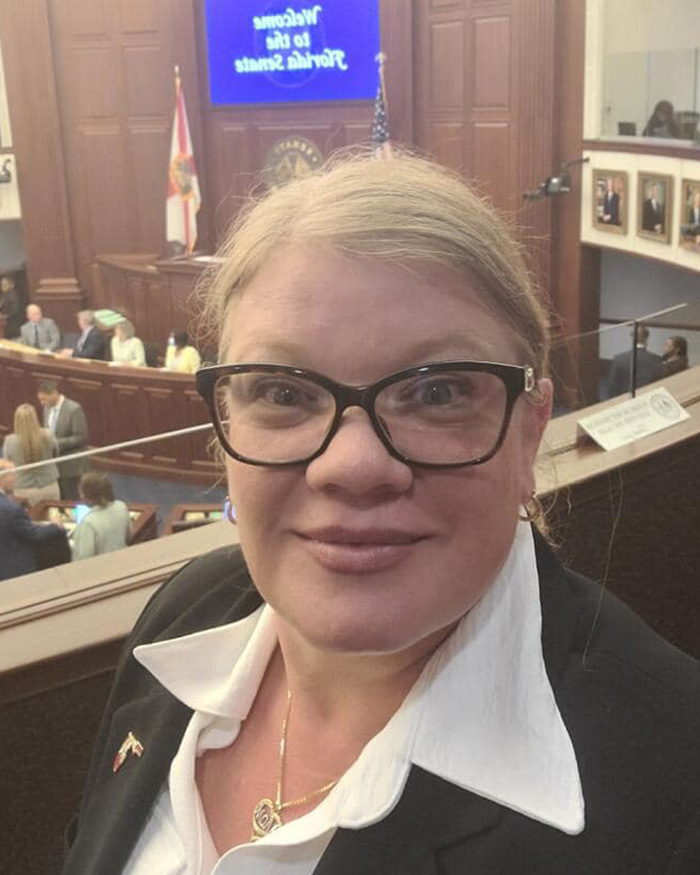
Image credits: FOX 13 News Utah/Youtube
Mia also described years of deteriorating mental health, insisting the surgery was something she believed would help her.
According to detectives, she admitted buying the weapon, firing 12 rounds, and intentionally going to her parents' home.
"I went to my parents to do the deed. K*ll them. It was spur-of-the-moment. I don't regret it. I hate them. That was the last straw," she said.
At another point, she remarked, "So much for family. I spent years trying to fix that broken-a*s family. Eventually, I had to get out, either going to k*ll myself or k*ll. Enough is enough, I'm taking someone with me."
The legal proceedings also revealed a complex history of severe mental illness.
Court records stated that Mia had been diagnosed with schizophrenia, psychosis, autism, obsessive-compulsive disorder, depression, and ADHD.
Her family maintained that they were not opposed to her gender identity or transition. Instead, they believed she was experiencing a psychiatric crisis that required urgent treatment.
Her surviving brother, Dustin Bailey, became one of the trial's most emotional voices.
In his victim impact statement, he rejected claims that the tragedy was rooted in prejudice, telling the court, "We support LGBTQ rights fully. This has nothing to do with identity."
He argued that powerful hormone treatments had been introduced while Mia already had severe psychosis, saying, "Providing powerful hormones to a person in a psychiatric crisis without proper psychiatric safeguards is not affirming care. It is reckless."
He added, "It acted as an accelerant, intensifying instability, impairing judgment, and compounding risk. That failure harmed Mia, and it endangered our parents."
Investigators also learned that Mia had reportedly accumulated around $20,000 in debt related to hormone therapy and other transition-related expenses.
Following her sentencing, she was transferred to the Central Utah Correctional Facility, where, under a Utah law enacted in 2024, she is housed according to her biological s*x at birth.
For years, Deidre Ruth cultivated the image of a devoted Christian mother and outspoken parental rights activist.
She regularly spoke at school board meetings, opposed mask mandates, challenged changes to s*x education, and argued against books she believed were inappropriate for children.
To many in South Florida, she was simply a conservative community advocate.
Few people knew that nearly three decades earlier, she had been convicted in a homicide that forever changed another family’s life.
Before she became known as Deidre Ruth, she was Deidre Frazer, a Philadelphia teenager.
The case dates back to 1996, when 16-year-old Christa Lewis, an honor student at St. Hubert Catholic High School for Girls, went to a neighborhood carnival with friends.
According to court records, two groups of teenagers exchanged insults before going their separate ways.
Later that evening, they crossed paths again, and the confrontation turned physical.
During the chaos, Lewis was pushed into Frazer, who was holding a knife.
The blade pierced Lewis’ chest, fatally wounding her.
At trial, Frazer admitted she had the knife but insisted she never intended to kill anyone.
She claimed she pulled it out only to frighten the other group and argued that Lewis was accidentally pushed into the blade.
Her attorneys described the incident as “a tragic accident” and maintained that she had acted in self-defense.
Prosecutors rejected that version of events, arguing the evidence showed malice rather than self-protection.

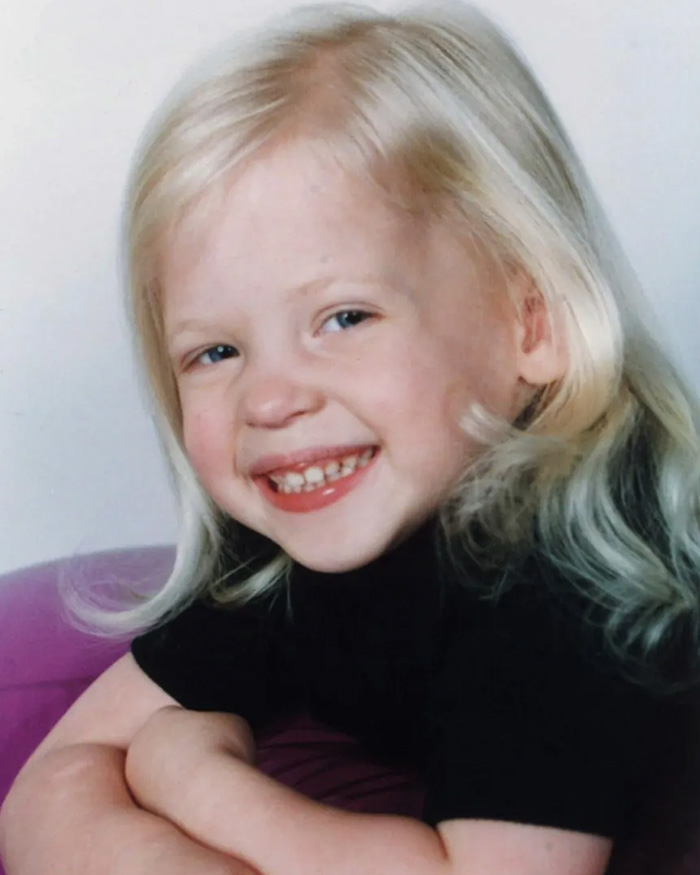
Image credits: Find a Grave
In June 1997, a jury found Frazer guilty of third-degree m*rder.
As the verdict was announced, she reportedly cried, "I'll die in jail!" while her mother shouted, "Oh, my baby! No, that's my baby!"
Frazer received a sentence of up to 20 years in prison but was released before serving the full term.
Years later, she married Steven Ruth, moved to Florida, and largely left her past behind while becoming active in local politics and education debates.
That history resurfaced unexpectedly in 2026, when reports connected the Florida activist to the decades-old homicide.
Approached outside a restaurant and asked about the case, Ruth appeared caught off guard.
"I do not know what you're talking about," she reportedly said.
When questioned again, she repeated the same response and allegedly seemed surprised that her past had become public.
Her mother, Dorothy Gravlin, continued to defend her daughter’s actions.
"That was 30 years ago. Leave us alone," she said. "She was attacked. It was self-defense." Gravlin also insisted, "Everything my daughter does is to help kids, not hurt them."
While the renewed attention focused on Ruth’s past, many in Philadelphia remembered the victim instead.
Christa Lewis's legacy continues through a playground named in her honor and a scholarship established to celebrate the promising young life that was cut tragically short.



Very interesting. I enjoy reading stuff like this so much.
Load More Replies... Very interesting. I enjoy reading stuff like this so much.
Load More Replies...

































 No fees, cancel anytime