Get Premium
Dark mode theme is available exclusively for premium users. Learn more about the benefits of subscribing.
No fees, cancel anytime.

 Dark Mode Ad-Free Browsing Unlimited Content
 Ad-Free Browsing Unlimited Content Dark Mode
Join 1.2 million Panda readers who get the best art, memes, and fun stories every week!

People can be quick to judge someone based on their appearance, especially when that person looks different from what they consider normal. But those opinions can leave a lasting mark on the person receiving them, especially when they’re mocked for something they never chose and cannot change.
This man revealed how his mom made hurtful comments about his girlfriend’s appearance for years. He had always tried to stand up for his partner, but an unexpected turn of events soon changed the situation entirely. Below, you’ll find all the details he shared about what happened, along with what readers had to say about the situation.




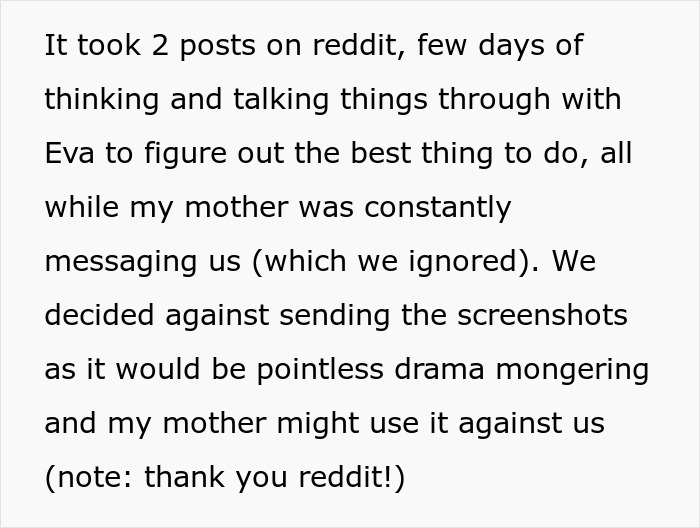





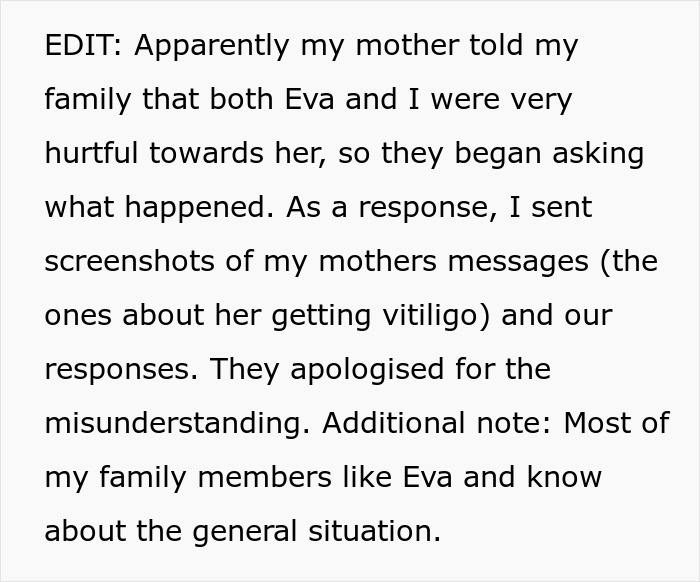

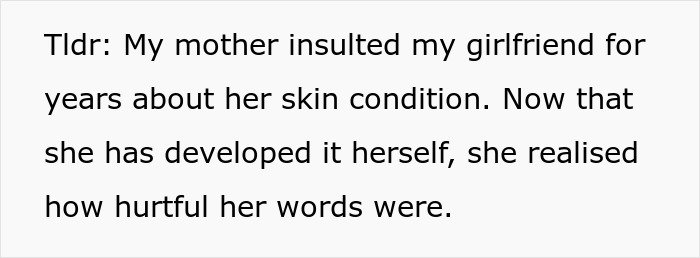
Image credits: WhoStoleMyCake
Vitiligo is a long-term condition that causes patches of skin to lose their natural pigment. It can affect people of any age, gender, or skin tone, and the lighter patches can appear almost anywhere on the body. For some people, the changes are barely noticeable, while others develop much larger areas of depigmented skin.
The condition occurs when the immune system mistakenly attacks melanocytes, the cells that produce melanin. When these cells are damaged or destroyed, the affected areas can no longer produce pigment normally. Scientists still don’t know exactly why this happens, although genetics and other environmental factors may play a role.
According to the American Academy of Dermatology, vitiligo can affect the skin on the hands, face, arms, feet, and other parts of the body. It can also affect areas such as the hair, inside of the mouth, and around the eyes. The pattern and extent of pigment loss can vary widely from person to person.
One of the biggest misconceptions about vitiligo is that it can spread from person to person. It cannot. Vitiligo is not contagious, meaning someone cannot develop the condition simply by touching, hugging, or spending time around someone who has it. That may seem obvious to people familiar with the condition, but misconceptions about visible skin differences can still contribute to stigma.
And while vitiligo itself is not generally painful or dangerous, living with a visible difference can have an emotional impact. Studies have linked the condition with issues such as embarrassment, anxiety, low self-esteem, and social discomfort, particularly when people feel judged because of their appearance.
Visible differences can sometimes attract attention people never asked for, and vitiligo is no exception. People who have the condition can carry a significant social and emotional burden, particularly when other people respond with staring, insensitive comments, or stigma.
That is why comments about someone’s appearance can be much more than harmless teasing. Global Vitiligo Foundation notes that people with vitiligo may feel self-conscious, embarrassed, anxious, or frustrated about how others perceive them. For someone like the girlfriend, having those feelings reinforced by repeated insults from the same person could hardly have helped.
Of course, nobody is required to like every physical difference they see, and personal preferences are perfectly normal. However, there is a big gap between thinking something looks unusual and repeatedly using it to make another person feel bad. One is an opinion; the other is hurtful behavior.
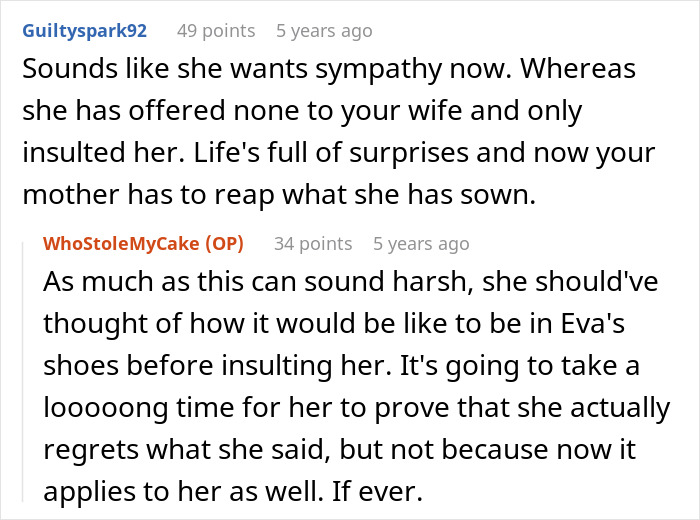
And when that attitude comes from a family member, setting boundaries can become especially important. The couple in this story had already created distance after the mother’s repeated comments, and choosing not to reopen that door simply because circumstances had changed was their decision.
The biggest lesson here is that empathy doesn’t necessarily have to be learned through personal experience. The mom may now better understand what the woman has dealt with, but hopefully that understanding also makes her think differently about the words she uses toward other people.
What do you think? Was the couple right to keep their distance, or should they have given the mother another chance? Share your thoughts in the comments below.

















Mom's reaching out is reminiscent of people who've committed a crime saying they are sorry and beg for forgiveness - but only after they get caught.


I work with a black guy with vitiligo, he claims he's half-white. Ron is a blast and a hell of a toolmaker.
Mom's reaching out is reminiscent of people who've committed a crime saying they are sorry and beg for forgiveness - but only after they get caught.
I work with a black guy with vitiligo, he claims he's half-white. Ron is a blast and a hell of a toolmaker.






























 No fees, cancel anytime









39
12