Get Premium
Dark mode theme is available exclusively for premium users. Learn more about the benefits of subscribing.
No fees, cancel anytime.

 Dark Mode Ad-Free Browsing Unlimited Content
 Ad-Free Browsing Unlimited Content Dark Mode
Join 1.2 million Panda readers who get the best art, memes, and fun stories every week!
Parents who have several children often do their best to treat them equally. However, that doesn’t always mean they should receive the same exact thing. Each child has unique needs, so arguably, they require different things from their parents.
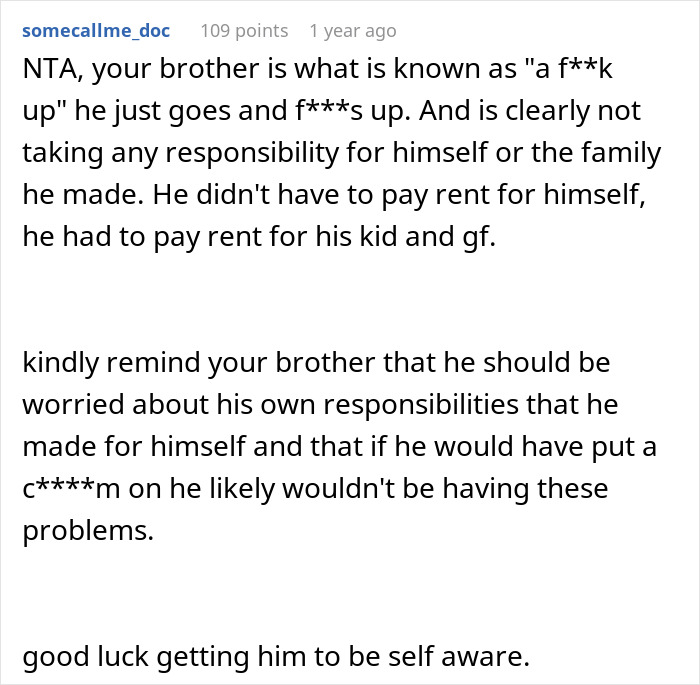
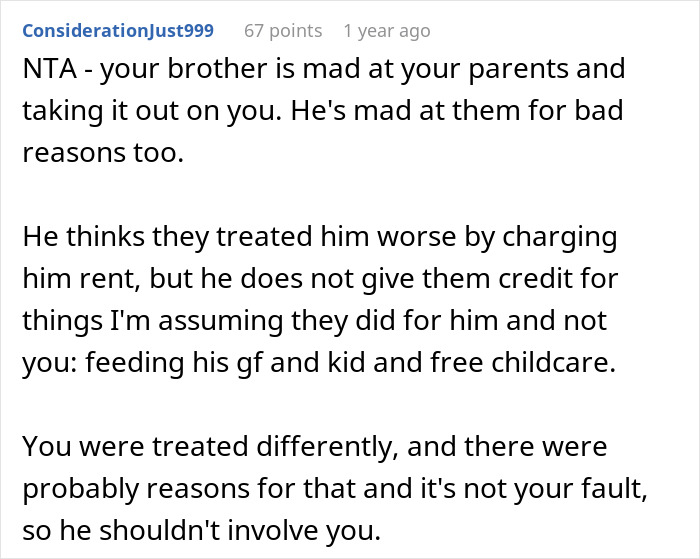
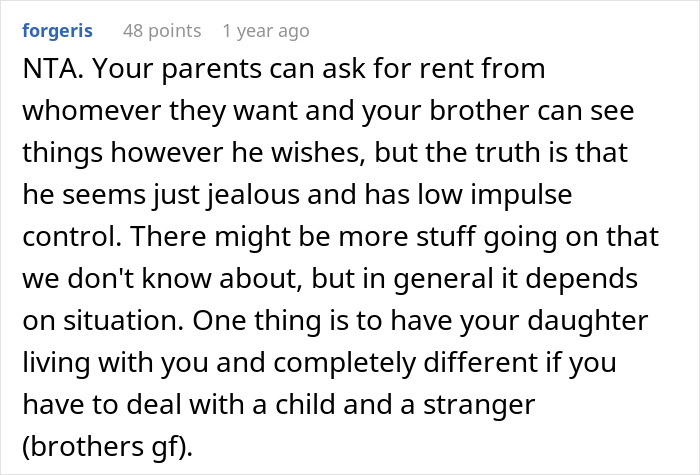
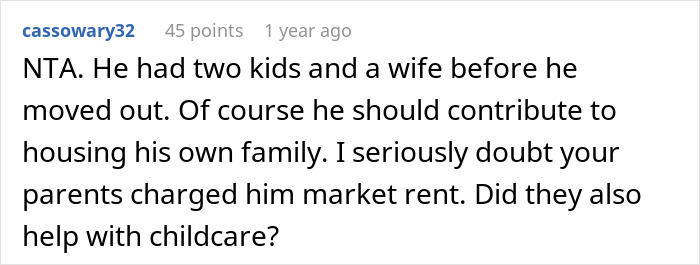
This brother seems to disagree with this, as he felt it was unfair that he had to pay rent while living with his parents when his little sister didn’t. The family tried to explain that their situations were completely different, which he refused to believe, continuing to provoke his younger sibling.
Image credits: Prostock-studio / envato (not the actual photo)
Image credits: monkeybusiness / envato (not the actual photo)
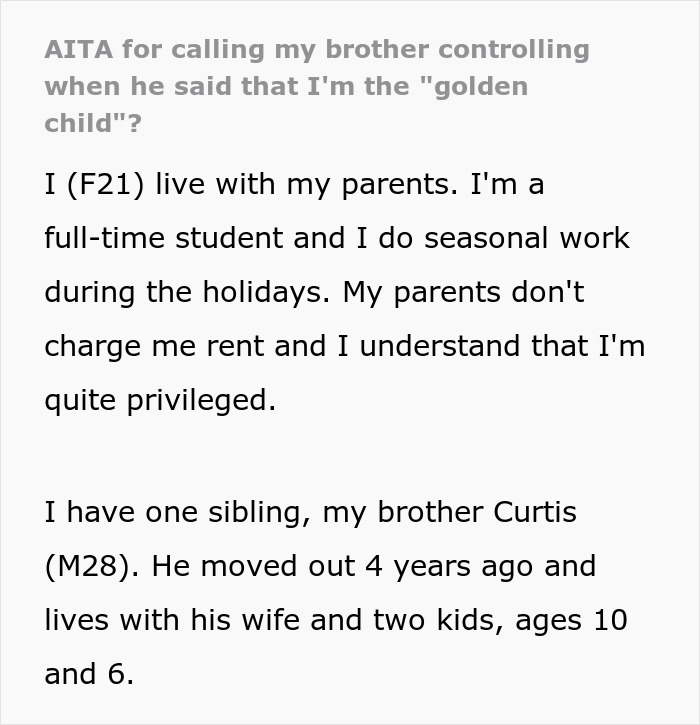
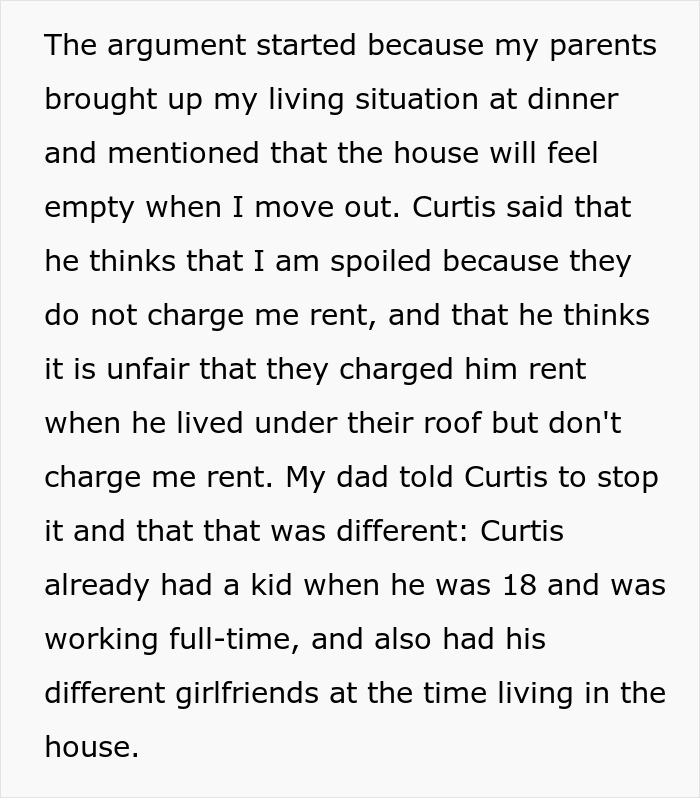
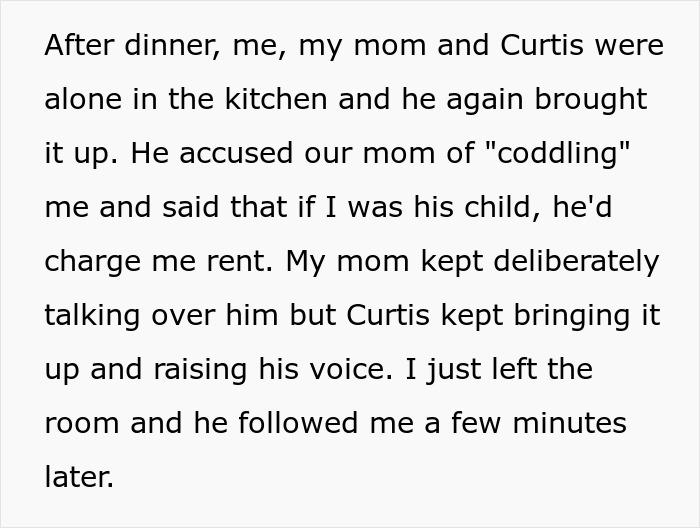
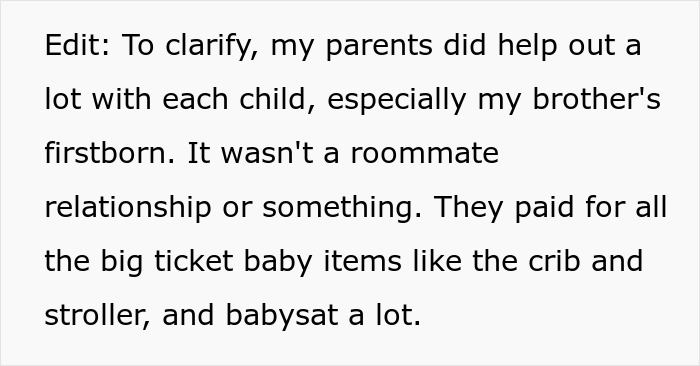
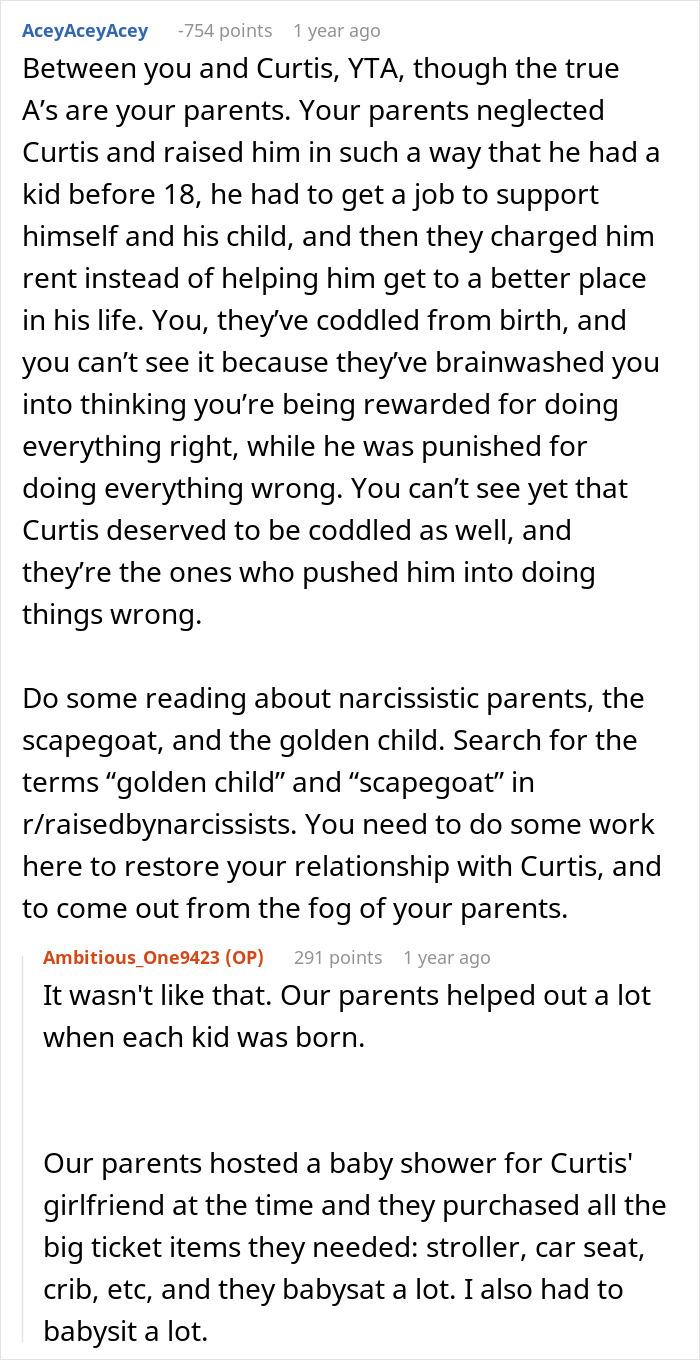
Image credits: Ambitious_One9423
The parents in this story seem to be treating their kids fairly instead of equally, and many experts applaud such an approach to parenting. Since every kid is unique, it’s impossible for parents to treat them equally or create equal opportunities. One child might need more support in some areas while the other in others, so focusing on their individual needs instead of equal treatment is technically more fair.
Equality is often mistaken for equivalence, which recognizes our differences and individual characteristics and still considers them to be of equal value. This concept might be easier to understand when looking at this image.
Let’s say a parent treats their children equally. Then, they would always support each of them in the same manner, ignoring the unique situation each child is in. Even though, for example, parents are spending equal amounts of time in the same way with each kid, one kid may still feel overlooked because their individual needs aren’t heard and met.
Parents who treat their children fairly or equivalently, on the other hand, consider children’s needs and personal situations. Ideally, this helps different children thrive equally as their unique needs are addressed, setting them up for success. Keep in mind that different treatment doesn’t mean that parents don’t love their children the same. It just means that they have to structure some things differently for each child.
Image credits: Eduardo Ramos / unsplash (not the actual photo)
Even though parents might be treating their children fairly, some kids may still find an issue with it. They might feel that parents are doing the opposite just because they aren’t treated in the same way as the rest of their siblings. If a parent shows the slightest sign of preferential treatment just because one child needs it more, they might start asking questions and demanding more parental attention.
In this case, Kiddocare suggests acknowledging their complaints and justifying them, without apologizing.
“If your child complains about unfairness towards another sibling, listen to his/her reason and justify yourself properly. Be firm that giving the sibling some extra help/attention is necessary, and lace your words with some compliments to the complaining child and make it up with something else or promise the same treatment the next time around,” their team writes.
Clinical psychologist Catherine Gallagher suggests saying something along the lines of, “Just so you know, this isn’t because he’s more special, it’s because this is what he’s needing right now and when you need us, we’re right there for you.”
When treating kids fairly, there has to be plenty of communication with the children. Not to mention, the fairness has to be consistent. If kids do something wrong or right, they have to be rewarded or reprimanded all the same.
“You should also communicate to the other sibling(s) when you are dealing a reward or a reprimand to your child, that they should also expect the same when they do the same,” Kiddocare adds. “Sure, the degree of the reward/reprimand can vary from child to child, but if communicated properly, your children will not have the feeling that you’re being unfair to them in any way.”

By entering your email and clicking Subscribe, you're agreeing to let us send you customized marketing messages about us and our advertising partners. You are also agreeing to our Privacy Policy.
Thank you! You've successfully subscribed to newsletters!


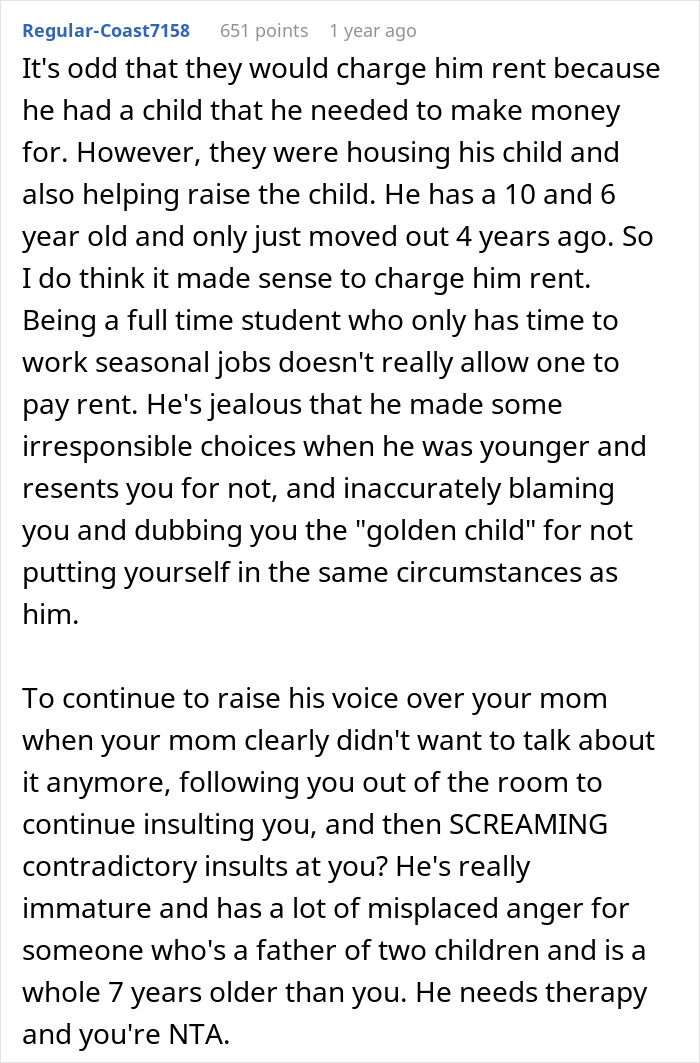
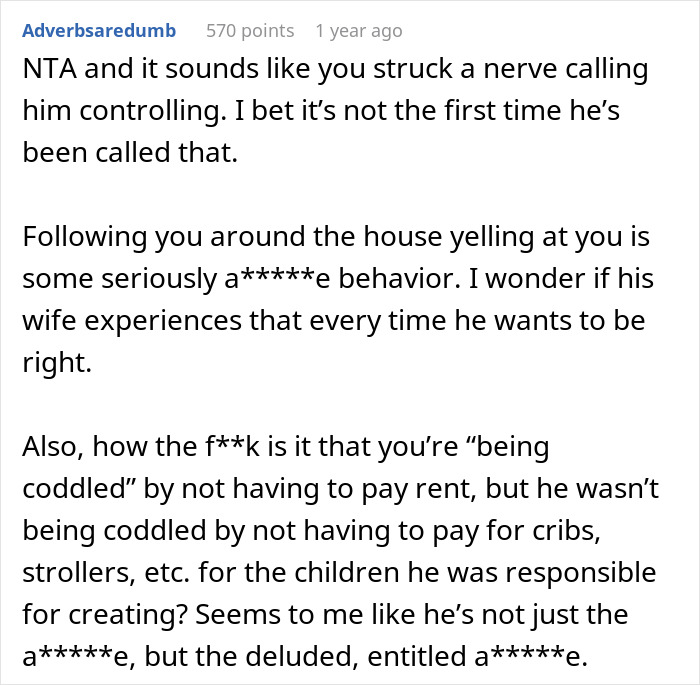
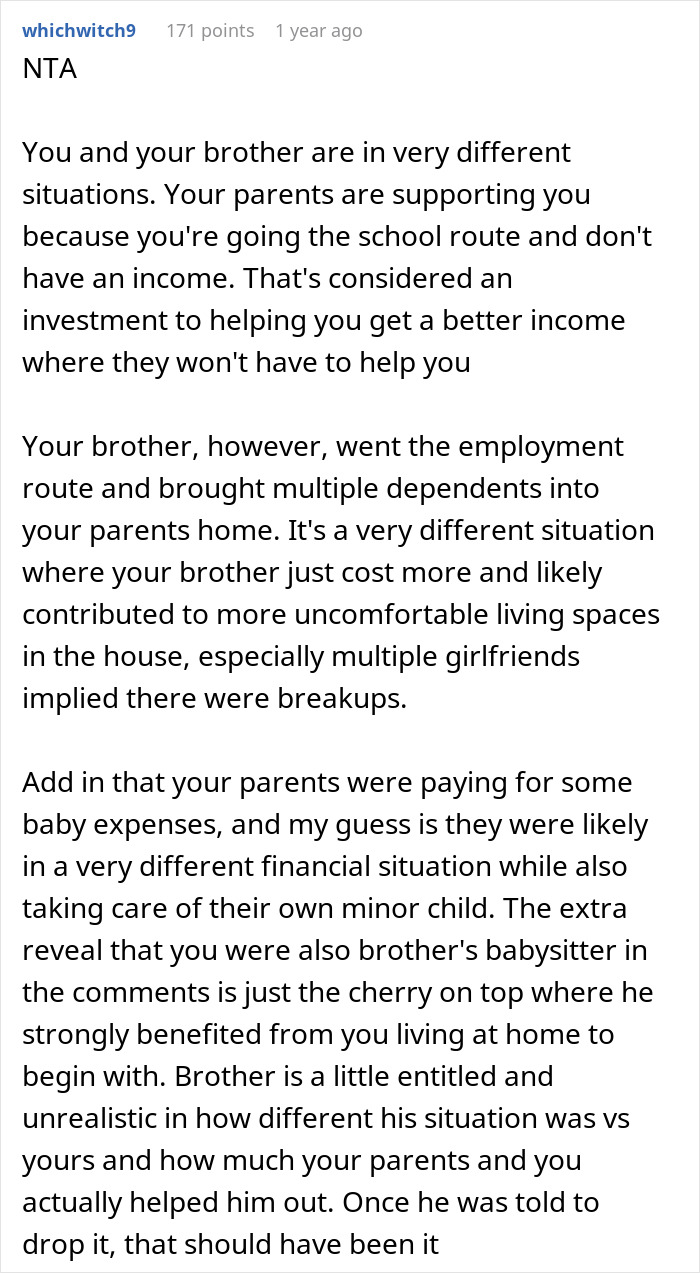
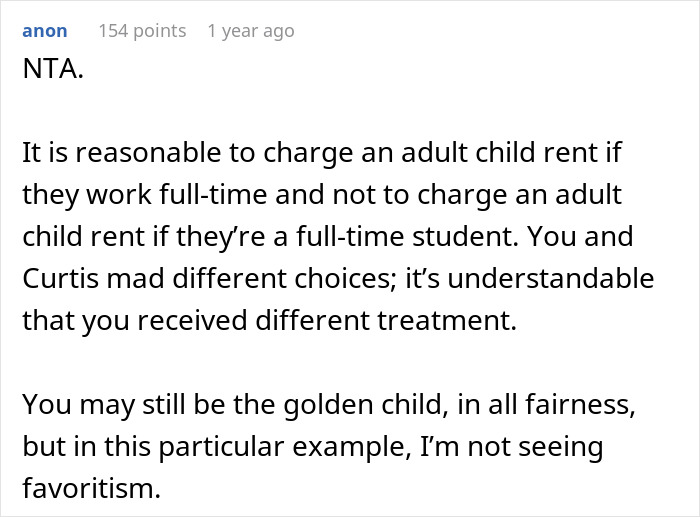
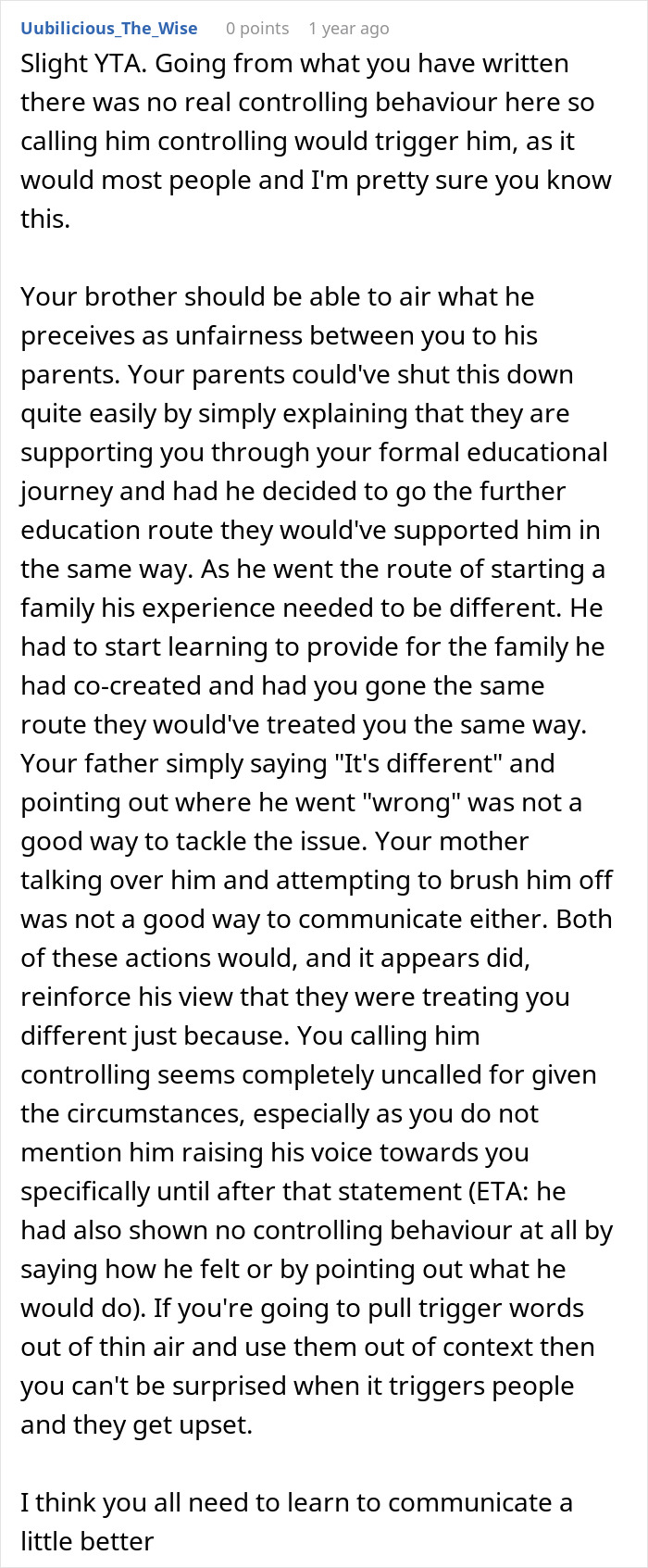
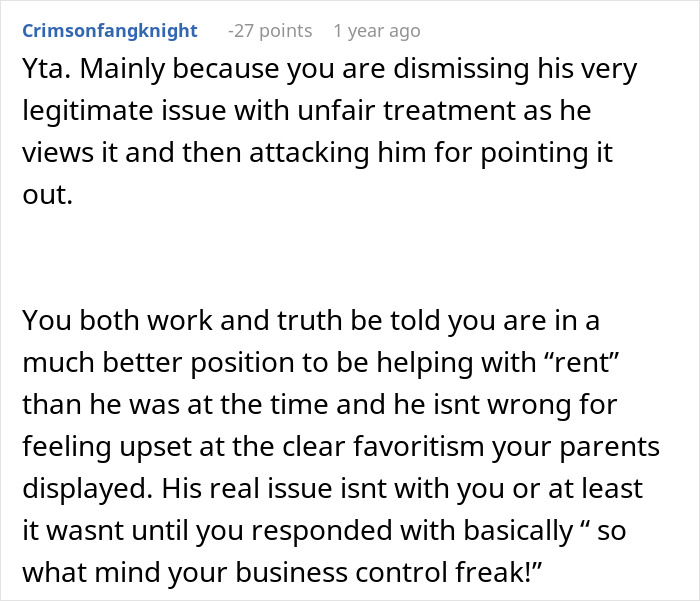
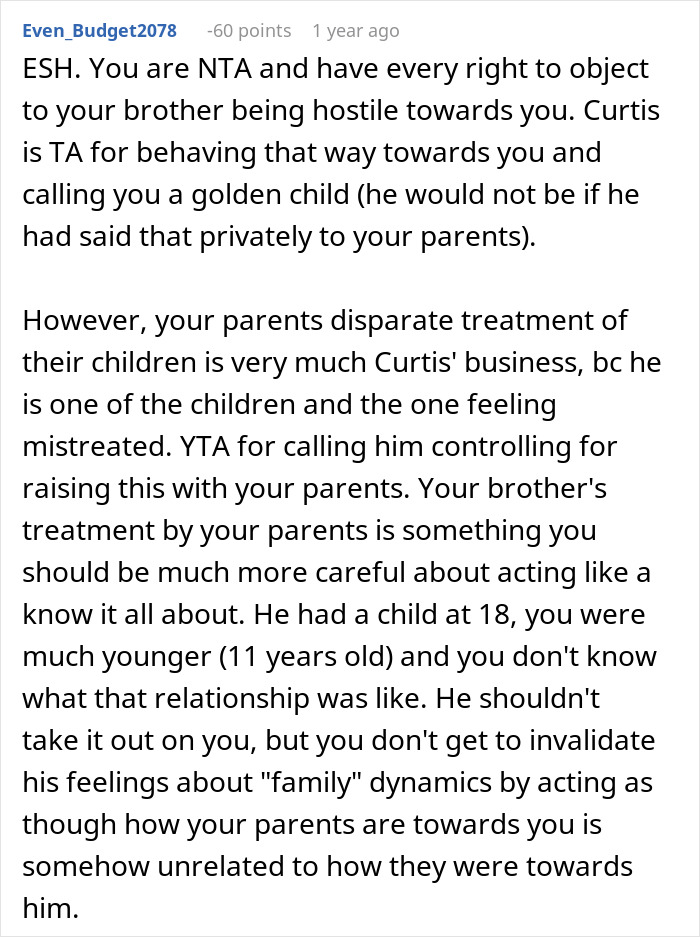
As usual, the YTAs are missing the real point: CURTIS IS THE ONE WHO SCREWED UP HIS LIFE. Not the OP. Not his parents (so far as we know). He chose to have unprotected s*x with at least two women and have a child by the age of 18, and let his parents pay for big-ticket items AND kept living in their home with his kids and girlfriend(s). The fact that his sister chose not to follow in his footsteps naturally means she will be treated differently. I swear, I could have written this. My older siblings made choices straight out of high school that I didn’t. As a result, my life is different from theirs. What else do they expect?

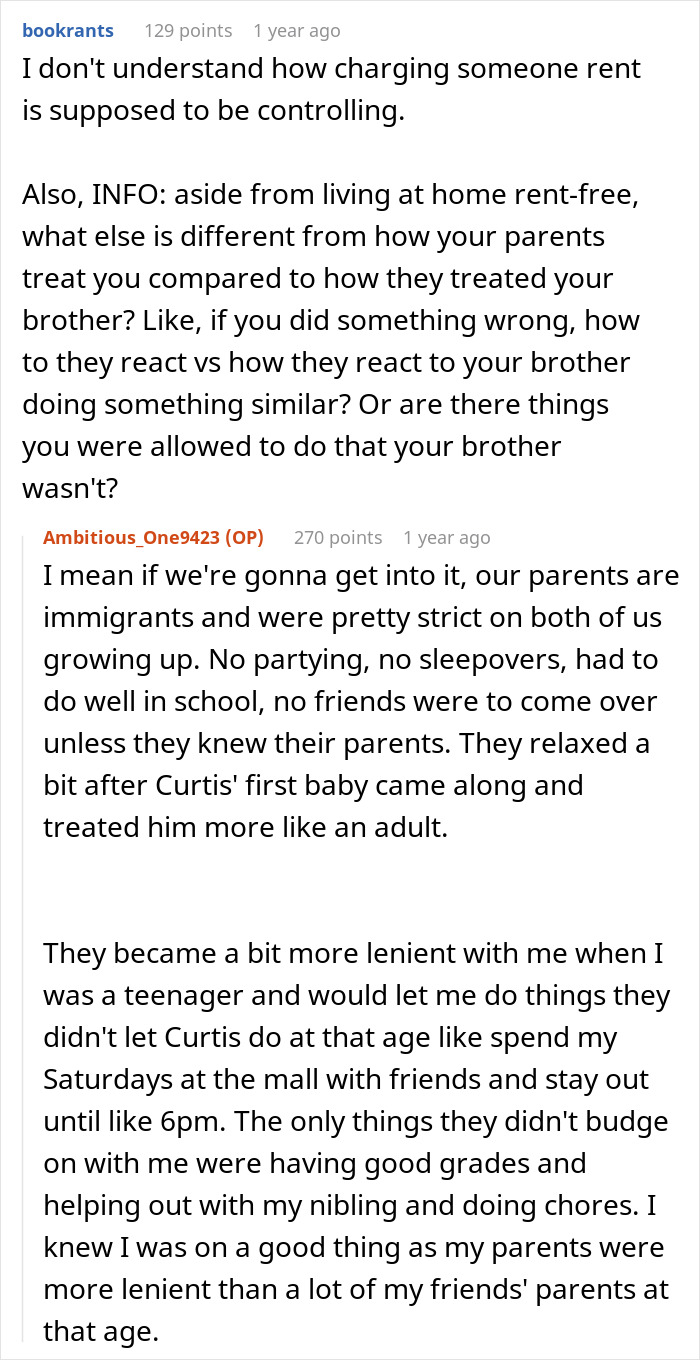
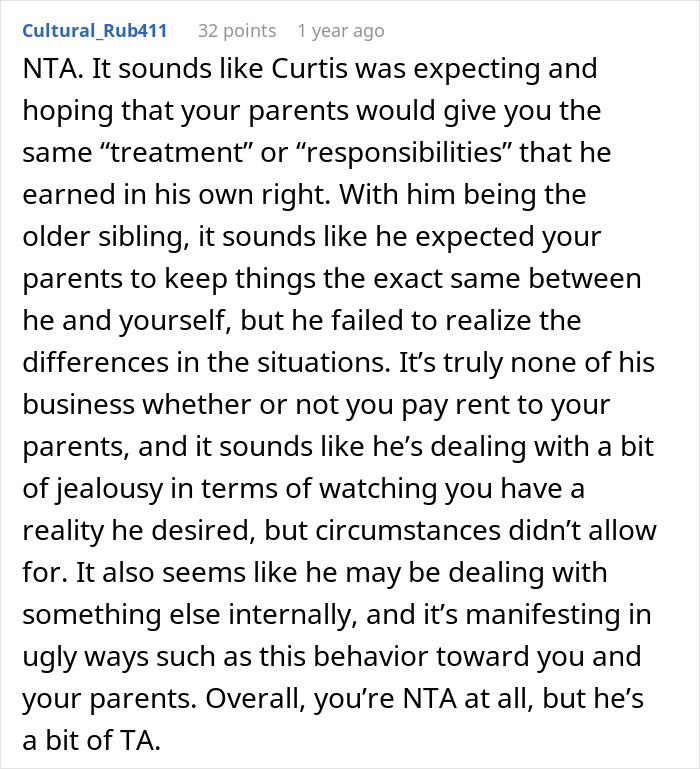
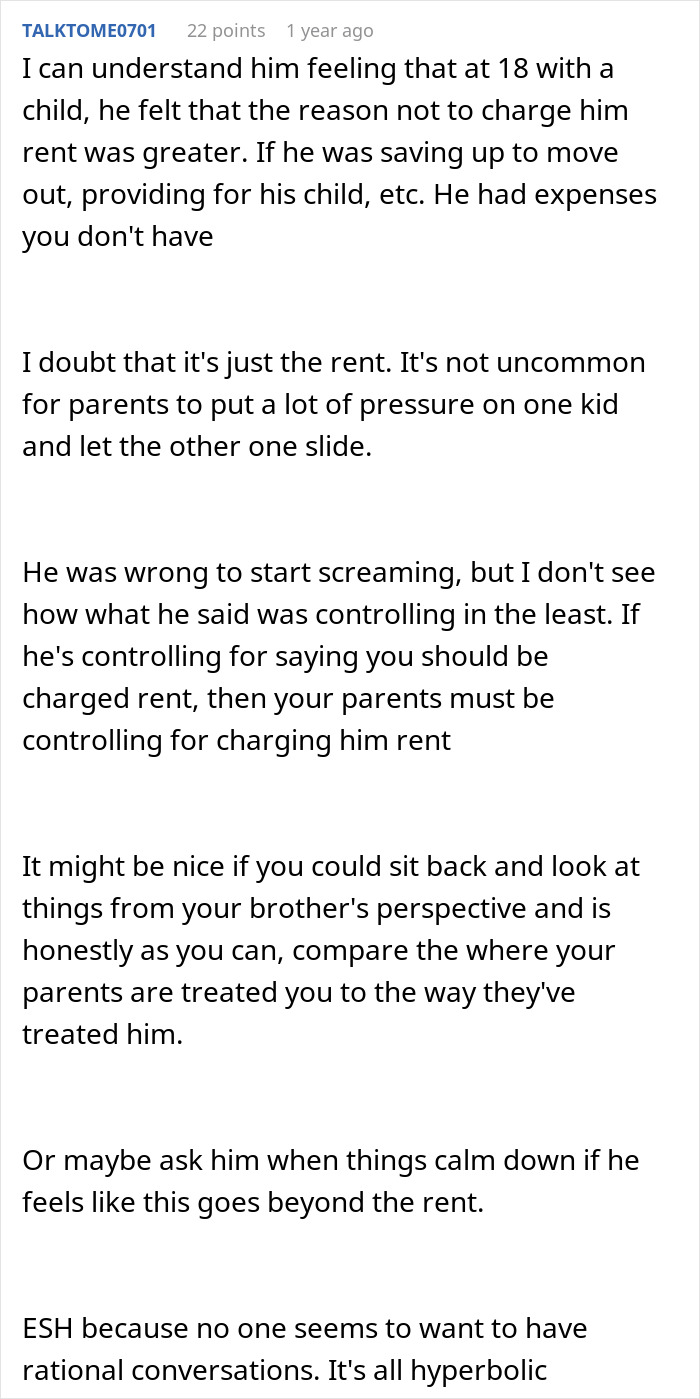
I think it is clear this family argument is over more than this one issue. If the brother truly thinks sis is a golden child, there are probably years of examples. OP admits in a comment that the parents were mech more less “CONTROLLING” of her once the grandkids came.
Load More Replies...
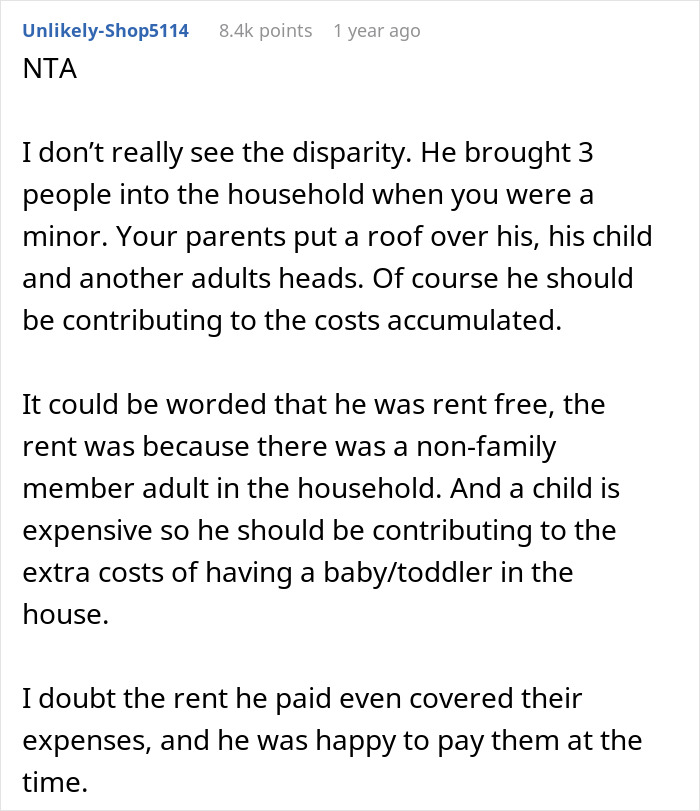
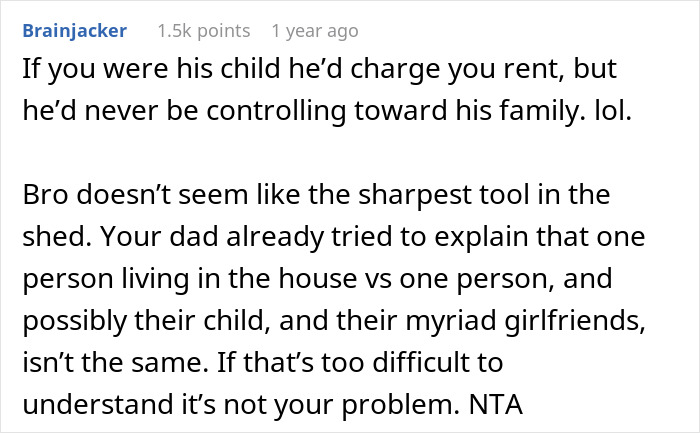
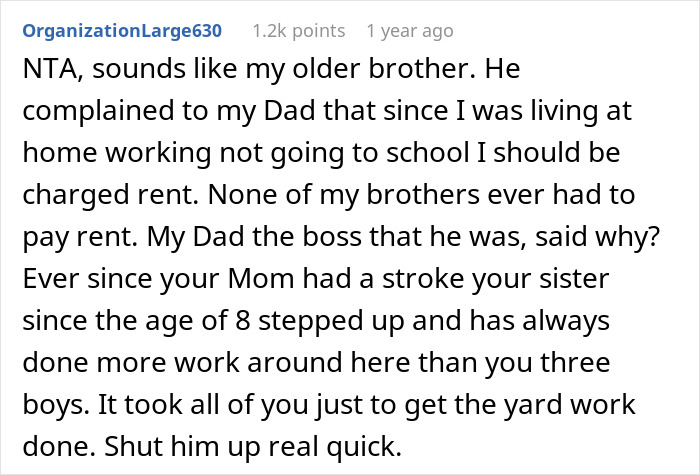
NTA. If my son had a kid before turning 18 *and* brought his baby mama to live in the house *and* expected me to babysit, you bet I'd be asking him to pay rent! OP isn't the golden child, she's simply the one who doesn't cause trouble or take bad decisions. It's fair the parents aren't asking her to pay rent when she doesn't cost them money other than basic necessities like food and water.

As usual, the YTAs are missing the real point: CURTIS IS THE ONE WHO SCREWED UP HIS LIFE. Not the OP. Not his parents (so far as we know). He chose to have unprotected s*x with at least two women and have a child by the age of 18, and let his parents pay for big-ticket items AND kept living in their home with his kids and girlfriend(s). The fact that his sister chose not to follow in his footsteps naturally means she will be treated differently. I swear, I could have written this. My older siblings made choices straight out of high school that I didn’t. As a result, my life is different from theirs. What else do they expect?
I think it is clear this family argument is over more than this one issue. If the brother truly thinks sis is a golden child, there are probably years of examples. OP admits in a comment that the parents were mech more less “CONTROLLING” of her once the grandkids came.
Load More Replies... NTA. If my son had a kid before turning 18 *and* brought his baby mama to live in the house *and* expected me to babysit, you bet I'd be asking him to pay rent! OP isn't the golden child, she's simply the one who doesn't cause trouble or take bad decisions. It's fair the parents aren't asking her to pay rent when she doesn't cost them money other than basic necessities like food and water.
































 No fees, cancel anytime























33
9