Get Premium
Dark mode theme is available exclusively for premium users. Learn more about the benefits of subscribing.
No fees, cancel anytime.

 Dark Mode Ad-Free Browsing Unlimited Content
 Ad-Free Browsing Unlimited Content Dark Mode
Join 1.2 million Panda readers who get the best art, memes, and fun stories every week!
Every family has its own rules and traditions, but most people would be forgiven for thinking that some things are near-universal. For example, when a child has a birthday, this event is recognized in at least some way, to the point that even saying “happy birthday” is a default assumption.
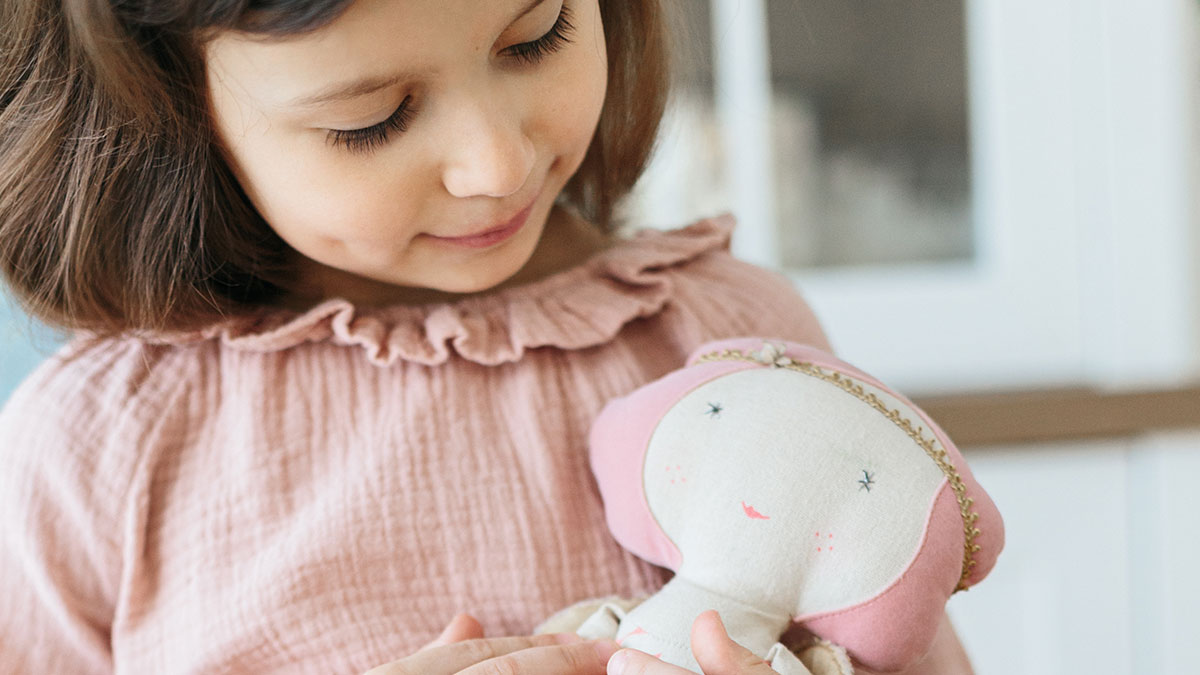
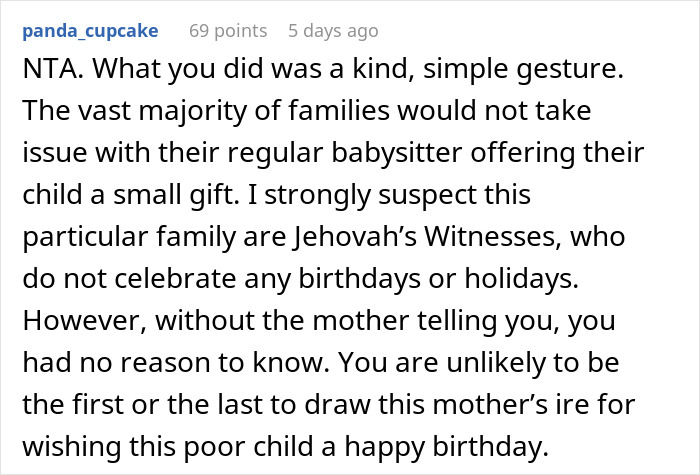
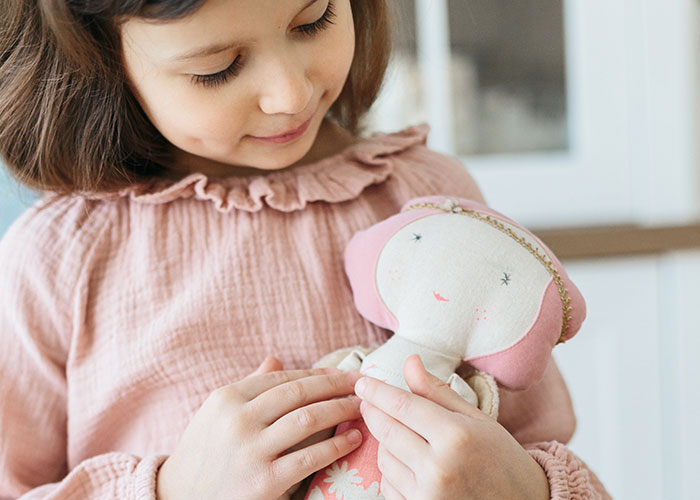
A babysitter asked the internet if she was wrong for getting a seven year old girl a doll for her birthday. As it turns out, this little girl is from a family where they apparently don’t celebrate any holidays, birthdays or anything of that sort. We reached out to the woman who made the post via private message and will update the article when she gets back to us.
Image credits: sonyashna / envatoelements (not the actual photo)
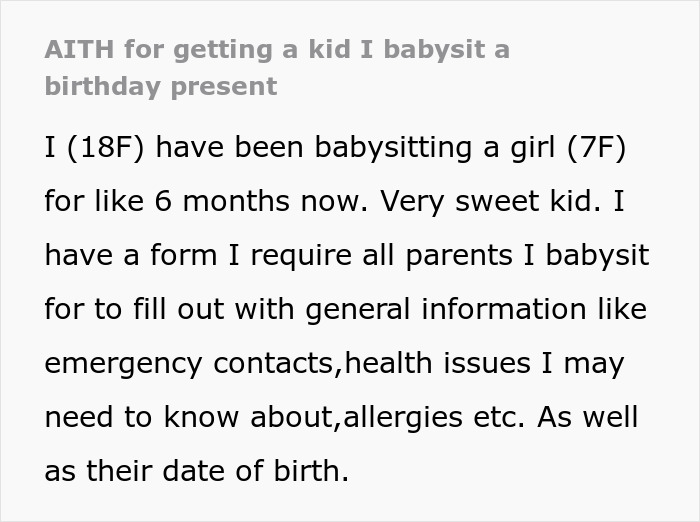
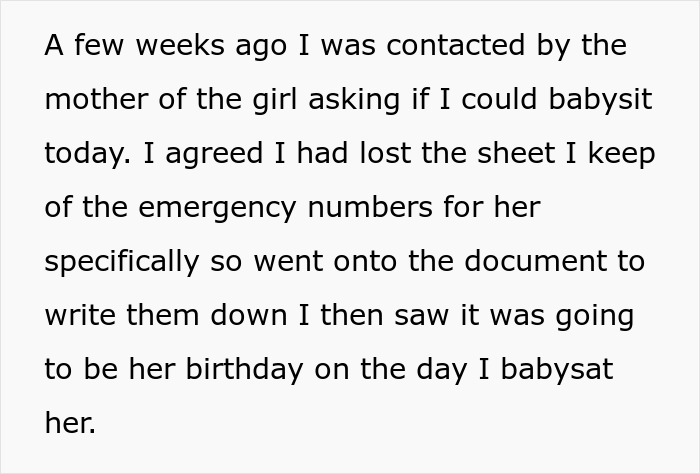
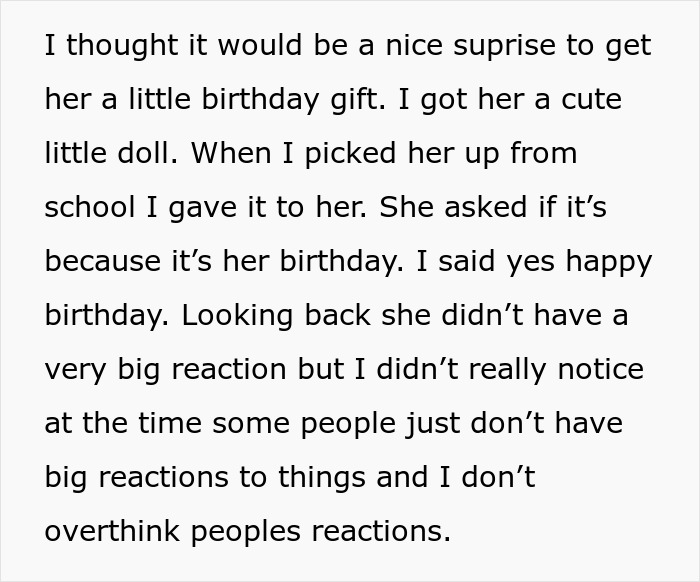
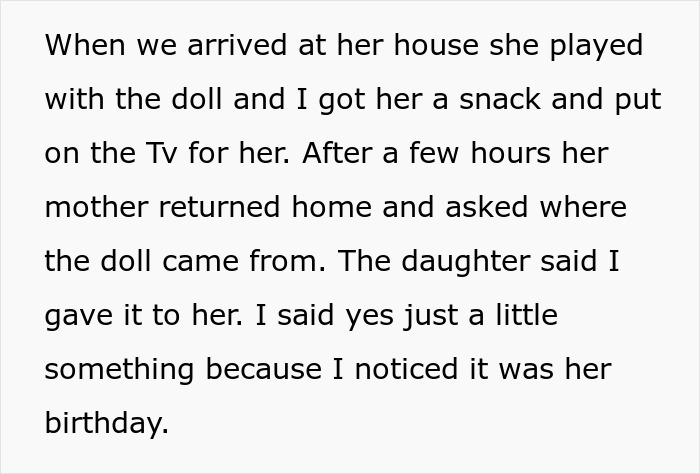
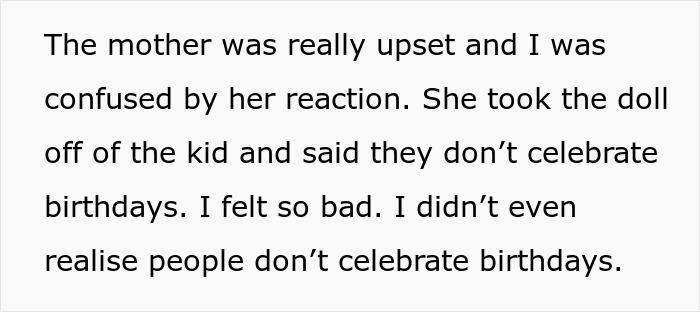
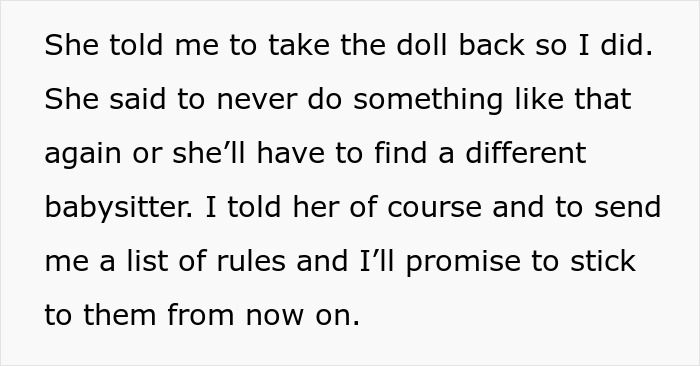
Image credits: LightFieldStudios / envatoelements (not the actual photo)
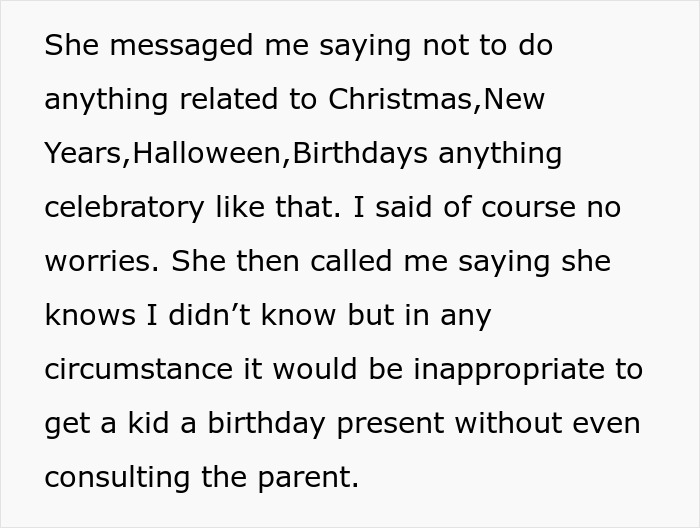
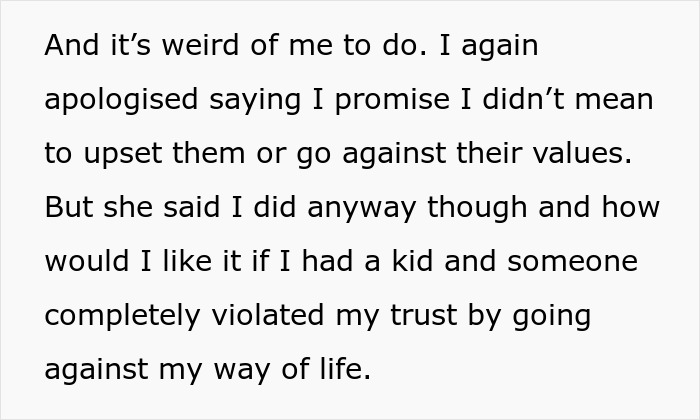
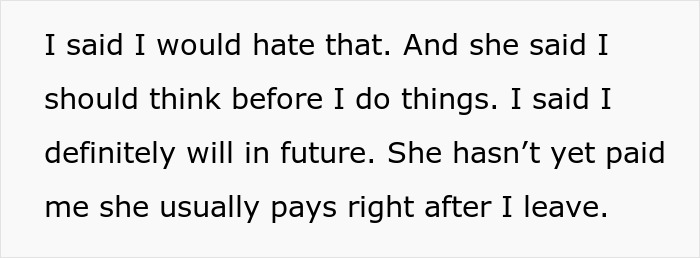
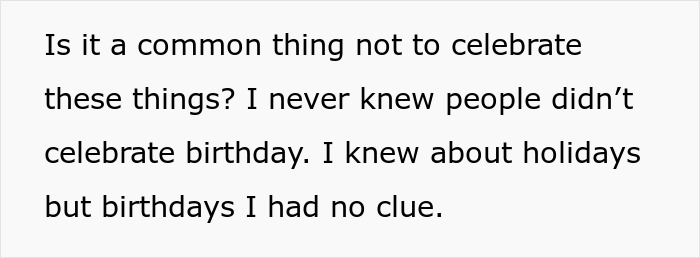
Image credits: Narrow_Medicine_7283
Image credits: Farknot / envatoelements (not the actual photo)
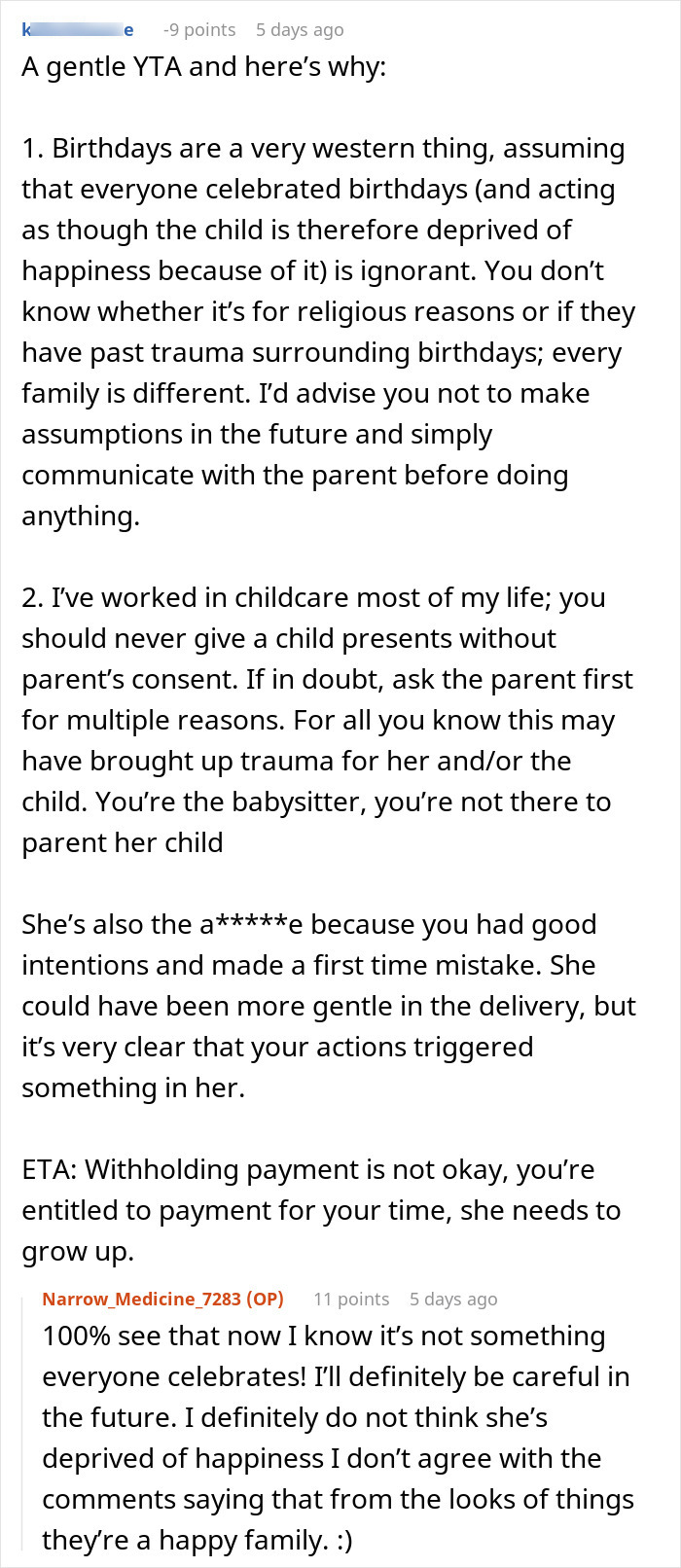
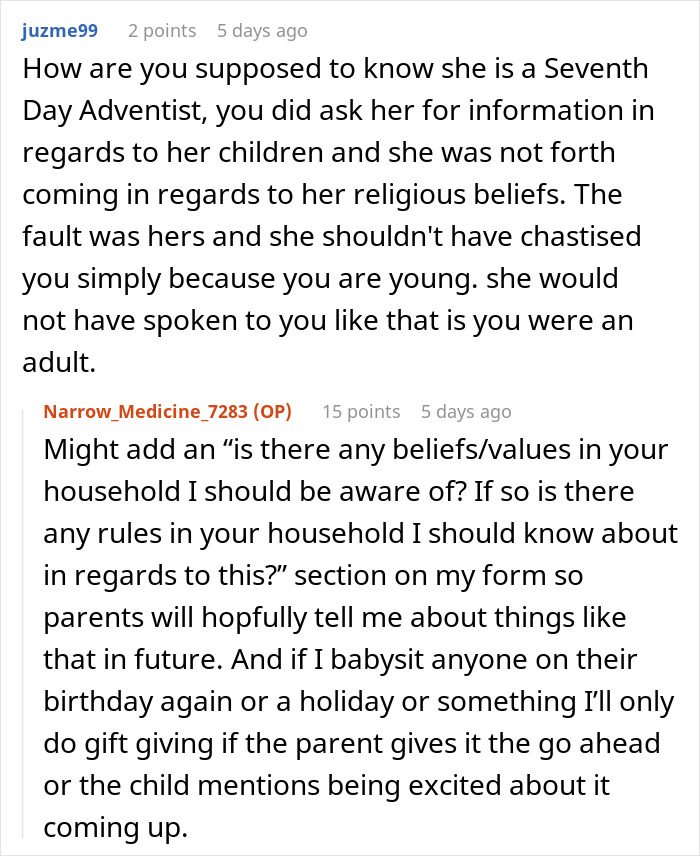
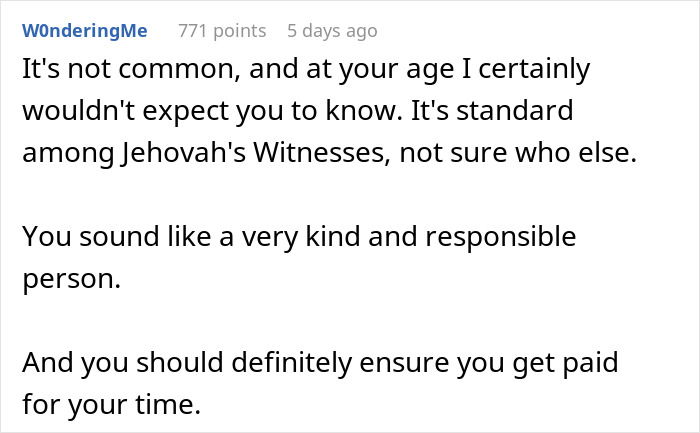
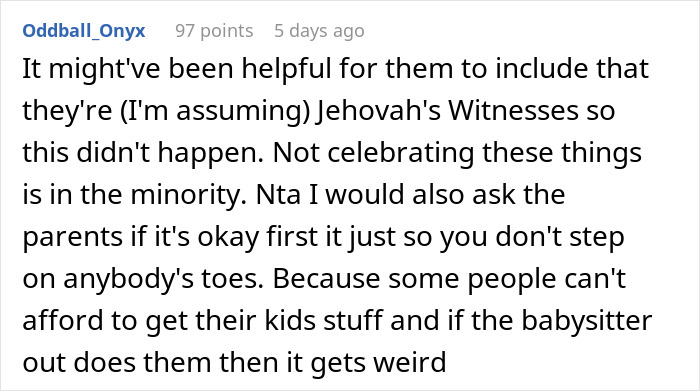
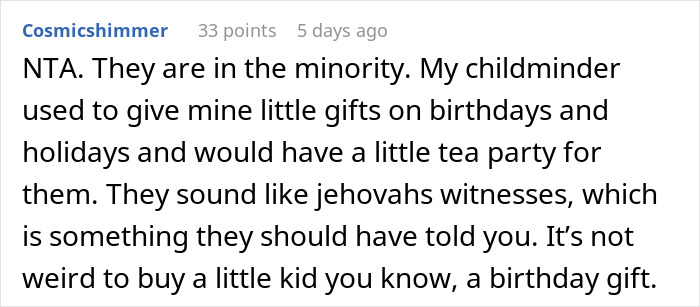
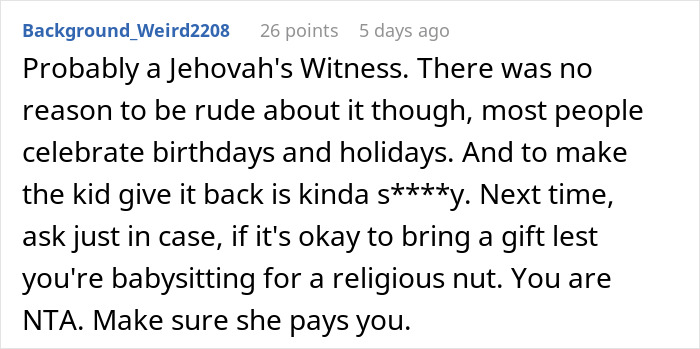
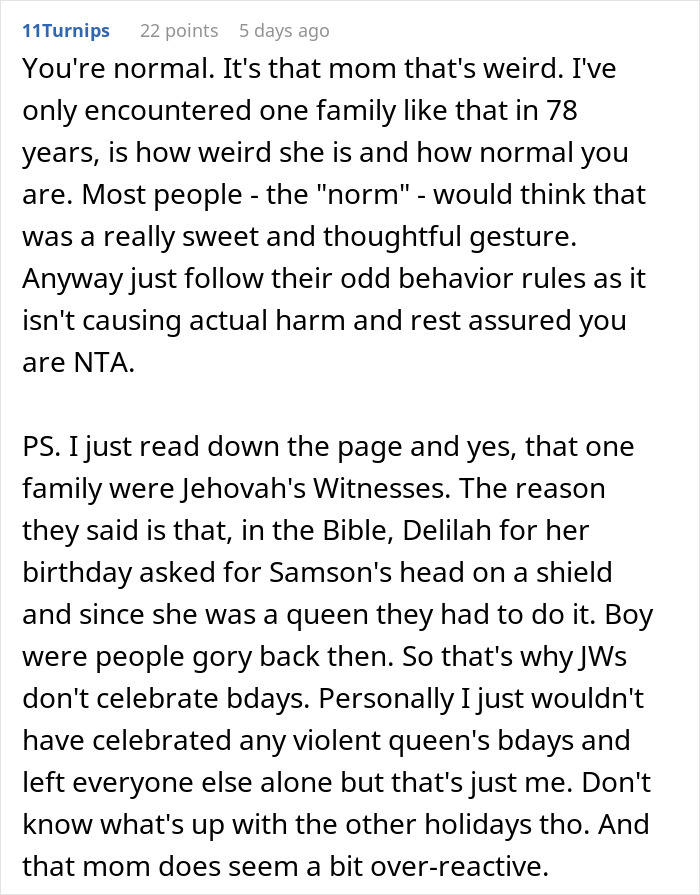
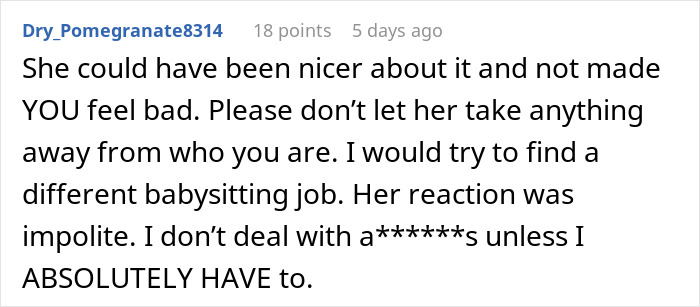
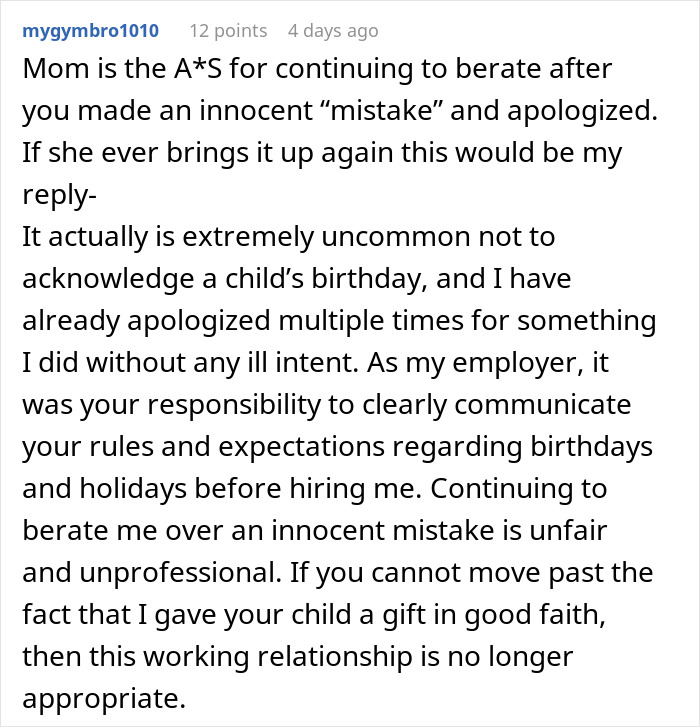
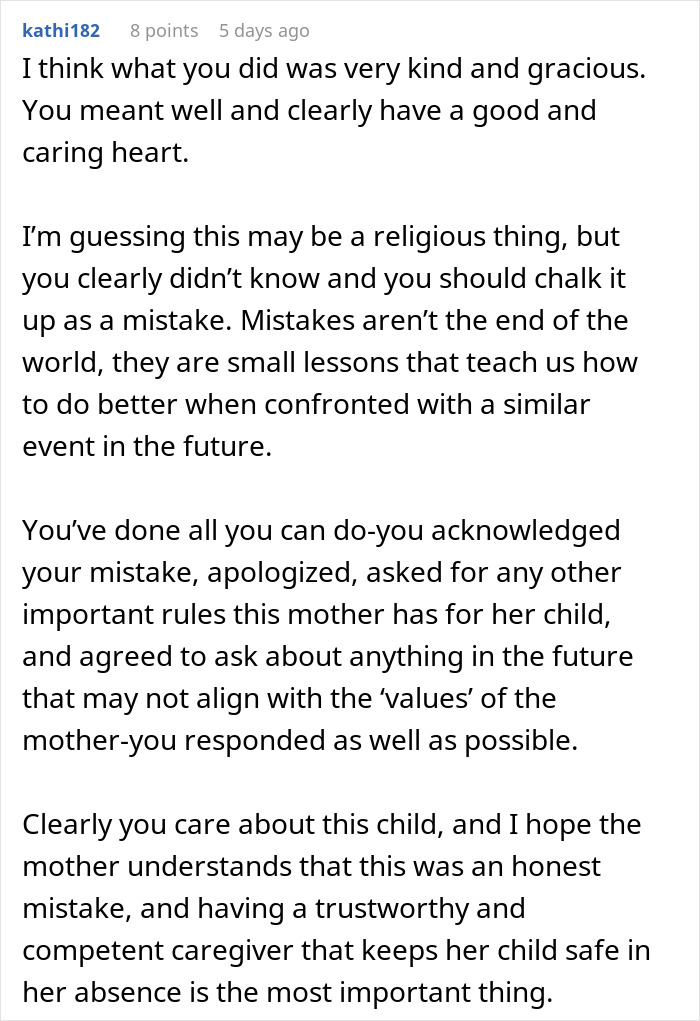
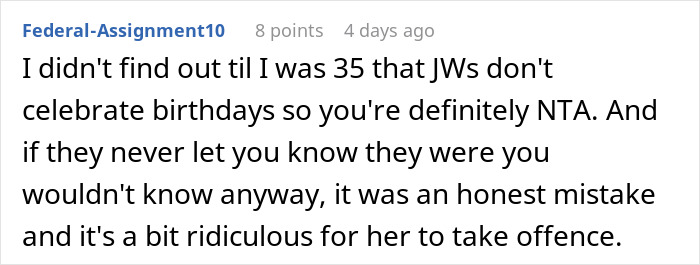
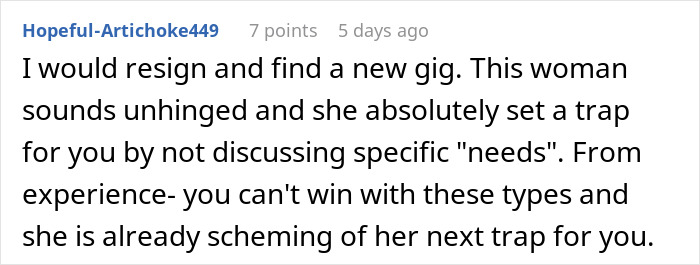
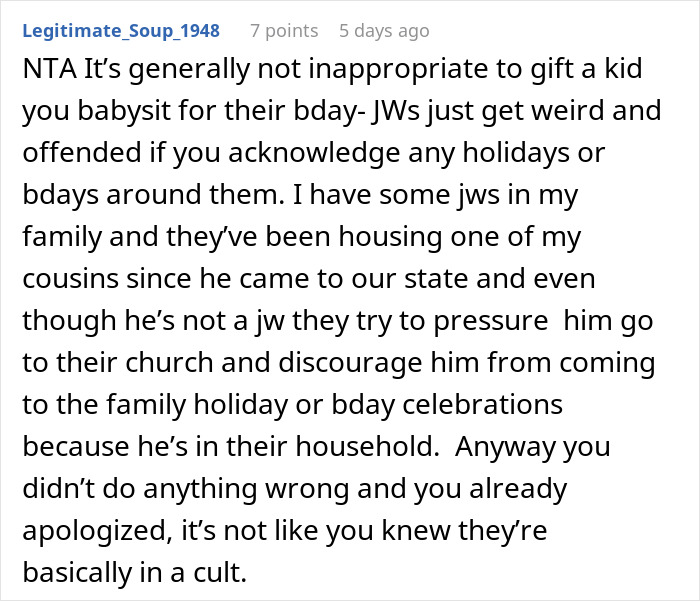
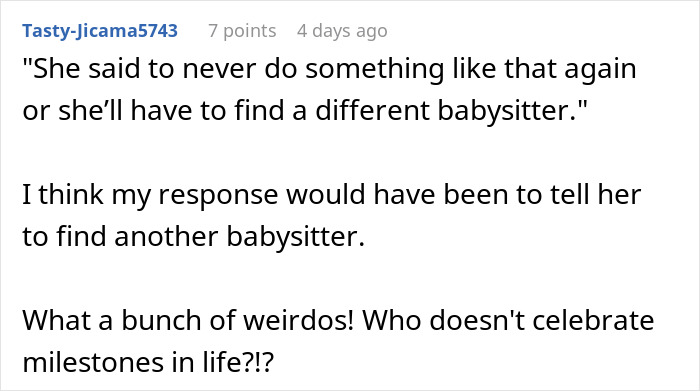
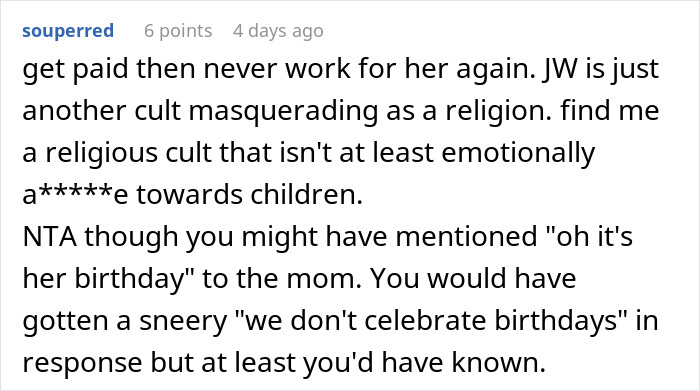
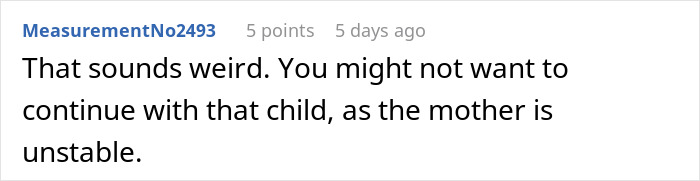
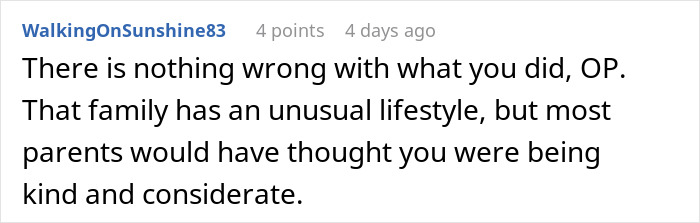
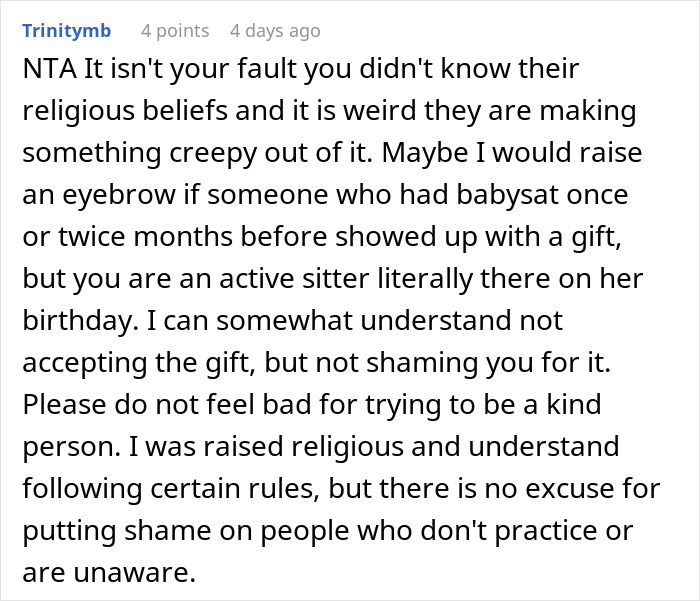
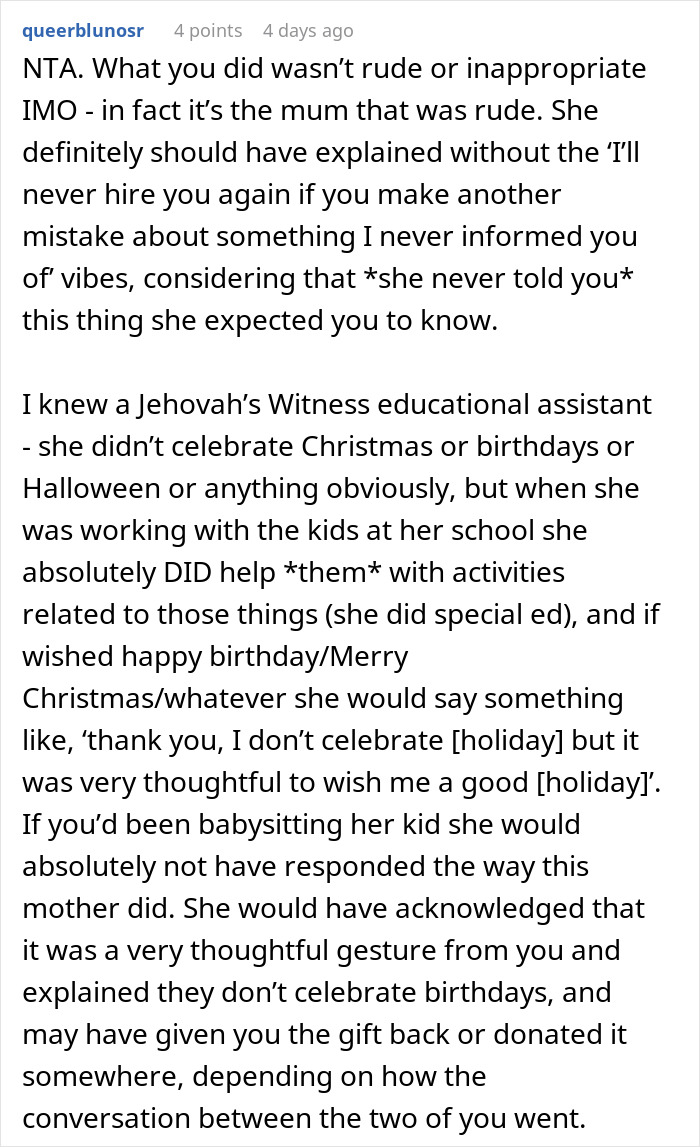
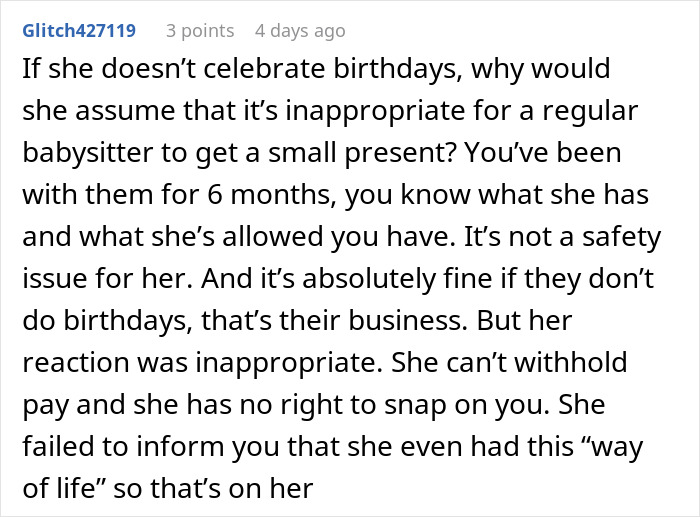
The act of giving a gift is usually seen as a universal “win,” but as one 18-year-old babysitter recently discovered, a kind gesture can quickly turn into a cultural collision when family values aren’t explicitly discussed. After noticing a seven-year-old’s birthday on her intake form, the sitter surprised the girl with a doll, only to be met with a stern lecture from the mother. The family, identified as Seventh-day Adventists in the comments (some of which can be found below), does not celebrate birthdays or traditional holidays like Christmas and Halloween.
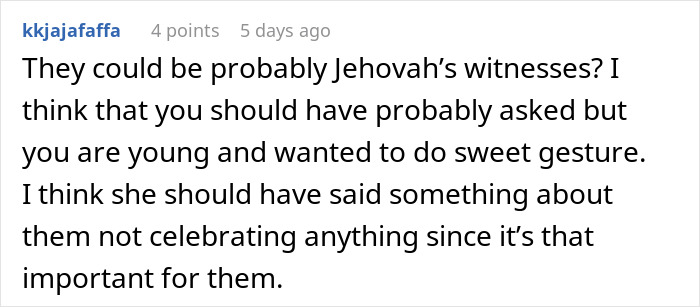
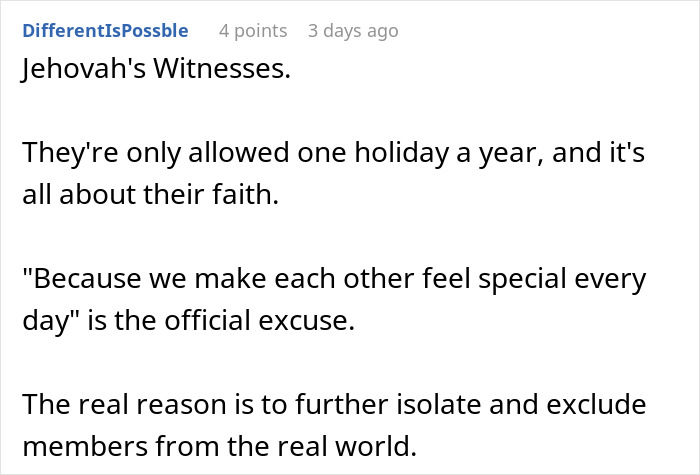
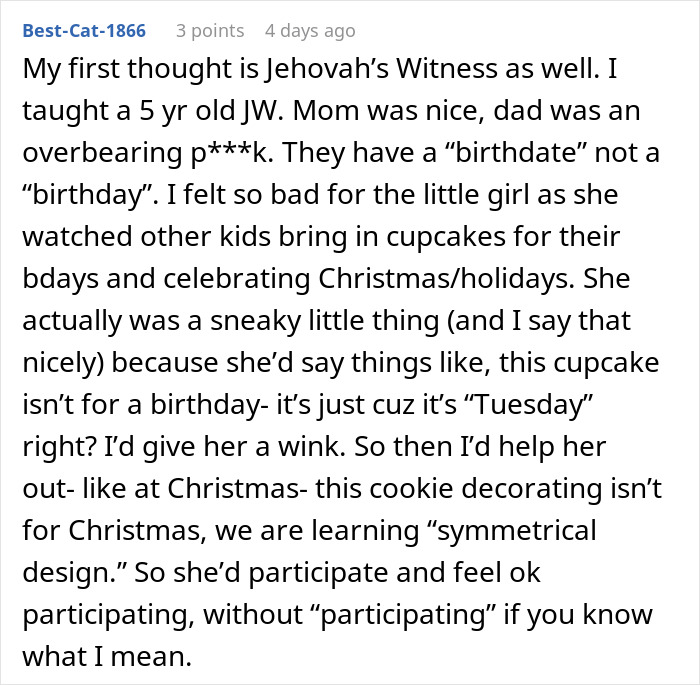
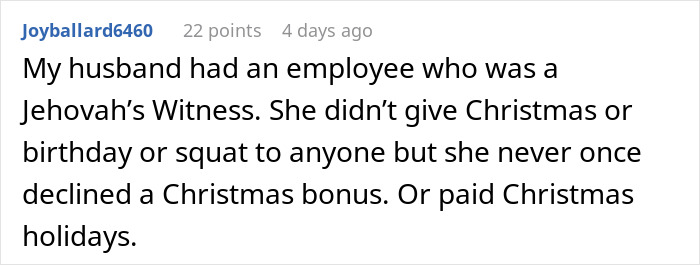
While the babysitter was understandably shocked, most people in secular or mainstream religious circles view birthdays as a non-negotiable milestone, this situation highlights the importance of navigating religious and cultural diversity in professional domestic roles. In many faith traditions, including certain branches of Seventh-day Adventism or Jehovah’s Witnesses, forgoing such celebrations is a way to focus on spiritual devotion rather than “self-exaltation” or traditions they believe, somewhat justifiably, have pagan origins.
The friction in this story stems from a psychological phenomenon known as naïve realism, which is the human tendency to believe that our own perception of the world is the “objective” reality and that others will naturally share it. The babysitter assumed that birthdays are a universal joy because, in her experience, they are. Conversely, the mother assumed that any “responsible” adult would know to ask permission before introducing a new toy or celebrating a holiday.
Research into cultural competence suggests that these types of misunderstandings are common when people from different backgrounds interact without a clear “playbook.” For the mother, the doll wasn’t just a toy, it was a physical representation of a “worldview violation.” When our deeply held values are ignored, even accidentally, the brain often triggers a “threat” response, which explains why her reaction felt so intense and accusatory toward the sitter.
Image credits: LightFieldStudios / envatoelements (not the actual photo)
From a professional standpoint, this incident underscores the necessity of setting clear boundaries early in a childcare relationship. While the babysitter’s intent was pure, the mother’s point about “consulting the parent” holds some weight in the world of professional caregiving. Experts in childcare ethics often recommend that providers check in before introducing gifts or celebrating events, as every household has its own “hidden rules” regarding sugar, screen time, or religious observance.
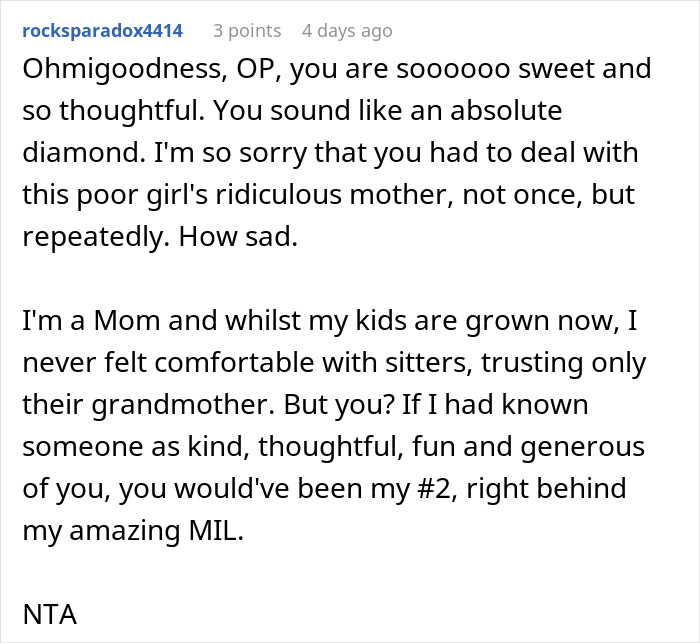
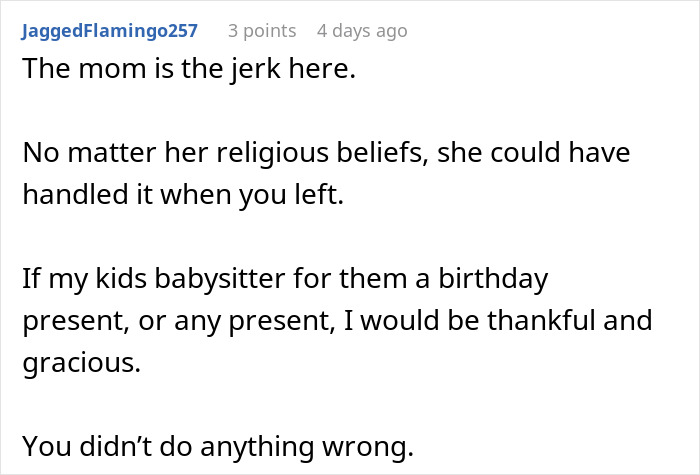
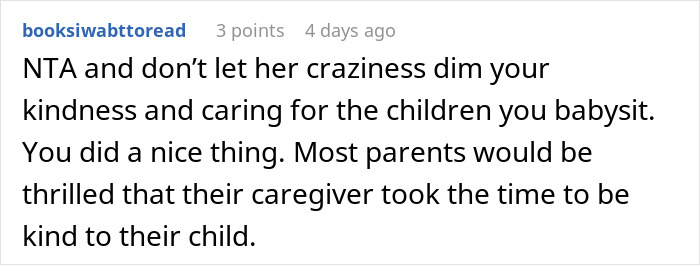
However, the mother’s harshness, suggesting the sitter was “weird” and withholding pay, likely crosses the line from a “teaching moment” into an overreaction. It is difficult for a young employee to respect a “way of life” that hasn’t been communicated to them, and part of the parental “mental load” involves clearly stating the house rules to those they hire.
Ultimately, this story demonstrates some of the complexity of modern co-parenting and domestic work. It serves as a reminder that “common sense” is often just a collection of cultural biases we’ve picked up along the way. For the babysitter, this is a lesson in the power of the “pre-emptive question.” For the mother, it is perhaps a lesson in emotional regulation and the reality that most people who violate your rules do so out of a lack of information, not a lack of respect. In a pluralistic society, the only way to avoid these “gift-giving landmines” is through radical transparency and an intake form that covers more than just allergies, it should cover values, too.









By entering your email and clicking Subscribe, you're agreeing to let us send you customized marketing messages about us and our advertising partners. You are also agreeing to our Privacy Policy.
Thank you! You've successfully subscribed to newsletters!
1k+views
Share on Facebook

The proselytizing can be annoying if I'm on the street. On the other hand, I find the ones at my door polite. I say "Thank you, but I already have my own spiritual beliefs." They leave (some look relieved). The one aspect that I don't care for is that some practice shunning, as do some people in other religions, ideologies, etc.
Load More Replies...
Poor kid. Imagine all your classmates talking about what they got for Christmas, what costume they're wearing to go trick or treating, or their birthday parties and you've just got to sit there in silence. Some of my memories from childhood were Christmases, birthdays and Halloween.
The proselytizing can be annoying if I'm on the street. On the other hand, I find the ones at my door polite. I say "Thank you, but I already have my own spiritual beliefs." They leave (some look relieved). The one aspect that I don't care for is that some practice shunning, as do some people in other religions, ideologies, etc.
Load More Replies... Poor kid. Imagine all your classmates talking about what they got for Christmas, what costume they're wearing to go trick or treating, or their birthday parties and you've just got to sit there in silence. Some of my memories from childhood were Christmases, birthdays and Halloween.




























 No fees, cancel anytime









34
20