Get Premium
Dark mode theme is available exclusively for premium users. Learn more about the benefits of subscribing.
No fees, cancel anytime.

 Dark Mode Ad-Free Browsing Unlimited Content
 Ad-Free Browsing Unlimited Content Dark Mode
Join 1.2 million Panda readers who get the best art, memes, and fun stories every week!

Some parents have an unsettling need to “protect” their kids, which would be fine if they didn’t see danger in unreasonable places. A woman asked the internet if she was “wrong” to hide that she had a reasonable trust fund from her future mother-in-law.
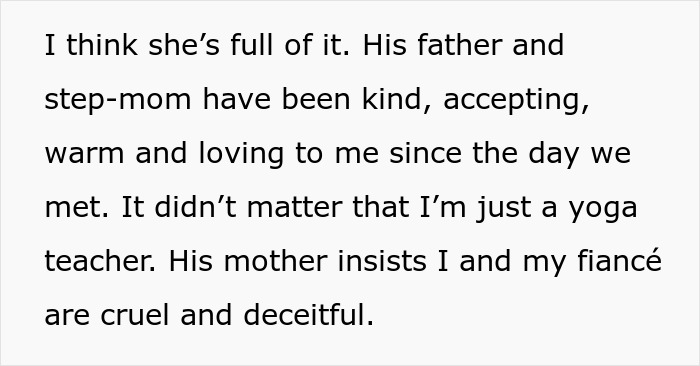
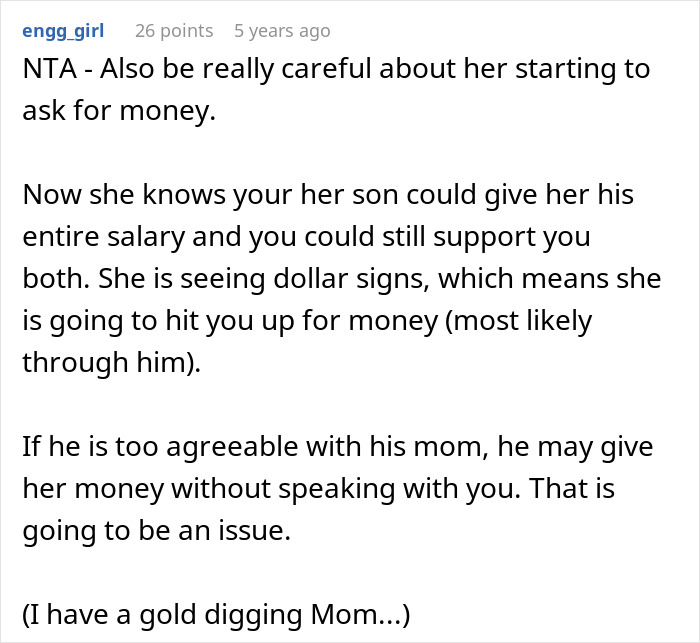
As it turns out, the mom was under the rather toxic impression that she was after her doctor son’s money. When the mother discovered that she was actually well-off, she flipped out and called her “cruel and deceitful.” People online discussed controlling parents, stereotypes about wealth and a few detailed their own experiences.
Image credits: jet-po / Freepik (not the actual photo)
Image credits: mediaphotos / Freepik (not the actual photo)
Image credits: The Yuri Arcurs Collection / Freepik (not the actual photo)
Image credits: zamrznutitonovi / Envato Elements (not the actual photo)
Image credits: ThrowAwayMIL1208
Image credits: Victoria Priessnitz / Unsplash (not the actual photo)
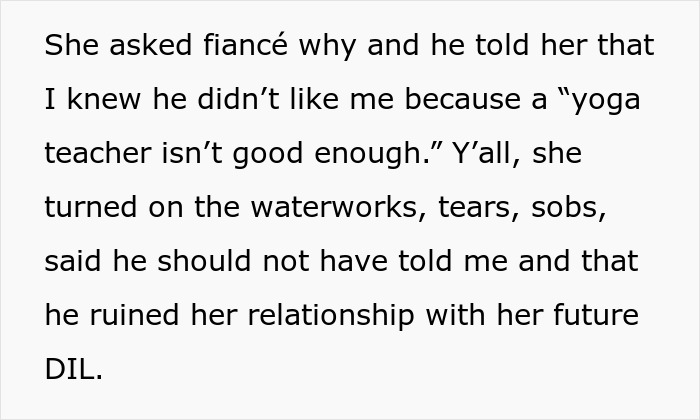
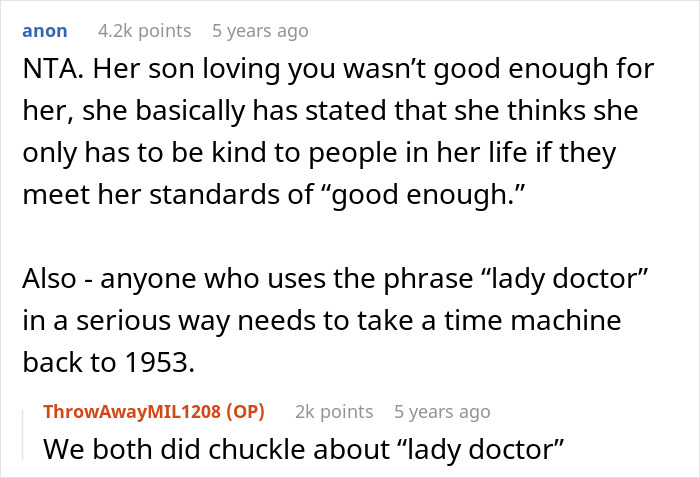
Entering the world of in-laws is often like navigating a minefield where the map is written in a language you don’t speak, but for one yoga studio owner, the minefield was more like a high-stakes soap opera. Her story, which recently went viral, serves as a masterclass in dealing with the “Monster-in-Law” trope, specifically the variety that believes their child is a prize to be won by the highest bidder. When this woman got engaged to her oncologist boyfriend of three years, she didn’t just gain a fiancé, she gained a Mother-in-Law (MIL) who was convinced a yoga teacher wasn’t “on the same level” as a doctor. It is a classic tale of parental over-involvement, where a parent’s identity is so inextricably linked to their child’s professional success that they view any partner without an MD or a PhD as a personal affront to their legacy. This behavior is often a symptom of parental enmeshment, where boundaries are blurred and the parent struggles to see their adult child as an independent person capable of making their own romantic choices.
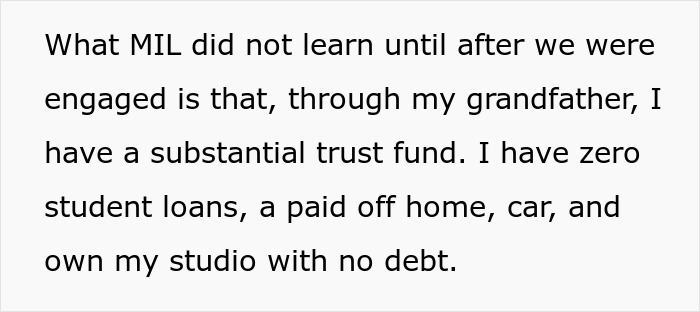
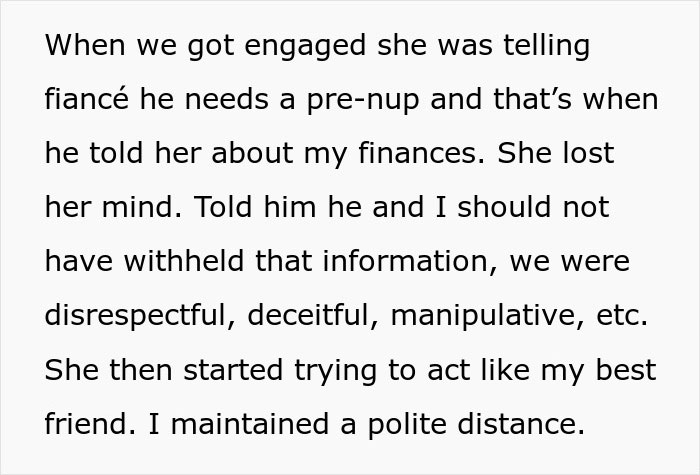
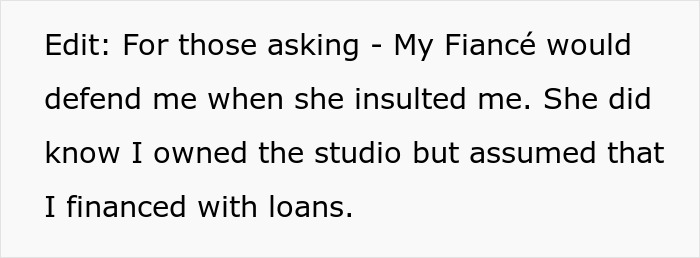
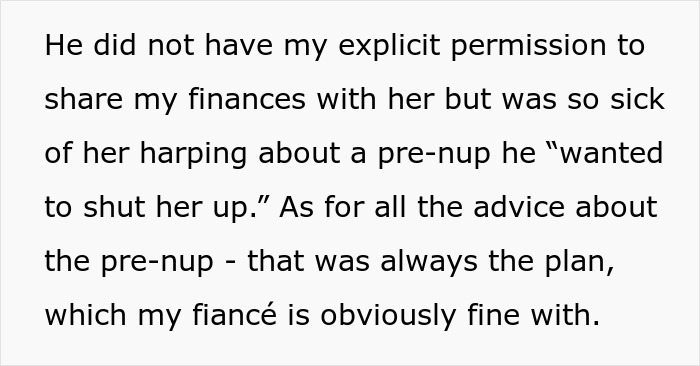
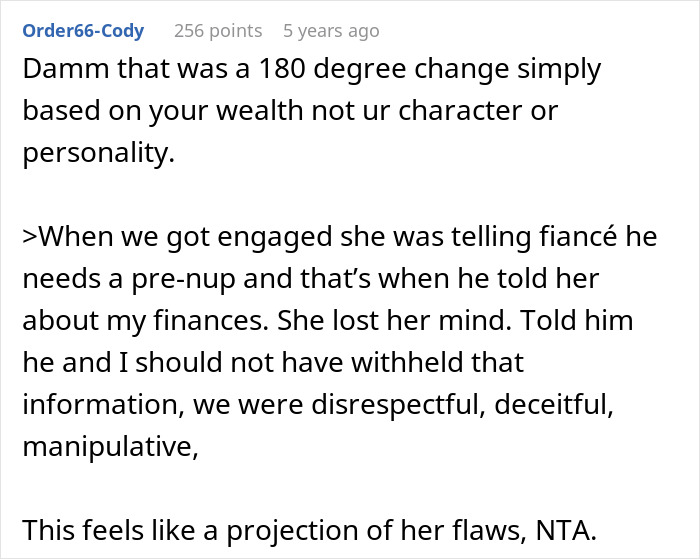
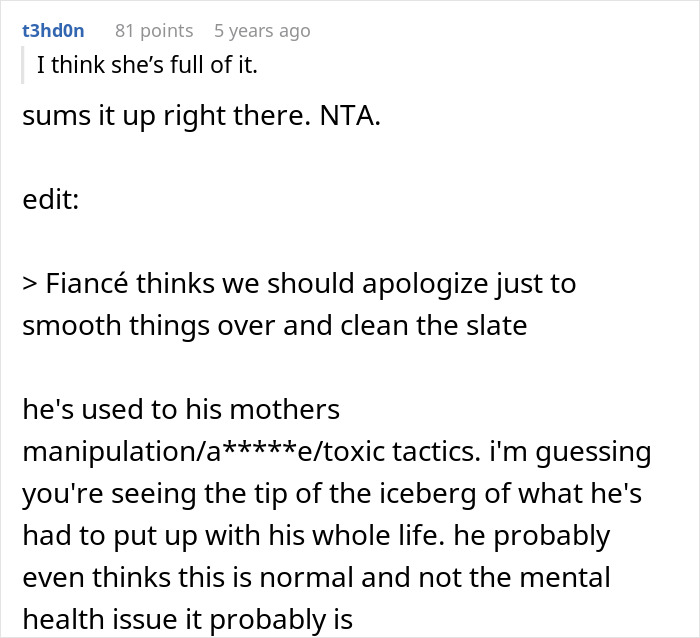
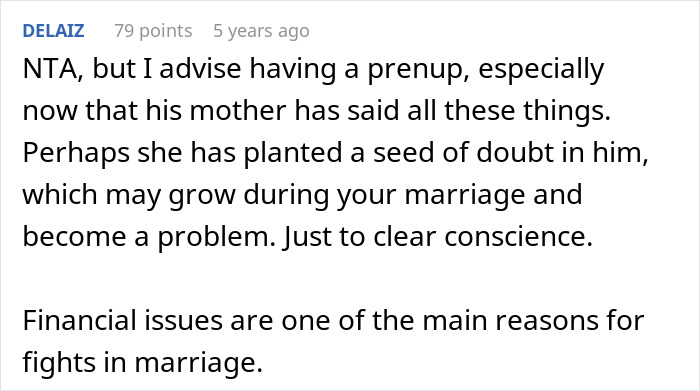
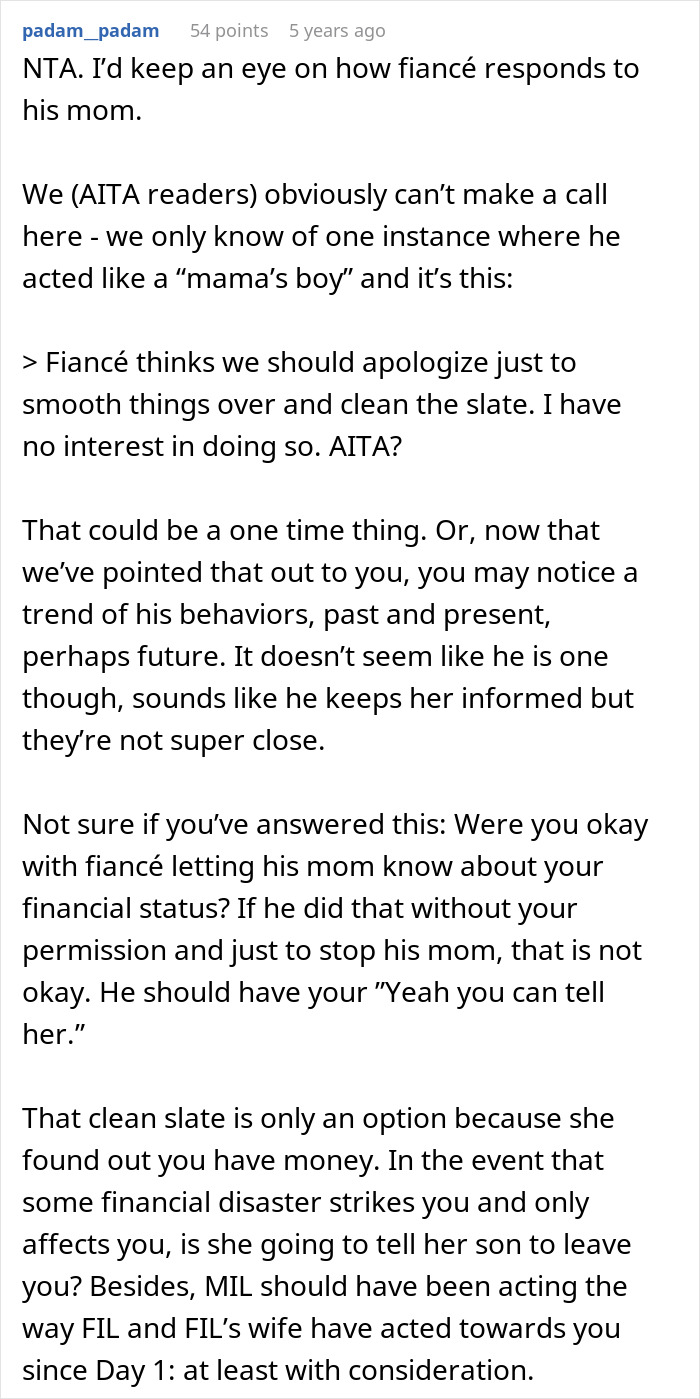
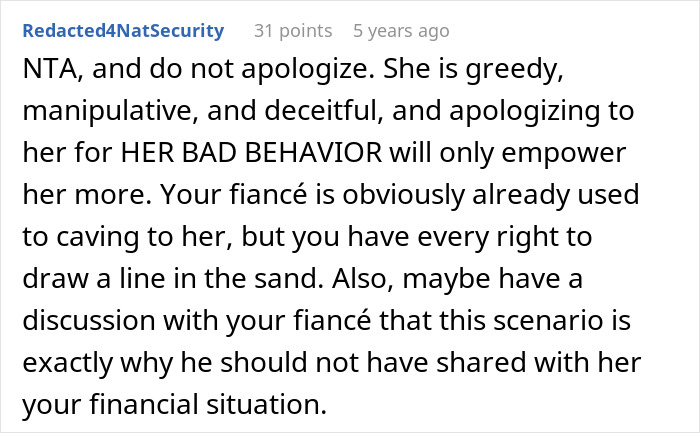
The irony of this particular story is enough to make anyone chuckle. While the MIL was busy whispering in her son’s ear that his girlfriend was a gold-digger after his “doctor money,” the girlfriend was actually sitting on a substantial trust fund, a paid-off home, and a debt-free business. She kept her wealth private to avoid being judged, a move that many financial experts suggest is a wise way to ensure relationship compatibility is based on character rather than currency. However, when the MIL insisted on a prenuptial agreement to “protect” her son, the fiancé finally snapped and revealed the truth: his future wife was actually the one with the deeper pockets.
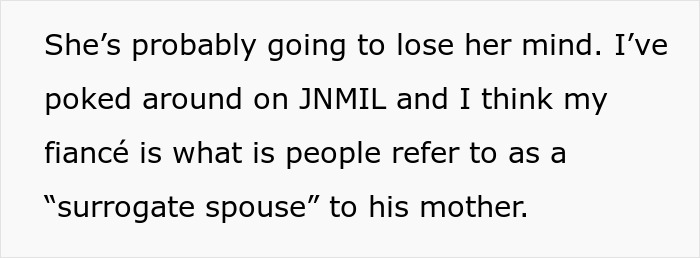
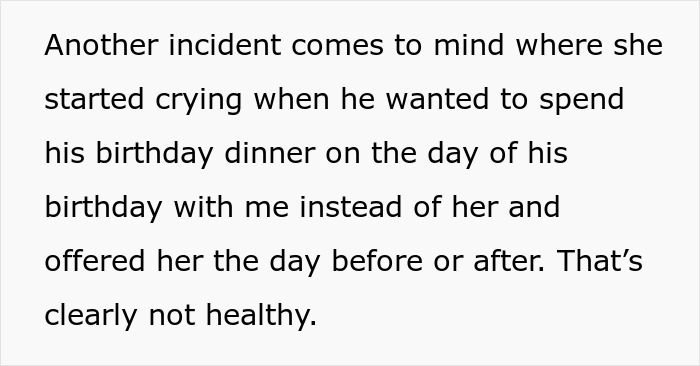
This story also touches on a deeper, more uncomfortable dynamic known as the “surrogate spouse,” where a child takes on more roles than they should with their own parents. This doesn’t involve anything physical, but rather describes a parent who relies on their child for the emotional support and intimacy usually reserved for a partner. When the MIL in this story threw a tantrum because her son wanted to spend his actual birthday with his fiancée instead of her, she wasn’t acting like a mother, she was acting like a jilted lover. This kind of emotional manipulation, often characterized by “waterworks” and guilt trips, is designed to keep the child tethered to the parent’s needs. For a partner caught in the middle, it can feel like you’re dating two people instead of one. Learning how to set firm boundaries with these types of parents is the only way to protect the sanctity of the new marriage.
Image credits: Getty Images / Unsplash (not the actual photo)
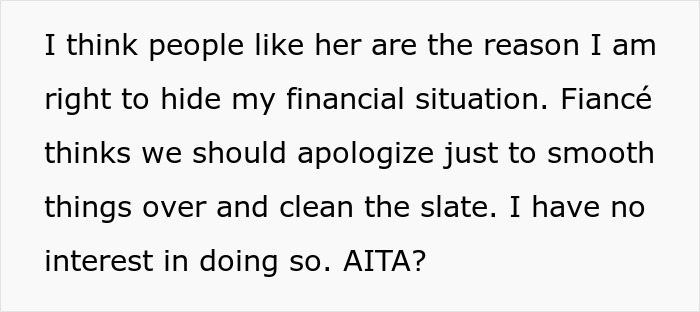
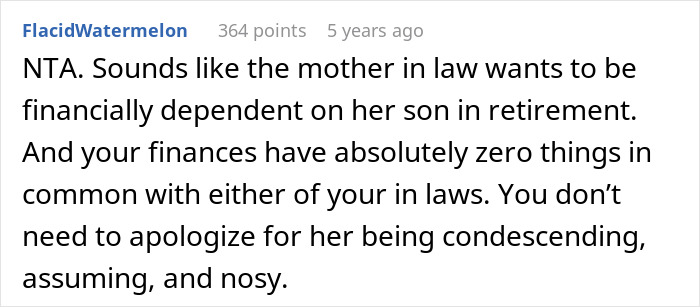
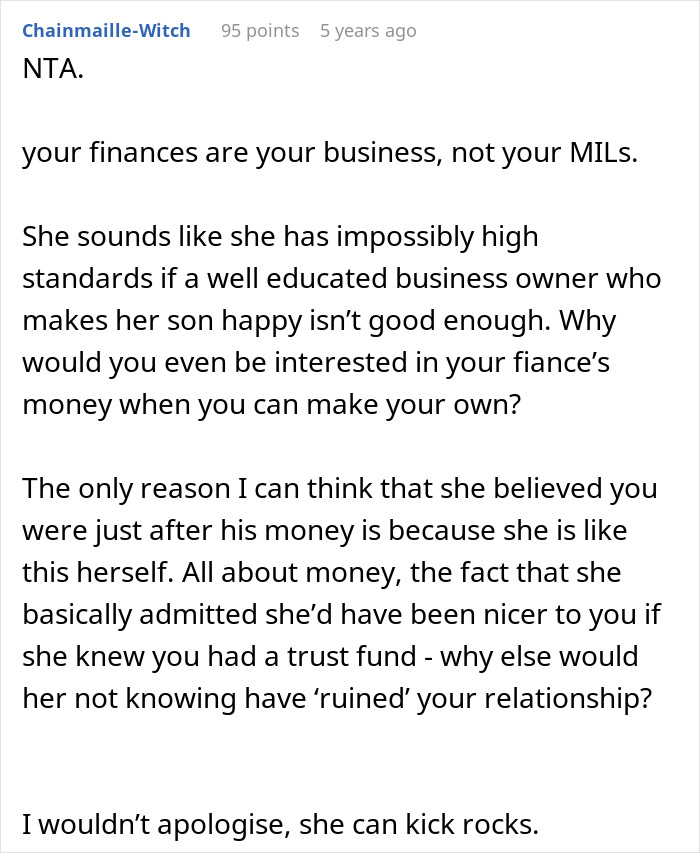
The fiancée’s refusal to apologize for being “deceitful” about her money is perhaps the most empowering part of the narrative. In a healthy family dynamic, you shouldn’t have to disclose your bank balance to earn basic respect. The fact that the MIL only valued the woman once she realized she was wealthy reveals a narcissistic personality trait where people are viewed as assets rather than individuals.
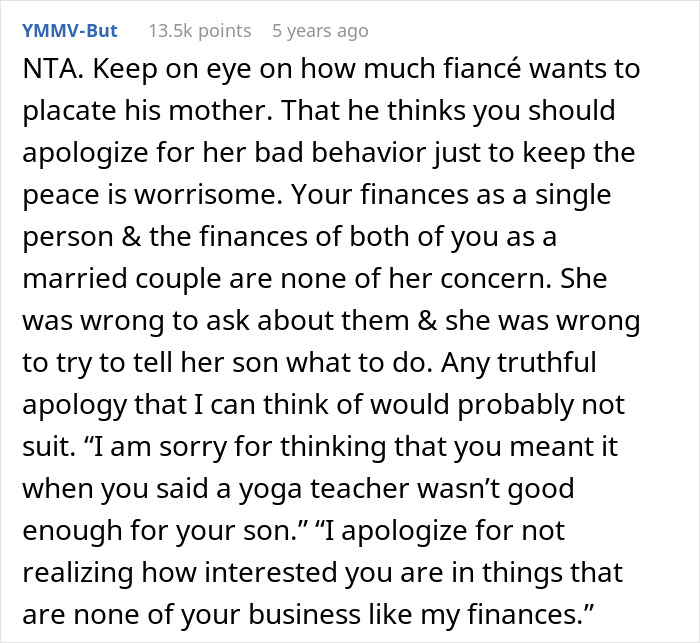
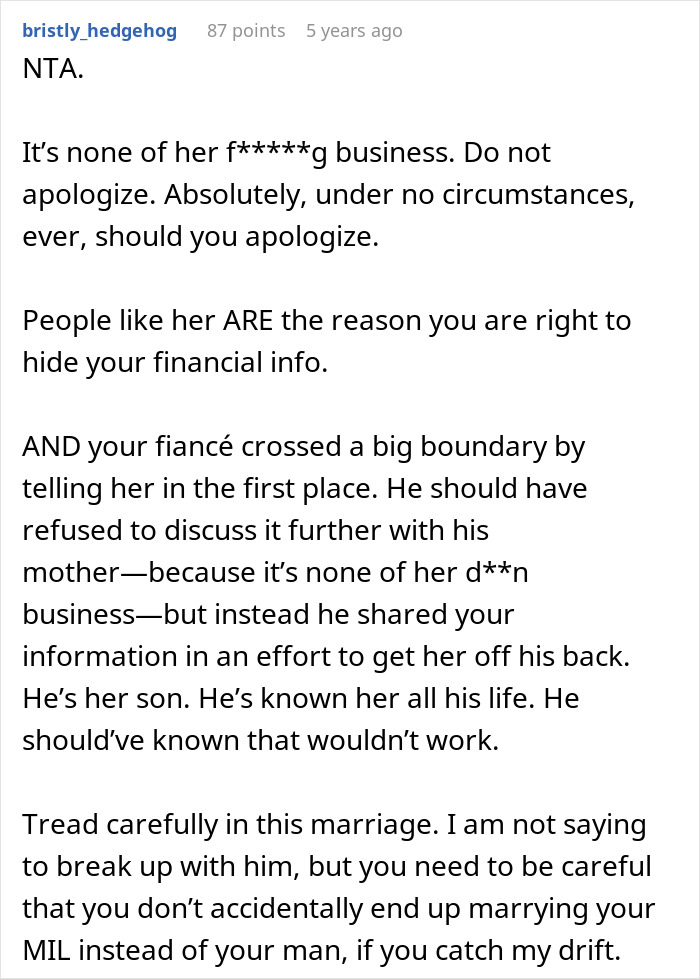
When a parent demands an apology for a boundary you set to protect yourself, they are essentially asking you to validate their mistreatment of you. The fiancé’s urge to “smooth things over” is a common reaction for children raised by high-conflict parents, often referred to as people-pleasing, but it rarely leads to long-term peace. It usually just signals to the parent that their manipulation is working.
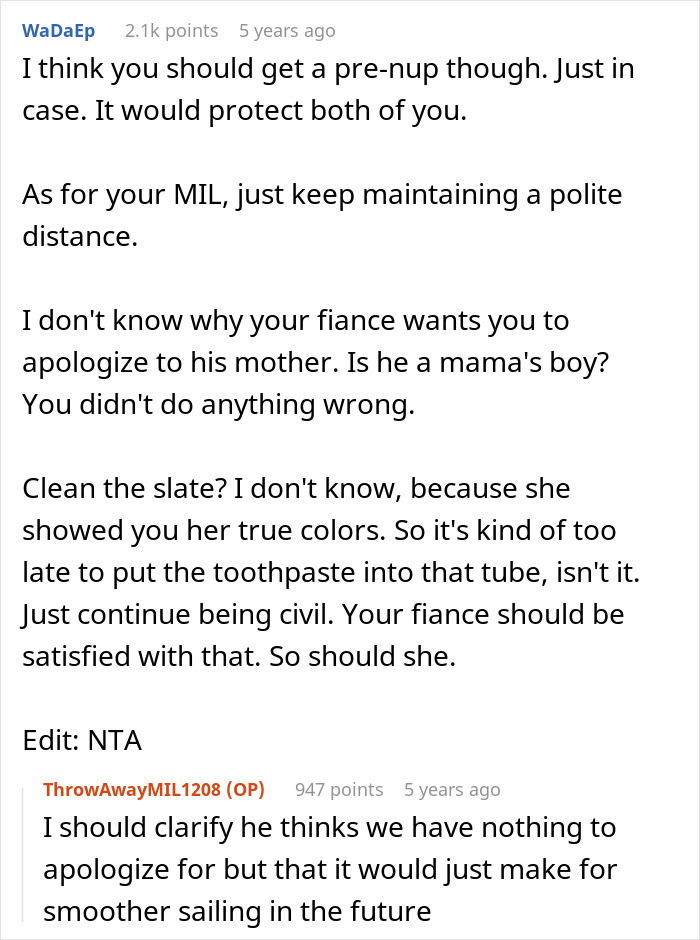
Ultimately, this story serves as a reminder that “family” doesn’t give someone a free pass to be disrespectful. While prenuptial agreements are excellent tools for financial planning, they shouldn’t be used as a weapon to vet a partner’s worthiness. For couples facing similar parental interference, the key is solidarity. The “leave and cleave” approach, where the couple prioritizes their own unit over the demands of their extended family, is essential for a lasting bond. If a mother-in-law chooses to see a “yoga teacher” as an inferior being until she sees the bank statement, she has already shown her true colors. Maintaining a polite but firm distance isn’t being “cruel”, it’s practicing self-care in the face of a toxic dynamic. The best response to a controlling parent is living a happy, successful life on your own terms, whether that’s in a boardroom or a yoga studio.

By entering your email and clicking Subscribe, you're agreeing to let us send you customized marketing messages about us and our advertising partners. You are also agreeing to our Privacy Policy.
Thank you! You've successfully subscribed to newsletters!


I'm over here wondering whether the OP's husband would refer to being called a 'man doctor' or a 'gentleman doctor.' The first one implies he specializes in prostates and the second one might necessitate the purchase of a top hat, cane, and tailcoat.

I rather enjoyed the picture you painted of the "gentleman doctor" 😂
Load More Replies... 
I'm over here wondering whether the OP's husband would refer to being called a 'man doctor' or a 'gentleman doctor.' The first one implies he specializes in prostates and the second one might necessitate the purchase of a top hat, cane, and tailcoat.
I rather enjoyed the picture you painted of the "gentleman doctor" 😂
Load More Replies... 




























 No fees, cancel anytime


















40
15