Get Premium
Dark mode theme is available exclusively for premium users. Learn more about the benefits of subscribing.
No fees, cancel anytime.

 Dark Mode Ad-Free Browsing Unlimited Content
 Ad-Free Browsing Unlimited Content Dark Mode
Join 1.2 million Panda readers who get the best art, memes, and fun stories every week!
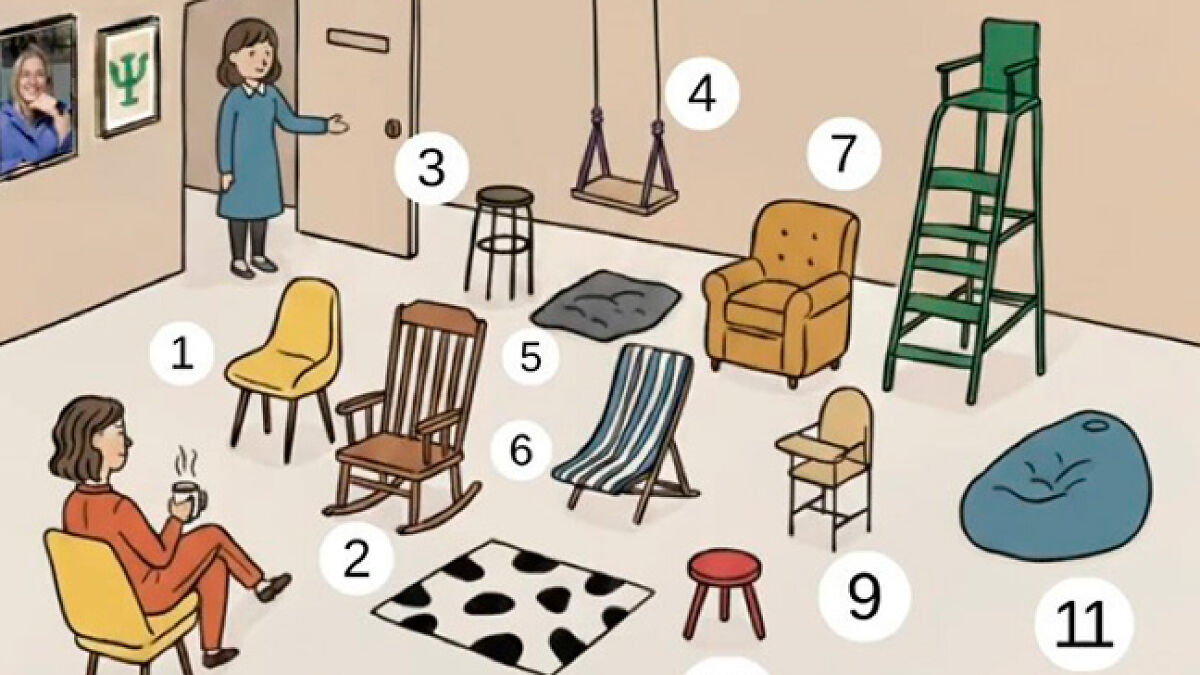
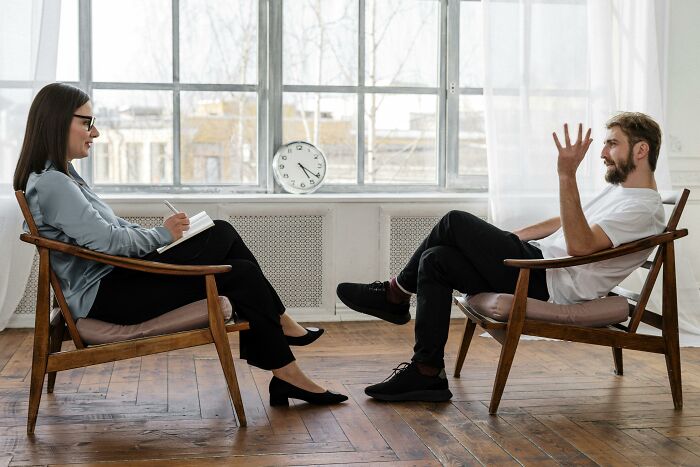
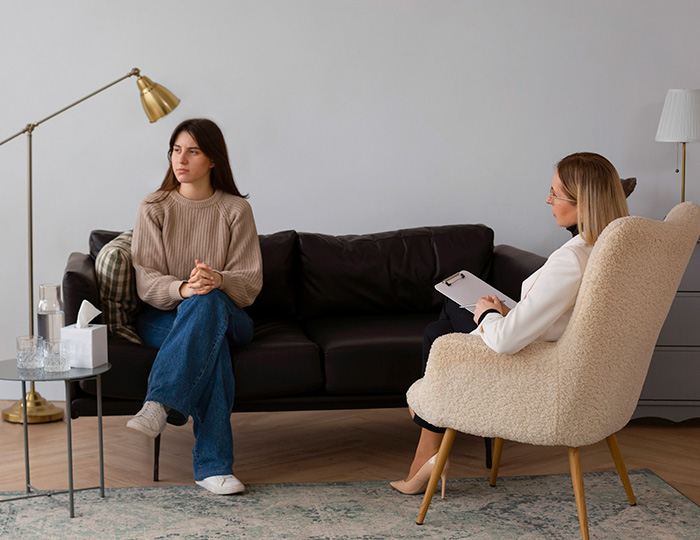
Which seat you choose in a therapist’s office can already give the health expert information about you—even before you utter a word.
Your seat of choice may reveal how willing you are to open up about your problems to the expert, who is a health professional but also a stranger, as well as hint at your deepest fears and even possible attachment issues.
This is according to psychotherapist Dr. Sheetal Nair, who shared her seat theory on Medium, inviting people to reconsider their choices.
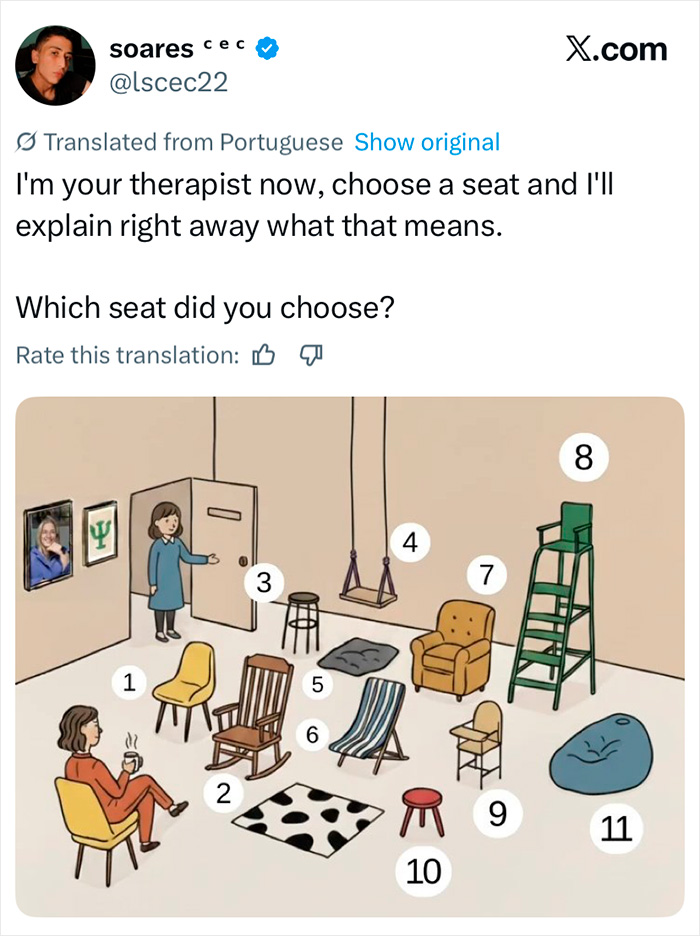
Image credits: X / @lscec22
Soares, a therapist who goes by @lscec22 on X, also shared what each seat might say about a patient.
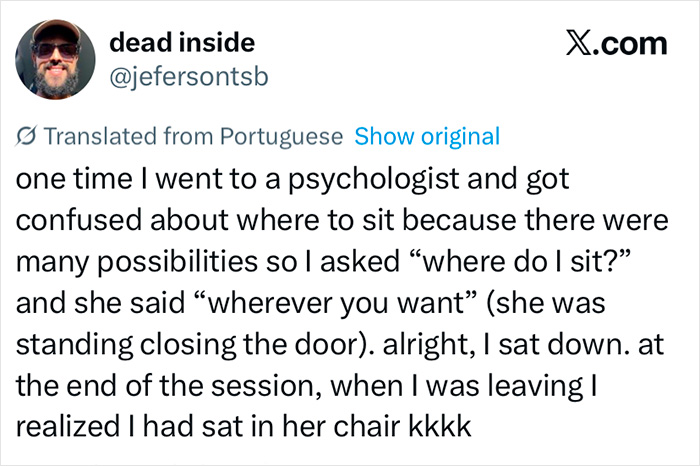
Reacting to a viral image showing a hypothetical first therapy session with different seating options, one user shared on X, “Once I went to a psychologist and got confused about where to sit because there were so many options. So I asked, ‘Where should I sit?’ and she said, ‘Wherever you want’ (she was standing, closing the door).
“Okay, I sat down. At the end of the session, when I was leaving, I realized I had sat in her chair lol.”
Image credits: Freepik
People then began sharing which seat they would choose from 1 to 11 and why, with most respondents explaining that their decision was based solely on comfort.
However, experts believe a chair can reveal a great deal about a patient and their story, offering valuable insight to the therapist.
According to Dr. Nair, seating choices are tied to environmental psychology. “I’ve seen people unknowingly pick seats that scream, ‘Challenge me,’ ‘Protect me,’ ‘Don’t see me,’” the TEDx Speaker wrote.
Image credits: X / @lscec22
Image credits: X / @lscec22
Chair #1, which is face-to-face and in direct line of sight, is for patients he described as “direct confronters.”
These patients often have “a secure or anxious-ambivalent attachment style” and may believe they are more ready to open up than they actually are. They tend to engage quickly but expect the therapist to intervene frequently during the session.
Image credits: Freepik
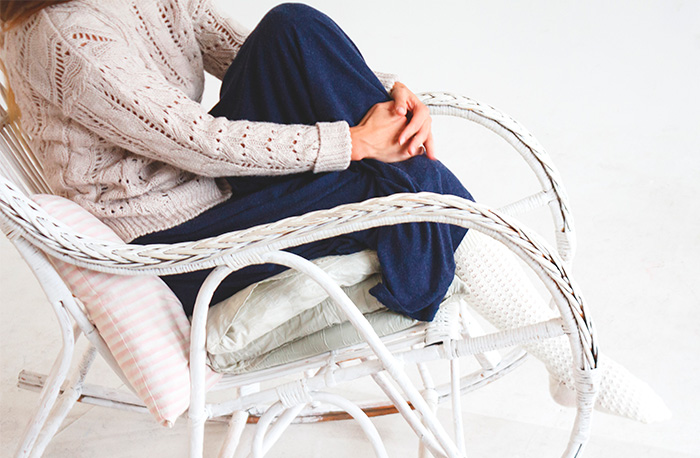
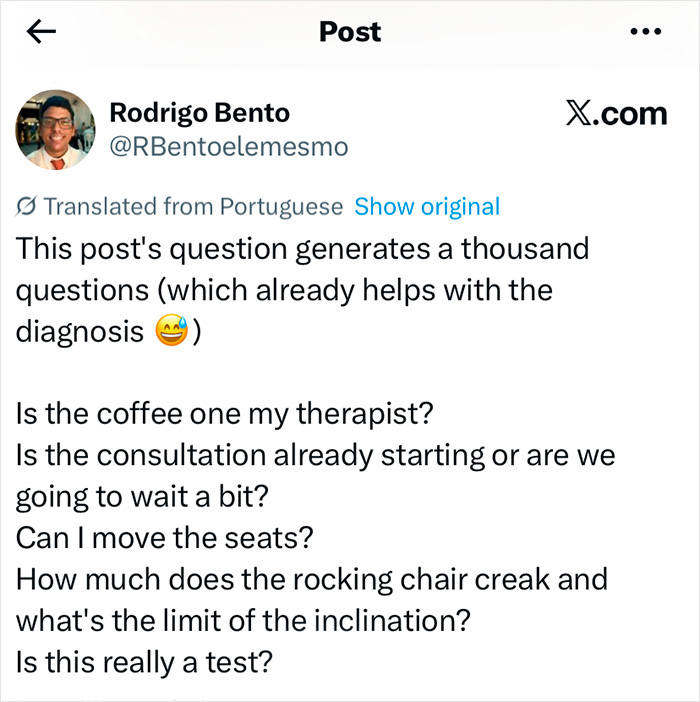
Chair #2, the rocking chair, is associated with infancy and often signals “unresolved early attachment issues” or nostalgia for the patient’s childhood.
“Beware: nostalgia is comforting, but it’s also a trapdoor for avoidance,” the expert warned.
Similarly, @lscec22 noted that the chair is linked to creative people who like to “reclaim the simple joy of childhood.”
Image credits: cottonbro studio
Image credits: X / @lscec22
Chair #3, the plain stool near the door, is for “transactionalist” patients who are focused on getting immediate value from the money they spend on therapy.
These patients may be more emotionally guarded and have a practical, results-oriented mindset.
As for Chair #4, the swing seat, Dr. Nair believes it is linked to “high openness, ADHD tendencies, or simply a fear of sitting with discomfort.”
Image credits: Freepik
The floor cushion, Chair #5, signals a desire to eliminate the hierarchy many people assume exists between patient and therapist.
“In Jungian terms, you might be seeking integration rather than correction — a merging of your inner shadow with your public self,” Dr. Nair noted.
Image credits: Aleksandra_Iarosh
Image credits: X / @lscec22
Image credits: X / @lscec22
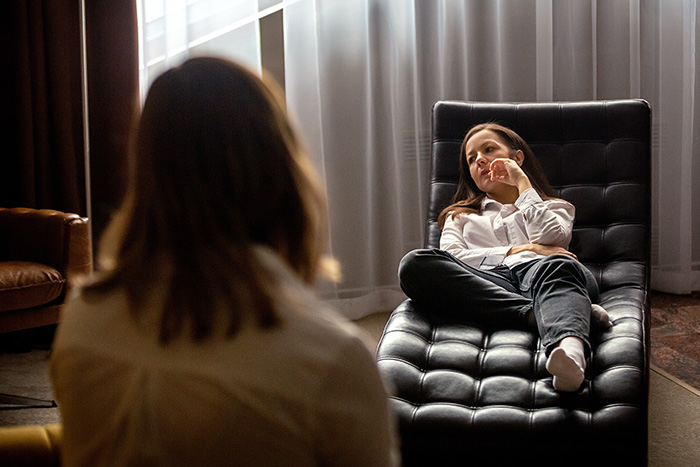
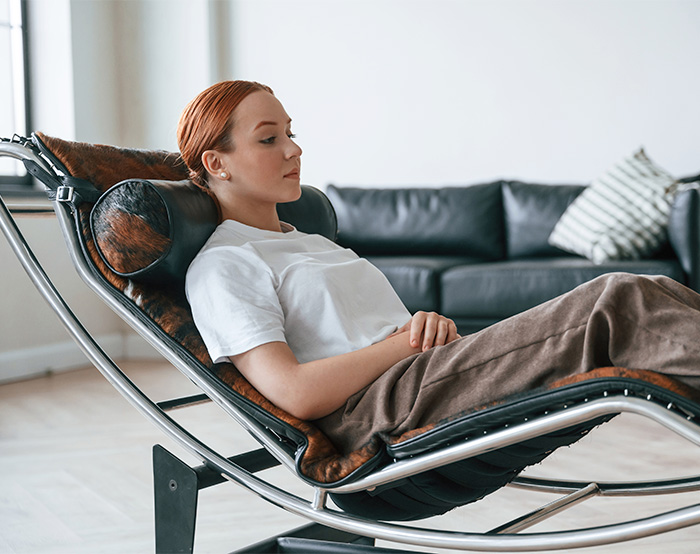
Chair #6, the lounger, suggests the patient wants to feel safe and comfortable before they are ready to open up.
However, the lounger may also signal a desire to distance oneself from the therapist and could indicate that the patient might “confuse physical comfort with emotional progress,” the psychotherapist said.
According to @lscec22, those who choose this chair are likely feeling stressed and trying to find calmness before connecting with themselves.
Image credits: LightFieldStudios
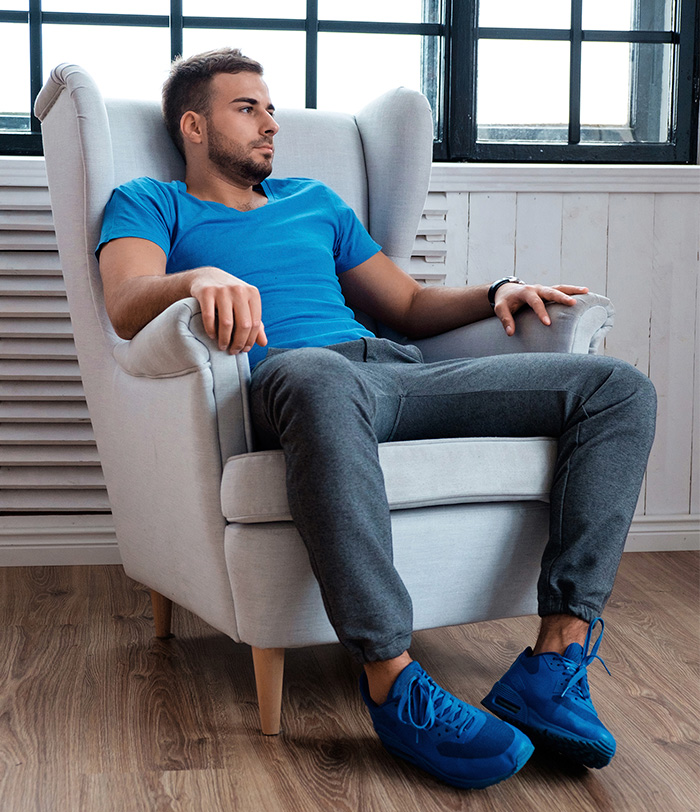
Chair #7, the big armchair, may look extremely comfortable, but it is actually a “psychological fort,” according to Dr. Nair.
“If you choose this, you’re telling the therapist, ‘I’ll talk, but from behind my walls.’ It’s protection wrapped in fabric.”
Image credits: LightFieldStudios
Image credits: X / @lscec22
Chair #8, the ladder, is likely the most unconventional choice. Dr. Nair noted that ladders are linked to ambition. In psychotherapy, he said, this choice might suggest that the patient is focused on long-term progress, a “climb,” rather than expecting immediate results.
For @lscec22, the ladder indicates that the individual is not impulsive and prefers to view the whole landscape before taking action.
Image credits: Wavebreakmedia
Image credits: X / @lscec22
Image credits: Zinkevych_D
Image credits: X / @lscec22
Regarding the child’s seat, Chair #9, it can signal that the patient is still attached to their childhood.
“Sometimes it’s playful. Sometimes, it’s unhealed trauma inviting re-parenting,” Dr. Nair explained.
For @lscec22, this seat is typically picked by someone who values “affection, care, and spontaneity.”
Image credits: katyatsiganok
Chair #10 is the smallest seat. Choosing it may mean that the patient also feels small and that they are trying to seem “invisible.”
According to Dr. Nair, this can make therapy challenging, as the patient is likely to be a “people pleaser” who fears “taking up space.”
Image credits: mstandret
Finally, Chair #11, the beanbag, “swallows” the patient. This choice may signal that the individual is trying to disappear into denial, hidden as comfort, instead of facing deep conversations, Dr. Nair said.
@lscec22 agrees with this analysis, noting that patients who choose this seat “tend to withdraw when feeling the weight of the emotions around them.”

By entering your email and clicking Subscribe, you're agreeing to let us send you customized marketing messages about us and our advertising partners. You are also agreeing to our Privacy Policy.
Thank you! You've successfully subscribed to newsletters!


I'm sorry, but as a therapist, I do not test my clients or judge them based on where they sit. I want them to feel comfortable and safe, not judged.


I would sit in no 2 but only because it’s the seat right in front of the therapist. It would seem weird and rude to sit anywhere other than in front of the person you’re talking to.

I chose 1 or 2 for the same reason. Why would I pick a chair furthest away unless I wanted to be a jerk? /s
Load More Replies... I'm sorry, but as a therapist, I do not test my clients or judge them based on where they sit. I want them to feel comfortable and safe, not judged.
I would sit in no 2 but only because it’s the seat right in front of the therapist. It would seem weird and rude to sit anywhere other than in front of the person you’re talking to.
I chose 1 or 2 for the same reason. Why would I pick a chair furthest away unless I wanted to be a jerk? /s
Load More Replies...































 No fees, cancel anytime
























19
22