Get Premium
Dark mode theme is available exclusively for premium users. Learn more about the benefits of subscribing.
No fees, cancel anytime.

 Dark Mode Ad-Free Browsing Unlimited Content
 Ad-Free Browsing Unlimited Content Dark Mode
Join 1.2 million Panda readers who get the best art, memes, and fun stories every week!

If you’re a 9-to-5 employee, you know how work can sometimes creep well beyond office hours. On some days, you power through to get the job done, no questions asked. On others, it feels like an endless drain but naturally, you expect to be paid for the extra effort, right?
Well, a new hire at a company soon realized that their manager was scheduling daily calls after work hours. At first, they didn’t mind participating, assuming the time would be compensated. But when the first paycheck arrived and the extra hours weren’t reflected, the new employee decided to take matters into their own hands… Keep reading to see what happened next.
Image credits: Andrej Lišakov / Unsplash (not the actual photo)
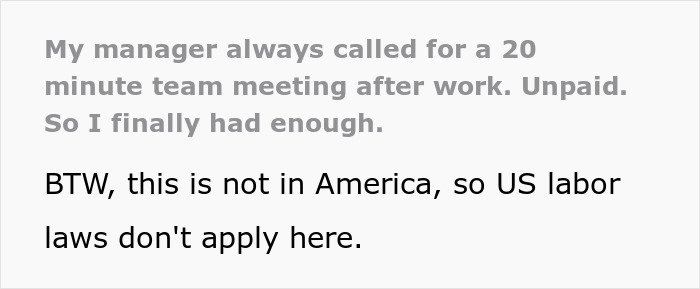
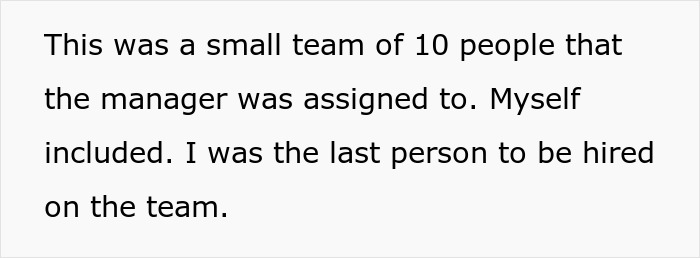

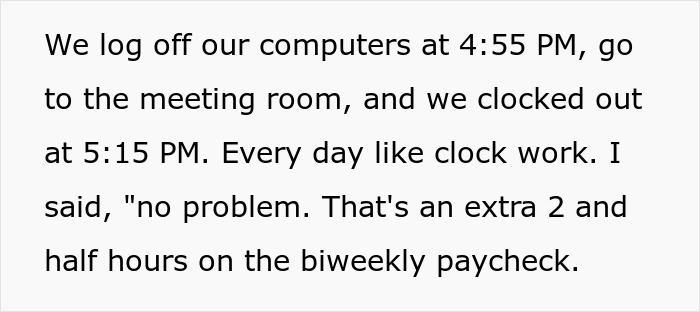

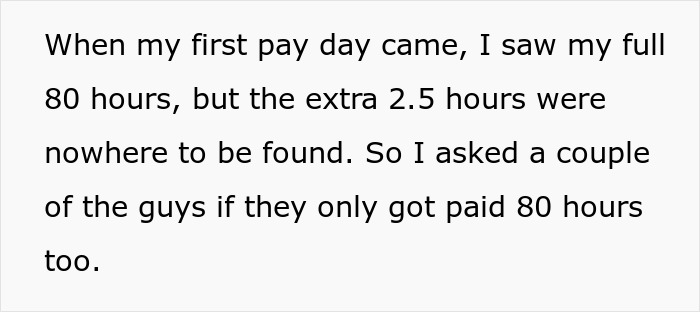

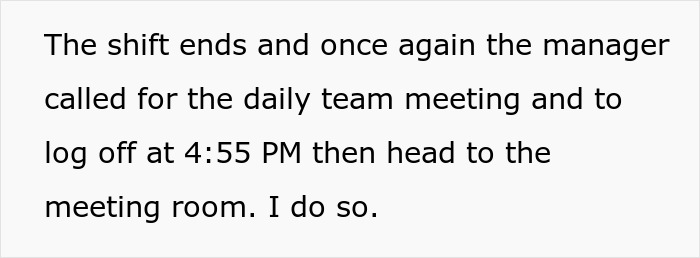
Image credits: Vitaly Gariev / Unsplash (not the actual photo)
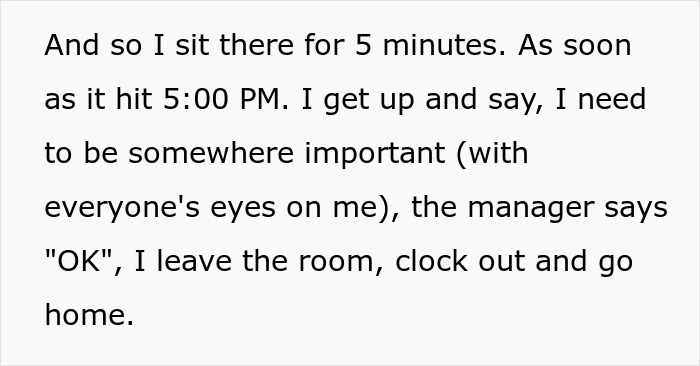

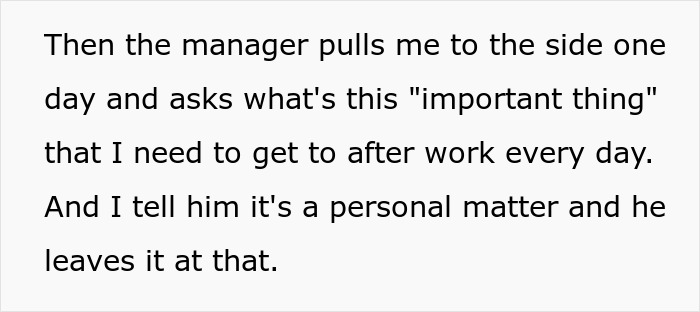
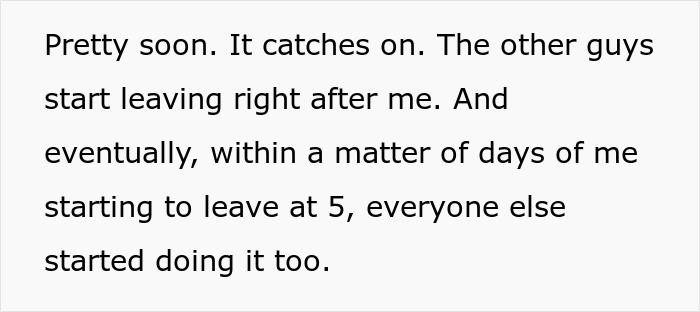
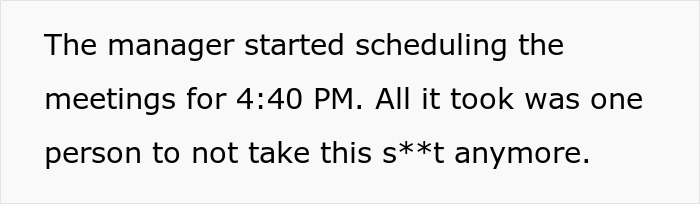
Image credits: executor-of-judgment
Image credits: Clay Banks / Unsplash (not the actual photo)
Today, we’re living in a world where the traditional 9-to-5 is slowly being redefined. After the pandemic reshaped how we work, millions of employees began pushing for remote options, flexible hours, and even shorter workweeks. The idea is simple: work smarter, not longer. Countries like Iceland, Spain, and Belgium have been experimenting with four-day or 32-hour workweeks, proving that productivity doesn’t always depend on clocking endless hours. These models aim to reduce burnout while keeping output steady. The focus has shifted from “time spent” to “results delivered.”
Remote work has fast-tracked the demand for flexibility in a big way. When your office is your living room, the line between work time and personal time can blur quickly. That’s why some countries have stepped in with “right to disconnect” laws. France and Australia, for example, have created rules that protect employees from after-hours emails and calls. In simple terms, once you’re off the clock, you’re off the clock. No guilt. No pressure to reply at midnight. These laws help workers protect their mental space. Because rest isn’t laziness; it’s necessary.
At the same time, overtime rules are evolving faster than ever. We’re not talking about staying back five or ten minutes to finish an email. We’re talking about the extra hour or two that quietly turns into a habit. Many employees regularly stretch their day just to meet deadlines or keep up with expectations. Over time, those extra hours add up in a big way. Governments are recognizing that modern work patterns demand updated protections. Work culture may be changing, but fairness still matters. And being compensated properly is a huge part of that fairness.
Take Canada, for example. In most provinces, once you cross 44 hours in a week, you’ve officially entered overtime territory. That means your employer can’t just say “thanks” and move on; they need to pay you extra. The standard overtime rate is 1.5 times your regular hourly wage, which is 150%. Some workplaces with union agreements offer even better terms, but they can’t go below that legal minimum. The goal is simple: if you’re giving more of your time, you deserve more in return. It’s about respecting both effort and energy. Fair pay encourages healthier workplaces.
Now let’s hop over to France, famous for its 35-hour workweek. Yes, 35 hours. Anything beyond that counts as overtime and must be paid accordingly. France has some of the strongest worker protections in Europe, and they take work-life balance seriously. The idea is that people shouldn’t live to work, they should work to live. Employers are required to compensate for extra hours, and the rules are strict. It’s structured, clear, and protective. The message is simple: your personal time matters. And the law backs that up.
Portugal and Spain also have clear guidelines. In Portugal, the standard workweek is 40 hours, and overtime pay increases the more extra hours you work. Spain also sets a 40-hour standard but limits overtime to 80 hours per year unless those hours are swapped for time off. When overtime is paid, it’s often at enhanced rates, sometimes around 175% or more. The aim is to prevent overwork from becoming routine. Extra hours are meant to be the exception, not the rule. Balance is baked into the system.
Image credits: Getty Images / Unsplash (not the actual photo)
In the United Kingdom, the Working Time Regulations set a 48-hour maximum workweek, averaged over 17 weeks. Employees can choose to opt out, but it has to be voluntary. Meanwhile, in India, overtime rules come from the Factories Act of 1948. The standard workweek is 48 hours, and any time beyond that must be paid at double the regular rate—yes, 200%. That’s a strong incentive for employers to manage hours carefully. Both countries aim to create boundaries while allowing flexibility.
In the United States, overtime rules fall under the Fair Labor Standards Act. Non-exempt employees must be paid 1.5 times their regular hourly rate for any hours worked beyond 40 in a week. It sounds straightforward, but classification matters. If you qualify, those extra hours must be compensated. The rule exists to prevent exploitation and encourage reasonable scheduling. Employers can’t simply expect free labor. The system may not be perfect, but the foundation is clear. Overtime isn’t a favor, it’s payable time.
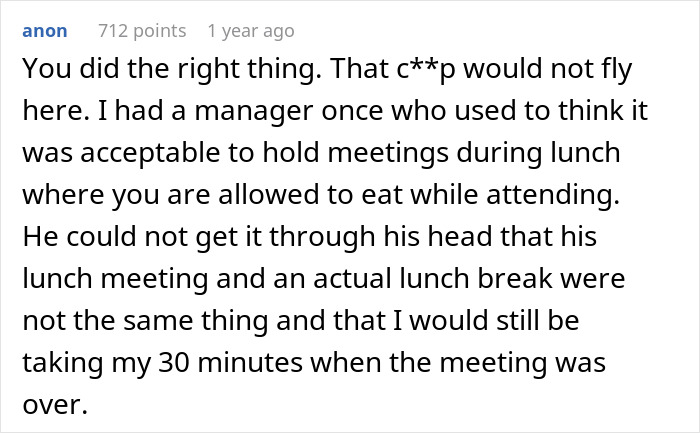
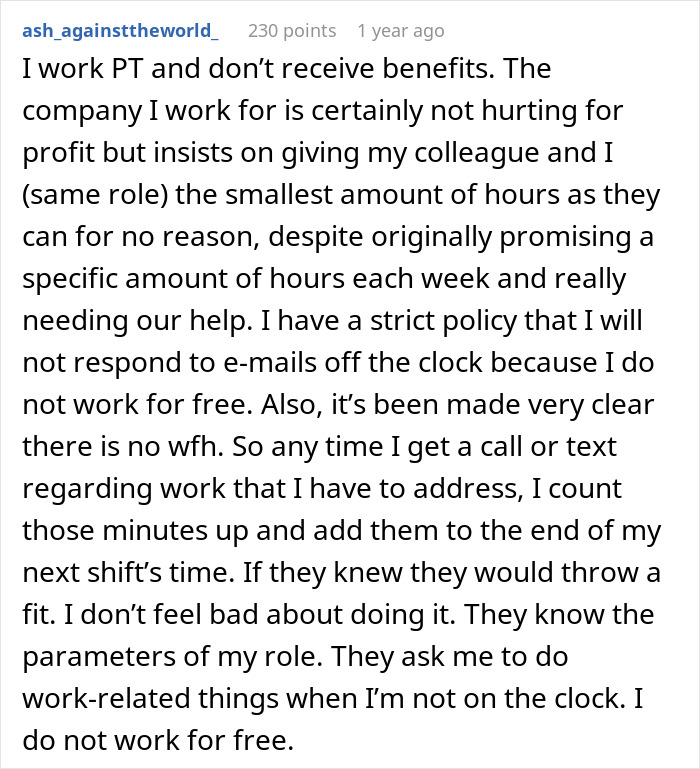
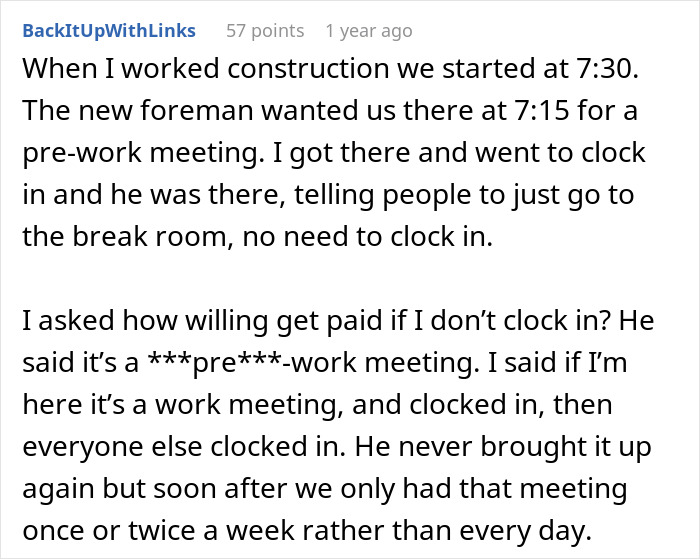
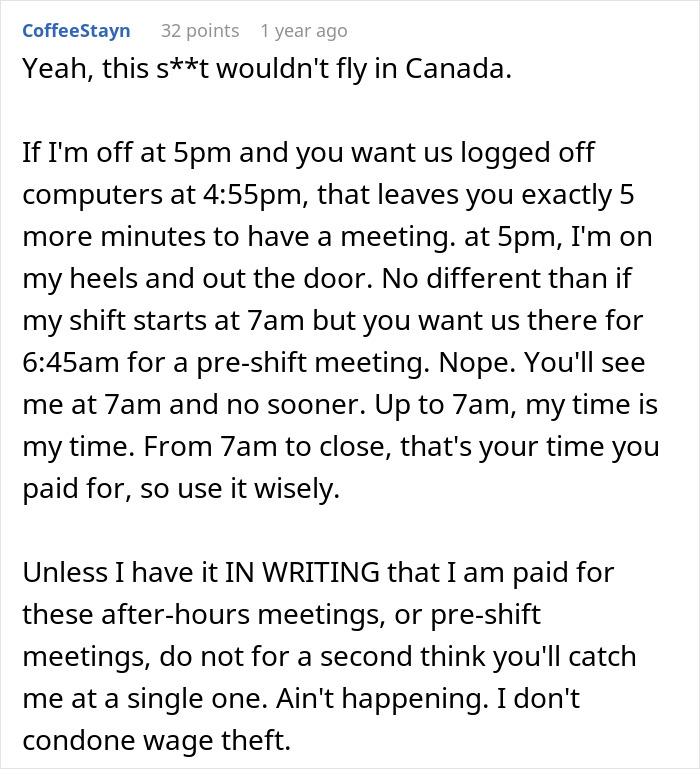
As we can see, overtime laws around the world are designed to protect workers and rightly so. Employees deserve to be paid for the extra time and effort they invest. Yet sometimes, managers blur those boundaries and assume people will simply comply. In this particular case, however, the worker chose a different path. Instead of accepting unpaid hours as “normal,” they quietly took a stand. And interestingly, that small decision created a ripple effect. What are your thoughts on situations like this? Have you ever had a manager who expected unpaid overtime?








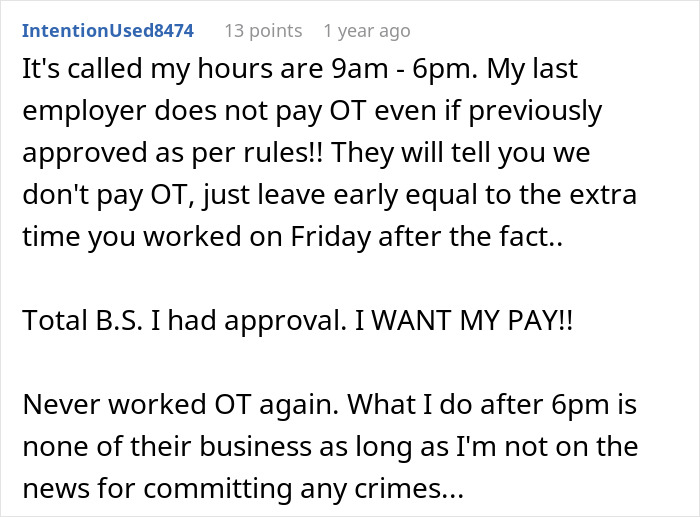
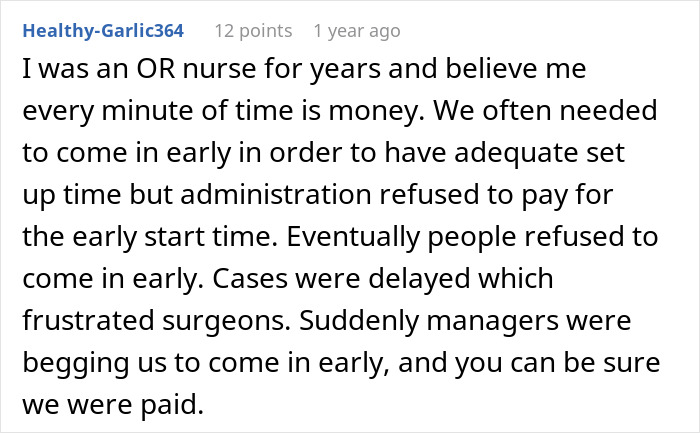
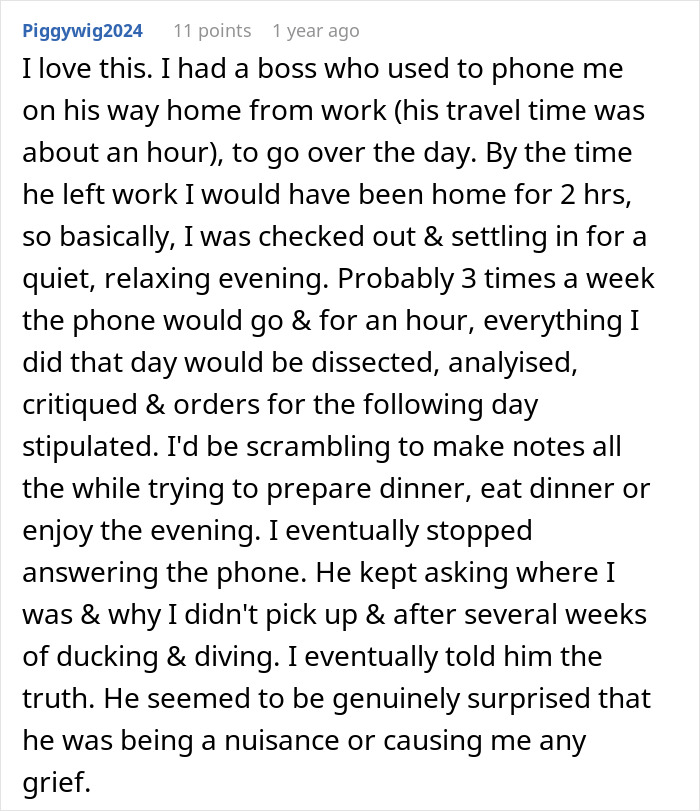

By entering your email and clicking Subscribe, you're agreeing to let us send you customized marketing messages about us and our advertising partners. You are also agreeing to our Privacy Policy.
Thank you! You've successfully subscribed to newsletters!


My last boss used to schedule meetings at 3.30pm on a Friday, most of the team worked out in the field so they’d all collect together in time, his meetings were a) well managed time wise and b) never went over 30 minutes, he knew that lads who work in the field hate being sat in the office. So 4pm rolls around and he basically threw them out of the office, an hour and a half before the end of day. He’d tell them to wash their vans on the way home and that was their day done. That team never had issues with anything to do with doing little extras to get jobs completed, no dramas relating to time in work, all onboard with supporting the manager. Funny how getting a nice early finish on a Friday generates positive vibes eh?

A few years back my boss wanted us to prepare for an important meeting using a fancy website that management was promoting. "It'll just take a couple of hours" she said. "Either I do that in your office on paid time, or it doesn't get done" was my reply. Given this is France that has laws about unpaid work, the issue was dropped. Out of sheer curiosity I visited the website and to load the front page took over fifty seconds and eight and a half megabytes with over a thousand requests and continual JSON chatter. Clicking *anything* caused a complete redraw of the screen and all the plugin modules measured in tens of seconds. My browser can run Google Docs (a full word processor) fairly fluidly, but this travesty brought it to it's knees. I think the "work" would have taken a quarter hour, the other hour and three quarters was waiting for it to do anything.
My last boss used to schedule meetings at 3.30pm on a Friday, most of the team worked out in the field so they’d all collect together in time, his meetings were a) well managed time wise and b) never went over 30 minutes, he knew that lads who work in the field hate being sat in the office. So 4pm rolls around and he basically threw them out of the office, an hour and a half before the end of day. He’d tell them to wash their vans on the way home and that was their day done. That team never had issues with anything to do with doing little extras to get jobs completed, no dramas relating to time in work, all onboard with supporting the manager. Funny how getting a nice early finish on a Friday generates positive vibes eh?
A few years back my boss wanted us to prepare for an important meeting using a fancy website that management was promoting. "It'll just take a couple of hours" she said. "Either I do that in your office on paid time, or it doesn't get done" was my reply. Given this is France that has laws about unpaid work, the issue was dropped. Out of sheer curiosity I visited the website and to load the front page took over fifty seconds and eight and a half megabytes with over a thousand requests and continual JSON chatter. Clicking *anything* caused a complete redraw of the screen and all the plugin modules measured in tens of seconds. My browser can run Google Docs (a full word processor) fairly fluidly, but this travesty brought it to it's knees. I think the "work" would have taken a quarter hour, the other hour and three quarters was waiting for it to do anything.







































 No fees, cancel anytime











32
3