Get Premium
Dark mode theme is available exclusively for premium users. Learn more about the benefits of subscribing.
No fees, cancel anytime.

 Dark Mode Ad-Free Browsing Unlimited Content
 Ad-Free Browsing Unlimited Content Dark Mode
Join 1.2 million Panda readers who get the best art, memes, and fun stories every week!
Right beneath bustling cities and remote landscapes, entire networks of underground bunkers are carved out of rock and concrete, sealed off from public view.
Only a select few know what really exists down there (hint: these top-secret locations hide more than just people).
Read on to uncover 10 underground bunkers you were never meant to see, from declassified government facilities and Nazi hideouts to Cold War relics and luxury “doomsday” billionaire bunkers.
This post may include affiliate links.
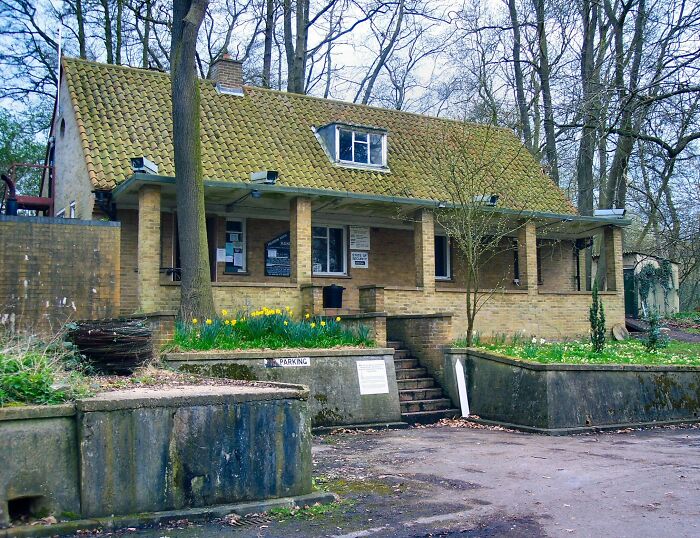
Tucked beneath an ordinary bungalow in the Essex countryside, the Kelvedon Hatch Secret Nuclear Bunker is one of Britain's best-kept Cold War secrets.
A plain, unmarked farmhouse door opens into a 100-foot tunnel leading three stories underground, where the British government planned to ride out a nuclear war in near-total secrecy (per Secret Nuclear Bunker).
Built in 1952 and expanding to over 20,000 square feet, the bunker was designed to house up to 600 government officials, military personnel, and BBC broadcasters, who would have been responsible for communicating with any survivors above ground.
The facility included its own BBC studio, a hospital, a canteen, and enough supplies to sustain its occupants for up to three months (per BBC)
For decades, locals had no idea what was buried beneath the Essex hills. The site was so effectively concealed that even the road signs pointing to it simply read "secret nuclear bunker," a deeply ironic label that became something of a local joke.
The British government officially decommissioned the bunker in 1992, and it has since been opened to the public as a museum by the Parrish family, who have owned the land since the 1950s.
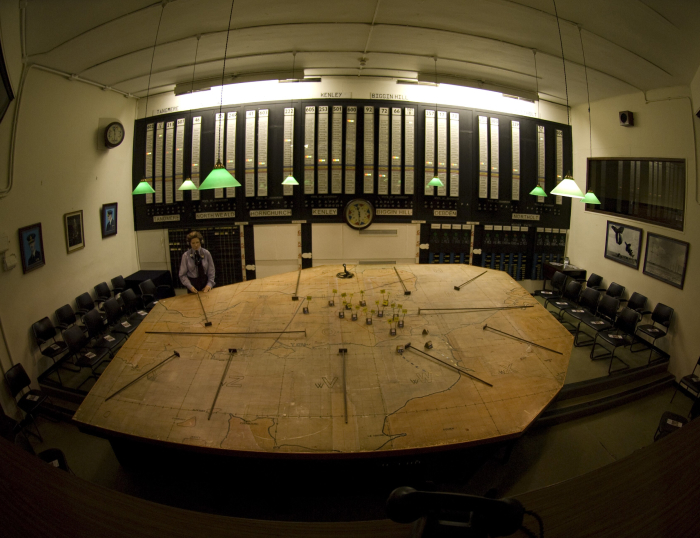
Strategically situated in Uxbridge, Middlesex, the Battle of Britain Bunker is an underground operations room that was instrumental in the successful defense of Britain during 1940 (per British Modern Military History Society).
The 2,000-square-meter complex on two levels served as the Headquarters of No. 11 Group Fighter Command and had a major role in many other war-related campaigns, including support of Operation Overlord in June 1944.
To access this bombproof, gasproof bunker today, you need to walk down 76 steps, 60 feet underground. The Battle of Britain Bunker was visited by King George Vl and Winston Churchill, who famously said following one of his visits on 16 August 1940, “Never in the field of human conflict was so much owed, by so many, to so few.”
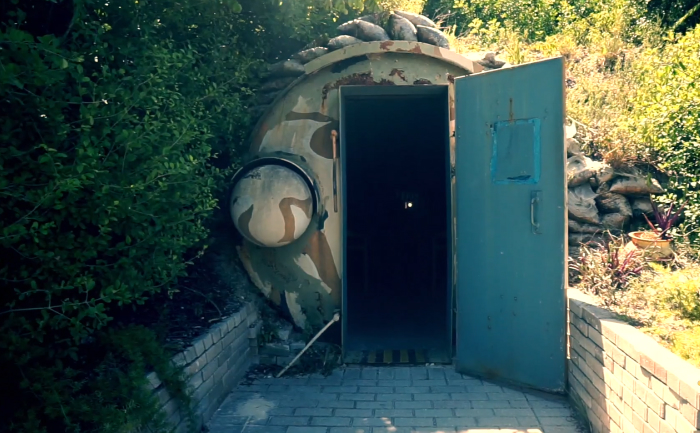
The Kennedy Bunker, named the “Detachment Hotel” in documents, is a top-secret nuclear bomb bunker tucked away on the tropical Peanut Island, just south of Palm Beach (per Waterfront Properties and Club Communities).
As the name suggests, the Kennedy Bunker was built specifically for the safety of America’s 35th president.
The South Florida location was purely strategic, close enough to a Kennedy family home in Palm Beach. In the unfortunate event of a nuclear showdown, John F. Kennedy would run away to a helicopter from Palm Beach and arrive at the hidden bunker in no more than five minutes.
The fallout shelter was constructed by Navy Seabees in December 1961, taking less than two weeks to finish the then-president’s tropical Detachment Hotel (per The New York Times).
The underground bunker was aptly kept secret for years until its existence was finally declassified. “The government never declared it existed until 1974,” said Anthony Miller, a member of the executive board of the Palm Beach Maritime Museum. “But it was the worst-kept secret in Palm Beach.”

This didn't hold the title of "worst-kept secret in Palm Beach" for long...
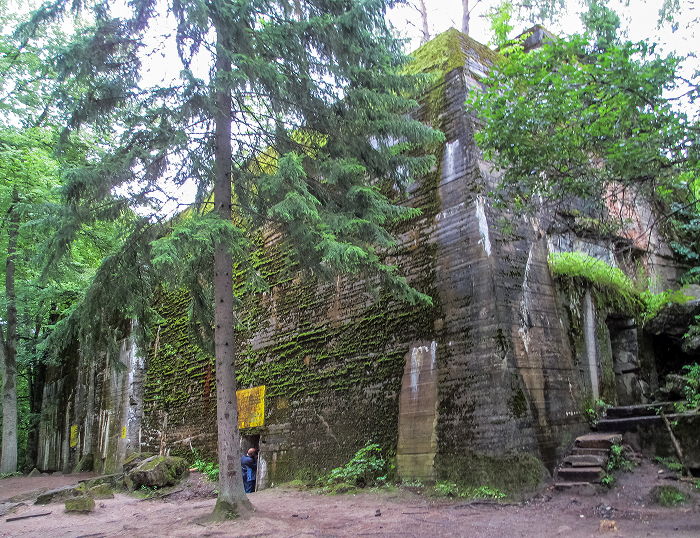
Nazi leader Adolf Hitler used to hide inside and plan the brutal war from a secret forest headquarters.
Deceptively peaceful forest roads in Poland lead to a massive complex of bunkers, where the dictator of Nazi Germany covertly directed major military operations of World War II (per CNN).
Adolf Hitler first arrived at Wolf's Lair in June 1941, almost simultaneously with the largest military invasions in the history of warfare, Operation Barbarossa.
The Wolf's Lair even served as a hideout for Hitler’s most loyal Nazis; Joseph Goebbels, Hermann Göring, Martin Bormann, and Wilhelm Keitel all lived alongside their dictator leader inside the well-fortified bunker.
“The Wolf’s Lair became an unofficial capital of the Third Reich,” said history enthusiast Grzegorz Opala, who works as a tourist guide around the facility’s eerie remains.
Tucked away in West Virginia, the infamous Greenbrier bunker was meant to keep the entire US Congress safe underground.
Hidden in one of the country’s most famous luxury resorts, Greenbrier, the post-apocalyptic bunker was kept secret from the public for 30 years; it was never even used (per NPR).
In 1978, locals started to smell something fishy at the famed Greenbrier. “Why is there a 7,000-foot landing strip for a town of 3,000 people?” recounted Greenbriar's official historian, Bob Conte.
He answered that there was no such thing and didn’t give them the shocking answer: “The government could fly their people in here in case of war and go to the bunker that's under the Greenbrier.”
In case of a nuclear Armageddon, the House and Senate would flee behind 3-foot-thick concrete walls and sleep on metal bunkbeds. ‘All they had for private items that you could lock up were a small drawer, right underneath the beds, you could put your personal items in here,” Conte explained. “For 30 years, every one of these 1,100 beds was assigned to somebody.”
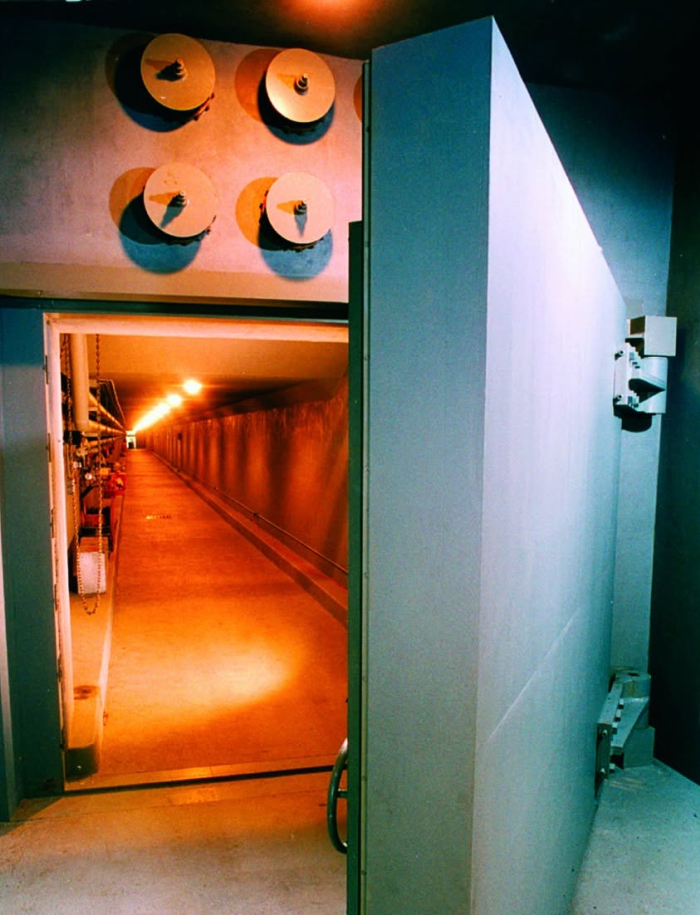
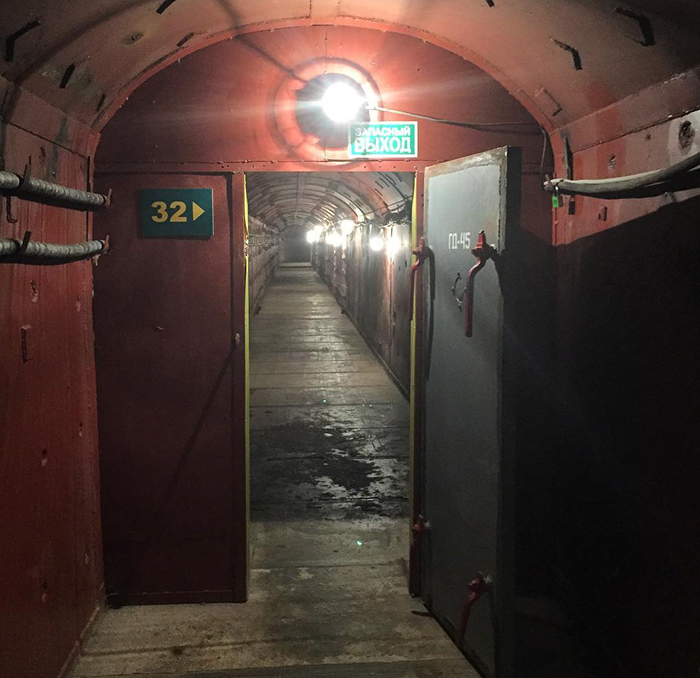
Deep down in downtown Moscow lies a Cold War nuclear bunker constructed by the Soviet Union (per Business Insider).
After the US developed the destructive nuclear bomb, the USSR government built a top-secret underground facility to survive such immense power, ingeniously located 65 meters (213 feet) under the city surface (per Бункер-42).
Step inside the expansive, heavily fortified Bunker-42 to find dusty tunnels, old rooms, and four cavernous tubes spread across 75,000 square feet.
“The tunnel used to be covered up; there are still some panels,” said the bunker's director, Olga Arkharova, pointing at a corroded metal object (per The Moscow Times). “There used to be carpets and parquet floors, and people in white coats working here.”
Up to 3,000 people could survive inevitable death for a whole three months, though it was mainly built from 1952 to 1956 as a “communications headquarters for the country's leadership and military top brass.”
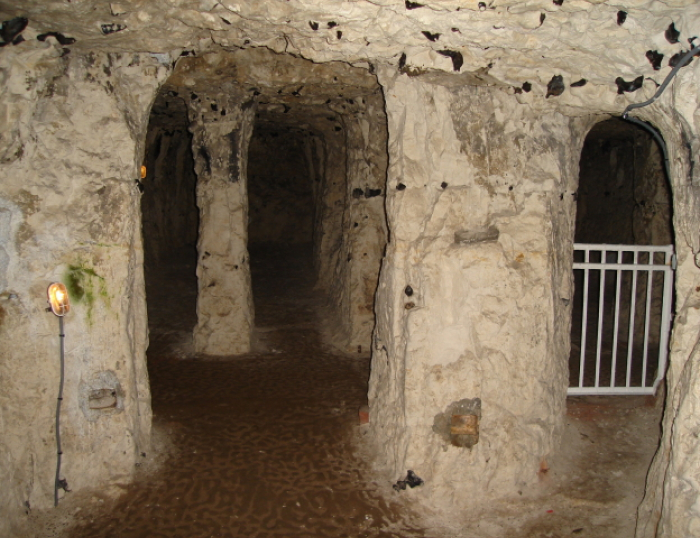
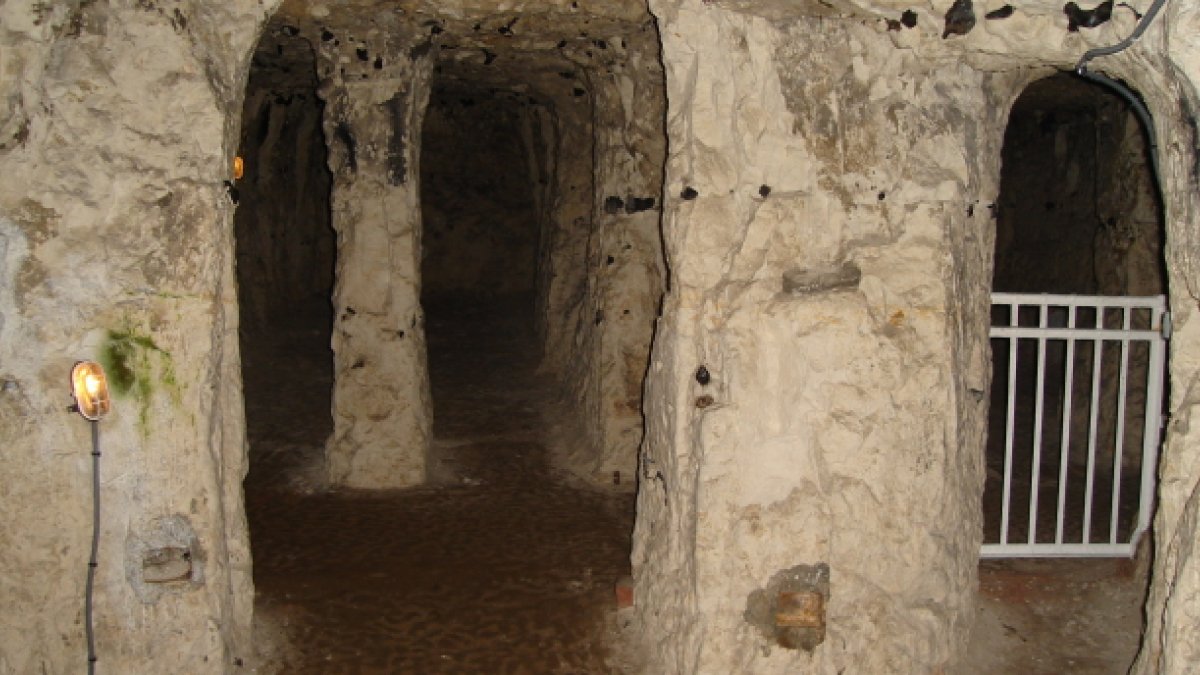
Dug only by hand, the Underground City of Naours takes you back into the eerie lives of WW1 soldiers (per La Cité Souterraine de Naours). In July 1916, the first Australian soldiers to come to France visited Naours as tourists, leaving mysterious graffiti on the hidden city’s walls (per France.fr).
The darkness and heavy air in the caves and tunnels can send shivers down your spine, while the 3,000 examples of graffiti drawn by suffering First World War soldiers make you question who really benefits from wars.
Around 1,800 were drawn by a mix of Australian, French, English, Irish, Scottish, and American soldiers, while over 600 remain unidentifiable.
The Underground City of Naours served as an organized tour destination during the Great War, as a way to distract soldiers on leave or convalescent behind the front lines.
Today, the cave network is considered the largest known concentration of World War I inscriptions on the Western Front.
In 1942, Adolf Hitler ordered the construction of a gigantic, 5,000km (3,100-mile) system of coastal defences (The Atlantic Wall) to protect against an Allied invasion of occupied Europe (per The Guardian).
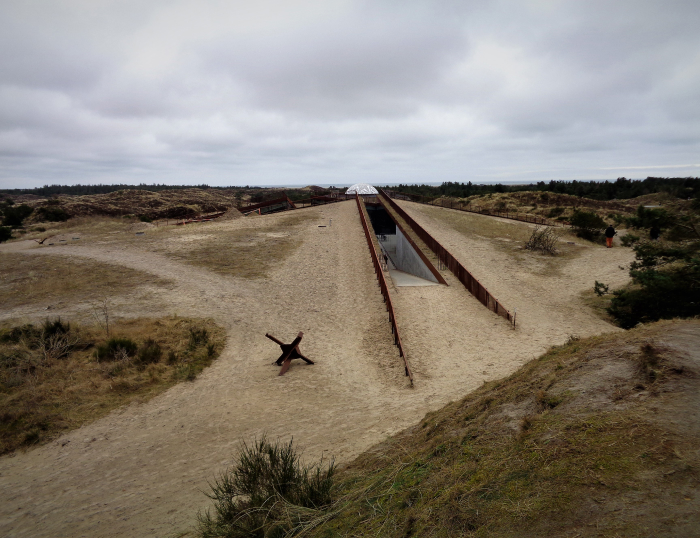
In August 1944, the Germans established a massive Tirpitz Battery located near Blåvand, Denmark. Originally, the two colossal gun bunkers were built as part of the Atlantic Wall to protect the entrance to Esbjerg harbor, though World War II ended before they finished building the bunkers (per tirpitz.dk).
Today, the gloomy remnant of the historic Atlantic Wall is a living evidence of war woes, which can be accessed through forgotten dunes in the middle of the sand in Blåvand. Visitors can behold the original gun bunker by entering an underground exhibition tunnel, all behind a 3.5-meter-thick, well-fortified concrete wall.
The naturally curious visitors often feel bewildered at the nature of such a Nazi bunker. Why would anyone build a massive battery right in Blåvand? What was the exact mechanism behind guns during the war? More importantly, how far could they really shoot over the sea?
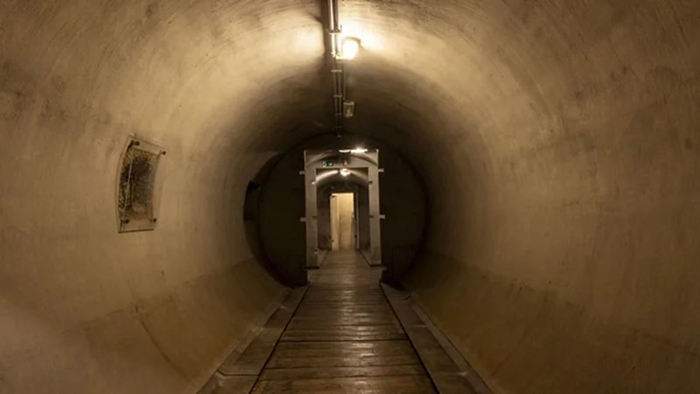
As Italy was newly entangled in the merciless World War II in June 1940, Fascist leader Benito Mussolini was quick to order the construction of air-raid shelters at his private Rome residence, Villa Torlonia (per CNN).
A total of three fallout bunkers were consequently built for Mussolini and his family in the case of an emergency. The first one was constructed by repurposing an old wine cellar on the grounds of Villa Torlonia.
The second was an air-raid shelter featuring concrete-covered rooms and anti-gas doors, along with an air-purification and exchange system. It was located in the basement of the Casino Nobile, one of the buildings in the villa’s grounds.
With WW2 in full swing, the dictator set about constructing a heavily armored bunker, situated 20 feet underground in front of the Casino Nobile. The shelter was built in December 1942 in a cross shape, with corridors 50 feet long and 8 feet wide, topped with 13 feet of reinforced concrete.
The third bunker was never finished as Mussolini was arrested on July 25, 1943; it lacked a necessary toilet, ventilation system, and watertight doors.
Doomsday underground bunkers are not just overly used, cliché movie plots; real-life survival shelters can be more epic and rather weird.
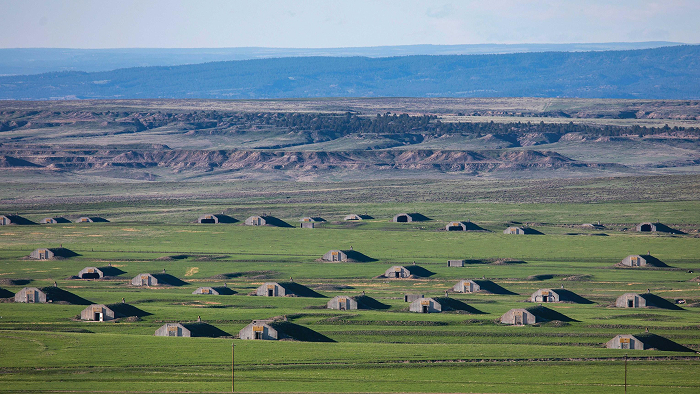
Vivos xPoint takes a fortified former US Army base and turns it into a massive, future-proof billionaire bunker the size of a city.
Situated near the Black Hills of South Dakota, the grand humanitarian project comprises 575 privately built military bunkers, repurposed as hidden shelters for the mega-rich and their families.
The Army Corps of Engineers originally built the facility to store destructive bombs and munitions until 1967. It was sold to the City of Edgemont and then to local cattle ranchers.
Vivos ultimately bought the property, which sits at a high and dry altitude of 3,800+/- feet, and converted it into a real-life “doomsday bunker.”
The high-end shelter is expected to accommodate around 5,000 individuals in the event of an apocalypse, costing between $25,000 and $200,000 for each bunker’s interior design and finishes (per CNN).
Those who prepay for the doomsday can enjoy a life-saving facility that includes a spa, gym, community theater, hydroponic gardens, classrooms, and even a medical clinic.
These underground bunkers were built in secret and meant to stay that way. Whether carved into mountains, hidden beneath resorts, or buried under city streets, they tell the same story: those in power have always prepared for the worst while the rest of us stayed in the dark.
A few have finally come to light. Most probably never will.

No bunker was ever "meant to be seen". Secrecy is one of the points of a bunker.
Michael Largey: quite right. But... this reminds me that information about the Post Office Tower (now the BT Tower) used to be an official secret, despite the fact that it's this huge great tower right next to a main road in the middle of London. Links follow.
Load More Replies...
Many people have a strange love for that movie, but I've stopped worrying about it.
Load More Replies... No bunker was ever "meant to be seen". Secrecy is one of the points of a bunker.
Michael Largey: quite right. But... this reminds me that information about the Post Office Tower (now the BT Tower) used to be an official secret, despite the fact that it's this huge great tower right next to a main road in the middle of London. Links follow.
Load More Replies... Many people have a strange love for that movie, but I've stopped worrying about it.
Load More Replies... 
























 No fees, cancel anytime