Get Premium
Dark mode theme is available exclusively for premium users. Learn more about the benefits of subscribing.
No fees, cancel anytime.

 Dark Mode Ad-Free Browsing Unlimited Content
 Ad-Free Browsing Unlimited Content Dark Mode
Join 1.2 million Panda readers who get the best art, memes, and fun stories every week!
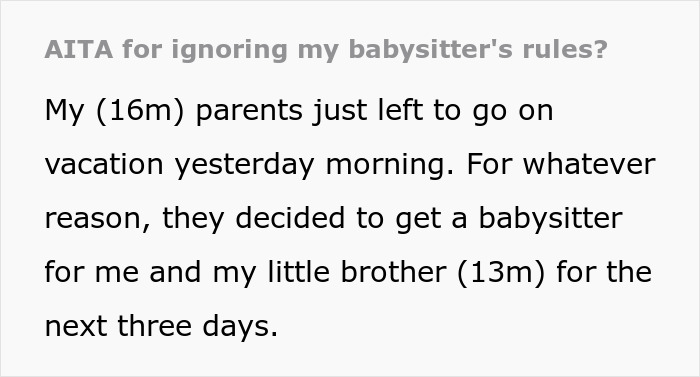
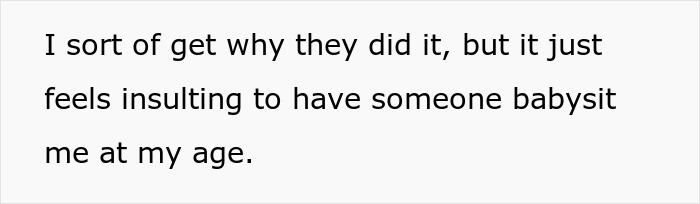
At 16, some teenagers can handle the responsibility of looking after their homes and siblings. However, when this Reddit user’s parents went on a mini-vacation, they hired a babysitter.
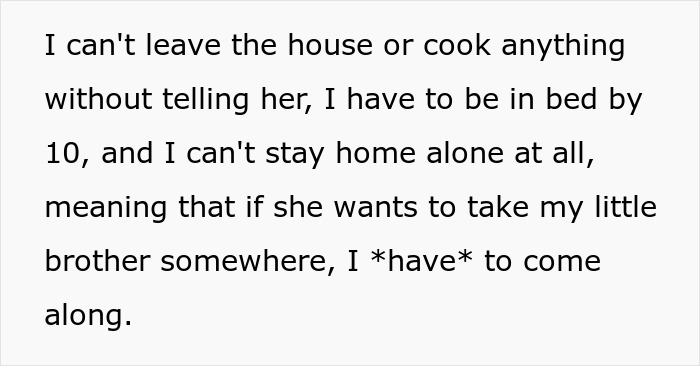
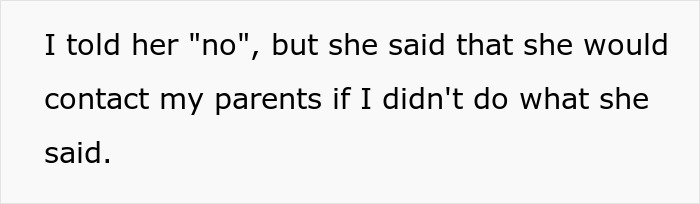
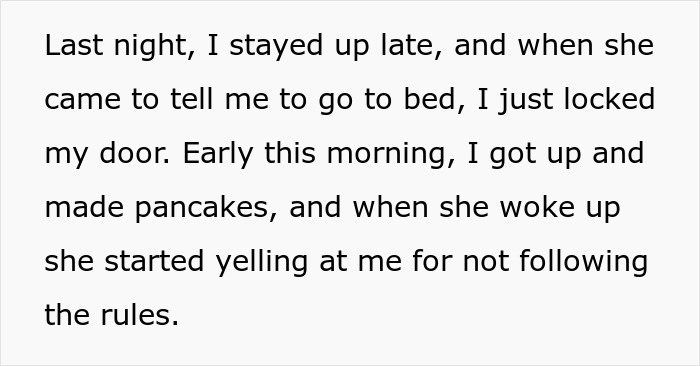
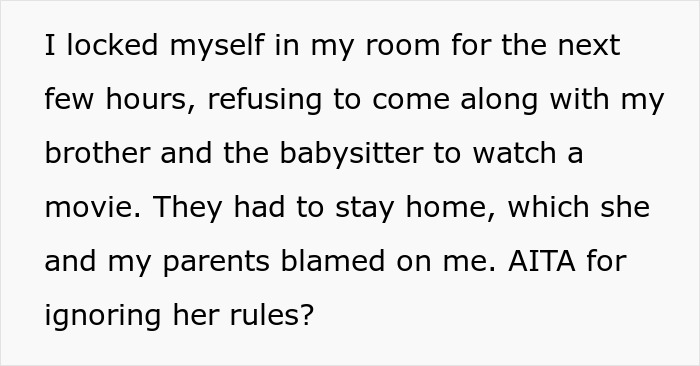
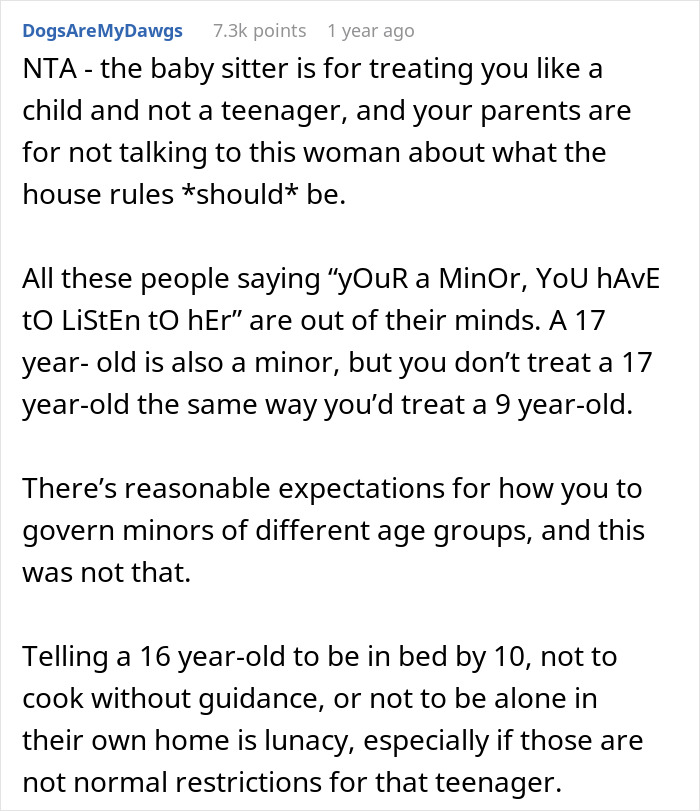
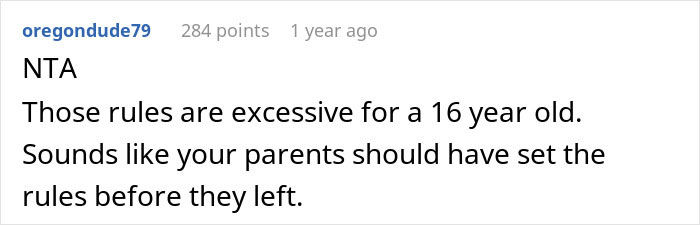
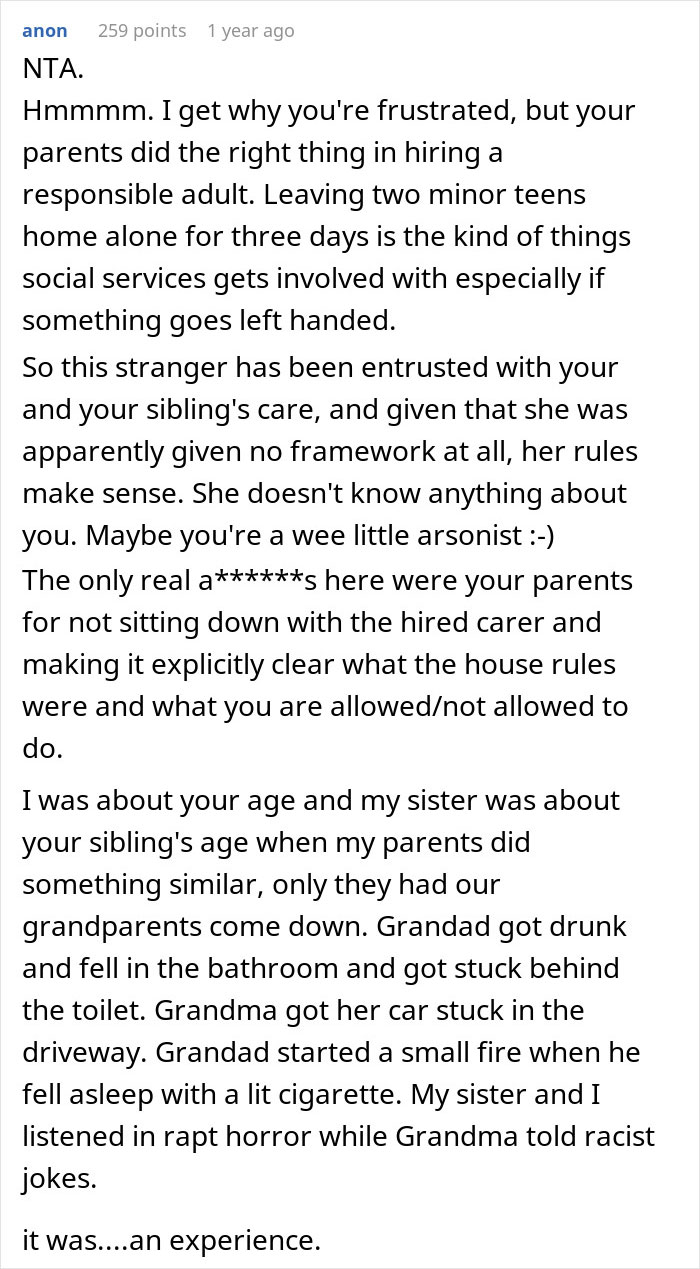
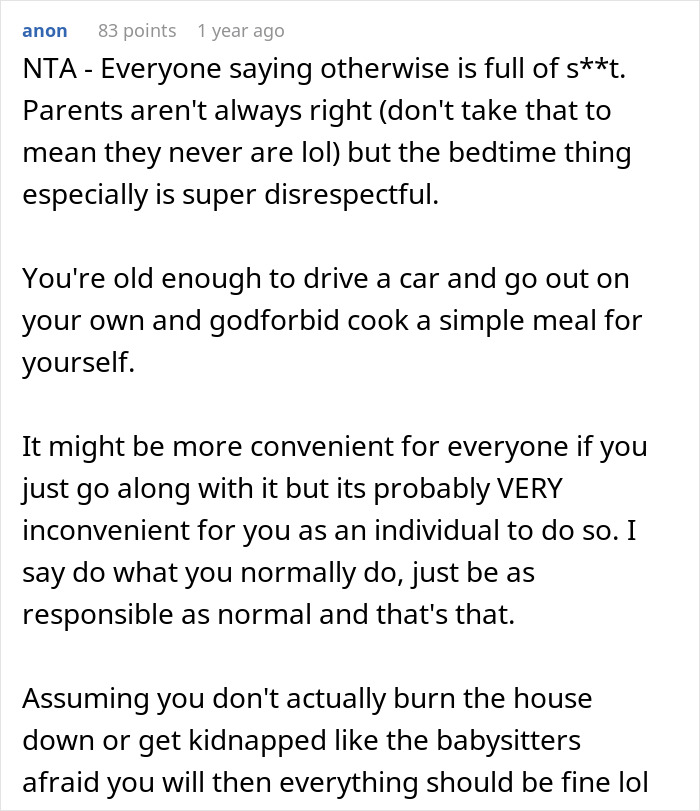
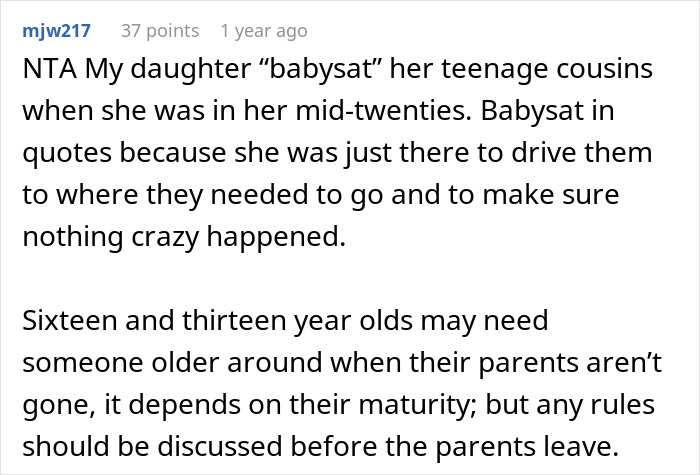
Though he thought their decision was reasonable, he couldn’t say the same about the woman’s strict rules. After he refused to follow them, the teen faced consequences from both the babysitter and his parents, leading him to ask for judgment on the ‘Am I the [Jerk]?’ subreddit.
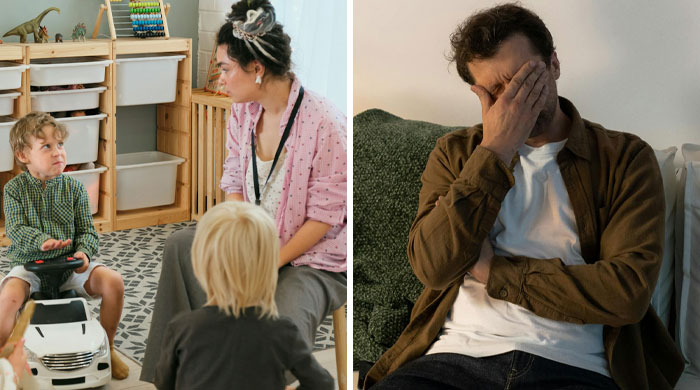
Image credits: Mikhail Nilov (not the actual photo)
Image credits: Liza Summer (not the actual photo)
Image credits: cottonbro studio (not the actual photo)
Image credits: anon
Image credits: Ksenia Chernaya (not the actual photo)
Between work, appointments, and other family commitments, every parent will have to leave their child home alone at some point, so it’s good to have a plan in place and try to prevent situations like the one we just read about.
While learning to be independent is an important part of growing up, every child does this at their own pace.
Experts provide these guidelines to help parents decide whether their kid is ready to be home alone:
Image credits: Christina Morillo (not the actual photo)
Before parents leave the house, they should tell the sitter where they will be and how to reach them at all times, and under what circumstances to call 911 before contacting them.
They should also show them where the emergency exits are, as well as the places of smoke detectors, fire extinguishers, and first-aid kits.
Before starting their shift, the sitter should know how to enable and disable security systems and alarms, and the location of the spare key, should they, for whatever reason, need it.
However, the sitter should also be aware of any special problems a child may have, such as an allergy (to bee stings, foods, etc.) or needing to take medicine at a specific time.
The babysitter has to know the parents’ expectations before they leave and get introduced to the child’s usual routine (homework, bedtime, meal times). The two parties should have a talk about their general house rules, including any limits on TV, computer use, video games, playing outside, etc.
Otherwise, as we can see, problems will arise even around basic everyday subjects.


Somehow some people think it's okay for a 16 year old to drive cars, work fulltime and join the army in a year, but somehow also can't be trusted to stay at home alone for a few hours... Interesting 🤔

Naw it was for a few days not hours reread it smh
Load More Replies...
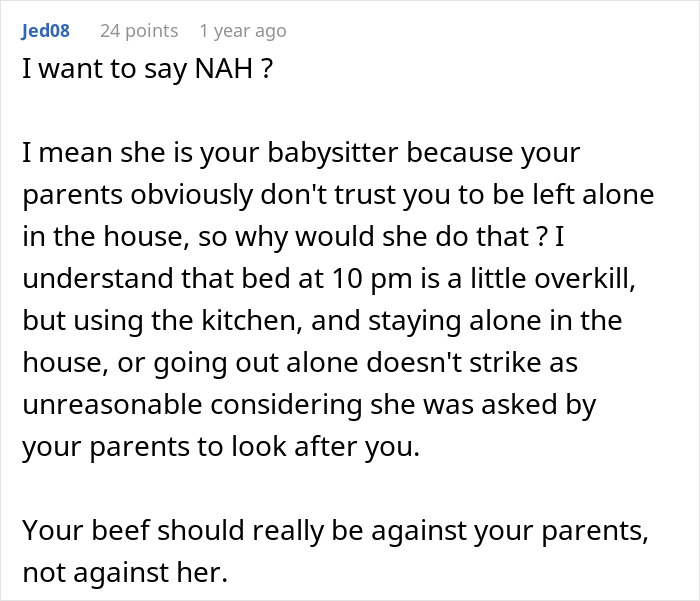
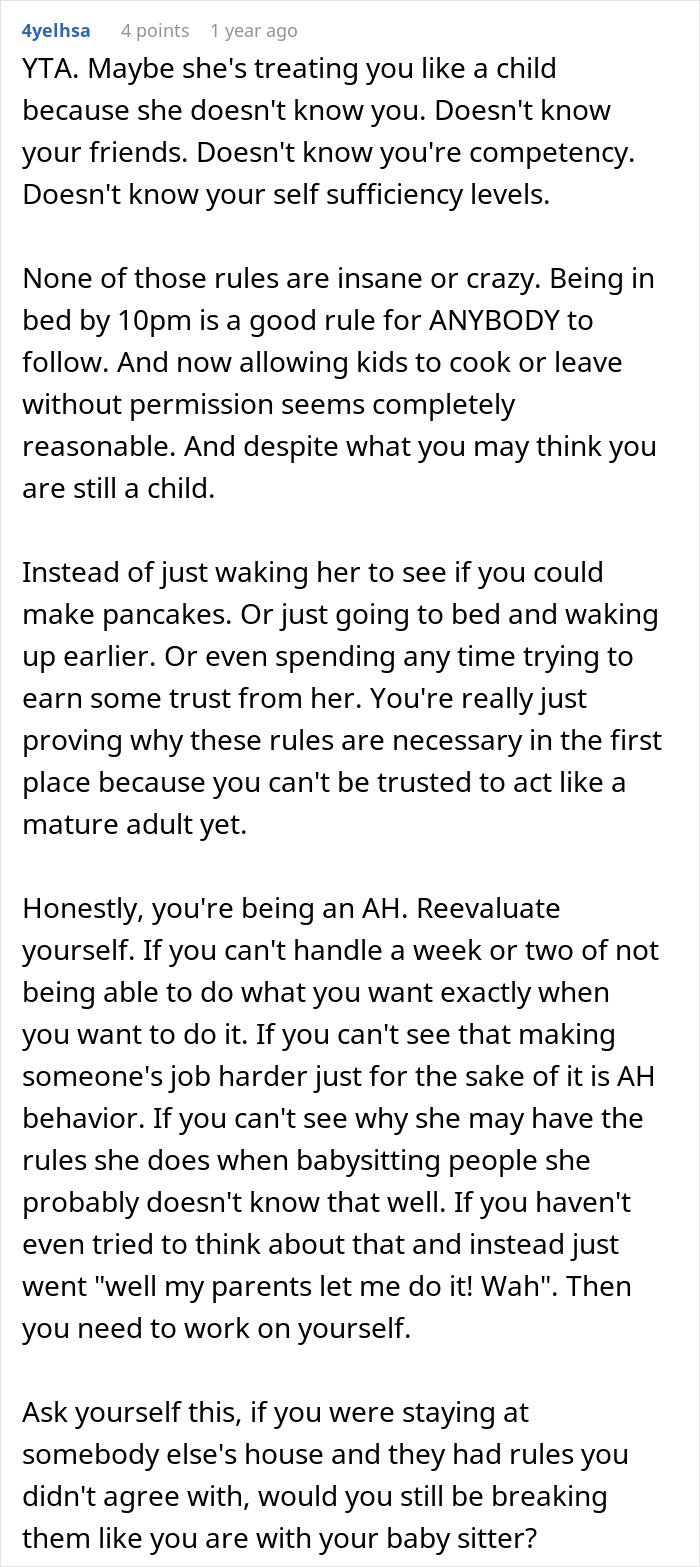
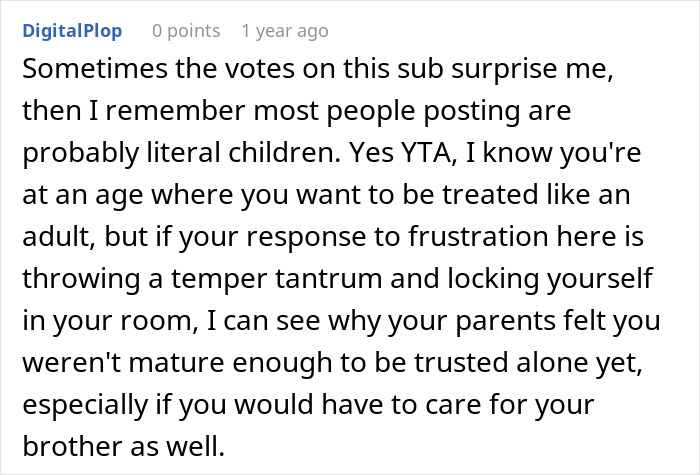
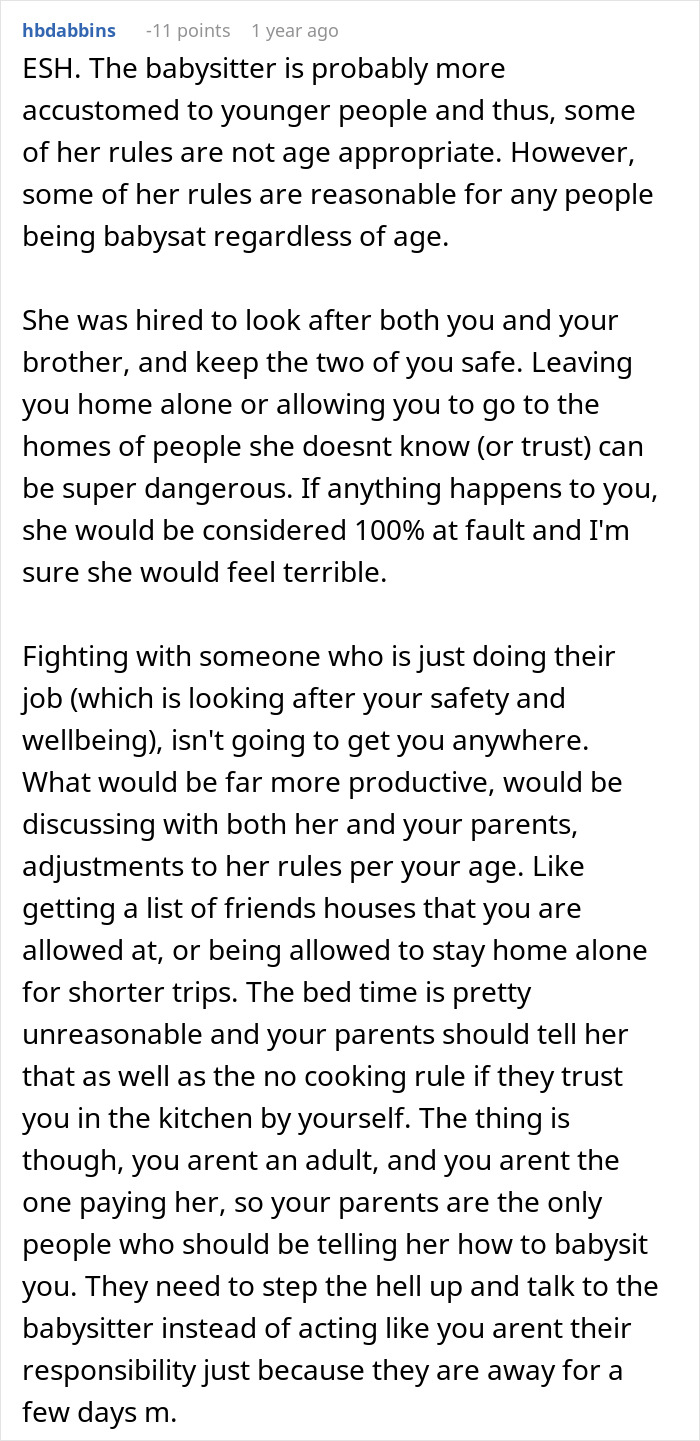
This is a three way lack of understanding, had the babysitter been introduced to the boys before her duties were undertaken? Had the parents stated their own rules on each individual child? Had the older child had a chance to discuss his abilities with the childminder. It seems the parents were happy with the childminder, childminder was making sure both children were safe as per her job. It's all a communication breakdown. No one is an AH really, just needed a bit more structure.

I think a little more info is needed. We don't know how the 16 year old has handled any responsibility in the past and if he can be counted on to take care of his brother and himself. I started babysitting when I was 12. As the oldest of my siblings and my cousins I started by watching them for a few hours at a time. Shortly after that I was regularly sitting for a number of families. When I was 15 years old I watched some kids in my neighborhood for the whole summer, 8:00am-4:00pm, 5 days a week, while the parents were at week. During the summer that I was 16, I stayed home alone with the dogs while my family went on vacation for a couple of weeks. I was able to do these things because I had proven that I could be responsible and because my parents trusted me. Kids mature at different rates and there is no "one size fits all" when it comes to how we grow up.
Load More Replies...
What type of parent doesn't discuss rules with the babysitter beforehand? This could have all been avoided.

This is what I was thinking. All the adults here are TA. The teenager was being a teenager and wanting his autonomy, which teenagers need if they are to become functional adults.
Load More Replies... Somehow some people think it's okay for a 16 year old to drive cars, work fulltime and join the army in a year, but somehow also can't be trusted to stay at home alone for a few hours... Interesting 🤔
Naw it was for a few days not hours reread it smh
Load More Replies... This is a three way lack of understanding, had the babysitter been introduced to the boys before her duties were undertaken? Had the parents stated their own rules on each individual child? Had the older child had a chance to discuss his abilities with the childminder. It seems the parents were happy with the childminder, childminder was making sure both children were safe as per her job. It's all a communication breakdown. No one is an AH really, just needed a bit more structure.
I think a little more info is needed. We don't know how the 16 year old has handled any responsibility in the past and if he can be counted on to take care of his brother and himself. I started babysitting when I was 12. As the oldest of my siblings and my cousins I started by watching them for a few hours at a time. Shortly after that I was regularly sitting for a number of families. When I was 15 years old I watched some kids in my neighborhood for the whole summer, 8:00am-4:00pm, 5 days a week, while the parents were at week. During the summer that I was 16, I stayed home alone with the dogs while my family went on vacation for a couple of weeks. I was able to do these things because I had proven that I could be responsible and because my parents trusted me. Kids mature at different rates and there is no "one size fits all" when it comes to how we grow up.
Load More Replies... What type of parent doesn't discuss rules with the babysitter beforehand? This could have all been avoided.
This is what I was thinking. All the adults here are TA. The teenager was being a teenager and wanting his autonomy, which teenagers need if they are to become functional adults.
Load More Replies...





















 No fees, cancel anytime















72
82