Get Premium
Dark mode theme is available exclusively for premium users. Learn more about the benefits of subscribing.
No fees, cancel anytime.

 Dark Mode Ad-Free Browsing Unlimited Content
 Ad-Free Browsing Unlimited Content Dark Mode
Join 1.2 million Panda readers who get the best art, memes, and fun stories every week!
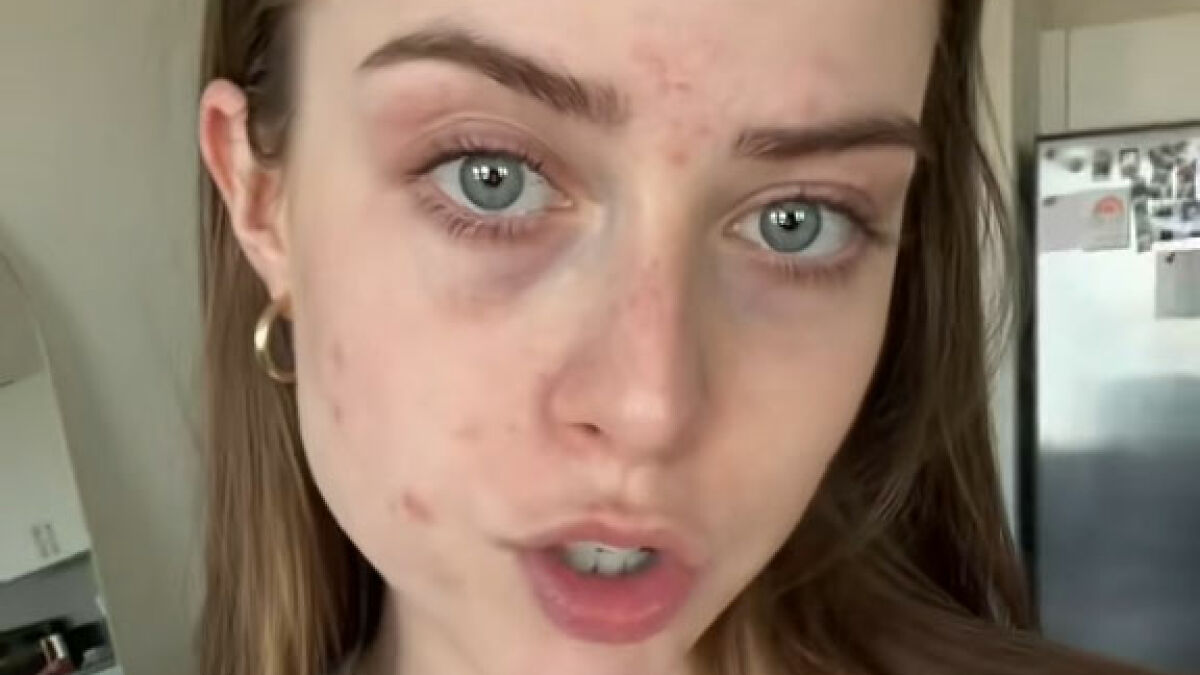
Whether it was saying “No, thank you” to the Reese’s brought to the office by a colleague or not buying the cinnamon roll at her local bakery that was calling her name, Caroline Dobbs’ sugar-free journey was indeed a challenge.
The influencer, a self-confessed sugar obsessive with nearly 300,000 followers on TikTok, showed how she controlled her impulses until she reached a new record in her no-sugar challenge.
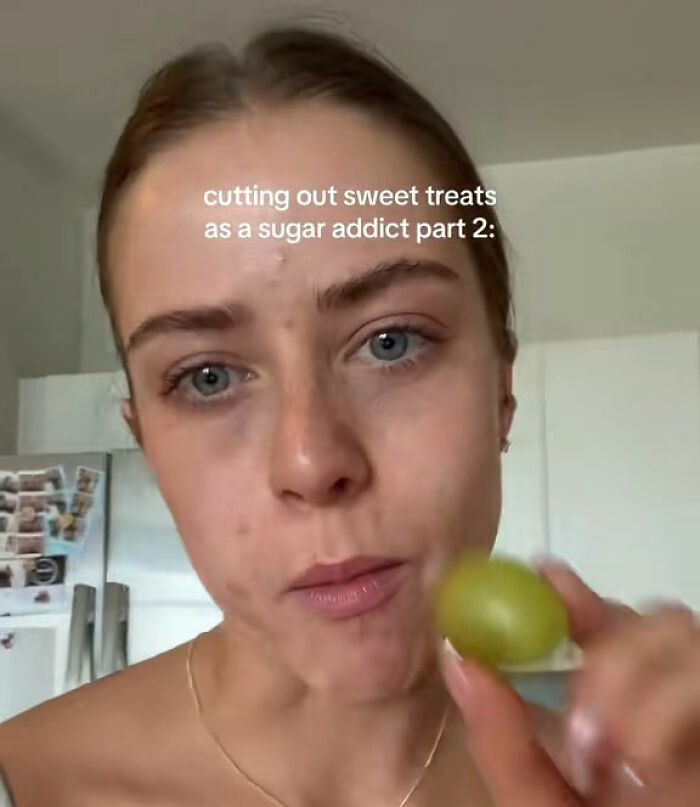
Image credits: carolineedobbs
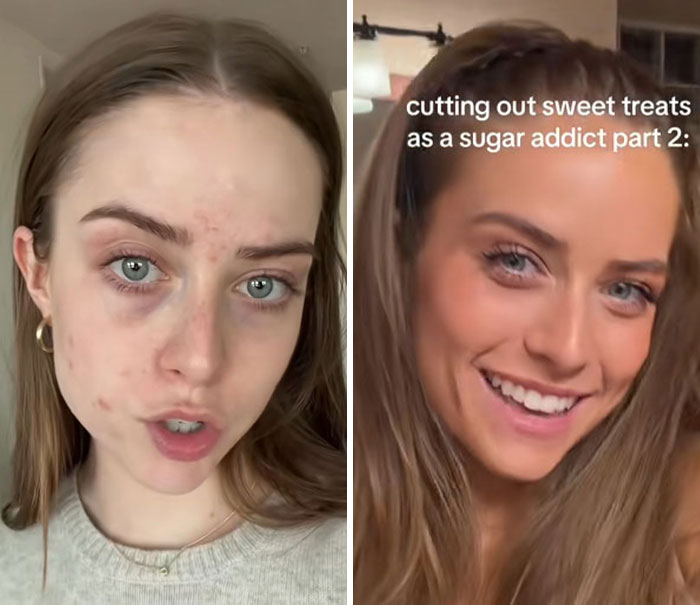
Caroline filmed daily updates for her TikTok page, documenting how she felt after deciding to cut out all sweet treats from her diet.
People were impressed with the results, with many pointing to a specific change in her body and giving the influencer the same compliment.
During one of the earliest days of her healthy mission, Caroline filmed herself eating grapes, admitting that she “hated” the challenge she had embarked on.
Image credits: carolineedobbs
In a different part of the now-viral TikTok, she filmed one of her friends indulging in a chocolate umbrella and screamed at the camera in frustration.
“What the heck even is that?!” Caroline exclaimed while filming a chocolate pastry topped with whipped cream that she couldn’t eat.
On day ten, the sugar-obsessed influencer announced she was “still going strong.”
“I’m honestly doing okay as long as there’s no sugar around me any time at all during the day.”
Image credits: Andres Ayrton/pexels (not an actual photo)

After hitting the two-week mark, she decided to break her sweet treat abstinence to celebrate Easter with a cinnamon roll and “magnificent” marshmallow Peeps.
Beyond her frequent sugar cravings—her last record was 10 days—Caroline appears to have a healthy lifestyle and has posted several videos of herself exercising at the gym.
Many people seemed to share her obsession with pastries, chocolate bars, and candy, with one person writing on her latest challenge, “13 hours no sugar (I just woke up).”
Image credits: carolineedobbs
Others were inspired enough to actually try the challenge themselves. “Imma try this as well. I hope I make it for at least 3 days.”
But most viewers pointed out a positive physical change they observed in Caroline as she crossed off the days on the calendar. “Girl your skin has cleared so much,” one commenter remarked.
“Your skin got better,” echoed another, to which Caroline responded, “That’s why I do this.”
@carolineedobbs New record: 14 days!!! This wasn’t as bad as the first time I did it!! #nosugarchallenge#noprocessedsugar#nosugardiet#sugaraddiction#austintx♬ L.Boccherini, Minuet from String Quartet No.5 in F major – AllMusicGallery
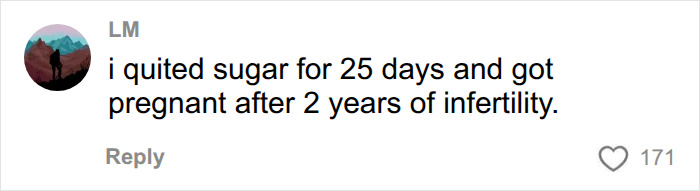
Another woman who tried the zero-sugar experience shared, “I’ve done the no sugar for 1 month, joints didn’t hurt, face wasn’t puffy, more energy, slept better, skin was glowy and no cravings.”
But is sugar really so unhealthy that we should eradicate it from our lives?
On average, US adults take in 17 teaspoons of added sugar per day, according to Harvard Medical School. Soft drinks and bakery products are the top culprits.
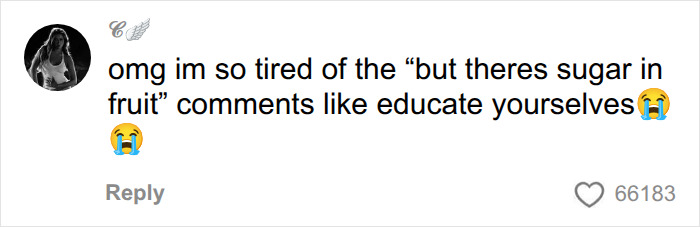
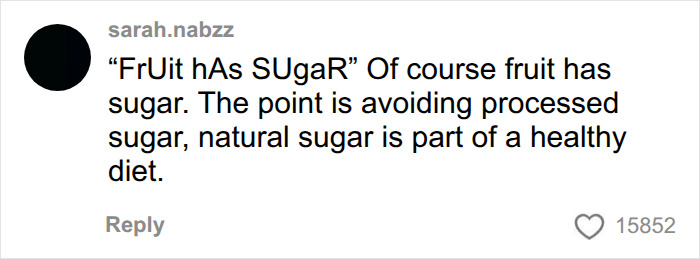
Added sugar refers to sugars that are added to foods during processing or preparation, which are different from the naturally occurring sugars in foods like fruits, vegetables, and milk.
Image credits: Ilo Frey/pexels (not an actual photo)
A study published in 2023 in BMC Medicine analyzed data from more than 110,000 individuals followed for an average of nine years. Researchers found that eating higher amounts of added sugars was linked with higher risks of heart disease and stroke.
Consuming too much added sugar can raise blood pressure and increase chronic inflammation, both of which are pathways to heart disease.
This habit is also linked to an increased risk of type 2 diabetes, cavities, and tooth decay.
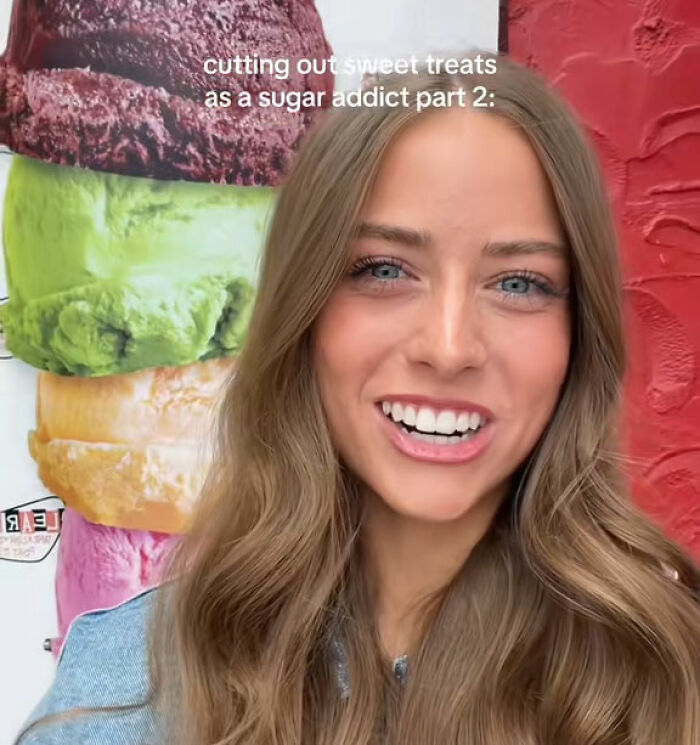
Image credits: carolineedobbs
Additionally, excess consumption of sugar, especially in sugary beverages, contributes to weight gain, as people often gulp down liquid calories without fully realizing the effects they have on their bodies.
The observations from Caroline’s followers may have been right. Cutting out added sugar may improve skin health, with studies linking high added sugar consumption to accelerated skin aging.
Common sources of added sugar include soft drinks, fruit drinks, sweeteners, flavored yogurts, cereals, cookies, cakes, candy, and most processed foods.
However, it is also present in many supermarket items, including soup, bread, cured meat, bottled salad dressing, and ketchup.
Image credits: cottonbro studio/pexels (not an actual photo)
But should it be completely cut out of our diets? No. Still, it should be consumed in moderation, experts say. The Dietary Guidelines for Americans 2015–2020 recommends consuming no more than 50 grams (200 calories) of added sugar in a 2,000-calorie diet. This translates to 10% of total daily calories.
The most recent update, Dietary Guidelines for Americans 2025–2030, states that no meal should contain more than 10 grams (2.5 teaspoons) of added sugar.
@carolineedobbs New holiday! Happy Caroline started eating sugar again Day! #purejoy#sweattreat#sugaraddiction#austin#fyp♬ original sound – charles
Glucose can still be acquired from fruit, vegetables, and whole grains, which provide nutritional benefits to the body.
The most important factor in any dietary pattern is consistency, which isn’t necessarily reflected in a “challenge,” Healthline notes.
”If you cut out added sugar for 30 days only to return to a diet that’s high in added sugar, the benefits of the challenge will be lost,” the health magazine warns.

By entering your email and clicking Subscribe, you're agreeing to let us send you customized marketing messages about us and our advertising partners. You are also agreeing to our Privacy Policy.
Thank you! You've successfully subscribed to newsletters!


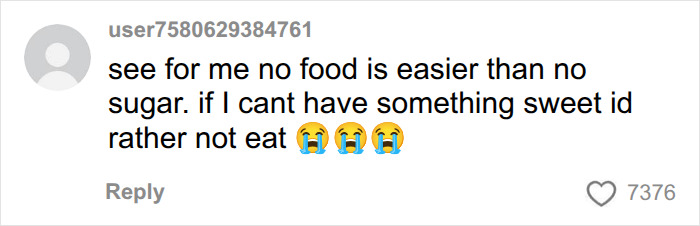
I turn absolutely feral if I can't have my sweet pastries between ovulation and red days 😅

That is my current location and for everyones safety I have baked goods on hand.
Load More Replies...
If I did this with an autoimmune disease, I would probably still gain weight and have awful skin lol it doesn't seem to matter unless you have optimal medication and treatment
I turn absolutely feral if I can't have my sweet pastries between ovulation and red days 😅
That is my current location and for everyones safety I have baked goods on hand.
Load More Replies... If I did this with an autoimmune disease, I would probably still gain weight and have awful skin lol it doesn't seem to matter unless you have optimal medication and treatment























 No fees, cancel anytime











14
6