Get Premium
Dark mode theme is available exclusively for premium users. Learn more about the benefits of subscribing.
No fees, cancel anytime.

 Dark Mode Ad-Free Browsing Unlimited Content
 Ad-Free Browsing Unlimited Content Dark Mode
Join 1.2 million Panda readers who get the best art, memes, and fun stories every week!

Your spouse is supposed to be the person you trust most—the one who makes you feel safe, loved, and supported. But what happens when the person you built your life with suddenly changes, and it feels like you don’t even know them anymore?
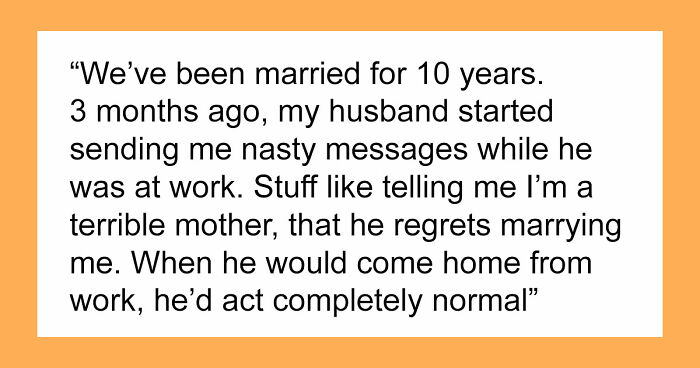
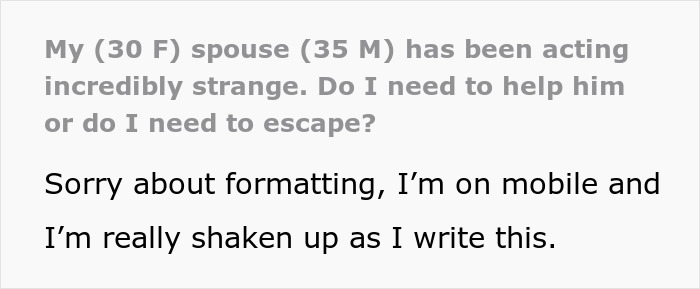
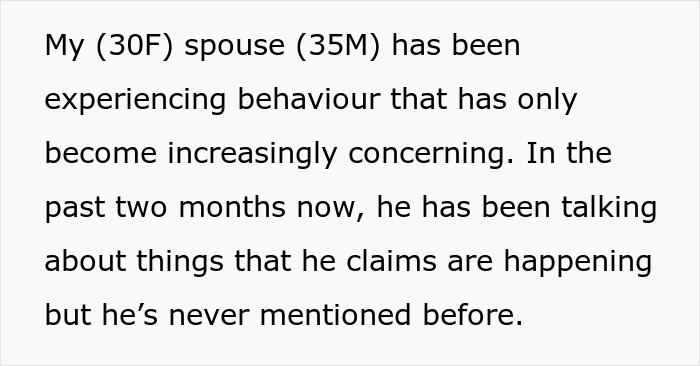
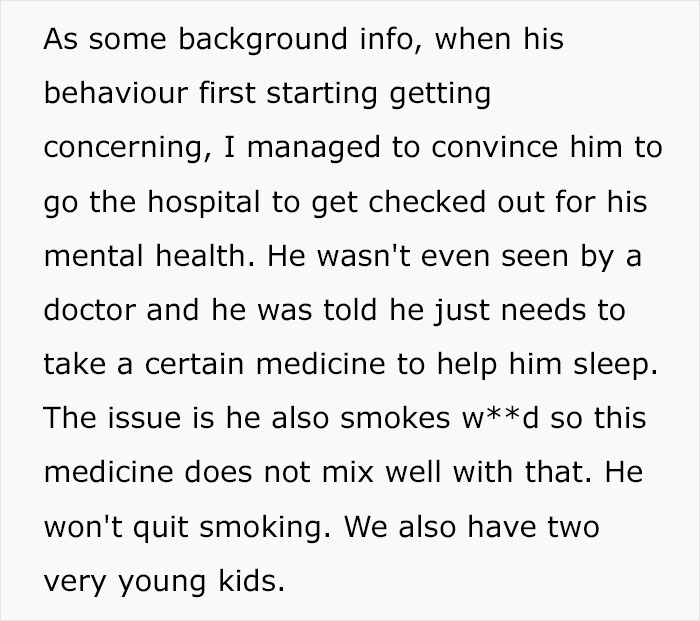
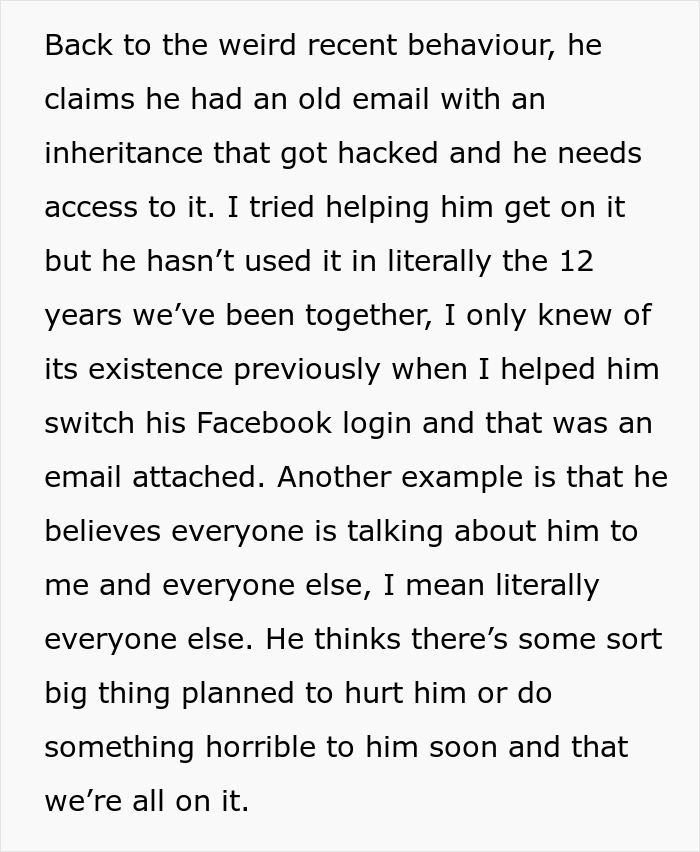
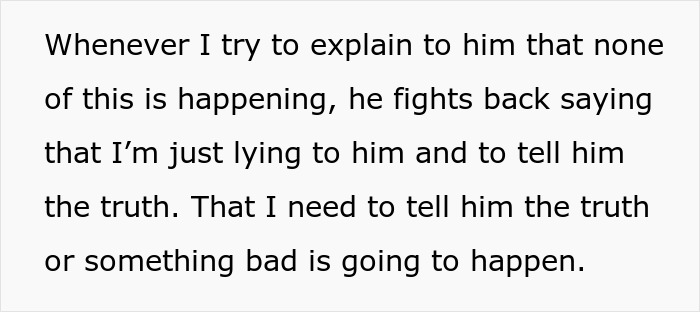
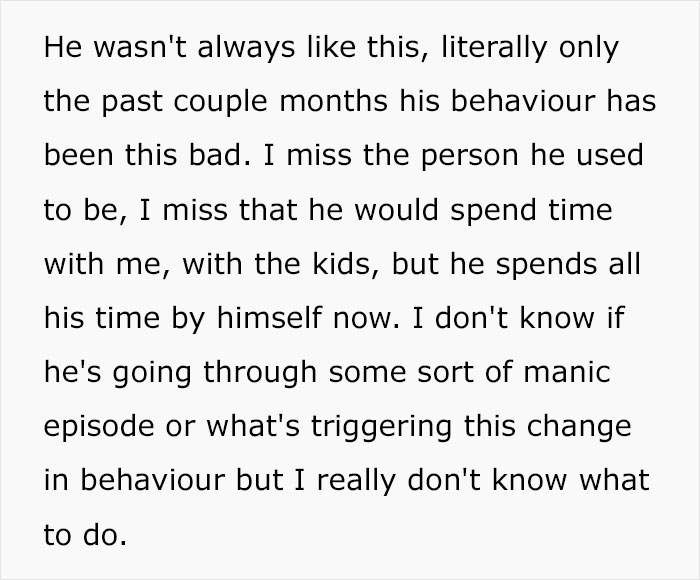
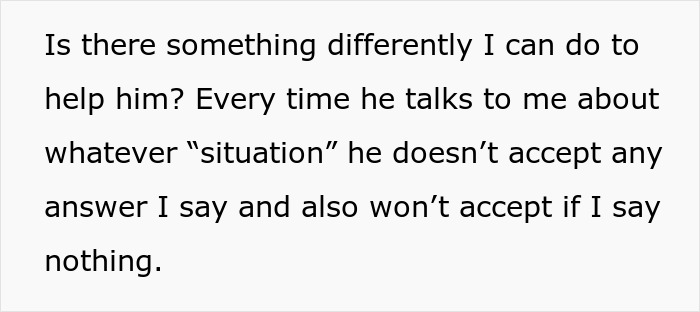
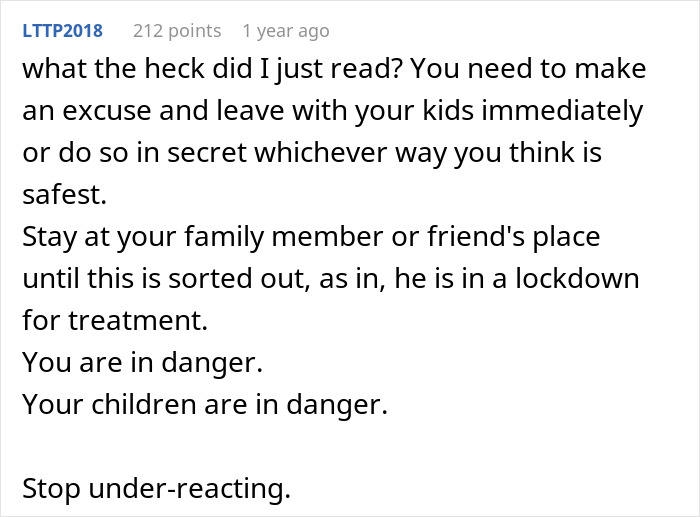
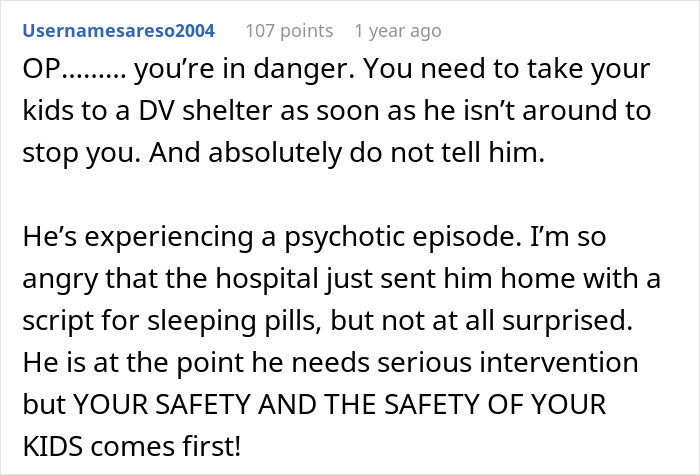
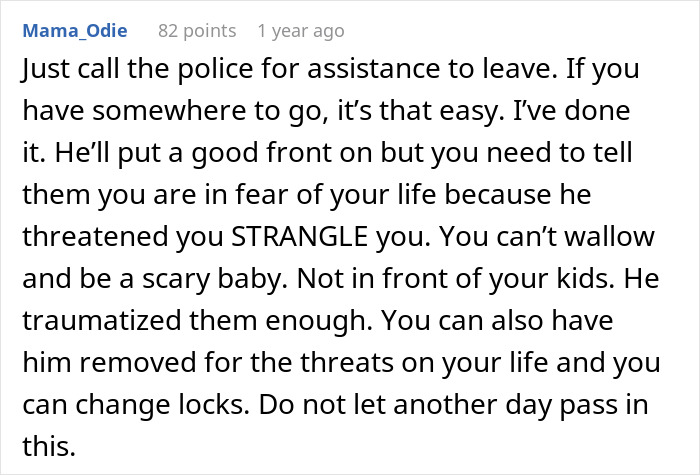
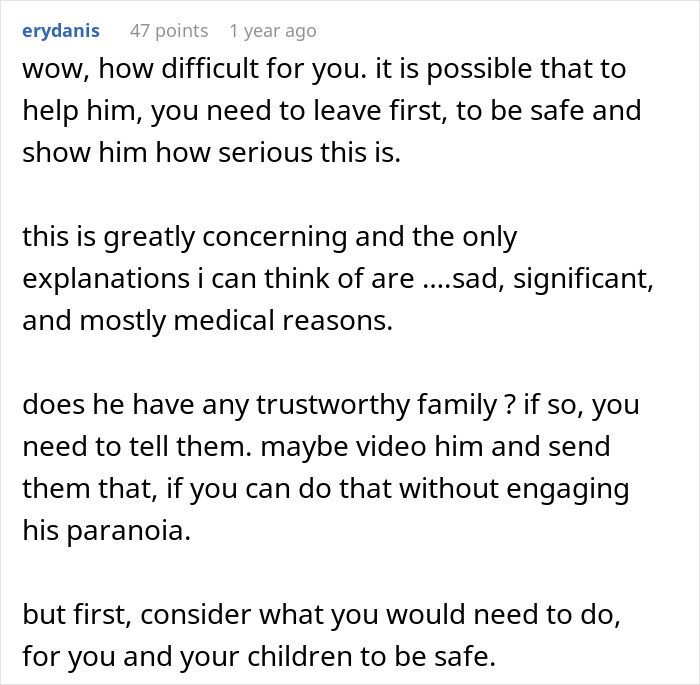
That’s what one woman faced when her husband began showing deeply troubling behavior. He became convinced that people were plotting against him, even accusing her of being part of it. As his paranoia grew, so did his anger, leaving her scared for herself and their children.
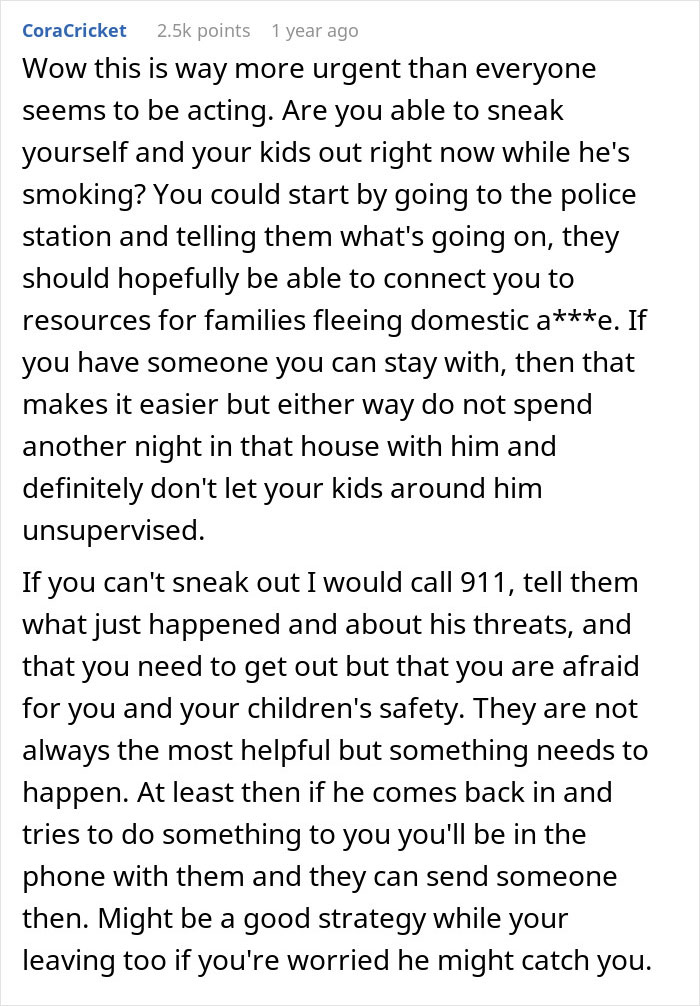
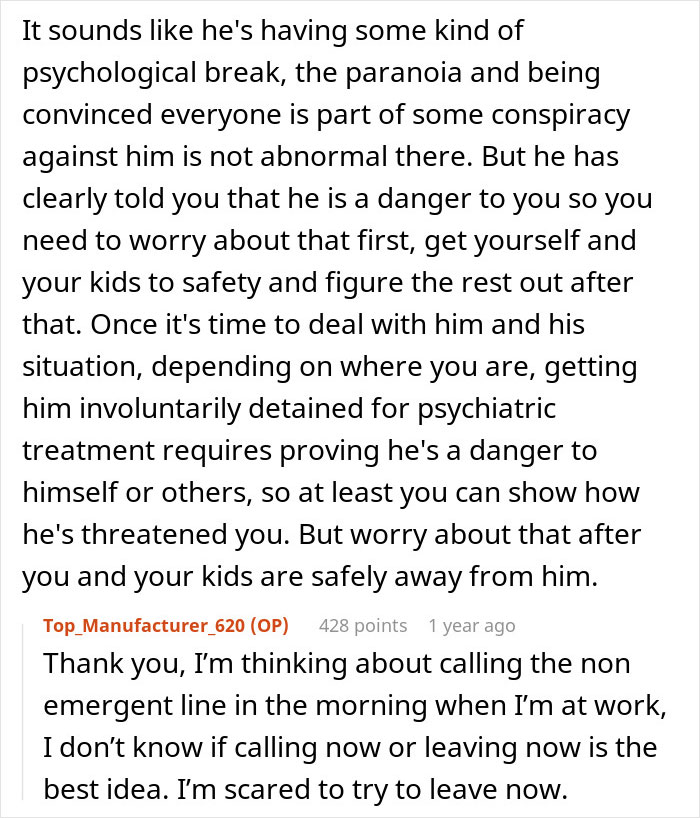
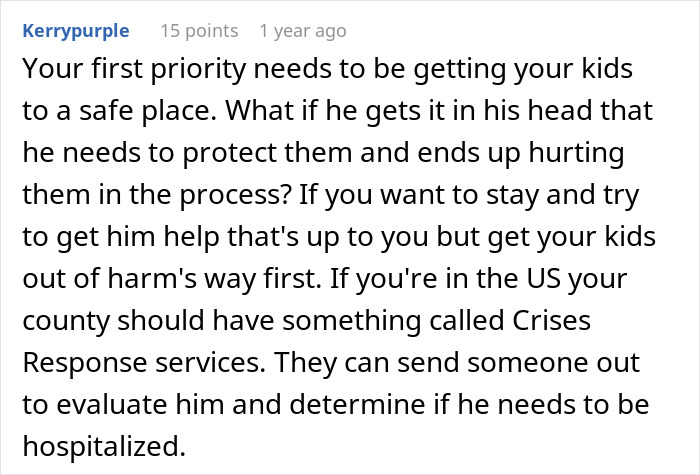
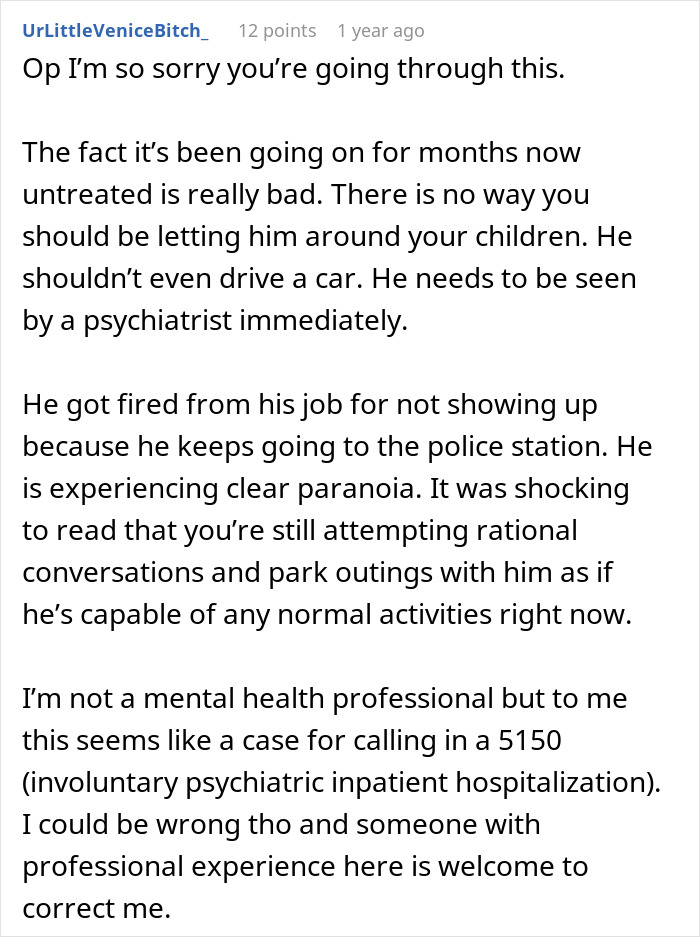
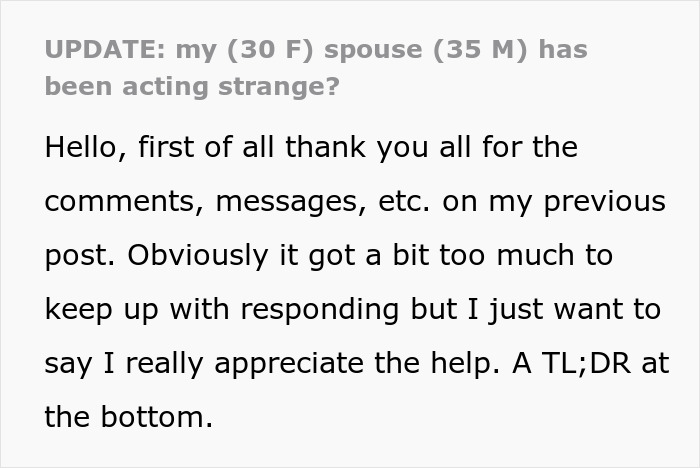
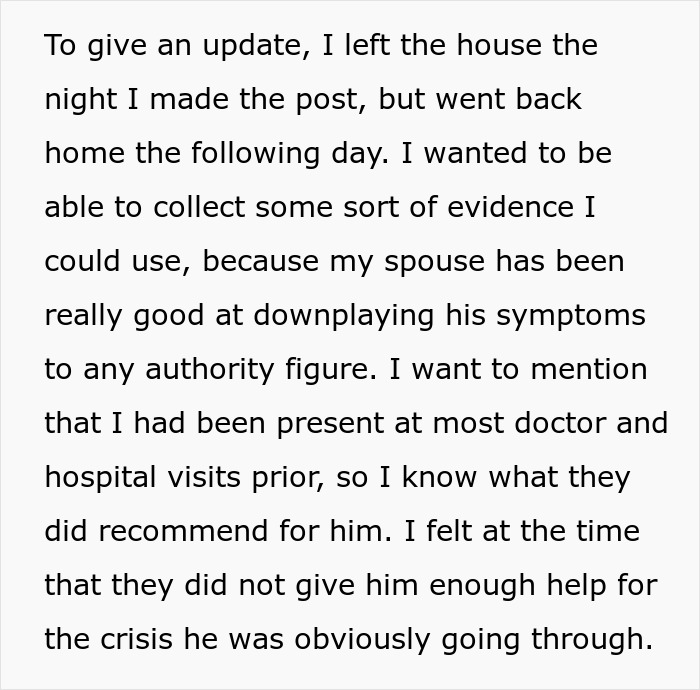
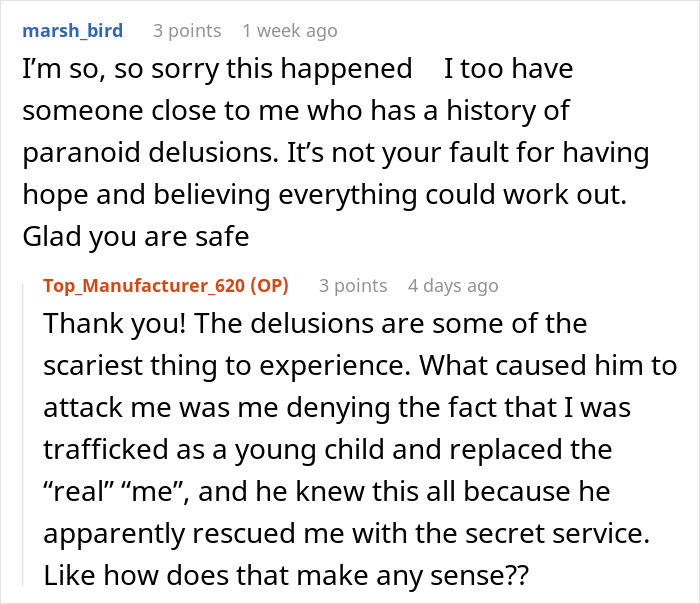
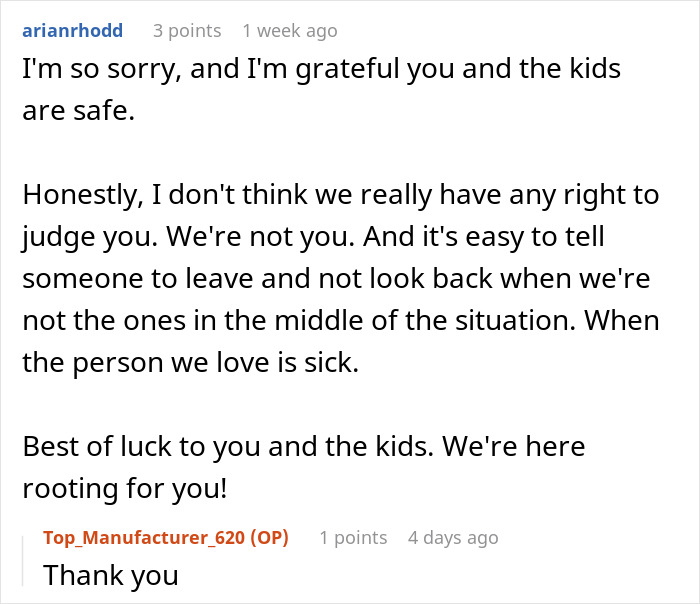
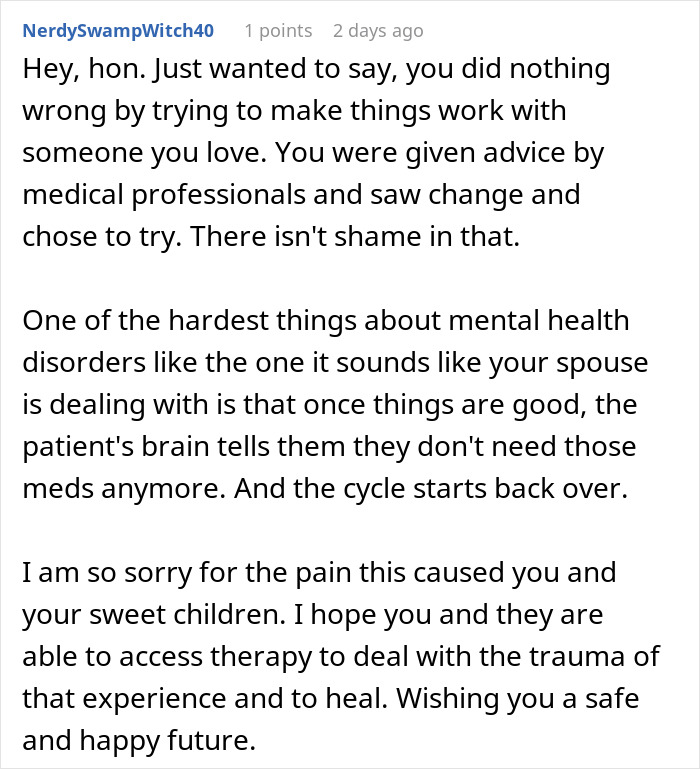
Unsure whether to help him or to protect herself by leaving, she turned to Reddit for advice. Here’s how her story unfolded.
Image credits: dikushin / freepik (not the actual photo)
Image credits: jcomp / freepik {not the actual photo)
Image credits: EyeEm / freepik (not the actual photo)
Image credits: nomadsoul1 / freepik (not the actual photo)
Image credits: freepik (not the actual photo)
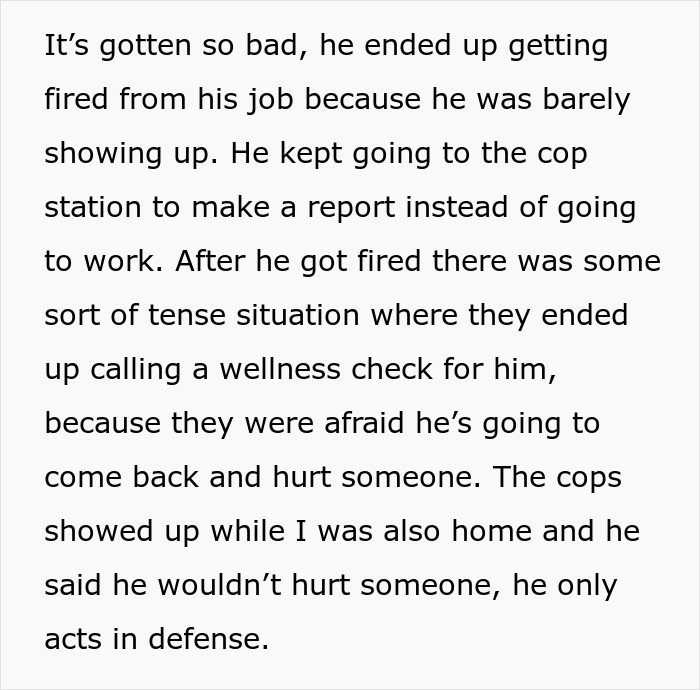
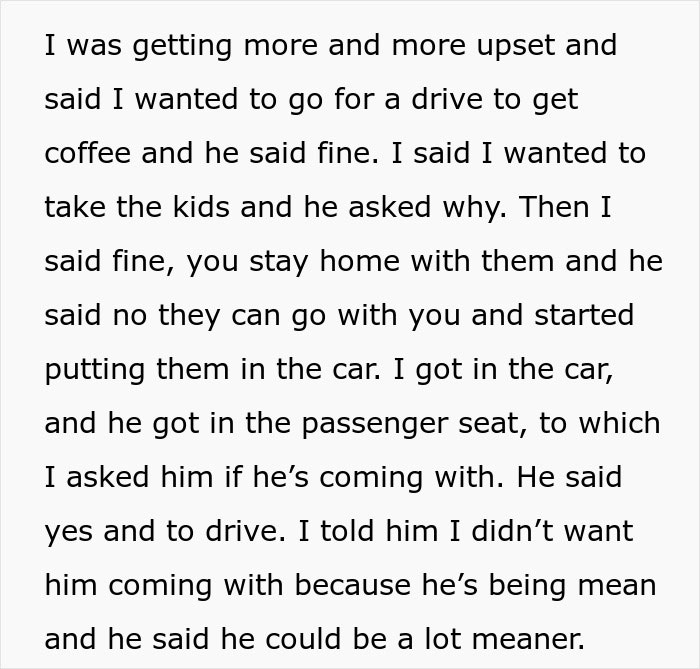
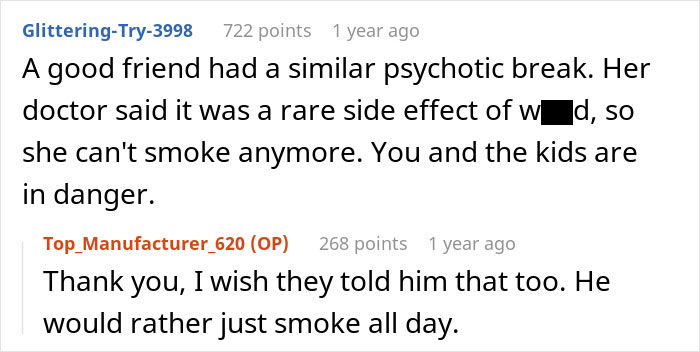
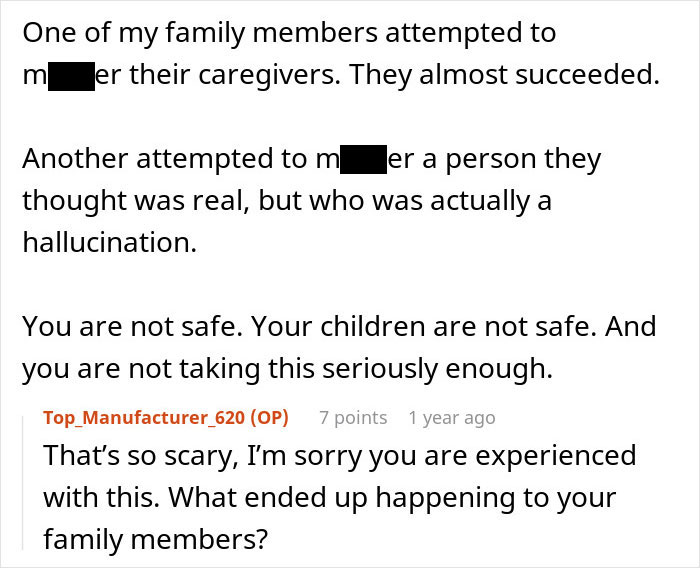
Image credits: Top_Manufacturer_620
It’s impossible not to feel for the woman in this story. When the person you’ve built your life with suddenly changes, when the partner you once leaned on starts showing signs of mental illness, it can turn your entire world upside down.
Not only do you find yourself trying to navigate the challenges of everyday life while caring for your partner, but their struggles inevitably affect you, too. A marriage is a shared experience, and when one person is hurting, the impact ripples through the relationship.
Research shows that when one spouse lives with a mental illness, the other often experiences a decline in their own mental health. Anxiety and depression are more common among partners in these relationships compared to couples where neither spouse has a disorder. In fact, the strain can be two to three times greater, and in cases of severe illnesses like schizophrenia, the stress level of the unaffected spouse can skyrocket even higher.
It’s a reminder that while compassion and love are at the heart of these partnerships, the weight of the situation can be overwhelming.
Tapestry, a women-only mental health treatment center, explains in more detail how mental illness can affect relationships. While every couple’s journey is different, they note that there are several common challenges many partners tend to face.
Emotional distance and disconnection
Mental illness can create a sense of emotional distance within a relationship. Conditions like depression or anxiety can leave a person feeling numb, withdrawn, or so caught up in internal battles that it’s difficult to engage with their partner.
For the other spouse, this can feel like rejection, even when it isn’t. Over time, that distance can chip away at the closeness that once defined the relationship, leaving both partners feeling isolated and misunderstood.
Image credits: cookie_studio / freepik (not the actual photo)
Communication breakdowns
Clear, honest communication is the foundation of any healthy marriage, but mental illness can make that difficult. Mood swings, fatigue, or heightened anxiety can all get in the way of open dialogue. Sometimes, even small misunderstandings can spiral into frustration or resentment when one partner is struggling to cope.
When symptoms are mistaken for disinterest or neglect, it only adds fuel to conflict, especially when both partners are doing their best but feel like they’re speaking different languages.
The weight of stress and responsibility
The emotional toll isn’t the only challenge. Caring for a spouse with mental health issues can create a cycle of stress for both partners. The person who is unwell may feel guilty for how their condition impacts the marriage, while the other may feel overwhelmed by the pressure of holding everything together. Daily life can begin to feel dominated by the illness, leaving little space for joy, intimacy, or shared moments of calm.
Financial pressures
Another layer of strain often comes from money. Mental illness can make it difficult to maintain steady work, while treatment, like therapy, medication, or hospital stays, can be expensive. These financial pressures add yet another source of conflict to a relationship that may already feel fragile.
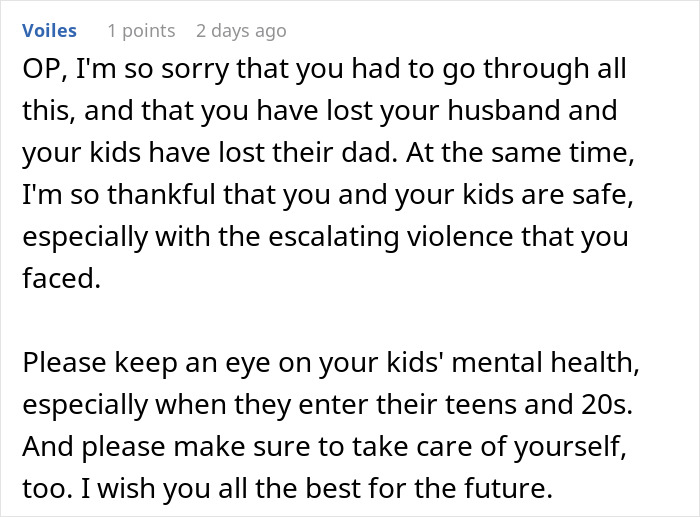
For the woman in this story, the most urgent concern was her and her children’s safety. But for many couples, even when the immediate danger isn’t there, the effects of mental illness can be far-reaching. What’s clear is that no one should face these challenges alone.
If you or someone you know is in a relationship where mental health struggles are present, reaching out to professionals and local organizations can be a vital first step. Seeking help isn’t weakness, it’s the strongest thing you can do for yourself, your loved one, and your family.
Image credits: jet-po / freepik (not the actual photo)
Image credits: SkelDry / freepik (not the actual photo)
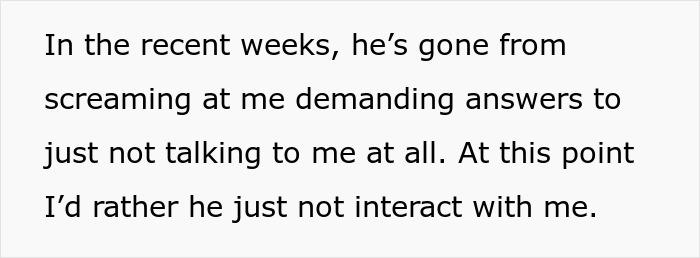
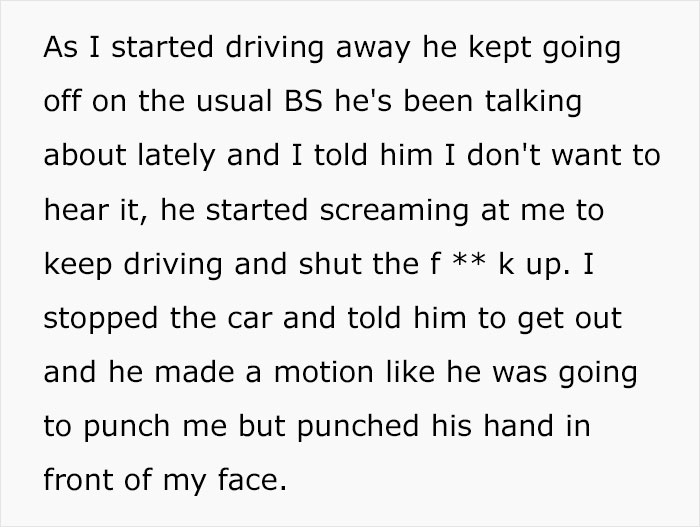
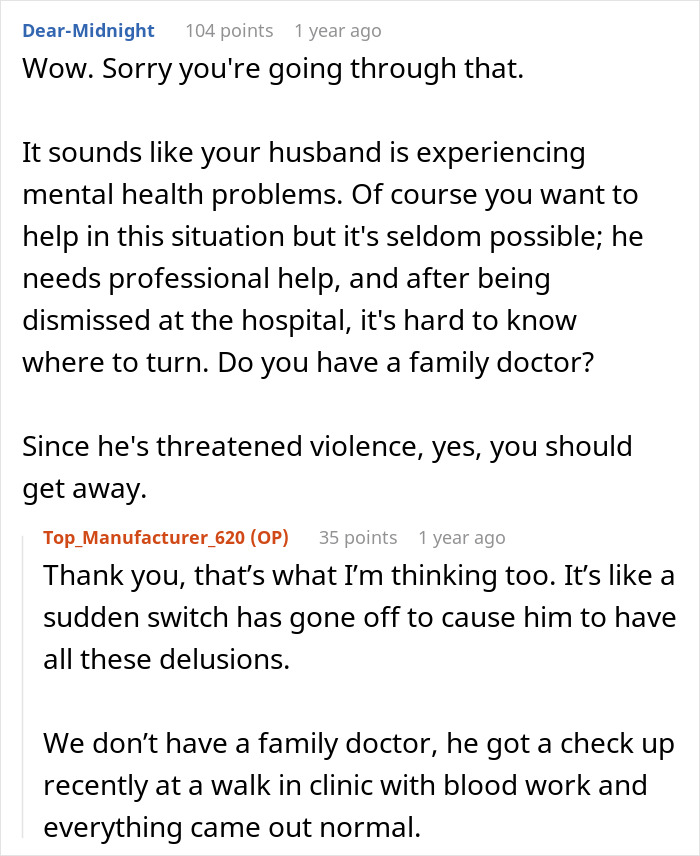
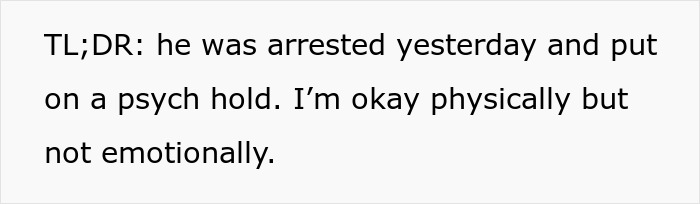
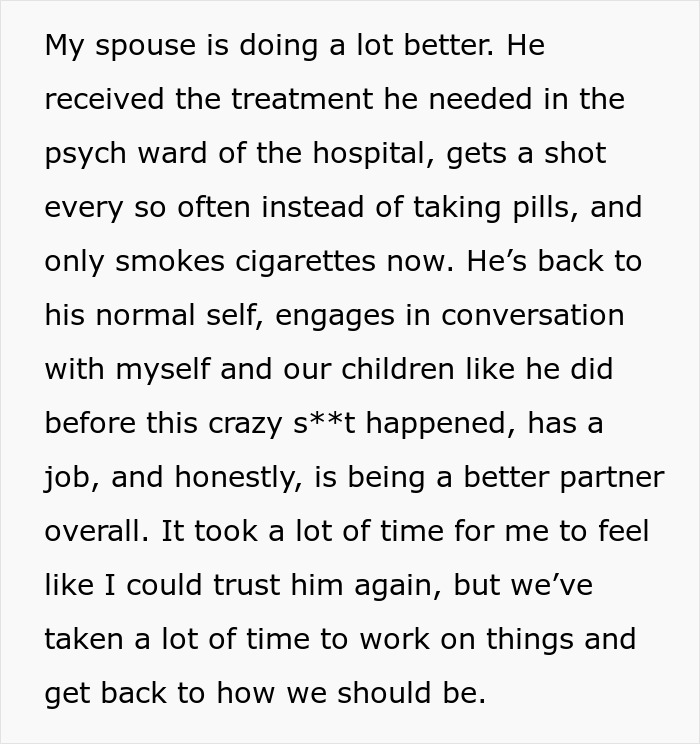
Image credits: Top_Manufacturer_620
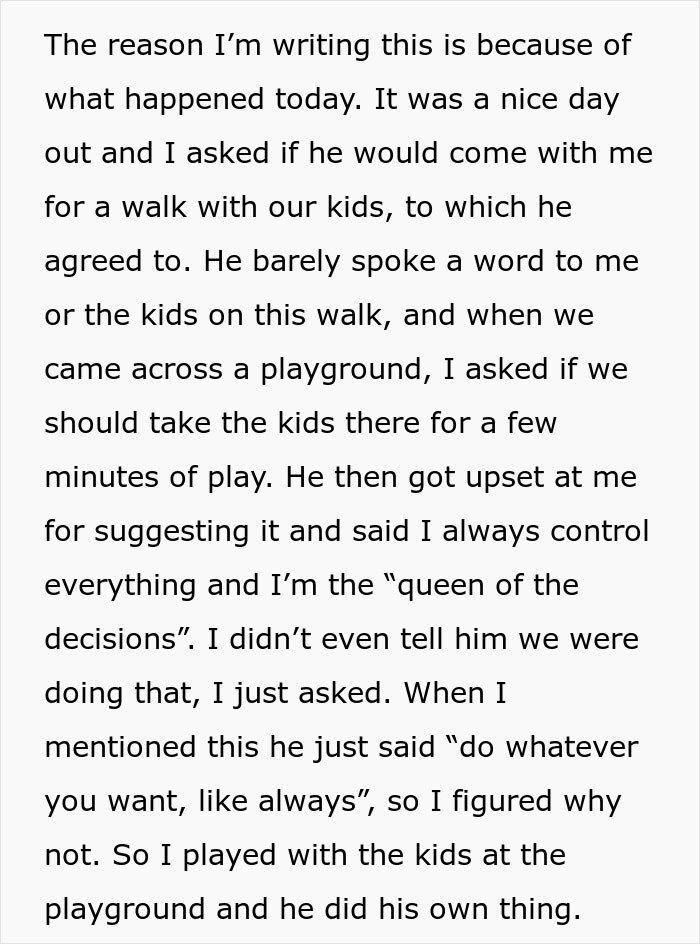
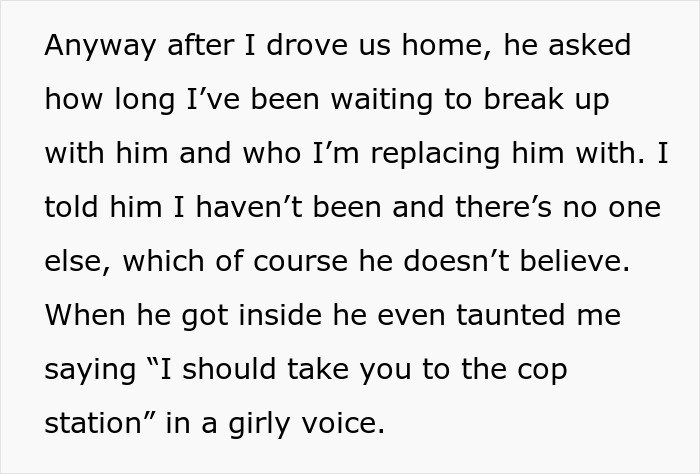
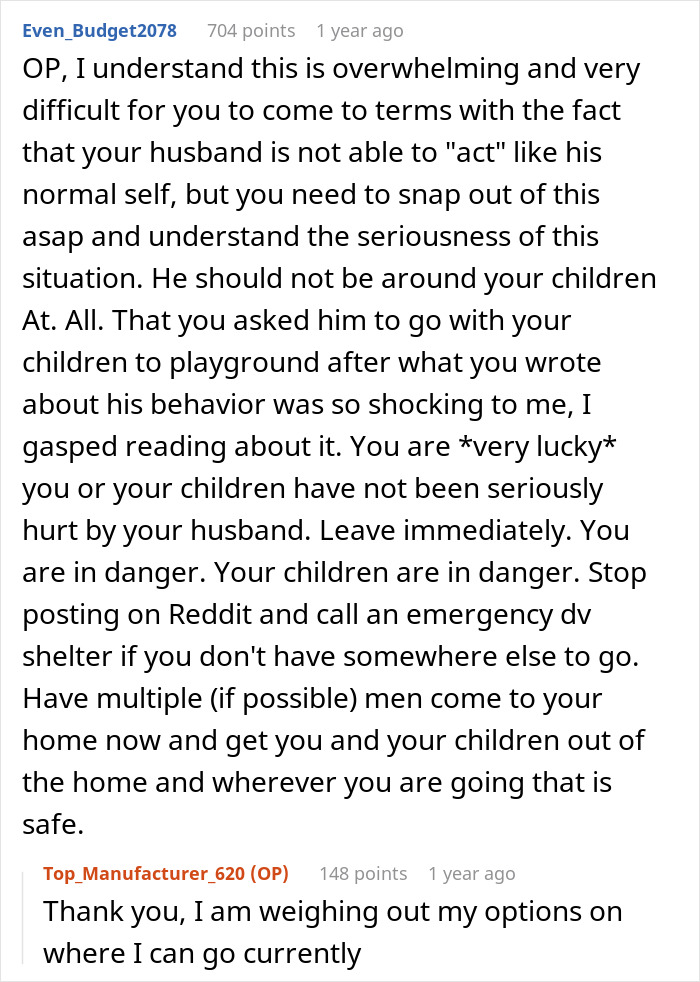
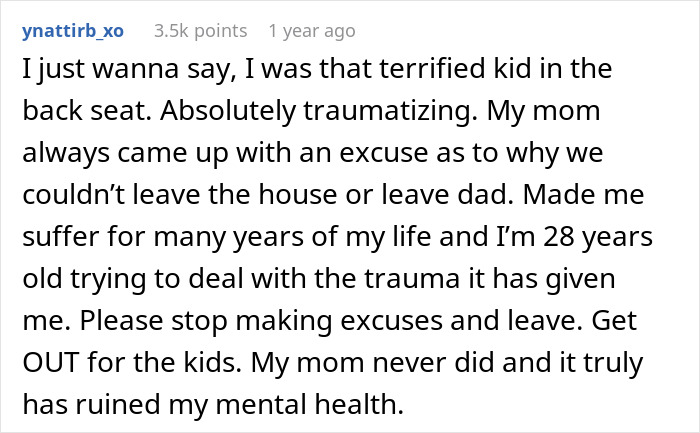
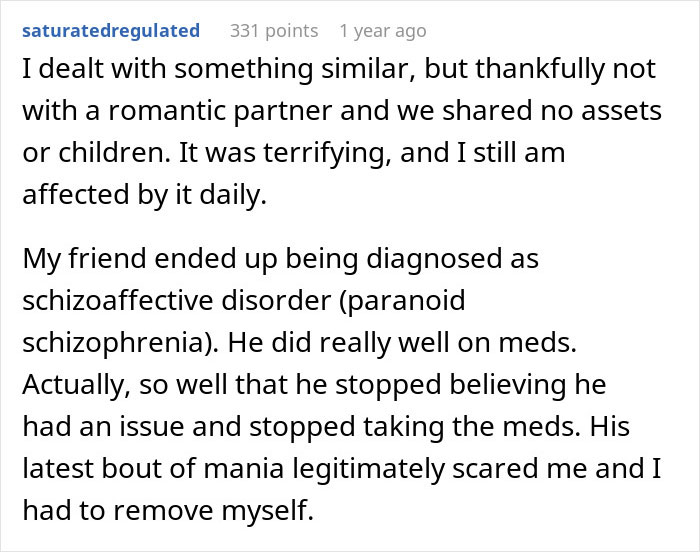
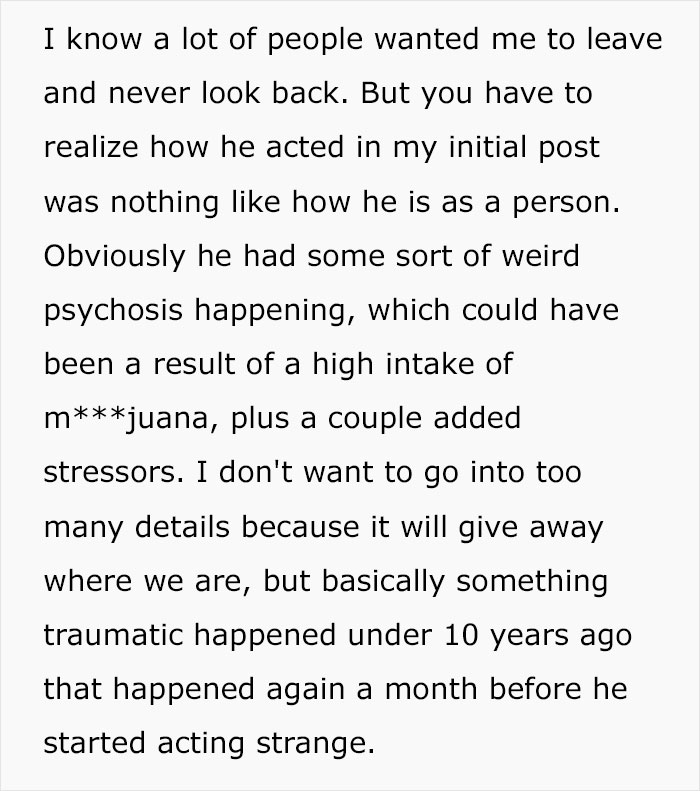
Image credits: Top_Manufacturer_620
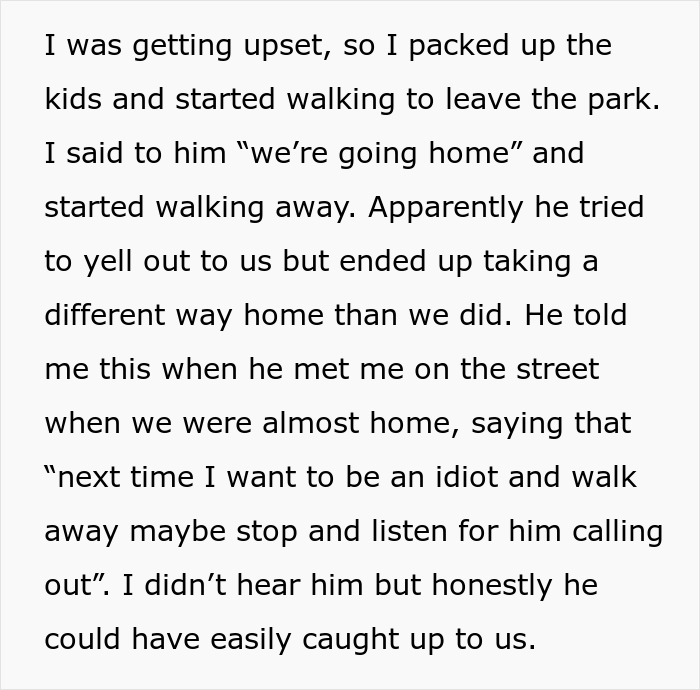
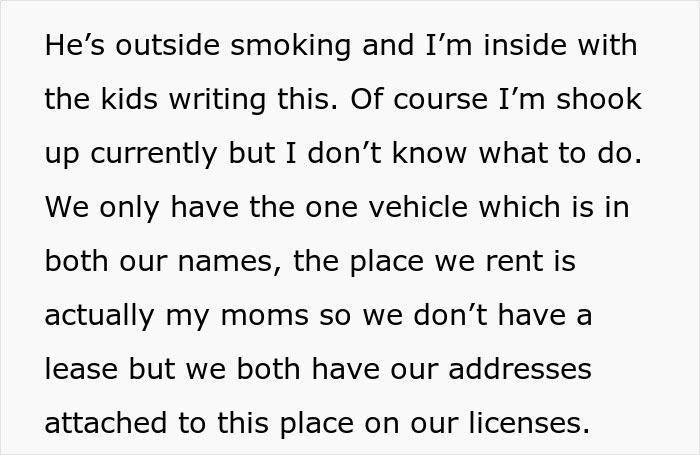
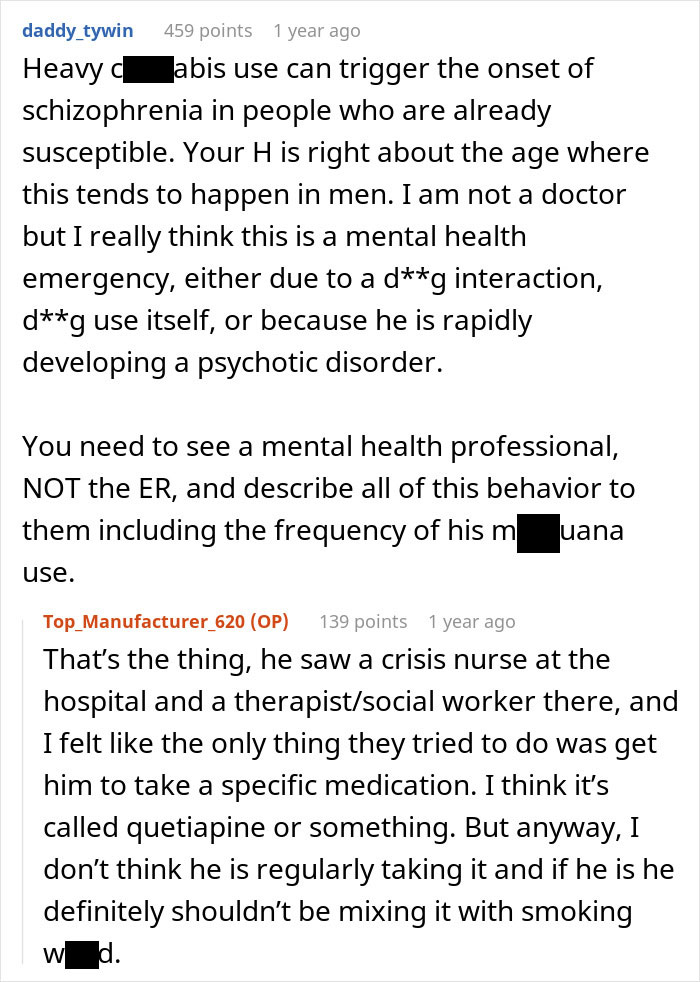
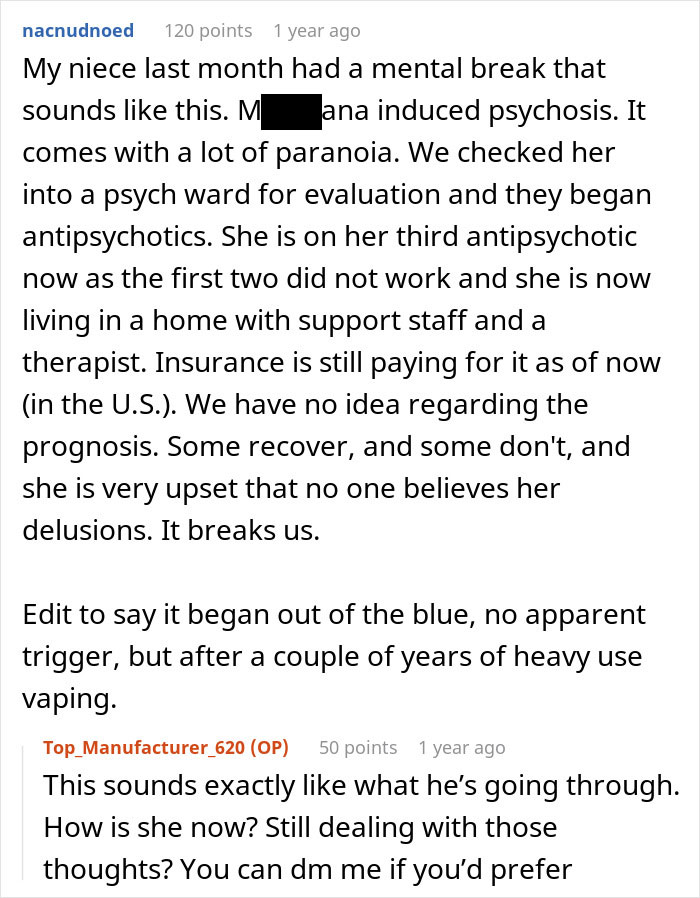
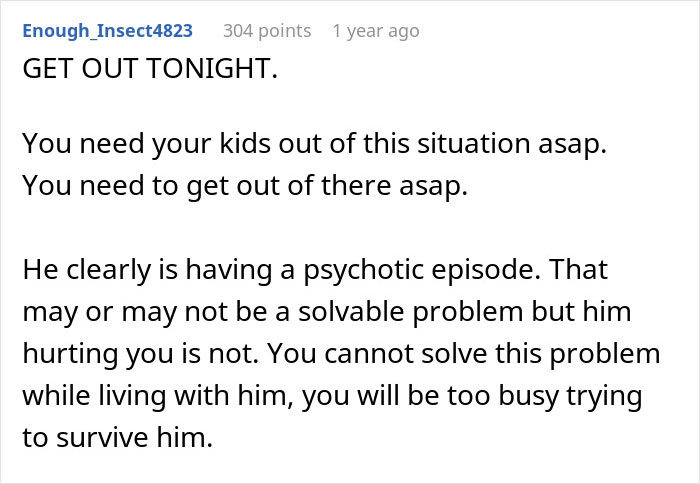
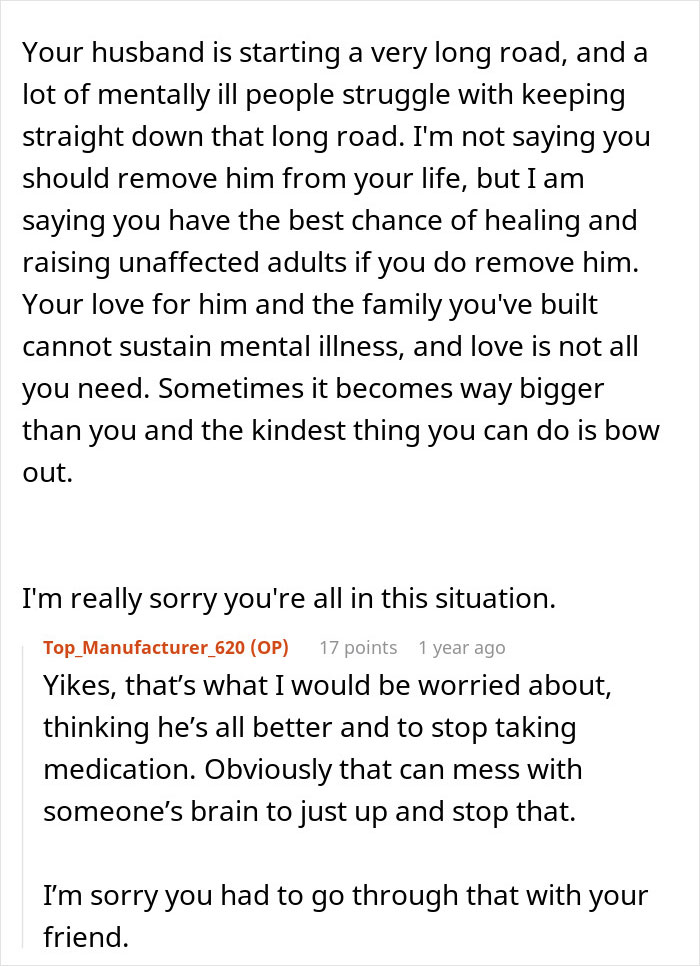
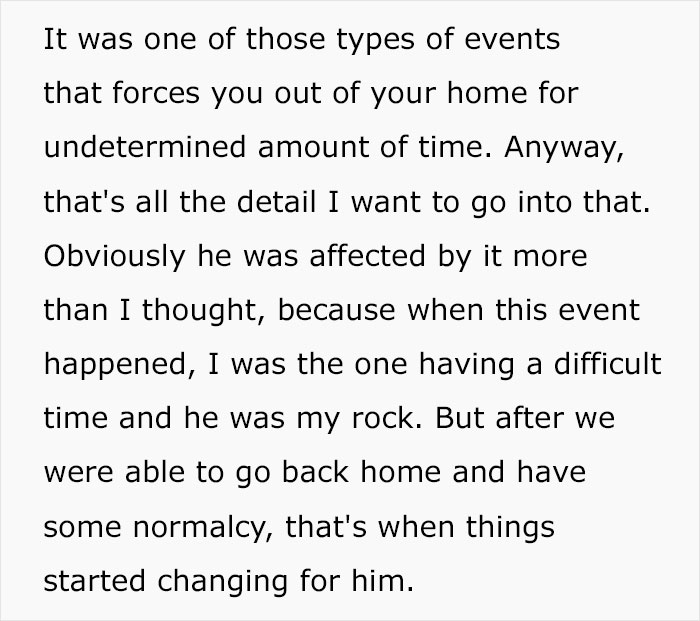
Image credits: Top_Manufacturer_620

By entering your email and clicking Subscribe, you're agreeing to let us send you customized marketing messages about us and our advertising partners. You are also agreeing to our Privacy Policy.
Thank you! You've successfully subscribed to newsletters!


This happened to my husband's best friend. There was nothing we could do about it. We tried to tell his brother that he needed help...told his father the same thing. He said things almost identical to what the man in the story said. It's bringing back a lot of emotions. I just wish that he was still with us. I'm sure you can guess by the last sentence that it did not end well for him. I miss him everyday.

Someone who worked for me developed schizophrenia at 35. Prior to the disease arising, she was one of the most talented managers, most professional people, and one of the smartest people I’ve known. Over 2 to 3 years she went from that to florid psychosis. Like the person in this story she refused meds and treatment, ultimately causing me to dismiss her.
Load More Replies...
Mental health or even a tumour could cause this. Either way he needs help beyond what she can provide.
Brain tumor crossed my mind too, along with psychotic episode.
Load More Replies... This sounds a lot like Korsakoff syndrome, a psychosis triggered by weed a***e. It causes lack of vit B12 and gives a paranoia. I have a cousin with that. They can keep symptoms down with meds but it is irreversible. He now lives in a world where everyone wants to hurt him. He suffers a lot and is also a danger to everyone around him. I was sadly not at all surprised by the update. She risked the kids lifes on multiple occasions. Don't stay when someone gets delusional.

Korsakoff's is from alcohol, not weed. This is a very common type of psychosis we see in vulnerable people who smoke a lot of weed. The psychosis is notable for its high degree of paranoia. The delusions are typically what we call "non-bizarre." Meaning they are things that really could've happened in real life. Somewhere out there is someone who was trafficked and rescued by her husband. You really could get an e-mail with an inheritance. Your wife really could be talking to another guy. As opposed to the bizarre delusions that we sometimes see in schizophrenia. That they can breathe underwater. Or can time travel, etc. Although schizophrenia can have non-bizarre delusions as well. This guy is a little old for schizophrenia. There is a subtype where onset is in the 30's but it's primarily African American women. Most males present in late teens, early 20's. Korasakoff's psychosis is notable for confabulation. AKA, completely making s**t up.
Load More Replies... This happened to my husband's best friend. There was nothing we could do about it. We tried to tell his brother that he needed help...told his father the same thing. He said things almost identical to what the man in the story said. It's bringing back a lot of emotions. I just wish that he was still with us. I'm sure you can guess by the last sentence that it did not end well for him. I miss him everyday.
Someone who worked for me developed schizophrenia at 35. Prior to the disease arising, she was one of the most talented managers, most professional people, and one of the smartest people I’ve known. Over 2 to 3 years she went from that to florid psychosis. Like the person in this story she refused meds and treatment, ultimately causing me to dismiss her.
Load More Replies... Mental health or even a tumour could cause this. Either way he needs help beyond what she can provide.
Brain tumor crossed my mind too, along with psychotic episode.
Load More Replies... This sounds a lot like Korsakoff syndrome, a psychosis triggered by weed a***e. It causes lack of vit B12 and gives a paranoia. I have a cousin with that. They can keep symptoms down with meds but it is irreversible. He now lives in a world where everyone wants to hurt him. He suffers a lot and is also a danger to everyone around him. I was sadly not at all surprised by the update. She risked the kids lifes on multiple occasions. Don't stay when someone gets delusional.
Korsakoff's is from alcohol, not weed. This is a very common type of psychosis we see in vulnerable people who smoke a lot of weed. The psychosis is notable for its high degree of paranoia. The delusions are typically what we call "non-bizarre." Meaning they are things that really could've happened in real life. Somewhere out there is someone who was trafficked and rescued by her husband. You really could get an e-mail with an inheritance. Your wife really could be talking to another guy. As opposed to the bizarre delusions that we sometimes see in schizophrenia. That they can breathe underwater. Or can time travel, etc. Although schizophrenia can have non-bizarre delusions as well. This guy is a little old for schizophrenia. There is a subtype where onset is in the 30's but it's primarily African American women. Most males present in late teens, early 20's. Korasakoff's psychosis is notable for confabulation. AKA, completely making s**t up.
Load More Replies...




























 No fees, cancel anytime

































45
40