Get Premium
Dark mode theme is available exclusively for premium users. Learn more about the benefits of subscribing.
No fees, cancel anytime.

 Dark Mode Ad-Free Browsing Unlimited Content
 Ad-Free Browsing Unlimited Content Dark Mode
Join 1.2 million Panda readers who get the best art, memes, and fun stories every week!

“We’re all in this together” is that popular song from High School Musical, but it’s also a phrase families love saying. And it’s actually quite comforting right up until someone discovers “together” means everyone except you.
Today’s Original Poster (OP) believed her parents’ explanation for why she had to take on more than $60,000 in student loans. Years later, an accidental discovery revealed that the money set aside for her education hadn’t vanished because of failed investments at all.
More info: Reddit
Image credits: SkelDry / Magnific (not the actual photo)
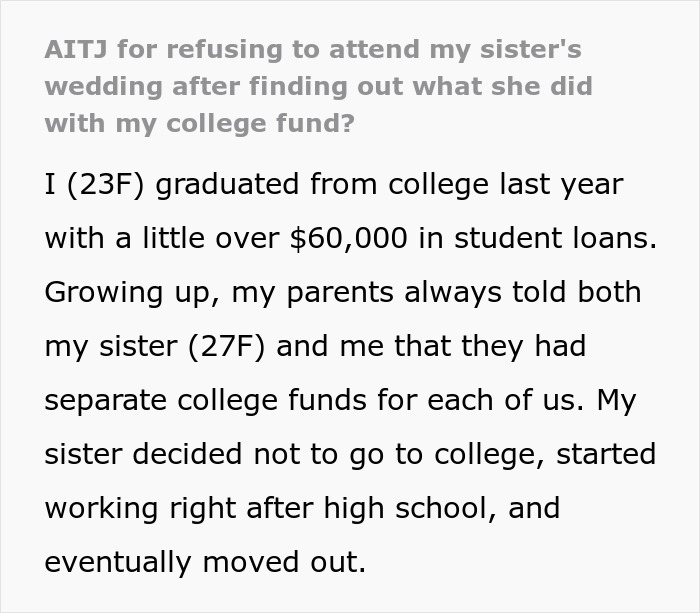
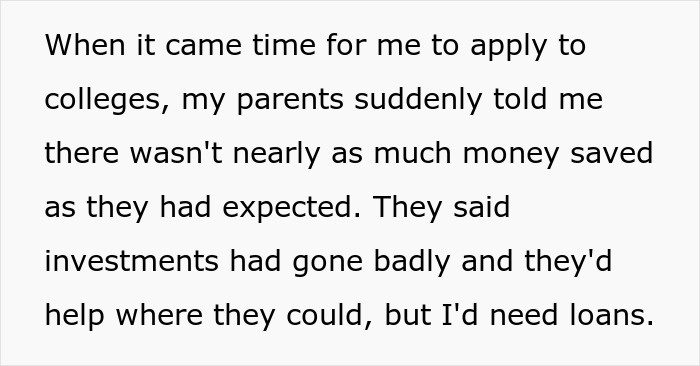

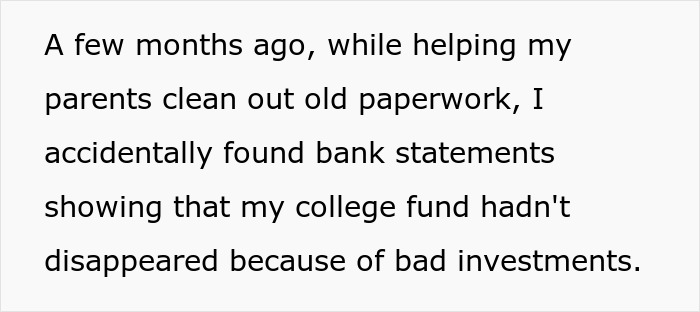

Image credits: zinkevych / Magnific (not the actual photo)
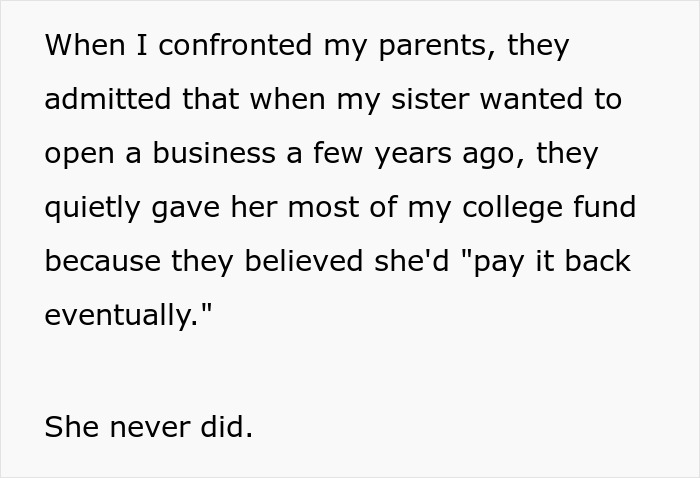


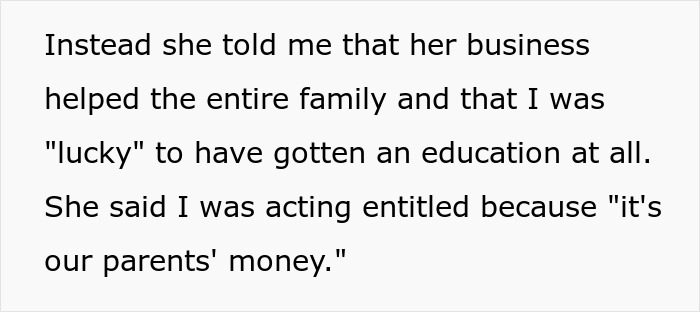

Image credits: gpointstudio / Magnific (not the actual photo)




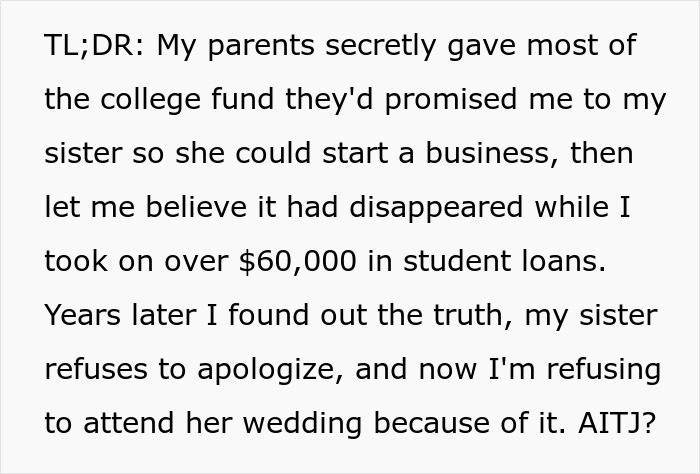
Image credits: FearlessState5503
Growing up, the OP and her older sister were both told they had separate college funds waiting for them. While her sister chose to skip college and enter the workforce, the OP planned her future expecting that the savings her parents had promised would help cover tuition. However, those expectations came crashing down when her parents revealed there was far less money available than expected.
They blamed poor investments, apologized, and explained she’d need to rely heavily on student loans to finish school. Believing there was nothing anyone could do, she accepted the situation and graduated carrying more than $60,000 in debt. Then, one day while she was helping her parents organize old paperwork, she stumbled across bank statements showing repeated transfers from her college fund over several years.
In that moment, she realized that the money hadn’t been lost in failed investments. When she confronted her parents, they admitted they had used most of her education fund to help finance her sister’s business. According to them, they believed the sister would eventually repay the money, but she didn’t. When she spoke to her sister, she argued that her business had benefited the entire family.
Now, the sister is getting married and wants the OP to be her bridesmaid. The OP refused, saying she won’t even attend the ceremony unless her sister at least acknowledges what happened and offers an apology. Her parents believe she’s unfairly threatening to ruin the wedding over decisions made years ago, while several relatives argue that family should simply forgive and move on.
Image credits: simonapilolla / Magnific (not the actual photo)
The OP’s frustration isn’t just about having to repay student loans, it also stems from learning that the debt may have been avoidable. Psychology Today states that the effects of student loan debt extend far beyond monthly repayments. Carrying significant education-related debt can delay important life milestones, including buying a home, building savings, or achieving long-term financial stability.
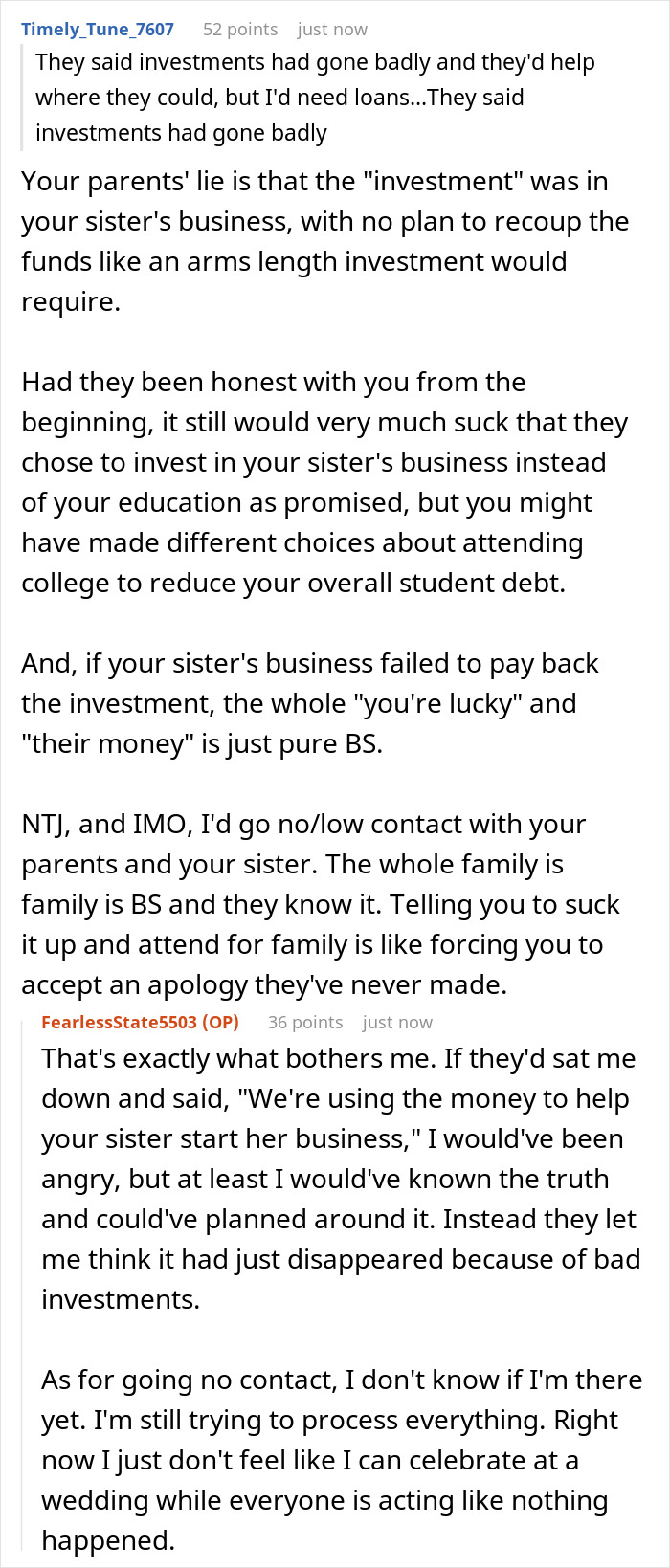
The financial burden, however, is only one part of the situation. According to PATHS, financial secrets within a family causes damage to relationships, and the deception surrounding hidden financial decisions can be even more harmful. When relatives hide information about something as significant as a college fund, it can leave family members feeling betrayed and make rebuilding trust much more difficult.
That may also explain why the lack of an apology became such a major issue in the conflict. Resolve Counselling explains that a meaningful apology involves more than simply saying “I’m sorry.” It should include acknowledging the harm caused, accepting responsibility, and expressing genuine remorse. Without those elements, people who feel wronged often struggle to move forward.
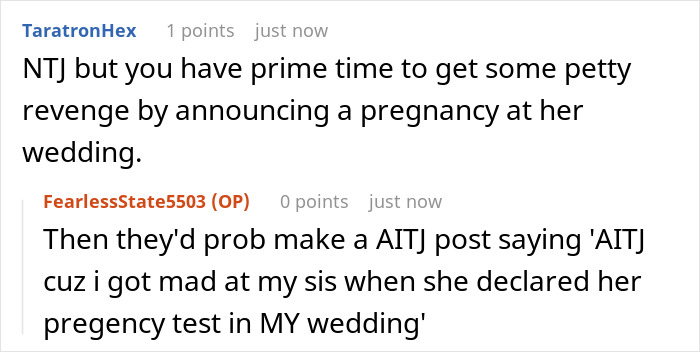
Netizens felt the OP had every right to skip the wedding, arguing that both her parents and sister had betrayed her trust. They were also especially critical of the sister who had benefited from money that had been set aside for someone else’s education. What would you do if you were in the OP’s shoes? Would you still attend the wedding or skip it altogether? We would love to know your thoughts!



















By entering your email and clicking Subscribe, you're agreeing to let us send you customized marketing messages about us and our advertising partners. You are also agreeing to our Privacy Policy.
Thank you! You've successfully subscribed to newsletters!


After the parents giving most of the college fund to the sister. They now have extra money to pay on the sister's wedding. That speaks loud and clear about who will always come first. At the very least low contact and not attend the wedding.

This is what I was thinking. Gee, golden child gets OPs college money AND wedding money?
Load More Replies...

I'd be done with them entirely as a whole. Parents and sister are liars you can never trust in any capacity. So why would you ever want to waste any more time in relationship with these low character, dishonest people? I'd just leave them entirely in my rearview and work on building a life without their toxic influence or demands.
After the parents giving most of the college fund to the sister. They now have extra money to pay on the sister's wedding. That speaks loud and clear about who will always come first. At the very least low contact and not attend the wedding.
This is what I was thinking. Gee, golden child gets OPs college money AND wedding money?
Load More Replies... I'd be done with them entirely as a whole. Parents and sister are liars you can never trust in any capacity. So why would you ever want to waste any more time in relationship with these low character, dishonest people? I'd just leave them entirely in my rearview and work on building a life without their toxic influence or demands.






































 No fees, cancel anytime








38
22