Bored Panda works better on our iPhone app
Continue in app Continue in browser

The Bored Panda iOS app is live! Fight boredom with iPhones and iPads here.

Ethical Concerns Rise After Scientists Use Gene Editing To Erase Down Syndrome-Causing Chromosome
Smiling young girl with Down syndrome playing outside in yellow shirt, representing gene editing scientific breakthrough.
38

Ethical Concerns Rise After Scientists Use Gene Editing To Erase Down Syndrome-Causing Chromosome

32

ADVERTISEMENT

Scientists in Japan have used gene-editing technology to remove the extra chromosome responsible for Down syndrome, at least in lab-grown human cells. 

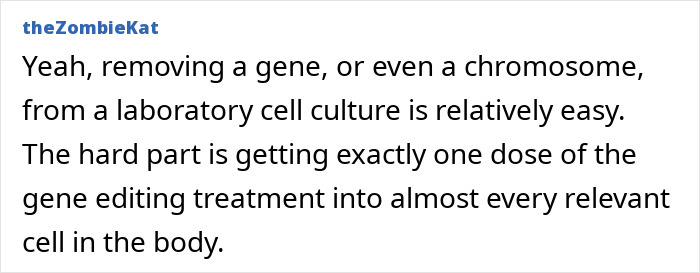
The project, led by Dr. Ryotaro Hashizume of Mie University, used CRISPR-Cas9 to target the trisomy 21 chromosome, the root cause of Down syndrome, which affects 1 in every 700 births.

Highlights
  • Japanese scientists have successfully removed the extra chromosome that causes Down syndrome in lab-grown human cells.
  • This was the first time CRISPR was used to eliminate an entire chromosome.
  • Experts say this could lead to future therapies, though ethical debates about the potential treatment remain.
RELATED:

    Removing the extra chromosome altered cell behavior dramatically

    Smiling young girl with Down syndrome playing outdoors on a sunny day, representing gene editing breakthrough.

    Image credits: Ermolaev Alexandr/Adobe Stock (Not the actual photo)

    Down syndrome occurs when a person is born with three copies of chromosome 21 instead of two. 

    That surplus genetic material causes developmental differences and raises the risk for a number of health issues, including heart defects, immune dysfunction, thyroid disease, and Alzheimer’s-related dementia.

    ADVERTISEMENT

    To address this, Dr. Hashizume and his team designed special CRISPR guides that zeroed in on the extra chromosome, and only that one.

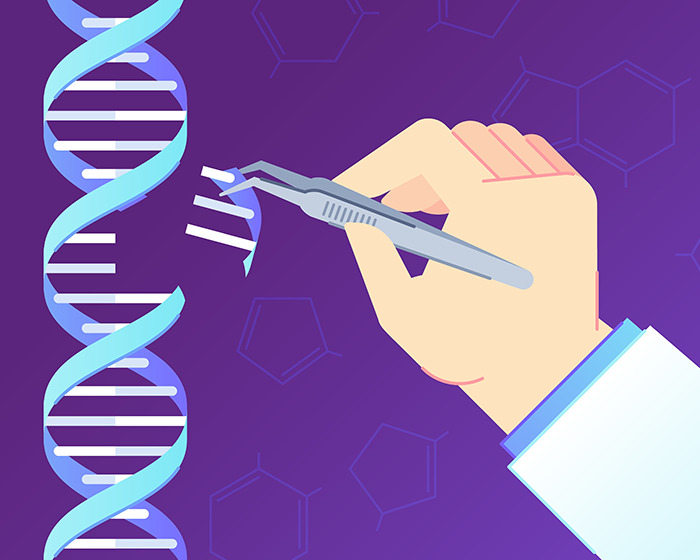
    Hand holding tweezers editing DNA strand, representing scientists curing Down Syndrome with gene editing advances.

    Image credits: Nexa/Adobe Stock

    In both stem cells and mature skin cells taken from people with Down syndrome, the gene-editing tool successfully removed the extra chromosome without affecting the healthy ones.

    Once the surplus was gone, the cells began to behave differently, according to aSci Tech Daily report. 

    Genes tied to brain development also became more active. Genes that were previously overactive, such as those linked to inflammation or metabolism, quieted down as well.

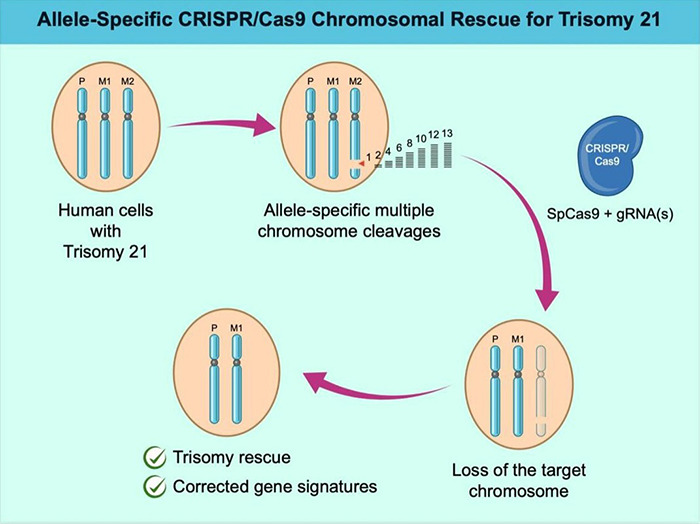
    Diagram showing gene editing with CRISPR/Cas9 to cure Down Syndrome by rescuing trisomy 21 in human cells.

    Image credits: thebiomics

    ADVERTISEMENT

    The edited cells even grew faster and divided more normally, suggesting that the excess chromosome had placed some biological strain on them.

    This is the first time CRISPR has been used to erase an entire chromosome

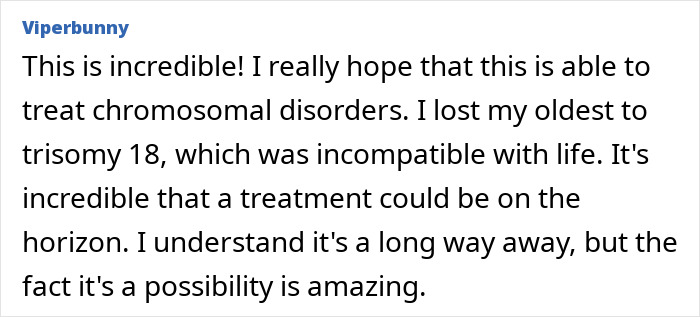
    Comment expressing hope for gene editing advancements in curing Down syndrome and other chromosomal disorders.

    ADVERTISEMENT

    Dr. Hashizume and his team’s study marked the first time scientists have successfully used CRISPR to delete a full chromosome from human cells. 

    The team accomplished this through a process called allele-specific editing, which essentially involves training CRISPR to find only the rogue copy of chromosome 21.

    To improve their odds, researchers temporarily suppressed the cells’ natural DNA repair mechanisms. The strategy paid off, and it made the deletions more consistent.

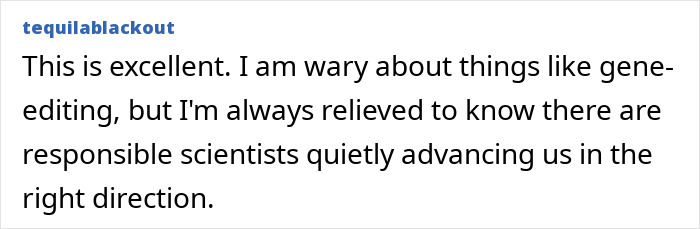
    Comment from user tequilablackout expressing cautious optimism about gene editing advances by responsible scientists.

    ADVERTISEMENT

    The team’s method worked in differentiated, non-dividing cells, too, not just in embryonic stem cells.

    This hinted at the method’s possible therapeutic potential in older patients.

    It’s not ready for real-world treatment, but the implications are huge

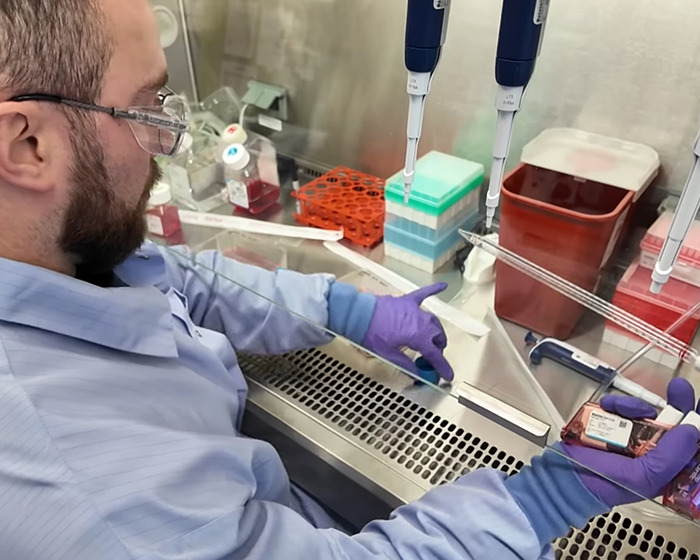
    Scientist wearing blue gloves working with gene editing tools in a laboratory focused on curing Down Syndrome.

    Image credits: CNBC International

    Researchers are quick to stress that this discovery is still years away from being used in humans, since the method could affect good chromosomes, too.

    Still, the study proves something once thought impossible: that a whole chromosome can be removed in a precise manner.

    Dr. Hashizume and his team stated that the next steps will involve refining their method to prevent unintended edits and testing its effects over time. 

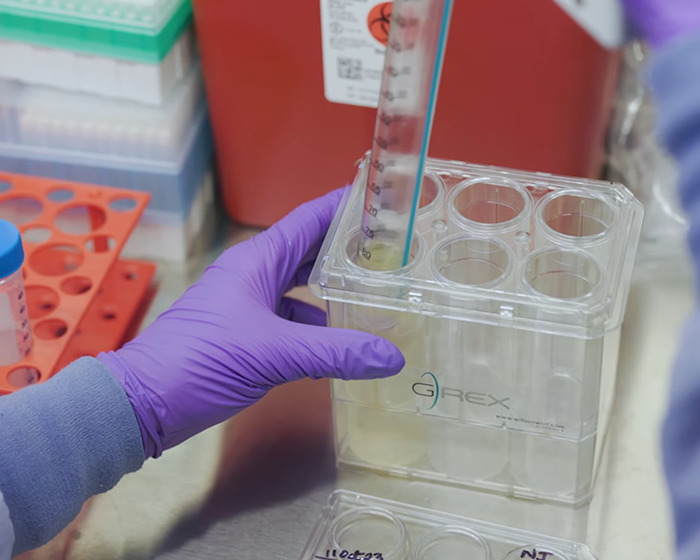
    Scientist wearing purple gloves using a pipette with test tubes in a lab focused on gene editing research.

    Image credits: CNBC International

    ADVERTISEMENT
    ADVERTISEMENT

    If successful, the approach could pave the way for regenerative therapies that begin at the genetic root of Down syndrome.

    Some netizens were wary of the scientists’ method.

    “I hope (the) solution is not coming with another problem,” one commenter wrote. 

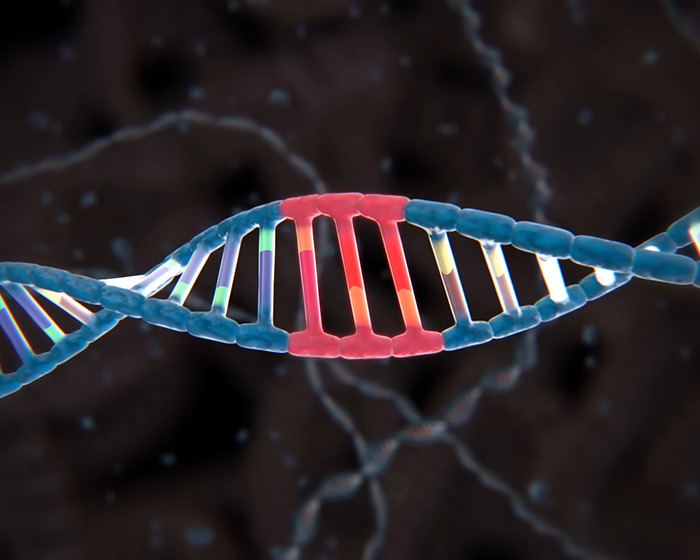
    Close-up of DNA strand with highlighted gene section representing gene editing used by scientists to cure Down Syndrome.

    Image credits: McGovern Institute

    “The road to h*ll is paved with good intentions,” another wrote.

    “Playing with nature is scary,” another commenter stated.

    Others, however, were excited about the potential of the scientists’ study.

    Comment warning about ethical concerns of gene editing related to designer babies and Down Syndrome cure advancements.

    ADVERTISEMENT

    “I love people with Down Syndrome, and this would be a wonderful blessing!” wrote one commenter. 

    “This will be amazing. Many, and in some countries, most fetuses with Down syndrome are aborted. This will be a great breakthrough,” another wrote.

    The ethics of “erasing” Down syndrome still raise serious questions

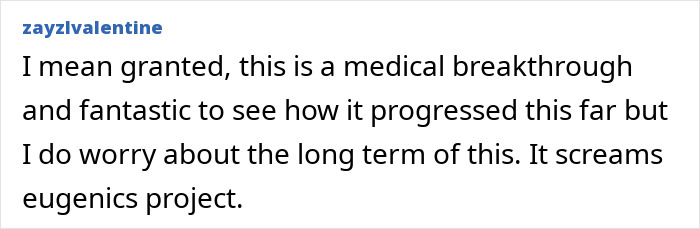
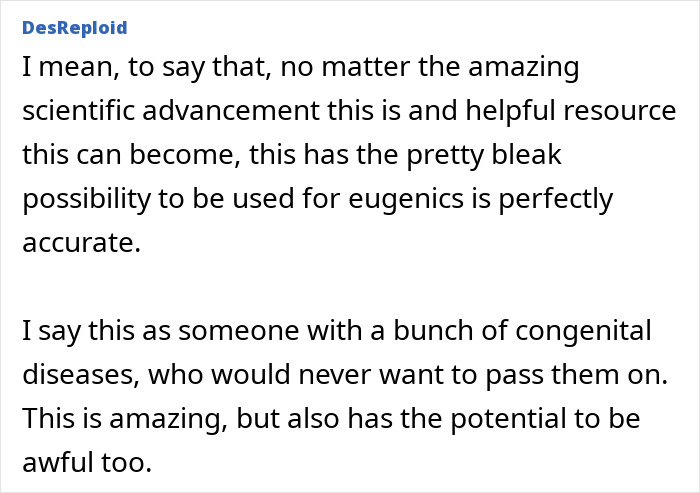
    User comment expressing hope about medical breakthrough but concerns about long-term effects and eugenics related to gene editing.

    ADVERTISEMENT

    While the science is promising, the idea of eliminating Down syndrome has sparked deep ethical debate, according to theNew York Post.

    Critics worry that such technologies could devalue the lives of people with the condition.

    Scientist examining samples through a microscope in a lab, researching gene editing for Down syndrome cure.

    Image credits: DC Studio/Adobe Stock (Not the actual photo)

    ADVERTISEMENT

    Iceland, for example, has practically eradicated the condition, but this was because almost all expectant mothers terminate pregnancies after a positive prenatal Down syndrome screening.

    Such practices have drawn both support and criticism.

    Family walking outdoors holding hands, highlighting breakthrough gene editing for Down Syndrome cure advancements.

    Image credits: Nexa/Adobe Stock (Not the actual photo)

    Ástríður Stefánsdóttir, a medical doctor and a professor in applied ethics at the University of Iceland, described these concerns.

    “When we start listening to what people with Down syndrome themselves have to say about this … they find it disturbing … and we hear the same stories from their families,” he said.

    Netizens largely welcomed the developments of Dr. Hashizume and his team’s research

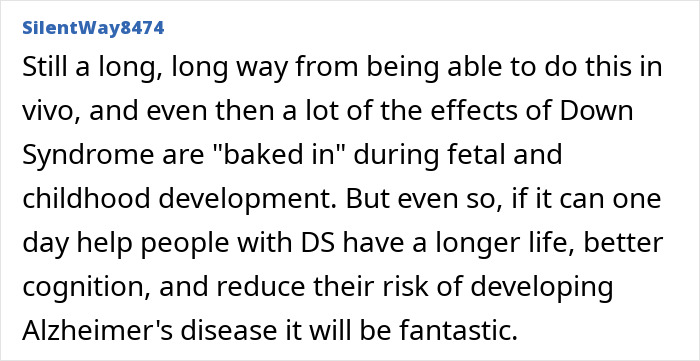
    Text comment about gene editing for Down Syndrome highlighting potential benefits for cognition and Alzheimer's risk reduction.

    ADVERTISEMENT
    ADVERTISEMENT

    Text excerpt discussing ethical concerns around gene editing as a potential cure for Down Syndrome.

    Scientist discussing gene editing advancements aiming to cure Down Syndrome in a groundbreaking medical breakthrough.

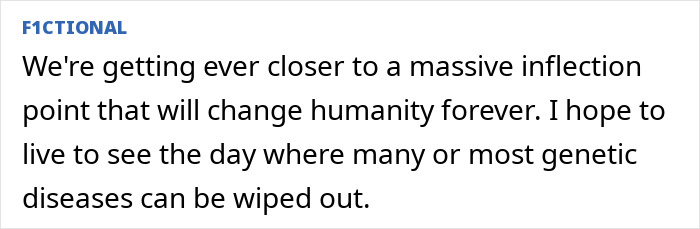
    Comment on gene editing and curing Down syndrome mentioning CRISPR and future medical breakthroughs predicted by scientists.

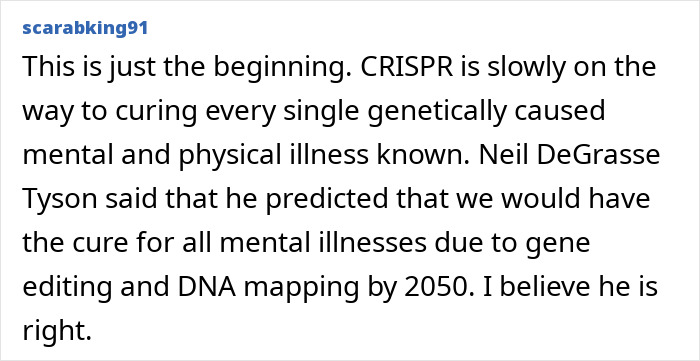
    User comment about CRISPR and gene editing in a plain text format, discussing potential for curing Down Syndrome.

    ADVERTISEMENT
    ADVERTISEMENT

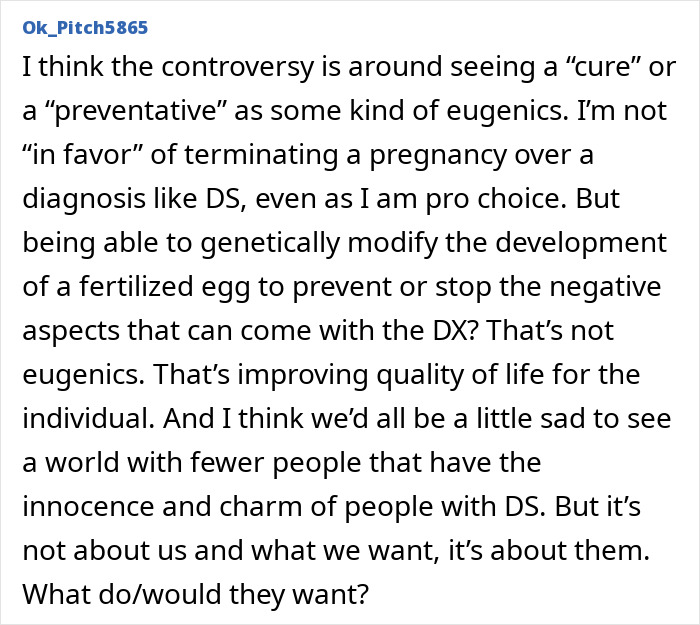
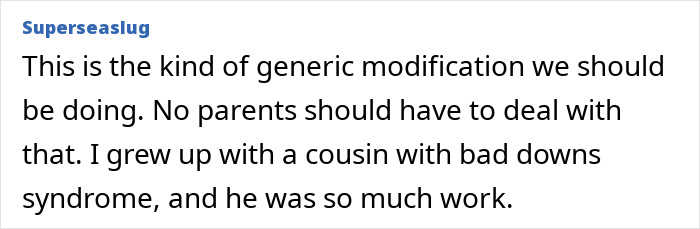
    User comment on gene editing for Down syndrome, expressing support for modifications to ease challenges faced by affected families.

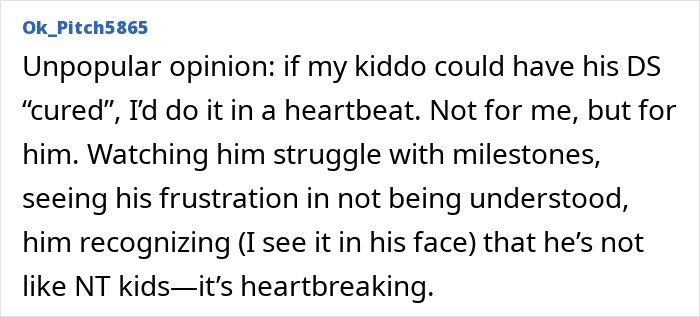
    Comment expressing support for gene editing as a potential cure for Down Syndrome, noting struggles with milestones.

    Comment from Ok-Company8448 expressing hope that gene editing cure for Down Syndrome will save millions of lives soon.

    ADVERTISEMENT

    Scientist explaining gene editing techniques to cure Down syndrome in a laboratory setting with DNA models.

    ADVERTISEMENT

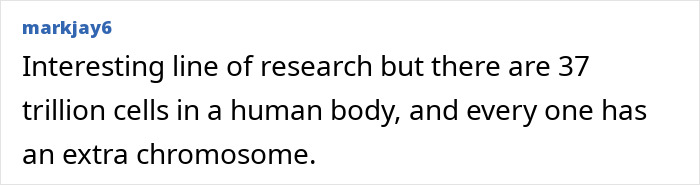
    Comment discussing research on Down Syndrome and gene editing, mentioning 37 trillion human cells and extra chromosomes.

    Person in a casual setting expressing fear, highlighting concerns related to scientific advances in gene editing for Down Syndrome.

    ADVERTISEMENT

    Scientists in a lab using gene editing technology to cure Down syndrome in a groundbreaking medical breakthrough.

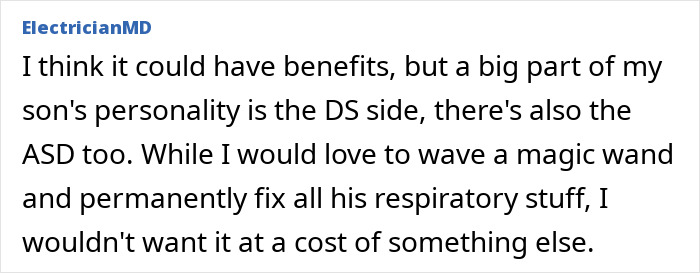
    Comment from ElectricianMD discussing potential benefits and concerns about gene editing for Down Syndrome treatment and personality changes.

    ADVERTISEMENT

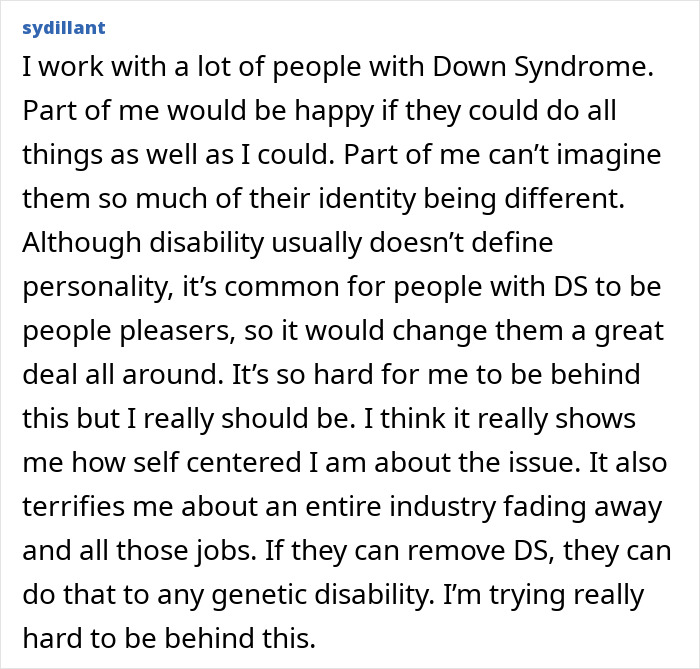
    Comment discussing working with people with Down Syndrome and reflecting on the impact of gene editing cure for Down Syndrome.

    ADVERTISEMENT

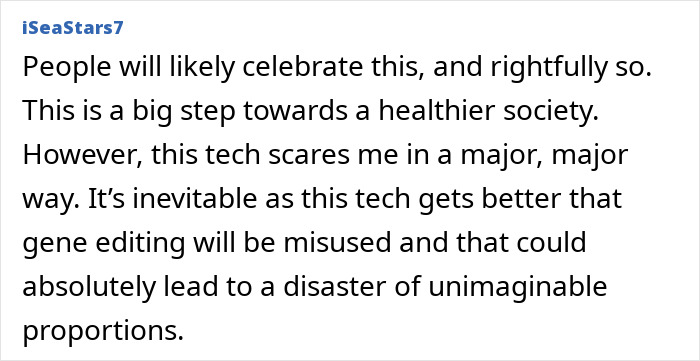
    Comment discussing concerns and hopes about gene editing in curing Down syndrome and its societal impact.

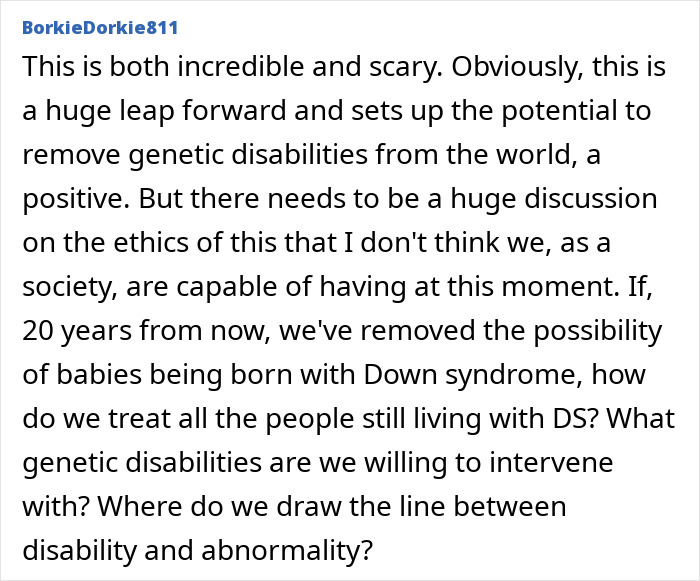
    Comment discussing the ethical concerns and impact of curing Down syndrome with gene editing technology.

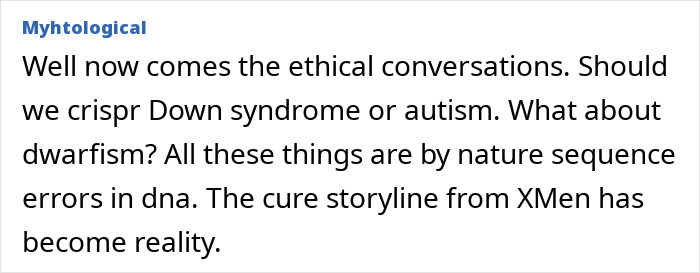
    Text discussing ethical conversations about using gene editing like CRISPR to cure Down syndrome and other genetic conditions.

    ADVERTISEMENT
    ADVERTISEMENT

    Comment discussing the potential and ethical concerns of gene editing as a cure for Down Syndrome.

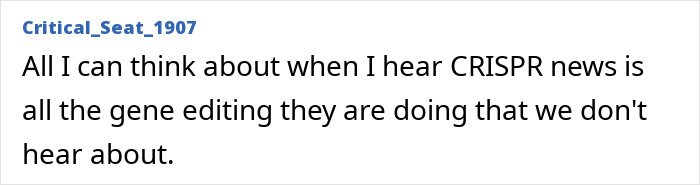
    Text post discussing thoughts on gene editing and CRISPR news related to Down Syndrome scientific advances.

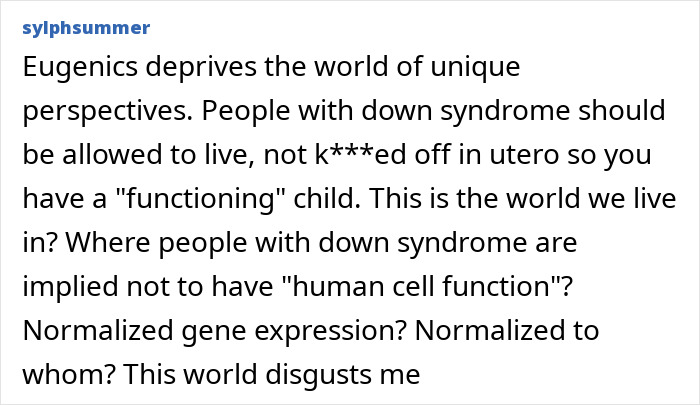
    Commenter expressing strong opinion against eugenics and advocating for rights of people with Down syndrome.

    ADVERTISEMENT

    Poll Question

    Total votes ·

    Thanks! Check out the results:

    Total votes ·
    Share on Facebook
    Peter Michael de Jesus

    Peter Michael de Jesus

    Writer, Entertainment News Writer

    Read more »

    After almost a decade of reporting straight hard news, I now bring that discipline to entertainment writing at Bored Panda. I cover celebrity updates, viral trends, and cultural stories with speed and accuracy, while also embracing the lighter, evergreen side of pop culture. My articles are often syndicated to MSN, extending their reach to broader audiences. My goal is straightforward: to deliver trustworthy coverage that keeps readers informed about the stories dominating the conversation today.

    Read less »
    Peter Michael de Jesus

    Peter Michael de Jesus

    Writer, Entertainment News Writer

    After almost a decade of reporting straight hard news, I now bring that discipline to entertainment writing at Bored Panda. I cover celebrity updates, viral trends, and cultural stories with speed and accuracy, while also embracing the lighter, evergreen side of pop culture. My articles are often syndicated to MSN, extending their reach to broader audiences. My goal is straightforward: to deliver trustworthy coverage that keeps readers informed about the stories dominating the conversation today.

    What do you think ?
    XenoMurph
    Community Member
    5 months ago Created by potrace 1.15, written by Peter Selinger 2001-2017

    There seems to be confusiion in the comments between abortive eugenics and a possible genetic treatment after birth. Which would be amazing. People not reading the material and having an opinion anyway. The curse of our times.

    Apatheist Account2
    Community Member
    5 months ago

    This comment is hidden. Click here to view.

    If they can "treat" Down syndrome, this may open Pandora's box to treatments of homosexuality, skin colours, s3x...the so-called "designer babies", just outside instead of insider the womb. Some cultures still want to have a son first; maybe they'll want them to be taller, or faster, or whatever. Some cultures *cough* China *cough* already hothouse some of their children to become athletes (to be fair, their divers are incredible) - imagine what they'll do if they can alter them to be better athletes. I understand why this research is done, but I can already see people thinking of how they can monetise it.

    Load More Replies...
    Scott Rackley
    Community Member
    5 months ago Created by potrace 1.15, written by Peter Selinger 2001-2017

    Pearl clutching over the ethics of doing this? How about the ethics of not doing this?

    ADVERTISEMENT
    WubiDubi
    Community Member
    5 months ago Created by potrace 1.15, written by Peter Selinger 2001-2017

    To parallel - I remember being stunned when a section of the deaf community said that curing a major cause of deafness was akin to a genocide of their culture and language. They were purposely having kids with other deaf people to guarantee deaf children so they could teach them BSL. Someone think of the children. Literally. I think Downs sufferers are more sane about their own condition being something undesireable.

    Dragons Exist
    Community Member
    4 months ago Created by potrace 1.15, written by Peter Selinger 2001-2017

    Anyone who thinks that getting rid of disabilities or any other negative generic things is "genocide" or "eugenics" is a dumbáss

    Load More Replies...
    Load More Comments
    XenoMurph
    Community Member
    5 months ago Created by potrace 1.15, written by Peter Selinger 2001-2017

    There seems to be confusiion in the comments between abortive eugenics and a possible genetic treatment after birth. Which would be amazing. People not reading the material and having an opinion anyway. The curse of our times.

    Apatheist Account2
    Community Member
    5 months ago

    This comment is hidden. Click here to view.

    If they can "treat" Down syndrome, this may open Pandora's box to treatments of homosexuality, skin colours, s3x...the so-called "designer babies", just outside instead of insider the womb. Some cultures still want to have a son first; maybe they'll want them to be taller, or faster, or whatever. Some cultures *cough* China *cough* already hothouse some of their children to become athletes (to be fair, their divers are incredible) - imagine what they'll do if they can alter them to be better athletes. I understand why this research is done, but I can already see people thinking of how they can monetise it.

    Load More Replies...
    Scott Rackley
    Community Member
    5 months ago Created by potrace 1.15, written by Peter Selinger 2001-2017

    Pearl clutching over the ethics of doing this? How about the ethics of not doing this?

    ADVERTISEMENT
    WubiDubi
    Community Member
    5 months ago Created by potrace 1.15, written by Peter Selinger 2001-2017

    To parallel - I remember being stunned when a section of the deaf community said that curing a major cause of deafness was akin to a genocide of their culture and language. They were purposely having kids with other deaf people to guarantee deaf children so they could teach them BSL. Someone think of the children. Literally. I think Downs sufferers are more sane about their own condition being something undesireable.

    Dragons Exist
    Community Member
    4 months ago Created by potrace 1.15, written by Peter Selinger 2001-2017

    Anyone who thinks that getting rid of disabilities or any other negative generic things is "genocide" or "eugenics" is a dumbáss

    Load More Replies...

    Load More Comments
    You May Like
    Related on Bored Panda
    Popular on Bored Panda
    Trending on Bored Panda
    Also on Bored Panda
    ADVERTISEMENT