Bored Panda works better on our iPhone app
Continue in app Continue in browser

The Bored Panda iOS app is live! Fight boredom with iPhones and iPads here.

Mysterious ‘Petralona Man’ Skull Found In Cave 60 Years Ago Baffles Experts After New Study
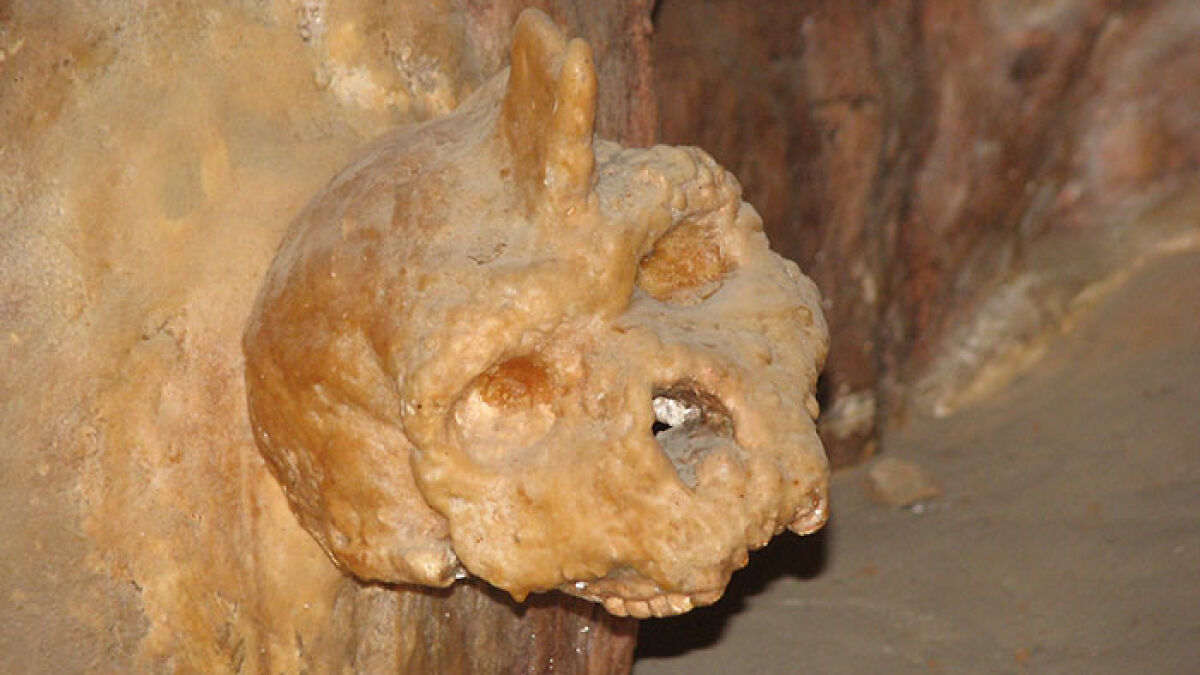
Ancient Petralona Man skull fossil embedded in cave wall, showing worn features and mineral deposits.

Mysterious ‘Petralona Man’ Skull Found In Cave 60 Years Ago Baffles Experts After New Study

32

ADVERTISEMENT

A mysterious skull pulled from the wall of a cave in northern Greece more than 60 years ago has finally given up one of its secrets

According to new research, the fossil is around 300,000 years old and doesn’t belong to modern humans or Neanderthals. 

Instead, scientists believe the “Petralona Man” represents a different branch of the human family tree that may have once lived alongside other species in Europe.

Highlights
  • Scientists finally dated a mysterious skull found in a Greek cave, and it’s around 300,000 years old.
  • The fossil is neither fully human nor Neanderthal, but from an ancient group called Homo heidelbergensis.
  • Researchers say the skull’s discovery sheds light on how different human species lived alongside each other in Europe.
RELATED:

    The skull’s discovery in Petralona Cave sparked decades of debate

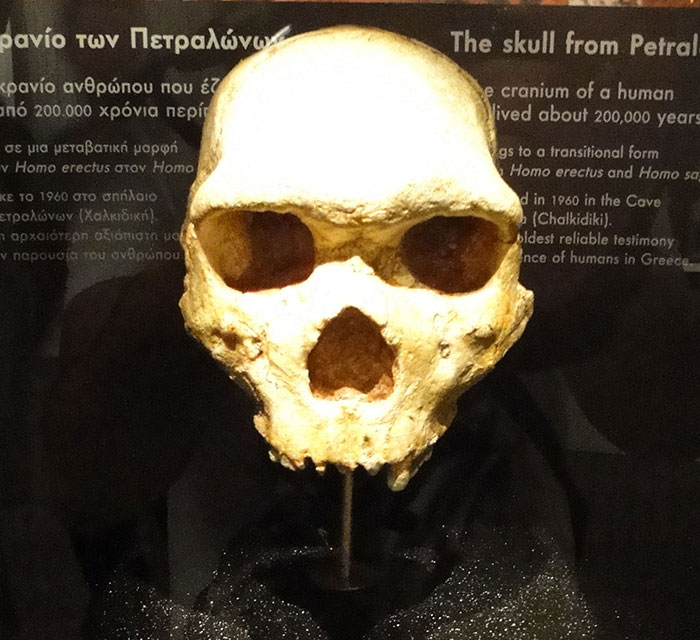
    Skull of Petralona Man displayed in museum with text describing its discovery and significance in human evolution.

    Image credits: Knop92/Wikimedia Commons

    The story of the skull began in 1960 when it was found inside Petralona Cave in northern Greece. 

    What made the find unforgettable was its strange appearance. Its fossilized cranium was still attached to the cave wall and a stalagmite was growing directly out of it, according to theNew York Post.

    ADVERTISEMENT

    Map showing the location of Petralona Man skull discovery and cave layout with original entrance and A1-A2 pit highlighted.

    Image credits: Falguères, C., Shao, Q., Perrenoud, C., Stringer, C., Tombret, O., Garbé, L., & Darlas, A. (2025). New U-series dates on the Petralona cranium, a key fossil in European human evolution. Journal of Human Evolution, 206, 103732

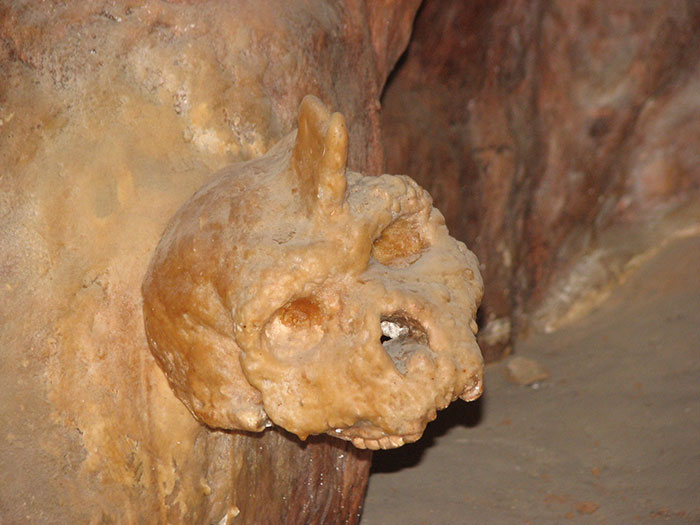
    The stalagmite gave the skull, which has since been dubbed the “Petralona man,” a horned appearance.

    For decades, scientists struggled to place it in the human timeline. Some argued it was Neanderthal, while others believed it belonged to early Homo sapiens. 

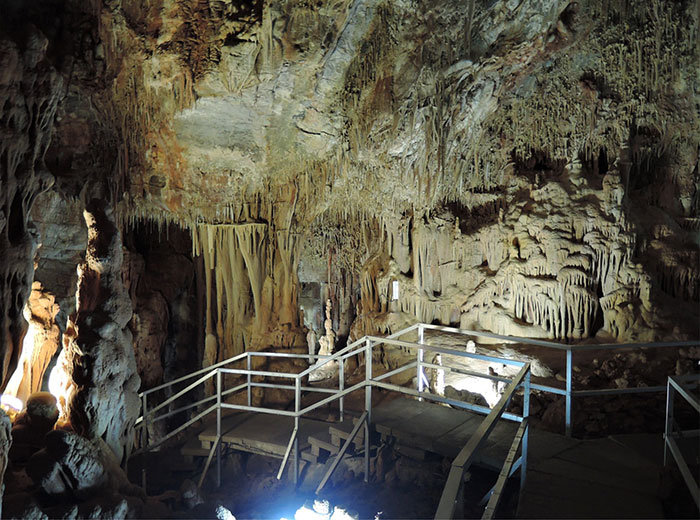
    Interior view of a cave with rock formations where the mysterious Petralona Man skull was found 60 years ago.

    Image credits: Carlstaffanholmer/Wikimedia Commons

    ADVERTISEMENT

    Age estimates were equally messy, with guesses ranging anywhere from 170,000 to 700,000 years old.

    In the new study, published in the Journal of Human Evolution on August 14, researchers finally narrowed down the Petralona man’s age. 

    Uranium-series dating revealed the skull’s true age

    Petralona Man skull fossil embedded in cave wall, ancient anthropological find puzzling experts after new study.

    Image credits: Nadina/Wikimedia Commons

    ADVERTISEMENT

    To crack the mystery, the study’s research team used uranium-series dating, a method that measures how uranium inside minerals slowly decays into thorium. 

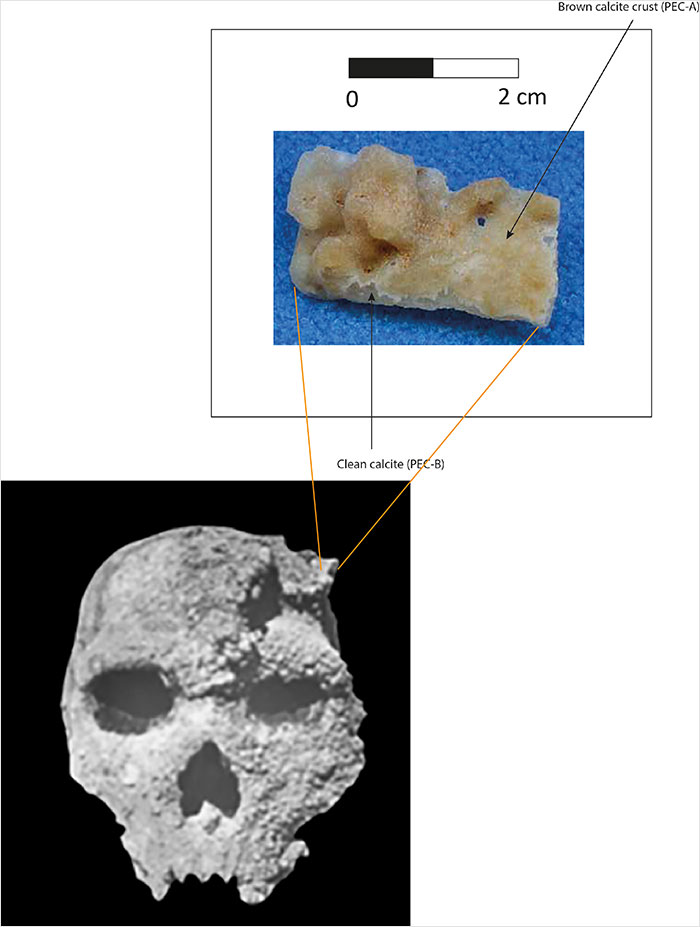
    By analyzing the calcite coating on the skull, they calculated that it formed roughly 286,000 years ago, with a lower limit of 277,000 years.

    Comment by Phil Mayfield asking if there is an axe stuck in an object, referencing Petralona Man skull discussion.

    ADVERTISEMENT

    Interestingly, the calcite appears to have grown quickly in Petralona Cave. This means that the skull itself had not been lying there for long before the first layers of calcite began forming. 

    This also suggests that the skull might date back 300,000 years or more.

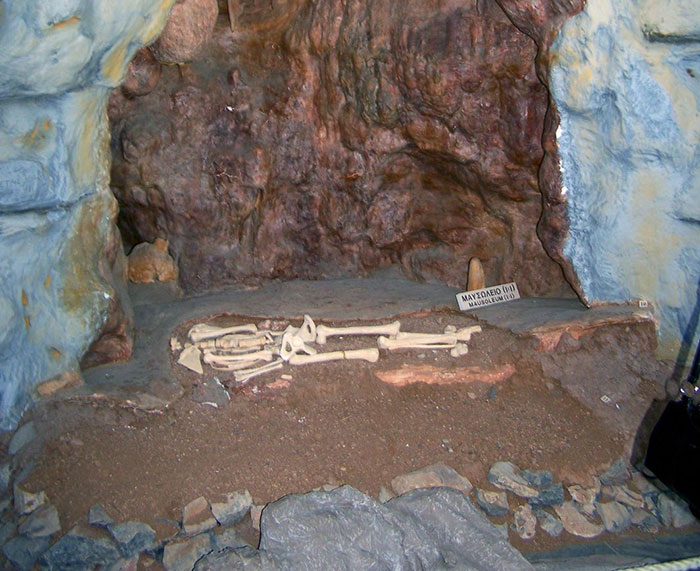
    Skeleton remains displayed inside a cave representing the mysterious Petralona Man skull found by experts.

    Image credits: Hombre/Wikimedia Commons

    Co-author Chris Stringer, a paleoanthropologist at London’s Natural History Museum, explained that this new estimate lines up with another ancient fossil, the Kabwe skull from Zambia. 

    In 2019, his team dated the Kabwe specimen to around 299,000 years, also attributing it to å heidelbergensis

    Text comment by Charles Anderson saying I saw them on land of the lost, related to Petralona Man skull mystery.

    ADVERTISEMENT
    ADVERTISEMENT

    “That fossil is closely comparable to the Petralona one, and I would classify them both as Homo heidelbergensis,” he said.

    The Petralona man likely lived beside Neanderthals, but it belonged to a different human group

    Overall, the study’s findings indicated that the Petralona man lived in Pleistocene-era Europe. 

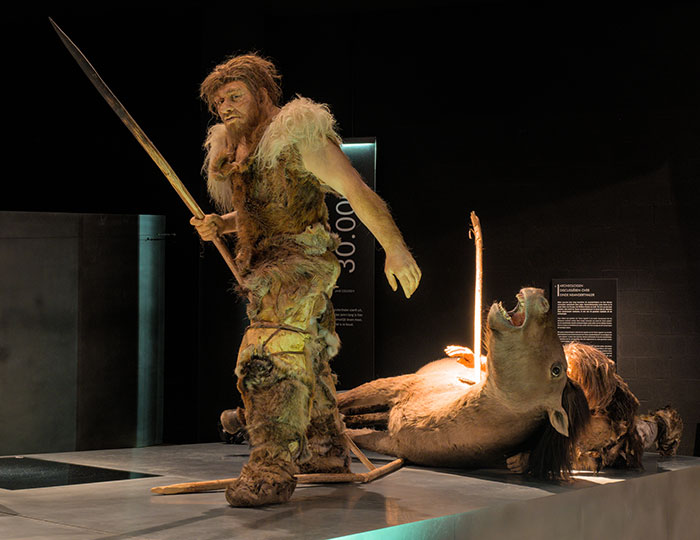
    Reconstructed Petralona Man figure holding spear beside prehistoric animal in a dimly lit museum exhibit.

    Image credits: Trougnouf (Benoit Brummer)/Wikimedia Commons

    Petralona man likely lived alongsideNeanderthals while being part of a completely different human group. 

    Stringer toldLive Science that the Petralonafossil is distinct from both Homo sapiens and Neanderthals. 

    Comment mentioning a Sleestak character in a social media thread with user profile picture and 8 reactions.

    ADVERTISEMENT

    “The new age estimate supports the persistence and coexistence of this population alongside the evolving Neanderthal lineage in the later Middle Pleistocene of Europe,” Stringer stated.

    Stringer added that based on the skull’s size and robustness, the Petralona man was probably male.

    Petralona Man skull with calcite crust sample shown, highlighting geological study of the mysterious ancient fossil.

    Image credits: Falguères, C., Shao, Q., Perrenoud, C., Stringer, C., Tombret, O., Garbé, L., & Darlas, A. (2025). New U-series dates on the Petralona cranium, a key fossil in European human evolution. Journal of Human Evolution, 206, 103732.

    ADVERTISEMENT

    Since the skull also featured moderate wear, it also likely belonged to a young adult.

    There’s also evidence suggesting that the skill was stuck to the wall by calcite encrustations, the same kind that formed the Petralona man’s “horn.”

    The Petralona man suggests that multiple human species lived side by side

    Comment by Hazel Fox questioning if the Petralona Man skull resembles the Dragon Man found in China despite age differences.

    ADVERTISEMENT

    Homo heidelbergensis is thought to be the last commonancestor of modern humans, Neanderthals, and Denisovans. 

    If the Petralona Man indeed belongs to this group, it reinforces the idea that multiple human species lived side by side inEurope during the Middle Pleistocene. 

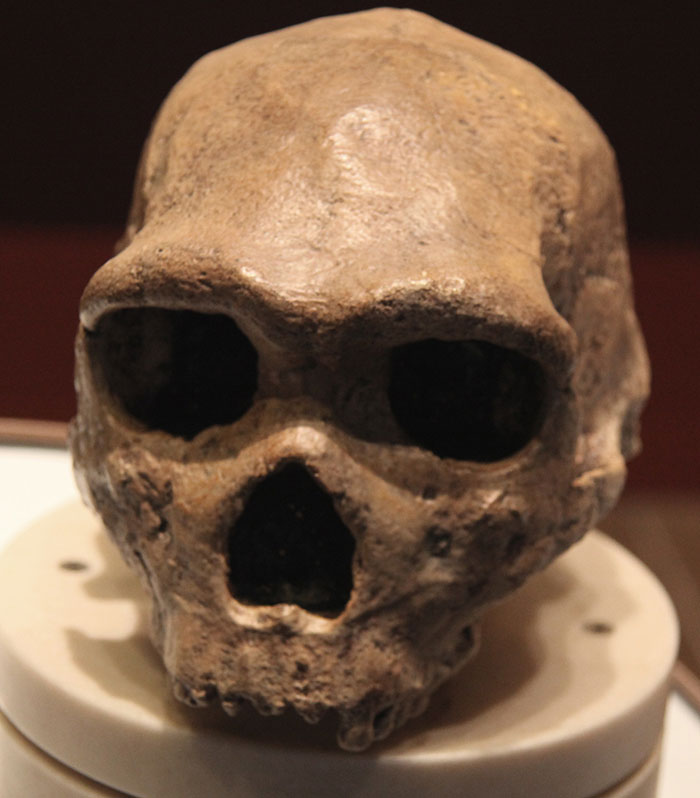
    Petralona Man skull displayed in a museum, showing distinct ancient human features and weathered bone texture.

    Image credits: Tim Evanson/Flickr

    These species might have even influenced each other’s evolution. The find also emphasizes how complex human ancestry really is. 

    Rather than one straight line, there were overlapping populations, migrations, and interactions that shaped who we are today.

    ADVERTISEMENT

    Comment by user David Butler reading It’s just a dumped gargoyle in a social media thread about Petralona Man skull discovery.

    ADVERTISEMENT

    Netizens, for their part, have speculated that the Petralona man, and his iconic horn in particular, will likely be embraced on social media. 

    “Conspiracy TikTokers will have a field day with this,” one commenter wrote.

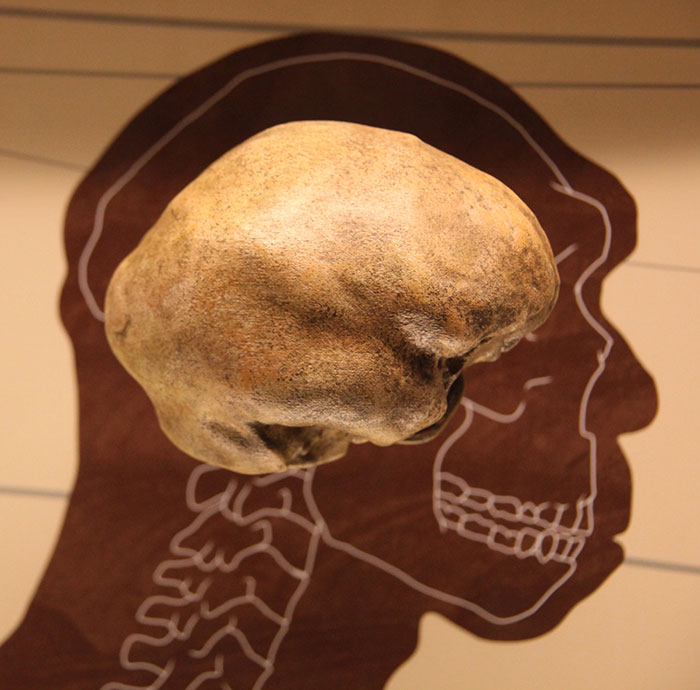
    Petralona Man skull displayed above an outlined human profile on a brown background in a museum exhibit.

    Image credits: Tim Evanson/Flickr

    “I suspect that all of the pseudoarcheologists are going to go crazy over the stalagmite on its forehead,” wrote another.

    Netizens shared their thoughts on the Petralona man’s skull on social media

    ADVERTISEMENT

    Comment by anubis_81 discussing the development and asking if other fossils match the Petralona Man skull circumstances.

    Skull of mysterious Petralona Man found in cave displayed on a wooden surface with study notes and measuring tools nearby

    Petralona Man skull displayed on a table, an ancient fossil found in a cave sparking expert mysteries after new study

    ADVERTISEMENT
    ADVERTISEMENT

    Close-up of the Petralona Man skull discovered in a cave 60 years ago, studied for its mysterious traits by experts.

    Petralona Man skull encased in stalagmite inside a cave, sparking new expert study and mystery after 60 years.

    Comment text about Petralona Man skull discovery and experts debating its authenticity and features.

    ADVERTISEMENT

    Petralona Man skull displayed on a stone surface, highlighting mysterious ancient human fossil studied by experts.

    ADVERTISEMENT

    Comment about human use of fire in cave related to Petralona Man skull discovery, highlighting its ancient significance.

    Illustration of mysterious Petralona Man skull found in cave, studied by experts decades after discovery.

    Skull cemented by stalagmite on cave wall, related to mysterious Petralona Man discovered decades ago.

    ADVERTISEMENT

    Fragmented Petralona Man skull embedded in rock shard, discovered in cave decades ago, puzzling experts after new study.

    ADVERTISEMENT

    Petralona Man skull displayed on a stand, highlighting the ancient human fossil found in a cave 60 years ago.

    Petralona Man skull displayed on a wooden stand in a museum exhibit with information panels in the background.

    ADVERTISEMENT

    Petralona Man skull found in cave 60 years ago, baffling experts after recent scientific study and analysis.

    Poll Question

    Total votes ·

    Thanks! Check out the results:

    Total votes ·
    Share on Facebook
    Peter Michael de Jesus

    Peter Michael de Jesus

    Writer, Entertainment News Writer

    Read more »

    After almost a decade of reporting straight hard news, I now bring that discipline to entertainment writing at Bored Panda. I cover celebrity updates, viral trends, and cultural stories with speed and accuracy, while also embracing the lighter, evergreen side of pop culture. My articles are often syndicated to MSN, extending their reach to broader audiences. My goal is straightforward: to deliver trustworthy coverage that keeps readers informed about the stories dominating the conversation today.

    Read less »
    Peter Michael de Jesus

    Peter Michael de Jesus

    Writer, Entertainment News Writer

    After almost a decade of reporting straight hard news, I now bring that discipline to entertainment writing at Bored Panda. I cover celebrity updates, viral trends, and cultural stories with speed and accuracy, while also embracing the lighter, evergreen side of pop culture. My articles are often syndicated to MSN, extending their reach to broader audiences. My goal is straightforward: to deliver trustworthy coverage that keeps readers informed about the stories dominating the conversation today.

    What do you think ?
    Apatheist Account2
    Community Member
    3 months ago Created by potrace 1.15, written by Peter Selinger 2001-2017

    On the poll, the last option should not be "were lived together" - drop the "were".

    Petra Peitsch
    Community Member
    3 months ago Created by potrace 1.15, written by Peter Selinger 2001-2017

    Why are you or anyone taking these stupid polls? Anyway, is logical, that ddifferent kimnd of humans were existing in the same time at the same place, and the most dominant one from these communities led to homo sapiens sapiens. Heidelbergensis with neantherthals and any other human species, about we are not aware. Do anyone thought about, how would humans look like 300.000 years in the future?

    Load More Replies...

    Apatheist Account2
    Community Member
    3 months ago Created by potrace 1.15, written by Peter Selinger 2001-2017

    On the poll, the last option should not be "were lived together" - drop the "were".

    Petra Peitsch
    Community Member
    3 months ago Created by potrace 1.15, written by Peter Selinger 2001-2017

    Why are you or anyone taking these stupid polls? Anyway, is logical, that ddifferent kimnd of humans were existing in the same time at the same place, and the most dominant one from these communities led to homo sapiens sapiens. Heidelbergensis with neantherthals and any other human species, about we are not aware. Do anyone thought about, how would humans look like 300.000 years in the future?

    Load More Replies...

    You May Like
    Related on Bored Panda
    Popular on Bored Panda
    Trending on Bored Panda
    Also on Bored Panda
    ADVERTISEMENT