Get Premium
Dark mode theme is available exclusively for premium users. Learn more about the benefits of subscribing.
No fees, cancel anytime.

 Dark Mode Ad-Free Browsing Unlimited Content
 Ad-Free Browsing Unlimited Content Dark Mode
Join 1.2 million Panda readers who get the best art, memes, and fun stories every week!
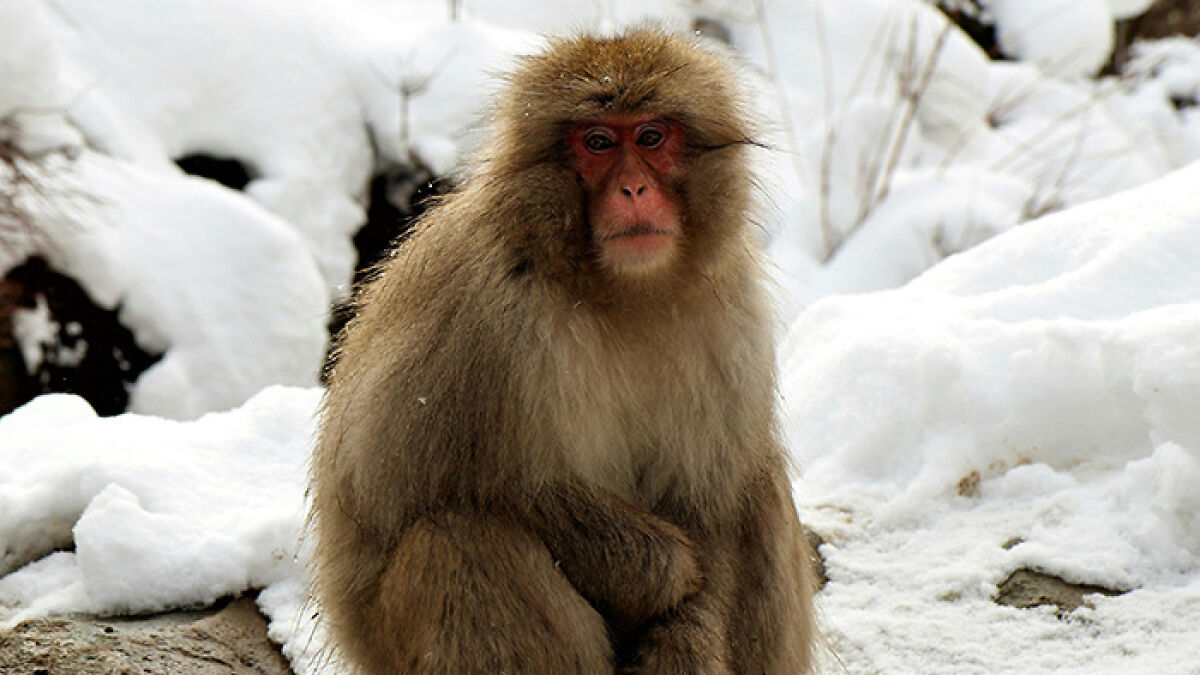
Macaque monkeys in two separate Japanese prefectures have taken the primatology world by storm after they were spotted attempting to mate with Sika deer.
The phenomenon, originally observed in a single male macaque in 2017, has apparently spread throughout a wider population of the monkeys, including females, in what researchers speculate is an example of animal culture.
Speaking to Bored Panda, Dr. Cédric Sueur, who recently published a paper on the subject, revealed the implications of such bizarre behavior—although the exact reason for it remains a mystery.
Image credits: Atsuyuki Ohshima
Japanese macaques are studied closely by primatologists because of their many examples of animal culture and the social transmission of skills and behaviors.
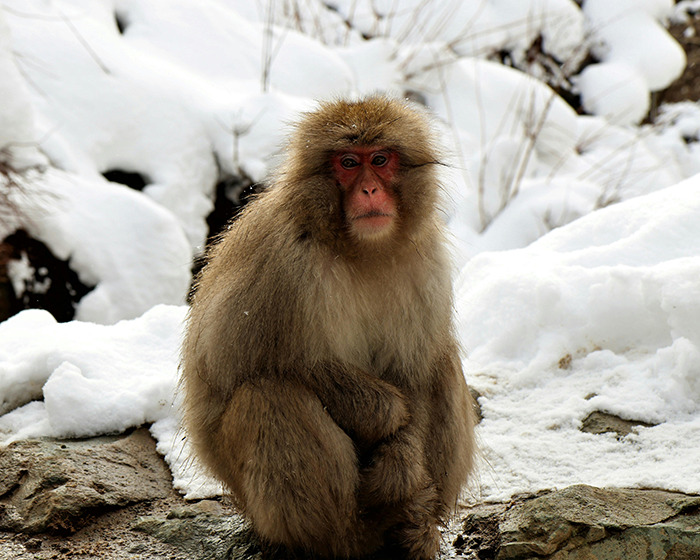
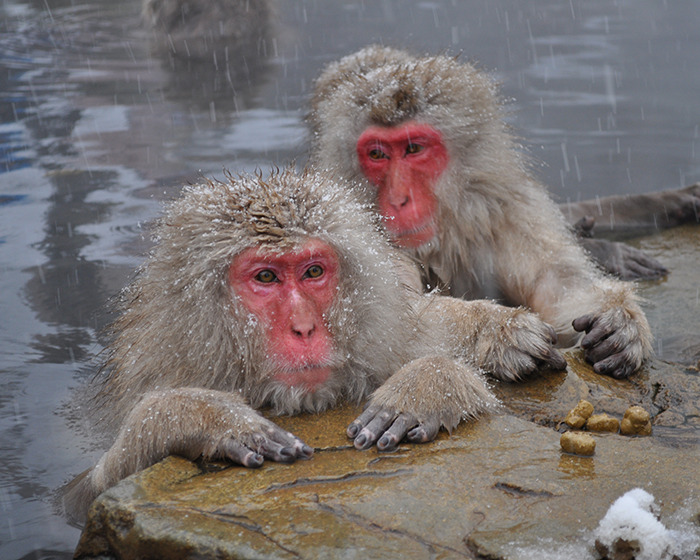
Most famously, a group in Jigokudani Park warm themselves by soaking in hot springs called onsen. The behavior represents culture because the monkeys learn it socially, and it is isolated to a single group.
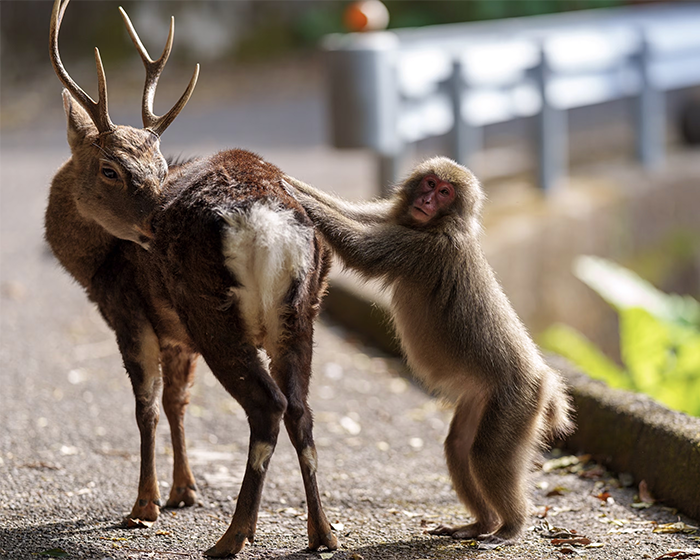
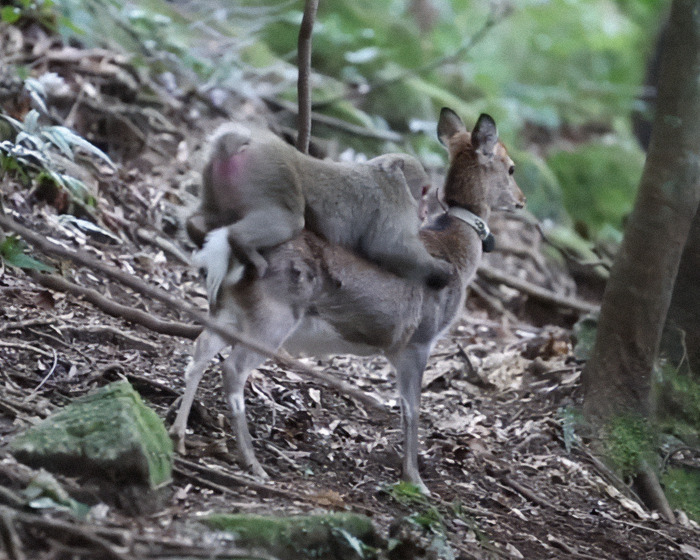
Though they’re a lesser-known example, macaques in various parts of Japan mount and “ride” Sika deer. However, it’s not quite like humans riding horses.
“It’s not to displace from one location another,” Dr. Sueur clarified. “It’s maybe thermal regulation. Grooming we’re sure about.” In other words, the monkeys pick insects off the deer, and in return, the monkeys get a cuddle buddy.
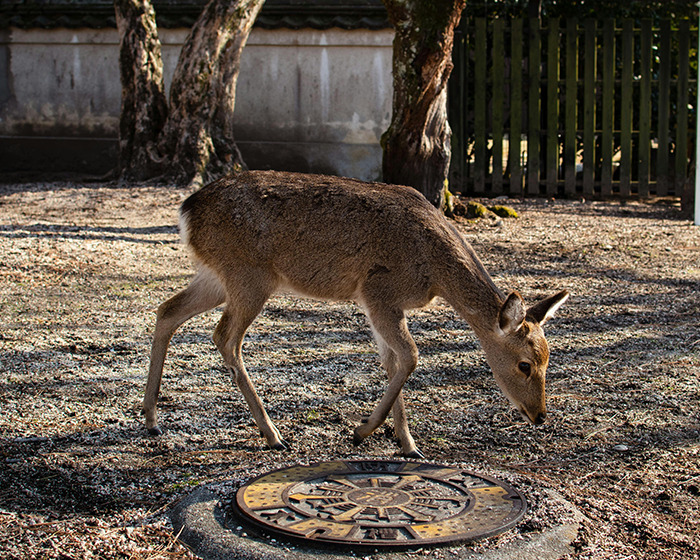
Image credits: Vishrut Bajpai/Pexel (Not the actual photo)
One of these monkeys apparently wanted to be more than just friends, though.
In 2017, a juvenile male macaque with “almond eyes” jumped onto a Sika deer, as he often did, only to begin trying to copulate with it.
The strange behavior was initially ascribed to the monkey’s low social status.
Macaques have complex social hierarchies, and juvenile males often leave their troops dominated by older males. Without female macaques to mate with, scientists thought he substituted a female deer in an act of “sexual frustration.”
Image credits: Real Wild
Nearly a decade later, though, the same monkey is now a dominant male with his own troop. Yet, not only does he continue his explicit behavior with deer, but many of the other monkeys in his troop do the same.
The University of Strasbourg-based primatologist considers this a prime example of social transmission.
“I think he was in a former group where he maybe rode the deer without any sexual behavior. But one moment, there was this sexual frustration, and he began this behavior, and he continued to do it.
“And then I think even if he got some females, he continued to do it. The others observed the behavior and learned to do it.”
Image credits: Hoi Wai/Pexel (Not the actual photo)
However, in a major twist, the member of the French National Centre for Scientific Research revealed that a separate group of macaques in Minoh National Park have also been observed trying to mate with Sika deer.
The park lies just north of Osaka, making it around 400 miles, or 650 kilometers, away from the troop in Yakushima—not to mention across the sea. This throws a bit of a wrench into the theory of social transmission.
Dr. Sueur still believes that’s what it is, though. “It’s two kinds of innovation, maybe out of necessity,” he said.
“Meaning sexual frustration is a kind of necessity. And all individuals feel sexual frustration at least once. I think most of the males and also the females. This is why it’s possible to observe it in several independent places.”
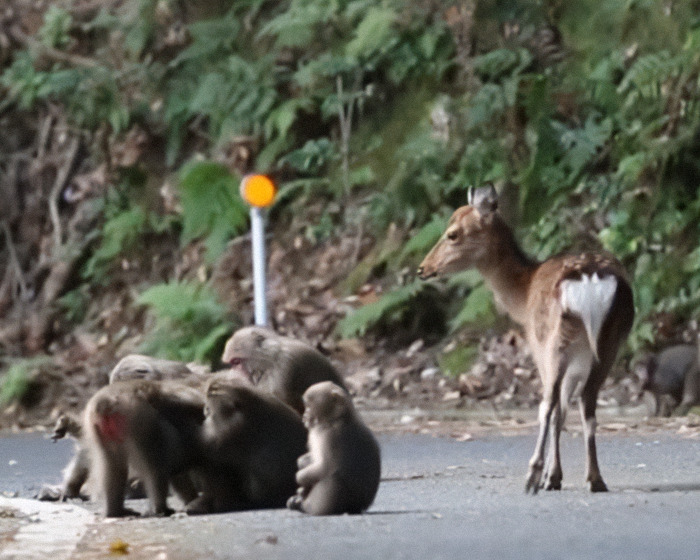
Image credits: Cédric Sueur
There are some differences in the two monkey cultures. In the Yakushima troop, the behavior is always heterosexual, suggesting that the monkeys can distinguish the sex of the deer.
In the case of the Minoh troop, though, female macaques have twice been observed trying to mate with female deer. The primate researcher insists this makes sense in the context of macaque sexual behavior.
“We can understand the apparition of this behavior because in a group of macaques, during the reproductive season, the male is trying to keep all the females together.
“But he cannot reproduce with all the females, or at least he has a kind of preference for some females. As a result, some females during this time also have sexual behavior together.”
Image credits: National Geographic
Image credits: Cédric Sueur – Les Péripéties d’un Primatologue
It’s unclear why the macaques try to mate with the deer in the first place. While riding the deer serves as a kind of mutualistic relationship that helps both species, the interspecies sexuality doesn’t seem to benefit the deer.
“I’m not sure about it,” the academic admitted. “I think it’s more because of the sexual frustration.”
Nevertheless, he predicts this is enough to prompt the behavior’s spread to other groups of monkeys.
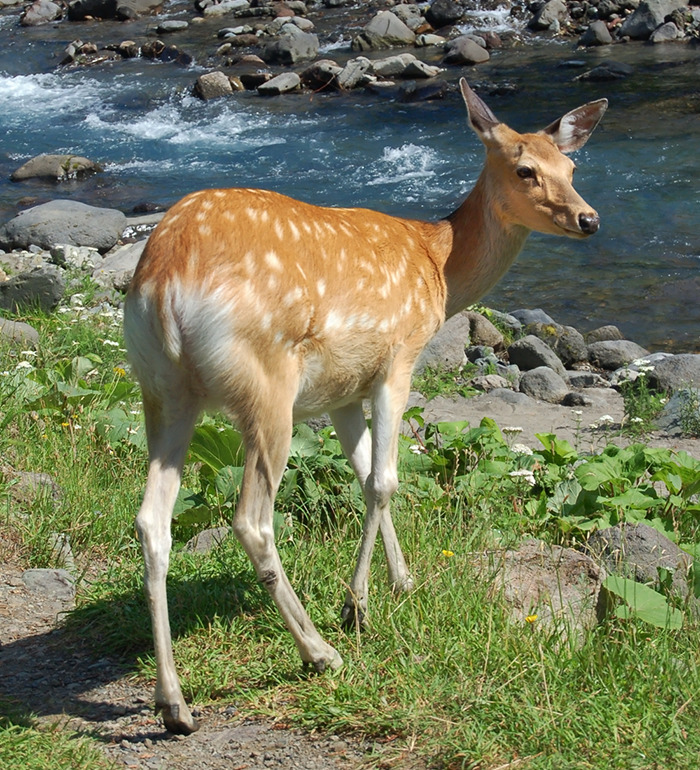
Image credits: Wikimedia
“The males have more pressure than females to show this behavior. Then the males immigrate from one group to another, so they can show this new behavior to the new group.”
To test his hypothesis, Dr. Sueur and his team will return to Japan in April to study the macaques. He will not only observe their behavior with the Sika deer but will watch for cultural behavior in general.
Image credits: Wikimedia
Image credits: Cédric Sueur – Les Péripéties d’un Primatologue
He sees the research as valuable for drawing parallels to human behavior.
“For a long time, scientists tried to say that we shouldn’t anthropomorphize animals, but today, this anthropomorphism has become an entire hypothesis,” he revealed.
“We discover more and more in more and more species that they have intentions. It’s not only instinct. They are able to think and to imagine, and when they do something, they do it on purpose. More and more thinking about these parallels is a good way of thinking.”



My though was more, that BP censors words and female nipples on classical paintings. But gladly posts this? 🤔
Load More Replies... 
My though was more, that BP censors words and female nipples on classical paintings. But gladly posts this? 🤔
Load More Replies... 




























 No fees, cancel anytime



















27
16