Get Premium
Dark mode theme is available exclusively for premium users. Learn more about the benefits of subscribing.
No fees, cancel anytime.

 Dark Mode Ad-Free Browsing Unlimited Content
 Ad-Free Browsing Unlimited Content Dark Mode
Join 1.2 million Panda readers who get the best art, memes, and fun stories every week!
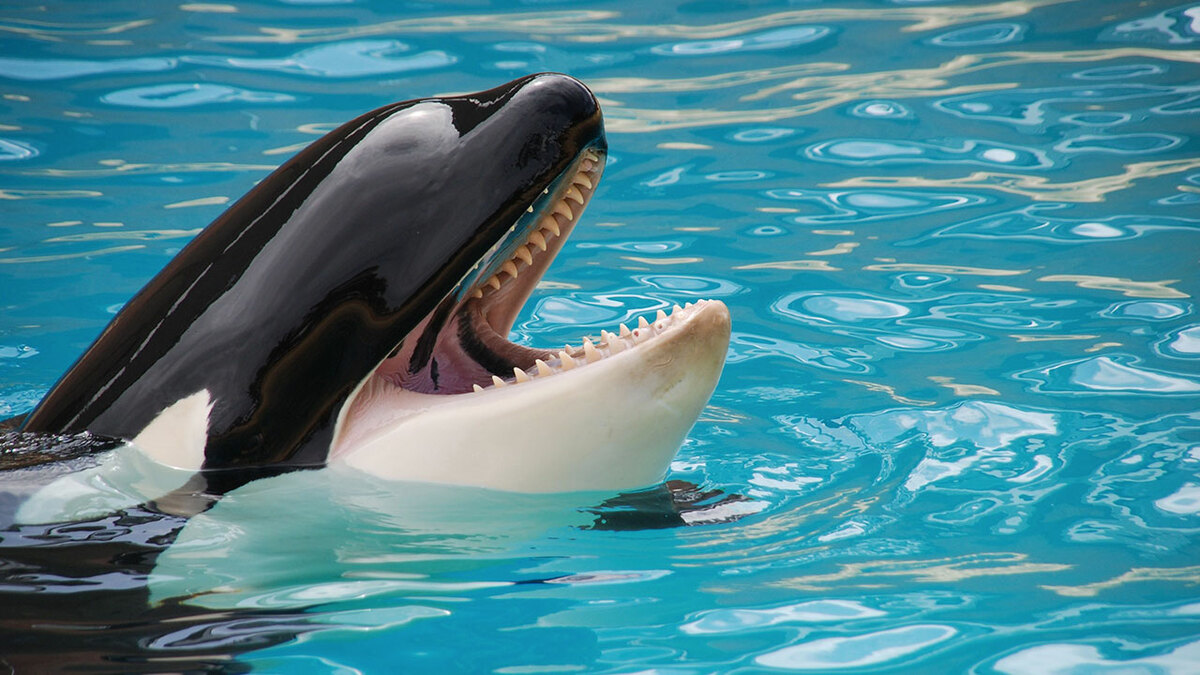
Most people can name at least one animal that can mimic human speech. The humble parrot. Its skill at mimicking human sounds is extraordinary, but it doesn’t surprise people anymore. Some may know that crows and ravens have excellent mimicking abilities, too, though they make less of a habit of it. However, few people know that more animals try to mimic human speech than just birds.
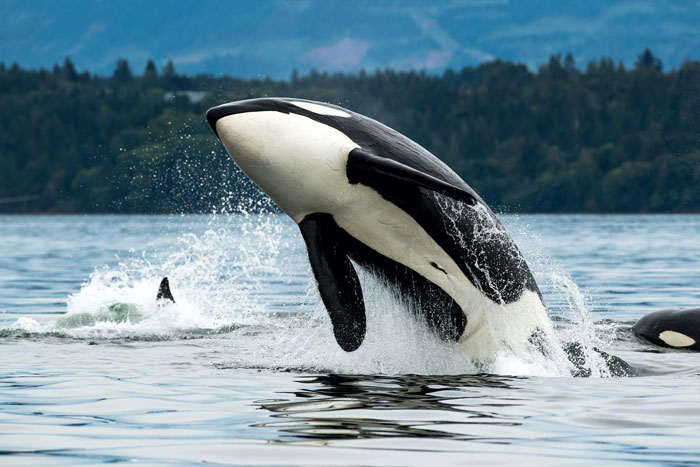
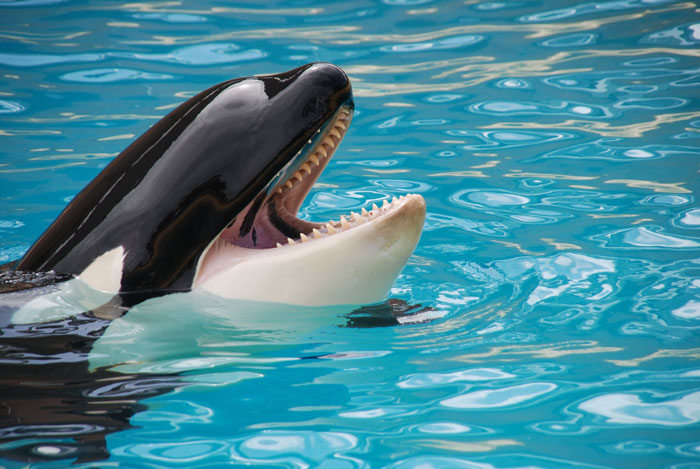
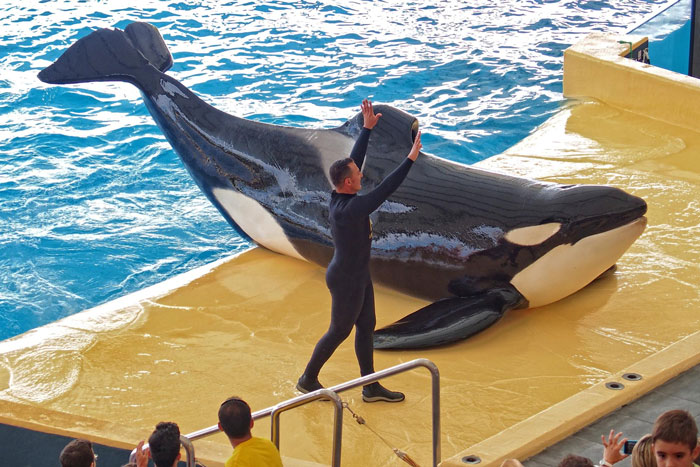
A team of researchers has found that orcas can imitate human speech patterns as well. They taught an orca named Wikie to mimic human words like “hello” and “bye-bye,” along with a handful of other simple phrases. After the audio recordings surfaced, some people found them amusing, while others were left disturbed.
Many birds are great at mimicking sounds, but few people would be surprised to see a parrot repeat a common phrase. While impressive, it has become part of the cultural psyche. A study by José Z. Abramson, Victoria Hernández-Lloreda, Lino García, Fernando Colmenares, Francisco Aboitiz, and Josep Call has shown a far more unexpected imitator – the orca.
The team of scientists got an orca named Wikie to mimic a few short phrases, as well as the sound of blowing a raspberry. They say this research could help them understand the natural dialects that occur in different wild cetacean groups.
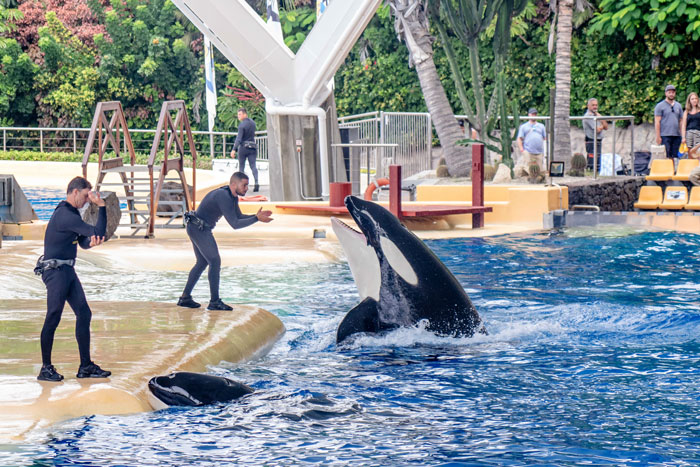
The researchers started by reinforcing a gesture-based command. A trainer would issue a ‘do that!’ command to get Wikie to imitate an action. Then, using the gesture, they asked the orca to imitate sounds made by another orca that was familiar to Wikie. Once it succeeded, they moved to the final phase, which involved sounds the animal was unfamiliar with.
One group of these sounds came from orcas Wikie hadn’t met, and the other consisted of the human words “ah ah,” “hello,” “bye bye,” “Amy,” “one two,” and “one two three”. Wikie reproduced all sounds in both groups within 30 attempts. In the group of human phrases, it took the most attempts to reproduce “ah ah,” totaling 17 attempts before the orca imitated the sound. Wikie was most successful at imitating “hello,” doing so on its first attempt and repeating it successfully 55% of the time afterward.
Wikie’s “speech” was assessed by the trainers on site, then by external independent observers, and by an acoustic analysis. Every source confirmed Wikie’s imitations as recognizable copies of the given sounds.
The researchers explain that Wikie’s success in imitation varied, which may have partly reflected differences in motivation across sessions. Another important factor was the trainers’ regime. They purposefully chose not to reinforce good copies of the sounds to avoid shaping the orca’s understanding of the task.
The results support the idea that orcas can mimic sounds through social learning. Numerous field studies have noted different dialects among different groups of cetaceans, and new research expands our understanding of how orcas communicate.
The researchers say their findings show that orcas have evolved the ability to control their sound production and can imitate a wide variety of sounds with their unique vocal apparatus. Their ability to mimic human words is especially fascinating because orcas have no vocal cords. Instead, they make sounds by moving air through their nasal passages. They push it back and forth through air sacs in their head, near the blowhole. The throat is not involved.
The research only studied Wikie’s mimicking abilities above the water’s surface. The researchers state that further studies are necessary to assess orcas’ ability to reproduce sounds underwater and to further support the idea that they imitate sounds as part of social learning. The field is not yet studied enough to make broad conclusions, but the researchers laid a strong foundation for future research on these highly intelligent animals.

By entering your email and clicking Subscribe, you're agreeing to let us send you customized marketing messages about us and our advertising partners. You are also agreeing to our Privacy Policy.
Thank you! You've successfully subscribed to newsletters!



































 No fees, cancel anytime









37
1