Get Premium
Dark mode theme is available exclusively for premium users. Learn more about the benefits of subscribing.
No fees, cancel anytime.

 Dark Mode Ad-Free Browsing Unlimited Content
 Ad-Free Browsing Unlimited Content Dark Mode
Join 1.2 million Panda readers who get the best art, memes, and fun stories every week!

Second chances are tricky. Everyone loves a redemption arc, until the past shows up uninvited, standing right in your lobby, reminding you of everything you thought you’d left behind you.
One man turned to an online community to share how he thought he’d rebuilt his life after a messy divorce, jail time, and years of self-work; but when his ex-wife suddenly reappeared, his fresh start quickly turned into a legal and emotional standoff he didn’t see coming.
More info: Reddit
Image credits: pvproductions / Magnific (not the actual photo)

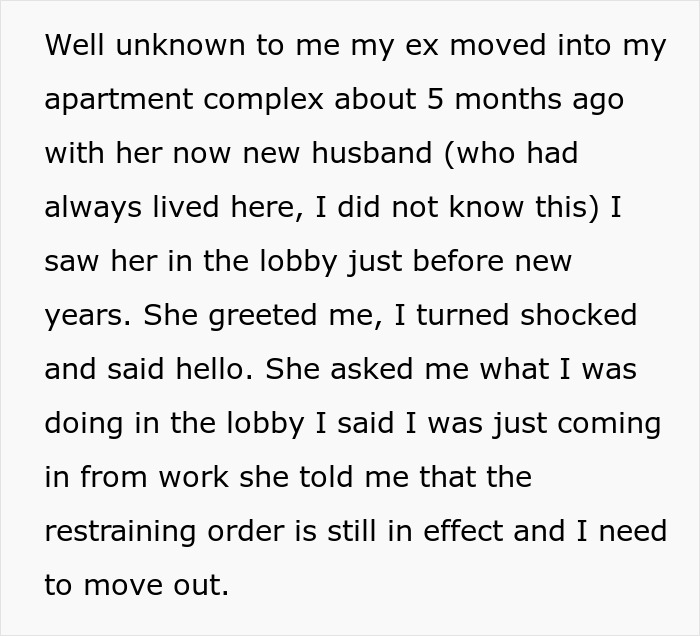
Image credits: wirestock_creators / Magnific (not the actual photo)
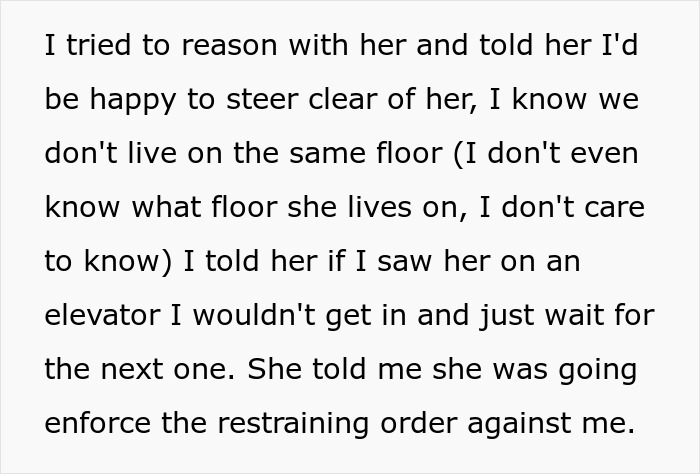
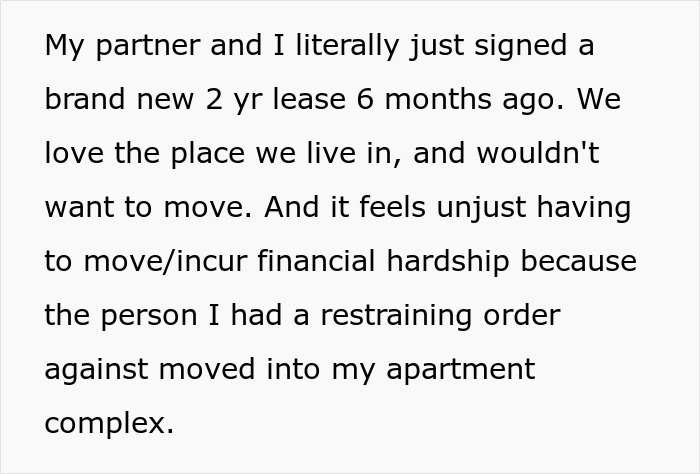

Image credits: kremen / Magnific (not the actual photo)
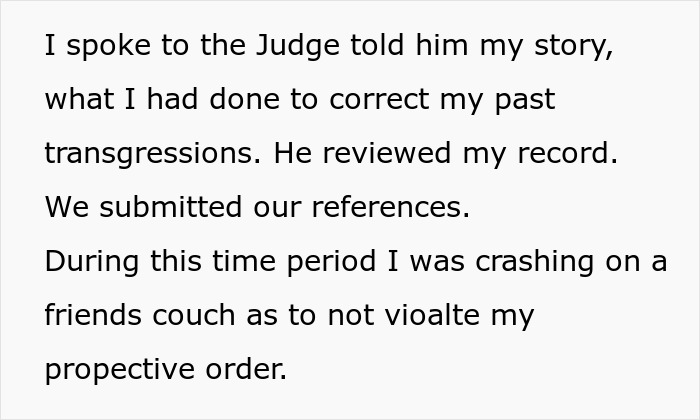
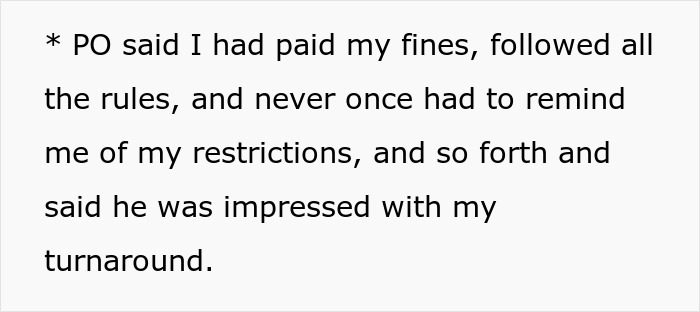
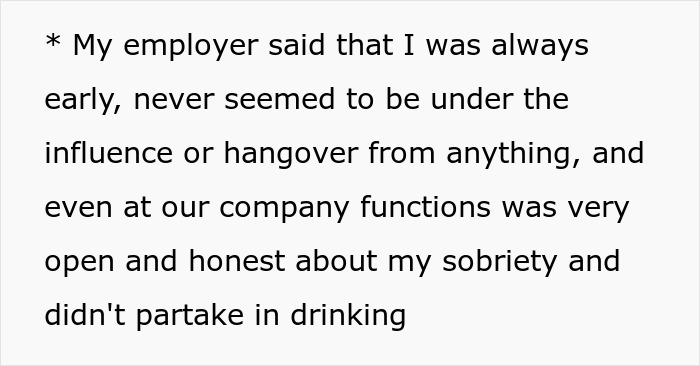
Image credits: www.kaboompics.com / Pexels (not the actual photo)
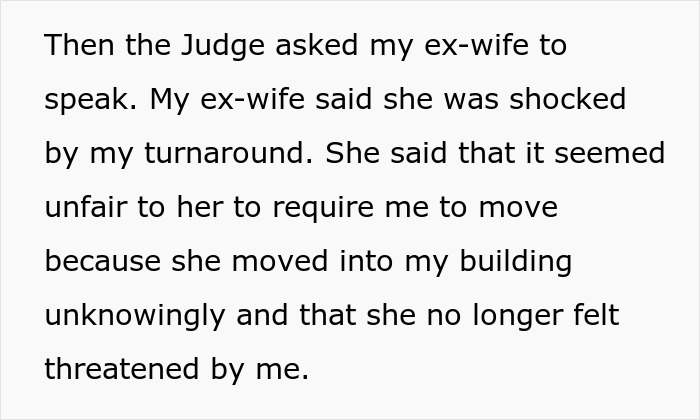
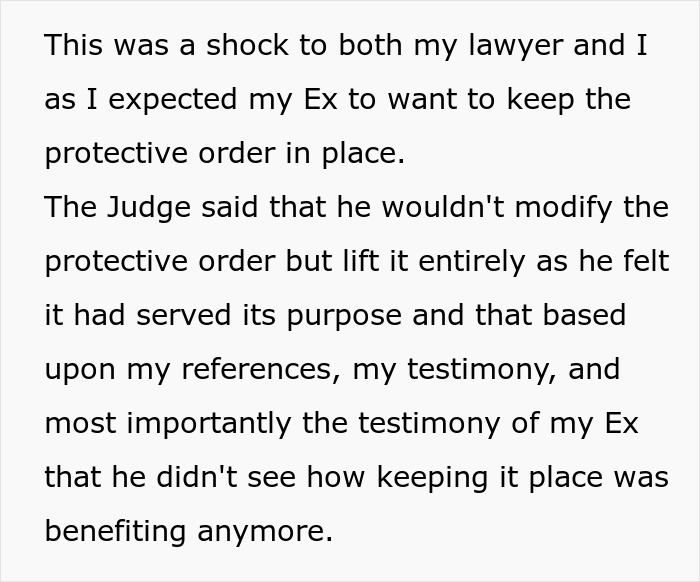
Image credits: freepik / Magnific (not the actual photo)
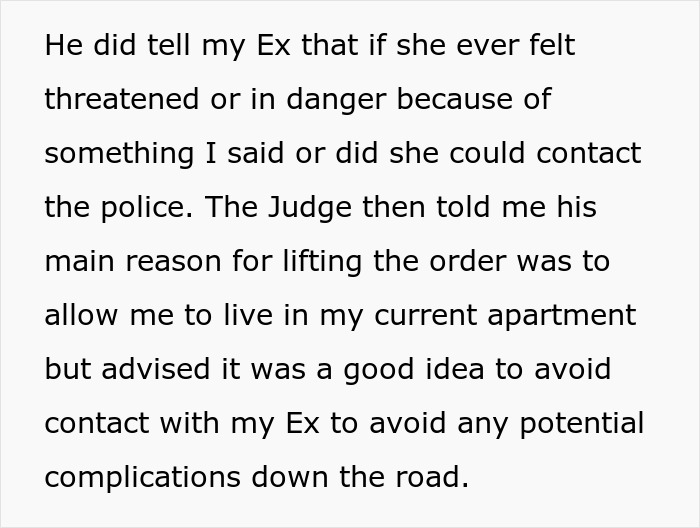
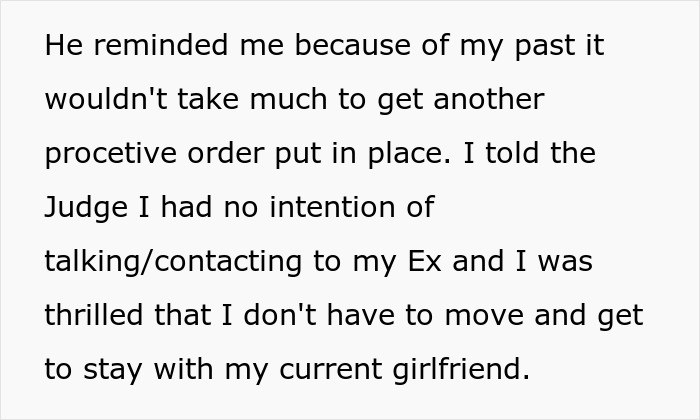

Image credits: imabetterman
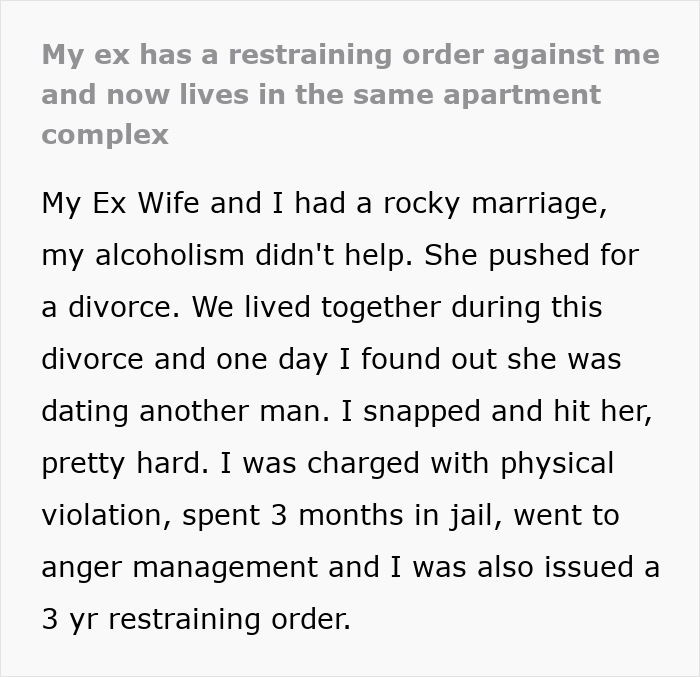
The original poster (OP) admits his past isn’t pretty. During a turbulent divorce fueled by alcoholism, he lashed out and hurt his ex-wife, an incident that led to jail time, anger management, and a three-year restraining order. It was a wake-up call he says changed everything.
In the years since, OP claims he’s turned his life around completely. He got sober, found stable work, built a healthy relationship with a new partner, and moved into a new apartment in a different part of the city. By all accounts, he kept his distance and respected the restraining order to a T.
Then came the plot twist. Nearly two years later, he unexpectedly ran into his ex-wife in his own lobby. Turns out, she had moved into the same apartment complex months earlier, something he had absolutely no clue about. The encounter was brief, but the consequences were swift, and heavy-handed, to say the least.
His ex quickly reminded him the restraining order was still active and insisted he needed to move out. Despite his best attempts to compromise, she pushed forward, eventually involving building management and putting his housing situation at risk.
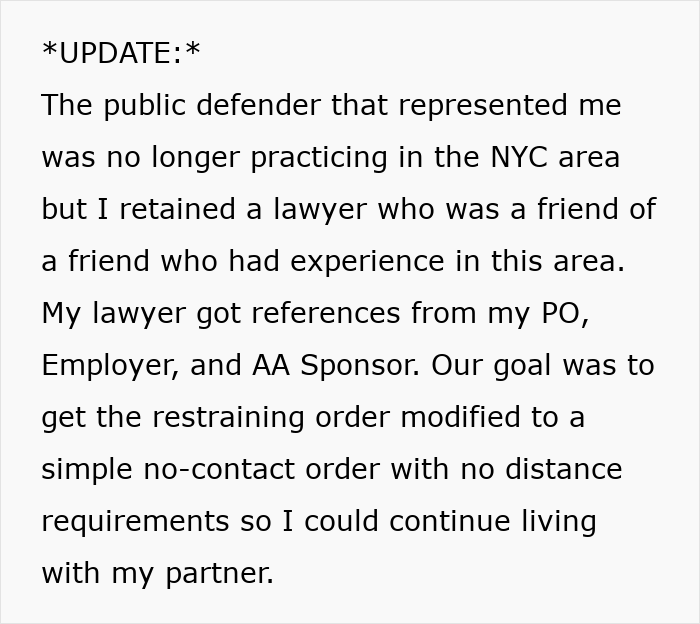
Now here’s where things get complicated. OP insists he’s done everything right since that moment; sobriety, accountability, zero contact. However, when legal restrictions collide with real life logistics, especially in a shared living space, who actually has to budge?
Image credits: freepik / Magnific (not the actual photo)
Protective orders, like restraining orders, are designed to prioritize safety above all else. Legal experts note that even accidental encounters (like sharing a building) can technically violate the terms, depending on how the order is written. It’s not always about intent; it’s about proximity and risk.
However, courts also recognize that life situations aren’t always black and white. In cases where both parties unknowingly end up in the same location, judges may consider modifications, especially if there’s evidence of rehabilitation and no further incidents. Context, history, and behavior all matter.
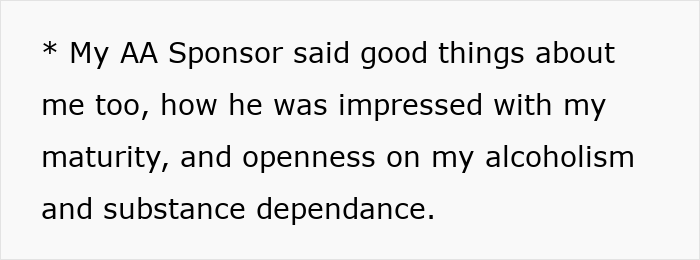
Rehabilitation plays a huge role in how these cases are viewed. Programs like anger management, sobriety support groups, and consistent employment can demonstrate meaningful change. While they don’t erase the past, they can influence whether restrictions are still necessary or overly burdensome.
There’s also the human side of it. Studies on behavioral change show that long-term accountability, support systems, and lifestyle shifts can significantly reduce repeat offenses. However, even with genuine change, rebuilding trust (especially with someone directly harmed) is a much more complicated process.
In the end, OP’s situation wasn’t just about legal technicalities, it was about whether growth and accountability can truly rewrite someone’s future. With his past colliding head-on with his present, the question became: how much does redemption really count?
Do you think OP deserves to stay in his home after turning his life around, or should the restraining order take priority, no matter what? Drop your thoughts in the comments!



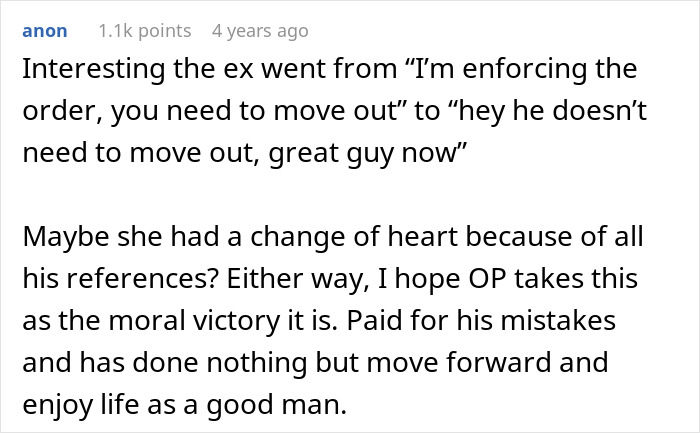
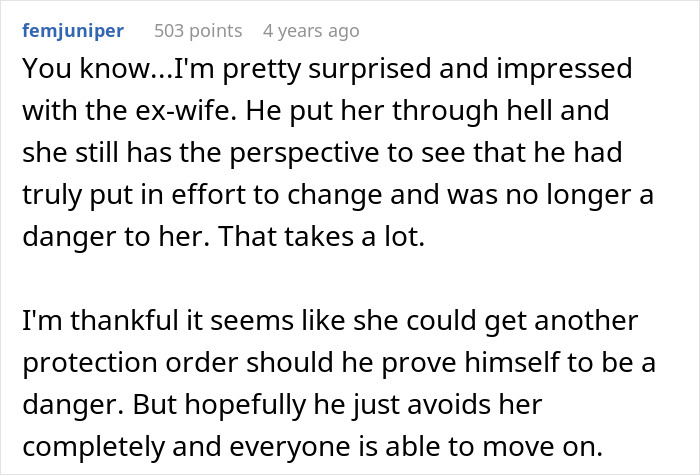



One big flag with this story, as they said its in NYC, if a person moves near a person they have a restraining order against, let alone the same building, under NY state law, the person who moved in second (in this case the ex) is required to move or surrender the restraining order. The person who was there first, automatically wins. The judge wouldnt have even bothered with all the character wittneses and everything else in this and wasting the courts time. Judge in NY would have just asked, who was there first, provide proof, and tell the other party they had to move to surrender the order. This story smells like BS to me.

I was going to ask, because in my country, if (and sadly that's a big "if") you get a restraining order against someone, you would be notified of their address. You literally wouldn't be able to unknowingly move into the same apartment building.
Load More Replies... One big flag with this story, as they said its in NYC, if a person moves near a person they have a restraining order against, let alone the same building, under NY state law, the person who moved in second (in this case the ex) is required to move or surrender the restraining order. The person who was there first, automatically wins. The judge wouldnt have even bothered with all the character wittneses and everything else in this and wasting the courts time. Judge in NY would have just asked, who was there first, provide proof, and tell the other party they had to move to surrender the order. This story smells like BS to me.
I was going to ask, because in my country, if (and sadly that's a big "if") you get a restraining order against someone, you would be notified of their address. You literally wouldn't be able to unknowingly move into the same apartment building.
Load More Replies...
































 No fees, cancel anytime













26
3