Get Premium
Dark mode theme is available exclusively for premium users. Learn more about the benefits of subscribing.
No fees, cancel anytime.

 Dark Mode Ad-Free Browsing Unlimited Content
 Ad-Free Browsing Unlimited Content Dark Mode
Join 1.2 million Panda readers who get the best art, memes, and fun stories every week!
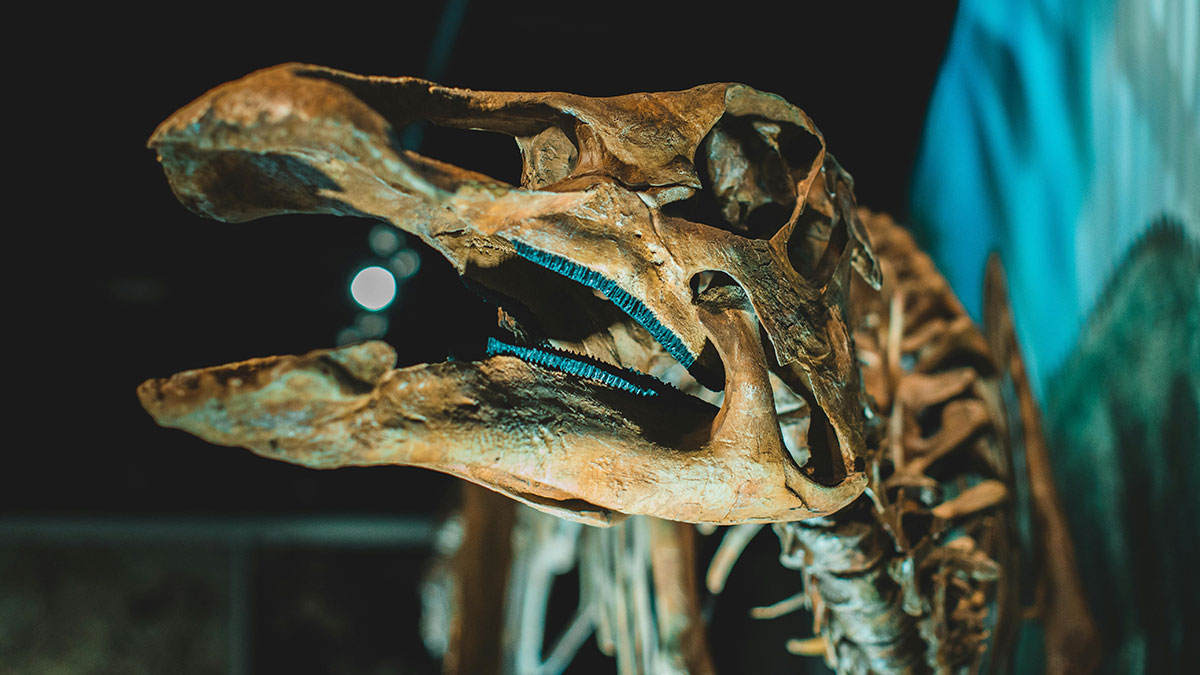
We all know Thailand for its beautiful beaches, spicy and delicious food, and modern, cosmopolitan capital, but the land now home to more than 70 million people was once inhabited by hundreds, if not thousands, of ancient creatures that we’re only used to seeing in history books.
Because of this, it’s hardly surprising that the country is home to archaeologists and paleontologists hoping to unearth the mysteries buried beneath our very feet. However, due to funding (or, better yet, the lack thereof), it isn’t always possible to fully investigate what could be life-changing discoveries. Still, a group of scientists finally managed to uncover the true identity of the mysteriously large bones first discovered in 2009.
Image credits: Patchanop Boonsai
The partial skeleton was discovered in 2016 when a local villager was walking along the bank of a communal pond in Chaiyaphum Province, in an area known as Ban Pha Nang Sua. The bone bed became visible during the dry season, and believing the remains were unusual rocks that might be significant, the villager reported them to Thailand’s Department of Mineral Resources.
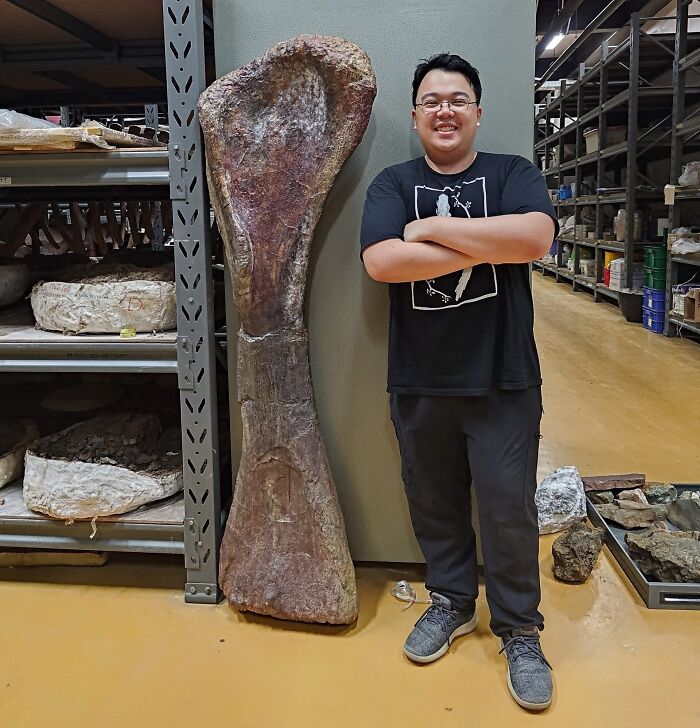
However, when paleontologists first arrived at the site, they quickly realized the discovery was far more than just a collection of “rocks.” They immediately recognized that they were looking at the remains of a prehistoric giant. Over the next four years, the team excavated the site and uncovered four back vertebrae, four hip vertebrae, five ribs, part of the pelvis and hip bone, a massive thigh bone, and a front leg bone.
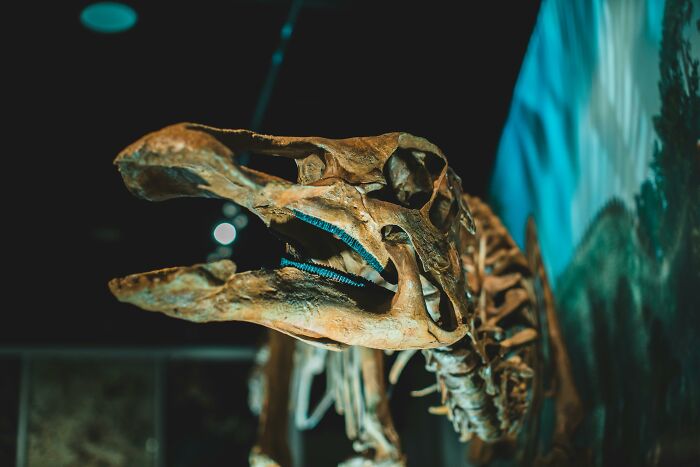
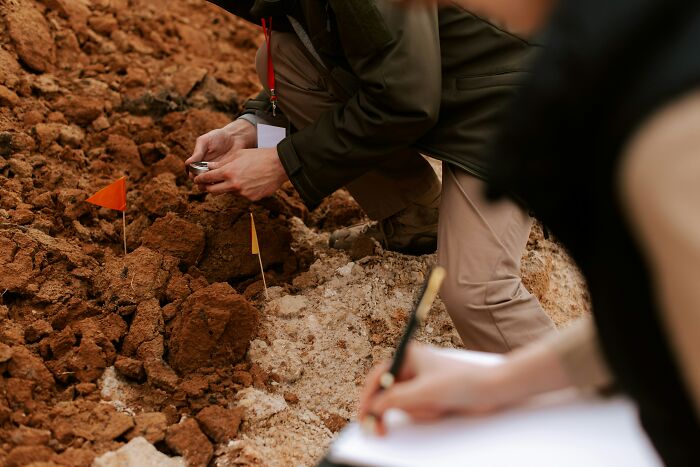
Image credits: Jonathan Cooper / Pexels (not the actual photo)
Image credits: Thai Enquirer / Facebook
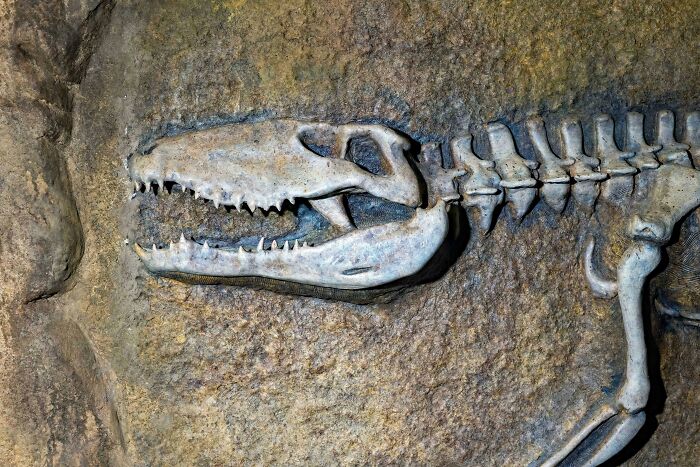
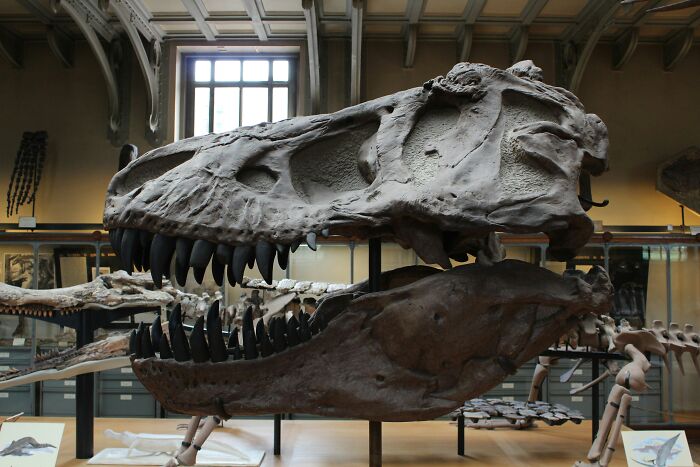
Image credits: Evan Krause/ Unsplash (not the actual photo)
Ph.D. student Thitiwoot Sethapanichsakul, who authored the research paper on the subject, confirmed that the skeleton belonged to a species of sauropod dinosaur. This means the animal was a herbivore with a long neck and tail, similar to what most people would associate with a Brachiosaurus from the Late Jurassic period. However, this particular dinosaur actually lived during the Early Cretaceous period.
Despite its enormous size — estimated at 90 feet (27 meters) long and weighing around 30 tons — the Nagatitan is far from the largest sauropod ever discovered. Experts believe the Argentinosaurus, found in Argentina, as the name suggests, was likely the heaviest sauropod to ever exist. It is estimated to have reached lengths of around 30 to 35 meters (98 to 115 feet) and weighed between 70 and 80 tons.
The group of paleontologists ultimately named the dinosaur Nagatitan chaiyaphumensis. According to Sethapanichsakul, the word “Naga” derives from the mythological Naga revered throughout Southeast Asia, while “Titan” refers to the dinosaur’s enormous size. The final part of the name, chaiyaphumensis, directly references Chaiyaphum Province, where the fossils were discovered.
For those unfamiliar with the legend, pros indicate that Naga is a mythological creature associated with both Hindu and Buddhist traditions and is often represented in Thai art, cultural festivals, and architecture. Typically depicted as a half-human, half-serpent being, the Naga symbolizes power, fertility, and protection, making it the perfect link between Thailand and one of the country’s biggest discoveries.
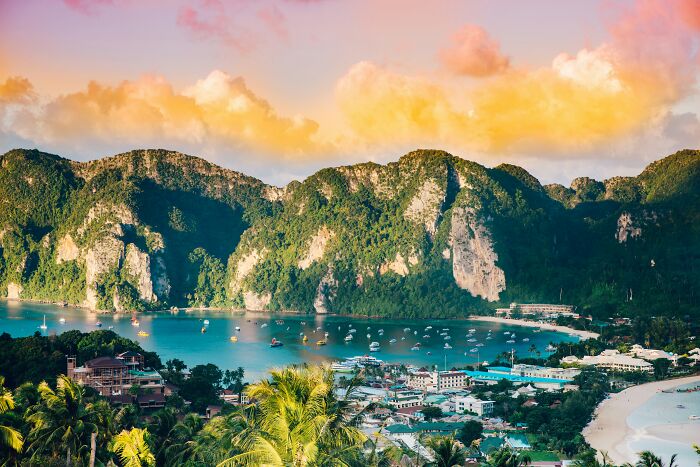
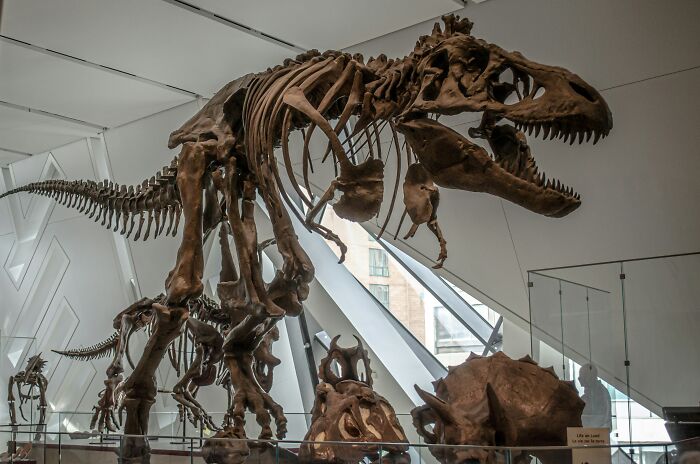
Image credits: David Clode / Unsplash (not the actual photo)
Image credits: Kateryna Hliznitsova / Unsplash (not the actual photo)
Curiously enough, researchers think this could be the last giant Sauropod species ever discovered in Thailand, and geology is a big reason why they managed to end this mystery. Scientists traced the presence of sauropods to the Khok Kruat Formation, often called Thailand’s “dinosaur-bearing rock unit,” because it contains fossils from the exact time these massive creatures lived.
Long story short, Thailand during the Early Cretaceous period was a warm, dry floodplain, basically the perfect environment for sauropods. But over time, global sea levels rose and gradually submerged those floodplains. After that, the types of rocks that formed were much less likely to preserve dinosaur fossils, and because of this, there’s a very small chance of finding more dinosaurs from that same period.
Image credits: Adam Mathieu / Unsplash (not the actual photo)
The research was finally resumed in 2024 after the group of paleontologists received the necessary funding, and it turned out exactly as they expected: the final sauropod species found in Thailand. But as we’ve said, it was the last of 14 sauropod species, and one of many dinosaurs found in Southeast Asia, despite Thailand only beginning to invest in paleontology in the 1980s.
A relatively recent area of study in Thailand, the region has proven to be a hub of discoveries for paleontologists and archeologists alike. In a matter of 50 years, the country went from having no funding or paleontologists to unearthing the largest species os sauropod in Southeast Asia. However, the largest dinosaur in Asia is the Ruyangosaurus, found in Henan Province, China.
This Sauropod is also from the Late Cretaceous period, albeit a few million years after the Nagatitan. He was estimated to be around 30 to 35 meters long (98 to 115 feet) and to weigh around 60 tonnes. That’s double the weight of the Nagatitan. But these are only estimates because, from the Argentinosaurus to the Nagatitan and the Ruyangosaurus, they were reconstructed using only a few skeletal bones.
Image credits: Narciso Arellano / Unsplash (not the actual photo)
The most complete giant skeleton belongs to the Patagotitan, also found in Argentina. Paleontologists managed to gather a total of 130 bones (versus the 11 bones in the Nagatitan that led to the estimates), meaning the dinosaur’s size is the most accurate in the world, not relying on estimates. The Patagotitan stands at 37 meters (122 feet), which makes it longer than a blue whale.
The weight, however, is lower than that of the Argentinosaurus, weighing around 57 to 70 tonnes. This would make it the longest dinosaur, but technically not the largest by weight. Much like the Nagatitan, it is also from the Early Cretaceous period and thrives in Argentina’s arid environment. Other dinosaurs from this era also include Protoceratops and Velociraptor.
Hopefully, Thailand will continue to be a gift that keeps on giving in Paleontology, and surely, researchers will continue to scour the region for more mysteries to be unearthed. Netizens were as infatuated with this discovery as the scientists themselves, taking pride that such well-preserved skeletons were still found after millions of years.
Image credits: www.facebook.com
Image credits: www.facebook.com
Image credits: www.facebook.com
Image credits: www.facebook.com

It would be nice if BP could differentiate between pictures of sauropods and the carnivores, it's not that difficult.

Too advanced for the AI model that creates the content. 😂
Load More Replies...
.....another fascinating new discovery of a sauropod............love it !!

It would be nice if BP could differentiate between pictures of sauropods and the carnivores, it's not that difficult.
Too advanced for the AI model that creates the content. 😂
Load More Replies... .....another fascinating new discovery of a sauropod............love it !!






































 No fees, cancel anytime
















37
4