Get Premium
Dark mode theme is available exclusively for premium users. Learn more about the benefits of subscribing.
No fees, cancel anytime.

 Dark Mode Ad-Free Browsing Unlimited Content
 Ad-Free Browsing Unlimited Content Dark Mode
Join 1.2 million Panda readers who get the best art, memes, and fun stories every week!

50submissions
1week left

History is rich and fascinating, but with so many moments to remember and life moving as fast as it does, we tend to hold onto only the biggest ones. The lesser-known stories get lost along the way—which is a shame, because they’re often just as captivating.
Thankfully, corners of the internet like the Instagram page Rare Histories do a wonderful job of giving them the spotlight they deserve. We’ve rounded up some of their most interesting posts below. Scroll down to check them out.
Image credits: rarehistories
This post may include affiliate links.
There is something special about getting an unfiltered peek at the past, the kind that rarely makes it into classrooms or school textbooks. Textbooks certainly do their best, but they can only hold so much, and the stories that get left out are often the ones that make history feel most human.
And when we do encounter the past through film or television, what we tend to get is a polished, dramatic version of events that prioritizes excitement over accuracy.
That is what makes posts like those from Rare Histories so refreshing. They fill in the gaps with real stories and moments that bring historical figures to life in ways no screenplay quite manages.
Take gladiators, for example. Most of what people picture when they hear the word comes straight from Hollywood, and that picture tends to be entirely male.
The reality, though, was a little more complicated. There is actual historical evidence, backed by Roman writers and a carved marble relief found in modern-day Turkey, that women did take part in gladiatorial combat.
The emperor Domitian reportedly arranged for female fighters to compete by torchlight at night, and in 200 AD, Emperor Septimius Severus formally banned women from the games, which tells its own story about how common the practice had become.
There is another widely held assumption about gladiators that turns out to be far less true than the movies suggest: that their fights almost always ended with someone losing their life.
In practice, gladiators were expensive to house, train, and feed, and their owners had every financial reason to keep them alive and fighting. When one gladiator admitted defeat, they would raise a finger, and that was usually the end of it.
A match that ended in a fatality was actually considered unusual. These were professional fighters with careers and a strict diet heavy in barley, which earned them the nickname “Barley Boys.”
Wealthy Roman women were apparently devoted fans, some even paying to have the sweat scraped from their favorite fighter’s skin after a bout, which they would then use as a luxury moisturizer.
Florence Nightingale is one of history’s most celebrated figures, but there is a side of her that rarely gets talked about. Long before she became famous for her work during the Crimean War, she was already practicing her instinct for care on the animals around her.
She kept a little owl named Athena as a pet, which she had apparently trained to peck her sister when her sister was being annoying.
Over the course of her lifetime, she also adopted at least 60 cats, and she was a genuine advocate for using small animals to help hospital patients recover more quickly, which was quite a forward-thinking idea for the time.
The Victorian era also gave us Charles Dickens, and while most people know him as one of the greatest novelists in the English language, fewer know that he had a very personal reason to fear train travel.
In 1865, he survived a serious rail accident when the train he was on plunged off a bridge. He escaped relatively unharmed, helped pull other passengers to safety, and then went back into the wreckage to retrieve the manuscript he had been working on, which would become Our Mutual Friend.
He never really got over the experience and largely avoided trains for the rest of his life.
Dickens knew London well, and the city he wrote about was not always a pleasant place to be. In the summer of 1858, it became almost unbearable. That period even got its own nickname: the Great Stink.
A combination of extreme heat and a total lack of proper sewage infrastructure caused the River Thames to produce a smell so overpowering that it brought the city to its knees.
With a population that had grown to millions over the previous decades, and no effective plumbing to handle the waste, the river had essentially become an open sewer.
Queen Victoria reportedly abandoned a river cruise the moment the smell hit. Parliament, which sat right along the riverbank, seriously debated whether to pack up and move to another city entirely.
Dickens himself described the stench to a friend in vivid and unflattering terms. It was that crisis of a summer that finally pushed the government to invest in a proper sewage system for the capital.
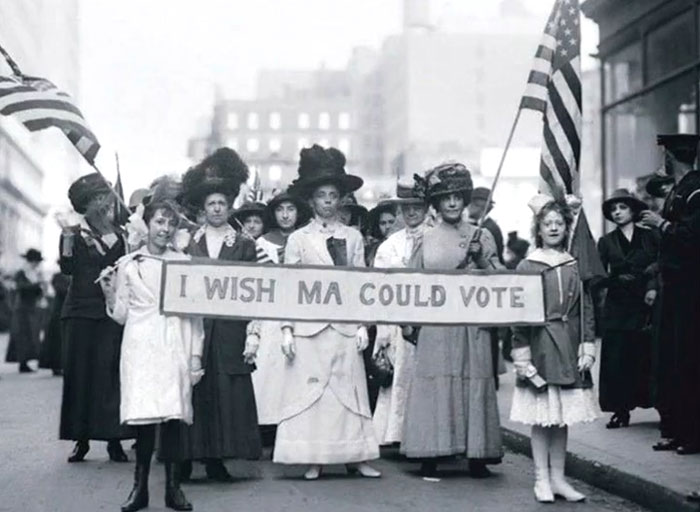
What makes all of this even more striking is that most ordinary Londoners living through these events could not have read a newspaper account of any of it.
There was no legal requirement to send children to school in Britain until 1880, and in the meantime, debates about who should fund education and whether working-class families could afford to give up their children’s wages kept generation after generation from learning to read or write.
In the slums, sending a child to school meant losing the income that child could otherwise bring in. Even as late as 1870, roughly half of all British children had no access to schooling at all.
School meals were eventually introduced as one way to soften the blow, making attendance at least a little more appealing to struggling families.
It is a long way from those overcrowded Victorian streets to where we are now, with centuries of history just a few taps away. The stories above are just a small handful of the many moments that shaped the world we live in, and yet most of us will never come across them through traditional education.
That is what makes it so worthwhile to pause and take notice when a corner of the internet decides to shine a light on the overlooked and the unexpected. History has no shortage of surprises, and there is always something new to discover.
You might also like: Rare historical images that bring the past into sharper focus



































 No fees, cancel anytime





![Albert Einstein's Office On The Day Of His [passing]](https://static.boredpanda.com/blog/wp-content/uploads/2026/02/8-69848a9bc3dd3__700.jpg "Albert Einstein's Office On The Day Of His [passing]")