Get Premium
Dark mode theme is available exclusively for premium users. Learn more about the benefits of subscribing.
No fees, cancel anytime.

 Dark Mode Ad-Free Browsing Unlimited Content
 Ad-Free Browsing Unlimited Content Dark Mode
Join 1.2 million Panda readers who get the best art, memes, and fun stories every week!
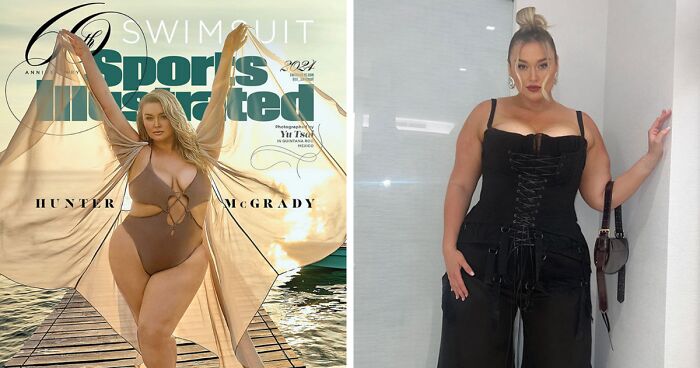
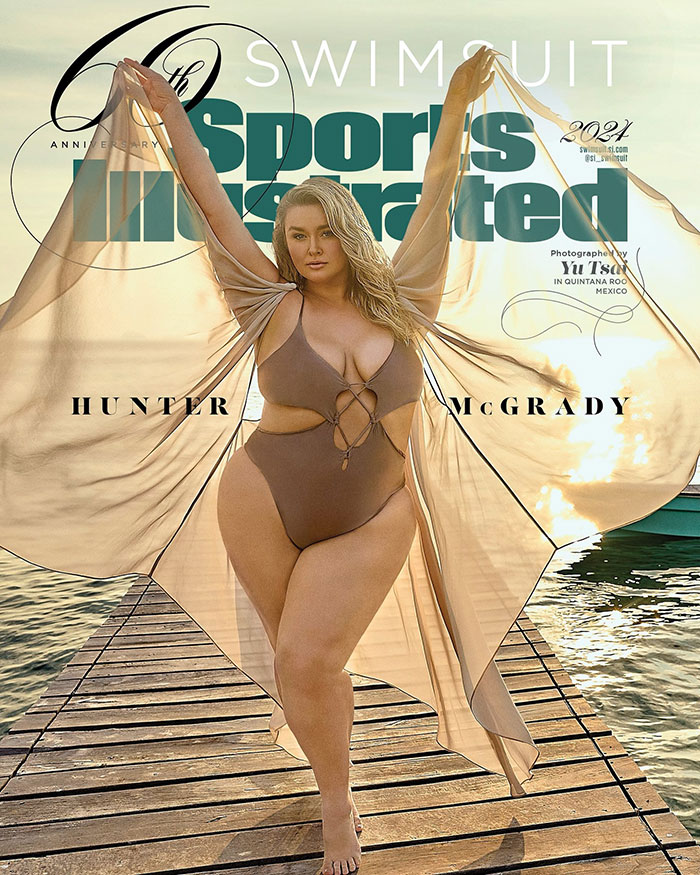
We are in the middle of the “Ozempic era,” according to Hunter McGrady, a plus-size supermodel and a 31-year-old mother of two who has become the cover model for the 2024 anniversary edition of Sports Illustrated Magazine alongside Chrissy Teigen, Kate Upton, and Gayle King,
“I’m just proud. I’m proud to be a part of SI Swimsuit,” McGrady says of her tenure with the franchise.
“I’m proud of the company as a whole, I’m proud of the imprint that they’ve made on society and they continue to make, and that would genuinely be my all-encompassing word: proud.”
For McGrady, the work she does for the publication is not only about beauty but also about fighting against an industry that promotes self-hatred as a way to monetize people’s insecurities.
“The more you hate yourself, the more that you find things to nitpick, the more money people are making off you,” she explained.
“Everyone’s saying, ‘Look different. Be different. Wear this. Cover up this way. Drink this and you’ll be thinner.’ I call it the bullsh** meter.”
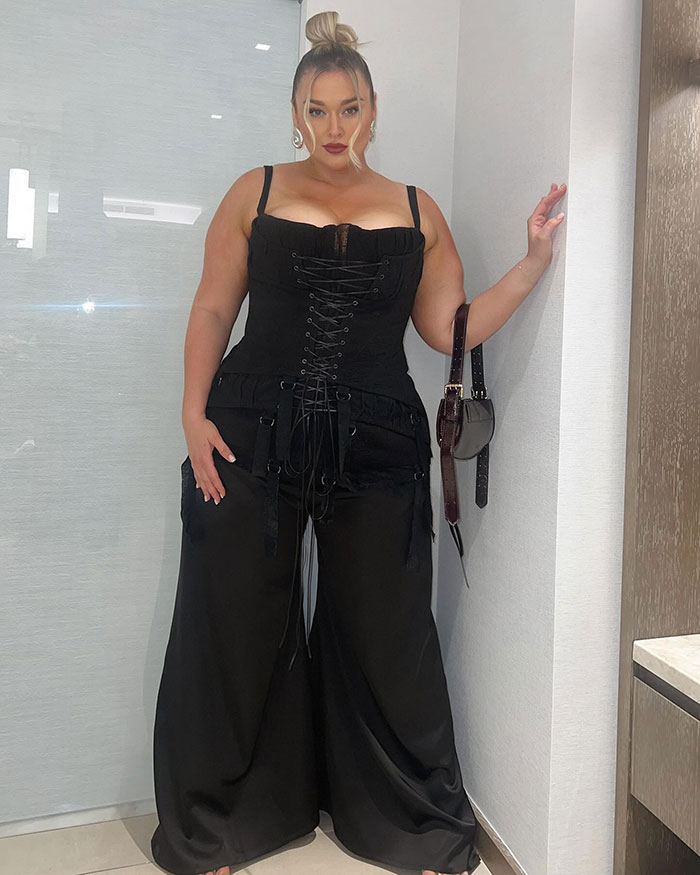
Image credits: huntermcgrady
For Swimsuit Magazine, McGrady’s weight is an asset, and she has been encouraged to keep her body as it is, even in an environment where being skinny has not only been promoted but expected.
“What Sports Illustrated is doing — celebrating all bodies –—is so powerful. They’re doing the work. Especially right now when we’re entering this weird era, an Ozempic era, and just celebrating thinness,” she stated.
But what is the “Ozempic era” exactly?
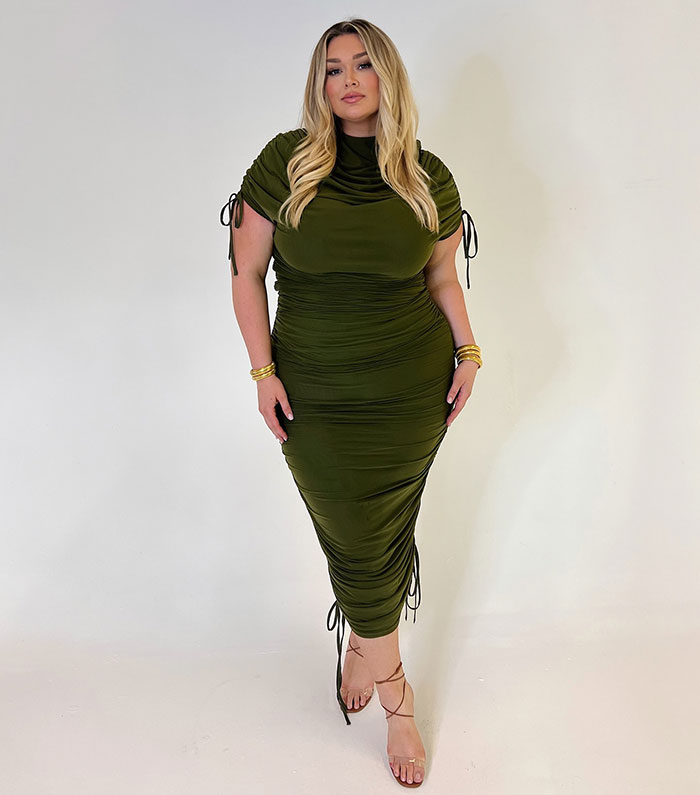
Image credits: huntermcgrady
It refers to the ever-growing demand for a “miracle cure” to one of the modern era’s most prevalent health issues: obesity.
According to the World Health Organization, worldwide adult obesity has more than doubled since 1990, and adolescent obesity has quadrupled.
These numbers are even more worrying when it comes to the US, where the rate has tripled and continues to rise year by year. Experts believe that, if things keep going as they are, over half the population will become obese in ten years.
Image credits: sportsillustrated
Ozempic, a brand name for the medication Semaglutide, was originally designed to help patients with type 2 diabetes improve their glycemic control. But in March 2024, the US Food and Drug Administration made a controversial, and profitable, decision by expanding the indication of the peptide to help obese people lose weight and reduce the risk of cardiovascular incidents.
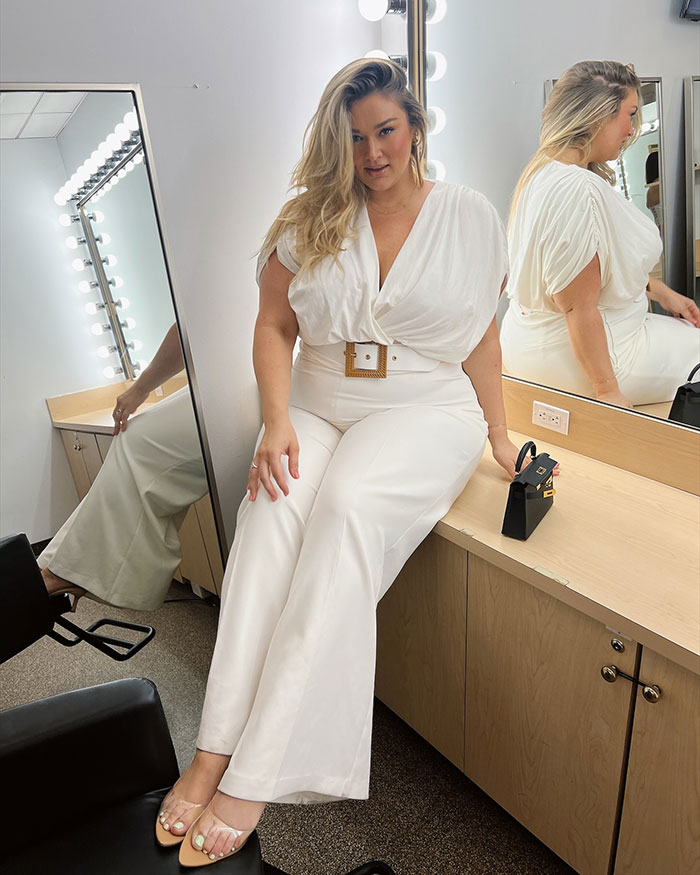
Image credits: huntermcgrady
Ozempic works by first lowering blood sugar levels and then combining a slowing down of digestion with a reduction in appetite to achieve weight loss. It comes with a host of side effects, which include nausea, diarrhea, vomiting, constipation, abdominal pain, headache, fatigue, indigestion/heartburn, and dizziness, among others.
Image credits: huntermcgrady
The effectiveness of the treatment has turned it into a pop culture phenomenon after celebrities such as Elon Musk, Amy Schumer, and Oprah Winfrey have confessed to having used it at one point or another.
“Hating your body — and I have to be careful with saying this — but that’s the biggest money-maker,” explained McGrady, believing that the prevalence of the drug stems more from self-esteem issues than proper health concerns.
The model is not far off the mark, as in 2023, Ozempic prescriptions surpassed 9 million, leading to shortages that impacted the recipients the peptide was designed for in the first place, type 2 diabetics.


Obesity IS unhealthy. So is being too thin. While I don’t think people should tell others that they need to lose weight or “be skinnier” in order to match up to some kind of bizarre unnatural “ideal”, I also don’t want to be told that I’m wrong for WANTING to lose weight if I AM overweight (which I am.) I don’t “hate my body”, as Hunter seems to think we all do, but I’m not delusional. Being overweight raises my risks of several health problems and issues. It’s all well and good for a “plus-size model” with a net worth in the millions to tell everyone that we should just be happy with our current bodies, but sometimes the reality is that we AREN’T happy with our bodies, and it doesn’t mean we “hate” ourselves. It just means we’re unhappy. And that is okay too. We shouldn’t have to pretend to be happy to be overweight. I’m rambling, but I hope I got my thoughts across XD


Why don't they mention the "side effects" of OBESITY in this article? Overeating so you gain weight is not something to be celebrated when your BMI is too high. Also think about the eating habits/lifestyle choices you are passing on to your children when you have a eating disorder that makes you this heavy.It is very sad where we are today as one of the most unhealthy nations on the planet and where our children are not looking to live as long as their grandparents did because of this mentality of no discipline and poor choices being something we accept.

TL;DR beyond the headline. Fat model posting s**t for publicity, is all I see, and BP apparently happy to go along with it.

She’s not posting it; Sports Illustrated is. I’m surprised you clicked it, though, unless you did simply to b***h. I spose that’s a valid motivation (since every thought anyone has anymore is sposedly “valid” 🙄).
Load More Replies... Obesity IS unhealthy. So is being too thin. While I don’t think people should tell others that they need to lose weight or “be skinnier” in order to match up to some kind of bizarre unnatural “ideal”, I also don’t want to be told that I’m wrong for WANTING to lose weight if I AM overweight (which I am.) I don’t “hate my body”, as Hunter seems to think we all do, but I’m not delusional. Being overweight raises my risks of several health problems and issues. It’s all well and good for a “plus-size model” with a net worth in the millions to tell everyone that we should just be happy with our current bodies, but sometimes the reality is that we AREN’T happy with our bodies, and it doesn’t mean we “hate” ourselves. It just means we’re unhappy. And that is okay too. We shouldn’t have to pretend to be happy to be overweight. I’m rambling, but I hope I got my thoughts across XD
Why don't they mention the "side effects" of OBESITY in this article? Overeating so you gain weight is not something to be celebrated when your BMI is too high. Also think about the eating habits/lifestyle choices you are passing on to your children when you have a eating disorder that makes you this heavy.It is very sad where we are today as one of the most unhealthy nations on the planet and where our children are not looking to live as long as their grandparents did because of this mentality of no discipline and poor choices being something we accept.
TL;DR beyond the headline. Fat model posting s**t for publicity, is all I see, and BP apparently happy to go along with it.
She’s not posting it; Sports Illustrated is. I’m surprised you clicked it, though, unless you did simply to b***h. I spose that’s a valid motivation (since every thought anyone has anymore is sposedly “valid” 🙄).
Load More Replies...













 No fees, cancel anytime




0
27