Get Premium
Dark mode theme is available exclusively for premium users. Learn more about the benefits of subscribing.
No fees, cancel anytime.

 Dark Mode Ad-Free Browsing Unlimited Content
 Ad-Free Browsing Unlimited Content Dark Mode
Join 1.2 million Panda readers who get the best art, memes, and fun stories every week!
No workplace schedule is perfect. It’s probably impossible for a worker to punch in and punch out on the dot daily. So there’s some leniency when employees can leave and when their time on the job becomes overtime. To implement overtime policies better, some places might ask employees to report to managers if they’re working overtime.
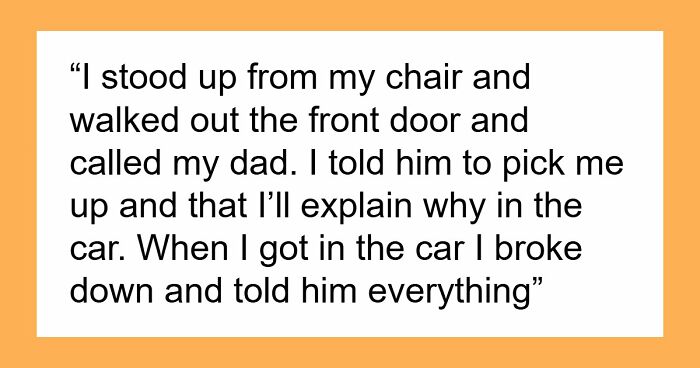
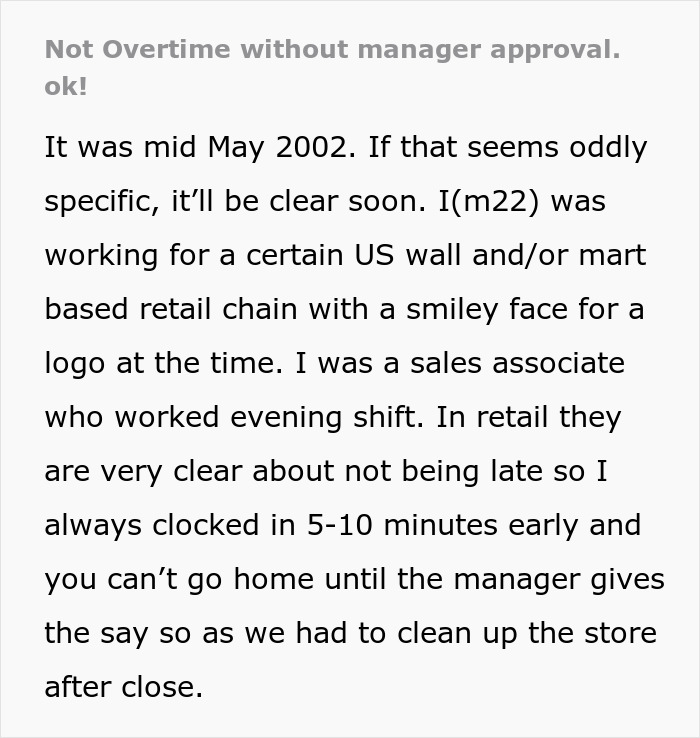
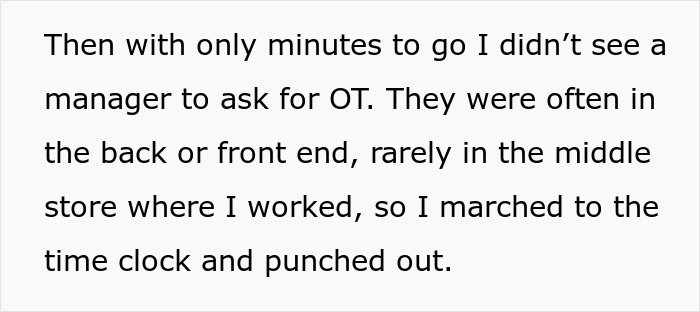
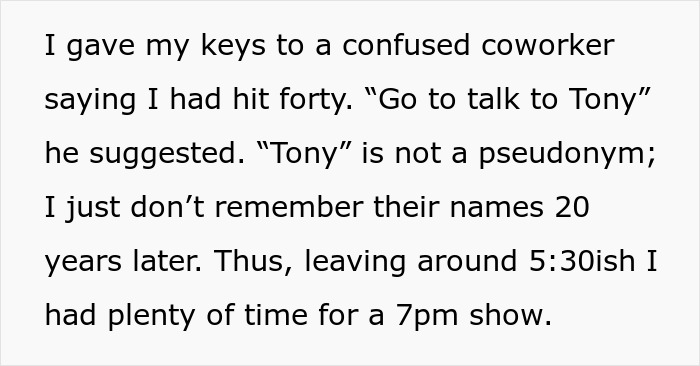
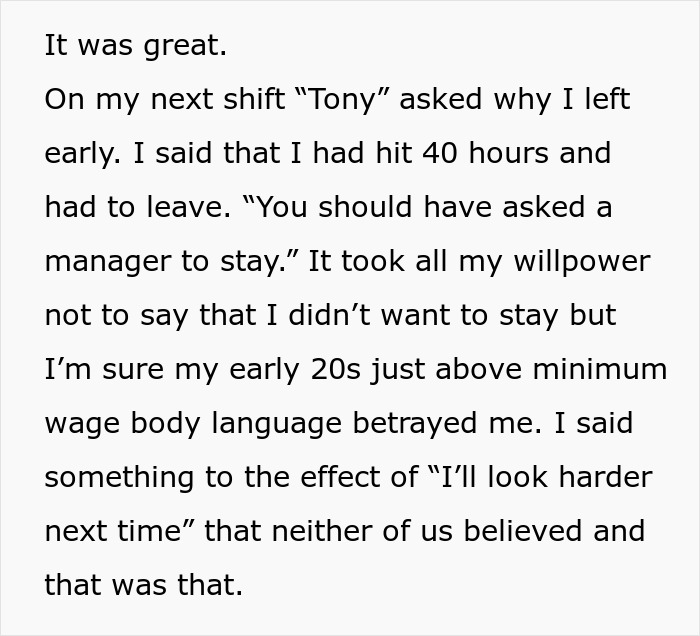
And that was just the case in this story. A man recounted how he maliciously complied with the overtime policy of the store where he worked some 20 years ago. As the then-prevailing rule was ‘No overtime without a manager’s approval,’ he walked off just as his shift was over. After all, he had a pretty important commitment at the movie theater!
Image credits: voronaman111 / envato (not the actual photo)
Image credits: wosunan / envato (not the actual photo)
Image credits: notarobotnorealy
Image credits: Ono Kosuki / pexels (not the actual photo)
Having to leave work before the official work hours are over is a common problem many employees run into. Granted, their reasons might be more serious than going to see a Star Wars film. But who hasn’t fantasized about sneaking off early?
People may have different reasons for leaving work early. Some have family emergencies, unplanned home repairs, or maintenance. Other times, there might be religious holidays that the employees need to take time off to take part in. Other meetings or networking events might also be reasons to leave work early.
There’s also a right way to do it. First off, experts say there are some circumstances to consider. Like company policies, which, in OP’s particular case, meant he had to report to a manager. Some employers and managers are stricter than others, so an employee should take that into mind before asking to leave early.
Although the OP’s malicious compliance makes for an entertaining story, experts also advise communicating with your supervisor in these cases. “Explaining the reason for needing to leave early, whenever possible, helps maintain trust and understanding,” Shift Amp writes.
Whether a supervisor will allow an employee to leave work early also depends on what kind of worker you are. Those who constantly come to work late, miss meetings and appointments, or ask to leave work early often have much less of a chance of getting a favorable response from their manager.
Lastly, Remote Work Junkie writes that it’s important to consider the company culture. “If you work for a company with good work/life balance and strong time off policies, then your chances of leaving early or working from home rises.”
Image credits: Mateusz Dach / pexels (not the actual photo)
Work-life balance is important, and employees are prioritizing it more and more. In 2022, Forbes reported that 90% of the respondents in their survey claimed that work-life balance is an important aspect of their job. More and more companies realize the importance of mental health days. Giants like Nike, LinkedIn, Netflix, and Duolingo provide mental health days to their employees.
In a way, what the OP did in this story can qualify as taking time off for mental health. But instead of taking the whole day off, he just finished work early. Dentons legal team writes that a mental health day can take many forms. That includes simply relaxing in bed, spending time with friends and family, or any other activity that enhances an employee’s mental well-being.
However, employees shouldn’t take advantage of it too often. Online career community Fairy God Boss writes that leaving work early for things like being with your significant other, simply wanting to go home, or having nothing else to do at work are not such good reasons.
“There are plenty of reasons why someone might have to leave the office early on occasion, and as long as you’re honest and only do so when it’s really important, it’s not something you should worry about too much,” they write.
Some companies still hesitate to have mental health day policies precisely because they’re afraid employees will start taking advantage. There is no way employers can monitor if workers use their days off for the intended purpose.
Dentons writes that workplaces should cultivate a culture where “employees feel comfortable taking care of their mental wellbeing without fear of repercussions or shame.” This includes employees being able to talk openly if they’re struggling and need support and being comfortable asking for mental health leave.

That... was rather anticlimactic. There was just the "Why did you do it?" questions for him, apparently no repercussions or discussions or any other -ssions.

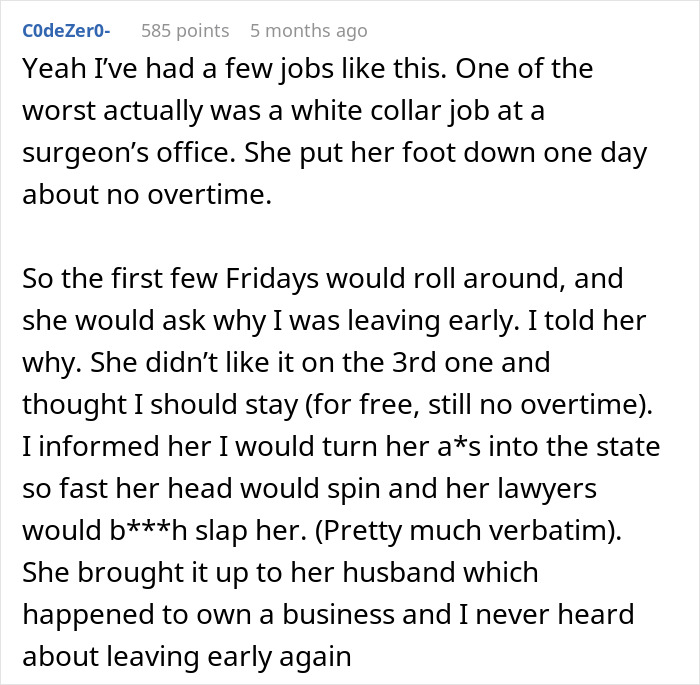
Hughes Aircraft implemented an unpaid overtime policy: work 45 hours, get paid for 40 hours. Since many workers had already been working casual (unpaid) overtime, a large majority immediately REDUCED their hours to 40, and reported the policy to the federal government as the company mandating time card fraud (albeit to undercharge the customer). The manager who came up with this brilliant idea was fired within three weeks of the policy roll out.
That... was rather anticlimactic. There was just the "Why did you do it?" questions for him, apparently no repercussions or discussions or any other -ssions.
Hughes Aircraft implemented an unpaid overtime policy: work 45 hours, get paid for 40 hours. Since many workers had already been working casual (unpaid) overtime, a large majority immediately REDUCED their hours to 40, and reported the policy to the federal government as the company mandating time card fraud (albeit to undercharge the customer). The manager who came up with this brilliant idea was fired within three weeks of the policy roll out.






























 No fees, cancel anytime












42
23