Get Premium
Dark mode theme is available exclusively for premium users. Learn more about the benefits of subscribing.
No fees, cancel anytime.

 Dark Mode Ad-Free Browsing Unlimited Content
 Ad-Free Browsing Unlimited Content Dark Mode
Join 1.2 million Panda readers who get the best art, memes, and fun stories every week!

Starting a new job is stressful for a lot of reasons, including the fact that you’re often expected to hit the ground running. Normally, there is some time devoted to teaching a job, but realistically, you sort of have to rely on coworkers to help out. Of course, this immediately falls apart if your coworkers have zero interest in lifting a single finger.
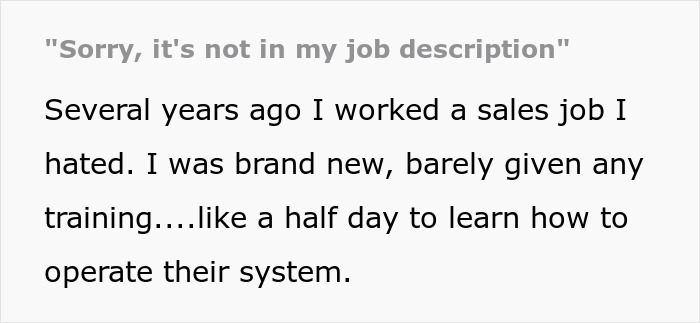
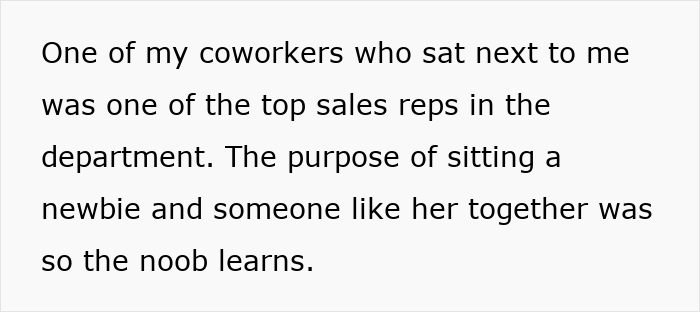
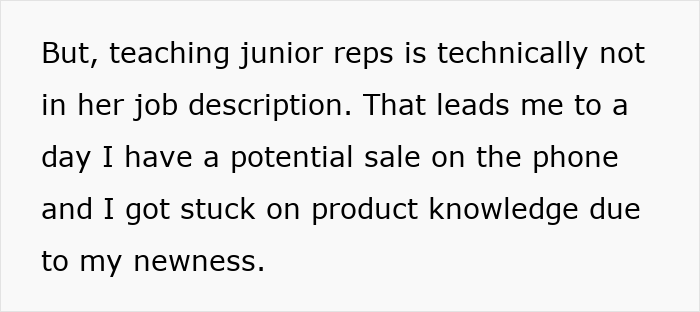
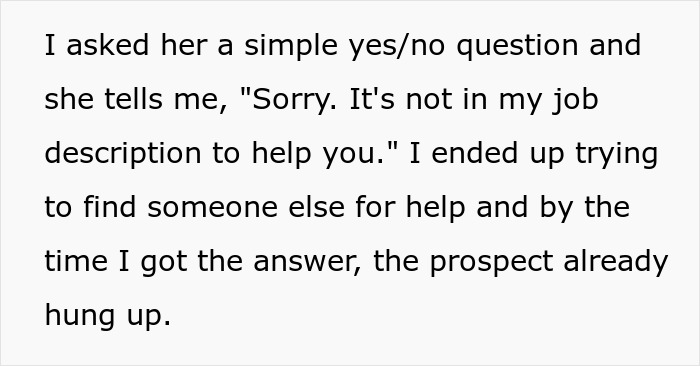
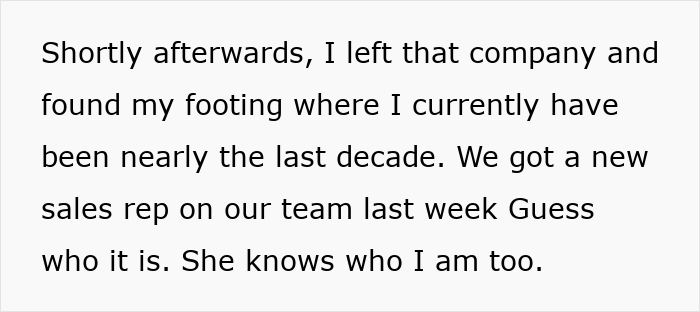
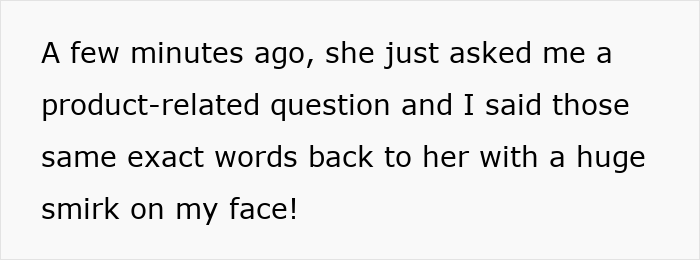
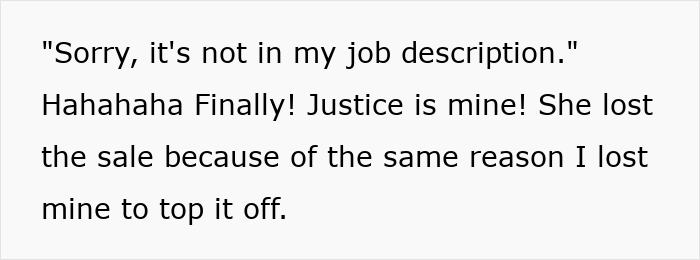
A man shared his bit of petty revenge on a coworker who refused to help him years ago as it was “not in her job description.” We also got in touch with the man who shared the post and he was kind enough to share some more details.
Image credits: Dmitrii Shirnin / unsplash (not the actual photo)
Image credits: Sable Flow / unsplash (not the actual photo)
Image credits: Vasilis Caravitis / unsplash (not the actual photo)
Image credits: Mean-Repair6017
Image credits: Sebastian Herrmann / unsplash (not the actual photo)
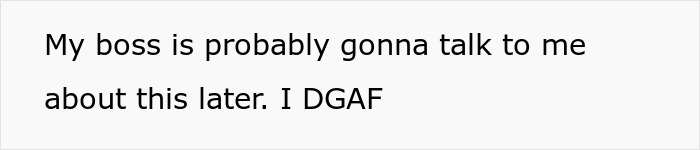
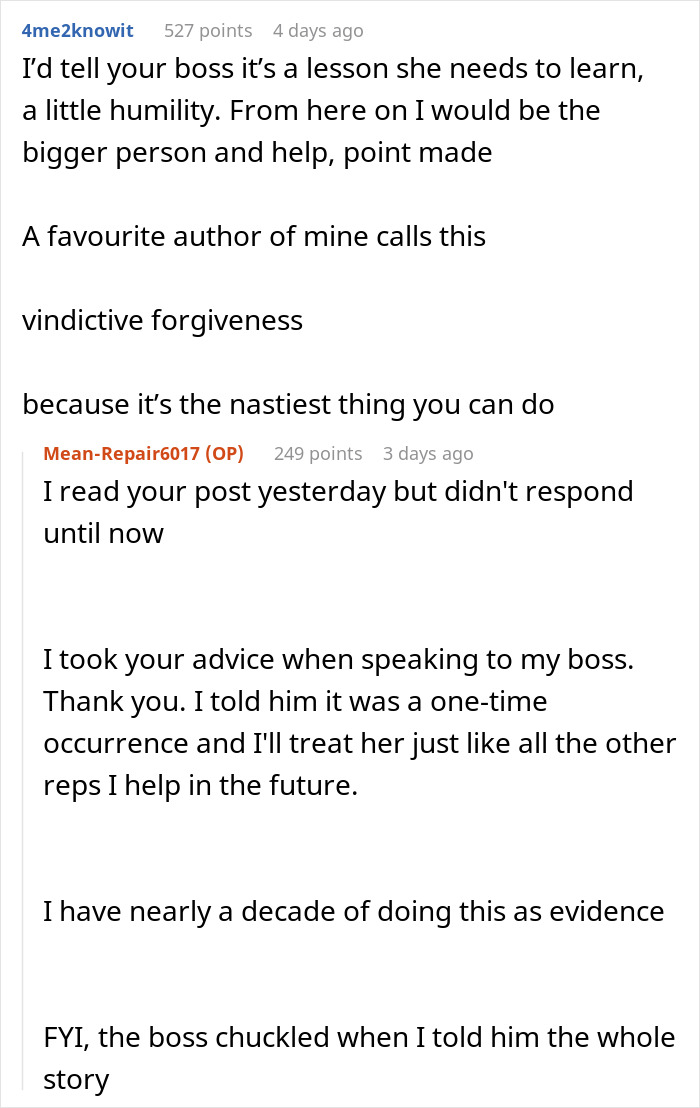
Bored Panda got in touch with the man who shared the story and he was willing to give a few updates. “I actually spoke with her on Monday about it and she said she had it coming. She was concerned I was going to continue to be a [jerk]. I let her know I got no beef with her any more. So I hope this works out. It’s not like she’s gonna be my friend or anything like that. But at least she can count on me like the other junior members of my team.”
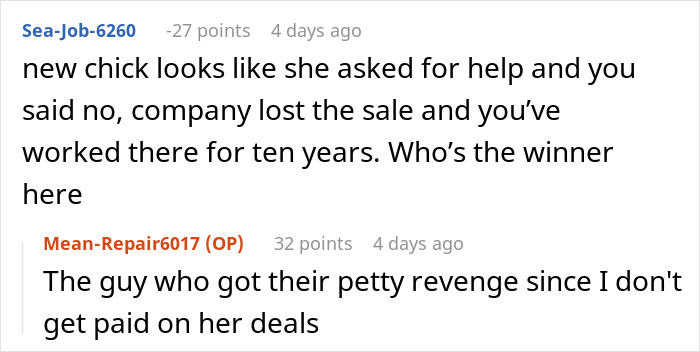
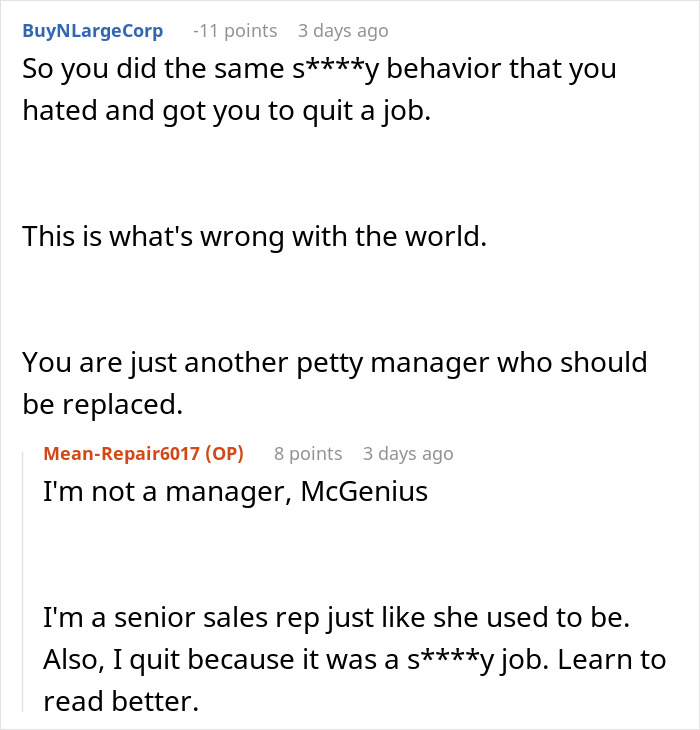
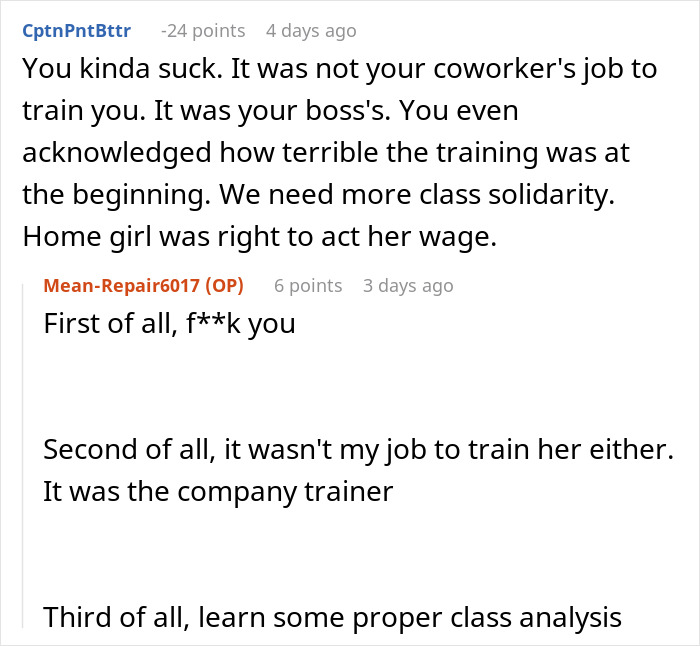
We were also curious to hear his thoughts on the many comments people left. “I did respond to some people. One in particular advised me to make this a one-time thing and then go back to being helpful even to her. That’s exactly what I did.”
When a worker constantly uses “not my job” to refuse responsibility beyond their narrow definition, there is usually more at play than simple laziness. In most work environments, the jobs are so narrowly defined that the employees are rewarded for staying in their lane either by getting no reward for doing their job or for being burdened with endless extra work. Over time, this creates a culture where people cordon off their own lists and view any request that isn’t within their job as a hassling intrusion.
Burnout is another giant factor. When employees are already feeling overwhelmed, a small request can be like the last straw. They’ve learned that no is the only way to protect their own sanity and schedule. Instead of taking a step forward to help a struggling teammate, they hold back, fearful that lending a hand today will deprive them of extra hours tonight and an inadequate “thank you” tomorrow. Such self‑protection can quickly devolve into a default reluctance to contribute to anything outside of a narrowly defined parameter.
Sometimes, it is a matter of unclear expectations. If management has not previously indicated that flexibility and teamwork are factors in performance evaluations, employees rationally assume that only core duties are at issue. Under such circumstances, extra work on a volunteer basis is not appealing. Why risk overextending yourself without reward? When job descriptions are holy writ and not living documents, employees use them as a shield against extra work, even when team success depends on assisting one another.
Image credits: Mapbox / unsplash (not the actual photo)
Power issues are at play as well. Lower-level members of staff or contractors may see any non-contracted request as overstepping on the part of coworkers or management. They are afraid that agreeing will invite a flood of requests in the future with no end point. By establishing rigid limits on “what I do” they are trying to protect themselves from future exploitation, but this is a defensive attitude that can wear down trust and work together across the office.
Lack of ownership is also involved. In companies where one’s record is only measured in terms of individual output and not of team work, co-workers care about their own numbers. They don’t think about improving procedures or debugging that won’t count towards their numbers directly. When the reward system doesn’t respect contributions by working as a team, “not my job” is the smart cut for maximizing personal scores.
Others simply get tired of being “team players”. They define it as constant freelancing of effort and time, which breeds resentment. Instead of being asked how they can incorporate the occasional extra work into their duties, they resort to refusal, thinking that any request that’s not part of their assigned job violates some unstated understanding. All-or-nothing thinking ignores the give-and-take of good teamwork, where occasional give-and-take builds goodwill and improves workflow.
Image credits: Toa Heftiba / unsplash (not the actual photo)
Lastly, poor leadership has a tendency to create these situations in the first place. If the managers themselves do not hesitate to dump unwanted tasks on others without explanation or appreciation, then employees take that as permission to do the same. A manager who never appreciates employees for doing extra work or makes an observation about extra effort is telling the team that extra effort is beside the point. In those environments, “not my job” isn’t an attitude, it’s the office’s survival default.
Ultimately, taking “not my job” too far undermines workplace morale, erodes creativity, and stifles problem-solving. It turns a productive team into a war zone of tight job definitions. Putting this cycle to an end requires decisive leadership that rewards flexibility, sets mutually supportive expectations, and recognizes when individuals go beyond their defined roles. Only then do workers feel free, and motivated, to help one another in a pinch rather than resorting to a four-word cop-out.

By entering your email and clicking Subscribe, you're agreeing to let us send you customized marketing messages about us and our advertising partners. You are also agreeing to our Privacy Policy.
Thank you! You've successfully subscribed to newsletters!

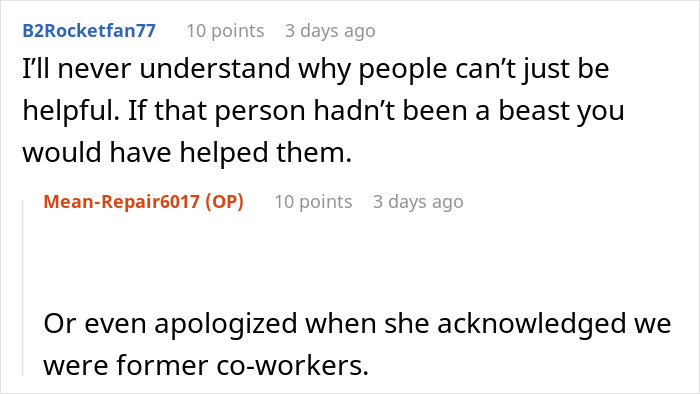
I'm surprised by the number of people who seem to equate answering a question with training someone. Training someone is not just giving them information but also making sure they use that information in the best way. Answering questions (in this kind of situation at least) is just being a decent person.

The problem is that corporations are weaponizing competence here.
Load More Replies...

I swear this stuff is so we stop getting angry with what's actually going on. We get too distracted by this and forget a bunch of kids just drowned because a clown decided not to fund the weather warning systems properly.
Load More Replies...
I'm surprised by the number of people who seem to equate answering a question with training someone. Training someone is not just giving them information but also making sure they use that information in the best way. Answering questions (in this kind of situation at least) is just being a decent person.
The problem is that corporations are weaponizing competence here.
Load More Replies... I swear this stuff is so we stop getting angry with what's actually going on. We get too distracted by this and forget a bunch of kids just drowned because a clown decided not to fund the weather warning systems properly.
Load More Replies... 






































 No fees, cancel anytime





















42
21