Get Premium
Dark mode theme is available exclusively for premium users. Learn more about the benefits of subscribing.
No fees, cancel anytime.

 Dark Mode Ad-Free Browsing Unlimited Content
 Ad-Free Browsing Unlimited Content Dark Mode
Join 1.2 million Panda readers who get the best art, memes, and fun stories every week!

The workplace is no place for racism or any kind of discrimination. Yet, according a 2023 global report by Catalyst, 66% of employees say they’ve experienced racism during their careers, and 52% claimed to experience it in their current jobs.
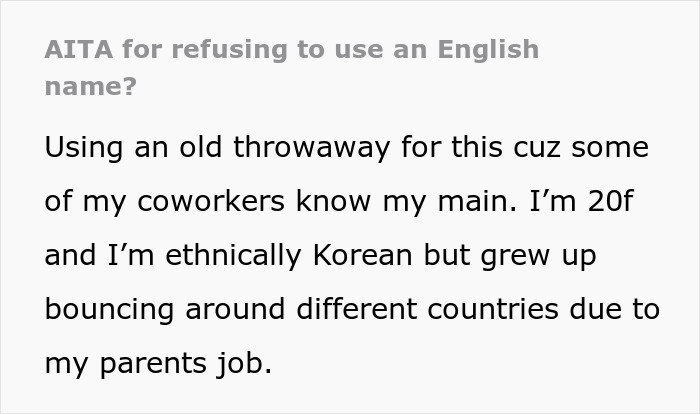
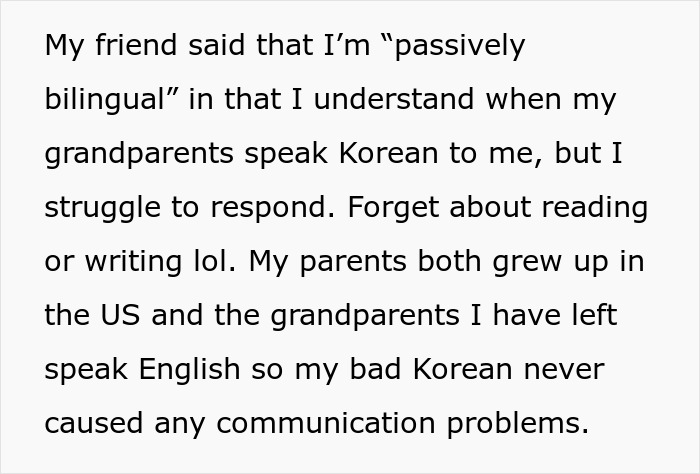
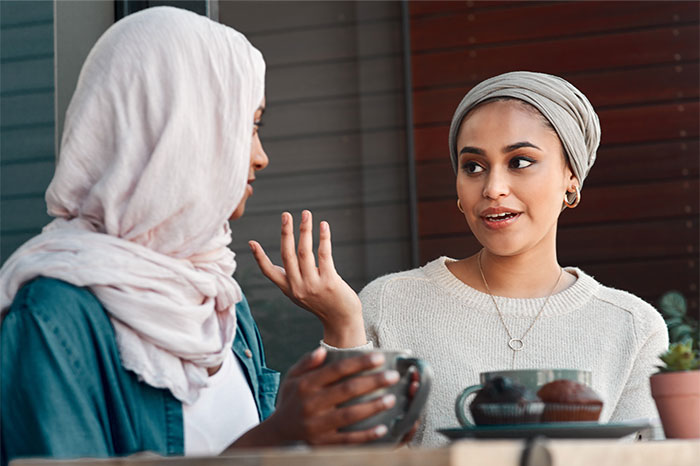
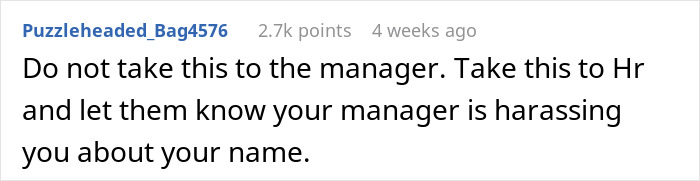
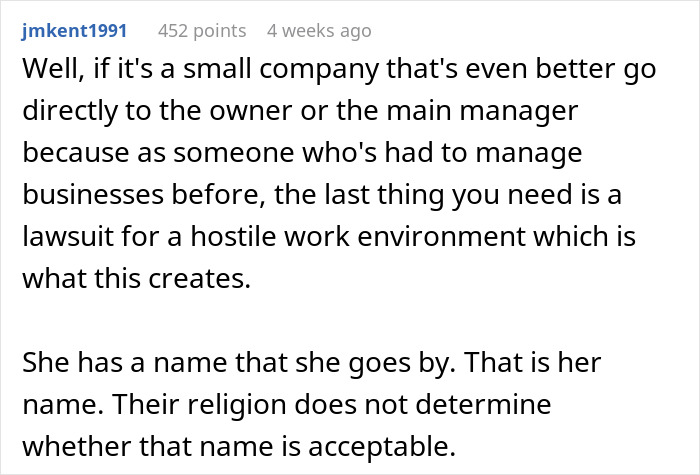
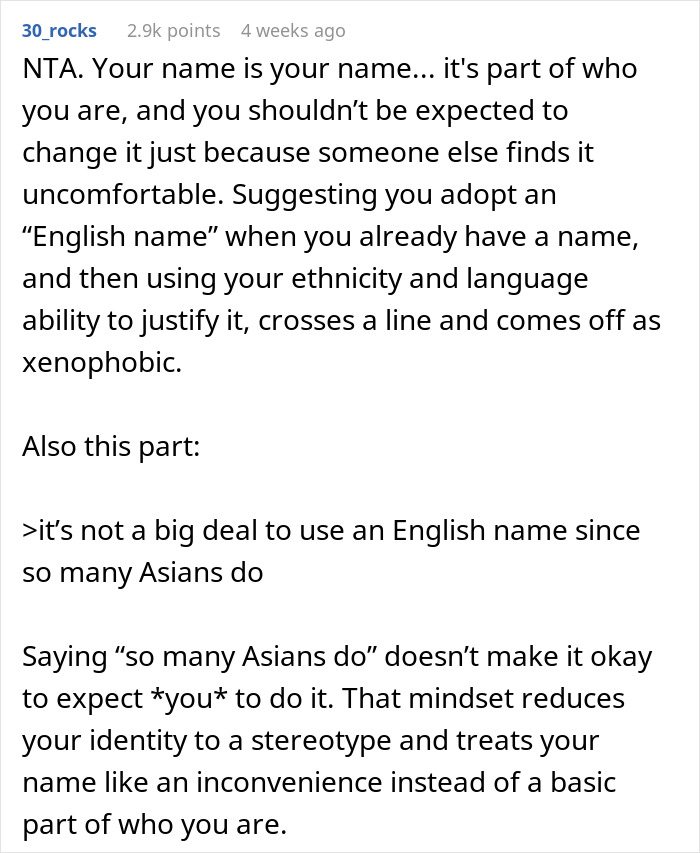
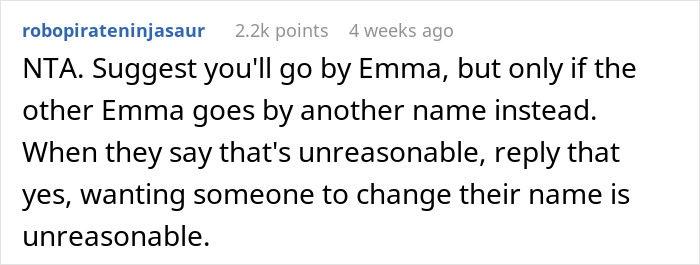
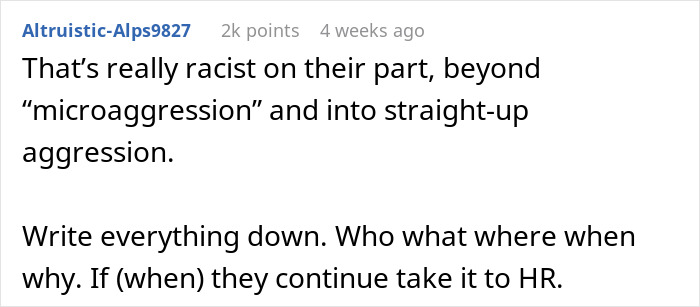
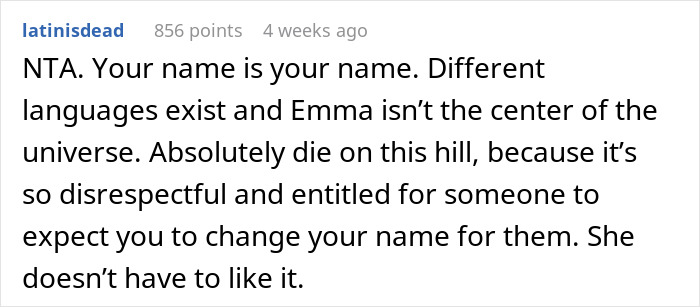
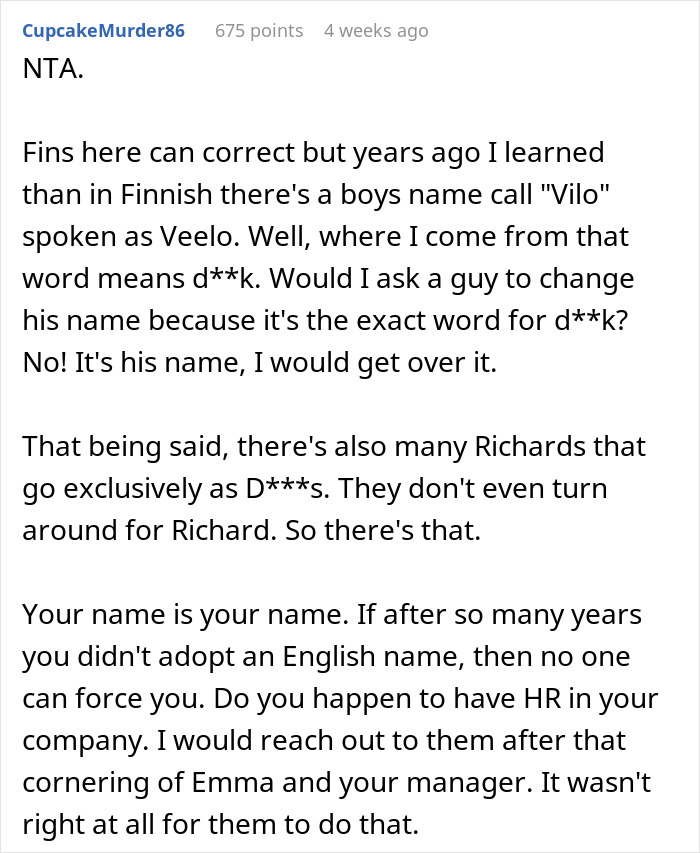
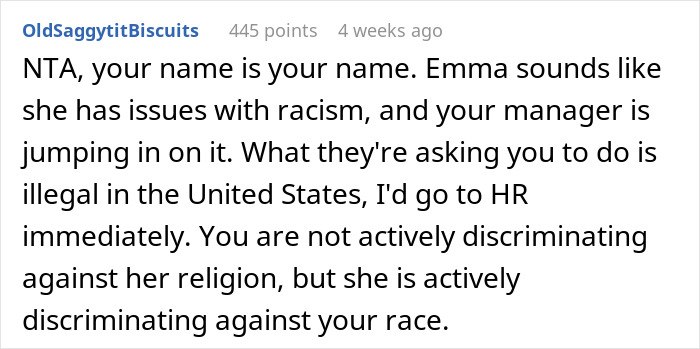
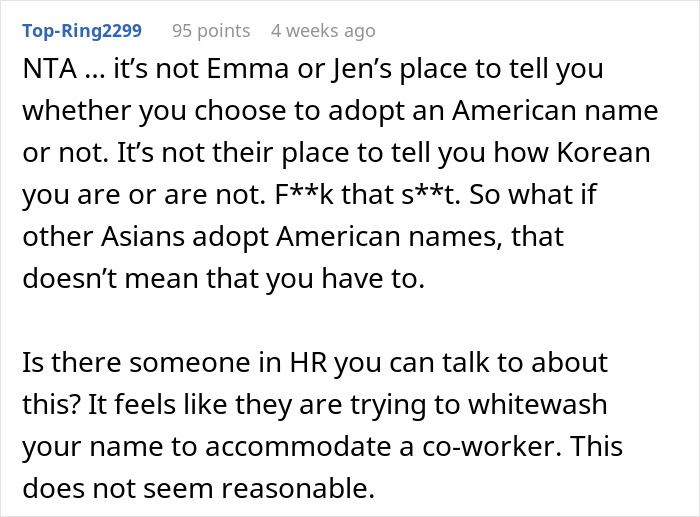
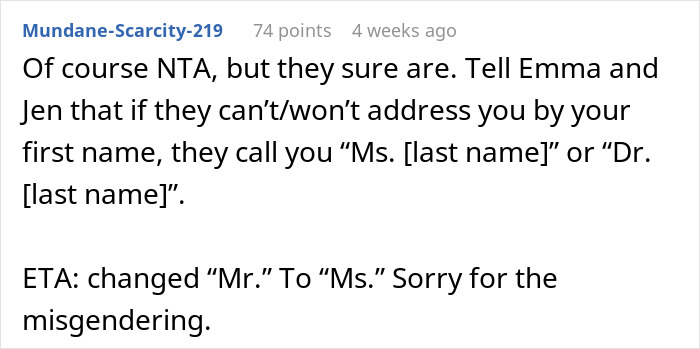
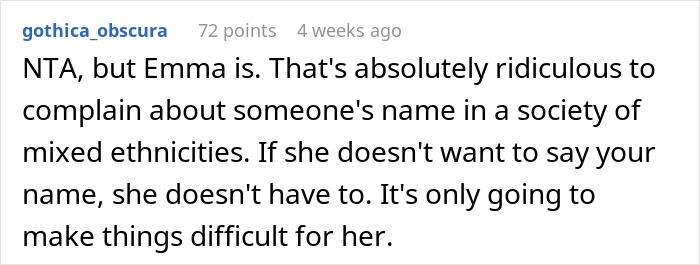
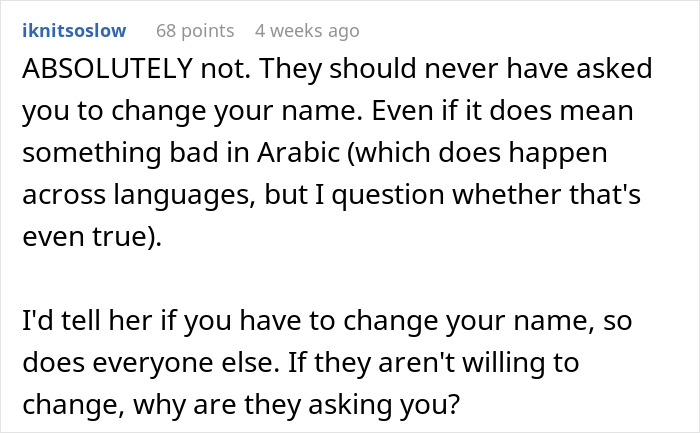
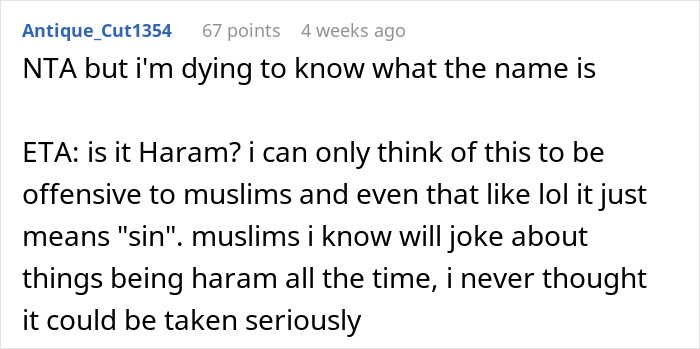
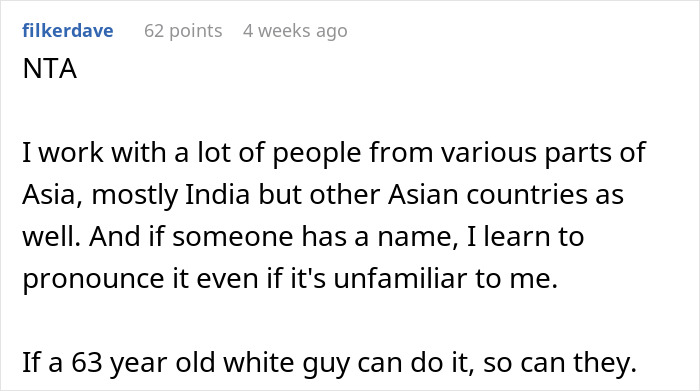
This Korean woman faced drama because of her non-English name. When a Muslim coworker complained to a manager that her Korean name means something offensive in her religion, the woman was asked to either use an English version of her name or choose a nickname while at work. Feeling that this isn’t a reasonable ask, the woman decided to check with people on the internet.
Image credits: unsplash (not the actual photo)
Image credits: freepik (not the actual photo)
Image credits: throwawayrella
Image credits: freepik (not the actual photo)
“What’s in a name?”, Shakespeare asked in Romeo & Juliet. Turns out, a lot. We might think that a name is just a sound and word we use to call others. But, in reality, names come with a lot of bias, and it’s most frequently racial.
Many children of immigrants can attest to that. Whether they live in the U.S., the UK, Canada, Australia, or any other English-speaking country, people with non-English names often have to anglicize them in order to fit in with the general public.
In 2004, a study found that job applicants with “white-sounding” names would get 50% more callbacks than African-American ones. Recent research from 2024 reiterated that by finding that employers favor white applicants over black ones by 24% even for entry-level positions.
A 2011 study tested this theory in Canada with Chinese, Indian, Pakistani, and even Greek names. The researchers noticed a similar trend: employer contact falls by 4.4% when the applicant’s name doesn’t sound English, even if they have the same education and experience that applicants with English-sounding names have.
Image credits: pexels (not the actual photo)
Immigrants and foreigners adopting an English name has become so normalized that people often even expect it. And while I myself have many times ordered coffee under the guise of “Jenny” or a “Katy” so the barista doesn’t botch my name, being asked to do so in a professional environment can feel discriminatory.
Historically, those who immigrated to the U.S. often changed their names to the most English-sounding names to accommodate English-speakers who couldn’t pronounce them properly. They would also have a better chance at economic success: many felt that an angliziced name would appeal better to customers.
This was true to immigrants from many different countries: Eastern Europe, Italy, Asia, and even Ireland. Some research suggests that 33% of U.S. immigrants changed their names within the 10 years of their arrival.
Image credits: unsplash (not the actual photo)
Asian immigrants often bore the brunt of the discrimination. The Chinese who immigrated into the U.S. early often faced lynching by mobs, racist ideologies like the “Yellow Peril”, and immigration bans. The Japanese were targeted also, as approximately 120k Japanese Americans were sent to concentration camps during WWII.
Catherine Ceniza Choy, a professor of Asian American and Asian diaspora studies at the University of California, Berkeley, explained to CNN that, in the 19th and the 20th century, Asians were perceived as “strange, but also inferior, dirty, uncivilized.”
“(Back then) the desire to fit in is also about surviving an overtly racist, hostile society,” she pointed out.
And, just as for immigrants from other countries, newcomers from Asia would choose to assimilate by Americanizing their names. From 1900 to 1930, 86% of boys and 93% of girls had “an American name”, according to the U.S. Census.
However, today, people recognize that demands and pressure to change one’s name are about power and control.
“When you have to disown a major aspect of your identity such as your name as a means to fit into American society, it can feel like you’re cutting off a part of yourself to the world,” a therapist who specializes in multicultural issues, Sam Louie, MA, LMHC, CSAT, writes.

By entering your email and clicking Subscribe, you're agreeing to let us send you customized marketing messages about us and our advertising partners. You are also agreeing to our Privacy Policy.
Thank you! You've successfully subscribed to newsletters!
152Kviews
Share on Facebook
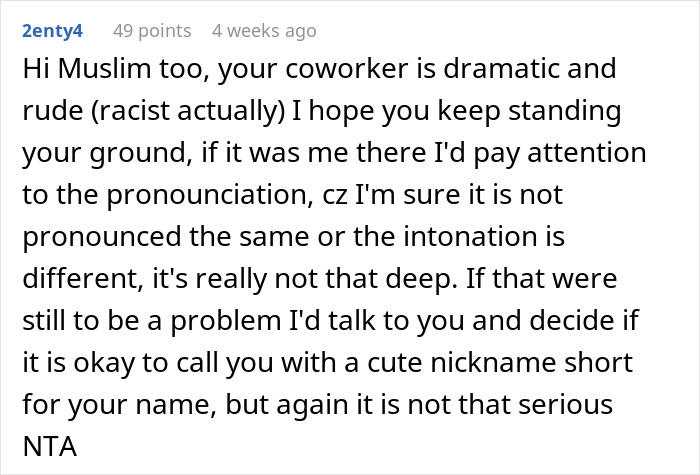
Your religion is your problem. I will respect your right to it but don't expect me to change anything about myself to accomodate your beliefs (excluding of course deliberately offensive behavior). I will not dress differently because your religion might take issue, I will eat whatever I want and I will certainly not change my d**n name.

Not to mention that Emma and Jen are both disrespecting OP's entire culture and ethnicity by demanding she change her name or go by an "English name". And I'm sure OP used a fake name for "Emma", but I would chortle so hard if OP also responded to them by demanding that "Emma" change HER name to something more in-line with her own religion, since she's so devout. If Emma's name is "English", isn't she offending her religion by NOT having a super-Muslim name like Khadijah or Maryam? >:D
Load More Replies...
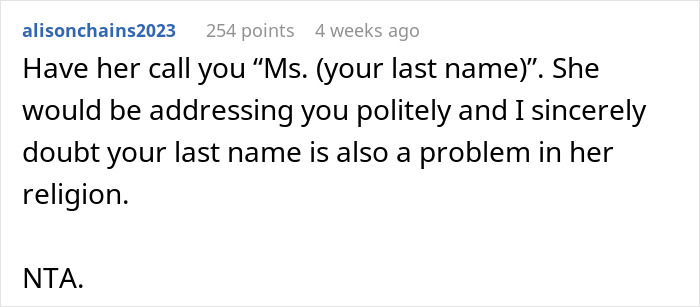
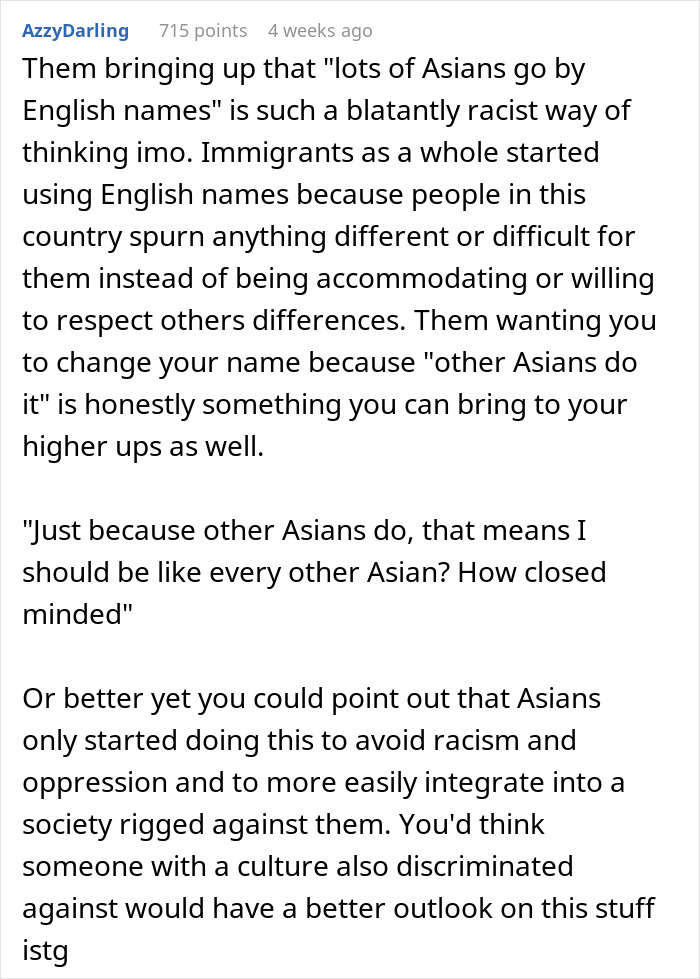
The reason why "loads of Asians use European names" is thoroughly racist anyway, so not a brilliant excuse. I do love the "Ms Surname" solution though.

It's not necessarily racism, it's just people trying to fit into the new country and culture they live in. If I moved to Japan or something I would probably give my kids a Japanese name so they fit in better. I moved to that culture for a reason - to join that culture. Not to try and make that culture fit me, the outsider.
Load More Replies... "This means something bad/whatever in my religion" => Automatic that's a you problem, not a me problem.
Your religion is your problem. I will respect your right to it but don't expect me to change anything about myself to accomodate your beliefs (excluding of course deliberately offensive behavior). I will not dress differently because your religion might take issue, I will eat whatever I want and I will certainly not change my d**n name.
Not to mention that Emma and Jen are both disrespecting OP's entire culture and ethnicity by demanding she change her name or go by an "English name". And I'm sure OP used a fake name for "Emma", but I would chortle so hard if OP also responded to them by demanding that "Emma" change HER name to something more in-line with her own religion, since she's so devout. If Emma's name is "English", isn't she offending her religion by NOT having a super-Muslim name like Khadijah or Maryam? >:D
Load More Replies... The reason why "loads of Asians use European names" is thoroughly racist anyway, so not a brilliant excuse. I do love the "Ms Surname" solution though.
It's not necessarily racism, it's just people trying to fit into the new country and culture they live in. If I moved to Japan or something I would probably give my kids a Japanese name so they fit in better. I moved to that culture for a reason - to join that culture. Not to try and make that culture fit me, the outsider.
Load More Replies... "This means something bad/whatever in my religion" => Automatic that's a you problem, not a me problem.







 No fees, cancel anytime
















56
106