Get Premium
Dark mode theme is available exclusively for premium users. Learn more about the benefits of subscribing.
No fees, cancel anytime.

 Dark Mode Ad-Free Browsing Unlimited Content
 Ad-Free Browsing Unlimited Content Dark Mode
Join 1.2 million Panda readers who get the best art, memes, and fun stories every week!

Substance dependance recovery is often viewed as a clear turning point, and I mean, why not? It’s a moment when someone begins rebuilding their life after years of struggle. For those who reach long-term sobriety, milestones like anniversaries are commonly seen as proof of resilience and change.
However, recovery does not happen in isolation. While sobriety marks a major personal accomplishment, its effects extend to family members who may have experienced years of instability, hurt, or separation. Today’s Original Poster (OP) found himself in this position when he refused to attend his mother’s 15-year sobriety celebration.
More info: Reddit
Image credits: The Yuri Arcurs Collection / Freepik (not the actual photo)
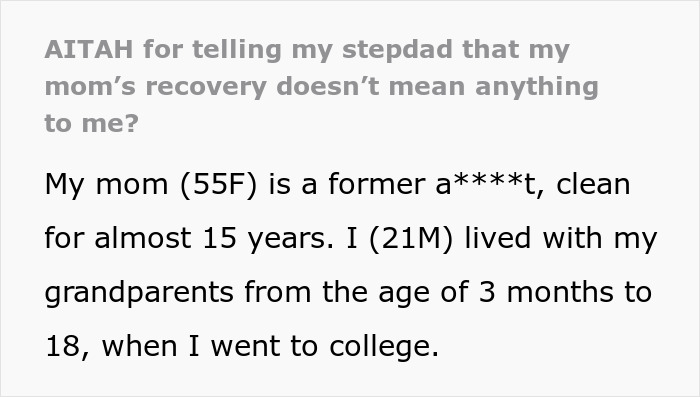
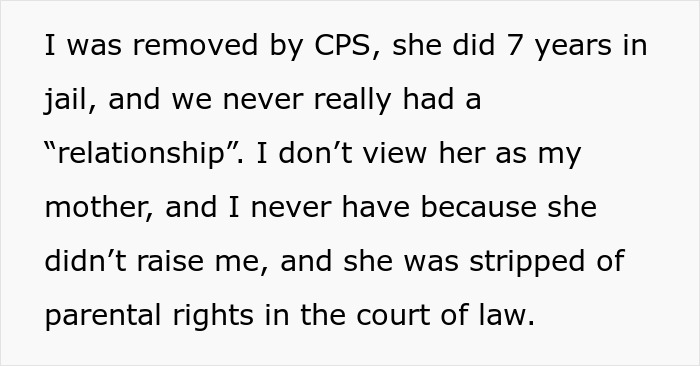
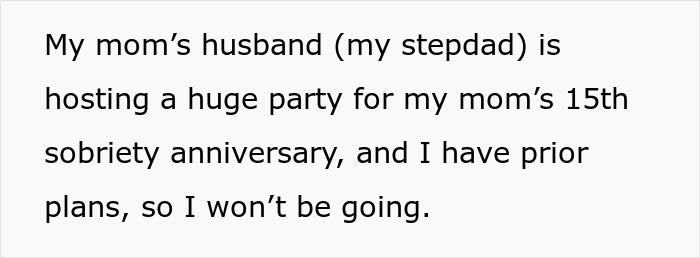

Image credits: prostooleh / Freepik (not the actual photo)
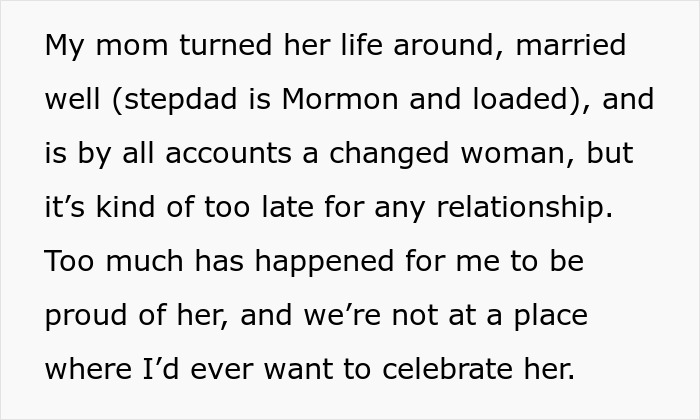
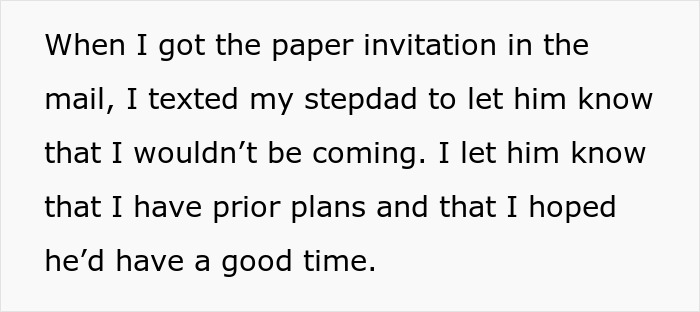
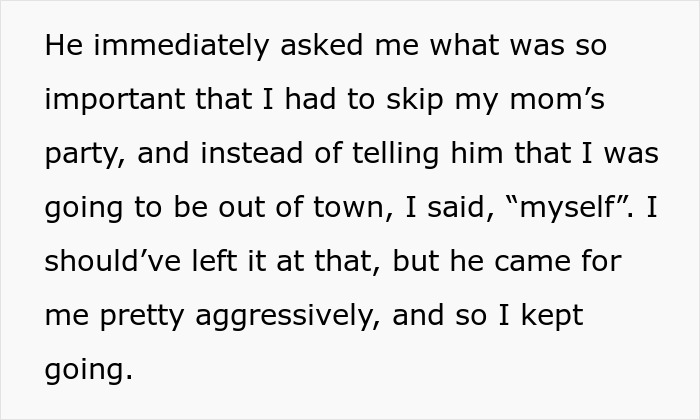
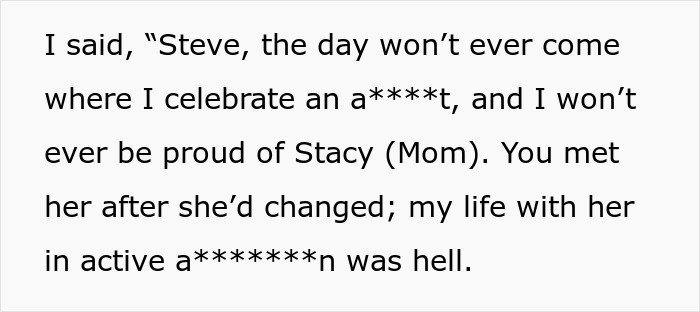
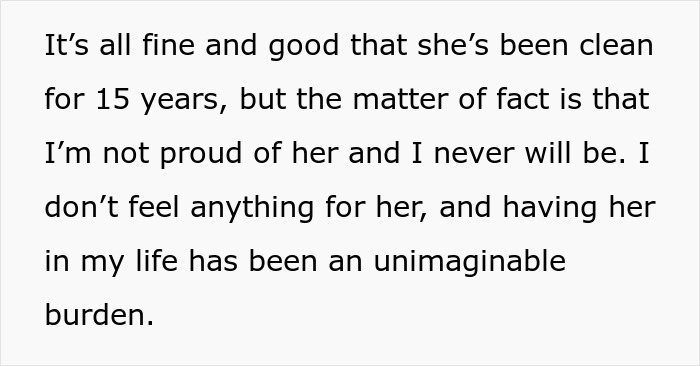
Image credits: New Africa / Freepik (not the actual photo)
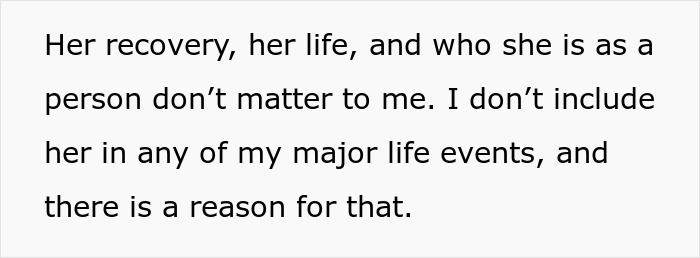
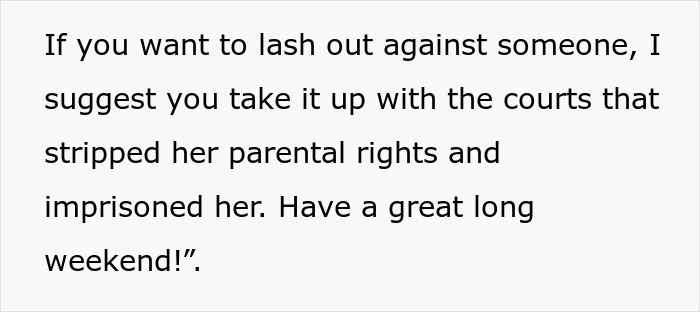
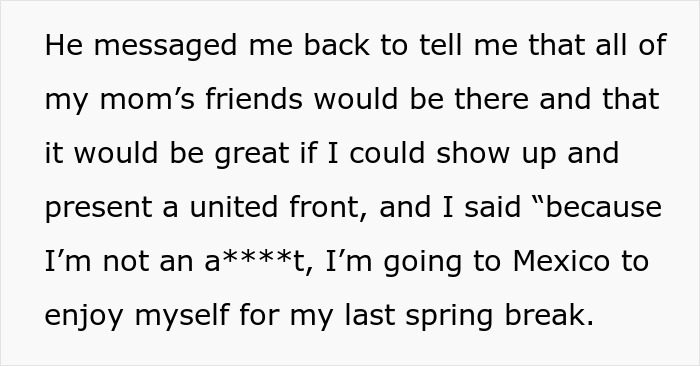
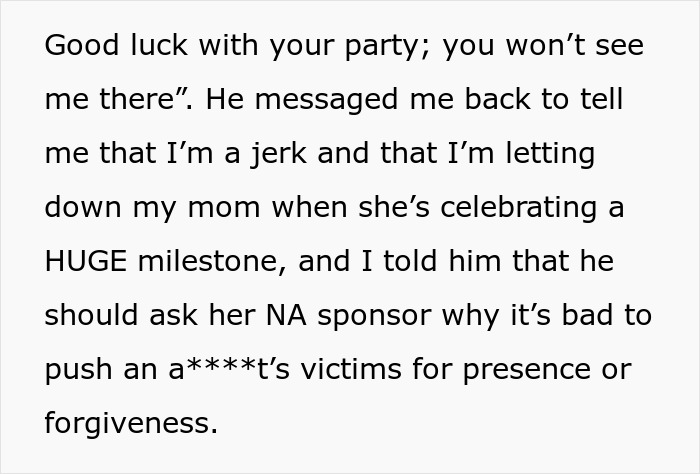

Image credits: neededathrowawayyy
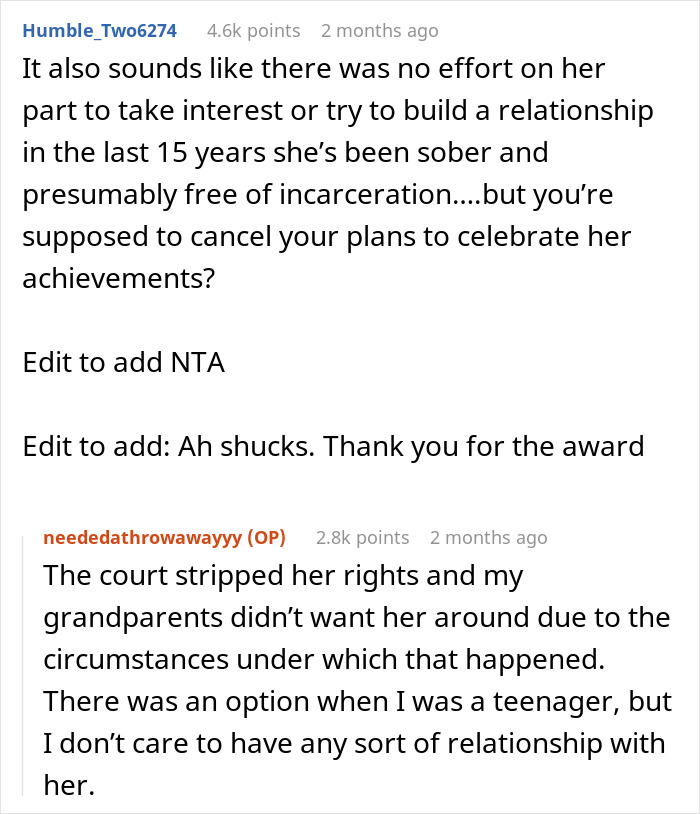
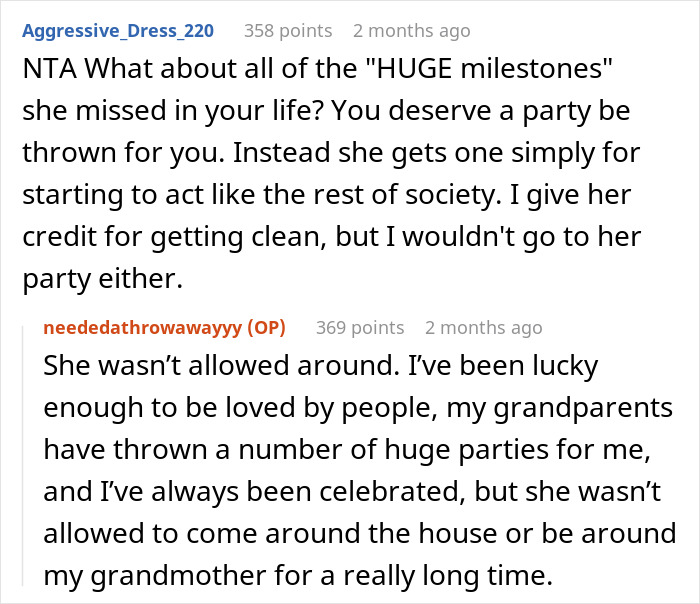
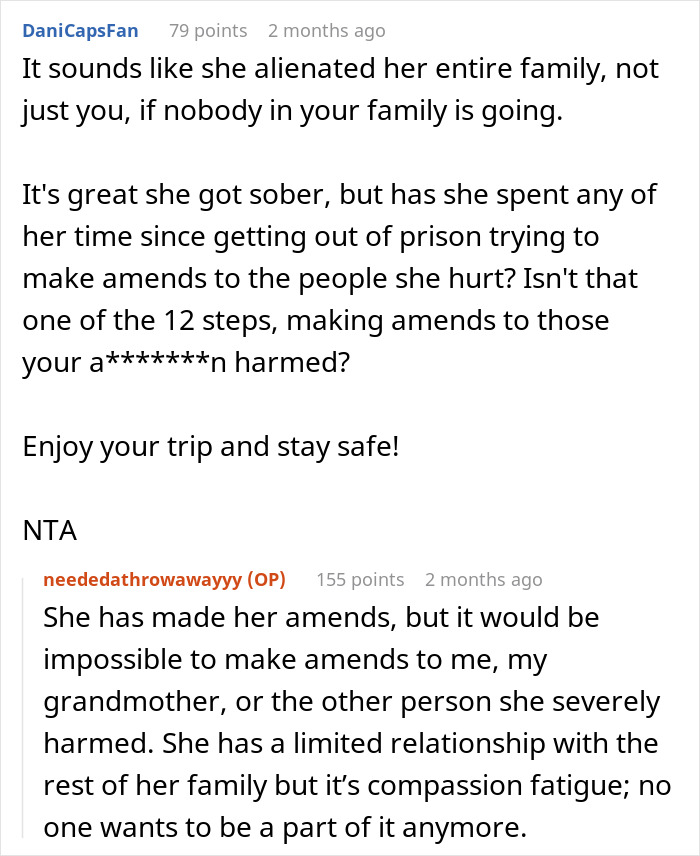
The OP shared that he was removed from his mother’s care as a baby due to her substance dependance and was raised entirely by his grandparents. His mother also served time in prison and lost her parental rights. While she eventually turned her life around, those early years left a permanent imprint. Years later, his mother set out to celebrate 15 years of sobriety, and her husband planned a large party to honor the occasion.
However, the OP noted that he wouldn’t go because he had made plans prior. So, when he received the invitation, he sent a message to his stepfather letting him know that he wouldn’t be there. When the stepfather asked what was so important, the OP made it clear that he was going out of town, but that didn’t sit well with him.
The OP then further made it clear that he didn’t feel pride for his mother’s recovery neither did he see it as something to celebrate. From his perspective, her sobriety didn’t erase the damage done during his childhood. Despite that, the stepfather urged him to “show up and present a united front“, and the OP insisted that he was going out of town to have a good time for himself.
The stepfather accused him of being a heartless jerk and for letting his mother down instead of celebrating such a huge milestone. He also accused him of dehumanizing her, which left him wondering if he was wrong for making a choice the same way his mother had made her choice years prior.
Image credits: lucigerma / Freepik (not the actual photo)
In situations where an adult child declines to attend a parent’s sobriety celebration, research helps explain why emotions and boundaries can remain complicated long after recovery. According to HelpGuide, children removed from their biological parents due to substance dependance, maltreatment, or neglect may continue to face emotional and psychological challenges even after being placed in stable homes.
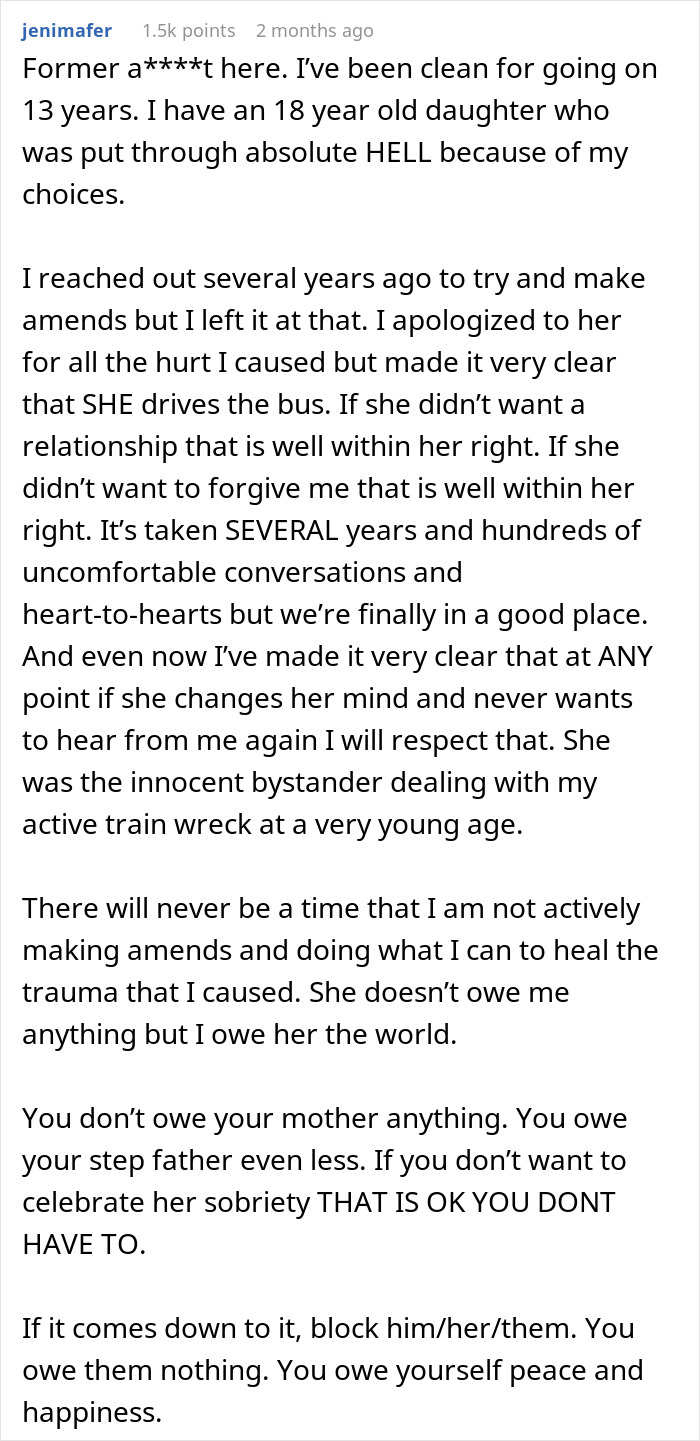
Building on this, Ashland Source explains that sobriety itself is a major milestone, but it does not automatically repair family relationships. Reconciliation is described as a separate process that requires rebuilding trust, establishing boundaries, and working through unresolved emotions like fear, resentment, and betrayal.
Similarly, Brazen Hub highlights that adult children of parents with substance dependance often carry lasting trust injuries and trauma-related responses, even when the parent is now sober. These can manifest as reluctance to reconnect or maintain close contact, not necessarily as rejection of the recovery itself, but as a protective response to earlier instability.
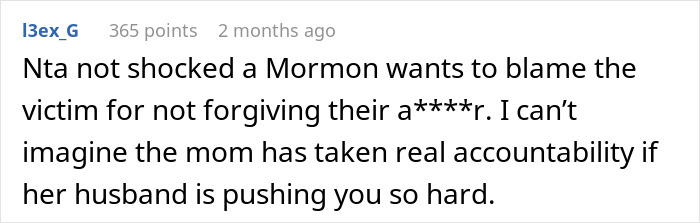
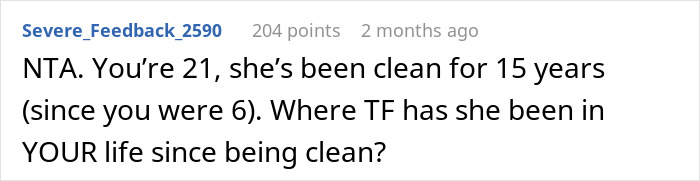
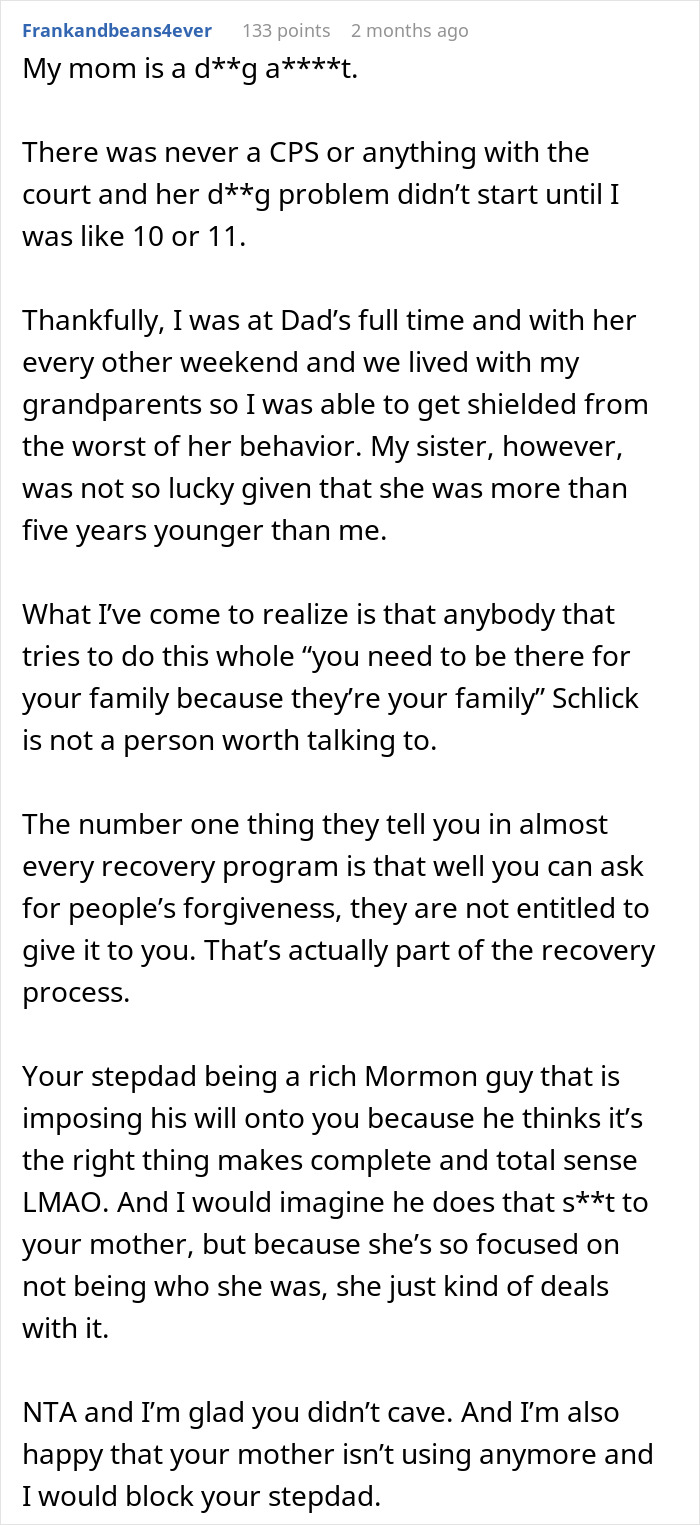
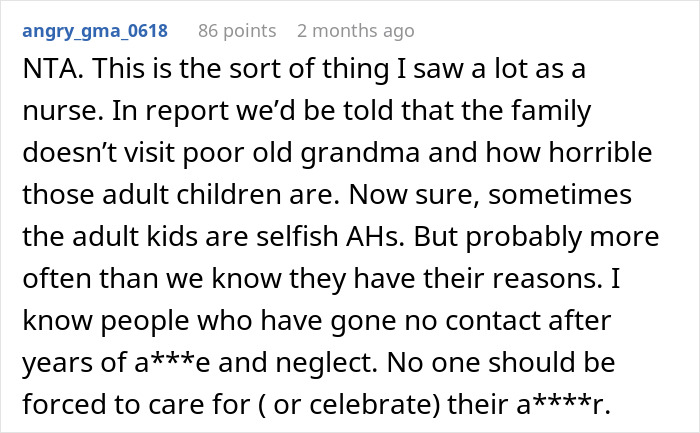
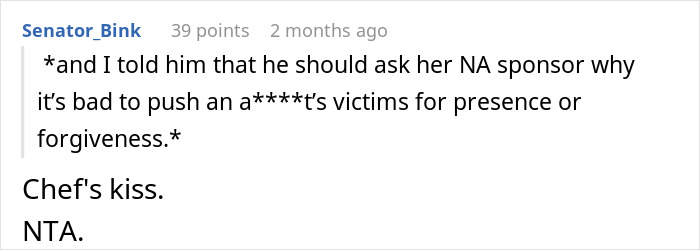
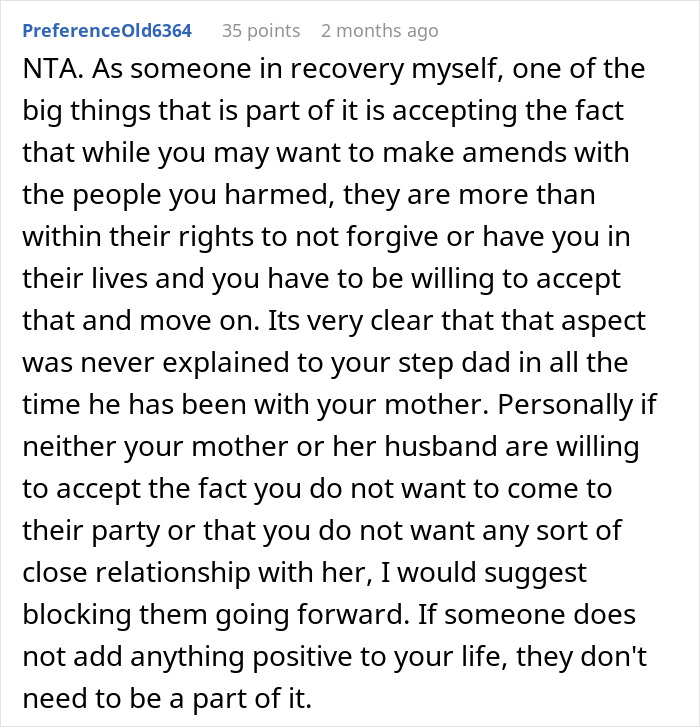
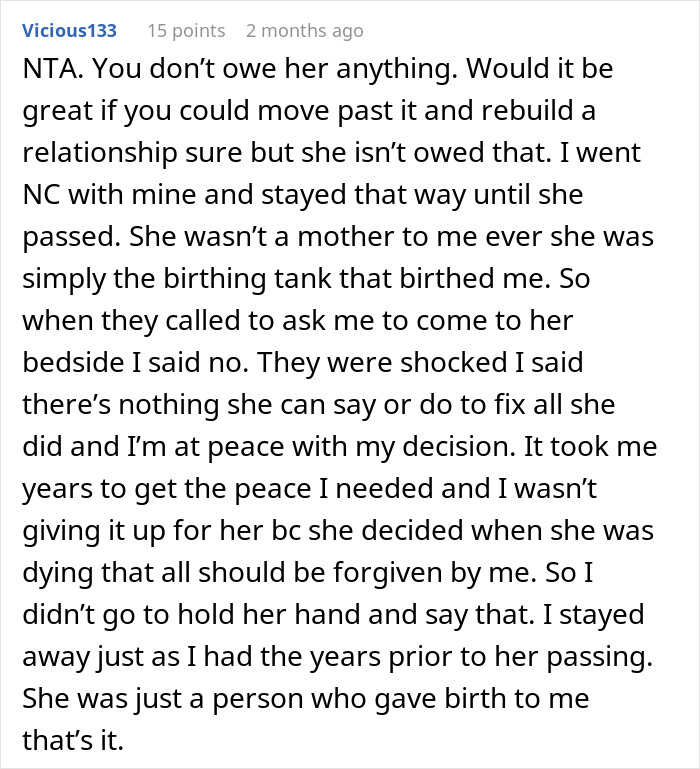
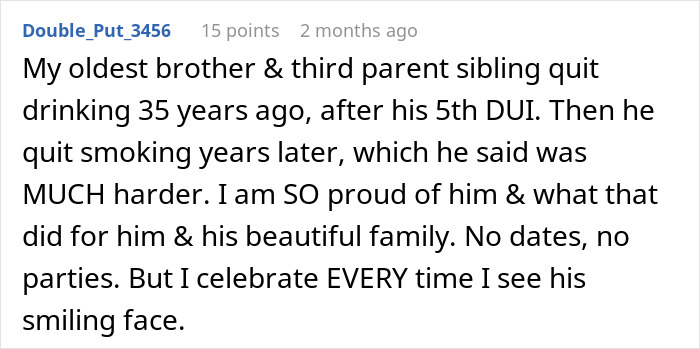
Netizens were strongly supportive of the OP, with many agreeing that attending the celebration should not be an obligation given the history. What do you think about this situation? Is the OP justified in keeping distance, or should he have attended the celebration anyway out of respect for recovery? We would love to know your thoughts!














By entering your email and clicking Subscribe, you're agreeing to let us send you customized marketing messages about us and our advertising partners. You are also agreeing to our Privacy Policy.
Thank you! You've successfully subscribed to newsletters!


The dad is Mormon and all these cults have this thing in common...The weaponized guilt and forgiveness to get more cultists. "You can steal, ra pe and mur der all you want, but ALL IS FORGIVEN if you convert and do X,Y and Z for insert [cult leaders here]" The guy needs a book to tell him how to act human and he dares guilt trip op...

His mother sounds like what is referred to as a "dry drunk" in 12 step fellowships. Somebody who has stopped drinking and/or using but still acts like they're in active a*******n by being angry, resentful, having a victim mentality etc. I've been in recovery for nine years. As part of the 12 step programmes, people have to do a step nine. Step nine is about making amends to those we harmed in active a*******n, unless making the amends would cause further harm, e.g., contacting an ex partner to apologise when there was a***e in the relationship probably isn't a good idea. When you do a step nine you also have to be prepared for the fact that the person may not want your amends. The person we're apologising to is under no obligation to accept our apology, because you aren't owed forgiveness. If you try to force forgiveness then it's not a real amends because it means you're not doing it to right past wrongs, but rather to try and make yourself feel better.

I'd like to point out, to give her the benefit of the doubt... We never heard anything from her. It was not OPs mom pushing him, but her husband
Load More Replies...
15 years sober is plenty of time to try to make things right. Idk if the grandparents would have blocked this, but after even 3-5 years sobriety an effort should have been made. That way she has some time behind her if sobriety to show them she is serious about getting back in her kid’s life. OP’s 100% right in their feelings and I was coming here thinking OP was going to be a 21 year old brat who needed to suck it up, but absolutely NTA after reading the post.

The dad is Mormon and all these cults have this thing in common...The weaponized guilt and forgiveness to get more cultists. "You can steal, ra pe and mur der all you want, but ALL IS FORGIVEN if you convert and do X,Y and Z for insert [cult leaders here]" The guy needs a book to tell him how to act human and he dares guilt trip op...
His mother sounds like what is referred to as a "dry drunk" in 12 step fellowships. Somebody who has stopped drinking and/or using but still acts like they're in active a*******n by being angry, resentful, having a victim mentality etc. I've been in recovery for nine years. As part of the 12 step programmes, people have to do a step nine. Step nine is about making amends to those we harmed in active a*******n, unless making the amends would cause further harm, e.g., contacting an ex partner to apologise when there was a***e in the relationship probably isn't a good idea. When you do a step nine you also have to be prepared for the fact that the person may not want your amends. The person we're apologising to is under no obligation to accept our apology, because you aren't owed forgiveness. If you try to force forgiveness then it's not a real amends because it means you're not doing it to right past wrongs, but rather to try and make yourself feel better.
I'd like to point out, to give her the benefit of the doubt... We never heard anything from her. It was not OPs mom pushing him, but her husband
Load More Replies... 15 years sober is plenty of time to try to make things right. Idk if the grandparents would have blocked this, but after even 3-5 years sobriety an effort should have been made. That way she has some time behind her if sobriety to show them she is serious about getting back in her kid’s life. OP’s 100% right in their feelings and I was coming here thinking OP was going to be a 21 year old brat who needed to suck it up, but absolutely NTA after reading the post.




















 No fees, cancel anytime









46
42