Get Premium
Dark mode theme is available exclusively for premium users. Learn more about the benefits of subscribing.
No fees, cancel anytime.

 Dark Mode Ad-Free Browsing Unlimited Content
 Ad-Free Browsing Unlimited Content Dark Mode
Join 1.2 million Panda readers who get the best art, memes, and fun stories every week!

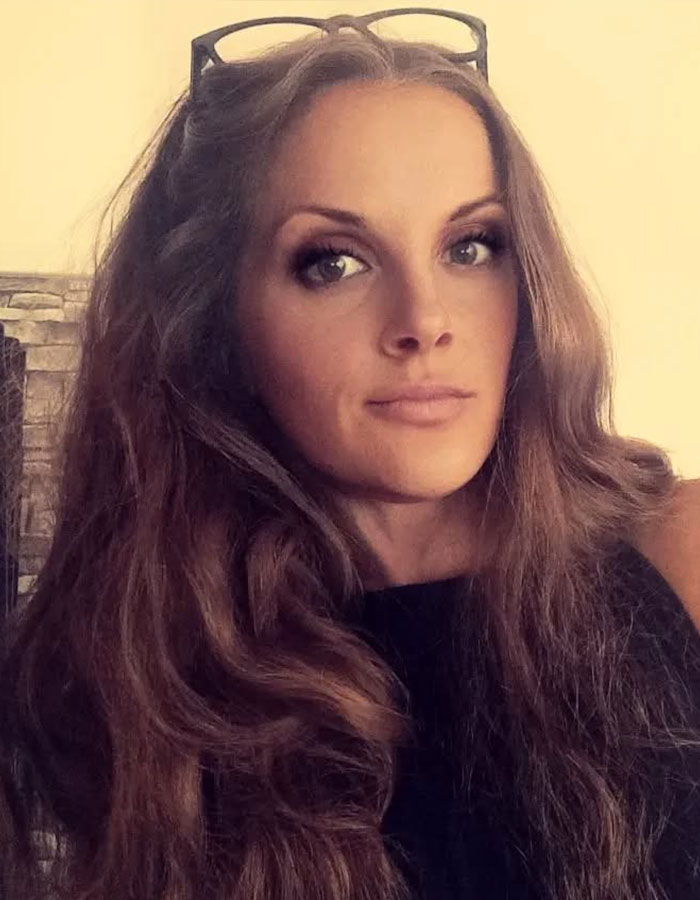
Thirty-two-year-old Charlotte Chapman-Hart experienced ear-splitting headaches from the age of thirteen, leading to multiple incorrect dietary disorder-related diagnoses.
It would take eight years before doctors discovered that she had cysts on her backbone and her brain was pressing down on her spinal column.
Despite the pain, she continued dancing ballet during this period and graduated from university with a health and human sciences degree.
Image credits: c_chapha
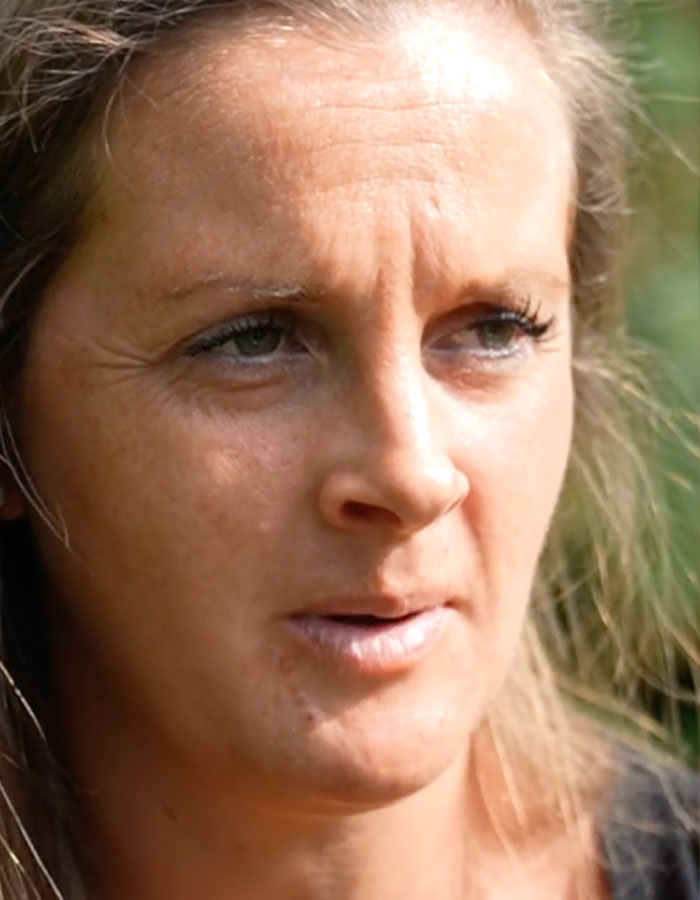
“It felt like an axe down the middle of my head,” the United Kingdom’s BBC reported her saying.
“Sneezing and coughing created a huge amount of pain, I felt like my head was going to explode.”
Throughout the harrowing ordeal, her mother would take her to doctors and advocate for her daughter, telling them: “Charlotte will only complain if she’s really, really in pain.”
But this explanation fell on deaf ears: “None of that was enough for people to do some diagnostic investigation.”
Image credits: Getty Images/Unsplash
Because Chapman-Hart refused to let the disorder affect her lifestyle and she continued dancing, medical professionals blamed her ballet.
“Any time that I was in pain it was like, ‘it’s because you dance, it’s because of what you put your body through,’” she recalled.
One of the cruelest challenges for Chapman-Hart was health professionals treating her like she was mentally or cognitively challenged.
“I think the hardest thing I’ve ever had to face is trying to convince people that I am of sound mind, and that what I’m telling you is the absolute truth,” she said.
This made it difficult for her to convey her suffering to physicians.
“I told them that I’ve never had an issue with eating. I’m just not hungry. Things don’t taste the same.”
But doctors refused to think out of their collective medical box and all of them addressed Chapman-Hart’s suffering incorrectly.
Image credits: BBC
Then at the age of 21, in 2014, a medico made a breakthrough. Chapman-Hart described the moment the penny dropped, saying:
The Doctor “turned the monitor round and showed us the scans.”
“It was like, ‘This is what you’ve got, this is how you spell it, this is what we’ve got to do’, and having just graduated, it was just like, ‘Right, park that for a moment, we’re going to cut your head open.’”
She had been diagnosed with Chiari malformation type 1, a condition where the brain pushes down on the spinal column, and syringomyelia, the formation of growths on said spinal column.
Image credits: BBC
Everything else in Chapman-Hart’s life was put on the back burner while surgeons prepped for an emergency brain operation. For Chapman-Hart, the diagnosis and the purported solution did little ease her mind.
“I was really scared about the nature of it and I did genuinely have a fear of, am I going to survive this?”
A week after she learned about her disorder, she successfully underwent the brain operation which relieved the pressure by removing a piece of the skull.
By 2015, her life had regained some semblance of normality. But it would not last.
Image credits: BBC
Chapman-Hart was forced to stop teaching ballet due to overwhelming head, neck and back pain in the same year.
In November 2018, she started getting thinner again, and by January of the new year, she had shed a third of her body weight.
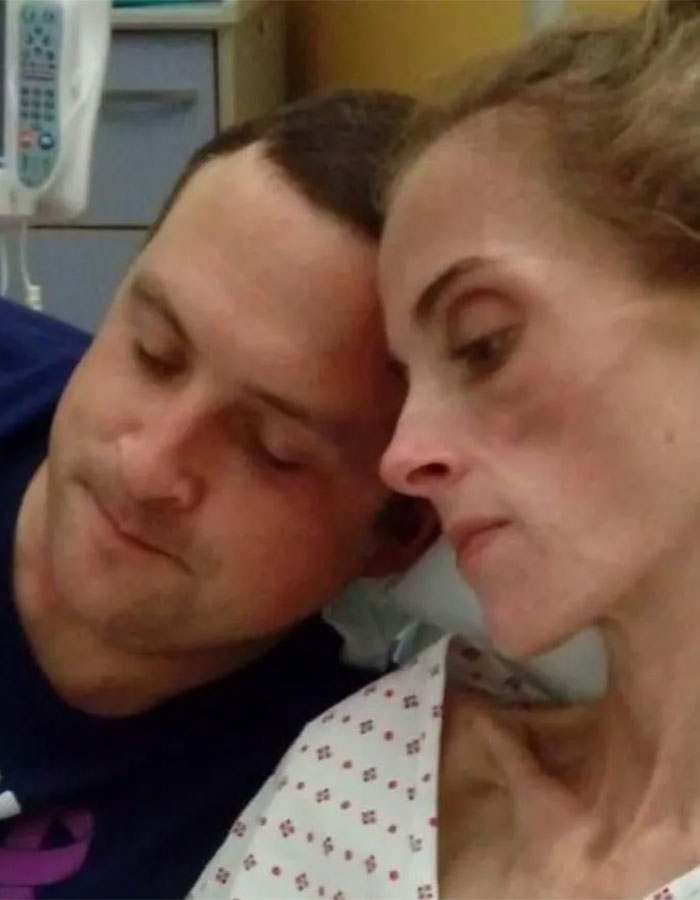
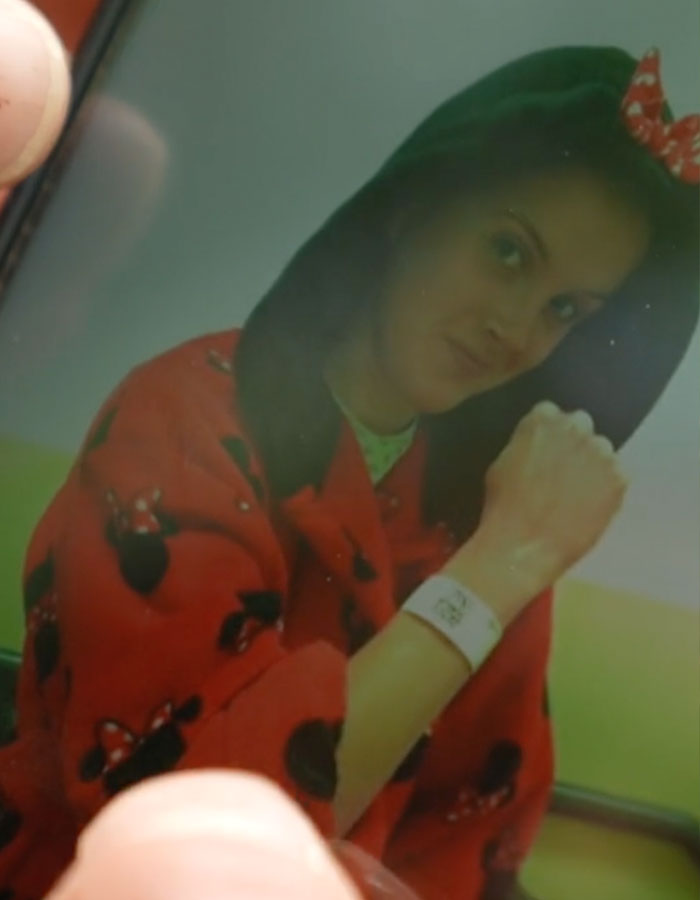
In 2019, she was admitted to hospital, this time because her organs were failing.
Leading up to the hospitalization, she had, without her knowledge, been prescribed an epilepsy medication for which weight loss was a known side effect.
Also, the medical bloc had failed her once more: the doctor who prescribed the meds did not check up on her as was required.
Image credits: c_chapha
Chapman-Hart describes her treatment during her three-month internment at the medical facility as “domineering” and “dehumanizing”.
Her caregivers allegedly threatened to force treatments on her without consent, which she claims caused her lasting anxiety and PTSD.
“I felt like I was alone and had a lot of people and things to fear,” the outlet reported her saying.
“All of which were beyond my control to effect. I just felt very vulnerable.”
Chapman-Hart would only learn that the medication was to blame for sudden weight loss in 2020.
Image credits: c_chapha
It appears the now 32-year-old is still not out of the woods. In 2023, she suffered a cardiac arrest and was resuscitated by her neighbors.
While the reason for the episode remains unknown (at least to Chapman-Hart), she believes that a significant part of her medical problems could have been avoided if doctors had listened to what she was saying.
“There’s been a lack of accountability,” she claimed. And while noting that she did not wish to call out those responsible, there is a lot that can be learned from the experience.
“It’s so that we can learn. There’s no funding for research, but we are research. Our lived experience is research – capture it.”
Chiari malformation type 1 is the most common of the four main variants of the disorder and is usually the result of the skull being too small for the brain, according to Cleveland Clinic.
“If you don’t have enough room in your skull, part of your brain, specifically your cerebellum, will grow downward where there’s extra space in an opening at the base of your skull — called the foramen magnum,” the online web portal notes.
Image credits: Getty Images/Unsplash
According to theAmerican Association of Neurological Surgeons, the condition’s prevalence is less than one in a thousand—and being mostly asymptomatic, when it is diagnosed, it is usually by accident.
Mayo Clinic describes syringomyelia as liquid-filled cysts that form on the spinal column and, in certain cases, grow continuously.
Sometimes it causes pain, sensations of stiffness, and deteriorating strength, and it usually accompanies Chiari.
It further notes that not all cases of syringomyelia require medical intervention.

By entering your email and clicking Subscribe, you're agreeing to let us send you customized marketing messages about us and our advertising partners. You are also agreeing to our Privacy Policy.
Thank you! You've successfully subscribed to newsletters!


"she believes that a significant part of her medical problems could have been avoided if doctors had listened to what she was saying." This would be a fantastic question to have as a poll. How many women had thought this at some point? There is still a systematic bias against female patients. Doctors don't listen.

Very true. My chronic migraines started when I was 15. Almost every doctor I went to tried to blame it on my period or stress. I even had one doctor tell me it was because I was bipolar (which I am) and was simply imagining the pain in order to gain attention because no one actually had 27-30 migraines a month. It wasn’t until I was 25 that I found a migraine specialist in a neighboring state who believed me and with his help, we managed to reduce my migraines to less than 10-13 a month. I’m highly sensitive to barometric pressure changes, so usually changes in the weather trigger my headaches. I’m now 48 with a number of chronic illnesses, and have become a pro at filtering out good doctors who like a puzzle from the lazy ones who are just looking to get patients in and out the door as fast as possible.
Load More Replies...
Doctors are taught to look for the simplest answer to symptoms. But when the simple diagnoses and treatments don't solve the problem, you've got to start looking for different answers. I'm hoping AI will help with this, being able to suggest all possible diagnoses based on symptoms, labs and scans. What a nightmare this woman has been through!

Their different answers tend to be " you are lying or you have a mental problem".
Load More Replies... "she believes that a significant part of her medical problems could have been avoided if doctors had listened to what she was saying." This would be a fantastic question to have as a poll. How many women had thought this at some point? There is still a systematic bias against female patients. Doctors don't listen.
Very true. My chronic migraines started when I was 15. Almost every doctor I went to tried to blame it on my period or stress. I even had one doctor tell me it was because I was bipolar (which I am) and was simply imagining the pain in order to gain attention because no one actually had 27-30 migraines a month. It wasn’t until I was 25 that I found a migraine specialist in a neighboring state who believed me and with his help, we managed to reduce my migraines to less than 10-13 a month. I’m highly sensitive to barometric pressure changes, so usually changes in the weather trigger my headaches. I’m now 48 with a number of chronic illnesses, and have become a pro at filtering out good doctors who like a puzzle from the lazy ones who are just looking to get patients in and out the door as fast as possible.
Load More Replies... Doctors are taught to look for the simplest answer to symptoms. But when the simple diagnoses and treatments don't solve the problem, you've got to start looking for different answers. I'm hoping AI will help with this, being able to suggest all possible diagnoses based on symptoms, labs and scans. What a nightmare this woman has been through!
Their different answers tend to be " you are lying or you have a mental problem".
Load More Replies...
































 No fees, cancel anytime

















28
11