Get Premium
Dark mode theme is available exclusively for premium users. Learn more about the benefits of subscribing.
No fees, cancel anytime.

 Dark Mode Ad-Free Browsing Unlimited Content
 Ad-Free Browsing Unlimited Content Dark Mode
Join 1.2 million Panda readers who get the best art, memes, and fun stories every week!

Everyone makes a bad choice during some point of their lives. Normally, this experience just reinforced why it’s good to have friends and family to help out when times get tough. Of course, if one has repeatedly managed to get themselves into hard times and regularly annoyed the people who might help, things are going to remain tough.
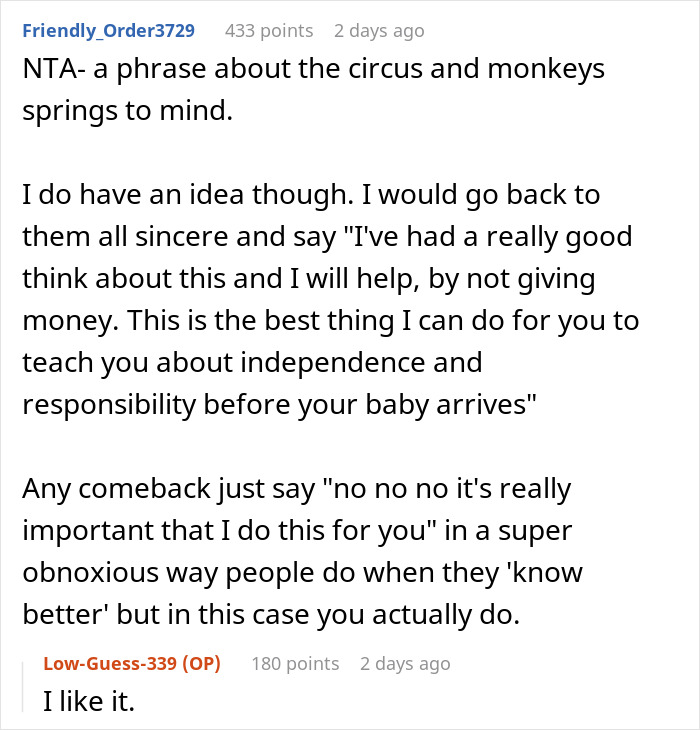
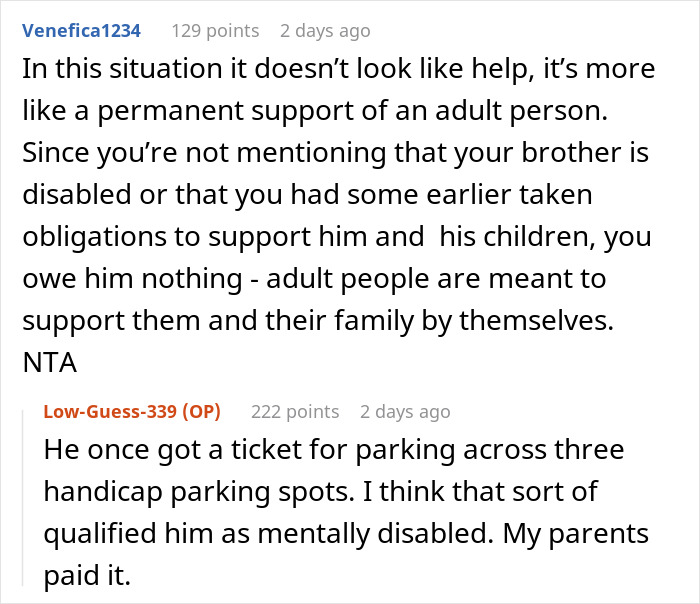
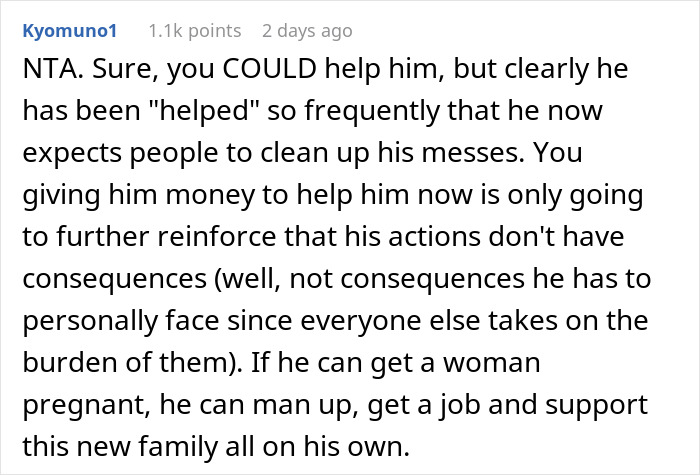
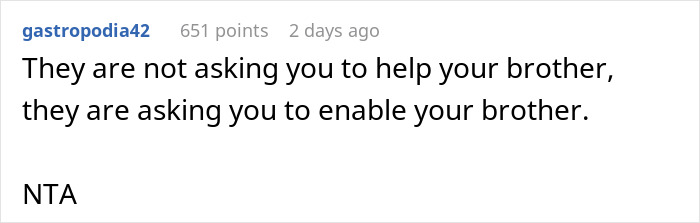
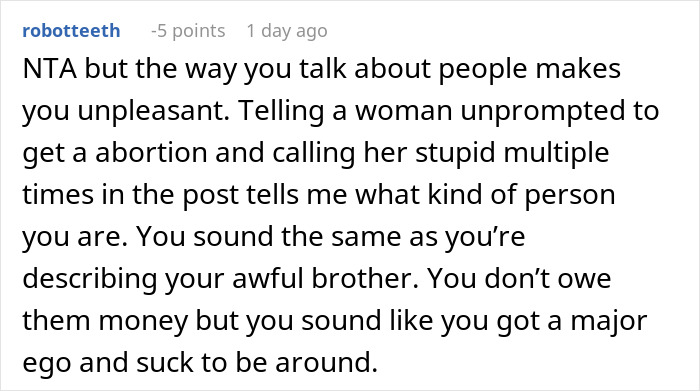
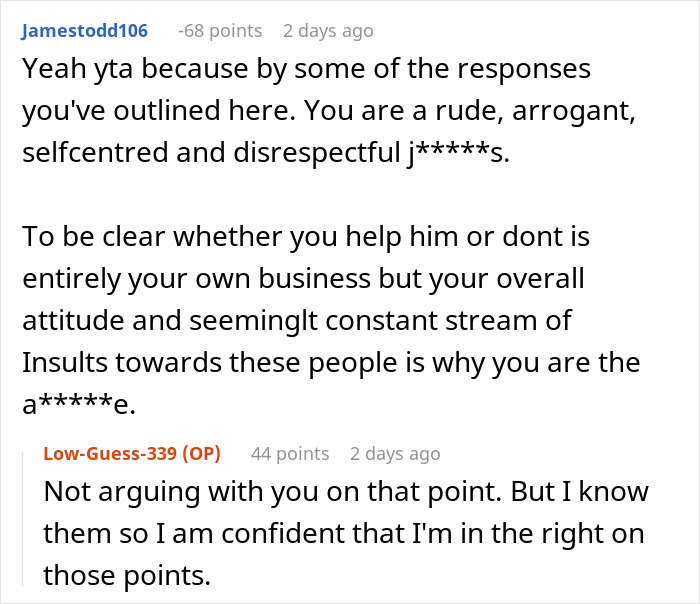
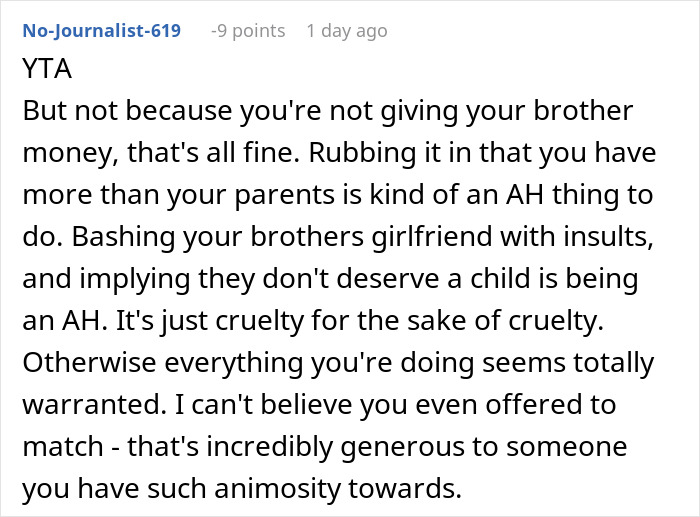
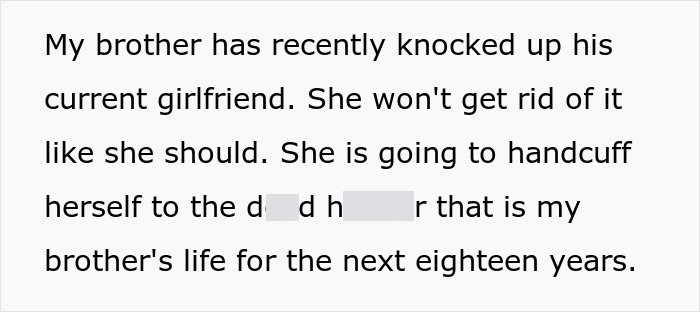
A man asked the internet if he was really wrong for refusing to help his unemployed brother with money for his pregnant girlfriend. When his family threatened to cut him out of their will, he pointed out that he was already wealthier than them. We reached out to the man who made the post via private message and will update the article when he gets back to us.
Image credits: bearfotos / freepik (not the actual photo)
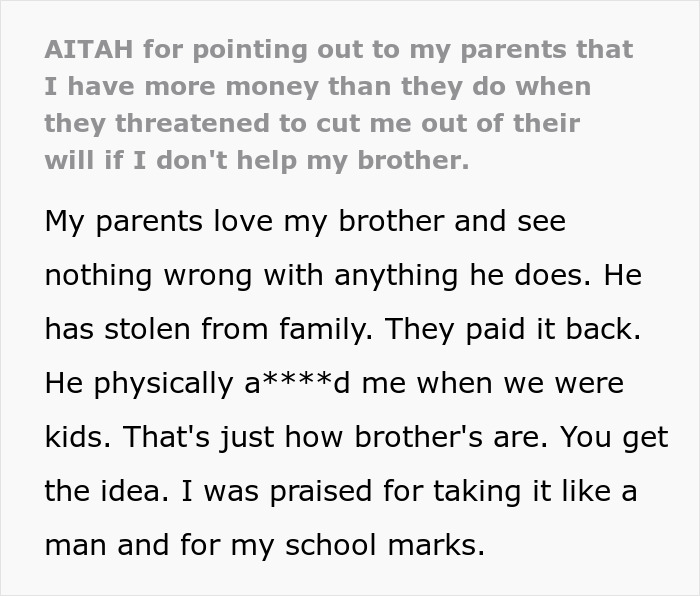
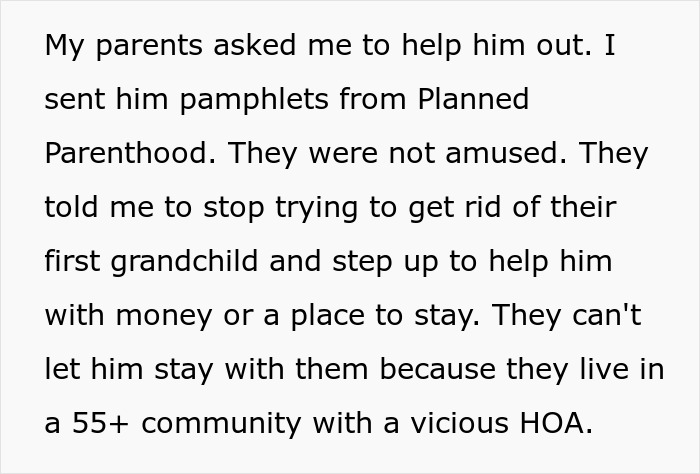
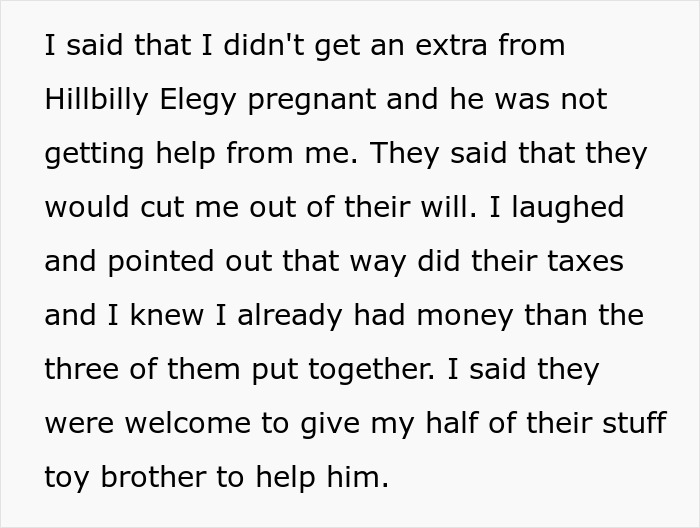
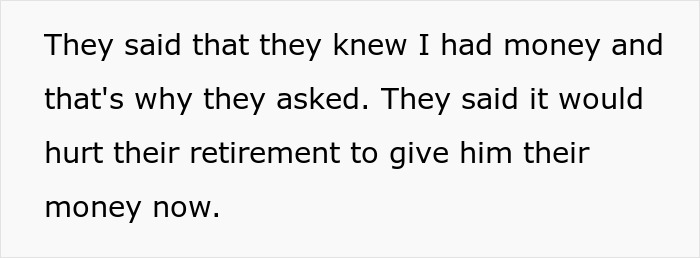

Image credits: stockking / freepik (not the actual photo)
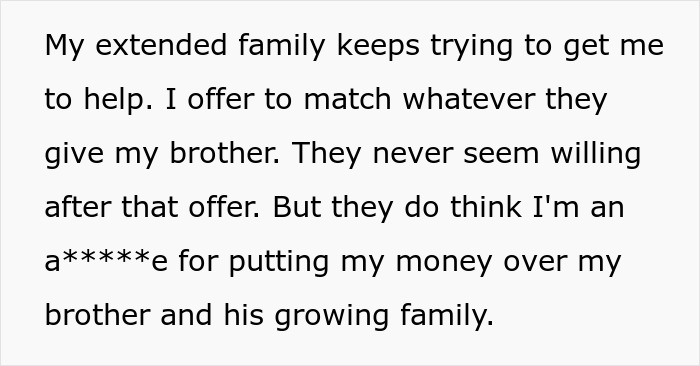
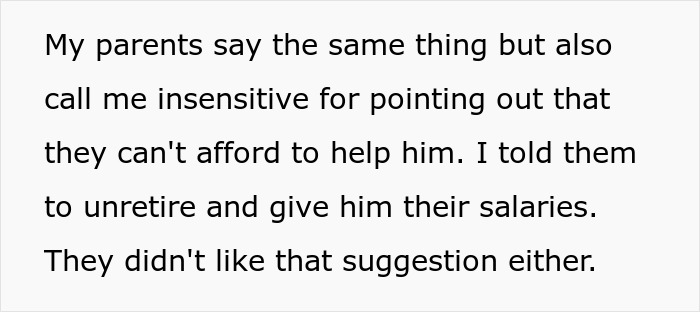
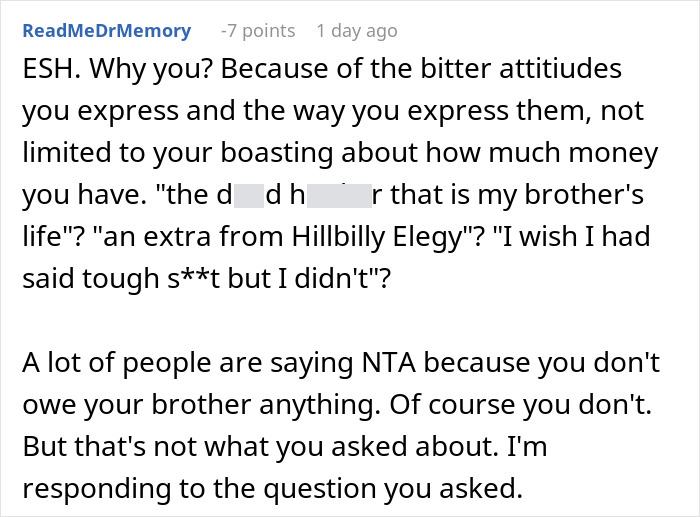
Image credits: Low-Guess-339
Navigating the complex landscape of family discord requires a delicate balance between empathy for shared history and the firm enforcement of personal boundaries. When a family unit has been built on a foundation of enabling problematic behavior, the sudden introduction of financial pressure often acts as a catalyst for long simmering tensions. This specific dynamic where one child is consistently excused for their failures while the other is expected to provide support is a textbook example of dysfunctional family roles. Experts at the American Psychological Association note that healthy families rely on clear communication and equitable treatment to maintain stability. When these elements are missing, the resulting vacuum is often filled by manipulation and resentment.
The situation highlights the phenomenon of the golden child and the scapegoat, a pattern where parents project their hopes onto one child while ignoring the legitimate grievances of the other. Work published by Psychology Today suggests that such patterns often lead to deep seated resentment and a complete breakdown in sibling empathy. For the child who was expected to endure hardship while the other was shielded from consequences, the transition into adulthood brings a necessary but painful shift toward self preservation. This transition is often perceived as coldness by family members who have become accustomed to the status quo of imbalance.
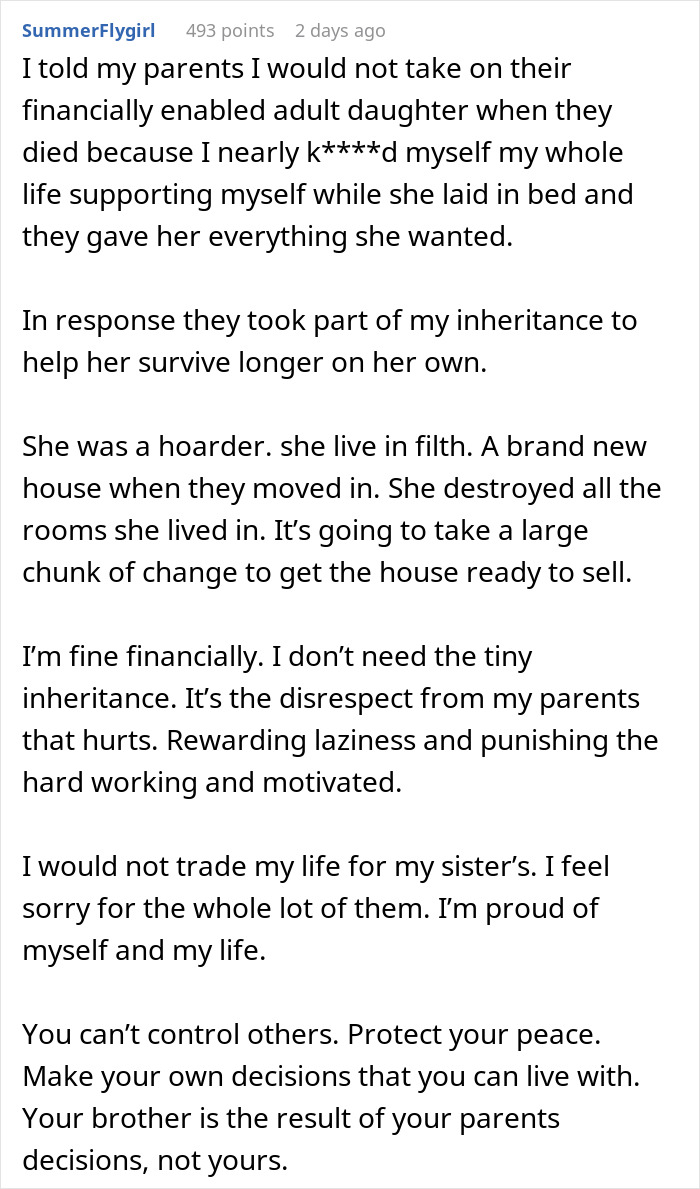
Setting boundaries with family members who have historically ignored personal wellbeing is not just a defensive move but a necessary step for mental health. According to Verywell Mind, establishing limits on financial support or emotional labor is often met with resistance because it disrupts the established system of the family. In cases where a sibling has a history of theft or worse, the expectation of unconditional support is particularly damaging. While the man who made the post might be ultimately within his rights to say no, it’s clear he’s got some unresolved anger towards how his family sees him and his brother.
Image credits: namii9 / freepik (not the actual photo)
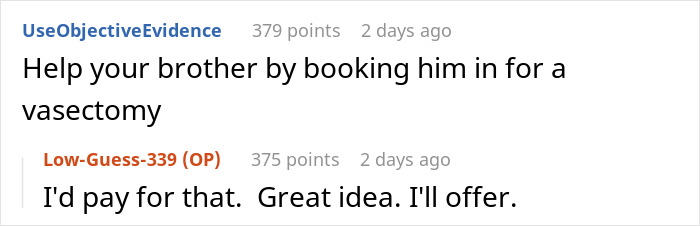
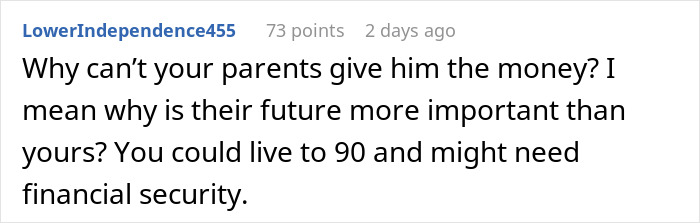
Addressing the issue of parental enabling is equally critical because it prevents the individual from learning from the consequences of their actions. When parents shield a child from the legal or financial fallout of their choices, they essentially stunt that person’s growth and create a cycle of dependency. This often leads to the parents turning to the more successful sibling to fill the gaps that their own enabling created. The Mayo Clinic emphasizes that learning to say no is a vital skill that helps prevent burnout and preserves one’s own financial and emotional resources. While the parents may view this refusal as a lack of loyalty, it is actually an invitation for the struggling family member to finally practice adult accountability.
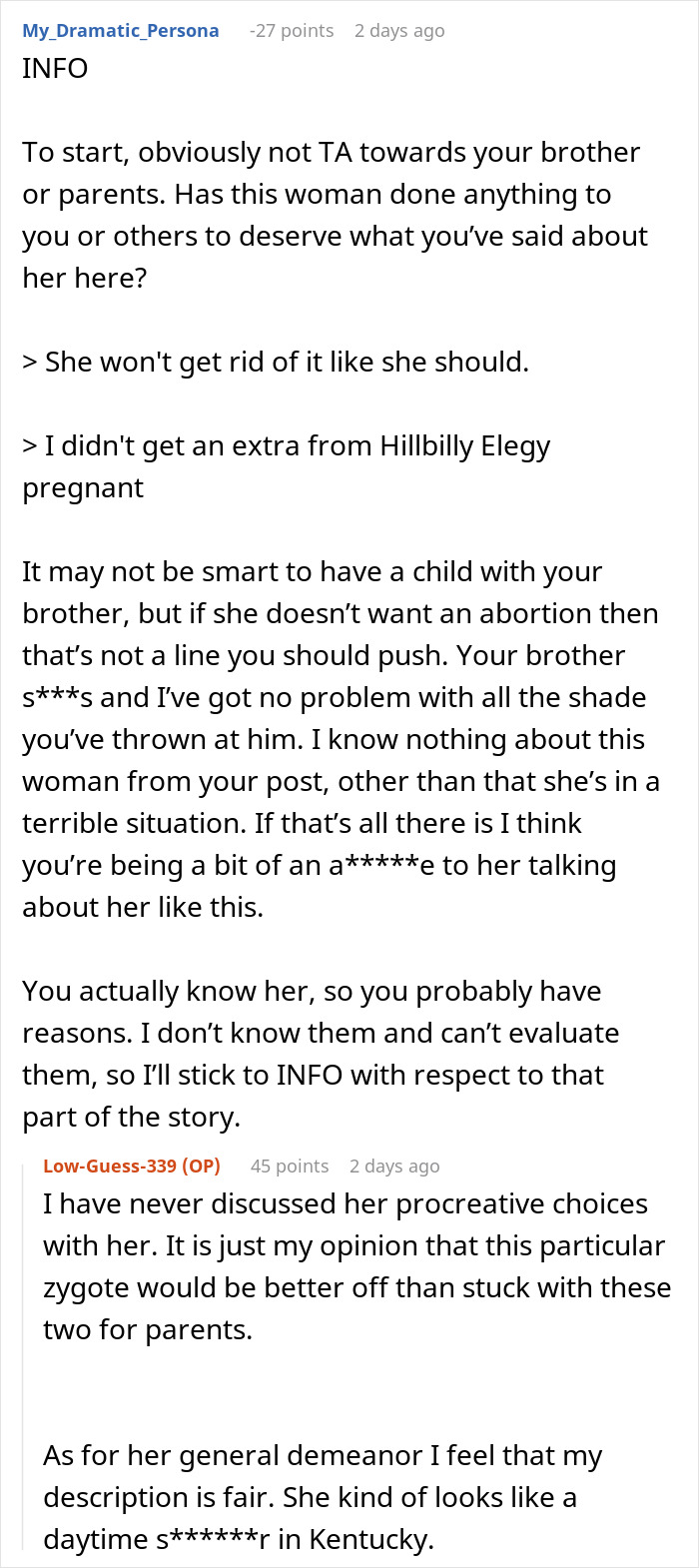
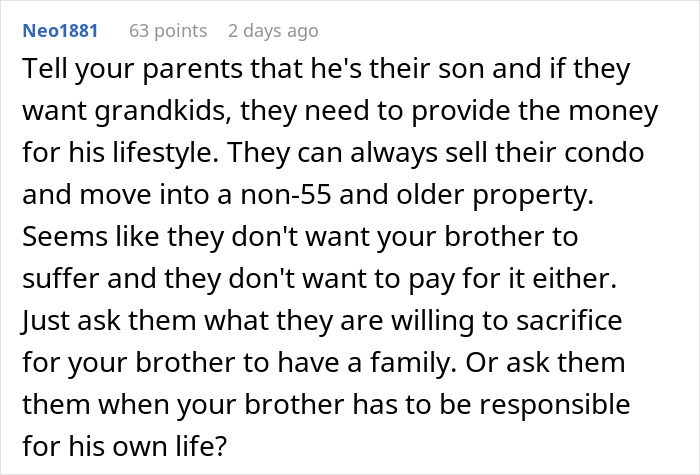
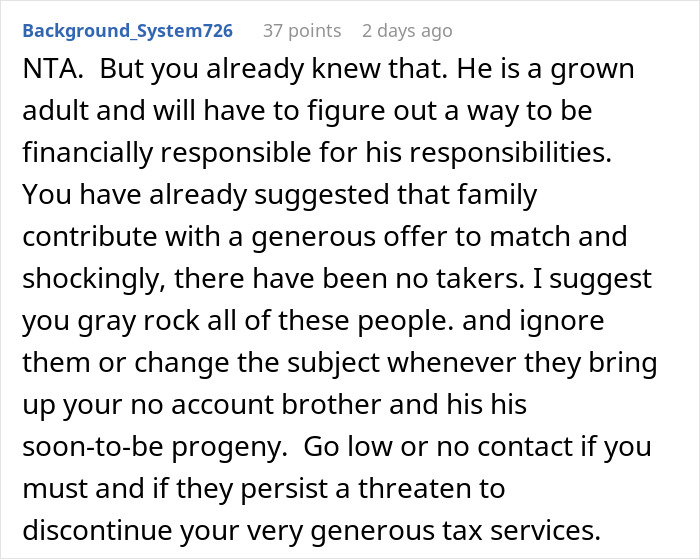
The strategy of offering to match what others contribute is a clever way to highlight the hypocrisy of those who demand generosity from others but refuse to give themselves. It shifts the burden of proof from the person setting the boundary back to the critics. This type of social pressure is common in extended family circles where the collective expects one person to bear the load for the sake of appearances.
However, true conflict resolution requires looking past these surface level demands and addressing the root causes of the estrangement. If the family cannot acknowledge the history of being mistreated or the unfairness of their requests, the conflict is likely to remain unresolved. Choosing to walk away from these toxic interactions might seem harsh to outsiders, but it is often the only way to protect one’s own peace. The ultimate goal of conflict resolution in such high stakes environments is not always reconciliation but rather the establishment of a sustainable distance that respects the dignity of the individual.














By entering your email and clicking Subscribe, you're agreeing to let us send you customized marketing messages about us and our advertising partners. You are also agreeing to our Privacy Policy.
Thank you! You've successfully subscribed to newsletters!


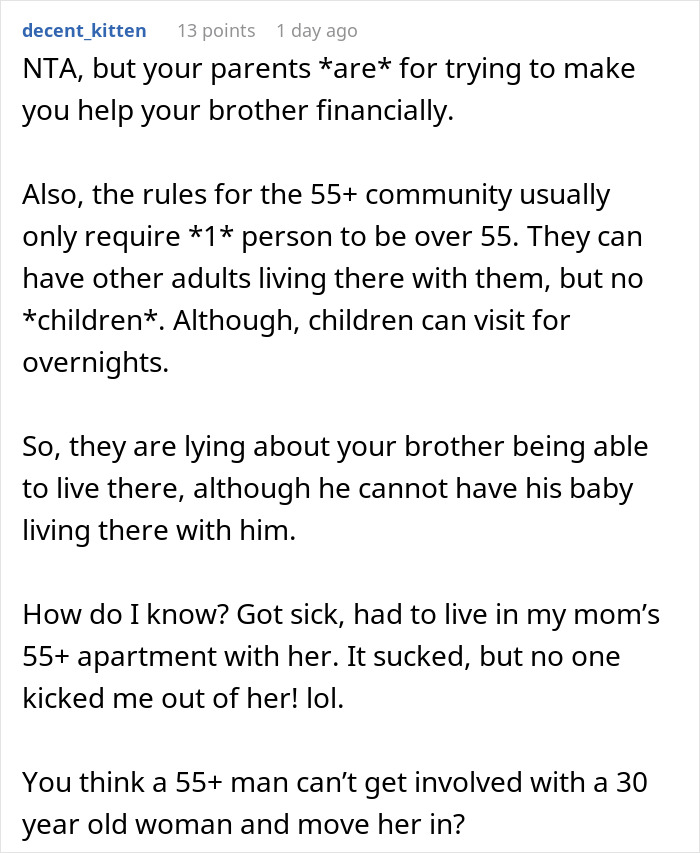
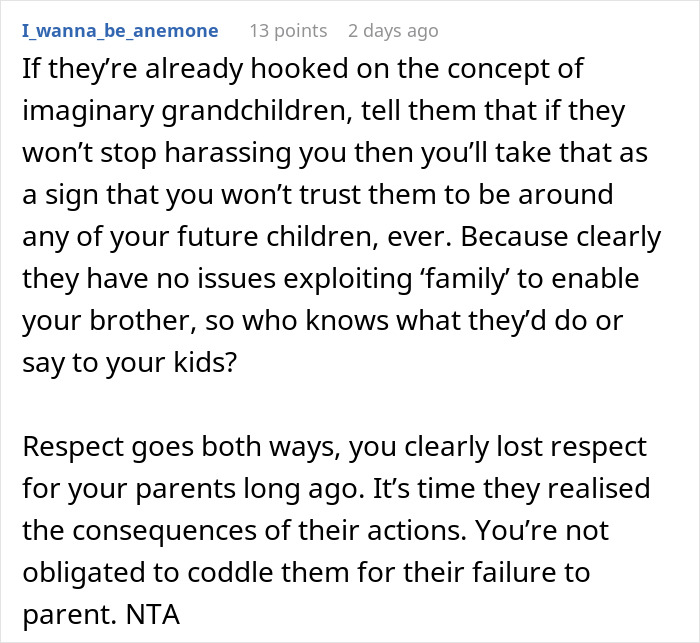
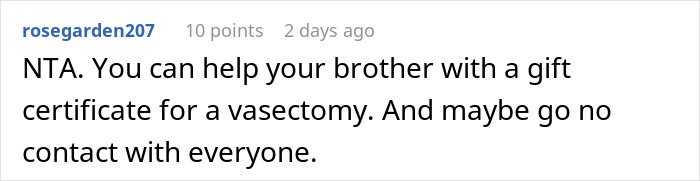
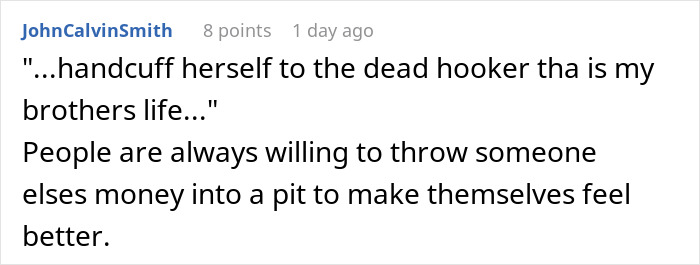
The idea of asking your child to step up financially for the bad decisions their sibling made is really weird to me.

Agreed - it's one thing helping out someone who has been unlucky (I have a disabled brother who I would help), quite another to help out one who has been an idiot (I had an alcoholic sociopathic junk1e brother-in-law, who I definitely would not), especially if they never looked like they would learn.
Load More Replies...
Someone needs a word with the brother about birth control. This is the third woman has has made pregnant. There is no way I would contribute a cent to a brother who is that reckless. Some of OP's comments are offensive and unnecessary.

I would tell them "You are the entirely incompetent parents who created the pathetic mess that is my brother, and you'd better believe you will NEVER be making that my problem.
The idea of asking your child to step up financially for the bad decisions their sibling made is really weird to me.
Agreed - it's one thing helping out someone who has been unlucky (I have a disabled brother who I would help), quite another to help out one who has been an idiot (I had an alcoholic sociopathic junk1e brother-in-law, who I definitely would not), especially if they never looked like they would learn.
Load More Replies... Someone needs a word with the brother about birth control. This is the third woman has has made pregnant. There is no way I would contribute a cent to a brother who is that reckless. Some of OP's comments are offensive and unnecessary.
I would tell them "You are the entirely incompetent parents who created the pathetic mess that is my brother, and you'd better believe you will NEVER be making that my problem.





























 No fees, cancel anytime












35
28