Get Premium
Dark mode theme is available exclusively for premium users. Learn more about the benefits of subscribing.
No fees, cancel anytime.

 Dark Mode Ad-Free Browsing Unlimited Content
 Ad-Free Browsing Unlimited Content Dark Mode
Join 1.2 million Panda readers who get the best art, memes, and fun stories every week!
Being siblings can be weird. Sometimes you’re the closest people on the planet and know each other better than anyone else. Other times, you can argue like sworn enemies and wonder how you’re even related.
One woman was excited to graduate and get ready to start law school. But her celebration quickly turned sour when her brother said she was only doing so well because she got lucky. He said she’d simply been born smart and joked that she hadn’t left him any brain cells.
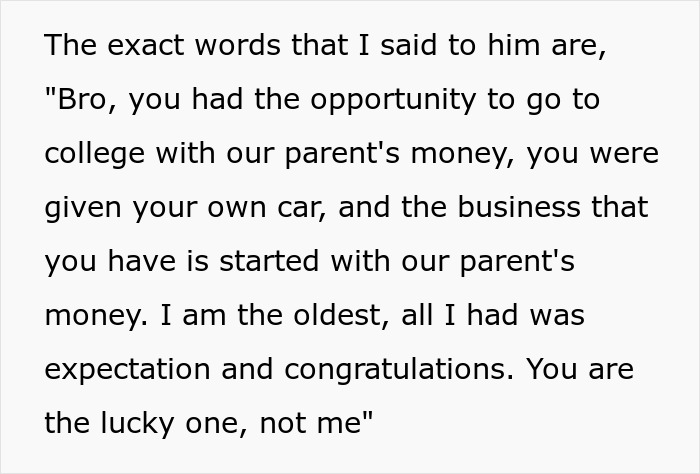
That didn’t sit well with her, so she made sure he knew just how much hard work had actually gone into getting where she was.







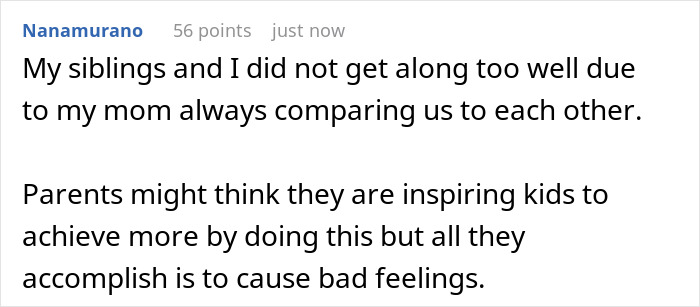
A lot of parents would probably never admit it, but plenty of them do have a favorite child. And no matter how much they insist they treat everyone the same, the people around them can often tell.
Sometimes the favorite is simply the child who has always been easier for them. Maybe they slept through the night as a baby and grew up following the rules without much fuss. Other times, it’s the one who happens to fit the family’s idea of what “successful” looks like.
That doesn’t necessarily mean they’re actually doing better than their siblings, but let’s be real, becoming a doctor or lawyer is probably going to score more points in some households than becoming a musician. Either way, siblings usually notice when one person seems to get more praise.
It happens more often than many people might think. According to the BBC, research suggests parental favoritism shows up in around 65% of families and has been studied across many different cultures.
Children can pick up on unequal treatment from a surprisingly young age, including differences in how much warmth or attention their parents show each sibling.
Feeling like the second-choice child can hurt. The BBC notes that perceived favoritism has been linked with lower self-esteem in children, along with anxiety and depression.
Those feelings can also follow someone into adulthood. So in this story, it makes sense that the brother’s insecurities didn’t come out of nowhere.
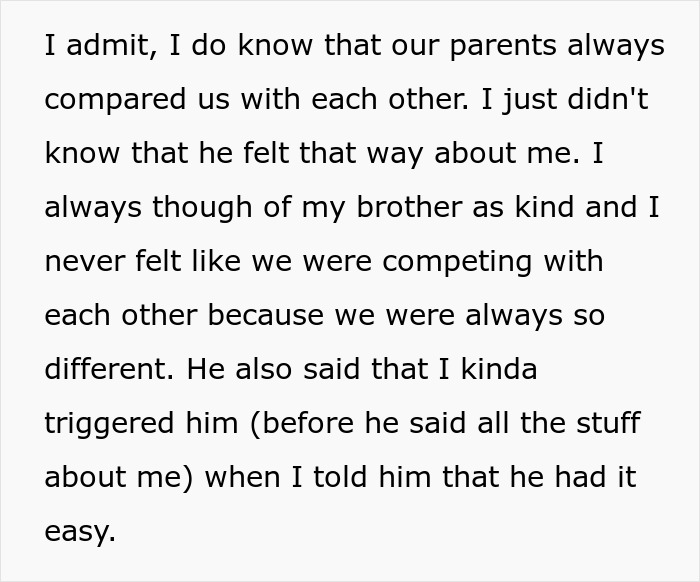
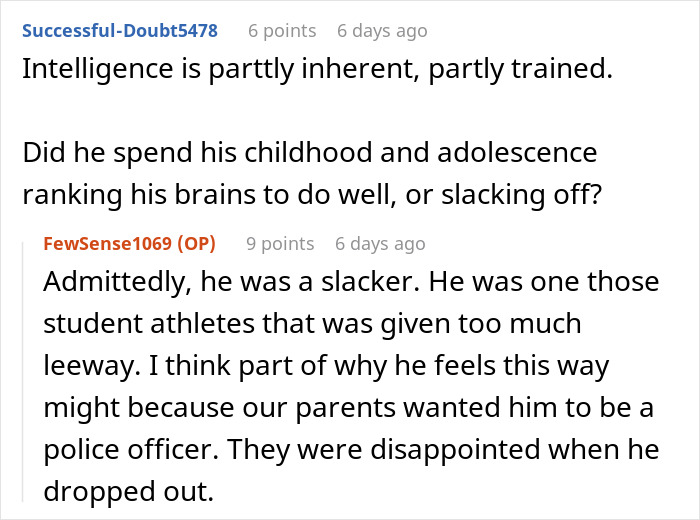
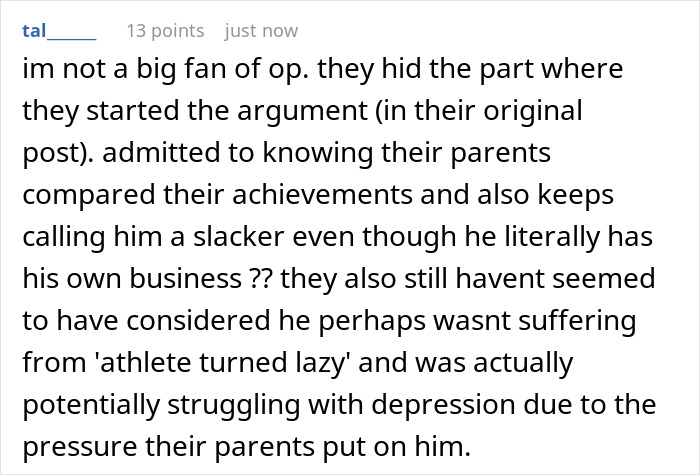
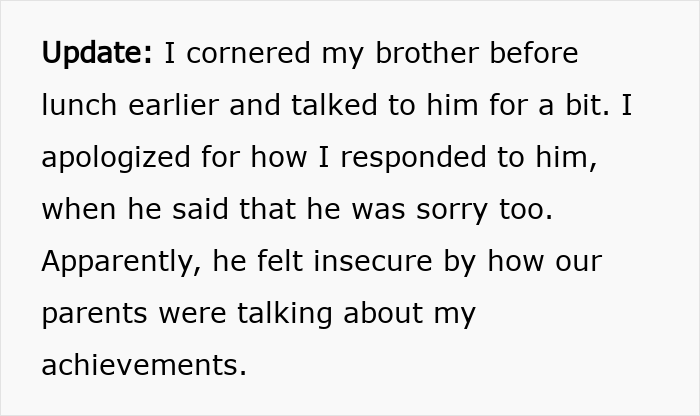
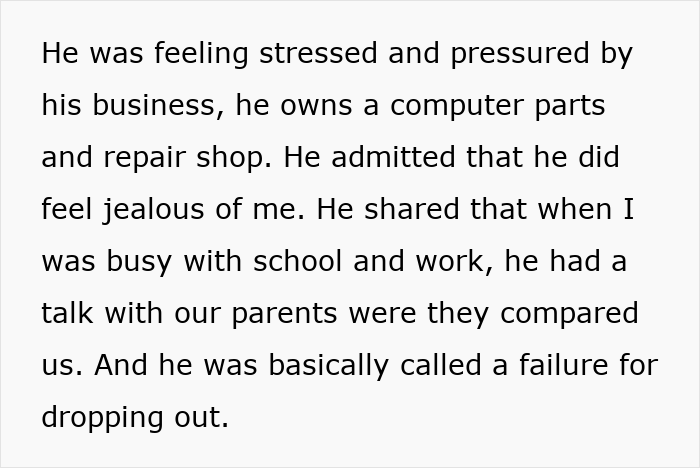
In her update, the woman learned that their parents had compared the two siblings before. Her brother had even been called a failure after dropping out of college, while she was getting praised for her academic achievements.
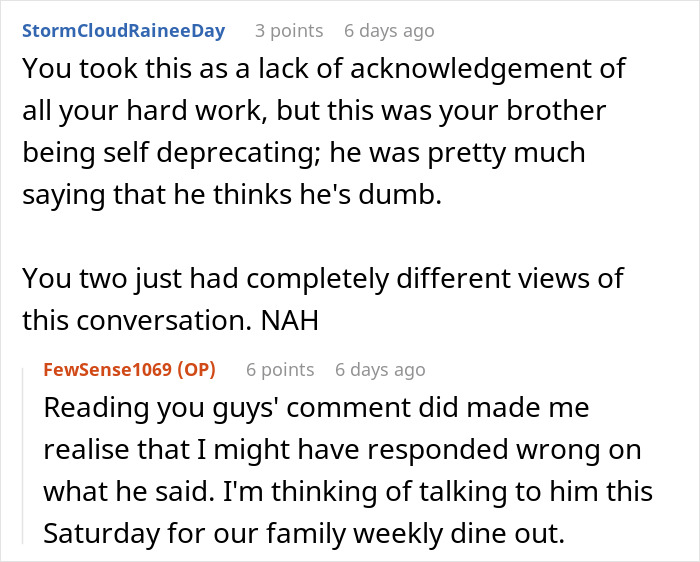
By the time he told her she was simply lucky and had been born smarter, he had clearly been carrying those feelings around for a while.
Of course, being the favorite doesn’t necessarily mean someone walks away untouched either. Behavioral health platform ResearchLink explains that the so-called golden child can end up feeling a lot of pressure to keep living up to the praise they receive.
Their confidence may start depending heavily on approval, and they can feel guilty when they see a sibling being treated more harshly.
That can make things messy for both siblings. The one who feels overlooked may grow up believing they’re somehow less capable or less worthy. Meanwhile, the favored sibling may feel like they always have to keep proving themselves.
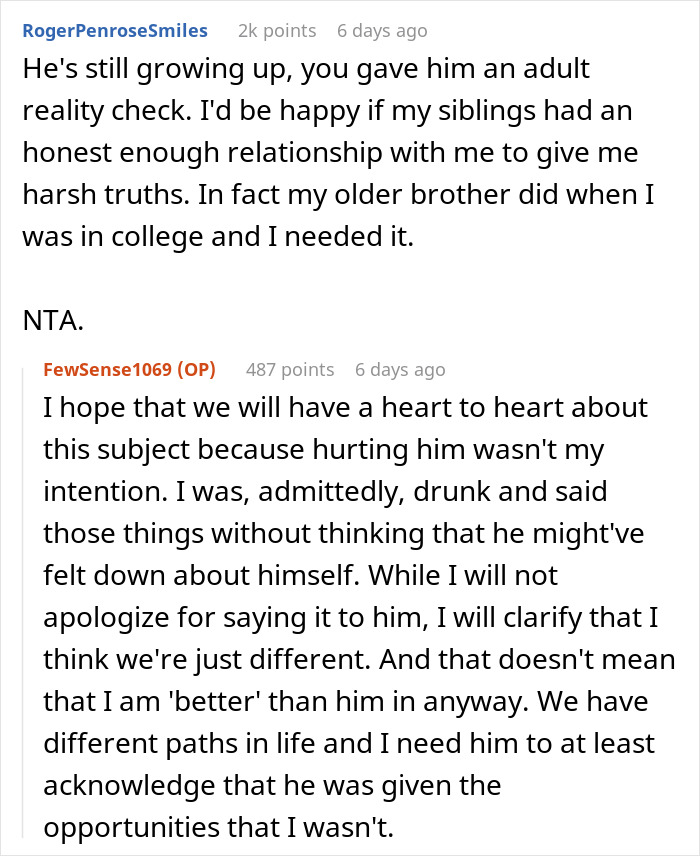
In this case, the sister had worked hard for what she achieved, so hearing it reduced to luck understandably bothered her. At the same time, her brother was dealing with his own hurt.
Moving forward usually means separating those old family roles from the relationship the siblings actually want to have now. For the person who felt overlooked, that can mean learning not to measure their worth by how their parents saw them.
For the favored sibling, it can mean accepting that the other person’s hurt is real without feeling guilty for doing well. Honest conversations can help both sides understand what was really going on.
And that seems to be where these two ended up. Once they talked properly, both apologized and finally explained what had been bothering them. They even made plans to spend more time together.
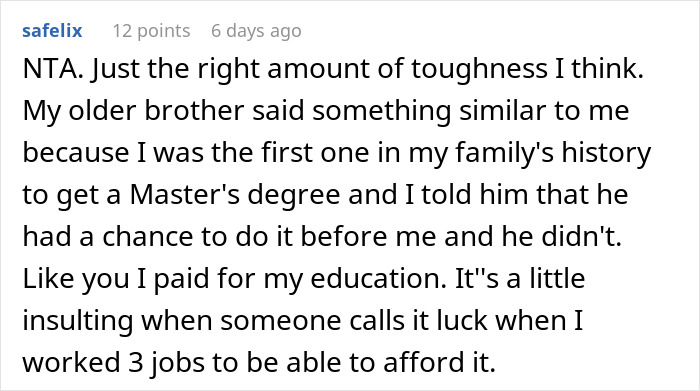
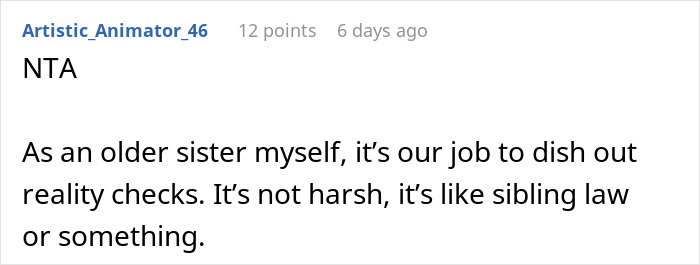
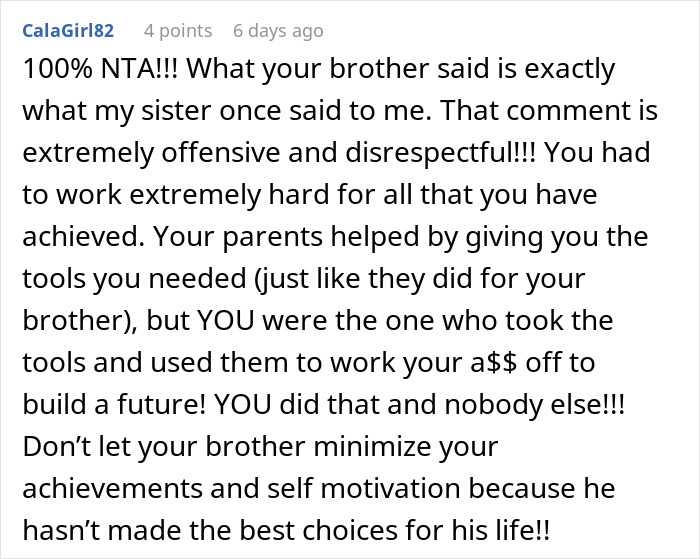
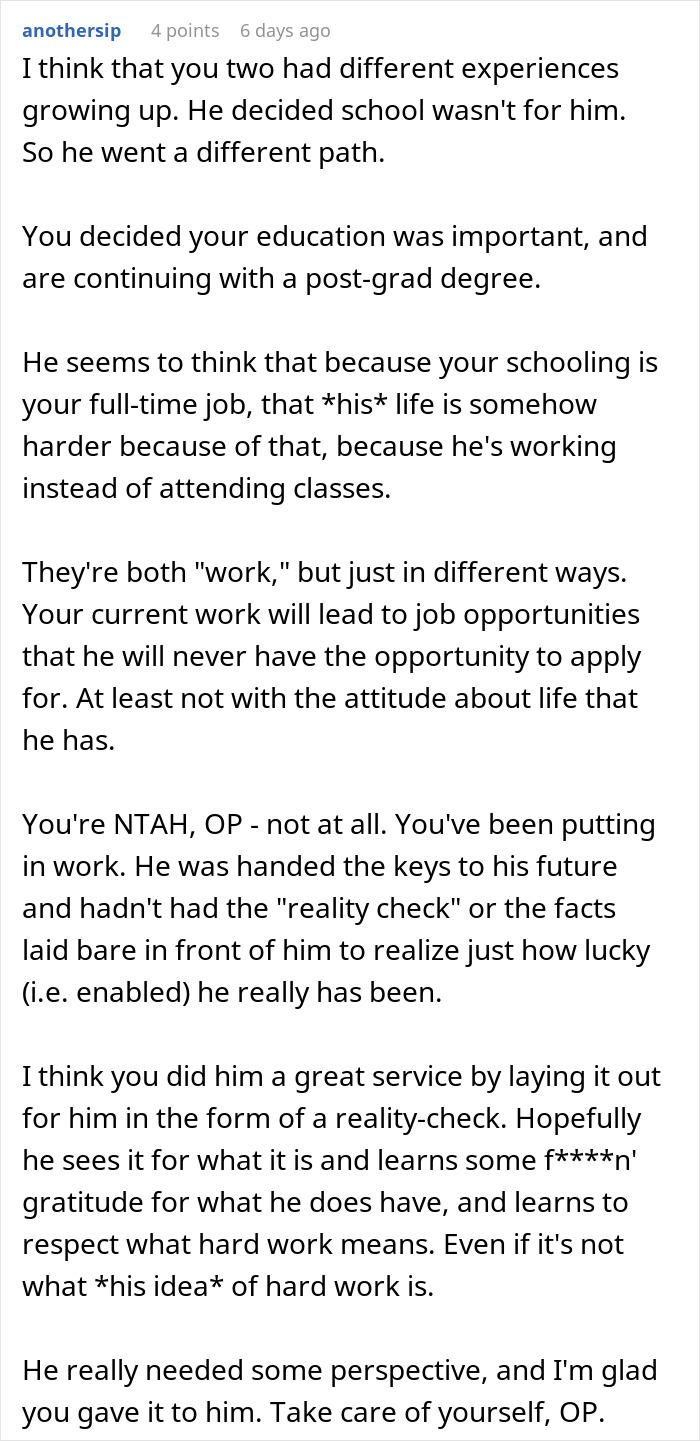
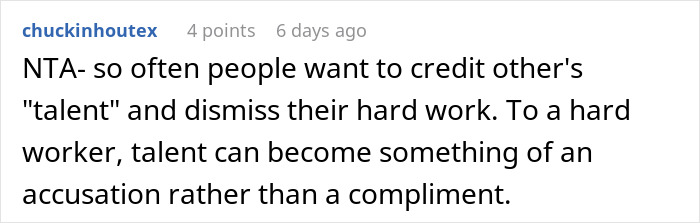
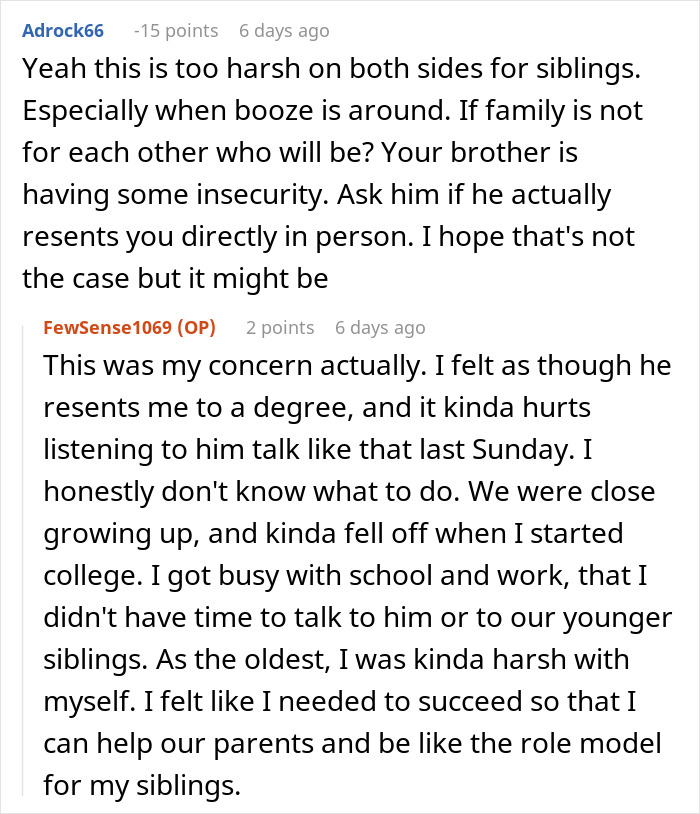
So, do you think the sister handled the situation well, or was her reality check a little too harsh? Share your thoughts in the comments below.




























By entering your email and clicking Subscribe, you're agreeing to let us send you customized marketing messages about us and our advertising partners. You are also agreeing to our Privacy Policy.
Thank you! You've successfully subscribed to newsletters!



































 No fees, cancel anytime









32
1