Get Premium
Dark mode theme is available exclusively for premium users. Learn more about the benefits of subscribing.
No fees, cancel anytime.

 Dark Mode Ad-Free Browsing Unlimited Content
 Ad-Free Browsing Unlimited Content Dark Mode
Join 1.2 million Panda readers who get the best art, memes, and fun stories every week!
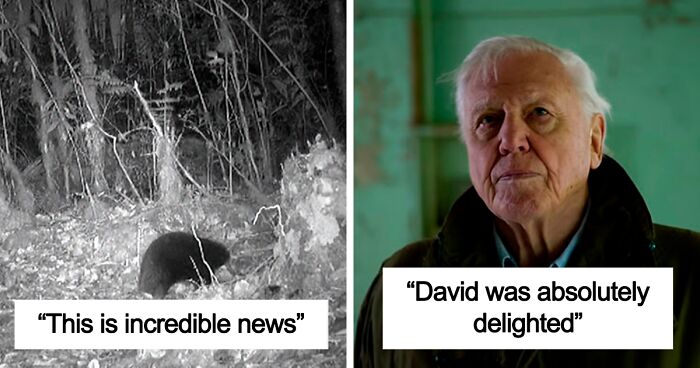
Amidst the challenges and uncertainties of science and nature, news of hope has recently emerged.
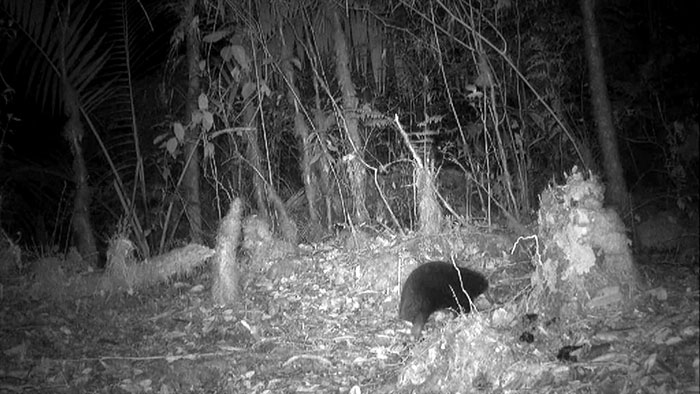
For the first time, researchers have captured footage of an ancient egg-laying mammal named after Sir David Attenborough, dispelling fears of its extinction.
Image credits: Expedition Cyclops
Up until now, the sole proof of the existence of the Zaglossus attenboroughi species was a preserved specimen of a deceased animal in a museum, dating back several decades.
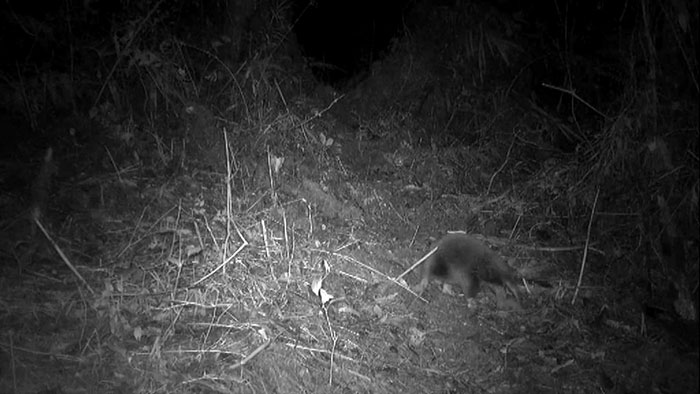
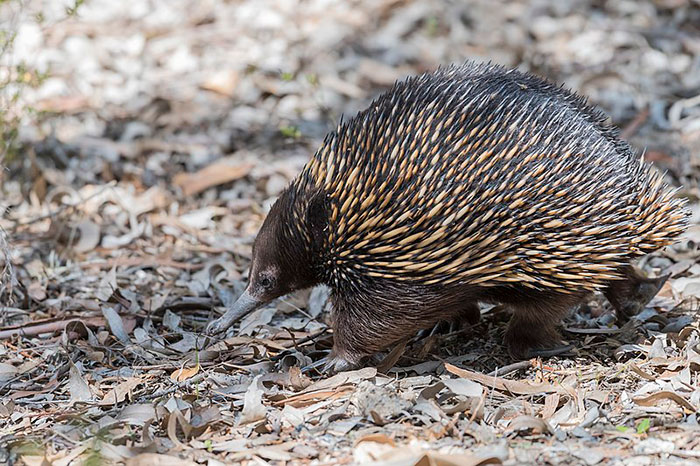
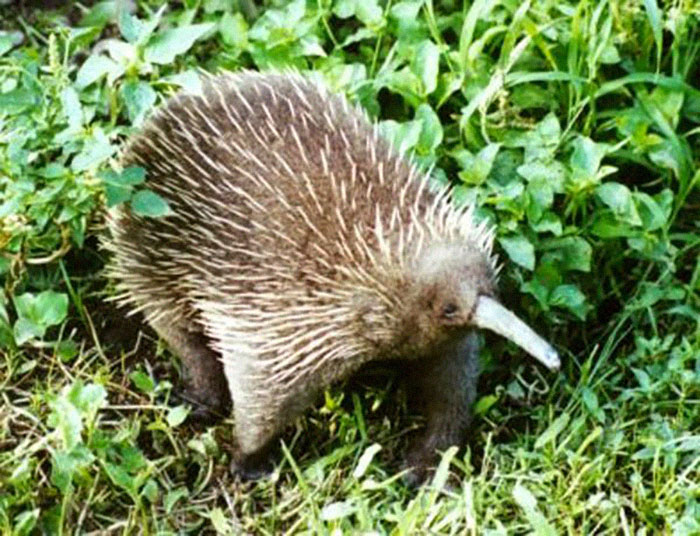
But now, a couple of Oxford University researchers captured during an expedition to Indonesia four brief three-second clips featuring Attenborough’s long-beaked echidna, a spiky and furry creature with a distinctive beak.
Image credits: Expedition Cyclops
Often referred to as “living fossils,” echidnas are believed to have originated around 200 million years ago, coexisting with dinosaurs on Earth.
Dr. James Kempton, a biologist from Oxford University, told BBC News: “I was euphoric, the whole team was euphoric.
“I’m not joking when I say it came down to the very last SD card that we looked at, from the very last camera that we collected, on the very last day of our expedition.”
Image credits: Gunjan Pandey
James revealed he had engaged in written correspondence with Sir David regarding the rediscovery, and that he was “absolutely delighted” at the news.
The biologist directed a month-long expedition through previously uncharted regions of the Cyclops Mountains, a rugged rainforest habitat situated at an elevation of 2,000 meters (6,561 feet) above sea level.
Image credits: Jaganath
Apart from locating Attenborough’s “lost echidna,” the expedition unveiled new species of insects and frogs while documenting thriving populations of tree kangaroos and birds of paradise.
The echidna, second only to the duck-billed platypus as the sole mammal capable of egg-laying, consists of four species, with three featuring long beaks.
Among these, the Attenborough echidna and the western echidna are classified as critically endangered.
Earlier expeditions to the Cyclops Mountains indicated the potential presence of the Attenborough echidna through signs like “nose pokes” in the ground, but inaccessible remote areas prevented definitive proof of their existence.
Image credits: John Cairns
Consequently, for the past 62 years, the sole evidence of the Attenborough echidna’s existence has been a specimen securely housed in the Treasure Room of Naturalis, the natural history museum of the Netherlands.
Pepijn Kamminga, the collection manager at Naturalis, told the British broadcaster: “When that was discovered, people thought, well, maybe it’s extinct already because it’s the only one.
“So this [the rediscovery] is incredible news.”
Prior to Kempton’s team discovering the long-lost species of the hedgehog-like mammal in the remote Indonesian mountains, the researchers persevered through an earthquake, malaria, and even a leech affixing to a member’s eyeball during their expedition.
Collaborating with the local village Yongsu Sapari, the scientists navigated and explored the remote terrain of northeastern Papua.
The echidna holds significance in local culture, with elders from Yongsu Sapari noting a tradition where conflicts are resolved by sending one party into the forest to search for the mammal and another to the ocean to find a marlin.
Both creatures, perceived as elusive, often taking decades or a generation to locate, symbolize the resolution of conflict and a return to harmonious relationships once found.
Image credits: www.facebook.com
Image credits: www.facebook.com








































 No fees, cancel anytime

















0
0