Get Premium
Dark mode theme is available exclusively for premium users. Learn more about the benefits of subscribing.
No fees, cancel anytime.

 Dark Mode Ad-Free Browsing Unlimited Content
 Ad-Free Browsing Unlimited Content Dark Mode
Join 1.2 million Panda readers who get the best art, memes, and fun stories every week!

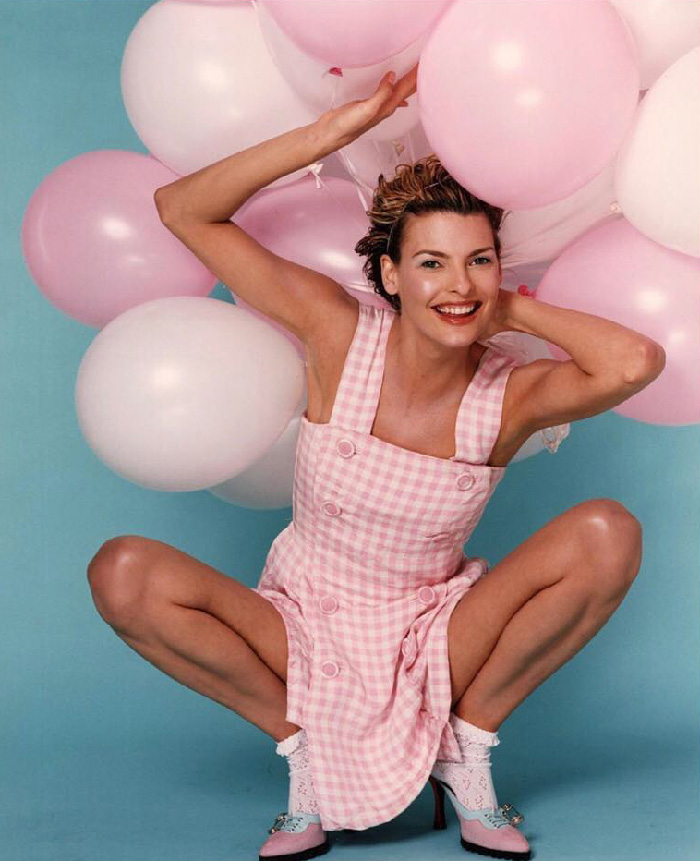
In the 1990s, Linda Evangelista was one of the “Big Six” supermodels, known for gracing countless magazine covers and landing lucrative contracts. She once famously quipped that she wouldn’t get out of bed for less than $10,000 a day.
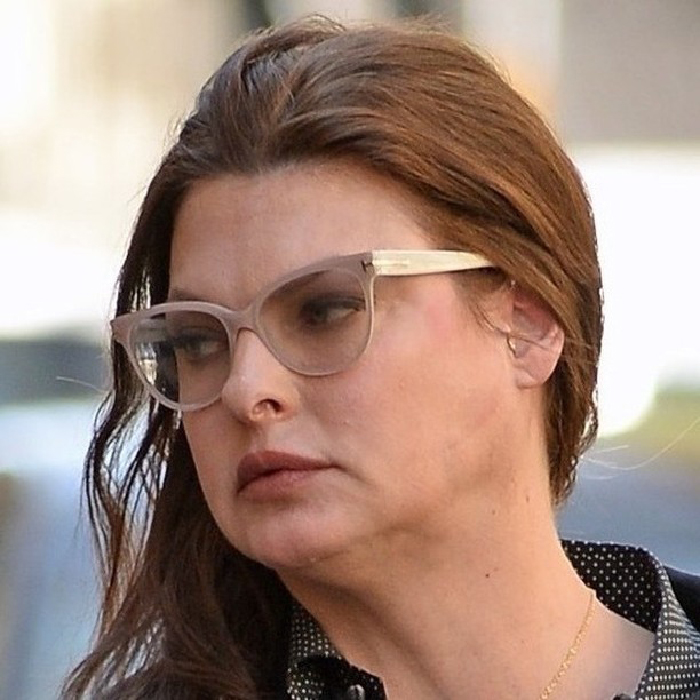
But for five years, she disappeared from the spotlight. Her absence wasn’t retirement. In September 2021, she revealed the reason. A noninvasive cosmetic procedure called CoolSculpting had left her disfigured.
Evangelista’s story serves as a stark warning in a culture fixated on self-optimization. It shows how even low-risk treatments can lead to life-altering consequences.
Speaking out was her way of shedding years of shame and standing up for others facing similar silent battles.
Image credits: lindaevangelista / Instagram
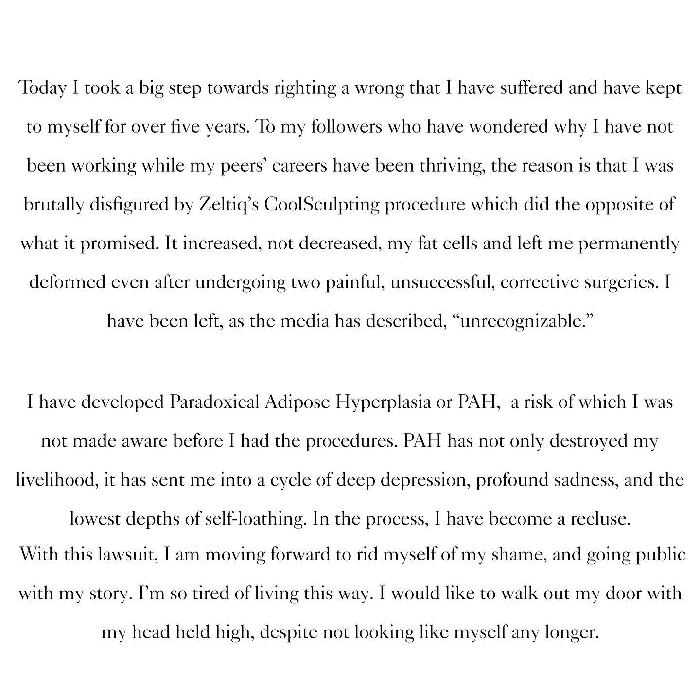
On September 22, 2021, Linda Evangelista made headlines. In an Instagram post tagged “#TheTruth #MyStory,” she shared why she had disappeared from the spotlight while her peers continued to thrive. The reason, she explained, was a cosmetic procedure that left her permanently disfigured.
Image credits: lindaevangelista / Instagram
She revealed she had undergone CoolSculpting, a treatment from Zeltiq marketed as a nonsurgical alternative to liposuction. Between August 2015 and February 2016, Evangelista had seven sessions, targeting her abdomen, flanks, back, bra area, inner thighs, and chin.
But instead of shrinking, the treated areas expanded and hardened into bulging masses. In an interview with People, she said walking in a dress without a girdle caused her thighs to chafe to the point of bleeding. The sensation, she explained, felt like “hard fat rubbing.”
The disfigurement also altered her posture; she described rectangular shapes under her arms that prevented her from resting her arms flat against her sides. Despite undergoing two corrective liposuction surgeries, she remained unrecognizable (via the Guardian).
Image credits: caraotaradio / Instagram
This outcome was a stark contrast to more common cosmetic enhancements. Lip-flips using Botox carry minimal risks and fade naturally in months. Veneers, while permanent, offer predictable results. Evangelista, however, was left with irreversible fibrotic bulges.
To reclaim her dignity, she went public, filing a $50 million lawsuit against Zeltiq Aesthetics Inc., claiming the company failed to disclose known risks (per CNN). She alleged Zeltiq knew of the complication but concealed it from consumers.
By telling her story, Evangelista hoped to walk tall again, even if she no longer looked like the icon the world once knew.
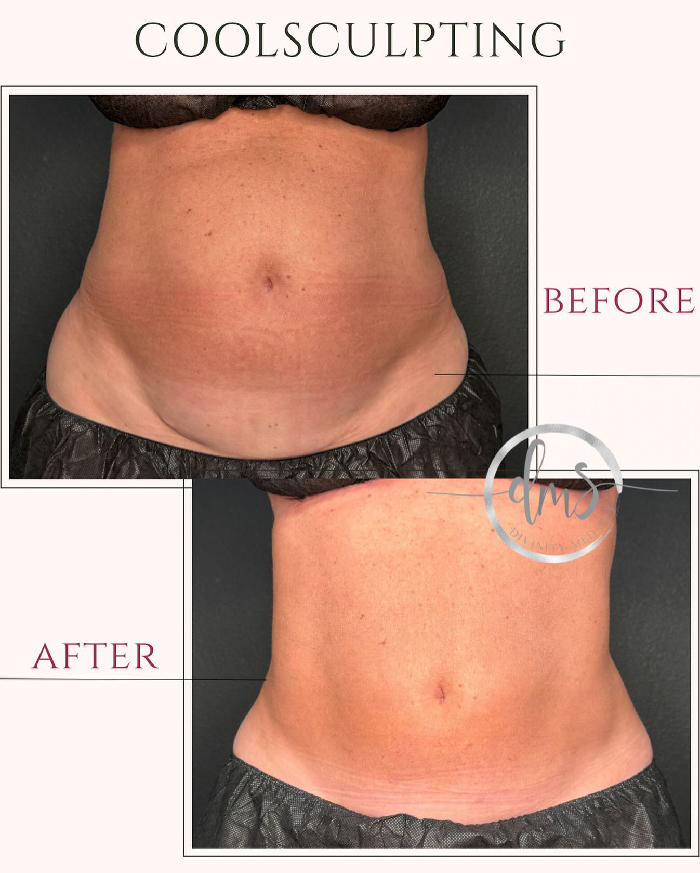
To understand how this standard procedure led to such adverse results, it is helpful to examine the science behind CoolSculpting. The treatment employs cryolipolysis, which involves freezing fat cells to destroy them. The body then naturally eliminates the dead cells over several weeks.
According to the Mayo Clinic, fat cells are more vulnerable to cold than skin or muscle, so the treatment targets fat without damaging surrounding tissue. The device uses suction to pull in a targeted area, then cools it to a temperature that triggers fat cell death.
Marketed as a safe, FDA-cleared, no-downtime treatment, CoolSculpting has been performed more than 17 million times worldwide (via Medical News Today). Most patients experience the intended outcome. Some studies show that a single session can reduce the fat layer in the treated area by up to 20%.
Image credits: aesti_yani / Instagram
However, these results are not instant. Improvements typically become visible between one and three months as the body processes and removes the crystallized fat. Patient satisfaction is generally high; a 2022 study in the Aesthetic Surgery Journal reported an 84% satisfaction rate. For Evangelista, who hoped to smooth out stubborn areas without surgery, it seemed like a low-risk solution.
Instead, she experienced a rare but severe side effect known as Paradoxical Adipose Hyperplasia (PAH). In this condition, the fat cells behave in the opposite manner intended by the treatment. They expand and harden, creating thickened, bulging tissue that often mimics the shape of the applicator.
The New York Times dubbed this the “stick of butter effect.” The exact causes remain uncertain, but some researchers believe the suction pressure or reduced oxygen levels may stimulate pre-fat cells to grow instead (per Stat Pearls). The resulting fat is fibrotic, dense, and resistant to diet and exercise.
Image credits: caraotaradio / Instagram
A key issue in Evangelista’s legal battle was how often PAH occurs. While the manufacturer cited a risk of just 0.025%, a newer Aesthetic Surgery Journal review suggests the rate may be significantly higher.
Evangelista said she wasn’t warned. When the bulges formed, she blamed herself and tried extreme dieting and workouts. Not until a diagnosis in June 2016 did she realize she had a medical condition.
She underwent two full-body liposuction procedures to remove the masses, but the condition returned. This recurrence shows how persistent PAH can be. The fibrotic fat often grows back, leaving lasting scars and disfigurement.
Image credits: lindaevangelista / Instagram
Linda Evangelista shared her CoolSculpting photos in a published interview with People, and the images quickly spread across social media.
Rather than becoming tabloid material, the photos ignited meaningful conversations about the pressure on celebrities to undergo cosmetic treatments and the rarely discussed risks. By showing the results of her failed procedure, she pushed the public to consider the hidden dangers behind beauty enhancements.
The fashion world responded with overwhelming support. Models like Naomi Campbell and Cindy Crawford praised her bravery (per People), and designers including Isaac Mizrahi and Jeremy Scott shared their admiration. Fans also flooded her with love.
This response contrasted sharply with reactions to other celebrities, such as Meghan Trainor, who faced backlash for revealing cosmetic changes that some felt contradicted her earlier body-positive image. While Trainor was criticized for shifting her brand, Evangelista was celebrated for her vulnerability.
View this post on Instagram
The difference highlighted a growing demand for transparency and honesty.
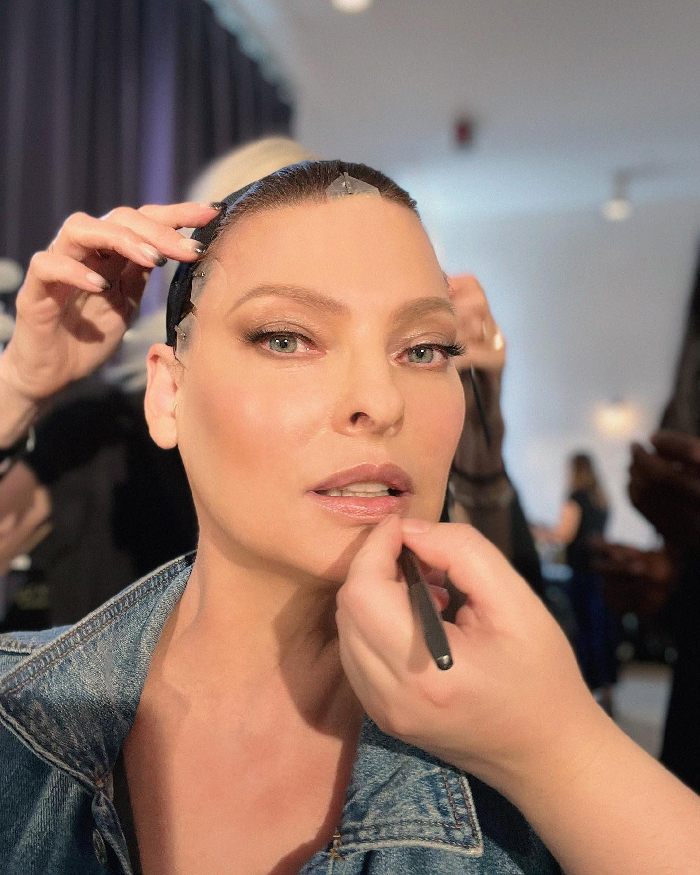
Soon after, Evangelista returned to print with impact. In September 2023, she appeared on the cover of British Vogue. Though the photos were striking, she was candid about the effort that went into them. She shared that makeup artist Pat McGrath used tape and elastics to pull back her face and jaw, a reminder of the illusion behind perfection.
She later graced the cover of Harper’s Bazaar in May 2025. In that interview, she famously said she didn’t care how she aged, a quote that quickly went viral. She also opened up about her mastectomy scars and keloids from breast cancer treatment.
Her candor marked a cultural shift, one where beauty conversations are less about perfection and more about revealing what it takes to achieve it.
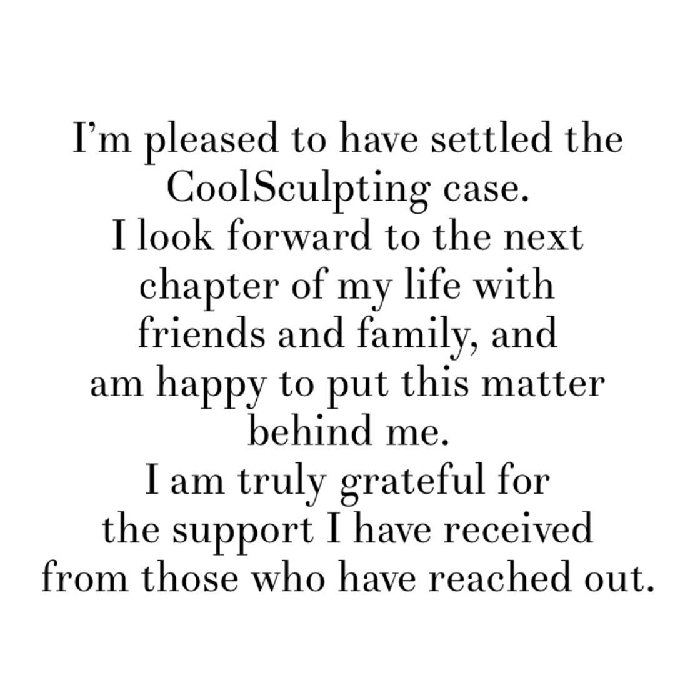
Linda Evangelista settled her lawsuit with Zeltiq in July 2022 (via CNN). But the effects of her story extended far beyond the courtroom. She leveraged her experience to create a platform to raise awareness of patient safety in the cosmetic industry.
Refusing a confidentiality agreement from the company that offered to cover corrective surgeries, she chose transparency over silence.
Her mission was no longer about reviving her modeling career, but about ensuring others weren’t caught off guard by the same rare complication.
A central focus of her advocacy has been pushing for truthful advertising. Evangelista pointed out the gap between bold consumer marketing and the cautious disclosures made to investors.
She revealed that while Zeltiq warned investors about risks like paradoxical hyperplasia as early as 2012, those risks were not mentioned in the “no downtime” TV ads that influenced her decision (per Newsweek). Her legal fight highlighted the need for clear, visible warnings, not hidden fine print.
Image credits: lindaevangelista / Instagram
Following her public statements, the British Association of Aesthetic Plastic Surgeons (BAAPS) released data confirming that fat-freezing complications do happen and often require corrective surgery (per Aesthetic Medicine). In response, BAAPS introduced a “Code of Candour for Celebrity Marketing,” calling for honest, transparent advertising of cosmetic procedures.
Evangelista’s journey has empowered patients to demand more thorough informed consent and pushed clinics to be more transparent about potential risks.
By highlighting her complication, she has sparked broader conversations about patient rights and the importance of knowing exactly what a procedure entails before entering a clinic.

By entering your email and clicking Subscribe, you're agreeing to let us send you customized marketing messages about us and our advertising partners. You are also agreeing to our Privacy Policy.
Thank you! You've successfully subscribed to newsletters!










 No fees, cancel anytime








16
0